Saga Communications Classic Rock WAFX 106.9 The Fox in Suffolk/Norfolk, VA has named Sonja Morrell as its new midday host. Morrell fills the role left by the late Mike Arlo, who recently passed away.
What We Know: Morrell currently serves as cluster Promotions Director and evening host at WAFX. Her history with the midday slot runs deep — she succeeded Arlo at Rock FM 99 WNOR in 1996 when he moved to WAFX. She remained at WNOR until joining WAFX herself in 2009. The transition keeps a familiar voice in a beloved daypart.
What They Said: Director of Content Mike Beck offered a heartfelt endorsement of the move. “No one can replace Arlo, but Sonja is uniquely qualified to continue the tradition he built,” Beck said. “She has been Arlo’s backup for decades, and the listeners know her well. Arlo and Sonja were great friends and I’m sure he is giving two thumbs up for this move.”
What Remains Unclear: The station has not yet announced whether Morrell’s evening shift will be filled internally or through outside talent. Additionally, her Promotions Director duties and how those responsibilities will be managed going forward remain unaddressed. No formal start date for her midday role has been publicly confirmed.
What It Means: This one was a no-brainer. WAFX didn’t need to go outside — they already had the right person in the building. Morrell’s decades on both sides of the dial in this market mean listeners won’t skip a beat. She knew Arlo, she knew the audience, and the audience knows her. Nice move.
Barrett Media produces daily content on the music, news, and sports media industries. Sign up for our newsletters to stay updated and get the latest information right in your inbox.
CBS News has tabbed Jill Schelsinger as host of a new podcast series. It’s set to launch later this month.
What We Know: Money Moves with Jill Schlesinger will debut on Tuesday, June 30th. The new podcast will release episodes on Tuesdays and Thursdays. According to CBS News, the show “breaks down complex financial topics in a clear, practical way.” Schelsinger is no stranger to CBS News. She’s served as a business analyst for the network. She has also hosted Jill on Money and the MoneyWatch podcasts in the past.
What They Said: “No jargon, no judgment, just actionable financial advice … Your life is changing. Your money changes. And your needs change. We want to be here for everybody who’s watching and listening to this show.” -Jill Schlesinger
What Remains Unclear: What motivated the network to launch a new podcast. It is also unknown if her other podcast ventures will end now that she’s hosting this specific show for the network.
What It Means: Under the direction of Bari Weiss, CBS News has wanted to increase its digital content offerings. This podcast allows the network to do just that. It is also a more practical podcast approach than another news or interview series that have been popular in so many organizations.
Barrett Media produces daily content on the music, news, and sports media industries. Sign up for our newsletters to stay updated and get the latest information right in your inbox.
ESPN locked up one of its most recognizable voices. Dave Pasch has signed a new multi-year exclusive deal that expands his role beyond NBA and college sports.
What We Know: Pasch has been with ESPN since 2003, building a two-decade reputation across NBA, college basketball, and college football. His new agreement adds NFL coverage to that portfolio — a first on the national stage for the veteran broadcaster. In addition, he called ESPN Radio’s coverage of the New York Knicks’ run to the NBA Finals. Specific details about his NFL assignment will be announced in the coming weeks. As part of his exclusive agreement, Pasch steps down from his role as radio play-by-play voice of the Arizona Cardinals. He held that role for 24 seasons.
What They Said: Mike McQuade, Executive Vice President, Sports Production, ESPN: “Live sports demand voices that can carry the weight of the moment. Dave Pasch has been doing exactly that for more than two decades. His command of the biggest stages in NBA, college basketball and football speaks for itself. Expanding his role to include NFL is a natural next step for one of the most trusted voices in the business. We’re excited about what’s ahead for Dave and for fans,”
Dave Pasch: “As I move to an expanded and exclusive role with ESPN, I would like to thank Jimmy Pitaro, Burke Magnus and Mike McQuade for this great opportunity. Having covered the NFL for two and a half decades for the Arizona Cardinals, I’m thrilled to now be involved with the NFL on the national stage, along with continuing to call college football, basketball and the NBA. I can’t wait to start the next chapter of my career,”
What Remains Unclear: ESPN has not yet revealed which NFL properties Pasch will cover or which broadcast partners he’ll work alongside. Also, who will be his replacement with the Arizona Cardinals is unknown.
What It Means: Pasch’s expansion reflects ESPN’s ongoing push to maximize its most versatile talent across multiple sports. Moreover, adding NFL duties makes him one of the network’s most broadly deployed play-by-play voices.
ESPN has re-signed Dave Pasch to an exclusive multi-year agreement
Continuing his two-decade-plus run as one of ESPN’s signature play-by-play voices
Thank you to Michael Bidwill and the Arizona Cardinals for a rewarding 24-year journey with the organization. That chapter comes to a close as I transition into an expanded and exclusive role with ESPN.
I am grateful to Michael and his father, Bill Bidwill, who in 2002…
Barrett Media produces daily content on the music, news, and sports media industries. Sign up for our newsletters to stay updated and get the latest information right in your inbox.
The chatter surrounding FOX Sports’ World Cup studio dynamic has grown louder. Analyst Stu Holden says it’s mostly noise.
What We Know: Holden addressed the on-air tension between Zlatan Ibrahimović and Alexi Lalas. He made his comments during an appearance on the Sports Media Podcast podcast. The pairing has drawn scrutiny from sports media observers. Some critics questioning Lalas’ performance and on-camera chemistry with the Swedish star. However, Holden suggests the behind-the-scenes reality differs sharply from the public narrative. He insists the dynamic is working — and that FOX insiders actually embrace it.
FOX Sports Soccer Analyst Stu Holden on the dynamic between Zlatan Ibrahimović and Alexi Lalas: “It’s not that they don’t have good chemistry. It’s that people haven’t seen the way that they have interacted and become a pairing. In fact, what I’m hearing more from friends behind the scenes is that they love the type of tension and drama that has been created from that. It’s almost become something they look forward to tuning in and seeing.”
FOX Sports Soccer Analyst Stu Holden on the criticism of Alexi Lalas: “I think too much is being made of the Alexi thing. But probably secretly, I’ve even talked to Alexi about it, I’m sure he’s enjoying this. It’s a role in a character that that he plays. We’re just seeing it in a way with two people he’s never really had that interaction with.”
FOX Sports Soccer Analyst Stu Holden on how relevant Alexi Lalas is to the American soccer audience: “Alexi is still relevant in today’s sports media. For a guy that really came to fame in 1994, it’s something I have a great appreciation for as a broadcaster now for 12 or 13 years. I iamgine if I can still be relevant as the way that Alexi is, that I’ve done something right. That doesn’t just come down to a name. That comes down to the way he works, the way he makes his teammates better behind the scenes.”
What Remains Unclear: Whether the broader sports media criticism of Lalas will intensify as the World Cup progresses remains an open question.
What It Means: Lalas understands his role on the FOX Sports broadcast. In speaking with Barrett Media earlier this year, he understood the opportunity as an entertainer as much as an analyst. Holden’s defense signals that FOX Sports is comfortable with how its studio team is being received. Furthermore, framing the tension as compelling television — rather than a flaw — suggests the network may lean into it more as the tournament progresses. Lalas remains a polarizing but durable presence, and for now, FOX appears unbothered by outside noise.
Barrett Media produces daily content on the music, news, and sports media industries. Sign up for our newsletters to stay updated and get the latest information right in your inbox.
NewsNation has added a new face to its Washington coverage team. Cory Smith will join the network as a Washington correspondent beginning June 30.
What We Know: Smith will be based in Washington, D.C., and report across NewsNation‘s daytime and primetime programming. He arrives after serving as co-host of DC News Now’s Sunrise on The Hill. During his career, Smith has interviewed prominent lawmakers, White House officials, and policy experts. He also led political coverage for several outlets and earned a National Edward R. Murrow Award along with six Regional Emmy Awards.
What’s at Stake: NewsNation continues to invest in political reporting ahead of a busy election cycle. As competition for viewers intensifies, experienced correspondents can help networks deliver deeper coverage from the nation’s capital. Smith’s background in investigative journalism and political analysis could strengthen the network’s reporting bench.
What Remains Unclear: The network hasn’t detailed specific assignments or beats Smith will cover other than that he’ll be based in Washington, D.C.
What It Means: NewsNation continues building its national news operation with experienced journalists from competitive television markets. Meanwhile, Smith brings a track record of political reporting, election coverage, and investigative work. His addition signals the network’s ongoing commitment to expanding its Washington-based reporting resources as political news remains a key driver of audience engagement.
Barrett Media produces daily content on the music, news, and sports media industries. Sign up for our newsletters to stay updated and get the latest information right in your inbox.
Approaching The Summit is a series of special interviews created in partnership with Point to Point Marketing featuring speakers at the upcoming 2026 Barrett Media Audio Summit in New York City. Follow along with this series as prominent names surrounding the event June 30-July 2 share their insights and expectations for what’s to come in the big apple. The Summit takes place at the SVA Theatre on West 23rd Street. For tickets and hotel room reservations, click here or visit the Summit section at the top of the website.
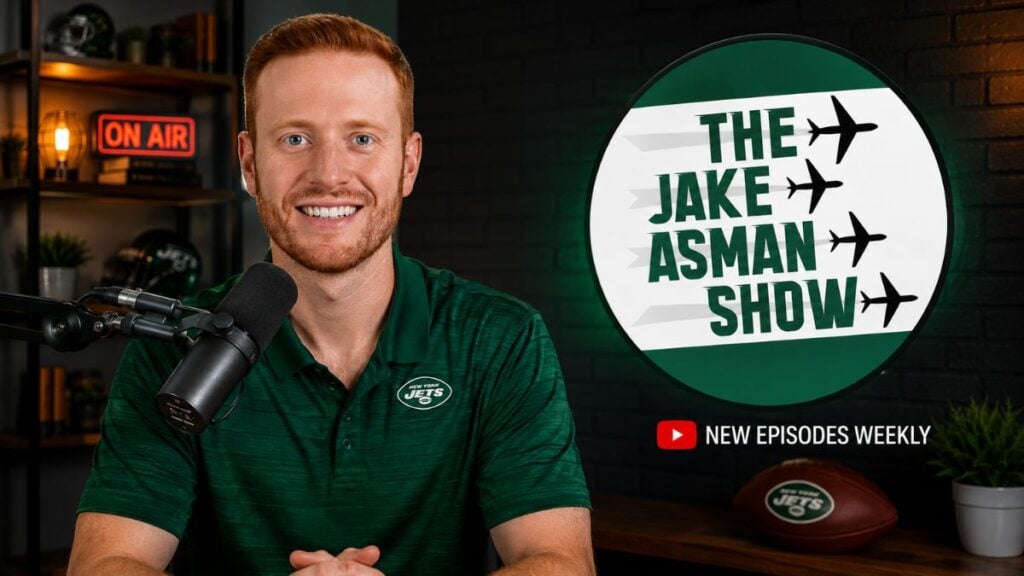
Jake Asman is a digitial content creator and host of The Jake Asman Show on YouTube with over 45,000 subscribers. He’s also hosted on traditional sports talk radio at ESPN 97.5 in Houston, and Sports Map Radio Network. Asman also is also a lead fill in host on Good Karma Brands’ ESPN New York, and SiriusXM Mad Dog Sports Radio. He’s attended the Barrett Media Audio Summit numerous times over the years, but this year will be making his panelist debut at the event.
Asman sat down with Barrett Media from his office in New York City, NY.
*Editor’s Note: Answers have been edited for clarity and length.*
John Mamola: What are you looking forward the most at the Barrett Media Audio Summit?
Jake Asman: The business just keeps changing dramatically, even in the last year or so. Unfortunately, we’ve seen so many people be laid off or have to go down a new career path. To get a chance to hear from important decision makers, on air people, behind the scenes people get everyone in one spot. It’s a discussion where sports media business is going. Especially, sports radio and the digital side of sports radio.
As someone who used to be a full time radio person is now part time radio, full time content creator. I started my YouTube show as a side hustle, and now it’s become a full time job. Getting a chance to be in the same spot with so many different people who have gone through different and similar things, and learn through information on where the business is headed. I think all of that is really valuable.
John Mamola: You’re someone in sports media that’s transitioned from the traditional sense to the digital sense. What can you recall from the summits you’ve attended in the past that helped you in that transition to achieve a smarter approach to the digital content sphere?
Jake Asman: There was a session at the last summit I went to. Matt Moscona and Phil Mackey did a great job talking about content on YouTube, and how it’s different than other platforms. They really emphasized thumbnails. I remember listening into that conversation, and I really adapted and changed the way I display my thumbnails on my YouTube channel ever since then.
That’s just one example of something I took from the summit and was able to immediately apply it to what I’m doing on YouTube.
There’s other countless things in radio that helped me as a talk show host. I was there when Mike and the Mad Dog were honored. I grew up on that show. So, hearing them talk about the business and their careers was exciting.
Felger and Mazz from Boston as well. I have an immense respect for hearing Felger’s view on radio and how he does a show. I found it to be exciting just being in the same room as all these people.
As a radio guy who’s also a digital content creator, and now a YouTuber. It’s all content at the end of the day. So, there was just a lot of value of being there and absorbing all the info you get.
John Mamola: Are you expecting the conversations you’ll personally have be different at this event than in years past? Meaning traditional talent and executives may pick your brain for items that work in digital maybe better than terrestrial.
If someone approaches you seeking out your advice, what do you hope to convey in this manner at the summit?
Jake Asman: I’m always happy to share my experience. It’s a very untraditional path to how I got here. I was a full-time afternoon talk show host in the fourth most populated city in Houston. Then both my co-hosts on a three-man show left for other gigs within a week of each other. Then all of a sudden, I’m now out of a job as they blow up the whole afternoon show.
So, it wasn’t my choice that I went full time on YouTube. I tried it in August of 2023 and thankfully I’ve been able to really grow the show and go live twice a day in making it work.
However, my path was always sports radio, and then the YouTube thing was something I did on the side as a way to talk about the New York sports teams. Because while I’m in Houston, and we’re not doing a lot of Jets and Yankees talk on Houston radio.
It’s an unusual path that I’m happy to always share how I got to what I did. I’m always trying to learn more about the business from a YouTube side of things too. Finding out what works on YouTube. Does any of those elements potentially work on radio, and vice versa.
I describe my YouTube show to a lot of people is that it’s a radio show that happens to be on video. Instead of a text line, I read comments. Instead of taking calls on the phone line, it’s people calling in but the calls are all on video. There’s a lot of elements of what I do that comes from radio, and hopefully vice versa.
There’s some things that I’ve done on YouTube that I’ve been able to take to radio with me. I’m open to pay it forward and help answer any questions on the content, behind the scenes, and everything else with a YouTube show. There are things I can now speak to from doing this for the last several years.
John Mamola: How have you seen the summit grow and evolve over time?
Jake Asman: The topics have been evolving just because there’s always so much with the business changing. You have to adapt your discussions on the business to what’s happening in real time in the business.
I remember a couple years ago, we were talking so much about the digital takeover. We’ve seen that. There’s people now who are doing what I do. They’ve left radio and they’re full time digitally. They might be better off in certain circumstances.
Just from that lens, I remember there were topics about this is coming. We’re here in a lot of respects.
So, I think Jason [Barrett] and the entire Barrett Media team does a great job of being on top of trends in the business. The different topics that are on these panels reflect that.
John Mamola: This year Barrett Media is combining all three formats into one giant summit. Is your plan to dabble into the news and music days as well to gain any knowledge from those settings?
Jake Asman: Yeah, absolutely. At the end of the day, where, if you’re on air, an entertainer, or a content creator, it might be different subject matter. But there’s much you could learn from anyone who is doing something similar.
Even if the topic is different than what you’re opining on. There’s definitely value in that. There’s value in seeing some of the production elements of shows behind the scenes. What they do in different formats. Could some of that be incorporated into this wild west new format that is YouTube content or digital content. There’s no defined term at this point.
There’s value in just understanding the business as a whole, regardless of if it’s music, sports, or news.
John Mamola: You have a unique perspective on this. What are the biggest challenges or opportunities that you hope are part of the discussions at the summit from a content creator point of view?
Jake Asman: There’s a lot of people that are in sales that maybe don’t understand the massive opportunity that’s out there in selling some of these digital shows.
My audience is fiercely loyal. They support me and I’ve been able to bring in some sponsors. I’m live for four hours a day. I do a two-hour show in the morning, a two-hour show in the afternoon every day. There’s a lot of inventory that I have open for different brands that want to align themselves with what we’re building.
There’s a lot of people that are in sales or represent brands that their job is to add spend on shows. They’re missing out on the opportunity that’s there on some of these YouTube shows, including my own. Hopefully being in an environment where you have a lot of these people in the same place. They’ll start to really grasp and understand there’s a lot of untapped potential on where you could be advertising and reaching a loyal audience that’s different than your traditional radio or TV audience.
John Mamola: If you were addressing someone who’s on the fence about attending the summit. From a radio perspective, what is to gain by being in attendance. Also from a digital perspective, why is it important to be in the room albeit the entire conference is not solely digital?
Jake Asman: If you’re in the sports media business, you want to have an understanding on how executives think about talent, ad spending, ratings, podcasts. You want the information on all aspects of the business. However, you also want to form relationships with people that are in similar situations that you’re in.
The networking goes without saying. Anyone who’s been to one of these events, you have great opportunities to connect with some of the bigger names in the sports media field. It can help you continue to pursue your passion for this.
I don’t think you can be in sports media unless you’re passionate about it. Here’s an opportunity to be with like-minded people for three days. It’s an opportunity to be around people who are passionate about something that obviously you’re passionate as well.
Jake Asman Show (Canva | ChatGPT | Social Screenshots)
Purchase your tickets to the 2026 BSM Summit here, and for more information BarrettMedia.com
Barrett Media produces daily content on the music, news, and sports media industries. To stay updated, sign up for our newsletters and get the latest information delivered straight to your inbox.
A Philadelphia sports radio host has challenged his on air competition. 97.5 The Fanatic host Bill Colarulo is publicly challenging Sportsradio 94WIP host Spike Eskin to a debate. The challenge follows Colarulo being blocked on social media following his criticism of Eskin’s take about Phillies star Bryce Harper after hitting for the cycle.
What We Know: The tension stems from a discussion by Colarulo following Bryce Harper’s historic cycle in a recent Phillies win. Colarulo took issue with Eskin’s stance on Harper and fired back publicly Monday about Eskin’s stance. In the days following, Colarulo discovered Eskin had blocked him on the social media platform X. That block is now the centerpiece of a very public challenge made by Colarulo toward Eskin.
What They Said: Bill Colarulo (via Unfiltered with Ricky Bo & Bill Colarulo): “I get something sent to me on Twitter last night (Tuesday night) and it was a tweet from Brett [Spike] Eskin. So I click on it, he blocked me! He blocked me! I just called you basically a coward and said ‘tell Bryce Harper to his face how you feel about him,’ and now you block me on Twitter! Are you that soft?” … “Maybe I should issue a formal challenge to Brett [Spike] Eskin if he wants to debate me on something sports related. The fact that he’s gonna act like he didn’t see what I did, but then he blocks me? Come on, man! Come on. I’m gonna challenge him to a debate. You love debating all your callers, why don’t you come after me a little bit? Why don’t we debate?”
What Remains Unclear: Eskin has not publicly responded to Colarulo’s challenge.
What It Means: We will see if Eskin accepts the offer for the debate. However, a disagreement between talents is common among sports radio hosts. Since arriving in afternoons at 97.5 The Fanatic, Colarulo has made no bones about challenging hosts on The Fanatic’s competitor in Philadelphia. If Eskin were to accept, it could make for some interesting fodder for Philadelphia sports fans in the summer months before football season.
Spike Eskin criticizes Bryce Harper for his "selfish attitude" after his base running comments.
"I just think he's selfish and he's hard to root for. He is a great player, I'm glad he's on the team, but when I'm watching the team, I'm rooting for the team more than him." pic.twitter.com/OlA0bRwjkb
Barrett Media produces daily content on the music, news, and sports media industries. Sign up for our newsletters to stay updated and get the latest information right in your inbox.
Brian Kelly is reportedly moving to television. The former LSU head coach will call college football games for CBS this season, according to a report by Front Office Sports.
What We Know: Kelly is reportedly joining CBS Sports after LSU fired him midway through the 2025 season. He finished 34-14 at LSU, including 19-10 in SEC play, before the school agreed to pay his full $54 million buyout. Before LSU, Kelly coached at Central Michigan, Cincinnati, and Notre Dame, where he became the program’s all-time winningest coach with 113 victories. He appeared in CBS Sports Network’s NFL Draft studio coverage earlier this year.
What They Said: Brian Kelly on a desire to still be involved in college football (via USA TODAY April, 2026): “I still want to make a difference. All the young men that have been under my charge over 35 years, I feel like I have a lot still to give. Even with all this money in college football, they still need mentorship, still need development. Money aside, I have a lot to give. And my motivation is to want to get back to building relationships and successful programs in college football.”
What Remains Unclear: CBS has not officially confirmed the hire. It’s also unknown how long Kelly’s broadcast role will last, if he’ll chase another coaching opportunity.
What It Means: Kelly would bring instant credibility to CBS’s college football coverage. His resume speaks for itself, and his presence will draw attention. This will be CBS Sports’ first season without Gary Danielson. That means Charles Davis will be moving to the number one booth. A year of change is ahead for the network and Kelly could be just the latest addition.
Barrett Media produces daily content on the music, news, and sports media industries. Sign up for our newsletters to stay updated and get the latest information right in your inbox.
The Walt Disney Company has agreed to a $50 million class action settlement. The deal resolves claims that Disney unlawfully inflated streaming subscription prices.
What We Know: The lawsuit alleged Disney forced YouTube TV and DirecTV Stream to carry ESPN and other Disney-owned channels, preventing cheaper packages and driving up consumer costs. Eligible subscribers held accounts between April 1, 2019, and March 31, 2026. Valid claim forms must be submitted by September 8, 2026, at OnlineTVSettlement.com. Eligible subscribers will be paid out ninety percent of the settlement if they live in one of 38 states covered by the original case. According to court records, residents of 12 other states — Alaska, Georgia, Idaho, Illinois, Indiana, Kentucky, Louisiana, Ohio, Oklahoma, Pennsylvania, Texas, Virginia, Washington and Wyoming — will be eligible for the remaining 10 percent. Notably, Disney and YouTube TV also clashed in a high-profile carriage dispute in 2025. The dispute led to Disney channels briefly going dark before reaching a new deal.
What Remains Unclear: Individual payout amounts remain undetermined until all valid claims are submitted. A final approval hearing is scheduled for January 14, 2027. Additionally, FuboTV remains part of the original lawsuit and has yet to reach its own settlement with Disney.
What It Means: Beyond the payout, Disney has agreed to entertain proposals from streaming distributors seeking slimmer channel packages. Those also include plans that exclude ESPN. The settlement doesn’t resolve anything with Fubo and Disney’s bundling practices. However, the settlement is a meaningful structural concession.
Barrett Media produces daily content on the music, news, and sports media industries. Sign up for our newsletters to stay updated and get the latest information right in your inbox.
Fox News weather anchor Janice Dean has announced she’s departing her role with the cable network. He departure is due to her Multiple Sclerosis diagnosis.
What We Know: Janice Dean served as the weather anchor on Fox & Friends during her 22-year run with the network. Hired in January 2004, she was the first official weather forecaster in Fox News history. In November, she announced a leave of absence related to her diagnosis with MS.
What They Said: “For a long time, I was able to handle the early mornings, the many hours on my feet, and the stress of broadcasting live. Getting up at 2:30 in the morning and performing anything is hard, but especially for someone who has multiple sclerosis. For those living with MS, the war is inside of us … Thankfully, I was diagnosed early, and I’ve been on different therapies for over the last two decades. But there’s no cure for MS. And over time, my symptoms have progressed. Unfortunately, lack of sleep and stress are some of the biggest triggers, and I was increasingly feeling the effects of my limitations. Ultimately, my symptoms progressed to the point that I can no longer continue working in my role, and my doctors agreed that stepping away was necessary for my health.” -Janice Dean
In a statement to Barrett Media, Fox News thanked Dean for her decades-long tenure with the network.
“Throughout her 22-year career with Fox News Media, Janice Dean has inspired viewers with her warmth, resilience, and dedication. Her willingness to share her personal journeys has touched countless lives and served as a source of strength and encouragement to many. We fully support Janice’s courageous decision to step away from her role as senior meteorologist on Fox & Friends and are grateful for her many contributions.”
What Remains Unclear: If Dean has plans to ever return to the media landscape. It is unknown if this is a retirement or simply an exit from her current role at Fox News.
What It Means: It unfortunately marks the end of an era for both Dean and Fox News. She had been a fixture on Fox & Friends and was a welcoming and familiar face to the network’s large morning viewership.
Barrett Media produces daily content on the music, news, and sports media industries. Sign up for our newsletters to stay updated and get the latest information right in your inbox.