

BlazeTV commentator Jason Whitlock is defending Cam Newton amid growing scrutiny over the direction of Newton’s media career. The debate gained traction after Ryan Clark questioned Newton’s loyalty to ESPN and Stephen A. Smith. Clark’s comments followed Newton’s decision to feature Whitlock on his 4th and 1 podcast, a move that sparked conversation across sports media circles.
Whitlock used his Fearless program to push back on that narrative. He argued that Newton’s choices reflect strategy, not disloyalty.
“Cam Newton wants to be Pat McAfee,” Whitlock says. He pointed to McAfee’s willingness to host controversial voices, noting that Newton is adopting a similar approach by inviting guests others might avoid. Whitlock also dismissed the idea that Newton owes unwavering loyalty to Smith.
He questioned whether that expectation is even realistic in today’s media landscape.
“This talk about Cam Newton being disloyal. When has Stephen A Smith ever been loyal?” Whitlock asks. “Was he loyal to Max Kellerman? Was he loyal to Skip Bayless was even loyal to Shannon Sharpe? No, he wasn’t.”
Beyond loyalty, Whitlock praised Newton’s long-term vision. He described the former NFL MVP as intentional in building a platform that stands apart from traditional sports media.
“Cam Newton is brilliant,” Whitlock said. “He has hatched a plan. He sees which way the wind is blowing, and actually choosing to be bold and different and unique.”
Whitlock contrasted that mindset with Smith’s approach. He argued that Smith has thrived within a structured system that rarely forces him outside his comfort zone.
“Stephen A Smith has been running out the same deal because he faces no competition,” Whitlock said. “He’s been doing the same show for two decades. Taking all the safe topics and saying whatever he’s supposed to say. While not talking to [nor] engaging with people he’s not supposed to talk to”
Whitlock went a step further by suggesting that Smith operates within clear boundaries set by others at ESPN. In his view, that limits the range of perspectives Smith is willing to explore.
“Stephen A Smith has overseers that tell him, Kyrie Irving, bad. Spank him Stephen A” Whitlock said. “Jason [Jason] Whitlock, bad. Don’t talk about him Stephen A. Stephen A. [Smith] is a coward.”
As criticism mounted, Newton addressed the situation in a video posted Tuesday on the 4th & 1 YouTube channel. He defended his decision to allow Whitlock to speak freely, emphasizing the importance of open dialogue on his platform.
“You cannot allow people to come on your platform and you control how it goes,” Newton said. “You only can allow them to speak their truth how they know their truth to be.”
Newton also explained that he was not in a position to immediately dispute Whitlock’s claims during the conversation.
“If you don’t know, you can respectfully say, ‘I don’t know if this is true or not,’” he said. “When Stephen A. says, ‘You didn’t hammer down on the question,’ I didn’t know that it was a lie.”
For Whitlock, the criticism misses the bigger picture. He sees Newton not as disloyal, but as someone adapting to where the industry is headed next.
Barrett Media produces daily content on the music, news, and sports media industries. Sign up for our newsletters to stay updated and get the latest information right in your inbox.
Salem News Channel has announced that it has increased its distribution by now being made available on The Roku Channel.
The development comes two weeks after the network was added to Amazon Prime Video, also adding to its distribution capabilities.
Previously, Salem News Channel was available through a dedicated Roku app. With this addition, the network will now be offered inside the Live TV Guide on Roku, allowing users to discover the channel as they browse and watch the channel instantly.
“This is a significant expansion of Salem News Channel’s reach, which already increased viewership by over 178% this year,” said Salem News Channel Vice President and General Manager Cary Pahigian. “Being part of The Roku Channel opens the door for entirely new audiences to discover the unique news and opinion that SNC provides.”
SNC offers live news coverage, interviews, and commentary from the network’s suite of conservative and Christian voices and personalities.
According to AdWave, more than 80 million households have at least one Roku device.
Barrett Media produces daily content on the music, news, and sports media industries. Sign up for our newsletters to stay updated and get the latest information right in your inbox.
President Donald Trump is set to appear as a guest on The Five on Fox News on Thursday, Jesse Watters announced on Wednesday night.
At the end of Jesse Watters Primetime, Watters revealed that the program would have an extra special guest during the Thursday edition.
“I wonder if Jessica’s (Tarlov) gonna be on,” Watters said with a smirk, alluding to the liberal voice on the show. “Tune in tomorrow to see.”
The Five routinely finishes as the most popular program in all of cable news. It often tops 4 million viewers on average. During the week of March 16th, the show averaged 3.8 million viewers.
The show features Dana Perino, Greg Gutfeld, Jesse Watters, Jessica Tarlov, and Harold Ford Jr., among others.
The Five will have a VERY SPECIAL guest tomorrow 👀
It appears that it would be the first time in the progarm’s history that President Trump would make an appearance on The Five.
Barrett Media produces daily content on the music, news, and sports media industries. Sign up for our newsletters to stay updated and get the latest information right in your inbox.
Cumulus Media is ushering in a new era on mornings at Atlanta’s Q99.7. The company announced that Q99.7 will debut The Q Morning Crew on Monday, March 30, replacing longtime staple The Bert Show. The new program will air weekdays from 6-10 a.m. and feature Joe Breezy, Daena “DK” Kramer and Cort Freeman.
The launch marks a significant shift for the CHR station following a 25-year run from its previous morning franchise. Cumulus executives are positioning the new Q99.7 morning show as a fresh, personality-driven option designed to better reflect Atlanta’s evolving audience. Program Director Patrick Davis says the trio was put together with complementary strengths in mind.
“The Q Morning Crew brings humor through three distinct personalities,” Davis said. “Joe is the ambitious, charismatic host chasing a big opportunity in Atlanta. DK is a sharp, funny, independent woman who balances sweetness with sass. Cort is a quick-thinking comedian whose creativity and masculine edge keep the show unpredictably funny.”
Joe Breezy returns to the Atlanta market after building a strong presence in Nashville radio. He most recently hosted afternoons on Mix 92.9 and also appeared as a pop culture correspondent on WKRN-TV’s Local On 2.
Kramer adds both national and major-market experience. She has worked in Houston, San Francisco and Las Vegas, and previously co-hosted the syndicated program The 90s with Alfonso Ribeiro. In addition to radio, she has earned recognition as a voiceover artist and improvisational comedian.
Freeman joins the show as both an on-air contributor and executive producer. He heads to Atlanta from Detroit, where he contributed to Mojo in the Morning and Dave & Chuck ‘The Freak.
Cumulus Media Chief Content Officer Brian Philips said the company has spent considerable time developing the show’s identity and chemistry for the Q99.7 audience.
“Patrick and this carefully recruited group of new talent have put in the work of developing a morning show for modern Atlanta,” Philips said. “Joe, DK and Cort are each set up to play to their proven strengths. This cast is ready for prime time.”
The move also aligns with a broader strategy to emphasize local programming. Cumulus Atlanta Vice President and Market Manager Justin Schaflander says the station aims to build a stronger connection with its audience.
“We’re eager to launch these three exceptional talents as we build our all-live and local approach at Q99.7,” Schaflander said. “This new morning show represents the next step in the reimagination of the station.”
With a new cast and creative direction in place, the company believes Q99.7 is positioned for its next chapter.
Barrett Media produces daily content on the music, news, and sports media industries. Sign up for our newsletters to stay updated and get the latest information right in your inbox.
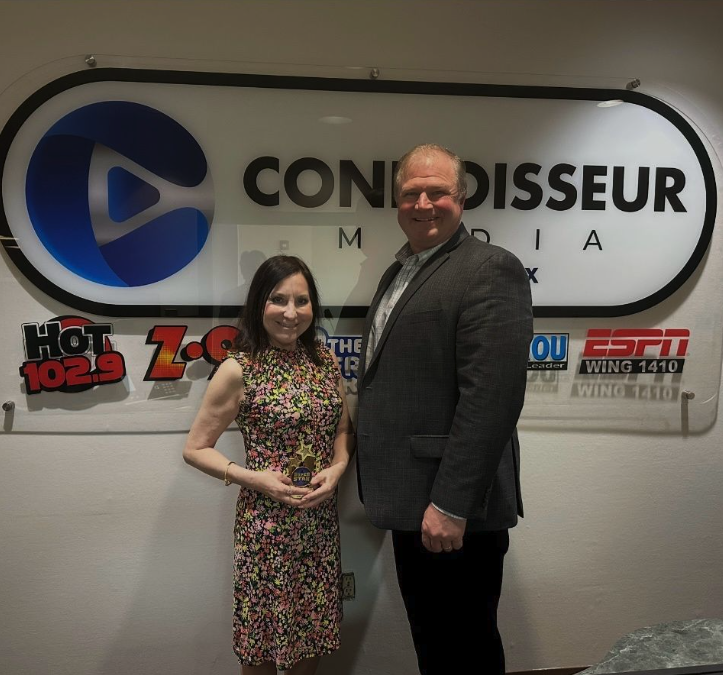
‘The Heidi & Frank Show’ is going national. Superadio Networks has secured a new syndication partnership with Toad Hop Network, the production company led by longtime radio personality Frank Kramer, to expand the Los Angeles based show nationwide.
As part of the agreement, Superadio will handle national syndication and ad sales for the morning program. Kramer and Heidi Hamilton have been a staple at KLOS since taking over for the legendary Mark and Brian in September 2012. KLOS will serve as the flagship affiliate as the show begins its national rollout.
Heidi and Frank have been together since 2000 when they worked at 971 Free-FM. They were recently recognized as one of the top 15 shows in Active/Modern Rock in Barrett Media’s Top 20 series. Industry decision makers helped decide the rankings.
Superadio Networks President Eric Faison expressed his enthusiasm for offering the show nationally: “The Heidi & Frank Show represents everything great about personality-driven morning radio. We’re excited to partner with Frank and the team at Toad Hop Entertainment to introduce the show to new markets while building a strong national platform for both affiliates and advertisers.”
Kramer added, “I’m extremely excited to announce that I have officially signed with Superadio Networks. Given that we are so close to April Fools’ Day, you might wonder if this is a joke. I assure you it is very real. I’m thrilled that Los Angeles is finally sharing its best-kept secret. I truly love The Heidi and Frank Show, and have always said I’ll be doing this until the very end. I look forward to even more listeners hearing the show as we expand our reach.”
Stations interested in airing The Heidi & Frank Show can reach Superadio Networks here for additional details.
Barrett Media produces daily content on the music, news, and sports media industries. Sign up for our newsletters to stay updated and get the latest information right in your inbox.
For over my two decades in sports radio, I never truly understood how Nielsen ratings work. For all the gains and losses the stations I represented experienced, the system never tells a full story of success. However, it’s the system that nearly every radio station must live by to sell its story to advertisers. What’s your target demo? How’s your time spent listening? Your average quarter-hour cume—how do you explain the rise or fall of that figure?
It’s a math problem without a full answer. Yet in radio, Nielsen is the only teacher at the front of the classroom. There’s no competition to push for improvement, and broadcasters remain stuck in a quagmire. Paying fees because they can’t fully sell their own story or leverage their own first-party data with advertisers.
Television is very different. Networks and streaming platforms can subscribe to competitors if they don’t like the story Nielsen tells. Companies like VideoAmp, Comscore, and iSpot have built business models centered on big data rather than relying primarily on panels. With competition comes change. Nielsen had to adapt, and it did. Since then, live sports and the networks that carry them have seen the benefits. So why can’t radio have competition for ratings data again?
When Nielsen rolled out its Big Data + Panel measurement system for networks, the concept was simple: enhance the measurement model to reflect the modern era of television. With that rollout, change followed. The traditional panel of about 42,000 homes was supplemented with data from sources such as set-top boxes and internet-connected smart TVs. At the time, that meant roughly 45 million homes and 75 million devices.
Sports radio programmers and market managers would salivate at that kind of panel increase. Instead of relying on one or two P1-type listeners to carry a station within a target demo, imagine having a few hundred more in comparison.
CBS Sports & TNT Sports continue record-setting viewership for NCAA Tournament
🏀 Most-watched NCAA Tournament in history with 10.1 million viewers through Second Round
🏀 Record-breaking 19.7 million viewers for Sunday’s early primetime window led by St. John’s win over Kansas pic.twitter.com/D0MPs0bNFh
— March Madness Men’s Basketball TV (@MM_MBB_TV) March 24, 2026
Now, television networks and leagues are measured through a methodology that includes both linear and streaming platforms, encompassing every major sports broadcaster.
The new measurement system went into effect on September 1 of last year, just in time for the college football and NFL seasons. The results were not stunning—but they were significant.
The NFL averaged 18.7 million viewers per game during the regular season, the second-highest audience since averages began being tracked in 1988—a 10% year-over-year increase.
The NBA began the 2026–2027 season with viewership up 18% compared to the same period last year. That included a total audience of 115 million people in the United States watching national games during that stretch, a new record.
While MLB didn’t see the same impact during most of its regular season, the postseason delivered gains. The 2025 playoffs averaged 6.33 million viewers in the United States, up 28% year over year and the most-watched postseason since 2017.
The NHL didn’t miss out either. At the Winter Olympic break, regular-season games averaged 491,000 viewers, a 15% increase from the same point the year prior.
March Madness? Up 7% over last year, and averaging a record 10.1 million viewers through the first two rounds of action. The first time the tournament has averaged more than 10 million viewers through two round, and highest since 1993.
The Winter Olympics on NBCUniversal nearly doubled viewership from 2022. MLS saw a 59% increase in viewership for its opening weekend last month. Even the Westminster Dog Show posted a 36% increase compared to the prior year.
The question is whether these numbers should be believed. Are there really 36% more people watching a dog show, or is the sample size simply much larger? Is MLS truly drawing 59% more viewers for opening weekend, or has Nielsen finally adapted to data it ignored for years?
The NFL set new viewership records on Thanksgiving Day.
The Chiefs-Cowboys matchup drew 57.2 million viewers, breaking the record for the most-watched regular season game in league history.
If networks and sports leagues can pressure Nielsen to adapt or risk irrelevance, why can’t radio do the same? Yes, audio measurement is a smaller segment than video when it comes to national ad dollars. And yes, Nielsen has filed lawsuits against potential competitors over the years, often citing patent infringement.
Still, radio has never had a stronger case to demand that Nielsen adapt, improve, or step aside.
If television networks and sports leagues can push for better measurement, sports radio should lead that charge on the audio side.
Look at the results.
Those increases in viewership are driving more ad dollars and creating new revenue opportunities. They’re also allowing leagues not just to request—but to demand—higher rights fees from streaming platforms and broadcast networks alike. On the surface, advertisers could take a wait-and-see approach with these figures. Many, however, are not.
Radio can no longer remain handcuffed by a single company controlling its measurement system while retaining the ability to shut down competition. Why pay fees when the system still fails to capture all listening? Would you pay for a full tank of gas if it only gave you half a tank’s worth of use?
You’d buy a different car—one that gives you the full tank for the road ahead.
Radio doesn’t need to burn the entire system down. But it does need to stop accepting one version of the truth as the only version available.
Because that’s what this ultimately comes down to: truth. Not perfect measurement, not flawless data, but a more complete picture of how audiences consume audio in 2026. Streaming, podcasts, smart speakers, in-car apps—the listener has evolved. The measurement, by and large, has not.
Television didn’t wait. Networks, leagues, and advertisers demanded better. When they didn’t get it, they found companies willing to build it. That pressure forced change. It created competition. And ultimately, it fueled growth.
Radio has that same opportunity right in front of it. It may not come from immediate competition, but from the willingness to say no more. There has never been a stronger argument for change than using the Big Data + Panel model as a catalyst for a better future—especially when it comes from the industry’s lone measurement provider.
Radio must hold Nielsen to the same standards demanded by its television counterparts. Sports radio should be leading the charge, and other formats should follow.
Opportunity only matters if there’s a willingness to act. If broadcasters continue accepting incomplete data, they will continue telling incomplete stories—and leave money, leverage, and credibility on the table.
At some point, the industry must decide: Are we comfortable being graded by a system we don’t fully trust, or are we ready to demand one that reflects our true value?
Because until that happens, radio isn’t just underselling its audience. It’s underselling itself.
Barrett Media produces daily content on the music, news, and sports media industries. Sign up for our newsletters to stay updated and get the latest information right in your inbox.
The sport of college football has never been bigger. A game built on tradition and rivalry continues to find new avenues of expansion and engagement, as traditional and digital platforms create conduits that connect fans to the sport. If you haven’t heard of Josh Pate yet, it won’t be long until you do.
Over the past decade, Pate has grown his passion for the sport into a digital hub for all things college football. The journey has taken him from working in a fabric warehouse to being regarded as one of the sport’s most influential voices in connecting fans to the game. That effort was recognized earlier this year, as Pate’s program, Josh Pate’s College Football Show, ranked as the ninth-best program out of 580 potential shows in the latest Barrett Media Rankings for digital shows.
“It makes me feel immense pride, and a little bit of validation,” says Pate. “I grew up on traditional media and immersed myself in it. That’s the kind of media I consumed growing up, and the ecosystem I was raised in. It’s still means a lot to me that people who have been in the industry for so long look at what is a new way of doing things and say, ‘I like that.’”
Throughout his journey building the program, Pate believed the wheel didn’t need reinventing. As a consumer of traditional media, he felt that even with new platforms, the same formula for success applied. Instead, he leans into the mindset of what a college football fan desires from their favorite programs.
“It’s a new medium. There are new production lanes you may exist in. But a lot of what works was figured out a long time ago. You may have to spread a new layer of butter over the toast to account for changes in attention spans, but what made Dan Patrick interesting when I was growing up still applies today,” explains Pate.
Thinking Differently
It may be an old rule, but Pate considers consistency essential to success. That means delivering content on a reliable schedule that meets audience expectations, while also making decisions that align with what the audience wants. For Pate, everything revolves around the customer who continues to make his product their destination for college football.
As the sport continues to expand, so does Pate’s audience. After a successful run with CBS Sports and 24/7 Sports, Pate negotiated ownership of his podcast in his most recent CBS agreement, allowing him to collaborate and partner with other networks. That freedom and independence, Pate says, helped him shape his ideal vision for the future of his product.
“For a long time, anybody in our business had to accept the way the world was. Then a decade ago when you had the rapid emergence of digital media, it was a trigger mechanism for me to stop thinking about how things have been forever. It may be time for me to think more idealistically,” explained Pate. “The perfect scenario is building something successful that you own.”
In his first college football season after leaving CBS, Pate found a new path through a series of collaborations that elevated his brand. He reached an agreement with On3, bringing his podcast to its college football platform and audience. Through that relationship, his brand also aligned with Yahoo Sports and its growing digital presence.
Pate also announced a collaboration with the highly successful Bussin’ With The Boys podcast. He made weekly appearances on Bussin’s The Locker Room, serving as the featured guest for college football insight and analysis.
Even while arranging agreements with On3 and Bussin’ With The Boys, Pate remained selective, declining opportunities that didn’t align with his brand.
“The thing that’s been tough is saying no to brands that maybe don’t align with what we do, and the values of the show. That leaves a lot of money on the table,” said Pate. “But it’s a promise that you make to your audience. I’m not going to bring anyone here that doesn’t make sense, or bring anything on the show that doesn’t make sense either. That’s where rubber meets the road.”
ESPN Opens The Door
Perhaps the biggest partnership Pate secured last year was his agreement to appear on ESPN’s Get Up and other network programming. His inclusion, along with Bussin’ With The Boys, marked another step in ESPN’s growing collaboration with digital content creators.
While Pate initially had an agreement for a set number of appearances, a conversation with Get Up host Mike Greenberg gave both sides more flexibility. Rather than sticking to a fixed number, they chose to evaluate the process throughout the season. That approach led to a successful run and exceeded the original agreement.
“I went into the ESPN experience last year with an open mind. I didn’t want to have stars in my eyes even though I grew up on ESPN. Every experience I had with ESPN probably exceeded expectations,” said Pate. “You really don’t appreciate it until you’re around it. The production and professionalism done at that level.”
Because of his efforts, reports have surfaced about expanding Pate’s role within ESPN programming next season.
“Everyone sat down around the camp fire and realized we all love this. We all want more of it. Let’s work it out, and we’re in the process of doing that right now,” explained Pate about his role at ESPN. “Those are the people that I want to be in business with for a long time. You cross your fingers that they feel the same about you. But we talked about a lot of exciting concepts and ideas that are still up in the air right now. I strongly believe we’ll get something worked out for the upcoming season.”
Expansion With Netflix?
With his continued growth, it would be easy to assume platforms like Netflix might take interest in Pate’s product. The streaming giant has recently explored exclusive deals with high-profile sports podcasts.
Pate, a self-admitted wrestling fan, embraces a “never say never” mindset when it comes to future opportunities.
“The concept is going to broaden a little bit. What you’re really doing in the long run is investing in the idea of creators and personalities being able to bring audience. That doesn’t always mean that you bring an existing show or product to your shelf,” explained Pate.
For now, he prefers to observe how Netflix’s involvement impacts podcast growth and consumption.
“As of this moment, I’m not actively seeking to take my show anywhere from where it has grown up. Because it wouldn’t serve the audience. It would serve me, and put more money in my pocket,” said Pate. “The conversations have been there, don’t get me wrong. But to this point, it’s been a non-starter because it’s not what’s best for the audience. However, I always circle back to never say never.”
Fallout From President Trump Interview
Although Pate has largely avoided political content, he wasn’t surprised by the reaction to his recent sit-down with President Donald Trump. After the White House reached out, the time allotted for the interview was significantly reduced.
Reflecting on the final product, Pate said the conversation never had the chance to fully explore college football topics.
“There’s just no way to dive into anything long form when the time is cut. So, there wasn’t a lot of meat on the bone with the conversation,” explained Pate.
As for the reaction, Pate focused on feedback from his core audience rather than outside criticism.
“A ton of people criticize you who never otherwise consume your content. Frankly, I don’t care what the opinion is from someone who is not part of my audience. I’m respectful about that, but respectfully I don’t care,” said Pate. “There were members of our audience that have been with us for a long time. Not even for political reasons, but for more primary reasons. They did not like that we did it, and their reasoning was very simple. They saw me breaking a promise of bringing something besides college football to the channel.”
Pate has always prioritized serving his audience above all else. He acknowledged that criticism, even if it came from a small portion of his base. Still, he never considered withholding the interview.
“We did it, and we’re going to air it. Period,” said Pate. “Because we had what we had, I let people know it was going to happen. We aired it and then discussed the behind-the-scenes aspect after it aired. Then we moved on. I was always going to release it. The substance or lack there of affected how we promoted it.”
In the end, Pate said he has no regrets about the interview. While he learned from the experience, he acknowledged the execution could have been better.
In an era where the lines between traditional and digital media continue to blur, Josh Pate isn’t choosing sides—he’s building a bridge. One grounded in the fundamentals that made sports media resonate, yet flexible enough to evolve with a new generation of fans.
What separates Pate isn’t just his reach, partnerships, or rapid rise—it’s his discipline. The discipline to stay consistent. The discipline to say no. And most importantly, the discipline to keep the audience at the center of every decision.
Because in a landscape driven by clicks, algorithms, and constant change, Pate’s approach serves as a reminder: the most powerful growth strategy isn’t chasing every opportunity—it’s earning trust and protecting it.
And as college football continues to expand its footprint across platforms, personalities, and audiences, don’t be surprised if Josh Pate’s model becomes less of an outlier—and more of the blueprint.
Barrett Media produces daily content on the music, news, and sports media industries. Sign up for our newsletters to stay updated and get the latest information right in your inbox.
If you follow a television personality long enough, you can see the starts, stops, and shifts in their career. At times, you sense when a personality is ready to take a major step in their profession. That growth shows in their development as a talent, their on-air comfort, and the expanding scope of their work. This rising star is versatile—able to report, opine, and host, excelling in all three. Right here and now, that personality is ESPN’s Courtney Cronin.
She came to the forefront at ESPN as a Minnesota Vikings and then Chicago Bears national reporter. Even then, you could see the Midwestern grit and savvy from the Glenview, IL native and Indiana University graduate.
That attitude has remained as Cronin has become a regular on a number of ESPN programs. She was always a bright light whenever she appeared on Around the Horn, battling back and forth with sports reporters of all generations and more than holding her own.
Cronin’s talents go beyond mere sports opinion. She has taken some fine turns as a SportsCenter anchor—an ESPN role as pressurized and highly touted as any. Cronin took to the position with ease. She rifled through highlights, interviews, and reports with incisive delivery, never losing that Midwestern sports fan mentality.
When I think of Cronin, the word balance comes to mind. She’s a fan of the games, and we see that in her passion and enthusiasm, but she does not overdo the fan persona. She is a true television professional who has climbed that perilously slippery ladder at ESPN.
Cronin is also not afraid to camp it up a bit. In fact, she did so this past week, donning a blonde wig and teenybopper duds while paying tribute to the 20th anniversary of the premiere of Hannah Montana on the ESPN/Disney+ show Vibe Check. Cronin played the part to the hilt, clearly enjoying it in the process.
This is a big part of her own vibe. She expertly walks that fine line between a sharp, polished television personality and an approachable, accessible presence. We like listening to and watching her because she’s one of us.
Cronin is supremely multimedia. She is a regular contributor on ESPN Radio with a background in print journalism. Her reporting includes work at the San Jose Mercury News covering Bay Area sports. Also at Mississippi’s The Clarion-Ledger, where she covered collegiate and high school sports.
These print journalism chops are still clearly visible, but make no mistake—Cronin is a television star. Her presence has grown alongside her resume at ESPN. She now presents a smart, slick style on the air. You might say she’s gone from the girl next door to the woman who owns the house next door, a couple of condos, and beachfront property.
Cronin’s rise at ESPN has been steady. She has worked at her craft, branching out from a regional NFL reporter into a prepared, well-versed, and impactful presence across a number of assignments and productions. ESPN has responded by wisely giving Cronin more airtime. The television business is ultra-competitive. At ESPN, that competition is multiplied.
Every hopeful talent who arrives in Bristol, CT, longs to be the next Chris Berman, Robin Roberts, Dan Patrick, Stuart Scott, Rich Eisen, Linda Cohn, or Laura Rutledge. Some make it; others don’t. Few can handle the pressure of being at the “Worldwide Leader in Sports,” and others fold under it.
Some of the most talented local and regional sportscasters have missed the cut at ESPN.
It is safe to say that Cronin will not be one of those people. On the contrary, she’s on the precipice of greatness at ESPN. Hopefully, the network continues to find vehicles for her abilities. With all of Cronin’s roles and programs, perhaps her best work came last week when she filled in for Shae Cornette, hosting ESPN’s top-rated daily talk show, First Take.
It is one thing to report on a Big 12 Tournament game for ESPN Radio or work with an ensemble cast on Around the Horn. It is another to take control of the network’s top program alongside its most prominent talent, Stephen A. Smith.
Cornette has done an outstanding job as the permanent successor to the terrific Molly Qerim on First Take. It has been a smooth transition, with Cornette adding stability and hard-edged commentary. She has made the host’s seat her own, effectively interacting with Smith and an array of guest panelists.
With Cronin at the helm, the show did not miss a beat. She began by orchestrating Smith, along with ESPN NBA insiders Brian Windhorst and Shams Charania. Cronin let these three basketball mavens run the fast break, moving up and down the court with opinions and topics, but there was no doubt she controlled the show’s pace and timing.
She later welcomed two more loquacious guests in ESPN college basketball analyst Seth Greenberg and betting expert/commentator Joe Fortenbaugh. I liked the way Cronin handled the host chair—teasing upcoming topics, smoothly transitioning in and out of breaks, and interspersing her own opinions within the conversation.
It’s really hard to stand out on a program like First Take, but Cronin did just that in an authoritative manner.
In a discussion of NCAA tournament top seeds, Cronin pointed out that Michigan does not have any Big Ten teams in its bracket, beat several Big Ten teams by double digits this season, and was undefeated on the road in conference play—strong, relevant details.
On this edition of First Take, Cronin worked alongside articulate and seasoned colleagues. She managed the division of time superbly, giving everyone a chance to ply their wares. As the show headed into its final half hour, she led a stand-up segment with Fortenbaugh, Greenberg, and Smith discussing March Madness upsets. She continued to guide the show seamlessly between topics, including the Tom Brady/Dwyane Wade collaboration to educate pro athletes on financial management and the effect of the NIL era on college basketball.
In the early days of NBC’s late-night comedy show Saturday Night Live, the cast was called the “Not Ready for Prime Time Players.”
At ESPN, Courtney Cronin is definitely not in that category. She is prime time and then some, creating engaging television on every show and assignment. I can’t wait to see what’s next for this exceptional sports personality who has truly arrived.
Barrett Media produces daily content on the music, news, and sports media industries. Sign up for our newsletters to stay updated and get the latest information right in your inbox.
As Women’s History Month concludes, Barrett Media is sitting down for conversations with some of the highest-ranking female executives in the media space. In this installment, we sit down with Beasley Media Group CEO Caroline Beasley.
Beasley has worked at the company founded by her father since 1983. After rising to the role of CEO and chair of the company’s Board of Directors, Caroline Beasley has served on numerous other boards. She is the chair of the BMI Board of Directors. She is also a former Joint Board Chair of the National Association of Broadcasters Board of Directors. The executive is a past chair of the NAB Radio Board.
Caroline Beasley also serves on the board for the Broadcasters Foundation of America and the National Association of Broadcasters Leadership Foundation. In 2023, she was named a Giant of American Broadcasting by the Library of American Broadcasting. In 2022, she earned the National Radio Award from the NAB.
To say Caroline Beasley has accomplished a lot in her career would be an understatement. In this Q&A, she shares background on those who influenced her career, why she believes in mentorship, and why women have as many opportunities as men at Beasley Media Group.
Garrett Searight: When did you know that you wanted to be in this business?
Caroline Beasley: I literally grew up in the radio business, so in many ways it has always been part of who I am. Some of my earliest memories are of visiting radio stations with my father and seeing firsthand the connection our teams had with their local communities. But it wasn’t until I began working in the company myself and learning different aspects of the business that I realized that I wanted to be a part of it.
Looking at Leadership
GS: Who were some of the people who influenced you throughout your career?
CB: My father, George Beasley, was the greatest influence on my career – he was my mentor. He was amazing and truly cared about what he did. I learned a great deal from him not only about business but about life. I’ve also been very fortunate to learn from many talented leaders across our industry who challenged me, supported me, and helped me grow over the years.
GS: How important is it to you to be a mentor to other future leaders?
CB: It’s very important to me. I believe we all have a responsibility to help develop the next generation of leaders. Mentorship comes in many different forms- it can be as simple as taking the time to listen, offer guidance, or provide an opportunity for someone to grow.
GS: Many view radio as a male-dominated space. Yet there are several female CEOs. Why do you think there has been a shift to so many female leaders?
CB: I believe it’s about finding the best candidate for the position. At Beasley, we’re intentional about building leadership teams that reflect the communities and audiences we serve that include women and men. Women have long held senior roles within our company, not because of their gender, but because they were the most qualified candidates for the positions, as have men. It’s been a core part of our culture for a long time.
Enjoying the Now and Looking at the Future
GS: What’s the best part of your job?
CB: Without question, it’s our employees. I have the privilege of working alongside incredibly talented, creative, and passionate individuals across our company. Surrounding yourself with great people who are truly exceptional at what they do is both inspiring and energizing.
I also love the impact we have in our local communities. Whether it’s through the content we create, the connections we foster, or the support we provide during times of need. Knowing that what we do truly matters to our audiences makes this work incredibly meaningful.
And as our industry and the world continue to evolve, I’m excited by the opportunities that come with new technology and innovation, and how we can continue to grow and connect in new ways.
GS: What would you say to aspiring female leaders in the media space?
CB: My advice would be to never settle and not be afraid to take on new challenges — even if they feel outside your comfort zone. That’s where real growth happens. Work hard and work smart. Surround yourself with people who support and inspire you, and never stop learning. The more you know, the more you will have to offer.
At the same time, it’s important to embrace the evolving landscape of our industry, including new technologies like AI. These tools are not something to fear- they’re opportunities to innovate, grow, and stay ahead of the curve. And most importantly, stay true to who you are. Your authenticity is your greatest strength, and it will always serve you well!
Barrett Media produces daily content on the music, news, and sports media industries. Sign up for our newsletters to stay updated and get the latest information right in your inbox.
In this line of work, I get to talk to plenty of news/talk radio hosts — local and national alike. It’s honestly one of the things I love most about the job. Picking the brains of the best hosts, program directors, and everyone else involved in the format never gets old. Learning what they believe, what they love, how they strategize, and their take on the broadcasting world makes me excited when my feet hit the floor in the morning.
But there’s also something I wrestle with. I’m keenly aware that this is almost universally a one-sided relationship. They have something I want and need. In reality, the only side truly benefiting from our conversations is mine. It’s my job to get what I need from them, and they don’t owe me a thing.
What I’ve found, however, is that nearly every national host I’ve spoken with shares one remarkable ability: they’re insanely personable.
Off the top of my head, I can think of exactly one host where I hung up the phone thinking, “Man, that guy’s a jerk.” Just one. In almost every other encounter, the hosts don’t sweat the dynamic between us. They don’t fuss over the transactional nature of the conversation. They just genuinely enjoy talking — about their show, their company, their station, or honestly, just about life.
To someone like me — someone who leans a bit toward introversion and “I’m a burden on everyone I interact with” thinking — that’s about as foreign as hearing someone speak Swahili. Conversations don’t come naturally to me. Small talk? I despise it. Nothing makes my skin crawl faster than sitting at a restaurant with a group when someone turns and asks, “So, what are you gonna get?” Why does it matter? Why do you care? Does it influence what you’re going to get? It shouldn’t, you should order what you want! Is this really all we’ve got to talk about?
Yet these national hosts thrive in exactly those moments. They don’t tense up. They don’t check the clock. I’ve found that they lean in, make eye contact — even over a phone call, somehow — and they make you feel like you’re the most interesting person they’ve spoken to all week.
That’s a skill. And it’s an underrated one.
Being a genuine “people person” isn’t something you can fake for long, especially when you’re on the air every single day. The audience figures it out. Listeners know when a host actually wants to be there versus when they’re just going through the motions. So it tracks that the hosts who’ve climbed to the national level are the ones who don’t just tolerate connecting with people — they actually enjoy it.
Now, to be clear, I’m not arguing that a warm personality is the only reason these hosts have reached the heights they’ve achieved. Obviously, preparation matters. Research matters. Strong opinions, sharp instincts, and the ability to hold an audience through a commercial break — all of that matters enormously. But underlying all of it is this one trait that keeps showing up every time I talk to someone at the top of the format.
The ability to make people like you — even while you’re sharing burning hot opinions — is more valuable than most folks in the radio and content business will ever admit. It’s the difference between a radio host the audience tolerates and one they feel like they actually know. It’s the difference between a caller who hangs up feeling dismissed and one who hangs up feeling heard. More than that, it’s often the difference between a great host and an average one.
I’ll keep noticing it every time I dial up one of these folks for a conversation. And sure enough, most of them will make me feel, at least for a few minutes, like we’re old friends catching up — even though I know it’s my side of the phone doing all the benefiting.
That’s the gift. And it’s rarer than people think.
Barrett Media produces daily content on the music, news, and sports media industries. Sign up for our newsletters to stay updated and get the latest information right in your inbox.