NASCAR and Bussin’ With The Boys are teaming up. The partnership launches a brand-new weekly series called ‘Racin’ With The Boys.
What We Know: Hosts Taylor Lewan and Will Compton will guide the progam while Peyton Manning’s Omaha Productions is leading production. The 14-episode series drops every Thursday starting May 28, living on the Bussin’ With The Boys YouTube channel. Additionally, this marks another expansion of the growing Bussin’ With The Boys franchise beyond its football roots.
What They Said: Bussin’ With The Boys host Taylor Lewan “Now that the NFL Draft has passed, we have a lot of time until next football season, so we were in search of a new sport to follow. We’ve decided to make NASCAR our summer vacation hobby, and learn everything we can in the shortest amount of time possible.”
Bussin’ With The Boys host Will Compton “We’re going to be fully immersed, and get as involved as possible with all parts of the NASCAR world. We’re excited to partner with NASCAR to bring our ideas to the sport in our own way.”
NASCAR EVP and Chief Brand Officer Tim Clark “We’re not trying to make NASCAR fit into someone else’s box. We’re letting Taylor and Will explore it their way. That’s where the fun is, and honestly, that’s how you reach people who might not have given the sport a shot before.”
What Remains Unclear: Whether the show extends beyond 14 episodes remains to be seen. Furthermore, it’s unclear how deeply the Bussin’ With The Boys brand may expand into other sports after this. The platform expanded more into college football last year with several other projects. Also, the access points the Bussin’ With The Boys team will have with the partnership is also unknown.
What It Means: This is the first vertical outside of football for the Bussin’ team. It will be interesting to see if their audience gravitates to the content in ways alike their football roots. For NASCAR, they’re the latest sport that has begun thinking differently with collaborated content with online creators. MLB last year was the first league to officially partner with a content creator hub in Jomboy Media. As Bussin’ With The Boys continues to expand their horizons, it also could lead to a play where certain verticals could be attractive to streaming platforms outside YouTube.
🚨 BREAKING NEWS 🚨
BUSSIN’ WITH THE BOYS is officially partnering with NASCAR to bring you RACIN’ WITH THE BOYS 🏁
A new weekly show featuring the people who make @NASCAR what it is. New episodes every Thursday starting May 28th. Don’t miss it 🔥 pic.twitter.com/fpFnu72fvk
Barrett Media produces daily content on the music, news, and sports media industries. Sign up for our newsletters to stay updated and get the latest information right in your inbox.
Marty Smith is returning to NASCAR coverage. The ESPN personality will host TNT Sports’ studio coverage for its five-cup series races this summer.
What We Know: According to reporting by Sports Business Journal, Smith will serve as studio host when TNT’s NASCAR slate kicks off June 28 at Sonoma. The run also includes Chicago, Atlanta, North Wilkesboro, and Indianapolis. Notably, Smith recently signed an extension with ESPN last month. His TNT deal is a side arrangement, allowing him to fulfill both commitments simultaneously.
What’s At Stake: Smith recently signed a multi-year extension to continue as a key contributor on college football, golf and NFL Draft coverage. He will also continue co-hosting Marty & McGee alongside Ryan McGee on SEC Network. The arrangement with TNT is separate from his agreement with ESPN. According to SBJ he will be able to fulfill both commitments.
What Remains Unclear: The specific terms of Smith’s TNT deal have not been disclosed officially by the network. It’s also unclear how the growing ESPN-TNT relationship factored into Smith’s selection specifically. The broader partnership between the two networks — spanning Inside the NBA, the Big 12, and the College Football Playoff — suggests this could be part of a larger arrangement. Whether Smith’s role could expand beyond this summer’s five races remains an open question.
What It Means: For Marty Smith, this is an absolute home run. A familiar face from a larger network joining coverage of NASCAR is a huge plus for viewers across the country. This move is a homecoming for Smith. He first joined ESPN in 2006 to cover NASCAR, later becoming the network’s lead NASCAR reporter through 2014. Before ESPN, he worked at NASCAR.com, Speed Channel, and FSN. With the sport continuing to struggle in viewership, it’s apparent that networks are attempting anything they can do to draw more eyeballs to the sport. Smith is a fine addition to that effort.
Barrett Media produces daily content on the music, news, and sports media industries. Sign up for our newsletters to stay updated and get the latest information right in your inbox.
Paradigm Talent Agency has launched an expanded broadcasting division. The move unites Napoli Management Group and 3 Kings Entertainment under one powerful roof, representing more than 600 voices across media.
What We Know: Paradigm now stands as a major force in broadcast talent representation. Napoli Management — long known for repping TV news anchors, reporters, weathercasters, and sportscasters — brings deep ties to networks like FOX News, CNN, ABC News, and CBS News. Meanwhile, 3 Kings Entertainment, with over 23 years in the business, has placed on-air personalities, analysts, and hosts across ESPN, FOX Sports, NBC Sports, and beyond. Together, they cover broadcast, streaming, and emerging platforms.
What’s At Stake: Paradigm’s leadership emphasized that the combined division creates expanded access to entertainment, publishing, and brand partnership services for all clients. Executives noted the platform reflects growing industry demand for representation across both traditional and next-generation media outlets.
What Remains Unclear: It’s uncertain whether Napoli and 3 Kings will operate independently or in concert with one another within the broader division under Paradigm. Additionally, the full leadership structure is still undefined publicly. **UPDATE: Per Paradigm Communications: Napoli and 3 Kings will operate as one under the Paradigm Talent Agency banner**
What It Means: This is a significant power move in the talent representation space. Paradigm now oversees an expanded roster spanning news, sports, and digital media at a moment when demand for broadcast talent is intensifying.
Barrett Media produces daily content on the music, news, and sports media industries. Sign up for our newsletters to stay updated and get the latest information right in your inbox.
The Radio Hall of Fame has announced the class of 2026 inductees. The Class of 2026 will be honored October 8 at a ceremony taking place at the Fairmont Hotel Chicago.
What We Know: Eight honorees were selected. Six by a voting panel of more than 950 industry professionals, and two by the Nominating Committee. Balloting was conducted confidentially and overseen by Miller Kaplan’s Andrew Rosen. The inductees are as follows:
2026 Radio Hall of Fame Class
Boomer Esiason (WFAN – New York City)
Dennis Green (COO Sun & Fun Media – Key Networks)
Shotgun Tom Kelly (60’s on 6 – SiriusXM Radio)
Helen Little (WLTW – New York City)
Bob Pittman (Chairman/CEO iHeartMedia)
Rickey Smiley (Urban One – Reach Media)
Charlie Van Dyke
Fred Winston (Former WLS-Chicago)
What They Said: Radio Hall of Fame Co-Chair Kraig Kitchin “Our congratulations to each of our 2026 Inductees, on this well-deserved recognition. Each of these inductees has performed at the highest levels for a sustained period of time to make our industry that much more impactful to listeners and advertisers as a result. I’m thrilled to see them properly recognized by this announcement and the forthcoming Induction ceremony this October.”
What Remains Unclear: The official vote count was not revealed by the Radio Hall of Fame.
What It Means: This class reflects both the on-air and business sides of radio. The 2026 class brings together talent from major markets, satellite, and syndication, reflecting the medium’s remarkable range. Furthermore, names like Pittman and Smiley signal that both boardroom brilliance and on-air magic matter equally. Tickets are on sale now at: www.radiohalloffame.com. A portion of ticket purchases is a tax-deductible charitable donation to the Museum of Broadcast Communications, home to the Radio Hall of Fame.
Barrett Media produces daily content on the music, news, and sports media industries. Sign up for our newsletters to stay updated and get the latest information right in your inbox.
The 2026 Barrett Media Audio Summit is coming together in a way that genuinely excites me. Months have been spent building this lineup, inviting top personalities, executives, programmers, and business leaders. Our goal is to educate, celebrate, and challenge the media business to be better. We will do just that June 30-July 2, 2026 in New York City at the SVA Theatre on West 23rd Street.
One-day, Two-day and Three-day passes are available at BarrettMedia.com. A cluster rate is also available to help GMs/MMs keep costs down. Companies can also pursue barter arrangements to keep costs down by contacting iMar Entertainment here. Be advised, our news media show takes place Tuesday, June 30th. Sports Media is the focus on Wednesday, July 1st. And music radio takes us home on Thursday, July 2nd. If you’re traveling to NYC and need a place to stay, Hotel Hayden has rooms but is almost sold out. We can not add more rooms so reach out today to book your stay. It’s first-come, first-served at this point.
Welcoming Music Radio’s Best and Brightest
These next four individuals each bring something different to our Music Summit. They have gained real experience and a strong understanding of what it takes to wins on radio’s front lines. They’ve programmed incredible brands, entertained the masses, extended their shows into syndication, and even established hall of fame resumes. It’s my pleasure to welcome Broadway Bill Lee, Frank Kramer, Chris Lloyd and Justin Johnson to the 2026 Barrett Media Audio Summit lineup.
Starting with the talent, Broadway Bill Lee is one of the most beloved voices in New York radio history. His longevity at WCBS-FM is not accidental. It is the product of a genuine connection with an audience that very few personalities ever achieve — and a masterclass in what it means to stay relevant across decades of change. The radio hall of famer will join us on Thursday, July 2nd for a special session led by Jim Ryan that includes Scott Shannon and Jim Kerr. This will be a can’t-miss conversation.
Frank Kramer brings a West Coast’s perspective on personality-driven radio with him to the big apple. The Heidi and Frank Show on KLOS has built one of the most devoted morning audiences in the country, and Frank’s understanding of how to make listeners laugh and feel connected to the show is something every programmer and talent in the room will benefit from. His involvement in our Rock panel will add a personality touch alongside some bright programming minds.
Chris Lloyd has operated at the intersection of programming and leadership for years. As WBAB 102.3’s Director of Branding and Programming since 2006, Lloyd’s station has been nominated six times for Rock Station of the Year. Serving as WBLI’s Director of Branding and Programming since 2021, Lloyd has led the brand to a Marconi Award as CHR station of the year in 2024. He also occupies the role of Director of Rock Content for all of Cox Media Group. Chris will join our Rock panel led by Barrett Media’s David Hill. Included in the panel are James Kurdziel, Frank Kramer, and Justin Johnson.
Speaking of Justin Johnson, 98ROCK’s Program Director has helped the station become one of the most talked-about brands in the rock format. Johnson’s station identity resonates beyond the dial — combining strong local presence with a digital and social strategy that reflects how modern radio audiences consume content. The brand’s creativity was especially on display around the Artemis launch. Spend a few minutes to see how 98ROCK capitalized on the moment. Justin understands that winning in 2026 requires more than playing the right songs. He’ll add his programming perspectives alongside Kurdziel, Lloyd, Kramer and Hill on July 2nd.
Though they work in different markets, different formats, and for different companies, all four understand that radio’s future depends on more than music. It needs personality, community, courage, creativity, adaptability and unique skillsets. Whether you are a morning host, music director, program director, market manager, or advertising executive — you’ll get smarter on July 2nd hearing from these gentlemen.
Join Us For the Summit
To secure your seat at the 2026 Barrett Media Audio Summit, visit the Summit section up top. In there, you’ll find additional details on speakers, hotel rooms, and our sponsors. For details on sponsorship opportunities, please contact Stephanie Eads at Stephanie@BarrettMedia.com.
We look forward to seeing you in New York this summer.
Barrett Media produces daily content on the music, news, and sports media industries. Sign up for our newsletters to stay updated and get the latest information right in your inbox.
Information is the most valuable thing in sports media. Everyone from the top CEO to the part-time producer benefits from gathering information and applying it. The insider role for networks has taken the local beat reporter position and amplified it on steroids. Instead of covering the day-to-day operations of a given team, personalities earn these roles through relationships with agents, franchises, and trusted sources built over the years.
Shams Charania is one of the best in the business. He has taken the mantle from what Adrian Wojnarowski helped build at ESPN and made it his own. The job itself is simple; in fact, it’s journalism. That’s something many in sports media claim is dead or dying a death of ten thousand paper cuts. Regardless of the timing, sport, player, executive, or team, Charania’s success is built on the information he gathers and disseminates to the ESPN audience.
This Sunday, Charania did his job. Early Sunday morning, he reported that the NBA Most Valuable Player Award would be handed to Shai Gilgeous-Alexander for a second consecutive year. Was the news stunning? Not really, especially if you have watched the NBA this season.
However, once the report surfaced, the information itself was no longer the story. Instead of celebrating the moment for the first back-to-back winner since Nikola Jokić in 2022, many people became outraged that the information was “leaked” ahead of the official announcement.
Oh no, a spoiler for an annual end-of-season award.
“It’s Sunday, Shams. Go to brunch, you nerd,” said Blake Griffin.
Social media, of course, quickly judged the heralded NBA insider for “leaking” the information hours before the official announcement scheduled on Prime Video. Truthfully, this is not the first time an NBA MVP winner has been reported before the official announcement. Charania’s mentor, Wojnarowski, did the same thing in 2020 when Giannis Antetokounmpo won the award.
It’s ‘Lacking’ Not ‘Leaking’
Information is the most valuable currency in sports media. Charania’s job is to gather and report it. What’s lacking, however, is consistency in the outrage expressed across sports media.
Far too often, people in sports media search for anything that generates clout and clicks through hot takes about journalism dying. Others simply react to the reactions. It becomes less about being first and more about being the loudest. Ironically, those who are not first are often the loudest voices in the conversation.
Yet, when Charania delivers quality journalism, it goes unrecognized and instead receives unwarranted criticism rooted in a double standard.
For instance, when Adam Schefter is first to report the signing of a major free agent, people celebrate the value of being first. Why? Because it’s information. What follows is immediate reaction to that news. It may be praise or outrage, but every piece of information generates conversation.
When Ken Rosenthal reports a trade before the MLB deadline announcement becomes official, it is praised as an insider scoop that sparks discussion.
When Pierre LeBrun releases information about a suspension following a controversial penalty the night before, that information immediately fuels reaction as well.
In none of those instances are insiders chastised for providing information. Yet what Charania did Sunday morning was simply his job. It was no different from Schefter, Rosenthal, LeBrun, or any other peer in the business. There was no “leak,” despite what critics claimed. He obtained information through sourcing and reported it accordingly.
“My job is to report the news. When I get it, and I’ve vetted it — no matter how big, no matter how small — my job is to report the news,” said Charania on The Pat McAfee Show Monday. “That’s what I wake up thinking about. That’s what I go to sleep thinking about. This isn’t the first time, and it’s not going to be the last time.”
The Double Standard
It’s frustrating that sports media still cannot decide what it actually wants. Do audiences want information or not? The same information that fuels reactions is the foundation of the entire content business model. Without sports, there are no insiders. Without insiders, there is no news. In turn, without news, there is no content because there is no information to react to.
Now, would Charania have done the same thing if ESPN carried the NBA MVP announcement on its own network? Probably not, but someone else likely would have. That’s the job of an insider: a reporter who gains information through trusted sources and delivers it to an audience demanding immediacy.
It’s a role that is not disappearing, regardless of how heavily scrutinized it becomes. Insider reporting drives value, interest, engagement, and, most importantly, attention. If any network or content platform wants attention, one of the fastest ways to gain it is by playing the insider game.
At some point, sports media must decide what it actually wants from insiders. You cannot celebrate the race to be first when it benefits your favorite team, league, or storyline, then suddenly clutch your pearls when information arrives a few hours earlier than expected during an awards show.
The outrage over Charania reporting the NBA MVP winner was never truly about journalism ethics. Instead, it was about personal preference masquerading as moral outrage.
It’s What You Know
The reality is simple: information is the business. It always has been. Networks invest millions into insider talent because audiences crave immediacy. Fans refresh timelines during free agency, trade deadlines, coaching searches, suspensions, and award season because they want to know now, not later.
The same people criticizing Charania Sunday morning are often the first ones sharing insider reports when those reports benefit the conversations they want to have.
That’s the double standard.
You either value information or you don’t. You either respect journalism and reporting, or you prefer curated corporate reveals packaged for television.
Sports media cannot continue pretending to champion breaking news while selectively condemning it whenever the timing becomes inconvenient. The double standard surrounding outrage over information needs to end because insiders are not ruining sports.
They are doing exactly what the industry has trained audiences to demand.
Barrett Media produces daily content on the music, news, and sports media industries. Sign up for our newsletters to stay updated and get the latest information right in your inbox.
Spotify changed its logo into a green disco ball for its 20th anniversary, and the internet reacted exactly how it always does.
They called it cheap. They called it corny.
But it also showed how loved the brand was, because nobody trolls something they’re indifferent about.
At least that’s what I told my exes.
Here’s the part radio should not miss while everyone throws shade at the shiny green meatball — which either describes Spotify‘s new logo or is the name of a ska band that opened for Reel Big Fish in 1998.
For a week, people were talking about Spotify. Not its stock price. Not its podcast strategy. Not the low artist payouts.
By using one of music’s most iconic nightclub visuals, Spotify said, “We are still rooted in music.”
That’s important for a company that spent the last several years expanding into podcasts, video, audiobooks, and creator tools.
Spotify is saying, “We do a lot of things now, but the party still starts with music.”
The Logo Comfort Zone
During my years of creating radio stations, programmers would more often than not open with, “Can I see the logo?”
And anytime it didn’t have a guitar for a country station, a lightning bolt for a rock station, or a neon color for a pop station, they’d look confused.
And I don’t blame them. Too much of U.S. corporate radio looks like nobody designed it to excite anyone. Plenty of programmers still gravitate toward stations that look familiar, and plenty of executives still approve logos that feel safely interchangeable.
Different companies. Same color. Same shape. Nearly the same logo.
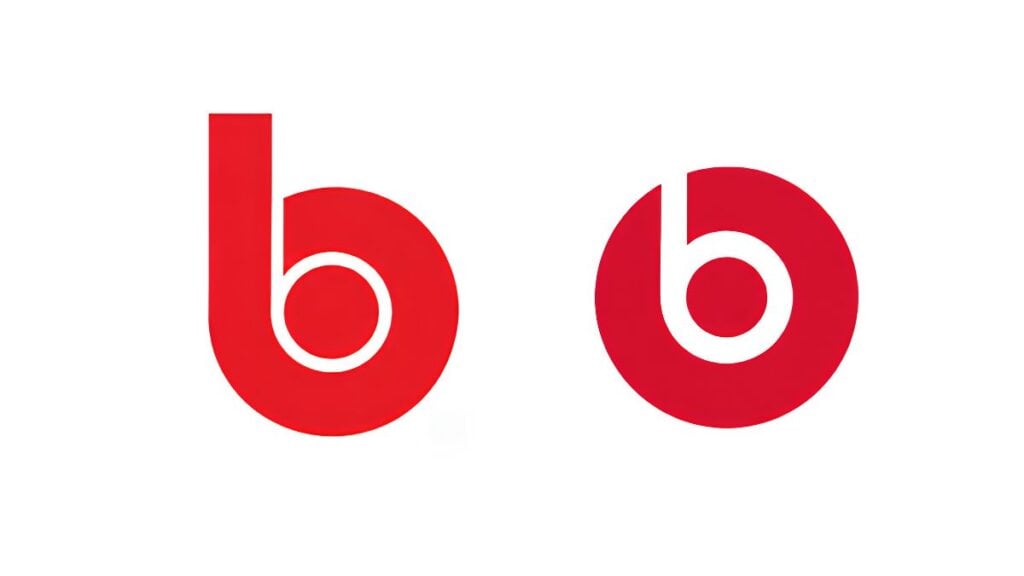
And while we’re here, Beasley Media may want to casually send Dr. Dre and Apple a friendly inspirational invoice. Just saying — if the Beats by Dre logo and the Beasley mark ever ended up seated next to each other at NAB, people might assume they arrived together. Maybe that’s a Q3 NTR opportunity.
The Oddly Familiar Font
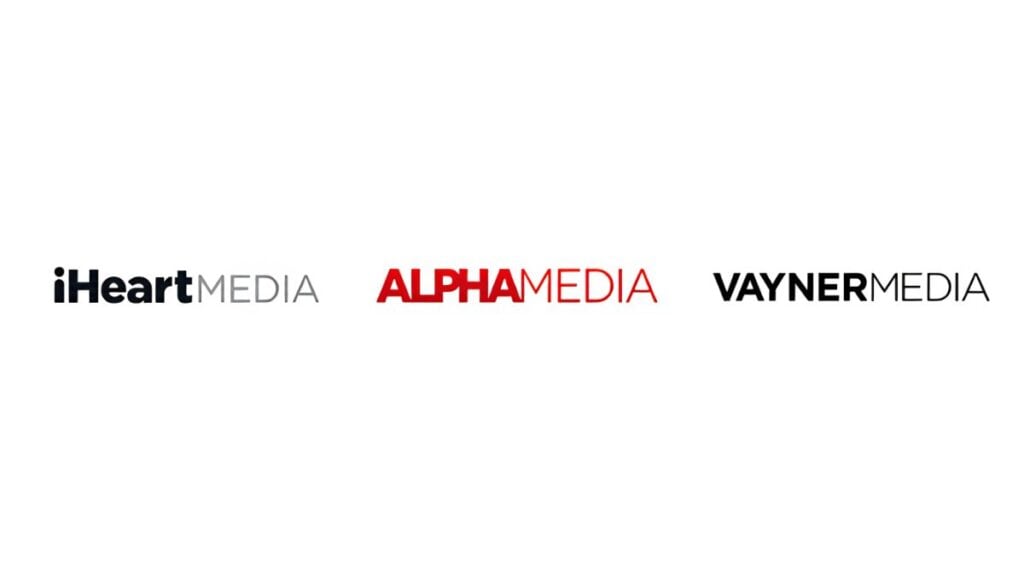
It goes beyond logos. The industry repeats itself with fonts, too.
iHeartMedia. Alpha Media. VaynerMedia.
Same familiar thin font, thick font, text lockup, maybe a splash of color if someone was feeling “artsy.”
All very professional. Like a LinkedIn headshot taken in front of a fake plant.
But professional is not the same as memorable.
I also told this to my exes, and based on their reactions, I clearly made a lasting impression.
Sameness Is Lameness
If the media business cannot clearly express its own brand differentiation, why should a local advertiser trust us to define theirs?
We tell clients we can make them stand out, then hand them an RFP from a company whose visual identity came straight from “Media Company Template 4.” That is not Canva slander. Canva is wonderful. Canva, call me.
We tell listeners this station is different, then surround it with sameness. Format sameness. Imaging sameness. Logo sameness.
And often a look that strikes out on strategy.
It’s Greater Than a Gradient
Instagram’s 2016 gradient logo drew ridicule when it replaced the beloved retro camera. But the company knew it was becoming more than just photos.
Airbnb’s Bélo logo got dragged, memed, and anatomically analyzed.
Been there.
But they stuck with it because it connected to a bigger brand idea: belonging.
Great logos often tie to a strategy the internet art critics don’t have the vision to see.
Think Phil-Osophically
As you look at your station, your company, and your visual representation, don’t start with, “Should we change the logo?”
Go deeper.
➔ Would anyone notice if we did?
➔ Would anyone care enough to complain?
➔ Do we care if they do?
➔ Could our logo tweak start a conversation in the community?
➔ Could it involve local artists, listeners, landmarks, sports teams, schools, causes, or inside jokes only our market would understand?
➔ Could it become a multiweek social campaign, or is it just an updated PDF in the Google Drive and a new email signature?
➔ Could we create five alternate versions tied to neighborhoods, festivals, what we are known for, heritage, or local lore?
➔ Would it stand out among 50 other logos on the back of a sponsored 5K T-shirt?
A Tweak Is Not a Rebrand
A logo tweak does not have to be a full rebrand. It can be a temporary test. A way to make people look and talk about your station again.
Spotify put a disco ball on its logo. Note: they didn’t change the logo itself.
But they got the internet to argue about it and handle the free promotion for them.
The No-Logo Logo Test
Before selling another branding campaign to a client or trying to convince your EVP on a refresh, ask yourself these questions.
If listeners saw only your colors, font, logo, and writing style, would they know it was you?
Or would they think it was every other station, every other cluster, every other company selling “media solutions”?
Spotify’s disco ball may be temporary, but it told their story.
Does your logo tell yours?
Join me next week when we explore the real branding mystery: why Spotify sounds like an app that plays nothing but commercials.
Barrett Media produces daily content on the music, news, and sports media industries. Sign up for our newsletters to stay updated and get the latest information right in your inbox.
The practice became synonymous with manipulation. Labels pushed records through favors, relationships, and sometimes outright cash. The industry eventually cleaned up much of its public image. Still, the stain never completely disappeared.
Fast forward to 2026, and the conversation feels familiar again.
Today’s music business runs on streams, playlist placement, engagement metrics, TikTok momentum, YouTube views, and algorithmic discovery. The gatekeepers have changed. The charts have changed. Technology has changed. But the pressure to manufacture momentum never disappeared.
The Gray Area
Artificial streaming, bots, and manipulated engagement have quietly become uncomfortable realities inside the music business. Everybody talks about it privately. Few want to discuss it publicly. Modern music marketing now exists in a gray area between promotion and perception manipulation. That should concern the entire industry.
A recent Rolling Stone investigation highlighted how artificial streaming, bot farms, and manipulated engagement continue creating serious concerns throughout the music business. The report explored allegations involving major artists, fraudulent streaming operations, AI-generated fraud, and a growing arms race between manipulation tactics and fraud detection systems. Whether every allegation proves true almost becomes secondary. The industry now openly acknowledges the problem exists.
Today’s environment operates at a completely different scale than radio ever did. Instead of influencing a few gatekeepers inside radio stations, modern manipulation can influence algorithms, playlists, social feeds, advertisers, investors, media outlets, and listeners simultaneously.
Fake Streams, Real Charts — The Music Business Has a Credibility Problem
Songs can suddenly explode online with millions of streams. Social engagement spikes overnight. Playlist numbers surge dramatically. Then something strange happens. Radio research does not react. Ticket sales stay flat. Shazam activity remains soft. Concert crowds do not sing along. The numbers say the song is massive. Real-world behavior suggests otherwise.
That disconnect is becoming impossible to ignore.
The modern music business revolves around momentum. Streaming platforms reward engagement velocity. Algorithms reward activity spikes. Songs that appear popular receive more recommendations, which creates even more exposure. Perception itself has become currency. That reality created an opening for an entirely new ecosystem of questionable promotional tactics.
Some companies sell guaranteed streams. Others promise playlist placement through large account networks. Certain campaigns rely on click farms, automated listening, fake saves, and artificial followers. The language around those tactics often sounds harmless.
But everybody understands what some of it really means. Artificial demand generation.
The Solution?
That concern has grown large enough that entire businesses now focus on identifying suspicious activity. A platform called artist.tools was built specifically to help artists, labels, and marketers protect themselves. It monitors over 10 million playlists and one million artists, surfacing bot detection alerts before distributors or streaming platforms act. It can identify harmful playlist placements before they trigger algorithm penalties, royalty holds, or takedowns. The industry is no longer simply chasing streams. It is now trying to verify whether those streams are legitimate.
The scary part is that manipulated engagement can eventually create legitimate engagement. If a song gains enough artificial traction early, algorithms may push it toward real listeners. Eventually, actual audiences may embrace it organically. That creates a difficult ethical question. If fake momentum eventually becomes real momentum, where exactly is the line?
Labels want growth. Managers want leverage. Artists want exposure. Investors want upward charts. Everybody benefits from momentum. That makes artificial engagement tempting inside a hyper-competitive business where attention spans continue shrinking.
Radio’s Role
Ironically, radio programmers now face many of the same questions once aimed directly at them. The industry spent years moving away from human gatekeepers toward data-driven systems. Now executives are discovering that data can be manipulated too.
Not every breakout hit is fake. TikTok genuinely launches records. Independent artists can build large audiences without traditional radio support. Viral moments happen naturally every day. But artificial engagement muddies the waters for everybody — especially developing artists trying to grow organically.
Once trust in the numbers disappears, the entire ecosystem wobbles. Fans question charts. Programmers question streaming spikes. Advertisers question audience authenticity. Without trust, the metrics become meaningless.
The old system manipulated gatekeepers. The new system manipulates the appearance of audience demand. In today’s music business, that distinction matters more than ever.
Barrett Media produces daily content on the music, news, and sports media industries. Sign up for our newsletters to stay updated and get the latest information right in your inbox.
Peter Rosenberg doesn’t sound like a man in crisis. He sounds like a man with a plan — several of them, running simultaneously, connected by group texts and sheer force of will.
When his tenure at HOT 97 ended in December 2025 after nearly two decades, Rosenberg didn’t disappear. He doubled down. He and his co-hosts Ebro Darden and Laura Stylez quickly launched The Ebro, Laura, & Rosenberg Show daily on YouTube, rebuilt from scratch and on their own terms. Four months in, the channel sits at more than 70,000 subscribers, with consistent live audience viewers every morning.
“We have a long-time connection with a lot of people,” Rosenberg says, “and we decided to continue to give them a daily show.” The choice to maintain a daily format wasn’t automatic. The team weighed their options.
But the logic won out quickly: they had always done a daily radio show, so why not do a daily radio show online? Producer Jason Griffin and video director Rahsaan Bascombe — both let go by Hot 97 at the same time — came along for the ride. The whole crew stayed together.
Building Something Real
What’s striking about the early numbers isn’t just the subscriber count. Rosenberg is more focused on something subtler: overall channel engagement trending upward across a publishing slate of roughly 25 to 30 videos a week. That’s a real media operation. “Seeing those overall numbers for the channel go up is satisfying,” he says. The merch is already live. The branding is sharp. It doesn’t look like a pivot. It looks like an established brand.
For someone who spent nearly 20 years measured by Nielsen ratings, defining success differently takes adjustment. Right now, Rosenberg is candid that the team is still figuring it out. “Ultimately it will be defined by paying people’s bills,” he says, with a laugh that’s equal parts honesty and pressure.
But there’s something else at play too — a sense that the new platform is actually reaching people in a way HOT 97’s digital presence never quite did. “It’s funny to now be more in people’s conversations, doing it on our own,” he admits. “That part’s crazy to me.”
The State of Hip Hop Radio
His read on the broader state of Hip Hop and Urban radio is sharp and a little grim. He sees genuine bright spots — more voices in the culture, more platforms that care about pushing it forward.
But Rosenberg, by his own admission a lifelong Hip Hop purist, isn’t impressed by most of what’s driving traffic. “Much of the stuff that’s done is cool, but a lot of it is done for the purpose of just — I need eyeballs.” He’s not naïve about the irony. “We have great conversations every day about culture, politics, music,” he says, “and having one hot take about Michael Jackson is the thing that gets everybody talking.”
He finds it, in his words, “profoundly irritating.” And he doesn’t see it improving.
There’s a distinction Rosenberg keeps returning to, and it matters to him enough that he makes it unprompted. He doesn’t think of himself as a content creator. “I’m a broadcaster and a host,” he says. “I do shows, and I care about them, and want them to be good.”
Rosenberg pictures an audience sitting down and listening to a show, with clips emerging from that show afterward — not the other way around. In an era of content farming, that’s an almost contrarian philosophy. He knows it.
Juggling It All
The workload is staggering. Beyond The Ebro, Laura, & Rosenberg Show, he has also recently brought his longtime late-night Hip Hop passion project to SiriusXM with Real Late on Shade 45. Rosenberg also co-hosts the afternoon sports show Don, Hahn, and Rosenberg on ESPN New York, covers WWE pay-per-view pre-shows, and appears on Pro Wrestling Nation on Fridays.
The secret to managing it all, he says, is surprisingly unglamorous: text message threads. One for the sports show, one for wrestling, one for the morning crew. Conversations running constantly, keeping him tethered to each world.
He’s also honest about what that breadth costs. Talking about Hip Hop specifically, he says, “I’ll never know as much as I did when I first showed up at HOT 97. I was strapped with information. There was no doubt about it.” Back then, being Joe Hip Hop was the whole job. Now he’s covering Hip Hop, sports, politics, and professional wrestling in the same week. The knowledge has had to give some ground.
What he’s gained instead is craft. “I think I’m a much better performer,” he says. “The hope is that you’ve sharpened that skill set enough, and that allows you to be the guy who does everything.”
A New Kind of Accountability
Fatherhood has shifted things too, in ways that combine with the professional transition in unexpected ways. His daughter has made him more conscious of how he carries himself, and the kind of work he wants to be remembered for. But it’s the combination of the baby and losing HOT that has recalibrated his approach to the most charged topics on air.
He still cares deeply about politics. He still talks about it every morning. He’s just asking himself harder questions about what the point is. “Am I changing hearts and minds, or am I just yelling really loud to get clips from the people who already agree with me?”
His wife pushed him toward an answer: you can say everything you want to say, but find the way to say it that doesn’t risk everything you’ve built. Expressing dismay, frustration, even fear — without the part that makes people wonder if you’re a problem.
“She got to eat,” he says, about his daughter, laughing again. There’s a lot packed into that line — the weight of it and the lightness of it at once.
Still Holding Both Worlds
Peter Rosenberg has always been someone who holds two worlds at the same time. Hip Hop and pro wrestling. New York and Maryland. Purist and mainstream. Radio and whatever comes next. The balance keeps shifting, but the man holding it, and most certainly his work ethic, hasn’t changed much at all.
Barrett Media produces daily content on the music, news, and sports media industries. Sign up for our newsletters to stay updated and get the latest information right in your inbox.
Three years. That’s how long the AM Radio for Every Vehicle Act has been sitting in congressional purgatory, and frankly, the industry — and the American public — should be furious about it.
Sens. Ed Markey (D-MA) and Ted Cruz (R-TX) introduced the bill three years ago with the kind of bipartisan fanfare that doesn’t come along very often in Washington. The legislation had a clear purpose: require automakers to keep AM radio as standard equipment in every new vehicle sold in the United States. Simple. Popular. Necessary. And yet, here we are, still waiting.
So whose fault is it? That’s the question worth asking. Because if this bill is as popular as the numbers suggest, someone has to answer for the fact that it’s gone essentially nowhere.
The NAB Has Done Its Job
Let’s start with the National Association of Broadcasters, because that’s where fingers often point first. In this case, though, the finger doesn’t belong there. NAB President and CEO Curtis LeGeyt has been vocal, consistent, and relentless in his support for the bill. He’s lobbied Capitol Hill. He’s touted the bipartisan support the legislation has attracted. And he’s celebrated every incremental win along the way, including the House Energy and Commerce Committee’s 50-1 vote to advance the bill last fall.
The NAB has even released public service announcements in both English and Spanish, urging listeners to contact their members of Congress directly.
The numbers the NAB has helped build are remarkable. The bill has cleared 375 co-sponsors across both chambers. National polling shows 83% of Americans support keeping AM radio in new vehicles as a public safety measure. Of more than 6,000 bills introduced this Congress, only two have more co-sponsors. By every measurable standard, LeGeyt and the NAB have done their jobs. The blame doesn’t live there.
What about the radio industry itself? Broadcasters could certainly be more assertive in pressuring lawmakers directly. Station owners and operators have platforms, audiences, and community relationships that carry real political weight. That said, industry-wide political lobbying is precisely what the NAB exists to do. Expecting individual broadcasters to carry the legislative load that their trade association is built to handle isn’t a reasonable standard.
Congress Needs to Act
That brings us to where the blame actually belongs: Congress. And this isn’t a partisan critique — it’s a systemic one.
It’s genuinely disheartening to watch a piece of legislation with hundreds of supporters on both sides of the aisle collect dust for three years without even making it to a floor vote in either chamber. Speaker Mike Johnson is a co-sponsor of this bill. Majority Leader Steve Scalise has pledged a floor vote. Senate Commerce Committee Chairman Ted Cruz co-authored the legislation. These aren’t fringe supporters — they’re the people with the power to schedule a vote tomorrow if they choose to. So why haven’t they?
The government shutdown last fall stalled momentum in the House. Three senators have used procedural objections to gum up the Senate version. Automakers and the Consumer Technology Association have spent millions lobbying against the bill in 2026 alone. Every time the bill builds a head of steam, something knocks it sideways.
That’s not a coincidence. That’s Washington.
Here’s the truth, though: this isn’t just a radio industry problem. It’s a symptom of a Congress that talks a big game and then struggles to execute even on the easiest wins. A bill with 83% public support, filibuster-proof backing in the Senate, and a 50-1 committee vote shouldn’t require three years and counting to reach the floor. In any other professional environment, that kind of performance would be unacceptable.
The radio industry should keep pushing. Listeners should keep calling their representatives. And Congress needs to stop stalling and vote on the AM Radio for Every Vehicle Act — because at this point, the delay itself should’ve become the story.
Barrett Media produces daily content on the music, news, and sports media industries. Sign up for our newsletters to stay updated and get the latest information right in your inbox.