

Home Blog Page 19

Blake Griffin Is Pointing the Finger at the Wrong People in Sports Journalism

0

You have to love when people attempt to replicate success with a different spin on an established concept. The Daily Show has built a successful model around presenting news through satire, inspiring countless imitators. Now, Blake Griffin is trying his hand at the same concept, adding a sports twist.

With his new program, The Stepback with Blake Griffin, the former NBA top overall pick takes aim at sports headlines and topics through satire and commentary. The debut episode, published Tuesday evening, focused on the state of sports journalism in 2026. The content was well-written, delivered punchlines and identified its targets. Yet Griffin’s argument missed a fundamental distinction: Much of what he criticized was exactly what those personalities, and now himself, deliver. Entertainment, not journalism.

Defining journalism has become increasingly difficult in today’s media landscape. I’ve always viewed it as gathering facts, verifying information and presenting accurate stories independently of personal opinion. Audiences once had a clearer understanding of the difference between reporting and commentary. Those lines have blurred with the growth of columnists, radio, television, podcasting and digital media.

Today, facts and opinions are too often treated as interchangeable. That doesn’t make them the same thing, nor does it make every personality discussing the news a journalist.

The Usual Suspects

Griffin targeted familiar names, including Stephen A. Smith, Colin Cowherd and Skip Bayless. He criticized the embrace-debate model that helped propel First Take into the sports media stratosphere before networks across television copied the formula.

But embrace debate wasn’t a new invention. Sports radio borrowed from the great columnists in every city, giving audiences not only the news of the day but also perspectives on what it meant. Reporting delivers the information. Commentary and reaction provide the entertainment.

Smith has a journalism background and continues to work sources for information. However, his presentation on First Take and his talk shows centers on opinion and debate. That’s entertainment, not journalism. Their contributions can be valuable without being classified as traditional reporting.

No doubt, sports journalism doesn’t look the way it once did. It hasn’t for some time. However, Griffin attacking entertainers for failing to meet the standards of traditional journalism misses the larger issue.

Griffin is criticizing personalities for doing what their employers hired them to do.

Business Evolves

Media needs a clearer distinction between journalism and entertainment. Dan Le Batard has argued that sports journalism is long dead, while his Meadowlark Media colleague Pablo Torre has established his own approach to investigative sports journalism. Regardless of where they stand, the industry needs to better explain the difference between informing an audience and engaging one.

Journalism presents verified information, facts and quotes, allowing audiences to draw their own conclusions. Entertainment uses information to frame opinions, reactions and personalities. Both have a place in sports media, but they serve different purposes.

“At some point, you have to ask yourself what exactly sports journalism on TV has been replaced with,” Griffin said. “People with very little information and no expertise. Picking positions they don’t actually believe in, and giving the hardest takes they can with zero accountability.”

He’s right that traditional sports journalism programming has changed. The Sports Reporters is no longer on television. Outside the Lines is now a podcast. SportsCenter once devoted its time to highlights, and lots of them.

But audiences and their expectations changed, forcing the industry to adapt. Accountability increasingly comes through viewership and engagement. Media companies either evolve with consumer habits or risk losing their audience.

“Maybe it’s supposed to be entertainment. Maybe it’s reality TV, or maybe it’s pro wrestling kayfabe. But it’s not reporting. It’s a gimmick,” Griffin said.

Again, agreed. It’s not reporting, and therefore it isn’t journalism. But the gimmick has found an audience and generated influence and advertising revenue, which is precisely what Griffin hopes to accomplish with his own program.

“The response of all these people might be, we’re not saying we’re journalists. But they’re taking the desks, articles, and the airtime of journalists. They are journalism’s replacement,” Griffin said. “That matters because we need good sports journalism.”

Swing And A Miss

This is where Griffin’s argument misses the mark entirely. Smith, Cowherd and Bayless didn’t take seats away from quality journalists. Networks and publishers made business decisions about the content they wanted to produce and the personalities they wanted to feature.

Cowherd isn’t on NPR. He’s on FOX Sports Radio, a platform built around engaging personalities. Smith isn’t presenting traditional reporting on ESPNews. He’s on ESPN, where information, commentary, debate and entertainment coexist. Bayless now operates as a podcaster, sharing opinions on the day’s headlines.

Griffin’s frustration should be directed at the companies that prioritize those formats, not the people succeeding within them. Media is a business, and when the economics change, the product changes with them. That’s why network television features fewer traditional sitcoms and more reality and game shows. The same economic pressures have transformed sports radio, while podcasting has drawn audiences toward niche programming, fewer commercial interruptions and on-demand content for a growing on-demand world.

Griffin is right to demand better sports journalism, more accountability and a clearer distinction between facts and opinions. But if he believes Smith, Cowherd and Bayless are responsible for its decline, he’s pointing the finger in the wrong direction.

Those personalities didn’t dismantle the business. They adapted to it.

The responsibility lies with the networks, publishers and media companies that decided personality-driven debate was a more profitable product than traditional reporting. They’re the ones who determine what gets airtime, what gets funded and which voices audiences see and hear.

If Griffin truly wants to champion sports journalism, his fight shouldn’t be with the people entertaining audiences. It should be with the companies that decided entertainment was the better business model in the first place. The problem isn’t that sports media has too many personalities. It’s that the industry increasingly prioritizes engagement over information, and no monologue aimed at the talent will fix that.

Barrett Media produces daily content on the music, news, and sports media industries. Sign up for our newsletters to stay updated and get the latest information right in your inbox.

A Little Jealousy and a Whole Lot of Marconi Admiration

0

The other day, I was on a video call with a programmer I respect. I was sitting in my office. He was on my screen, and behind him, lined up on a shelf, were his trophies. We were talking programming philosophy — how you build a station, how you coach talent, how you know when a song has run its course. Good conversation. But I’ll be honest. Part of my brain kept drifting to that shelf. I worked hard as a programmer. I still think about radio every single day, and now I get to write about it. But a Marconi never happened for me.

So when I see somebody win one, there’s a little bit of jealousy. And a whole lot of admiration.

More Than a Trophy

That’s exactly how I felt seeing this year’s Marconi winners announced Tuesday night in New York.

Winning matters. So does being nominated. In a business where so much of the attention goes to what’s struggling — the layoffs, the consolidation, the ratings that slipped — this is a night that points the spotlight at people doing exceptional work.

An award doesn’t settle every argument about what great radio sounds like. It was never supposed to. What it does is make me curious. What are these people doing that the rest of us could learn from?

The Story Behind Every Name

The winners list is a starting point. The people behind it are the story.

What shaped their programming philosophy? Who took a chance on them when nobody else would? Which decisions paid off — and which ones blew up in their faces? How did they earn the confidence of the people down the hall and the loyalty of the people listening in their cars?

I don’t want to guess at those answers. And I don’t want to assume every winner followed the same blueprint, because they almost certainly didn’t. Those are questions for interviews, not assumptions for a column.

I also want to include the nominees. Making the final list in your category means you’re doing something right. Those stories deserve attention, even if somebody else’s name got called when the envelope opened.

A Personal One

I’ll admit one result hit a little closer to home. Seeing 98 Rock — WIYY in Baltimore — named Rock Station of the Year made me proud.

I spent 12 years there. That building was a meaningful part of my career, and it taught me plenty about what it takes to build a station and then keep it great year after year. That second part is harder than people think.

This one belongs to the current team. They earned it. My history just explains why I was grinning when I saw the news.

Put It to Work

Here’s my advice to anybody who brought hardware home: use it.

Recognition is a powerful tool. Tell your listeners. They chose you, and they’ll enjoy knowing they picked a winner. Give your advertisers a reason to understand what it means — their message is running on one of the best stations in the country.

And recognize the people whose contributions will never put them onstage. The producer. The promotions coordinator. The engineer who kept you on the air through the storm.

Managers, this is your chance to tell employees specifically how their work contributed. Not a generic “great job, team.” Specifics. Let the celebration reach beyond the person holding the trophy.

Done right, an award becomes a source of pride throughout the building. And an invitation to keep building.

Your Turn

My job is to get to as many of these stories as I can and share what the rest of us can learn from them.

So help me out. If there’s a winner or nominee you think I should talk to — or a story behind the story — send it my way. My email is at the bottom of this column.

To every winner and every nominee: congratulations. This recognition deserves to be celebrated. It also deserves to be used thoughtfully.

I never took home a Marconi. That doesn’t keep me from appreciating what it means to the people who did. A little jealousy? Sure. But a whole lot of admiration.

Barrett Media produces daily content on the music, news, and sports media industries. Sign up for our newsletters to stay updated and get the latest information right in your inbox.

How News/Talk Radio Stations Can Use Breaking News Promos to Win

0

Depending on your radio station’s spot load, the number of local shows… There is a limit to how many promos your station can run. My belief is that promoting the station is essential and key to the station’s success.

How many promos should you be running? What content mix should be in those promos? How often should the promos be refreshed?

Businesses are paying big money to advertise on your station. Advertising on your station is key to success. There is an old-school term called “dirtying the cume,” which essentially means figuring out ways to tempt people to listen to all shows on your station.

If you look at Nielsen data, a substantial portion of your audience is not listening to your complete lineup. There are good reasons for this. A listener may not like one of the shows on the station. The listener may be roped into work, family or leisure obligations. There also may be a show on your station that has a bad reputation with a substantial part of your audience. Sometimes, there is a show that has run its course. But how do we address these issues?

Make News Your Competitive Advantage

What is your station’s competitive advantage? For news/talk stations, it is breaking news. How many news promos do you have running, and how often are they updated? I have limited time, so I use a service for news promos and update those promos daily or weekly, depending on the promo delivered. The service that I use provides a daily news promo that arrives around 10 o’clock every morning. I try to make sure that I am available to produce that promo when it arrives each day. Promos like this are key to demonstrating that my stations are up to the minute. I run that promo until the morning show the following day.

On Friday, I cut off that promo at midnight. I have five other news promos in the rotation that are all updated every 7 to 10 days. The sheer tonnage of promos is key in creating the impression that the station is bigger than it is.

Obviously, pulling promos that are out of date is essential. The daily news promo that I schedule my day around sometimes becomes obsolete.

I recently had a daily news promo become obsolete just a few hours after I produced it. I quickly changed the permissions to pull that promo from rotation ASAP.

Show Promos and Event Promos

My weekday lineup, 6a – 7p, has three promos running that are updated every three weeks. Sometimes there are just not enough hours in a day, and one promo may run an extra week or two. I always make sure to pull a promo from rotation ASAP if the content is out of date.

So, I have three separate promos running to promote each primetime show in the promo rotation. I daypart these promos. Obviously, they don’t run during the show they are promoting. I also daypart them out of the hour after the show, except on Wednesday. I know that seems odd. But here is why: I am in diary markets, and the diary keepers need to drop the diary in the mail on Thursday morning.

If one more mention can help, I don’t want to leave anything to chance. I have one promo in rotation for my 9p weekday show and one for my overnight show. Weekend show promos start running on Wednesday for Saturday shows and on Thursday for Sunday shows. Promoting a Saturday show on Sunday or Monday is a waste of precious promo time.

We all have station events to promote from time to time. Depending on their importance, I have those promos rotating two or three times in the promo list.

Station Personality Promos

I have one to three of these promos always running. I write and produce them. Here is a link to three promos that I have added to the mix this year.

I write these promos to add a surprise for listeners. As I have previously shared, every station has a personality. It is incumbent that the program director identify that feeling. I can assure you that my writing has been different for each station that I have managed. To be fair, my goofy personality comes out in these writings. These promos also must be written in a way that highlights the strengths of the station’s imaging voice.

I am working with Jim Cutler on my stations, and I know how to write for him. I have worked with other amazing people, and writing for them is different. It is not better or worse, but I find it important to mirror the personality that an imaging voice provides. When I write, I come up with a premise and imagine Jim reading the promo as I type it out.

I am not someone who continually rewrites a promo. I bang it out and perhaps make an edit. Which usually avoids repeating a word or phrase that is unnecessary. I then read it out loud as Jim would naturally read it while timing the copy. If it all times out properly, I send it off to get voiced. I sometimes will wait for the copy to be returned to pick out the music bed. I will also hunt for the right bed after I email the copy off. It depends.

How Many Promos Per Hour?

I also have a promo or two in the rotation highlighting the station app, website and so on.

How many promos per hour? This is a push-me, pull-you conundrum. I personally like two to three per hour.

Obviously, your station’s spot load and corporate initiatives may dictate promo schedules. Including promos that repeat in rotation, I have approximately 50 promos in that rotator. How long do I allow my station personality promos to run? Usually six to eight weeks, and then they are pulled. I sometimes will bring a personality promo back from the dead if I think it still works.

Creating memorable moments is our jam. That is what makes your radio station work. Being entertaining mandates providing surprises for your listeners. Being predictable in today’s fractured media environment is malpractice.

Barrett Media produces daily content on the music, news, and sports media industries. Sign up for our newsletters to stay updated and get the latest information right in your inbox.

Former Citadel and Entercom Radio Executive Matt Hanlon Dies

0

The radio industry has lost a passionate and talented executive. Matt Hanlon died on Tuesday, October 20th after suffering a heart attack. Longtime Michigan sports radio host Bill Simonson shared the news while providing an emotional tribute to his former friend and boss.

What We Know: According to Simonson, Hanlon played a key role in developing Michigan’s statewide sports radio landscape. After September 11, 2001, Hanlon relocated his family to West Michigan to oversee Citadel’s radio operations. During his tenure, he recognized the potential to transform Simonson’s local sports program into a statewide offering. That decision helped establish The Huge Show as a recognizable sports radio brand across Michigan.

Hanlon eventually oversaw Citadel’s Midwest region, managing 85 stations across 14 markets and approximately 1,500 employees. His leadership also helped generate seven-figure revenues through the network’s expansion. In a 2021 interview with Barrett Media, Hanlon discussed his approach to management and the risks and opportunities surrounding regional sports radio syndication. He explained that Michigan’s passionate sports audience and Simonson’s talent made the network an attractive investment.

Hanlon later held leadership positions in Charlotte, overseeing prominent radio brands including WFNZ and WBT. His last known role was in Des Moines, IA where he worked as the Director of Sales for Saga Communications.

What They Said: “He was a dude that came up with the idea for the statewide network. And he was a good friend. He was a great leader. We had a lot in common with five kids each. He went through a tough divorce, and tough times with his children. I’ve done the same thing with my kids. But his heart was always in the right place.” –Bill Simonson

What Remains Unclear: Additional details surrounding Hanlon’s death, including funeral arrangements and memorial services, have not yet been announced.

What It Means: Hanlon’s influence extended beyond individual stations and corporate leadership positions. His willingness to develop regional syndication demonstrated how local personalities could build successful statewide radio brands. Simonson previously discussed that business model in a Barrett Media column about advertising and expansion. Today, Michigan Sports Network continues distributing The Huge Show across the state. For Simonson, however, Hanlon’s greatest impact went beyond business accomplishments. He remembered a devoted father, loyal friend and passionate leader who supported people through difficult moments.

On a personal note, I had the privilege of working with Matt Hanlon for most of his tenure in Charlotte. Matt was an early believer in Barrett Media. His passion for sports, politics, and spoken word programming was on display at all times. He loved WFNZ and WBT and pushed all involved to raise the bar. While his strong opinions and willingness to change direction quickly could frustrate some, he cared deeply about his brands and their on-air execution. Simply put, he wanted to win. Matt’s love, passion, skill and belief in the radio industry will be sorely missed.

JB and Matt Hanlon during a market visit in Charlotte in 2021

Industry professionals can hear Simonson’s full tribute to Matt Hanlon below.

Barrett Media produces daily content on the music, news, and sports media industries. Sign up for our newsletters to stay updated and get the latest information right in your inbox.
Podcast Study 2026: 81% Say Hosts Drive Listening, Offering Radio a Roadmap

0

Radio broadcasters have an opportunity to strengthen audience relationships by adopting strategies driving podcast engagement. The latest findings from The Podcast Study 2026 show that personalities, content execution and direct listener connections can fuel growth.

What We Know: The research from Strategic Solutions Research and Point-to-Point Marketing surveyed 1,205 podcast consumers ages 18-54. Among respondents, 74% listen to local radio weekly, while 46% tune in daily. Additionally, 81% of respondents with a favorite podcast say the host plays a major role in their listening. The findings reinforce Barrett Media’s earlier reporting on podcast superfans, which highlighted substantial audience overlap.

What the Numbers Show:

  • 52% of daily radio listeners would tune in for opportunities to interact with hosts.
  • 47% are strongly influenced by host-read advertising.
  • 54% of weekly radio listeners believe podcasts carry too many advertisements.
  • 65% of weekly radio listeners typically see multiple clips before trying a podcast.
  • 55% of daily radio listeners would definitely join a free VIP club.

Meanwhile, 55% of podcast consumers decide whether to continue listening within five minutes.

What Remains Unclear: The research identifies substantial interest in premium experiences. However, actual conversion rates and potential revenue remain uncertain. It also does not establish whether adopting these strategies will increase radio ratings. Nevertheless, the findings suggest broadcasters already possess a valuable advantage: established personalities with loyal audiences. Turning those relationships into deeper engagement could help radio compete more effectively across audio platforms.

What It Means: For radio programmers, personality development remains essential to building loyalty. Furthermore, the research suggests stations should prioritize compelling openings, consistent social clips and direct host engagement. The study recommends premium host endorsements rather than increasing commercial clutter. Broadcasters could also strengthen relationships through exclusive content, newsletters, listener communities and live events. Those opportunities align with Strategic Solutions Research’s broader focus on audience research and programming strategy.

Barrett Media produces daily content on the music, news, and sports media industries. Sign up for our newsletters to stay updated and get the latest information right in your inbox.

Longtime ESPN Radio Producer Stosh Cienki Dies at 52

0

The Kansas City Chiefs and Royals cheering section is a little louder today in heaven. Longtime ESPN Radio producer Stosh Cienki has passed away at the age of 52. Cienki recently underwent surgery on his ankle. He provided an update on the surgery just one day ago on Facebook sharing that x-rays showed no signs of infection. Unfortunately, one day later, according to multiple sources, he experienced a pulmonary embolism which resulted in his sudden passing.

What We Know: Cienki spent more than two decades behind the scenes at ESPN Radio in Bristol. Over that time, he produced shows, booked guests, and mentored younger staffers. In 2024, he served as program director of the network’s weekend shows.

Away from the studio, Cienki was a Missouri native and lifelong Kansas City Chiefs fan. He lived in Cheshire, Connecticut, with his wife, Kelly. Together, they raised five children.

Throughout Wednesday, tributes poured in from across the ESPN Radio family.

What They Said: Bob Picozzi worked alongside Cienki for 18 years. Additionally, the two lived in the same town and attended the same church. “I am seldom at a loss for words. But hearing this morning that we’ve lost Stosh is absolutely devastating. He was such a kind and gentle soul—tall in stature but absolutely monumental as a human being. The ESPN family has been rocked to its core by this news. I guess God needed another producer. He now has THE best.” –Bob Picozzi

Sarah Spain, meanwhile, recalled how hard it was to lose Cienki as her producer in 2022. She also expressed her sadness upon learning of his passing. “After several producers we had finally found our guy in Stosh — supportive, kind, hard working, full of great ideas and as steady and dependable as they come. I won’t share the texts we’ve exchanged in the years since, but I’ll say that he never stopped being that steady, supportive and kind voice well after we stopped working together. Stosh was a gem, and I’m so heartbroken for his family and everyone who loved him. RIP friend.” –Sarah Spain

Longtime ESPN Radio host Freddie Coleman called Cienki his birthday twin. “I am STUNNED beyond words that I won’t ever see my birthday twin Stosh Cienki again after his passing last night. This will be the toughest day at ESPN Radio in my 22+ years because I am completely heartbroken. Stosh and I vibed the first second we met and the vibe/bond became stronger and stronger! I will miss his hugs, his smile, his kindness, his laugh…EVERYTHING! I need to stop now because I am about to break down again. Love You Stosh. You will ALWAYS be with me! Please keep Kelly Ann and their beautiful children in your prayers!” –Freddie Coleman

Albert Gattullo covered the Giants and Jets for ESPN Radio beginning in 2004. He first met Cienki over the phone when he joined the network. “I’ve worked with a lot of people in my 35 plus years in radio. Stosh is 1 of 1. So many people have sung his praises. I have never heard anyone say a bad word about him. I am not surprised because he is and was a man of integrity, compassion and love.” –Albert Gattullo

Similarly, John Kincade remembered their rivalry as an Eagles fan facing a Chiefs fan. “We never got to finish and decide a winner on our friendly but heated Eagles and Chiefs debates of the past few years! I’m sure we both declare ourselves the winner! Twenty plus years of crossing paths in person and then on those guest booking phone calls and always a good laugh and leaving with a smile. Love you Stosh! You will be missed.” –John Kincade

Christine Lisi, another ESPN colleague, echoed those feelings. “I am lucky to not only have worked with a gem of a human being all these years, but to have him as a friend. Sending love to his wife Kelly, and his entire family and friends.” –Christine Lisi

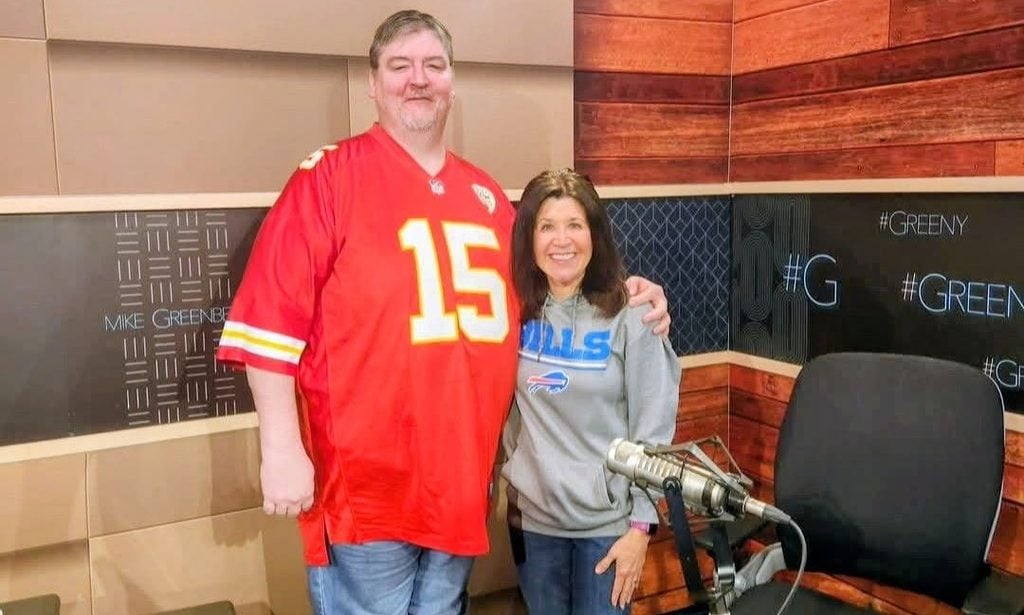
Stosh Cienki and Christine Lisi promoting their Chiefs and Bills fandom

Qadry Ismail, who previously worked with Cienki remembered his friend and former producer. “We just spoke a few times in the last month! I’m stunned. You were such a good man and friend! I’m deeply saddened for your family’s loss! Love you and will miss our talks.” –Qadry Ismail

Former ESPN Radio host John Seibel remembered his former producer as well. “Few had the fiber of Stosh Cienki. We immediately bonded over St. Joseph. Yeah, that small city north of KC. Stosh produced a ton of my shows at ESPN. He laughed when I called him “Slosh”. He laughed when I kidded him for his reproductive skills of populating the equivalent of a small third world country. Stosh was a pro’s pro and did great work, but he was just a good man. I think of my ESPN Radio brothers and sisters, specifically Freddie Coleman. Today is a hard day. ESPN lost a lot of “good”. RIP, Slosh. Love ya’, brother.” –John Seibel

What Remains Unclear: ESPN has not shared a public statement on Cienki’s death. Funeral and memorial plans also have not been announced. Likewise, it’s unclear whether the family will set up a fund or charity in his name.

What It Means: Producers rarely get public credit for what listeners hear on air. The reaction to Cienki’s death shows how much he mattered inside ESPN Radio. Hosts, reporters, and producers all described the same person. Above all, they remembered someone steady, generous, and quick to help. Albert Gattullo summed it up best in his post on Facebook, adding: “Stosh has been and will continue to be the glue that holds ESPN Radio together.”

On a personal note, I worked with Stosh at ESPN Radio from 2004-2006. He was a great sounding board, team first producer, positive person and good man. His contributions to the network and his influence on those he worked with did not go unnoticed. Barrett Media offers its thoughts and prayers to Stosh’s family and friends during this difficult time.

Barrett Media produces daily content on the music, news, and sports media industries. Sign up for our newsletters to stay updated and get the latest information right in your inbox.

Longtime ESPN Radio Voice Dan “The Duke” Davis Dies At 84

0

Dan “The Duke” Davis, one of ESPN Radio’s original voices, has died at 84. His signature SportsCenter updates anchored the network for nearly two decades.

What We Know: Davis joined ESPN Radio in January 1992, when the network launched. A year later, he became co-host of Brent Musburger’s SportsBeat. Then, starting in 1999, he served as the network’s best-known SportsCenter update reporter. Long before Bristol, though, his 1984 call of Doug Flutie’s “Hail Mary” became sports lore.

What They Said: Mike Tirico (via X): “Working with The Duke was one of the great honors and pleasures of my radio days. As great an update man as there ever was .. and one heck of a radio call on the Flutie Hail Mary pass for BC. Prayers to all those who were lucky enough to have Dan in their lives. The best!”

Peter Gianesini (via X): “My first shift on my first day as full-time staff at ESPN was to produce for Dan on the SportsBeat. He was incredibly patient with me that day. And for many many days that followed. Such a pro. And boy did we laugh. Miss you Duke.”

Jason Romano (via X): “I worked with Dan “The Duke” Davis my first 3 years at ESPN. He was a legend and his voice was one of those “Voice of God” types. My condolences to his family.”

What Remains Unclear: So far, ESPN has not shared a cause of death. Additionally, the family has not announced memorial plans. It also remains unclear how ESPN Radio will honor him on air.

What It Means: Davis’ passing closes a chapter on ESPN Radio’s founding era. After all, his career began in 1962 at WEMJ in Laconia, N.H., and spanned five decades. Furthermore, colleagues credited him with setting the standard for update anchors. Ultimately, his voice remains tied to one of college football’s greatest moments.

Barrett Media produces daily content on the music, news, and sports media industries. Sign up for our newsletters to stay updated and get the latest information right in your inbox.
104.1 KMOX Adding The Last Show with David Cooper to Daily Lineup

0

104.1 KMOX is adding The Last Show with David Cooper to its evening lineup. The program will air from 9-11 PM on the St. Louis news/talk station.

What We Know: The Audacy-owned station will bring Cooper’s program to St. Louis listeners during the late-evening hours. The show currently airs in Canada on stations in Calgary, Toronto, and Vancouver, among other markets. The addition gives 104.1 KMOX a new voice for its evening programming, with Cooper bringing a background in software development to his radio work.

What They Said: “The show is quirky, curious, unexpected and entertaining — a fresh voice in a crowded radio landscape that gives people something they won’t find anywhere else on the dial. We’re excited to bring David’s unique perspective to KMOX and think St. Louis is going to love it.” -104.1 KMOX Brand Manager Steve Moore

“I spent 15 years writing software, and the core question never leaves you: ‘Why does anyone keep using this past the first ten seconds?’ That’s the driving force of the show’. Thank you to Steve Moore and the entire Audacy team in St. Louis for the privilege of joining one of America’s most successful stations.” -David Cooper

What Remains Unclear: The station hasn’t announced whether the addition will prompt other changes to its lineup or whether Cooper’s program will eventually expand to additional markets in the United States.

What It Means: The move gives 104.1 KMOX another option for listeners seeking talk programming outside traditional news coverage. Meanwhile, Cooper’s existing Canadian footprint provides an established platform as he enters the St. Louis market. The show’s blend of curiosity, humor, and unconventional conversation could also help the station distinguish its late-night offering.

Barrett Media produces daily content on the music, news, and sports media industries. Sign up for our newsletters to stay updated and get the latest information right in your inbox.

Greg Wyshynski Signs Multi-Year Extension With ESPN

0

Greg Wyshynski is staying with ESPN. The senior NHL writer says he’s signed a multi-year contract extension with the network.

What We Know: Wyshynski serves as a reporter, senior NHL writer and analyst across ESPN platforms. During the season, he writes news stories and a weekly column. Additionally, he appears on several ESPN studio programs including SportsCenter and co-hosts The Drop, ESPN’s digital hockey show. Before joining ESPN in October 2017, Wyshynski built a loyal following as creator of Yahoo! Sports’ Puck Daddy blog. There, The Hockey News made him the first blogger on its list of hockey’s 100 most powerful and influential people.

What They Said: Greg Wyshynski (via X): “Happy to share I’ve signed a new multi-year contract with ESPN. Proud to contribute to our NHL coverage on multiple platforms. Love working with my hockey (and wrestling!) teammates who have such insight, creativity and passion for what we do.”

What Remains Unclear: ESPN has not disclosed the length or financial terms of the deal. It also remains unclear how his role in the network’s NHL coverage might grow this season.

What It Means: ESPN is sticking with one of the sport’s most respected names that covers it. Wyshynski has built a devoted following over many years for several brands, but has truly elevated his brand within ESPN. Locking him in for several more years will only re-enforce the level of coverage that the network provides.

Barrett Media produces daily content on the music, news, and sports media industries. Sign up for our newsletters to stay updated and get the latest information right in your inbox.

NBC Sports Delivers Highest Viewership Ever For First Game Of WNBA Finals

0

Game 1 of the WNBA Finals drew an average of 2.1 million viewers on NBC and Peacock. That makes it the most-watched Finals opener in league history.

What We Know: Golden State beat Atlanta 68-64 on Saturday, October 17, behind 26 points from Gabby Williams. Meanwhile, the audience peaked at 3.0 million viewers during the final stretch, from 5:45 to 5:55 p.m. ET. Overall, the opener jumped 11% compared to last year’s Game 1. For historical context, the 1997 winner-take-all title game averaged 2.85 million viewers on NBC.

What The Data Shows: Top Markets In Viewership (per NBC Sports PR):

MarketRating
San Francisco4.49
New Orleans3.04
Richmond2.12
Hartford-New Haven2.07
San Antonio2.06
Atlanta2.02

What Remains Unclear: To be fair, the 1997 game remains an imperfect benchmark, since the league used a single championship game that year. As a result, its 2.85 million average doesn’t compare directly to a series opener. It’s also unclear whether later games will hold this pace.

What It Means: Clearly, NBC Sports’ return to the WNBA is paying off. The network averaged 1.8 million viewers across seven regular-season games, up 35% from comparable coverage last season. Furthermore, its Semifinals Game 1 between the Valkyries and Aces drew 1.12 million viewers, the third-most ever for that round. Ultimately, NBC’s first Finals game since 2002 delivered a record start.

Barrett Media produces daily content on the music, news, and sports media industries. Sign up for our newsletters to stay updated and get the latest information right in your inbox.