Yahoo Sports has elevated Kendall Baker to Head of Newsletters, formalizing an expanded role for one of the most recognizable voices in sports email publishing and signaling a significant investment in growing its direct-to-consumer audience strategy.
Baker, who launched Yahoo Sports AM newsletter in 2023 after building previous newsletter brands at Axios and independently, signed a multi-year contract and will now oversee the growth and evolution of the company’s entire newsletter portfolio while continuing to serve as the primary author of its flagship morning product.
The move represents both a promotion and a strategic shift. Yahoo Sports aims to capitalize on sustained demand for curated email products. That demand persists as algorithm-driven distribution fragments attention across social platforms and mobile apps.
In his announcement, Baker framed the transition as the natural next step in a nine-year journey that began with a simple concept: delivering a SportsCenter-style experience directly to readers’ inboxes each morning in a concise, conversational format that blends news, analysis and personality.
What started with roughly 100 subscribers has since grown to nearly one million. Now Yahoo Sports AM, underscoring the durability of a format that prioritizes consistency, voice and habit-building over viral reach.
Under Baker’s leadership, Yahoo Sports plans to introduce new flagship newsletters, weekend editions, and pop-up products tied to major sporting events. The company also plans to expand internal resources and hire additional staff. Those hires will support editorial, production, and partnership initiatives.
In addition to launching original franchises featuring existing Yahoo Sports talent, the company plans to form strategic partnerships with outside publishers, journalists, and creators. Executives say the goal is to build a first-of-its-kind, interconnected newsletter network. They want it to extend beyond a single brand voice.
Baker will continue writing Yahoo Sports AM, a finalist for Best Newsletter at the 2025 Digiday Media Awards. Longtime collaborator Jeff Tracy will remain part of the operation as the team scales its ambitions.
For Yahoo Sports, the promotion signals confidence in Baker’s record of audience growth. It also reflects belief in newsletters as a core pillar of its long-term content strategy. That strategy prioritizes sustainable engagement models built on loyalty rather than fleeting clicks.
We’re thrilled to share that @kendallbaker has been elevated to Head of Newsletters at Yahoo Sports!
In this new role, Kendall will lead the growth and evolution of the Yahoo Sports newsletter portfolio. This includes launching new franchises with current Yahoo Sports talent and… pic.twitter.com/iPOikGA36V
Barrett Media produces daily content on the music, news, and sports media industries. Sign up for our newsletters to stay updated and get the latest information right in your inbox.
With 100 days remaining before the FIFA World Cup 2026 kicks off on Thursday, June 11, FOX Sports is using the milestone to signal that its buildup to the world’s most-watched sporting event has officially entered high gear.
The network, which serves as the English-language home of the tournament in the United States, marked the occasion Tuesday with a coordinated, company-wide rollout spanning television, digital, social and community initiatives designed to build national anticipation ahead of the 39-day competition across North America.
Eric Shanks, CEO and executive producer of FOX Sports, said the 100-day marker represents more than a countdown number, describing it as a visible checkpoint in what he called the most ambitious production effort in the company’s history.
“I’m incredibly proud of how everyone at FOX has come together to ring in 100 days to this iconic tournament as we prepare to deliver the most ambitious production in sports broadcast history,” said Shanks. “The coordination, dedication and planning taking place behind the scenes, here at home in the United States and in Mexico and Canada, reflect our commitment to creating the best presentation ever around the historic competition and we look forward to being America’s home where fans unite to watch and celebrate FIFA World Cup 2026 over 39 days this summer.”
As part of the celebration, FOX launched a promotional roadblock that ran across its broadcast network, cable properties and digital platforms, creating saturation-style visibility throughout the day.
Programming on FOX Sports channels carried a special on-screen World Cup graphic, while talent from the network’s soccer coverage appeared across multiple FOX properties, including FS1’s The Herd with Colin Cowherd and First Things First, in addition to news and lifestyle programming, underscoring the company’s cross-platform synergy in the months leading up to the tournament.
FOX Soccer analysts Alexi Lalas, Stu Holden, Maurice Edu and Rob Stone made guest appearances to preview storylines and reinforce the network’s role as the central destination for coverage. U.S. Men’s National Team defender Chris Richards also joined FS1 programming, further blending current player insight with studio analysis as FOX works to widen its reach beyond traditional soccer audiences.
On the digital side, FOX Sports rolled out a pair of daily content series counting down to the opening match. A “100 Moments” campaign will revisit standout highlights in tournament history, while “100 Fun Facts” aims to spotlight lesser-known records and storylines to engage casual fans and longtime followers alike.
FOXSports.com is also publishing preview features examining teams and players expected to shape the 2026 field, reinforcing the network’s editorial commitment alongside its broadcast plans.
Beyond on-air and online efforts, FOX partnered with Boys & Girls Clubs of America to host a youth soccer festival in Southern California, bringing together more than 100 participants for clinics and games alongside FOX broadcasters and former national team players. The event aligns with broader social impact initiatives tied to the Soccer Forward Foundation and Common Goal, as FOX integrates philanthropic outreach into its World Cup strategy.
The 2026 tournament will mark FOX Sports’ sixth presentation of the FIFA World Cup, following coverage of the men’s events in 2018 and 2022 and the women’s tournaments in 2015, 2019 and 2023. As the countdown continues, the network appears intent on ensuring that the road to kickoff becomes as visible — and as expansive — as the tournament itself.
Barrett Media produces daily content on the music, news, and sports media industries. Sign up for our newsletters to stay updated and get the latest information right in your inbox.
Former Miami Marlins president and longtime MLB executive David Samson took direct aim at super agent Scott Boras during Tuesday’s episode of his podcast, arguing that Boras’ recent media appearances serve one audience — and it is not baseball fans.
Speaking on Nothing Personalwith David Samson, he criticized Boras for what he described as a calculated tour through high-profile sports platforms, including appearances on The Pat McAfee Showand baseball-focused digital outlets, suggesting that every interview operates as a recruiting pitch rather than an effort to inform the public about the sport’s economic landscape.
“He is going there purposefully. He is using the platform that is given to him to let it be known to players. He’s not speaking to you the fan. He doesn’t care about you. He’s not trying to educate you, and not interested in informing you about one thing regarding labor or regarding player salaries. He’s not interested in the fist bump from McAfee,” explained Samson. “He is interested in making sure that inside a locker room that his current players have the talking points to speak to other players in order to poach them.”
Samson framed Boras’ strategy as self-promotion disguised as broader commentary on the state of baseball. In his view, Boras’ media visibility functions less as public service and more as brand reinforcement, carefully crafted to strengthen his negotiating leverage and expand his client base.
Beyond questioning motive, Samson challenged Boras’ command of the financial subjects he frequently addresses. He argued that discussions about media rights revenue, salary caps, floors, and labor structure often lack grounding. He said they overlook how deals actually materialize behind closed doors. He suggested that Boras’ public declarations about systemic change rarely align with the realities executives confront during bargaining sessions.
“When Scott Boras starts to talk to you about media revenue, close your ears. He doesn’t know the first thing,” said Samson. “When Scott Boras wants to talk to you about salary caps and salary floors and labor. He doesn’t know the first thing about it, and what he’s saying makes no sense inside the room where deals happen.”
Samson also reduced Boras’ role in the sport to a single objective: extracting maximum value from aggressive ownership groups. He said those owners are willing to spend heavily in pursuit of championships. He described emotionally driven owners convincing themselves that one marquee acquisition means the difference between a parade and disappointment. He argued that Boras thrives in those moments by amplifying urgency and scarcity. Strip away that dynamic, Samson implied, and the agent’s broader influence diminishes considerably.
Perhaps most notably, Samson dismissed the notion that Boras’ public commentary drives meaningful labor reform between players and owners.
“The mistake that Scott Boras makes is that not only when he talks does he think that we are listening, but he thinks that it actually is the catalyst of change amongst players and owners,” said Samson. “What he doesn’t realize is that it’s the opposite. When he talks and his lips are moving and he is promoting a certain concept or system. It actually has an inverse correlation to the possibility of that happening.”
While Boras has long embraced the spotlight as part of his negotiating theater, Samson’s remarks reflect a persistent tension between front-office leadership and baseball’s most powerful agent, underscoring the complicated intersection of media, messaging and money that continues to shape Major League Baseball’s business landscape.
Barrett Media produces daily content on the music, news, and sports media industries. Sign up for our newsletters to stay updated and get the latest information right in your inbox.
The Daily Caller has announced new executive appointments for Amber Duke, John Chambers, and Carter DeWitt.
The outlet has announced that Amber Duke will serve as Editor-in-Chief. She previously served as a Senior Editor of The Daily Caller.
“She is smart, relentless, tough and focused on what matters — pushing America’s leaders to respond to the concerns and questions of everyday Americans too often ignored in Washington,” co-founder and publisher Neil Patel said. “With Amber leading the newsroom, our mission is sharper than ever.”
“We’re not in D.C. to serve the entrenched interests of the ruling class,” Duke said in a post on social media. “We’re here to tell the truth and be a voice for forgotten America. I’m grateful for the chance to recommit to — and help advance — that mission as EIC.
“And I’m lucky to do it alongside a fantastic team that consistently breaks news and produces incisive commentary,” continued Duke. “We’re expanding video production and we’ve also launched State of the Day on Substack. Our potential is enormous, our future is bright, and I’m incredibly proud to be part of this next chapter.”
I’m honored to announce I’ve stepped into the role of Editor-in-Chief at @DailyCaller.
After five years away, I returned to the Caller last January because I couldn’t ignore the mission any longer.
Our readers are regular Americans who’ve been let down by elite institutions and…
John Chambers has been elevated to Chief Content Officer. He previously served as the Director of Marketing for the outlet.
“John will lead a unified strategy across reporting, video, live events, newsletters, Substack, and new initiatives,” Patel said. “John has a sharp instinct for trends, platform growth, and elevating the people around him.”
Finally, Carter DeWitt, will serve as the President of the Daily Caller News Foundation. Previously, she worked as the Chief Development Officer of the foundation.
“During her time in development at DCNF, she brought immediate energy and a major uptick in funding,” said Patel. “There is no one more committed to the Foundation’s success, and I’m confident she’ll take it to another level.”
Barrett Media produces daily content on the music, news, and sports media industries. Sign up for our newsletters to stay updated and get the latest information right in your inbox.
College football analyst Josh Pate is offering new insight into how his recent sit-down with Donald Trump unfolded, revealing that the most substantive parts of the experience may have occurred after the cameras stopped rolling.
Speaking on the Macrodosing podcast, Pate detailed how he set clear expectations with White House communications staff before the interview ever took place, making it known that his platform centers on college football rather than partisan debate and that he had no interest in turning the conversation toward foreign policy flashpoints or economic strategy.
“I kind of told the White House communications folks,” Pate said. “I said, my show is not one where we’re going to get political. We’re not discussing strategy on Iran, we’re not talking the economy. There’s a lot going on in college football, if we want to go down that road. Yeah, I’m open to it. So they said, that’s all agreeable.”
That understanding shaped his preparation, as Pate built his rundown around NIL legislation, conference realignment and the broader impact federal decisions can have on college athletics. Topics that increasingly blur the line between sports governance and public policy while remaining rooted in his core audience’s interests.
However, the structure he envisioned changed dramatically once he arrived.
Pate said he initially believed he would have between 35 and 45 minutes with the former president, only to learn shortly before taping that the window had shrunk to roughly 10 to 12 minutes, forcing him to recalibrate his approach in real time while weighing the risk of asking layered questions that could consume most of the available time in a single response.
“I go in there thinking we’re about to get 40 minutes with him,” Pate said. “Then all of a sudden it becomes 10 minutes. 10-12 minutes. If you’ve ever watched the President talk, it can go really long winded. … If I know I’ve got 10 minutes here, do I run the risk of asking a really in depth question that he just goes eight minutes on an answer. You didn’t even have an interview at that point.”
Ultimately, Pate said the finished product did not align with the conversation he envisioned during preparation.
“We got like five questions in,” he said. “It didn’t really dive too deep. There wasn’t a ton of meat on the bone. … Suffice it to say it didn’t go the way that I thought it was going to go. Not necessarily anyone’s fault or anything like that. If I knew we were only going to get 10, as opposed to going in thinking 35-45 that’s a whole different ballgame.”
Even so, Pate described the off-camera moments as unexpectedly revealing, noting that while crews adjusted lighting and finalized camera angles, he and Trump engaged in a more relaxed exchange that felt less like a formal interview and more like a candid conversation between acquaintances.
“I think the conversation with him off camera was probably more substantive than the interview that we had on camera,” Pate said. “He was really open. … It’s just me and him at a lunch table, basically talking like it’s your buddy on a Tuesday afternoon.”
The appearance by President Trump sparked debate across sports media and social media platforms, where some fans questioned whether a college football-focused show should host a political figure. Pate addressed that criticism last month head-on, defending both the independence of his platform and the broader editorial direction of the program.
Barrett Media produces daily content on the music, news, and sports media industries. Sign up for our newsletters to stay updated and get the latest information right in your inbox.
Boomer Esiason understands why some former players bristle at the structure of network broadcasting, but he isn’t buying the idea that NFL analysts are simply recycling the same lines year after year.
During Tuesday’s edition of Boomer & Gio on WFAN, Esiason addressed recent comments from former Broncos quarterback Jake Plummer, who suggested that longtime broadcasters have been “regurgitating” similar analysis for decades. Plummer, now co-hosting The Cold Tub, argued that the traditional format can become repetitive over the course of a full season.
Esiason pushed back by reframing the discussion around the nature of the sport itself.
“We are the same sport. Usually when you are covering the sport, you’re covering human interaction between coaches and players,” Esiason said. “Whether they’re good players, bad players, do stupid things on the field, do great things on the field. I don’t know what else you’re going to say but I do believe a fresh perspective is always nice.”
In other words, he contended that football’s core elements — decision-making, execution and relationships inside a locker room — do not fundamentally change, even as schemes and terminology evolve. As a result, certain themes will naturally resurface because they remain central to how games are won and lost.
At the same time, Esiason acknowledged that not every broadcasting role fits every former player, particularly when comparing studio work to calling games from the booth.
“I know CBS still has an open seat,” Esiason said. “The studio stuff can be a little bit boring, and especially if you don’t like traveling to New York or L.A. for it, or going to the games with the way that NBC does it. I think Matt Ryan found that out. Sure, I think he was good at it, but he didn’t love it. He had an opportunity to go back and work for the Falcons, and he took it.”
Ryan left his role as a CBS Sports analyst in January to return to the Atlanta Falcons in a newly created executive position named President of Football.
That distinction, Esiason suggested, matters. Studio shows require long hours under bright lights dissecting highlights and storylines in short segments, while booth analysts immerse themselves in one matchup, armed with a week’s worth of preparation and direct access to coaches and players.
Plummer has made clear that the repetitive cadence of network coverage no longer appeals to him, preferring broader conversations that extend beyond X’s and O’s. However, Esiason maintained that repetition does not automatically equal stagnation.
Barrett Media produces daily content on the music, news, and sports media industries. Sign up for our newsletters to stay updated and get the latest information right in your inbox.
iHeartMedia has revealed its fourth-quarter financial results, and the company reported a slight overall uptick for the window.
During the quarter, the company saw $1.1 billion in total revenue. That marked a year-over-year increase of 0.8%. When political advertising is excluded, iHeartMedia reported growth of 7.7% compared to 2024’s fourth quarter.
The Digital Audio Group saw its revenue grow by 14%, with podcast revenue increasing 24%. Multiplatform Group revenue was down 3% to $665 million.
For the whole of 2025, iHeartMedia reported revenue of $3.9 billion. That figure is relatively flat compared to 2024, and up 3.6% when political advertising is excluded.
“Our podcast momentum continues, growing 24.5% compared to prior year, above our guidance of ‘up in the mid-teens,’ and we have the number one audience in podcasting as measured by both Podtrac and Triton,” said iHeartMedia Chairman/CEO Bob Pittman. “In 2026, a major goal of ours is to return the Multiplatform Group to segment Adjusted EBITDA growth and we continue to invest in our broadcast programmatic efforts and working with partners like Amazon DSP, Yahoo! DSP and other to include our broadcast radio inventory on their programmatic platforms.
“We also see some of our recent announcements as validation of the power of broadcast radio, with companies like Netflix and TikTok coming to partner with us and our broadcast radio assets,” concluded Pittman.
“We are looking forward to 2026 to be an Adjusted EBITDA and Free Cash Flow growth year for iHeart, driven by our strong podcasting momentum, our growing programmatic revenues and the return of the Multiplatform Group to segment Adjusted EBITDA growth,” added President and COO Rich Bressler.
Barrett Media produces daily content on the music, news, and sports media industries. Sign up for our newsletters to stay updated and get the latest information right in your inbox.
Thank you for checking out ‘The Industry According To’. This series runs each Tuesday, and features radio and record industry executives, managers, programmers, talent, artists, and professionals from all areas of the business world. To be considered as a future guest, email me at keithblackboxgroup@gmail.com.
Today we check in with the hosts of a the very successful syndicated morning show, “TheDave and Mahoney Show.” Alongside Audrey Drake and Producer Chris Jackson, the team has piled up an impressive list of affiliates, mastering the ability to get their content to work across different formats and psychographic groups. In the latest Barrett Media Top 20 of 2025 lists, the show was voted in the Top 5 for both Alternative and Classic Rock. Quite an accomplishment, as voted on by peers.
“The Dave and Mahoney Show” broadcasts live from Phoenix. Their show is heard across the country on Rock, Alternative and Classic Rock brands in Las Vegas, San Diego, Reno, Albuquerque and many more.
So, let’s dive in.
What the Real Secret?
Keith: What’s the real secret to winning in morning radio beyond just talent and smarts?
Dave: Picking the right team and the right content for that team. Being in a room with anyone for 4+ hours a day can be a grind if you’re not creating content with people you like and respect. We are very fortunate to have a talented team of people that genuinely like and care for one another. And then finding the content that will resonate with those key players. It doesn’t have to be the biggest story of the day. It just has to be something that will get a passionate response from one of the cast members.
Mahoney: Us having the combined tallest and pound for pound best pompadour hairstyles out of any radio show in America hasn’t hurt us either.
The Morning Show Model
Keith: The model isn’t broken but it also hasn’t evolved much in decades — 6a-10a, stopsets strategically placed, shows with familiar cast arrangements covering similar topics, benchmarks at specific times, all built around linear listening. If you were hired to reinvent radio’s morning show model, what would you change?
Dave: I think social media has shown us the way. Creating clocks, bits, etc., is still important, but one thing we’ve struggled with as an industry is how we promote it. Not every break is going to be a home run. That’s ok. Are we showcasing the highlights as far and wide as possible?
How many people do we know that say they are fans of Theo Von or Tom Segura’s podcast and have never listened to a single full episode? A lot. Because they see the clips and know they produce funny or relatable content. We need to promote to those listeners that are in the market, to give us that invaluable TSL and occasions, but they need to know where to start their search on the dial by giving them a level of familiarity with the show.
The Belief Radio Still Believes
Keith: What’s the one belief radio — especially morning shows — still believe about itself that isn’t true anymore?
Dave: That having the platform itself is enough. “If I could just get on a winning station or into a major market I would be set” gets said way too much. Radio still has incredible reach, but we don’t win by default of being on anymore. Everyone has a platform, and we have to stick and move with the audience. That’s not just a challenge for morning shows. Seemingly infallible platforms go away or morph overnight – but if we are creating good content and never stop seeking the audience, we will win. Morning shows know how to grind out content nonstop which is what kills off so many potential competitors.
Mahoney: Being a historic winner isn’t good enough. Just because you’ve hit #1 at some point in your career doesn’t mean you can ride that out for another 5 to 10 years. We have to be focused on what comes next and how we can do it again but better.
National vs. Local
Keith: The industry debates local vs. syndication constantly. From your vantage point, what advantages do a syndicated show bring to a station? How do you make content feel local across several markets?
Dave: There is great value in both. Being a syndicated show with a couple of decades of experience means we can offer a product that takes a lot of the guess work out of production. We’ve vetted and tested our content and bits, and know what works with our cast of characters. While highly localized content is great, a lot of daily local news is more doom and gloom than the deeply unserious content that our show thrives off of.
Mahoney: Great chemistry is universal. It doesn’t matter what city you’re in, people just want to laugh and have some fun before the workday starts beating them down.
Audience Trust + Connection
Keith: With more competition than ever for attention, what’s the leader in making a listener repeatedly choose a morning show today — laughter, authenticity, vulnerability, strong opinions, subject matter, or something else?
Dave: We are all complicated human beings that deal with all of the things you listed. All of us on the show come in with an open mind each day about what each member of the show is dealing with. Many days we just dive right into life’s least important issues, which is what listeners expect from us. Other days we are talking about losing a loved one, fertility issues, money problems, or what to do about that little a**hole that is bullying my 7 year old. We have an overall tone for the show of levity, but we are living our lives in real time like everyone else. When those more serious moments call, we lean in.
Mahoney: I walk into the studio every morning trying to make my partners laugh. If we’re genuinely laughing, listeners know it’s real. I think that’s part of what keeps them coming back.
Personality vs. Content
Keith: Both can’t be 10s. Please rate individual personality first, then content subject matter on scales of 1 to 10, with 10 being “very important” and 1 being “not important,” and explain why you gave the ratings.
The personality traits and quirks always lead the way for us. If I told you owning a pet cow was a content choice, you may think that’s pretty dumb…until you hear how passionately Audrey talks about that. Is doing a quarter hour on Arbys a wise choice? Probably not, unless you understand that no living human loves The Meats more than Mahoney.
The dumbest content choices, if they elicit a passionate response from a cast member, can become some of the stickiest.
I’m lucky to work with two of my closest friends who let me be myself. I never feel like I have to hold back how weird I really am. Their trust makes everything easier and it’s why personality will always matter more than subject matter. People connect with people, not topics.
Everything is Political
Keith: Many shows are scared to touch sensitive topics but even having an opinion on the Super Bowl halftime show comes with a perceived political label. How do you handle sensitive topics knowing you broadcast in red and blue states?
Dave: Oh boy do we have some opinions on politics…but we make a conscious decision to avoid overtly political content. It’s because there is so, so, so much of that everywhere else. I would rather be the place that people can come to get a breather from the nonstop barrage of that than think that I need to espouse some wisdom that’s going to change the world. I think there are more and more people that just need a damn break from it all. We want to be that for them.
Mahoney: If I ever decide to get political on our show, it’ll be about the most important issue facing this country… the shocking lack of bidets in both public and private spaces.
Cast Roles
Keith: The “Dick, Dork, Deer” roles model was something countless shows used to be built around and while yours may not precisely follow that model, it’s clear all of you understand the roles within the show. Please explain the importance of role definition and how they relate to your overall success?
Dave: I’m the driver, the instigator, and the “voice of reason” in most cases. Mahoney is the bombastic one that has the hilarious take you never see coming. Audrey will call anyone (especially us) out on their BS in a hot second. But it’s more than that; for example…I’m the one who is supposed to have it all together, but honestly, I’m a hot mess at times too. Mahoney can unexpectedly be the most empathetic and understanding one in the room. Audrey will offer up the most intimate details of her life, despite the tough exterior.
Mahoney: We all take turns being the dick, the dork, and the deer at different times. For us, the show is the real star. We each have our roles but at the end of the day, we’re doing everything we can to make everyone else sound better. When you put the show first that’s when the best moments happen.
Who’s Leading the Huddle?
Keith: Being on multiple stations with several PDs and ownership groups, is anyone coaching the show? Who tells you what’s sticking or not? How do you decide to adjust when something is working in Phoenix but struggling elsewhere?
Dave: We have worked with Mike Stern for many years now. He has been an invaluable resource for the show. Our take on coaching is simple: Even the most experienced players need a good coach and they have to show up to practice. Because every game (or in our case market) needs to have the proper game plan. Our PD at KSLX, David Moore, has been a wonderful sounding board these last few years. So many affiliate PDs know exactly what’s right for their market. It’s our job to put the ball where they want it.
Mahoney: We’ve also been fortunate to work with Steve Renyolds and Mike Peterson over the years. Each of them brought a different perspective and helped us grow as talent and as people. Having coaches who are passionate and honest with you makes a huge difference.
Personal Lives
Keith: Your personal lives are very much woven into the show. How do you decide what’s off limits and what’s interesting enough to spend time with on-air?
Dave: We are all respectful of the other cast members’ choices of what they want to share, but literally nothing is off limits. We’ve talked tragedies, divorce, suicide, foreclosure, miscarriages, and so much more. We also have a motto that “life is content” – meaning that if someone accidentally craps themselves or forgets their sex toy in their luggage before going through TSA, it’s going to have its place on the show.
Mahoney: Nobody likes someone pretending to be perfect. We will always highlight our flaws and failures. The great thing about that is the calls we get letting us know we aren’t alone.
Keith: Has airing personal details ever created unforeseen problems?
Dave: Me talking shit about my mother-in-law coming to crash with us for three weeks at the time hasn’t been a GREAT idea, but I’ll sort that out with Shelly over a bottle of wine.
Mahoney: I’m currently banned from my HOA ZOOM meetings but other than that noreal unforeseen problems.
The Subject That Matters Most
Keith: For young and aspiring shows, if you could waive a magic wand and make one piece of overused subject matter illegal to air, and a second that is a “must master” area, what are they?
Dave: If you don’t have an angle on something, you can probably skip it. Find the things, no matter how trivial, that you really care about. No one is going to care that you are aware the Grammy’s happened last night, everyone is. But if you’re on a GLP-1 or weight loss journey of your own and you have a take on Jelly Roll losing 300 pounds, your listeners are going to remember that.
Mahoney: Nobody likes someone pretending to be perfect. We’re honest about our flaws and failures and the best moments are when listeners call and say, “I thought I was the only one.” That’s when you know the connection is real.
The Best Story Ever
Keith: What’s the one “The Dave and Mahoney Show” story we need to hear? Guest explosion, mayhem, big mistake, wild success?
Dave: One of my personal favorites is the night at our annual holiday concert in Las Vegas many years ago when Mahoney got too drunk, tried to stage drive, accidentally grabbed our bosses ass, got ditched by his girlfriend (who is now his wife), barfed in my car, and had me drop him off at the wrong house…who then called the cops on him and his accomplice (turns out I was “the accomplice in the car”)…and that horsin’ son of a bitch still made it to work at 6a the next day.
Mahoney: About 20 years ago when I was leaving to do my first morning show at 91X, Dave and I got into a faux Muay Thai boxing match on Fremont Street during my going away party. Dave “accidentally” landed a shot that destroyed my gallbladder. He claims those gallstones had always been there and I spent the next five days in the hospital and checked myself out early so I could drive all night to make it on time for my first show there. My bowels have never fully forgiven him.
Dave: I saved him from those deadly gallstones that night. He owes me his life.
To learn more about carrying “Dave and Mahoney”, click here.
Barrett Media produces daily content on the music, news, and sports media industries. Sign up for our newsletters to stay updated and get the latest information right in your inbox.
There’s been plenty of handwringing about what happens if CNN shifts to the political right under new ownership from Paramount Skydance. Some observers have wondered whether Fox News should be worried about a newly aggressive competitor fishing in the same ideological pond.
If you listen to FOX Corp. CEO Lachlan Murdoch, though, that anxiety seems misplaced. Speaking Monday at the Morgan Stanley Technology, Media, and Telecom Conference, he made it clear that Fox News isn’t losing sleep over CNN.
“Under the Ellisons, CNN obviously will be a strong competitor, as we’d expect,” Murdoch said. “But we like competition, and we’ve proven over many years now that we can – running news is hard.”
He’s right. And not just because that’s what a CEO is supposed to say on a conference stage.
For starters, Murdoch isn’t going to publicly belittle CNN. That’s simply not his style. It’s also not how Fox News has positioned itself for three decades. Sure, the hosts may fire rhetorical arrows in primetime. The corporate tone, however, tends to project confidence rather than insecurity.
Taking cheap shots at a rival network during an investor conference would signal fear. Instead, Murdoch projected calm. That’s a message to Wall Street as much as it is to viewers.
Confidence is easier when you’ve got a 30-year head start. Fox News launched in 1996 and essentially created the modern conservative cable news category. CNN was already a legacy brand by then, but it wasn’t built around opinion-driven conservative programming. Fox News entered the arena and then defined it. That foundation matters.
Brand loyalty doesn’t materialize overnight. It’s built over decades of consistent messaging, talent development, and audience cultivation. Fox News has spent a generation refining its voice. Viewers know what they’re getting when they tune in. That consistency creates habit. Habit creates loyalty. Loyalty creates insulation from short-term competitive threats.
Meanwhile, the broader landscape isn’t exactly friendly to cable news. Audiences are leaving traditional television in droves. Cord-cutting continues to chip away at distribution. Just yesterday, DISH Network’s parent company revealed a loss of nearly 170,000 subscribers in just the fourth quarter. In that climate, growth is rare. Yet Fox News has managed to expand both ratings and revenue. That’s not supposed to happen. In many ways, it’s borderline miraculous.
Part of that success comes from focus. Fox News understands its core audience. It programs directly to that base without apology. It’s not chasing every passing trend. It’s not rebranding every election cycle. That steadiness builds trust with viewers who feel underserved elsewhere. Even if CNN were to shift rightward under new leadership, it would still be playing catch-up in that specific lane.
History shows Fox News can withstand turbulence. High-profile departures have rocked the network before. When Tucker Carlson exited in a dramatic split, critics predicted disaster. The same doom-and-gloom surrounded the ousters of Bill O’Reilly and Roger Ailes. Each episode generated headlines, lawsuits, and endless commentary. Each time, the network recalibrated and moved forward. Ratings stabilized. Revenue streams held. The brand endured.
Controversy hasn’t been a stranger to Fox News. Political backlash, advertiser boycotts, and internal upheaval have all tested the operation. Those storms would have capsized a weaker enterprise. Instead, Fox News emerged more streamlined and, in many cases, more focused. That resilience becomes a competitive advantage. It signals to viewers and investors that the institution is bigger than any single personality.
So would a rightward shift at CNN suddenly erode that base? It’s hard to see how. CNN would face its own balancing act. Moving too aggressively risks alienating its existing audience. Moving too cautiously fails to capture new viewers. Repositioning a decades-old global news brand isn’t as simple as flipping a switch. Murdoch’s comment that “running news is hard” wasn’t a throwaway line. It was a reminder that execution matters more than aspiration.
Competition can sharpen even the biggest behemoths. It can force innovation. It can also validate a category’s relevance. If CNN leans right, it arguably affirms the strength of the conservative audience Fox News has cultivated. Rather than panicking, Fox News can lean into what it already does well. That’s a far more comfortable posture than scrambling to reinvent itself.
None of this guarantees perpetual dominance. History is littered with fallen giants (looking at you, Blockbuster, Sears & Roebuck, and Kodak). Complacency is always a risk. Still, Fox News has demonstrated an ability to adapt within its lane. Those moves don’t suggest a company bracing for an existential threat.
Murdoch’s remarks weren’t bluster. Fox News has navigated scandals, talent shakeups, and industry disruption. Running news is hard. It has maintained a fiercely loyal audience through all of it. That’s not easily replicated by a competitor adjusting its ideological dial.
If CNN under the Ellisons becomes more right-leaning, it may well become a stronger competitor. Murdoch acknowledged as much. But I’d doubt it would become a legitimate challenger to Fox News.
Strength in the marketplace isn’t something to fear. It’s something to measure yourself against. And based on the past three decades, Fox News likely believes it measures up just fine.
Barrett Media produces daily content on the music, news, and sports media industries. Sign up for our newsletters to stay updated and get the latest information right in your inbox.
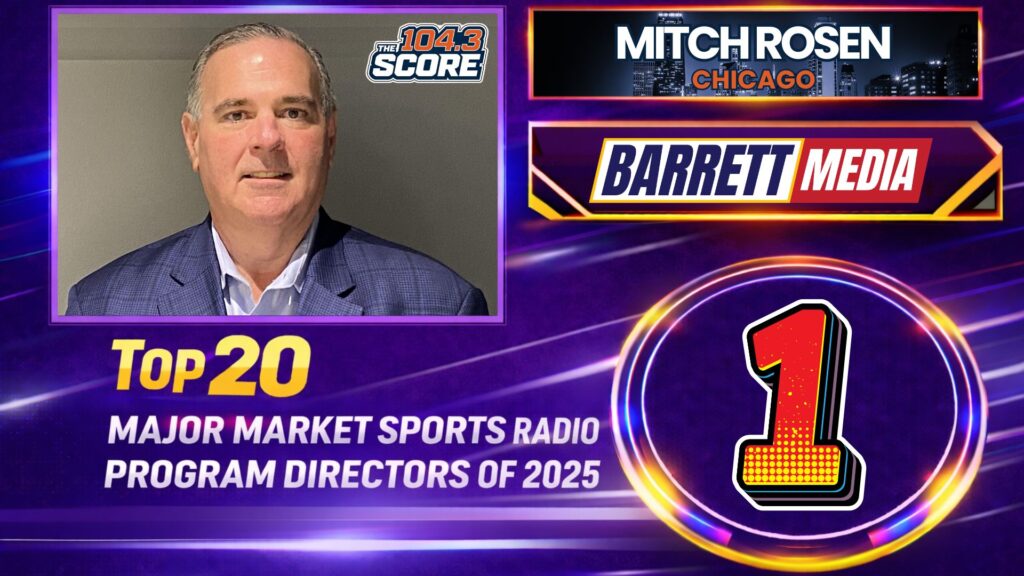
For a decade, Barrett Media has leaned on the industry it covers to help recognize the best among it. It’s a time-honored tradition in which peers submit who they feel best represents what makes sports radio the powerful industry it is. This year was no different, with massive participation in news, sports, and music helping determine the top performers and programmers in each format.
One of those categories is the top 20 program directors in sports radio, divided into major and mid-markets. This year, 104.3 The Score’s Mitch Rosen was recognized as the top sports radio programmer from a major market for the second time in his career. 104.5 The Zone’s Paul Mason earned his first number one ranking among mid-market sports radio programmers.
In speaking with Rosen and Mason, the characteristics that have led to their success mirror one another in many ways. Both oversee successful brands in their respective markets, and both understand that the recognition stems from the collective output of many contributors.
“It’s an honor. But it’s really a team award. This is about everyone I work with in Chicago, and the different brands around the country,” said Rosen. “It sounds very cliche, but it turly is a team. Without the people we work with every day on this iconic brand [104.3 The Score], it doesn’t happen.”
Mason expressed similar sentiments when reflecting on his team’s efforts, though seeing the rankings firsthand came as a surprise.
“I was surprised, but in the best way possible,” said Mason. “It was a really good feeling and reflects not just me. The station also finishing first as well puts a very cool visual on everything that we’ve been working on here for a long time.”
Mason’s brand, 104.5 The Zone, also ranked as the top mid-market sports station in this year’s Barrett Rankings. The Nashville-based brand earned that distinction for the first time after finishing third just a year ago.
Mason began his radio journey at the turn of the century at 1450 WMOH in Hamilton, Ohio, where he planned and executed a Friday night football show along with game broadcasts. His hands-on approach to crafting programming started in those early days and later took him to Cincinnati, West Palm Beach, and now Nashville. He joined 104.5 The Zone in April 2020 during the worldwide COVID-19 pandemic and has since seen the programmer role evolve.
“The growth of the role over the five years [includes] embracing streaming, podcasting, and video. We’re growing on every platform imaginable along with the growth of the FM signal,” said Mason. “The role requires us to be where sports is and consistently doing that day to day.”
As listener consumption habits change, top programmers must remain flexible to ensure content resonates across all platforms. Rosen identified adaptability as a key factor in his development as a brand manager.
“Every year, month, and day things change,” says Rosen. “It’s funny. Five years ago, someone would have said ‘you’re in the radio business.’ Today, it’s content distribution and you have to be flexible. You must go with trying new things with new technology. If you just stay ‘in the radio business’ you’ll get stagnant. I love when someone comes in with an idea. You have to listen, and that’s the most important thing about being a manager.”
Both Rosen and Mason described the humbling experience of being recognized at the top of their industry. That humility reflects a trait many successful executives share within a format built on the creativity of the talent Rosen and Mason hire. Their success is evident in the freedom they give their on-air staff, supported by belief and guidance.
“It’s all about how you treat people. To me, this job is about the people. Caring, teaching, and letting people be creative and do their jobs,” explained Rosen.
Mason echoed Rosen’s sentiments while noting that working with talent requires a tailored approach. It takes time, effort, and an understanding of what works for each individual to get the best results.
“We have a culture where people are trusted to the job they’re hired to do,” said Mason. “Bedside manner is important as well. Getting your staff to know that they can trust you and let them know that you’re going to let them do their job. Being there to listen to them and eliminating obstacles for them is key to help them reach their maximum potential.”
Neither operates alone. Rosen and Mason serve as key representatives not only for their brands but also for their respective companies. Rosen has been a decorated brand manager for Audacy for more than two decades. During his tenure, he has also overseen the BetMGM Network and sports radio operations in the Milwaukee cluster.
Audacy owns and operates several of the country’s largest sports radio brands. That strength appeared in the latest Barrett Media rankings, where seven of the top 10 programmers in major markets represent Audacy.
“It’s no secret. Sports is a big part of Audacy’s business,” noted Rosen. “Live sports and live sports talk is huge. That’s what differentiates us from a lot of other companies… I give our company a lot of credit. They realize that sports is something that will continue to grow that the audience and partners love too. It’s so interactive, and that’s so key to helping Audacy stand out amongst the others.”
For Mason, collaborating with top sports programmers at Cumulus has elevated his approach to brand management. From programming to promotions, digital strategy, sales, and everything in between, Mason believes leadership sets the tone. He points to Bruce Gilbert as a driving force.
“We’re fortunate to have the best in the business in Bruce Gilbert at our company. He’s an incredible resource, supportive, and it starts with him,” said Mason. “It’s nice to lean on our roster of great sports programmers within the company, and vice versa…. It takes the entire village. Everyone has to work together. There can’t be any siloes; it’s one big operation.”
Accolades from peers aside, Rosen and Mason remain focused on setting an example for the next generation of programming leaders. With decades of combined experience, they recognize the challenge of recruiting the next creative mind to advance sports content.
For Rosen, advice for those interested in the role begins with education, market knowledge, and respect for the people within it. Building lasting relationships remains essential.
“If you can combo platter knowledge of the market, getting to know talent, and building relationships, you can be a successful programmer,” explained Rosen. “Our format and the content space we’re in, we’re hungry for ‘the next.’ Who is that next? Everybody’s looking to find out who has those attributes… It seems simple, but those are key.”
Mason emphasizes growth and opportunity. With sports content becoming one of the most valuable properties in media, he encourages a fearless mindset when adapting to new methods of consumption.
“If you’re in the sports radio format, you like sports. Could you imagine growing something that reaches your maximum potential in something you’re passionate about,” questioned Mason. “You can’t be afraid of tech or change. No one will win that battle the way the world is going. How do you live within that, and finding your place there. We have done that very well here, but you need to be open to change while flowing with the current.”
In an industry built on opinion, competition, and constant reinvention, the best programmers understand that success is not built on ego. It is built on trust.
For Rosen and Mason, Barrett Media recognition is appreciated, but it is not the destination. It is a byproduct. A reflection of culture. Of collaboration. Of hiring talented people and giving them the room — and responsibility — to create.
That balance separates good programmers from great ones.
As Rosen and Mason look ahead, neither sounds satisfied. New platforms await, and voices will emerge. New ways to serve audiences who expect content whenever — and wherever — they want it continue to develop.
Barrett Media produces daily content on the music, news, and sports media industries. Sign up for our newsletters to stay updated and get the latest information right in your inbox.