Bonneville International has elevated a familiar voice from within its sports radio ranks, announcing that Richie Carni will take over as Program Director of Sactown Sports 1140 AM in Sacramento. A move that underscores both internal development and long-term confidence in his leadership trajectory across multiple platforms.
Carni, who will officially assume the role March 30, 2026, steps into the position after nearly nine years with Denver Sports 104.3, where he steadily climbed the ladder from board operator to producer, executive producer and ultimately assistant program director. Building a resume that blends traditional radio fundamentals with a firm grasp of digital expansion and audience engagement strategies.
Sacramento SVP and Market Manager Jim Richmond made it clear the company views Carni’s track record in Denver as more than incremental growth, praising his leadership instincts and ability to guide talent development while also driving new media initiatives that strengthen station identity beyond terrestrial signals.
“Sactown Sports is gaining a leader who has demonstrated vision and execution,” Richmond said in the announcement, expressing confidence that Carni’s experience will translate into measurable growth within a Northern California sports market that demands both credibility and creativity.
For Carni, the opportunity represents both professional progression and geographic transition into a market where sports radio plays a central role in daily conversation, particularly as teams and fan bases seek year-round coverage that reflects local perspective while remaining digitally accessible.
“I’m excited and honored to join the team in Sacramento,” Carni said. ““Sactown Sports is such an important part of the sports landscape in Northern California. I look forward to helping the team, continue to grow our digital presence and bring amazing content to sports fans in Sacramento.”
Sactown Sports 1140 AM has built its reputation on strong local voices and consistent market presence, and Carni’s background suggests he will prioritize talent coaching and cross-platform amplification rather than sweeping structural overhauls during the early phase of his tenure.
Carni steps in for Jose Gonzalez who served as the station’s program director since February of 2024.
Sactown Sports recently announced a lineup shift as Allen Stiles was elevated afternoon drive along Kevin “Whitey” Gleason. The station also announced the hires of Kayla Anderson and Matt George to co-host middays.
Barrett Media produces daily content on the music, news, and sports media industries. Sign up for our newsletters to stay updated and get the latest information right in your inbox.
As Netflix prepares to stream Major League Baseball games for the first time, the company will reportedly rely on Nielsen to measure viewership for its slate of marquee matchups, according to the Sports Business Journal.
The reported decision means the industry’s longstanding currency for audience measurement will track performance for high-profile events such as Opening Day’s Yankees-Giants matchup, the Home Run Derby and the Field of Dreams Game.
By embracing third-party measurement from the outset, Netflix signals that it understands the scrutiny attached to live sports rights deals and the expectations that accompany premium inventory.
The streaming giant begins a three-year agreement with Major League Baseball this season. While the package is limited in scope compared to MLB’s traditional broadcast partnerships, the games included carry significant brand equity, particularly Opening Day and the Home Run Derby, both of which typically draw strong advertiser interest and multi-platform conversation.
Up to this point, Netflix has turned to Nielsen only for its Christmas Day NFL games. The company has not utilizing the measurement for other live sports and event programming — including boxing cards, tennis exhibitions and Alex Honnold’s Skyscraper Live special.
Instead, Netflix has historically released select internal audience data, a practice that often prompts questions from advertising agencies and buyers who prefer independent verification.
By contrast, adopting Nielsen for MLB provides advertisers with familiar guardrails in the first year of a new sports rights venture. Media buyers routinely transact on Nielsen data, and its inclusion should streamline negotiations while reducing friction around reported audience delivery.
That clarity matters, especially as marketers continue shifting budgets from linear television to streaming platforms and demand consistent metrics across distribution channels.
For now, Netflix’s decision aligns its MLB coverage with the standards advertisers have long used to evaluate sports performance. As streaming platforms continue to compete aggressively for live rights, transparent and accredited measurement increasingly serves as a differentiator rather than an afterthought.
Barrett Media produces daily content on the music, news, and sports media industries. Sign up for our newsletters to stay updated and get the latest information right in your inbox.
As the February ratings period comes to a close, NBC Nightly News with Tom Llamas is celebrating a five-year high.
During the month, the network averaged 7.4 million viewers. That marks its most-watched February since 2021. It was also the closest the network finished to ABC News in the timeslot in the Adults 25-54 demographic in the past seven years.
World News Tonight finished February with an average of 8.9 million viewers. It earned an average of 1,143,000 viewers from the key demographic in February, just topping NBC Nightly News, which averaged 1,140,000 viewers. That figure represented a three-year high for the NBC newscast.
The performance of NBC Nightly News with Tom Llamas during February comes as the network broadcast the 2026 Winter Olympics from Italy. Llamas was on location from Milan throughout the event. Despite the on-location broadcast, ABC News’ nightly broadcast won its 10th consecutive Olympic week during the week of February 16th.
The retooled CBS Evening News averaged 4.4 million viewers during February. The Tony Dokoupil-led newscast saw an average audience of 539,000 viewers in the Adults 25-54 demographic in the month.
Barrett Media produces daily content on the music, news, and sports media industries. Sign up for our newsletters to stay updated and get the latest information right in your inbox.
Jim “Boomer” Gordon, the host of The Point on SiriusXM NHL Network Radio, has died following a battle with cancer, the network announced. The station and an outpouring of remembrances on social media reacted to the loss of a person whose voice and perspective became synonymous with daily hockey debate for listeners across North America.
In a statement shared on social media, SiriusXM NHL Network Radio said it was “deeply saddened” by Gordon’s passing, noting that he died surrounded by loved ones after what it described as a courageous fight, while emphasizing that he would be missed both on and off the air by colleagues and fans who had come to view him as more than just a host.
Gordon hosted The Point. A show built around his energetic recap of the previous night’s action, where segments such as “5 Burning Questions,” power rankings and daily fantasy analysis provided structure, but his personality supplied the edge that kept audiences engaged long after the final horn sounded.
Born in Hamilton, Ontario, Gordon carried the grit of his upbringing into a sports media career that refused to follow a traditional script. That independence resonated in an industry increasingly populated by more voices trained in similar programs. Drawing from a deep well of knowledge and a sharp memory that allowed him to recall obscure statistics, forgotten playoff series and long-ago draft decisions without missing a beat.
Mike Kern, a fellow host on SiriusXM NHL Network Radio, described Gordon as “a sports fanatic with a steel-trap mind.” One who emerged from the steel mills of Hamilton to become one of the more iconic voices in sports radio, adding that he discarded the rule book and forged his own path into the lives of countless hockey fans.
Kern also noted that in an era when broadcasting schools often produce technically proficient yet similar-sounding talent, Gordon stood out precisely because he was original, unfiltered and unapologetically passionate.
Following the news posted to social media, many in the sports media community extended their remembrances of Gordon.
We are deeply saddened to share the news of the passing of our friend and SiriusXM NHL Network Radio host Jim Boomer Gordon. After a courageous battle with cancer, Boomer passed away this week surrounded by his loved ones. He will be greatly missed by us all, on and off the air. pic.twitter.com/7ogTXxWC2R
We are saddened by the passing of Jim 'Boomer' Gordon, a long-time host on SiriusXM NHL Network Radio. Fans were entertained by his passion and benefited from his analysis of our game and knowledge of fantasy hockey. Our thoughts are with his family, friends and colleagues. https://t.co/fE8SSCEUY9
More to say on our friend and colleague as the minutes and hours go on. A tough time right now. We were together in building this from Day One of our channel. Thinking of Boomer’s family and friends as we mourn his loss. 💔🙏 https://t.co/LK5OWmqLd1
RIP Boomer. One of a kind hockey radio talent. I hope people appreciated what he gave that station and how much talking hockey meant to him, even as his health declined.
This is really, really sad news. Absolutely loved our chats, debates, goofing on the NY Jets. I'll miss it. https://t.co/aiKPT7FXLH
We are lesser because of the loss of Boomer, as hockey fans who enjoyed his exceptional work which was always nuanced & intelligent, but more importantly as people who were fortunate enough to know him.
My most sincere thoughts to Boomer’s family and all who called him a friend. https://t.co/pKvUCa8aLC
So sad. Loved chatting with Boomer on Mondays over the past 10 years. He deeply loved the NHL, fantasy hockey & always enjoyed texting about the hottest scorers each week (and about PSU/college football). A really good fellow that will be missed. https://t.co/M21lsaJkA9
This suuuuuuucks. I loved listening to Boomer's takes and his delivery was proof you didn't need to be loud and obnoxious to make a great point. Gonna miss listening to him… https://t.co/gU2nuYZ2UR
So upsetting! Boomer was one of the best. We texted often over the years. He was a great fan of the game with solid and fair opinions of the sport. Great person who will be missed by his listeners and those at @SiriusXMNHL . My condolences go out to his family. https://t.co/pzByCW467u
Barrett Media produces daily content on the music, news, and sports media industries. Sign up for our newsletters to stay updated and get the latest information right in your inbox.
Welcome to day three of Barrett Media’s Top 20 of 2025 in Music Radio presented by Strategic Solutions Research. Strategic Solutions Research is celebrating its 20th year providing strategic research, music testing and personality content testing for clients in the US and in 22 countries. Visit their website to learn how they can help your brand. Our thanks to Hal Rood and Kevin Cassidy for supporting the Top 20 series and the entire music radio industry.
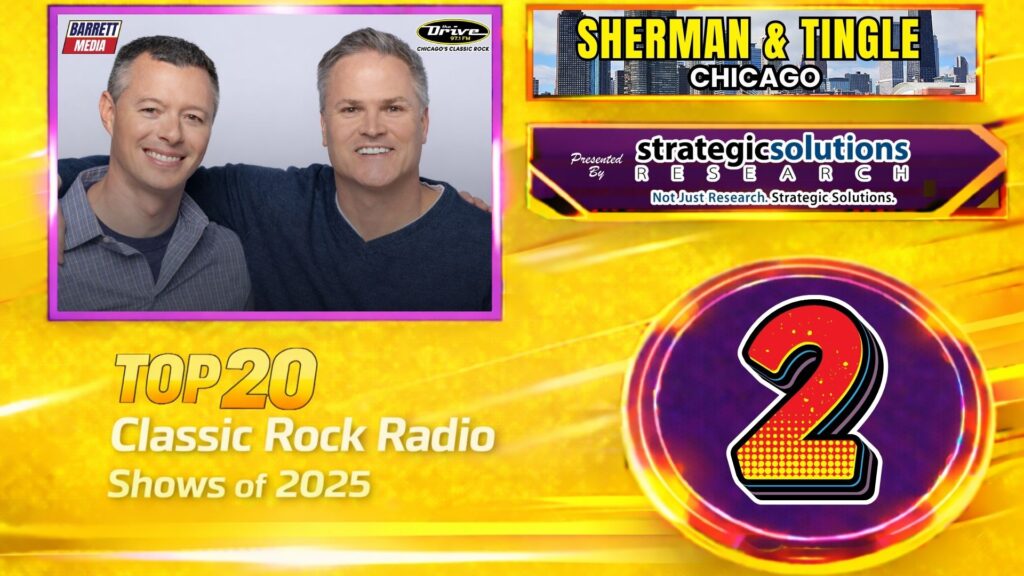
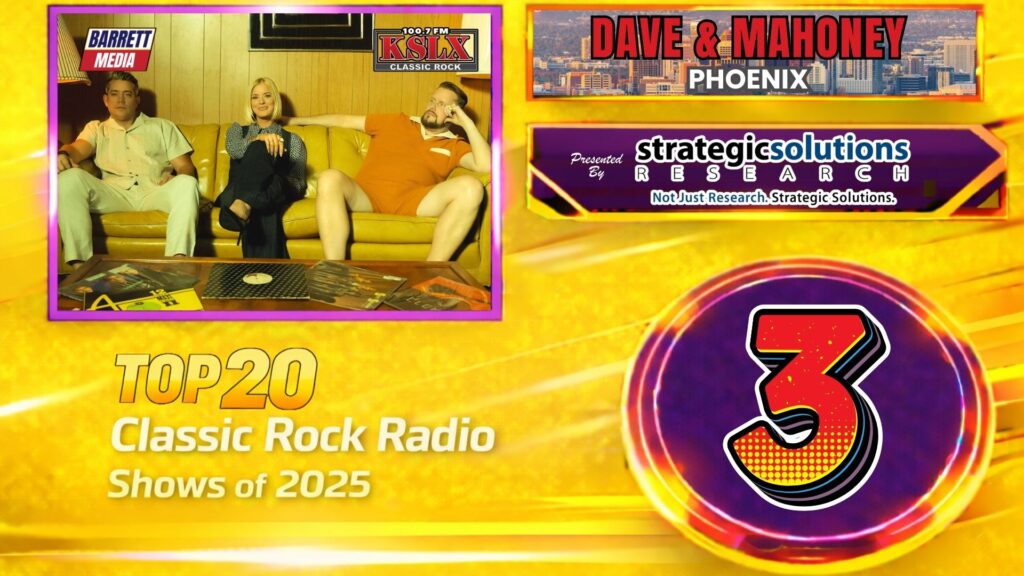
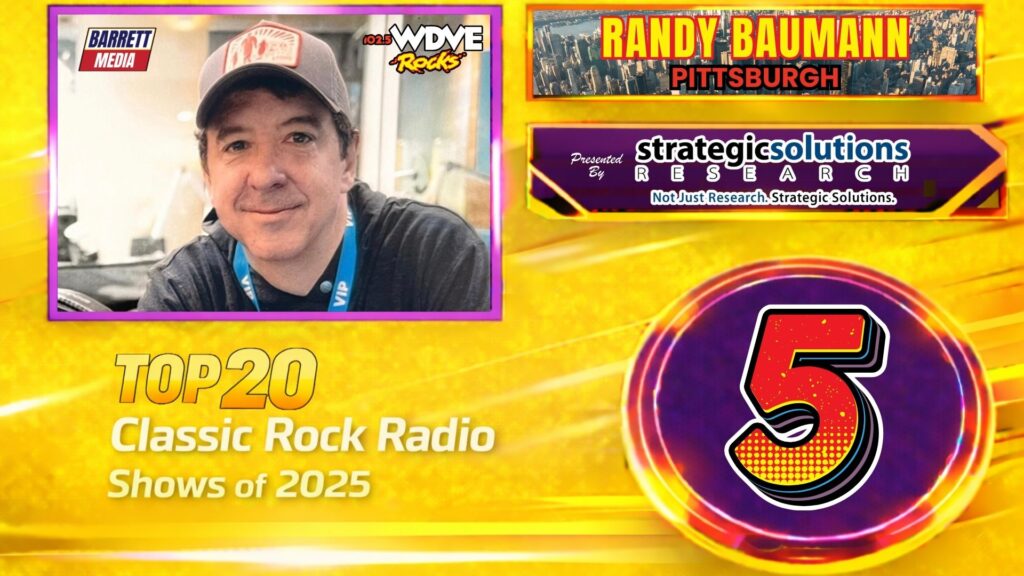
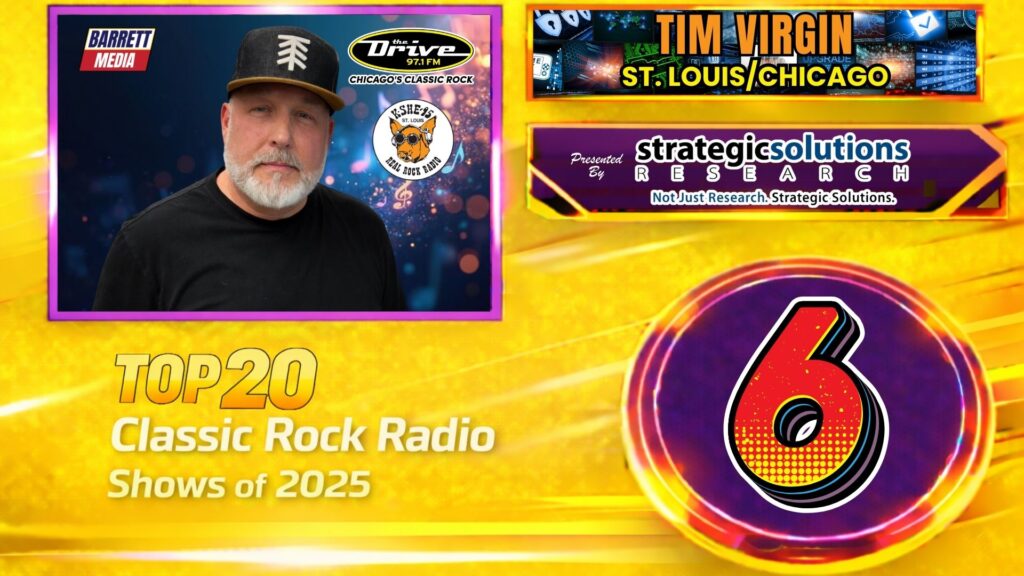
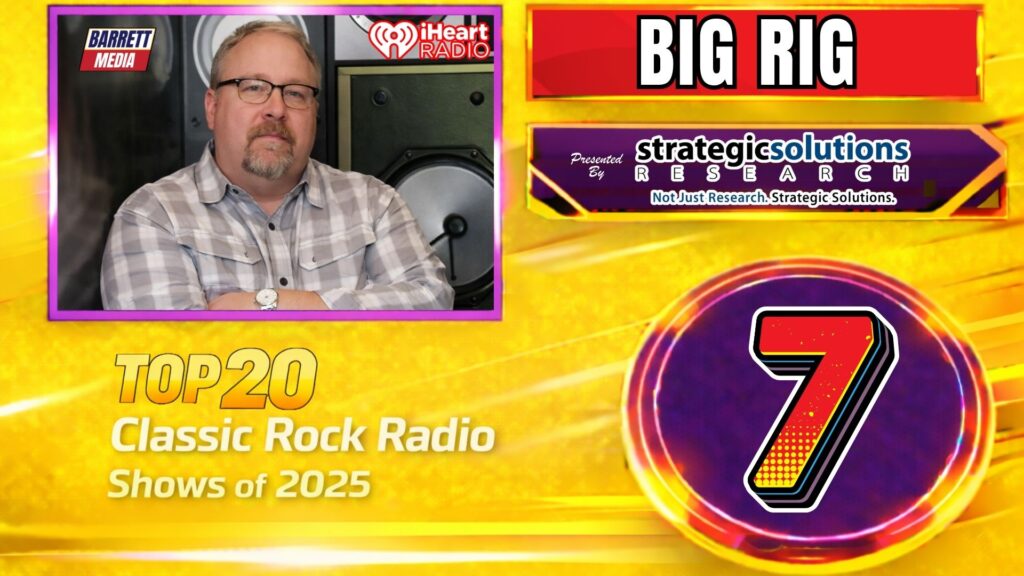
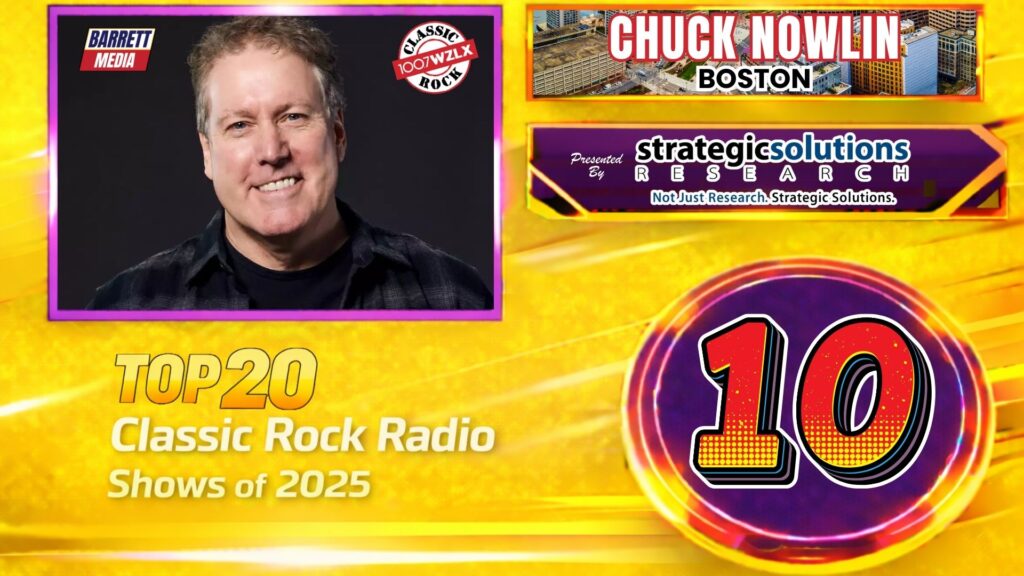
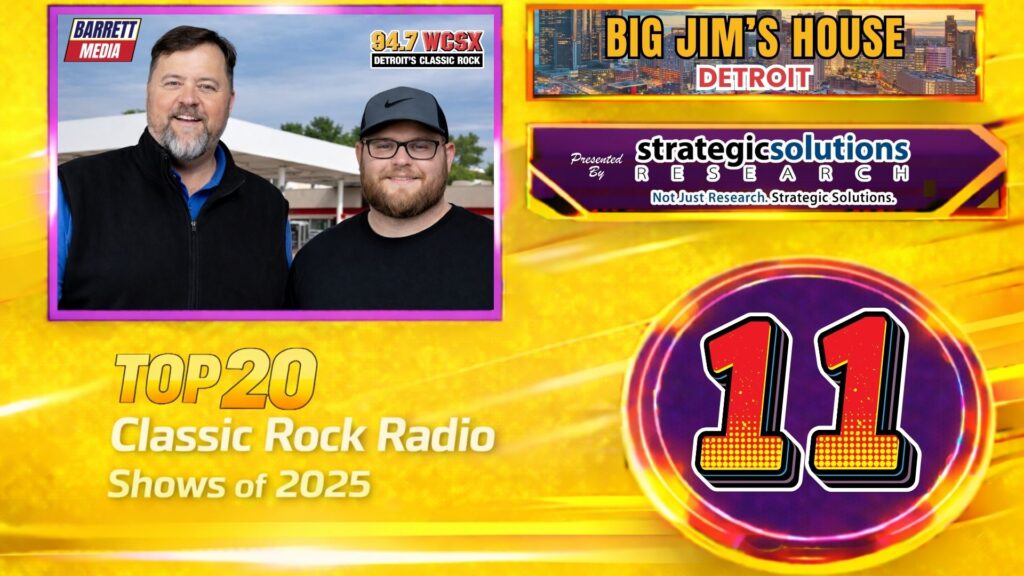
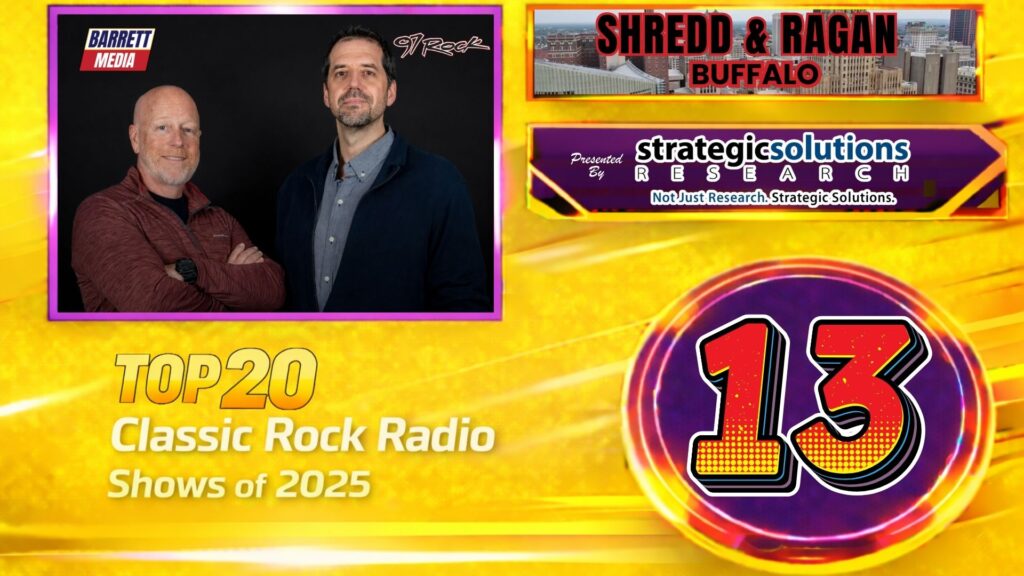
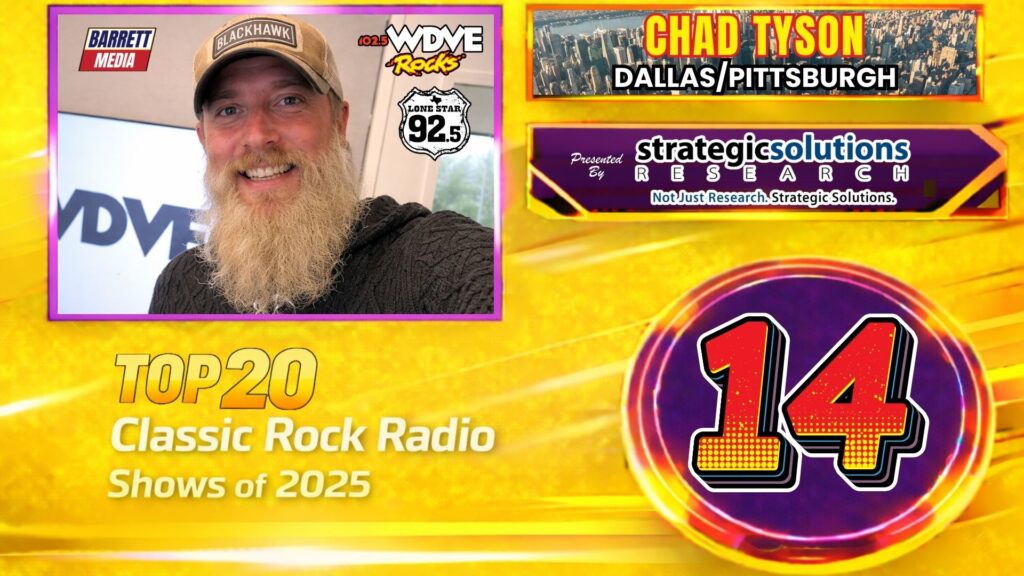
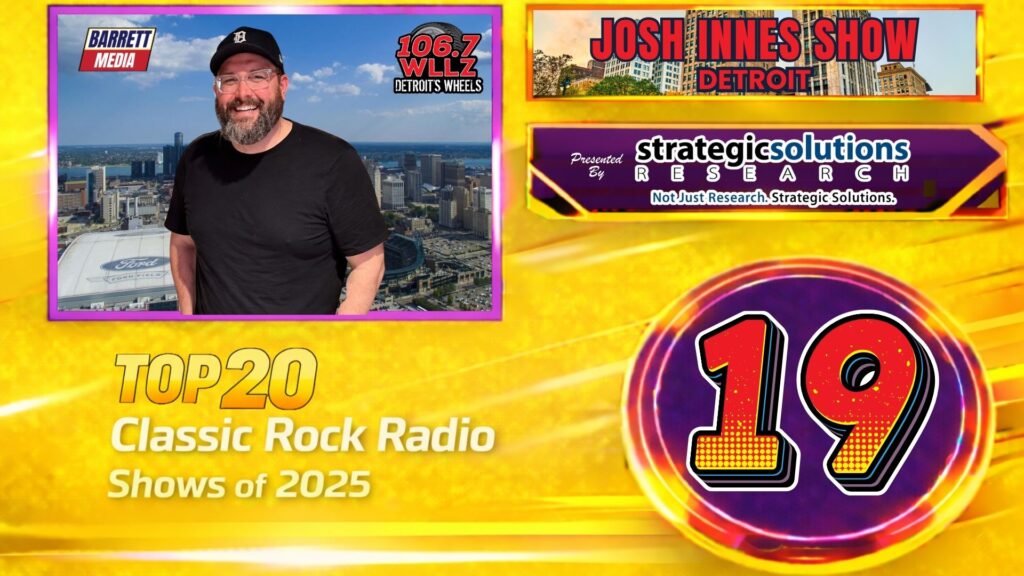
Today, the Top 20 series highlights the Top 20 Classic Rock Radio Shows of 2025. All results from this series are available on our website, in The Nooner newsletter, and are promoted across Facebook, LinkedIn, TikTok, X and Instagram. Be sure to visit, subscribe and/or follow to stay informed.
The full schedule of releases is listed down below the images. After this series is done, I will record videos discussing the entire process for music, sports and news. Those videos will be posted to the Barrett Media YouTube page. Make sure you subscribe so you’re notified once the video goes live.
Important Information
#1– These results represent the collective feedback provided by our industry voters. Barrett Media does not vote in this process. Our role is to assemble the group, collect the votes, and present the information. Results are based on 2025’s performance. 2026 changes have no effect on the voting. Think of it like an MVP race in sports – voters vote on last season’s performance.
#2 – Music radio is a massive space. Shows appear on lists in multiple formats. Programmers run stations in different cities and formats. Changes occur under the radar and without stations updating key information. That makes it difficult when trying to issue proper credit to deserving programmers, hosts and/or brands. We try to get it perfect, but we’re human, and mistakes do happen. If you notice an error, please email Jason@BarrettMedia.com so we can fix it.
#3 – This series specifically focuses on United States terrestrial music radio shows and programmers. Shows and brand leaders with Apple Music, Spotify, Amazon, SiriusXM, YouTube, podcasts and programming outside the United States are not included.
#4 – A total of 320 show images featuring shows and program directors are presented during this series. There are no photo changes unless it involves a mistake. We understand you may not like the way your left shoulder looks in a photo but such is life. Thanks in advance for understanding.
The Voting Process
A record One Hundred and Ninety Two (192) program directors, corporate executives, and format consultants were involved in this year’s voting. That beat last year’s mark of 173. Like always, there were a few who didn’t weigh in who I’d have loved to include but overall, the support was outstanding. THANK YOU!
Be advised that our voters represent the following companies: iHeartMedia, Audacy, Cumulus Media, Beasley Media, Cox Media Group, Townsquare Media, Hubbard Radio, Bonneville, Radio One, Connoisseur Media, SummitMedia, Saga Communications, MediaCo., Buck Owens Production Company, Pamal Broadcasting, Times-Shamrock Media, Stephens Media Group, Guaranty Media, Lotus Communications, Cromwell Media Group, Midwest Communications, One Putt Broadcasting, Griffin Media, plus numerous consultancies. We involve a large group to assure input is received from all areas of the country and to prevent the results from favoring any one company.
Though 192 voters are involved, the number of people voting on each format is lower. This is by design. We want experts from each format voting on what they know best. Depending on their role and expertise, some vote on all eight formats, others vote on as little as one. For this category, 32 programmers, consultants, and executives voted on the Top 20 Classic Rock Shows and Program Directors.
Two hundred (200) Classic Rock radio shows were eligible for voting consideration this year. We determine the results by using a point system for this process. A 1st place vote is worth 20 points, and each selection after number one earns two points less. It’s not a perfect system but it’s one we feel good about using to showcase the industry’s best.
And the Winner Is…
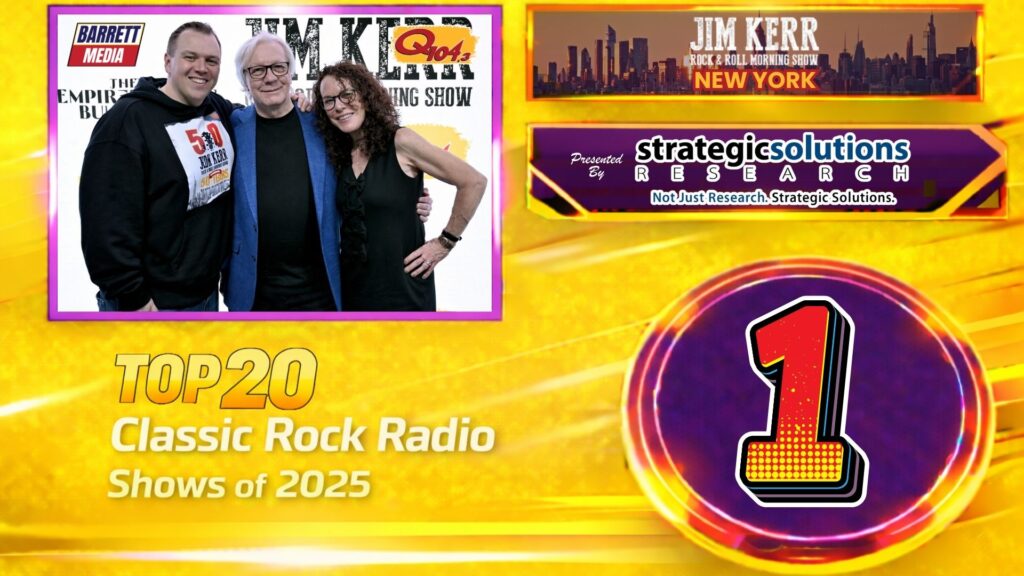
Jim Kerr Rock and Roll Morning Show of Q104.3 in New York City. This is Jim’s second category win in a row. In January 2026, Jim’s longtime radio partner Shelli Sonstein announced her retirement after a near five decade partnership. With the win, Jim and Shelli can feel good knowing they went out on top. Congrats to Jim, Shelli, Trevor, Eric and the entire Q104.3 team on the well deserved recognition.
I want to thank Dylan Barrett for creating the artwork, and each Classic Rock voter who participated in the process. Now without further delay, here are Barrett Media’s Top 20 Classic Rock Shows of 2025.
Additional Notes:
Jim Kerr Rock and Roll Morning Show earned the top spot with a fifty (50) point victory. Kerr’s morning show also scored a category best, five (5) first place votes.
Spots 21-25 belonged to Janda Lane, Gunner, The Lamont Show, Carol Miller and Dave & Dorene.
The tightest race saw Chuck Nowlin slip by Big Jim’s House for 10th place by one (1) point.
Of the 200 Classic Rock shows eligible for votes, sixteen (16) earned at least one 1st place vote.
Barrett Media’s Music Radio – Top 20 of 2025 Remaining Schedule:
Thursday February 26 = BM Top 20 Adult/Classic Hits Radio Shows and Program Directors
Friday February 27 = BM Top 20 Urban/Hip-Hop Radio Shows and Program Directors
Monday March 2 = BM Top 20 Country Radio Shows and Program Directors
Tuesday March 3 = BMM Top 20 AC/Hot AC Radio Shows and Program Directors
Wednesday March 4 = BM Top 20 CHR/Top 40 Radio Shows and Program Directors
Barrett Media produces daily content on the music, news, and sports media industries. Sign up for our newsletters to stay updated and get the latest information right in your inbox.
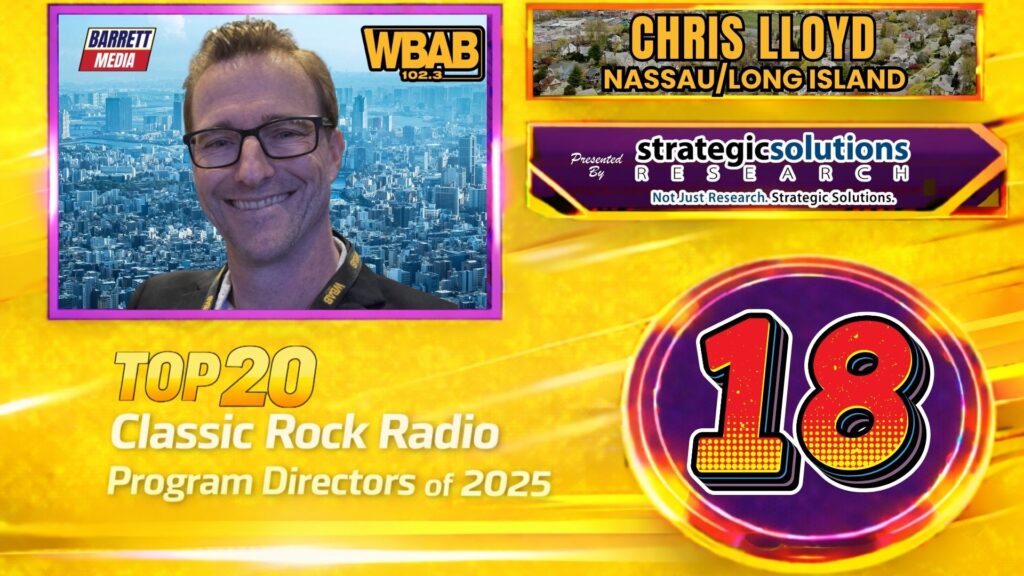
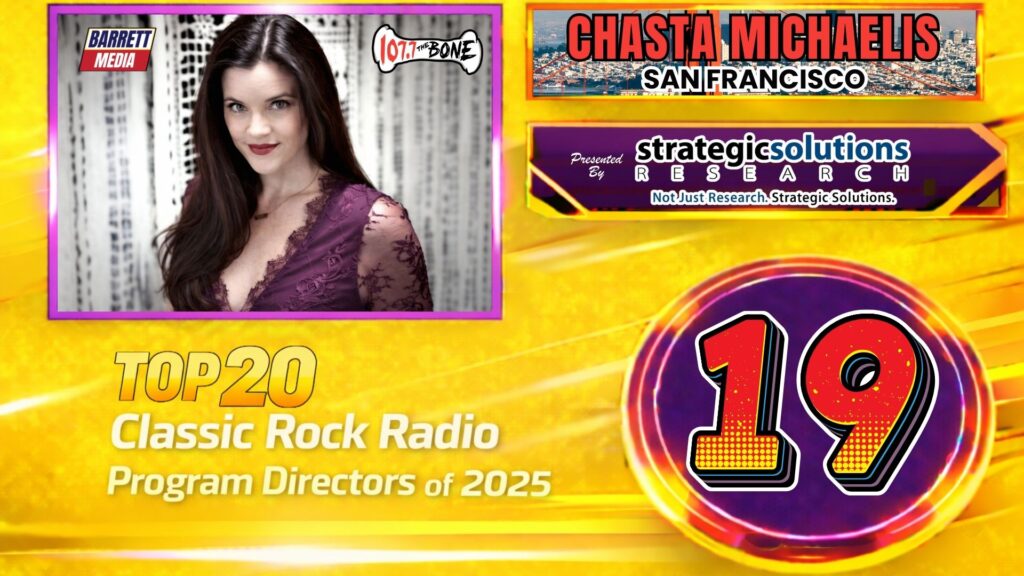
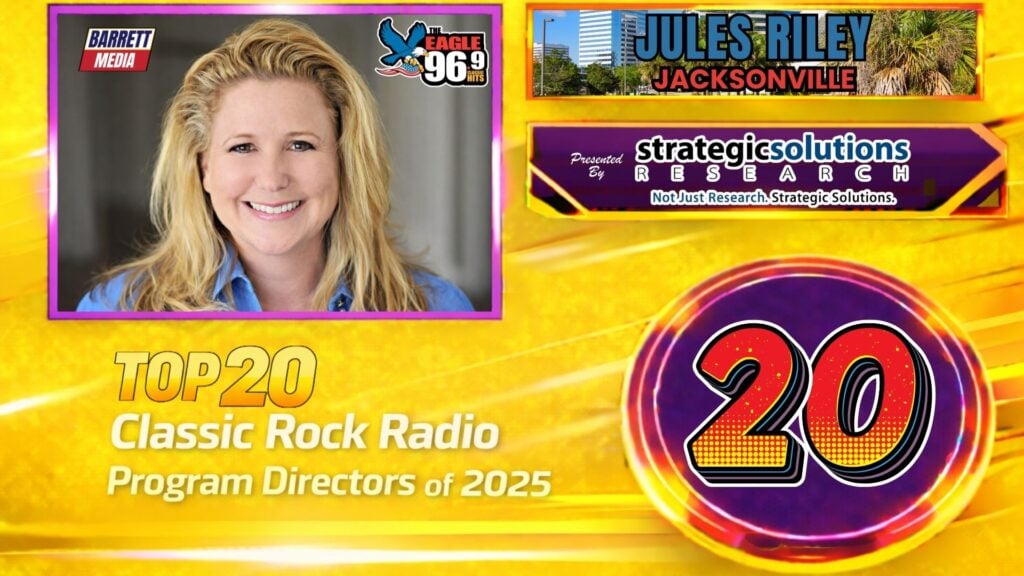
Day three of Barrett Media’s Top 20 of 2025 in Music Radio presented by Strategic Solutions Research has arrived. Strategic Solutions Research is celebrating its 20th year providing strategic research, music testing and personality content testing for clients in the US and in 22 countries. Visit their website to learn how they can help your brand. Our thanks to Hal Rood and Kevin Cassidy for supporting the Top 20 series and the entire music radio industry.
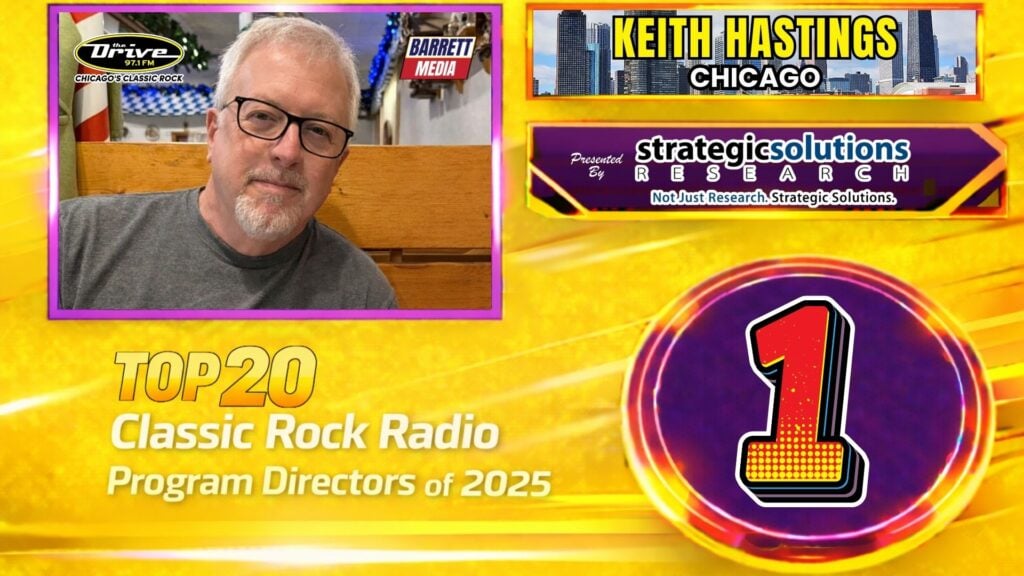
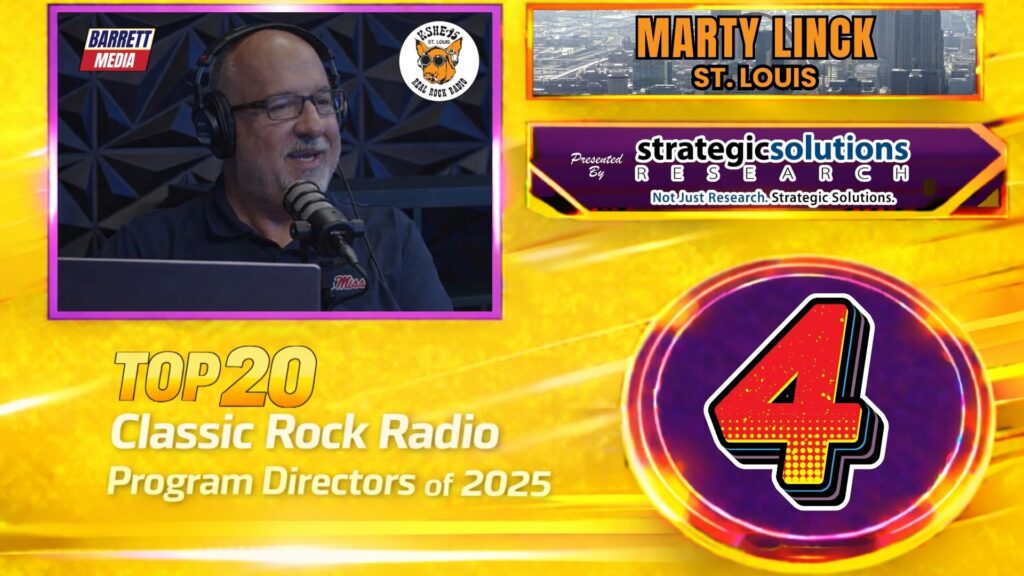
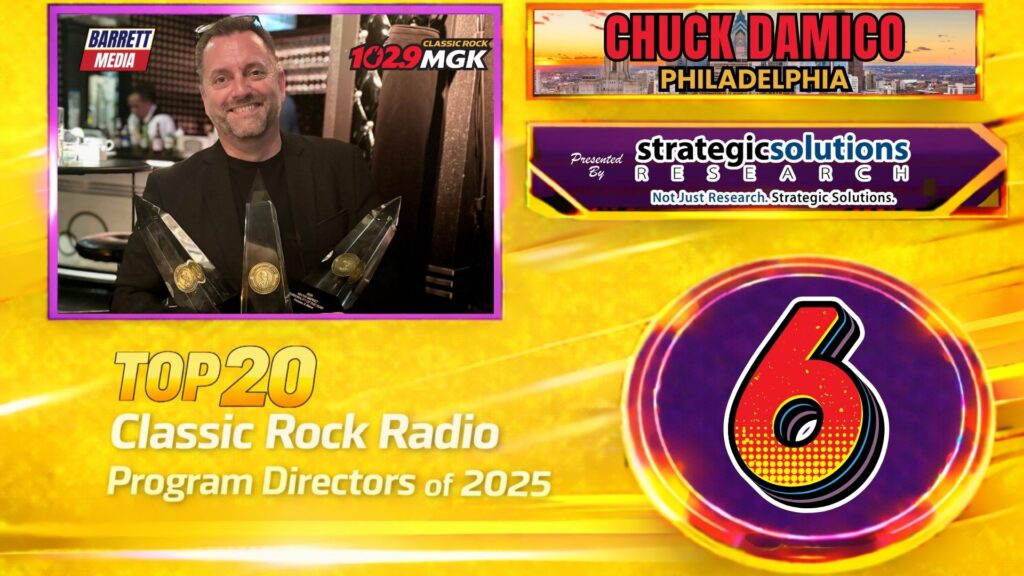
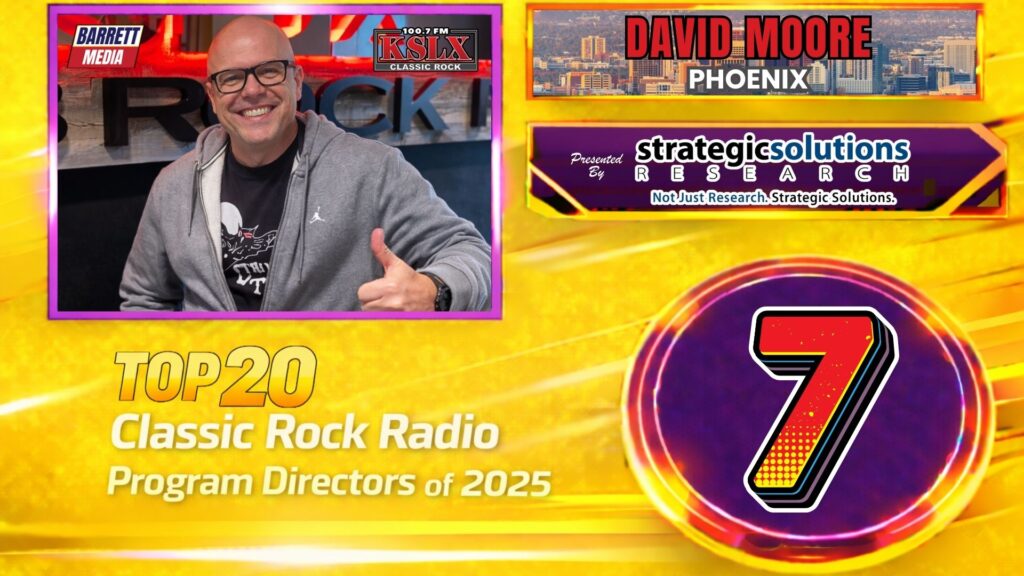
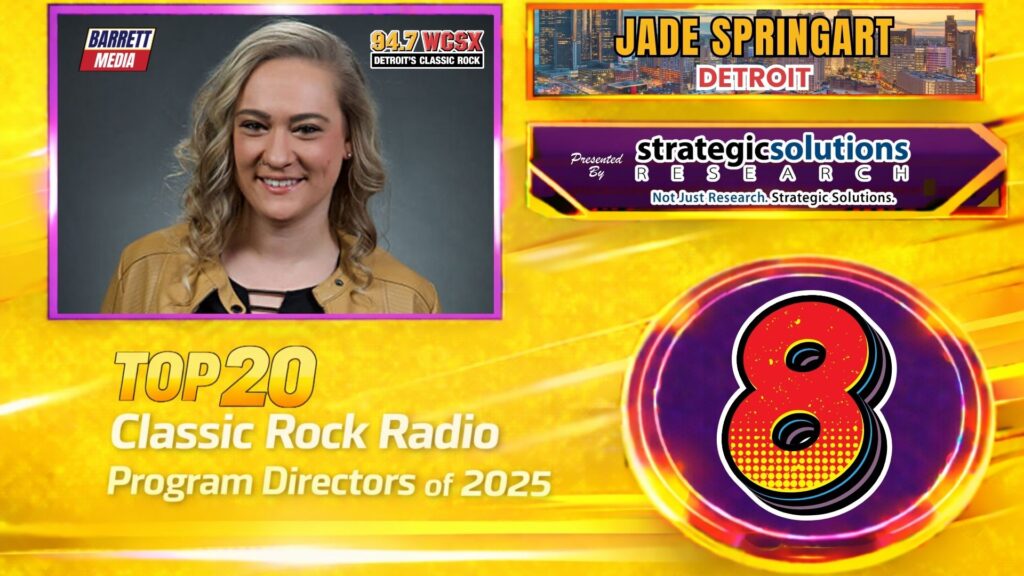
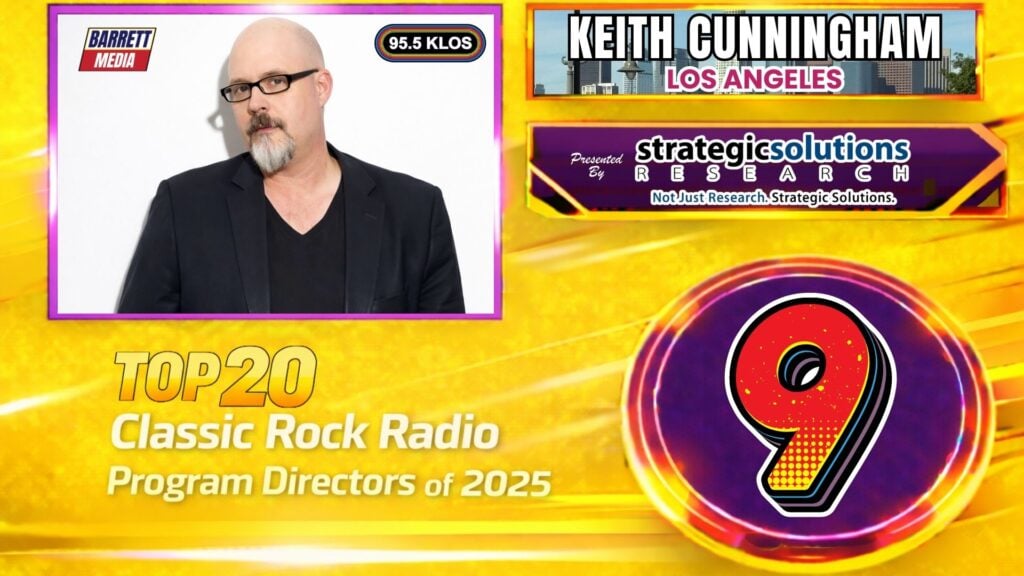
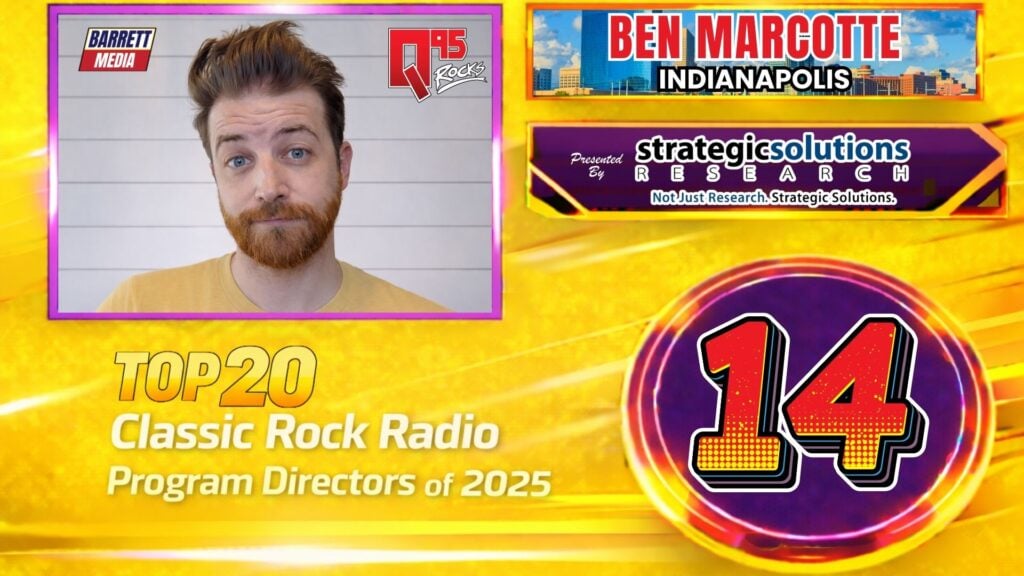
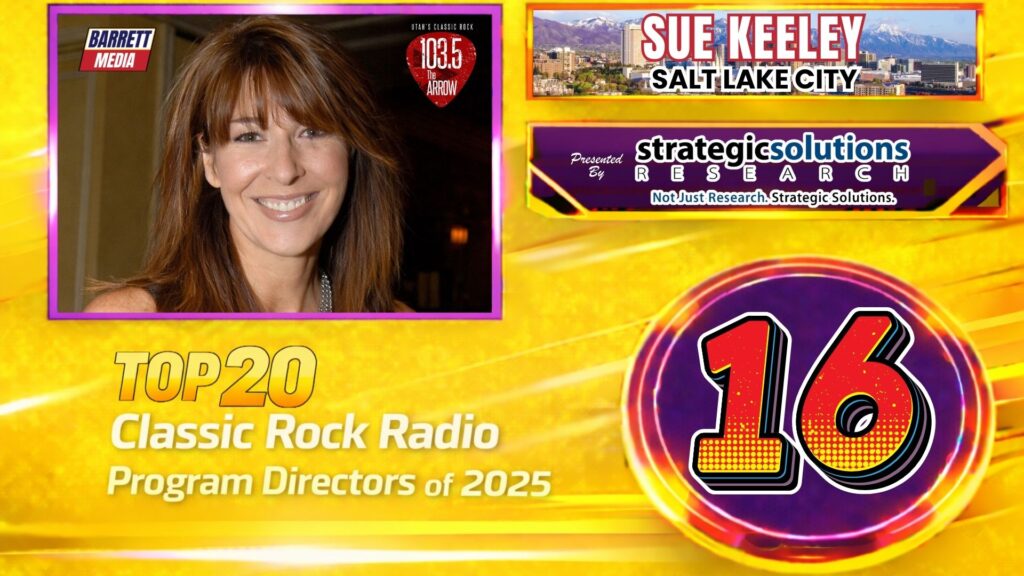
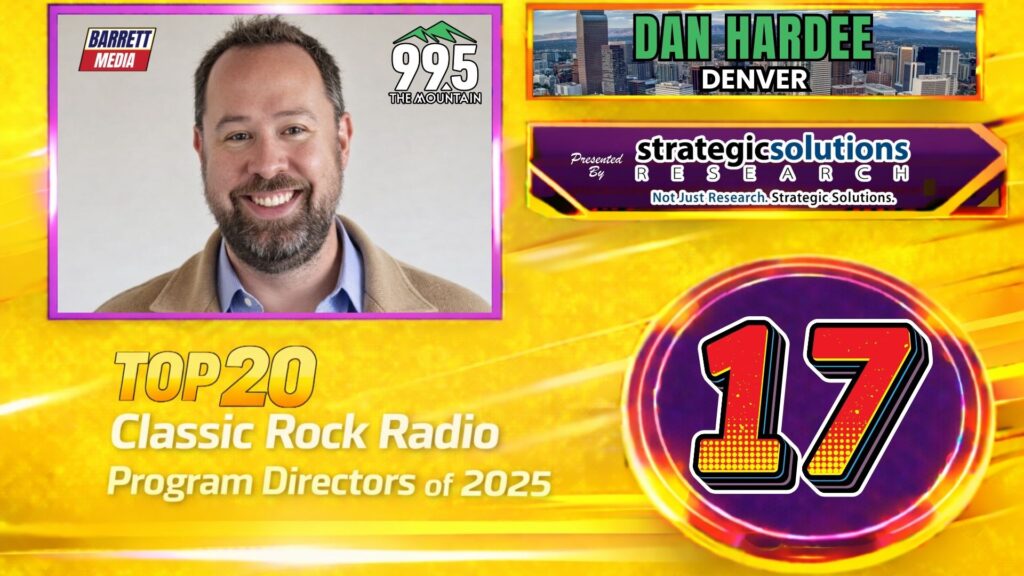
Today’s Top 20 series shines a light on the Top 20 Classic Rock Radio Program Directors of 2025. All results from this series are available on our website. We also encourage you to subscribe to The Nooner newsletter to receive the information in your inbox each day at 12pm ET. Each category is promoted across our social media pages too including Facebook, LinkedIn, TikTok, Instagram and X.
The full schedule of releases is listed down below the images. After this series is done, I will record videos discussing the entire process for music, sports and news. Those videos will be posted to the Barrett Media YouTube page. Make sure you subscribe so you’re notified once the video goes live.
Important Information
#1– These results represent the collective feedback provided by our industry voters. Barrett Media does not vote in this process. Our role is to assemble the group, collect the votes, and present the information. Results are based on 2025’s performance. 2026 changes have no effect on the voting. Think of it like an MVP race in sports – voters vote on last season’s performance.
#2 – Music radio is a massive space. Shows appear on lists in multiple formats. Programmers run stations in different cities and formats. Changes occur under the radar and without stations updating key information. That makes it difficult when trying to issue proper credit to deserving programmers, hosts and/or brands. We try to get it perfect, but we’re human, and mistakes do happen. If you notice an error, please email Jason@BarrettMedia.com so we can fix it.
#3 – This series specifically focuses on United States terrestrial music radio shows and programmers. Shows and brand leaders with Apple Music, Spotify, Amazon, SiriusXM, YouTube, podcasts and programming outside the United States are not included.
#4 – A total of 320 show images featuring shows and program directors are presented during this series. There are no photo changes unless it involves a mistake. We understand you may not like the way your left shoulder looks in a photo but such is life. Thanks in advance for understanding.
The Voting Process
A record One Hundred and Ninety Two (192) program directors, corporate executives, and format consultants were involved in this year’s voting. That beat last year’s mark of 173. Like always, there were a few who didn’t weigh in who I’d have loved to include but overall, the support was outstanding. THANK YOU!
Be advised that our voters represent the following companies: iHeartMedia, Audacy, Cumulus Media, Beasley Media, Cox Media Group, Townsquare Media, Hubbard Radio, Bonneville, Radio One, Connoisseur Media, SummitMedia, Saga Communications, MediaCo., Buck Owens Production Company, Pamal Broadcasting, Times-Shamrock Media, Stephens Media Group, Guaranty Media, Lotus Communications, Cromwell Media Group, Midwest Communications, One Putt Broadcasting, Griffin Media, plus numerous consultancies. We involve a large group to assure input is received from all areas of the country and to prevent the results from favoring any one company.
Though 192 voters are involved, the number of people voting on each format is lower. This is by design. We want experts from each format voting on what they know best. Depending on their role and expertise, some vote on all eight formats, others vote on as little as one. For this category, 32 programmers, consultants, and executives voted on the Top 20 Active/Modern Rock Shows and Program Directors.
Sixty two (62) Classic Rock program directors appeared on ballots turned in by our voters. We use a point system for this process with a 1st place votes equaling 20 points, and each selection after #1 earning two points less. It’s not a perfect system but it’s one we feel good about using to showcase the industry’s best.
And the Winner Is…
Keith Hastings of 97.1 The Drive in Chicago. Keith becomes the first PD in any format to go back-to-back as a category winner. Congratulations to Keith, his team, and everyone associated with 97.1 The Drive in Chicago on their well earned recognition.
NOTE: Keith Cunningham exited KLOS in November but earned strong support for his 11-months of contributions in 2025.
I want to thank Dylan Barrett for creating the artwork, and each Classic Rock voter who participated in the process. Now without further delay, here are Barrett Media’s Top 20 Classic Rock Program Directors of 2025.
Additional Notes:
Keith Hastings cruised to an eighty one (81) point victory in this category. He recorded a category best, five (5) first place votes to help secure the win.
Spots 21-25 belonged to Garner Goin, Chris Elliott, Ryan Castle, Borna Velic and Mike Beck.
The race for 13th place was tight. Suzi Klonk held off Ben Marcotte by one (1) point to finish in front.
Of the 62 Classic Rock program directors to earn votes, fifteen (15) received at least one 1st place vote.
Barrett Media’s Music Radio – Top 20 of 2025 Remaining Schedule:
Thursday February 26 = BM Top 20 Adult/Classic Hits Radio Shows and Program Directors
Friday February 27 = BM Top 20 Urban/Hip-Hop Radio Shows and Program Directors
Monday March 2 = BM Top 20 Country Radio Shows and Program Directors
Tuesday March 3 = BMM Top 20 AC/Hot AC Radio Shows and Program Directors
Wednesday March 4 = BM Top 20 CHR/Top 40 Radio Shows and Program Directors
Barrett Media produces daily content on the music, news, and sports media industries. Sign up for our newsletters to stay updated and get the latest information right in your inbox.
The International Flag League has secured a major media ally, announcing a new partnership with iHeartRadio that leaders from both organizations believe will accelerate the sport’s growth and broaden its global footprint at a pivotal time for flag football.
The organization, formerly known as USA Flag, has built its reputation as the world’s largest flag football tournament operator, staging events across multiple countries while positioning itself as a driving force behind the sport’s international expansion.
Now operating under the iFlag banner, the league aims to scale that growth by tapping into iHeartRadio’s vast distribution network, which spans broadcast radio, podcasts, streaming, digital platforms and social channels and reaches more than 250 million listeners each month.
Executives say the agreement centers on cross-promotion and storytelling, with iHeartRadio amplifying iFlag tournaments, athlete profiles and recruitment initiatives through its multi-platform ecosystem while also integrating league content into its sports and community-focused programming. Rather than functioning as a traditional sponsorship, the collaboration is designed to intertwine the brands in a way that fuels awareness and deepens audience engagement.
Michael Biondo, president of business development and strategic partnerships for iHeartMedia, framed the move as part of the company’s broader strategy to support emerging sports properties that demonstrate momentum and grassroots appeal.
“This partnership with the International Flag League showcases iHeart’s commitment to supporting emerging sports and the communities that champion them,” said Biondo. “By combining iFlag’s explosive growth with iHeart’s unmatched reach, we’re creating new opportunities for athletes, fans and brands to engage with the sport like never before.”
Charles Davis, co-founder and co-CEO of the International Flag League, described the alliance as a significant step forward not only for the organization but also for the sport at large, noting that access to a national audio platform gives the league a powerful tool to elevate competitors and expand into new markets. He emphasized that the partnership will help spotlight stories of inclusion and opportunity that have fueled the game’s expansion across youth, amateur and international levels.
The timing carries added weight as flag football continues to gain mainstream traction, drawing increased participation numbers and greater visibility on the global sports calendar. League officials believe sustained exposure across iHeartRadio’s channels will strengthen recruitment pipelines, drive tournament attendance and attract corporate partners seeking to align with a fast-growing property.
For iHeartRadio, the partnership offers direct access to a younger, digitally engaged audience that already consumes sports content across multiple platforms and values year-round interaction beyond marquee events. For iFlag, it delivers a media megaphone capable of carrying its message into communities where the sport continues to take root.
Barrett Media produces daily content on the music, news, and sports media industries. Sign up for our newsletters to stay updated and get the latest information right in your inbox.
Audacy CEO Kelli Turner has been on the job for just over a year, and has continued to be impressed with what the audio company can offer advertisers.
During a conversation with Gordon Borrell on the Local Marketing Trends Podcast, Turner shared that she plays a somewhat active role in the company’s sales efforts. She said she often makes the initial introduction with advertisers before passing them off to the company’s sales force.
Turner admitted that the organization can do a better job at telling its story, and showcasing what it can provide to marketers.
“I’m very involved in the sales side of the business, and how we can move that forward, and how we can better tell our story,” said Turner. “I think we have a great story. It’s just one that we don’t always do a great job of telling, or we don’t always have the ears of the people that should be listening. The amount of data and research, the case studies, and the story are very compelling.
“And I say that as someone who didn’t spend 20 years in radio, as someone who’s newer to it, and has continued to be incredibly impressed by sort of what we can offer,” Turner concluded.
The Audacy CEO was later asked what the company would look like in 10 years.
“We’ve always been content first — and I think 10 years from now, we will also be a content company,” Turner said. “Will someone be turning a dial on a radio in a car in 10 years? How exactly will they get our content? I can’t answer that question. What I can tell you is, we want to be everywhere that our audiences are.”
Barrett Media produces daily content on the music, news, and sports media industries. Sign up for our newsletters to stay updated and get the latest information right in your inbox.
Boston sports radio host Greg Hill unloaded on critics of the United States men’s hockey team Wednesday morning, calling the backlash over the players’ presence at the State of the Union address “fake outrage” and labeling the criticism “absolutely un-American.”
During The Greg Hill Show on WEEI, Greg Hill addressed the online reaction to the team’s appearance in Washington. Members were recognized during the president’s annual address to Congress. Some critics questioned whether the moment blurred the line between sports and politics. Hill argued the backlash said more about today’s social media climate than about the athletes themselves.
“The amount of fake outrage that I saw yesterday. From people who clearly have nothing to do but sit around on their pedestal couch and judge others was insane,” Hill said, opening the segment with a pointed rebuke of those attacking the players online.
Hill framed the appearance as a rare bipartisan moment inside a sharply divided political environment, suggesting that the recognition of the team’s accomplishment transcended party lines in a way few other moments do.
“The moment last night at the State of the Union address. When those guys came out and were showing everybody their medals. That was probably the only thing that brought the Congress and the President of the United States of America together to their feet to celebrate,” Hill said. “It’s a great thing.”
Greg Hill doubled down on his stance. He said the players earned the right to take part in national celebrations after representing the country internationally. Hill added that accepting a White House invitation or attending the State of the Union should not invite partisan scrutiny.
“To sit there and criticize a bunch of guys who did something great for this country over and over again, for accepting a visit to the White House or for showing up at the State of the Union, is absolutely un-American. It’s time to leave them alone,” Hill said.
Greg Hill also dismissed calls to boycott or unfollow individual players. He pointed to social media criticism aimed at NHL stars such as Charlie McAvoy and Jack Hughes. Hill argued that athletes representing Team USA should not face political accusations for attending a civic event tied to their accomplishment.
“If you get invited to go to the White House, so the rest of us un-athletic slobs can celebrate you for what you did for America. You go,” Hill said. “If you’re complaining about this or unfollowing Charlie McAvoy, as I saw people proudly announcing yesterday. Or you’re calling Jack Hughes a traitor, crawl back into your hole and find yourself a life.”
The comments underscore the increasingly complex intersection of sports, civic tradition and political optics, particularly when national teams become part of ceremonial moments in Washington. For Hill, however, the issue remains straightforward: athletes who represent the United States deserve celebration, not condemnation.
Barrett Media produces daily content on the music, news, and sports media industries. Sign up for our newsletters to stay updated and get the latest information right in your inbox.
MS NOW has selected Ali Velshi to take over the role previously held by Steve Kornacki during the network’s election coverage.
Velshi will operate the network’s “big board” full of election map data, results, and insights during the midterm elections later this year.
He replaces Kornacki, who departed MS NOW last year to remain with NBC News during the Versant split away from NBCUniversal.
The data analyst position on election night coverage for MS NOW is similar to that of John King at CNN and Bill Hemmer at Fox News.
“On big political nights, the numbers tell the story of participation, power, and choice. Voters decide elections, and the data lets us watch those decisions take shape in real time,” said Velshi. “I’m grateful for the opportunity to guide viewers through primaries, election nights, and major political moments with context, transparency, and a focus on the facts.”
Velshi joined MS NOW in 2016 after previously working at CNN and Al Jazeera America. He has since helmed his own weekend show and also worked alongside Stephanie Ruhle in the network’s lineup.
“I’ve had the privilege of learning from Ali for the last twenty-plus years in various newsrooms. One of his many gifts is his unique ability to take complex data and make it digestible,” said Rebecca Kutler, president of MS NOW, in a statement. “Ali will guide our audience through the real-time information that will determine the outcomes of the midterm and presidential elections. I’m thrilled Ali will bring his understanding of public opinion and voters to our election coverage in the years ahead.”
Barrett Media produces daily content on the music, news, and sports media industries. Sign up for our newsletters to stay updated and get the latest information right in your inbox.