The Broadcasters Foundation of America has announced the recipients of its Leadership Awards, Lowry Mays Excellence in Broadcasting Award, and its Chairman’s Award honorees, set to be announced at its annual breakfast in April.
On Wednesday, April 22nd, at 7 AM in the Beethoven Room of The Encore Resort, the Broadcasters Foundation will present the awards during the NAB Show in Las Vegas.
The 2026 Leadership Award honorees are:
Heather Cohen, President, The Weiss Agency
April Carty-Sipp, Executive Vice President, Industry Affairs at NAB
Michael J. Hayes, President, Hearst Television
Mike Hulvey, President & Chief Executive Officer, Radio Advertising Bureau
Chad Matthews, President, ABC-Owned Television Stations
Alissa Pollack, Executive Vice President, Global Music Marketing, iHeart
The Leadership Awards are given annually in recognition of career contributions to the broadcast industry and the community at large.
Meanwhile, WABC Radio and Red Apple Media owner and CEO John Catsimatidis has been named as the 2026 Lawry Mays Excellence in Broadcasting Award honoree. That honor is given annually to “an individual in broadcasting whose work exemplifies innovation, community service, advocacy, and entrepreneurship.”
Finally, the 2026 Chairman’s Award honoree is Deborah Norville. The longtime host of Inside Edition, Norville also spent time working at NBC News, CBS News, and ABC Radio. The Chairman’s Award is given to “an individual in recognition of their contribution to the broadcast industry.”
Those attending the NAB Show can attend the complimentary breakfast and awards program. Registration is strictly required, and can be done online by clicking here.
Barrett Media produces daily content on the music, news, and sports media industries. Sign up for our newsletters to stay updated and get the latest information right in your inbox.
Horse racing is one of the most followed sports in the world, meaning that it is little surprise that there is a wide range of podcasts available based on the subject.
That is equally unsurprising given the sheer number of people starting podcasts in this modern day. However, a wide range of options isn’t a negative, as it will only further the options available to a fan of the sport.
Knowledge is king when it comes to racing, as bettors look to find out more about runners on the Road to the Kentucky Derby. You can find out more about the prep series here: twinspires.com/kentuckyderby/road-to-the-derby/
But, what goes into creating a high-quality racing podcast, and what are some of the outstanding options available to fans of the sport?
The sector burst into life in the early 2000s. Apple quickly recognized it in 2004 when the latest iTunes update improved accessibility. However, it wasn’t until 2006 when a career path for podcasters became more apparent, as the commercial success of a show hosted by Ricky Gervais set the world-record for the most downloaded show.
The most notable tipping point came via true-crime show Serial, which saw podcasts gain mainstream and global popularity. Nowadays, all smartphones are compatible to play podcasts, creating a diverse selection of content choices, with some event putting their shows on YouTube in video format, creating somewhat of a television program in the process.
Why Are Racing Podcasts So Popular?
Gathering information is largely the key to a successful podcast, meaning that it is no surprise that racing options have excelled. Information is important for fans of the sport, as it enables bettors to make more knowledgeable selections on big races throughout the year.
Leading shows are able to get desired guests, who drop useful exclusives surrounding the plans with their leading runners. Meanwhile, tipster style shows are also incredibly popular. These do an excellent job of increasing excitement levels ahead of major races in the calendar, with preview nights typically gaining more numbers than most.
However, at the heart of every successful podcast is information, with racing fans always looking for every stat and trend that could impact the chances of a runner in a big race.
Most Popular Racing Podcasts
There is a saturated market for horse racing podcasts in this modern day, with virtually every bookmaker and expert being involved with at least one. However, few are able to offer a more neutral assessment at the latest news on track than Nick Luck Daily.
This shows has world-respected guests daily, with key information surrounding the biggest news stories in the sport on offer to keep avid fans in the loop surrounding key developments. Unlike other offerings, Luck’s podcast focuses heavily on factual information, with limited betting insights on offer.
Therefore, it is typically a podcast that many avid fans will listen to on their commutes to work to ensure that they are up to date with the most important news.
Other popular options include At The races with Steve Byk, and the Final Furlong Podcast. Both of these shows focus more on a betting angle, sharing tips ahead of major weekend races. The Jason Beem Horse Racing Podcast is a common favorite among American racing fans, with the host able to get major jockeys and trainers on his show for in-depth and exclusive interviews.
What Makes a Good Racing Podcast?
With a growing number of podcasts entering the racing market weekly, it is easy to argue that only the most informative are able to stand the test of time. Shows that offer the listener something important have the most weight, whether that be an exclusive interview with a leading trainer or jockey, or pinpointing a key demographic targeted at getting the support of bettors.
With the latter, it’s likely that only podcasts with a track record of producing winners on a regular basis will rank high among fans. Although shows that specialise on finding value outsiders may also prove popular, as the vast majority in the sector will typically flag up short-priced values that experts listening could have found by themselves.
Therefore, the vast majority of leading racing podcasts will have state-of-the-art equipment to ensure that they have the best sound quality possible. Being accessible to a listener is also vitally important, with the leading shows regularly available on a weekly basis on platforms such as Spotify and YouTube.
The reviews for Mike Tirico’s closing remarks after Team USA’s gold medal win over Canada continue to pour in, and in Dallas, two prominent radio hosts believe the moment may have cemented his place atop the sports broadcasting hierarchy.
On Tuesday’s edition of the Shan & RJ Show on 105.3 The Fan, R.J. Choppy and Shan Shariff spent several minutes dissecting Tirico’s on-air essay that followed the United States men’s hockey team’s dramatic Olympic victory. Rather than simply applauding the call, the hosts framed the conversation around what Tirico’s performance represents in the broader evolution of network sports television.
“Mike Tirico is getting a gold medal himself from the internet for being absolutely fantastic,” said Shariff. “Maybe the new number one seed of sports broadcasters. Bob Costas had it back in the day. Then Jim Nantz, and now I think Mike Trico has the gold.”
Choppy argued that Tirico is filling a role once owned by Bob Costas, a figure long associated with eloquent, reflective commentary during major events.
“Maybe we had it all along because we had it with Bob Costas, but nobody else really kind of took the mantle all that much of doing those essay types speeches,” Choppy said, suggesting that the tradition of poetic sign-offs had faded in recent years before Tirico revived it on a grand stage.
At the same time, Choppy made clear that Tirico’s appeal lies in tone as much as substance. While Costas earned widespread respect throughout his career, Choppy believes audiences eventually grew weary of what they perceived as a lecturing style.
“Bob became completely sanctimonious, arrogant and pompous,” he said. “We haven’t gotten there with Tirico yet, but Tirico doesn’t seem like he’s got an agenda of any kind. He’s just out there giving an essay on the moment, capturing the moment.”
That distinction, according to the show, explains why Tirico’s words resonated so strongly in the immediate aftermath of the Americans’ victory over their longtime rivals. Rather than centering himself or steering the message toward commentary beyond the rink, Tirico focused squarely on the achievement, the rivalry and the emotional weight of the championship.
By invoking both Costas and Jim Nantz, Shan & RJ placed Tirico in rare company, aligning him with voices who have defined eras of American sports television. The segment ultimately underscored how much influence a closing monologue can carry, especially when delivered at the intersection of national pride, Olympic drama and a historic rivalry.
For Choppy and Shariff, Tirico didn’t simply narrate a championship. He shaped how fans will remember it.
"Our country loves sports and it brings us together unlike anything else."
Barrett Media produces daily content on the music, news, and sports media industries. Sign up for our newsletters to stay updated and get the latest information right in your inbox.
Salem Podcast Network has announced the debut of The Danielle Gill Show, a new podcast from the conservative author.
Gill has worked for both PragerU and Turning Point USA before launching her podcast with Salem Podcast Network. She is the author of YGod: An Intelligent Discussion on the Relevance of Faith and The Choice: The Abortion Divide in America.
“I’m launching this podcast to create space for thoughtful conversations about culture, politics, and Christianity,” said Danielle Gill. “This podcast is an extension of the conversations I’m already having — about faith, family, and what it means to live with conviction in a liberal culture. I’m excited to bring those discussions to a wider audience.”
“Danielle represents the next generation of conservative voices,” said Salem Media Senior Vice President of Content Phil Boyce. “As Salem continues to invest in new talent and new platforms, her voice reflects both where the conservative audience is headed and the future we’re building at the Salem Podcast Network.”
Danielle Gill is the daughter of conservative author and commentator Dinesh D’Souza. She is married to Rep. Brandon Gill (R-TX).
“I’m proud to announce that my daughter Danielle has a new podcast, The Danielle Gill Show!” said D’Souza. “She brings freshness and insight and I’ll be popping by on the show as well which is going to be a lot of fun. Please watch it!”
The first episode of the new show was released on Monday.
Barrett Media produces daily content on the music, news, and sports media industries. Sign up for our newsletters to stay updated and get the latest information right in your inbox.
Longtime WBBM Newsradio host Betty Sanders has died at the age of 93, the Audacy Chicago all-news station has announced.
Sanders joined the station in 1972 alongside her husband, Bob — who had previously worked in radio in St. Louis, Kansas City, and Wichita, among other stops — to helm middays.
Bob and Betty Sanders spent more than a decade at WBBM in the midday timeslot. They eventually moved on to 1130 WISN in Milwaukee before retiring near Lake Geneva in Wisconsin. Bob Sanders died in 2013, after 59 years of marriage.
“Sanders is remembered for her quick wit, devotion to family and the distinctive presence she brought to Chicago radio,” the station wrote in an announcement of her death.
In a post on social media, WBBM said the show hosted by Bob and Betty Sanders was “known for its friendly conversations, celebrity interviews, and trivia quizzes.”
Former WBBM anchor Betty Sanders has died. She was co-host of The Bob & Betty Sanders Show, along with her husband. The popular show aired on WBBM from 1972 to 1982 and was known for its friendly conversations, celebrity interviews, and trivia quizzes. Betty Sanders was 93. pic.twitter.com/2WqPIjjELG
Barrett Media produces daily content on the music, news, and sports media industries. Sign up for our newsletters to stay updated and get the latest information right in your inbox.
NBC Sports Philadelphia’s recently unveiled 2026 Phillies television schedule clarified several offseason storylines, yet it also confirmed the end of a familiar on-air chapter, as Hall of Famer Mike Schmidt will not return to the broadcast booth this season after more than a decade of periodic appearances.
Play-by-play voice Tom McCarthy acknowledged the development over the weekend, noting that Schmidt will not be part of the 2026 rotation. A decision that follows a noticeably lighter schedule in recent years and signals the close of a broadcasting run that connected the club’s current era to one of the most decorated careers in franchise history.
Schmidt rejoined Phillies telecasts in 2014, initially working Sunday home games before expanding to Saturday broadcasts from 2015 through 2018, while also drawing on earlier experience from the 1990 season when he first stepped into a media role shortly after concluding his playing career.
Beyond the booth, Schmidt maintained a longstanding presence within the organization after retiring in 1989, returning in 2002 as a special instructor and later serving as a special advisor, roles that reinforced his visibility around the club and positioned him as a conduit between past and present for players and fans alike.
Schmidt appeared in just four games last season, including the regular-season finale against the Minnesota Twins on September 28, and although neither he nor the network outlined specific reasoning, the reduced workload suggested that his television commitments were gradually winding down.
NBC Sports Philadelphia’s press release announcing its 2026 coverage listed McCarthy as the lead play-by-play announcer, with analysts Ruben Amaro Jr., Ben Davis and John Kruk rotating in the booth, while 2008 World Series MVP Cole Hamels will continue in a part-time analyst capacity after debuting in a similar role last year.
Schmidt’s on-air departure does not diminish the magnitude of his resume, which includes three National League MVP Awards, 12 All-Star selections, 10 Gold Gloves and six Silver Sluggers, along with World Series MVP honors during the Phillies’ 1980 championship run.
During his 18-year career spent entirely in Philadelphia, Schmidt led the National League in home runs eight times, RBI four times and slugging percentage five times, ultimately finishing with 548 career home runs and earning election to the National Baseball Hall of Fame in 1995 with 96.5% of the vote on his first ballot.
Barrett Media produces daily content on the music, news, and sports media industries. Sign up for our newsletters to stay updated and get the latest information right in your inbox.
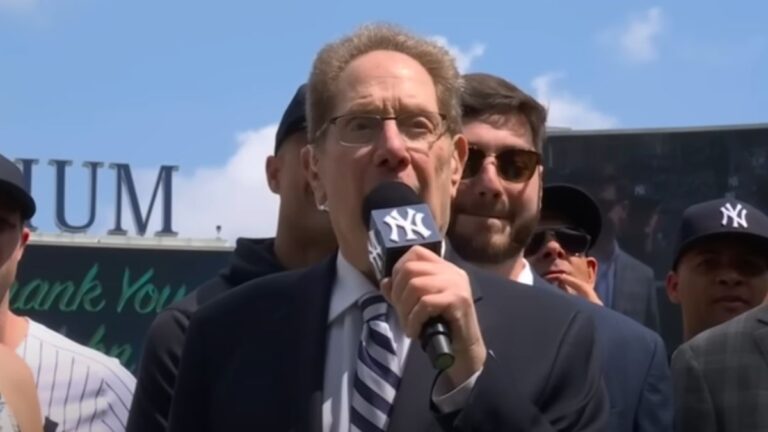
Legendary New York Yankees radio voice John Sterling says he is on the mend after suffering a heart attack in early January, offering an encouraging update that reflects the resilience that defined a broadcasting career spanning more than six decades and thousands of games behind the microphone.
Sterling, 87, shared the news during a weekend appearance on WFAN, explaining that his heart remains strong even as he works to regain strength in his legs, which have limited his mobility during recovery.
While he acknowledged the physical challenges that come with the rehabilitation process, he expressed gratitude for his overall prognosis and maintained the optimistic tone that listeners came to expect throughout his time calling Yankees baseball.
“I’m kind of waiting for the force to leave my legs and I can get back out there,” Sterling said. “I’m very fortunate, and all things are good.”
Despite the setback, Sterling emphasized that doctors have given him positive feedback about his cardiac health, which has provided reassurance to both the veteran broadcaster and the audience that followed his career for decades.
Although he stepped away from full-time play-by-play duties in April 2024, Sterling’s connection to sports remains intact. During his recovery, he has filled his days watching basketball, keeping up with the Winter Olympics and, more recently, tuning in to Spring Training action, reinforcing the lifelong fandom that shaped his professional path.
He described himself as blessed to have grown up loving sports, a passion that ultimately turned into one of the most recognizable careers in baseball broadcasting history.
Sterling retired after calling 5,631 regular-season and postseason games for the Yankees, including an extraordinary streak of 5,060 consecutive contests that ended in July 2019 due to illness. Over the years, he battled a series of health challenges, including a blood infection in 2020, and travel demands increasingly took a toll in the seasons leading up to his retirement.
Nevertheless, he briefly returned to the booth late in the 2024 season and during the postseason before ultimately closing the chapter on his Yankees tenure.
Beyond baseball, Sterling’s resume includes work with the Nets, Islanders, Braves and Hawks, along with induction into the New York State Broadcasters Hall of Fame. His signature home run calls and unmistakable baritone delivery became woven into the soundtrack of Yankees history.
As he continues his recovery, Sterling credited his four children for providing hands-on support throughout the process, saying they have taken charge of day-to-day responsibilities and ensured he remains in good spirits.
“I couldn’t have done anything without them,” he said. “They have been sensational in taking care of me.”
John Sterling shares a health update with Rickie Ricardo after suffering a heart attack in January.
Barrett Media produces daily content on the music, news, and sports media industries. Sign up for our newsletters to stay updated and get the latest information right in your inbox.
Can the NHL cash in on the Olympics buzz and renewed interest in the sport of ice hockey? For the first time in over a decade, NHL players have participated in the Winter Olympic Games this year in Milan Cortina. The opportunity is massive in several ways. It drives more hockey fans to watch the competition, as it has been dubbed a two-week All-Star Game. Plus, it gives NHL stars the opportunity to market themselves to a whole new audience.
Logic suggests that the viewership success of men’s Olympic hockey should translate into momentum for the NHL and its playoff push beginning this week. But that only happens if the league treats it like an opportunity — not an afterthought.
The central question is simple: Is the NHL putting real effort behind marketing the Olympic stars in a way that can generate sustained results post-Olympics? If history offers any guidance, the league should move aggressively and immediately.
To its credit, NBC has done its part. In its return to presenting hockey on a national stage, the network leaned into familiarity and nostalgia. The recognizable voices of Kenny Albert and Eddie Olczyk returned. Music associated with NBC’s 16 years of coverage resurfaced. The presentation felt intentional. Fans noticed. League executives noticed.
NHL deputy commissioner Bill Daly even acknowledged NBC Sports’ efforts.
“NBC was our rightsholder last time, and we didn’t get the level of cooperation we’re getting now,” said Daly to Sports Business Journal. “They see a common objective in trying to make this tournament as big as it can be and make it interest as many people as it can.”
It is encouraging to hear that. Now the league must match it. Because just last year, the NHL had a similar opening — and largely let it slip.
Following the 4-Nations Face-Off final between the United States and Canada, the league saw a short-term bump in viewership. The final became the most-watched NHL game in the United States last season and the most-watched hockey event ever on ESPN. An average of 9.3 million viewers tuned in, with the audience peaking at 10.4 million.
According to SBJ, that made the 4-Nations final the most-watched NHL game ever in the United States, surpassing Game 6 of the 2019 Stanley Cup Final between the St. Louis Blues and Boston Bruins.
Immediately following the 4-Nations, ABC’s doubleheader saw double-digit increases in viewership year over year. But the games barely achieved an average audience above one million viewers.
There’s no question that NHL viewership depends heavily on teams and markets with strong hockey history. Unfortunately, that is a problem the league has worked around for decades. However, with viewership for the U.S.-Canada matchup likely to rise above what the 4-Nations Face-Off Tournament final delivered, the league must use this second chance to better market itself to a captive audience.
Even with an 8 a.m. Eastern faceoff on a Sunday, the U.S.-Canada matchup features star power, familiarity and emotional stakes. It should exceed last year’s 4-Nations final audience. Whatever the final number becomes, it will represent something the NHL rarely commands. A massive, national audience emotionally invested in its best players competing in meaningful games.
Every hit harder. Every shot louder. Every second priceless.
With no games immediately following the event, the league should flood its media ecosystem. Promotional inventory across ESPN, ABC and TNT Sports should reinforce player narratives born in Milan Cortina. Local radio and television partners should amplify playoff races through the lens of Olympic performances. Digital teams should aggressively distribute highlights, behind-the-scenes content and personality-driven storytelling to audiences still searching for Olympic coverage online.
The tools are there. The access is there. The cooperation, according to Daly, is there. If the NHL truly is receiving the level of cooperation it has mentioned from NBC, then it cannot drop the ball when it comes to maximizing that access. What cannot be missing is urgency.
Skeptics will argue the league may not need to invest heavily in capitalizing on the opportunity. This is the league’s first season under the new Nielsen Big Data + Panel measurement system, and it will likely see improved results as part of the new methodology. The NFL, NBA and nearly every ESPN daily program have seen better year-over-year results in part because of this new measurement system.
In fact, ESPN reported a few weeks ago that NHL games on the network have seen a 39% increase in average viewership year over year through the first four months of the regular season. Do we really believe there are 39% more people watching NHL hockey this year compared to last year, or is this more about adding additional audience to the measurement itself?
It’s fair to point out that not only ESPN has seen this rise, but the Olympics have as well. The enhanced methodology also delivered the U.S. women’s gold medal game over Canada the all-time viewership record for a women’s hockey game in the United States. An average of 5.3 million viewers watched the U.S. women defeat Canada in an overtime thriller, which peaked at 7.7 million viewers in overtime.
There was debate all weekend about what the men’s final viewership will be. More star power, NHL familiarity and the same two nations involved — despite the 8 a.m. Eastern time faceoff on a Sunday — should produce a number higher than the 4-Nations final delivered last year.
Whatever the final number ends up being, it will represent something the NHL rarely has — a massive, national, emotionally invested audience watching its best players compete in meaningful games.
That audience won’t automatically convert. It won’t simply migrate to ESPN, ABC or TNT on its own. Casual fans don’t follow leagues — they follow moments. They follow stars. They follow storylines that feel big.
The U.S.-Canada Olympic final is a moment.
NHL commissioner Gary Bettman, NLPHA executive director Marty Walsh and IIHF president Luc Tardif spoke to the media about the return of NHL players at The Winter Olympics. Bettman also touched on the plan to have a best-on-best every two years: https://t.co/eZ4eQ2eksjpic.twitter.com/xBbHzRXkJM
If the NHL treats it like just another event on the calendar, history suggests the buzz will fade as quickly as it arrived. However, if the league aggressively markets the rivalries born in Milan Cortina, the personalities that emerged on the Olympic stage and the playoff races about to heat up back home, this can become more than a two-week spike. It can become a bridge.
A bridge from international spectacle to nightly relevance. From patriotic pride to team loyalty. From Olympic curiosity to NHL habit.
The opportunity is sitting there — millions of viewers, heightened emotion, fresh storylines and direct access to the players who just carried the sport onto a global stage.
The NHL cannot afford to let this become another “what if.”
If the league truly wants to grow the game, this is the moment to prove it.
Barrett Media produces daily content on the music, news, and sports media industries. Sign up for our newsletters to stay updated and get the latest information right in your inbox.
The organic feel of classic rock continues to roll with new music fans. We have seen a resurgence in the sound, the look, and the vibe over the past ten years. A talent and substance over style approach that the heroes of our past have inspired is present in some of rock’s coolest new bands.
Greta Van Fleet, Rival Sons, and Dirty Honey started the revolution. That’s led to new artists such as The Band Feel, Dorothy, and Tyler Bryant and The Shakedown.
Another band that is on my radar is Ten Ton Mojo. Riff meets grit and groove with a shot of blues and attitude.
Ten Ton Mojo features Dave Anthony (Lead Vocals), with Scott Lano and Christian Realmuto (Guitars). Also Paul “Sugar” Kane (Drums/Percussion) and Kenny Madden (Bass Guitar). The band has been releasing original music since 2013, and their latest EP Rebel Heart, Gypsy Soul is everything we love about American rock and roll.
Drenched in raunchy riffs is where their New York sensibility shines. Pounding percussion alongside an infectious chorus. Ten Ton Mojo takes us back to the vibe of Humble Pie with a shot of Guns N’ Roses down the hatch. When you hear them, you head down the rock rabbit hole and get lost in the groove.
They have been hailed “The Best Band in NYC” by Aquarian Weekly magazine.
I’ve seen the band open for Scott Weiland and Ace Frehley. They have headlined shows across the country, including New Jersey’s Light Of Day Winterfest show. You’ll be transported back to 1976 and, trust me, you’re gonna love it.
I caught up with Ten Ton Mojo’s Dave Anthony, on my Carr Stereo podcast, where he gave me the Ten Ton Mojo 101 mantra.
*Editor’s Note: Answers have been edited for clarity and length.*
Terrie Carr – You have been called the best band In New York City. There is a New York grit, but Ten Ton Mojo brings me back to the Humble Pie Days. You bring me back to the days of Bad Company. Days where vocals, soul, melody, and riff was so important. Ten Ton Mojo is a different kind of NY grit.
Dave Anthony – We started out on the lower east side of Manhattan, but the band actually comes from all over. I’m actually the most southern on Long Island. Scott is living upstate, Paul is in Staten Island, Christian is actually in Manhattan, and Kenny is in Yonkers.
We practiced in the Lower East Side for years at Rivington Studios. Now our road manager found us our own studio in Yonkers, and it’s been a great place for us. Cheap rent, and we use our own equipment. We have been playing hard, writing good stuff, and trying to make the right moves. We’re working with Max Gorman, our producer, and working at nice studios like SST in Weehawken.
We’re spreading the word on our band. I think that’s a huge part of it.
TC– Rebel Heart, Gypsy Soul the song. You are the deliverer of these songs that are drenched in that classic sound. Talk to me about the writing process, is that something you do in the studio?
You guys are road warriors. Do you write together on tour?
DA– Our writing process is more unique than most. Everybody is involved.
Our guitar player or even our bass player will come up with a riff and bring in something basic like a verse and a chorus. Then we’ll get to work on it all together. There is definitely contribution from everybody in the band. It’s all hands on deck.
TC– You can fit on any bill when you tour. I feel like when I go to a Ten Ton Mojo show, I’m going to have a good time.
DA– As much as we are probably a 70’s kind of sound, the 80’s is 100 percent in there.
That’s a big part of classic rock, and even now the 90’s. However, we are definitely striving for that sound. Earlier you touched on a bunch of bands I really love. Greta Van Fleet, Dirty Honey, Rival Sons, and Crobot.
I’m so glad you mentioned Crobot too because I don’t hear them mentioned as much.
TC– They are so underrated. Brandon Yeagley is one of the best vocalists in rock, and he never gets the credit.
DA– So many new bands out there, for the most part, that you see are classic rock-style tribute bands now.
Unfortunately, that’s almost filling the market for that sound. You’re not seeing as many original bands of that genre. That’s something that’s been getting lost in music in the past ten years, and I think that’s starting to come back.
Some of the bands you mentioned earlier are really big pioneers who are bringing that sound back as well. We are trying to do the same!
Ten Ton Mojo is the real deal. Attitude, tunes, and fun. Pretty much the definition of rock and roll.
Barrett Media produces daily content on the music, news, and sports media industries. Sign up for our newsletters to stay updated and get the latest information right in your inbox.
On Friday, I watched something spectacular. Mark Pope sat down at a press conference at the University of Kentucky and fielded a question from a journalism class. It could have turned into a polite, forgettable exchange, but instead it became a masterclass for anyone working in sports media. If you haven’t watched it yet, click the video below. It’s worth 2:41 of your time.
Pope was asked ‘what advice would you give to a young, aspiring journalist?’ Kentucky’s Men’s Basketball Coach smiled and told Kentucky sportscaster Lee Howard ‘that is a dangerous question‘.
Pope proceeded to give one of the more memorable answers I’ve ever heard from a Coach. He explained to those in the room that they were entering a business where their work will be judged by clicks, views and shares. He pointed out that they could be rewarded for producing cheap clicks or by being great at what they do.
That observation should hit home with every sports media professional.
Because he’s right.
Choosing Clicks Over Connection
In today’s environment, journalists aren’t just asked to report. They’re expected to deliver numbers. They are told what “works.” They’re shown which headlines convert. Many are nudged to create content that triggers engagement.
The danger isn’t in understanding audience behavior. It’s in allowing those metrics to dictate editorial judgment.
What advice does Mark Pope have for young, aspiring journalists?
I’m teaching an upper‑level journalism course at #UK this semester, and on Thursday, I took my class to Pope’s press conference. I asked him what guidance he’d give the next generation of journalists. His answer… pic.twitter.com/E6O4u30XWE
If you run a digital department, how often are conversations centered on traffic over impact? If you host a show, are you creating topics that give the audience something to think about and feel or are you talking about subjects that fit the play the hits mantra and prioritize social media engagement and/or ratings?
What about if you’re an executive? Are you rewarding creativity and originality or living and dying with Nielsen numbers and digital metrics?
Many executives build strategies around what they ‘think‘ the audience wants. They make judgments by examining what appears on a ratings sheet or what trends on X. If Nielsen says don’t play music to signal a break, they don’t. If capturing 3-minutes of listening in a quarter hour is more likely to work with 4-breaks per hour instead of 3, they follow the plan. And if a flood of replies come in on X in response to a topic, clearly the right call was made.
The Problem Is…
Those suggestions show what a meter responds to when exposed to your brand/show and the station’s signal. They don’t show if the person wearing it listened, cared or connected to it. Unless you’re sitting with the audience watching them in real-time, you are building a strategy to chase 5-10 devices in a city of millions, hoping it produces positive gains.
And don’t even get me started on social media responses. If I walk into a studio and grab the mic and label the USA Men’s Olympic Hockey team as overrated, I’ll draw a reaction. It’s a classic case of rage baiting. It might pull a number and produce a flood of responses but that doesn’t make it smart or sustainable. You can also get duped into thinking everyone cares when in reality BigJellyBelly09 from parts unknown is whose feedback you’re overvaluing.
The media industry has trained itself to equate visibility with value. But they are not the same thing. A story built to inflame will often outperform a story built to inform — at least in the short term. A clipped quote taken out of context circulates faster than nuanced analysis. A loud debate generates more instant reaction than a thoughtful breakdown.
But what does that approach build over time?
Not trust.
And trust is the currency that sustains sports media brands.
Quality Over Quantity
At Barrett Media, we operate inside of a niche. Our audience isn’t the casual fan scrolling for entertainment. It’s programmers, executives, talent, agents, advertising executives and decision-makers who shape the industry. We have strong, consistent, professional readers, and perform well each month. However, we know that our traffic ceiling will never mirror mass-market sports outlets. I’m comfortable with that. We’ve never once sold a sponsorship based on traffic. Our partners prefer our ability to grow their business over larger clicks and impressions.
Since 2015, I’ve operated with the philosophy that I’d rather reach 100 Bob Iger’s and Bob Pittman’s over 1,000 fans. If others want to brag about traffic and larger social media followings, go for it. They can be first breaking news too. I’ll be there to applaud them and read and promote their work. Our focus is on credibility, connection, trust, and impact. If we can celebrate, educate and challenge the industry consistently, and in a fair and responsible manner, we will be successful. That’s all that we can control.
If you want to be great and seen as a respected, truth telling journalist, cheap clicks and contrived conversations aren’t the answer. That means being ok with publishing pieces or creating segments that don’t produce massive numbers. It means asking uncomfortable questions without manufacturing drama. It involves protecting your credibility even when it’s easier to sensationalize headlines for incremental lift.
The Dilemma
In sports media, access, relationships, and reputation are everything. When you cover a team or a league consistently, you’re not just publishing content. You’re building a presence. Coaches, executives, athletes and agents form impressions. Peers in the industry take note too. Sources decide whether you’re worth trusting.
If your brand is synonymous with distortion or opportunism, doors close. If it’s associated with fairness, preparation, and credibility, doors open. That’s not a theory. It’s a reality in a relationship-driven business.
Mark Pope’s remarks to those students highlighted a crossroads facing the next generation. Do they want to chase algorithms or build authority? Are they going to prioritize reactions or invest in sustained relevance?
This is an issue for leaders too. If compensation and recognition are tied to traffic and ratings spikes, don’t be surprised if your staff values noise over depth. If long-term brand health and audience loyalty matter, behaviors must shift.
None of this means ignoring data. Analytics are essential. They reveal consumption habits and highlight opportunity. But data should inform strategy — not override standards. There’s a difference between understanding what resonates with an audience and exploiting what provokes.
Conclusion
In a landscape flooded with takes, brands that endure will be those that audiences and industry insiders consider reliable. It’s harder, slower, and may not produce fireworks but it builds something far more powerful than a temporary spike – trust and respect.
Mark Pope didn’t need to lecture anyone about media economics or digital transformation. His message was more fundamental: choose substance over shortcuts. Authenticity over gimmicks. Long-term trust over short-term validation.
For anyone serious about building a lasting sports media brand, that’s not just good advice. It’s a strategic blueprint.
Barrett Media produces daily content on the music, news, and sports media industries.Sign upfor our newsletters to stay updated and get the latest information right in your inbox.