

Thank you for checking out ‘The Industry According To’. This series runs each Tuesday, and features radio and record industry executives, managers, programmers, talent, artists, and professionals from all areas of the business world. To be considered as a future guest, email me at keithblackboxgroup@gmail.com.
The music industry is massive. Thousands of jobs, companies, brands, and artists, all chasing different goals. Today we tap the mind of Fred Jacobs.
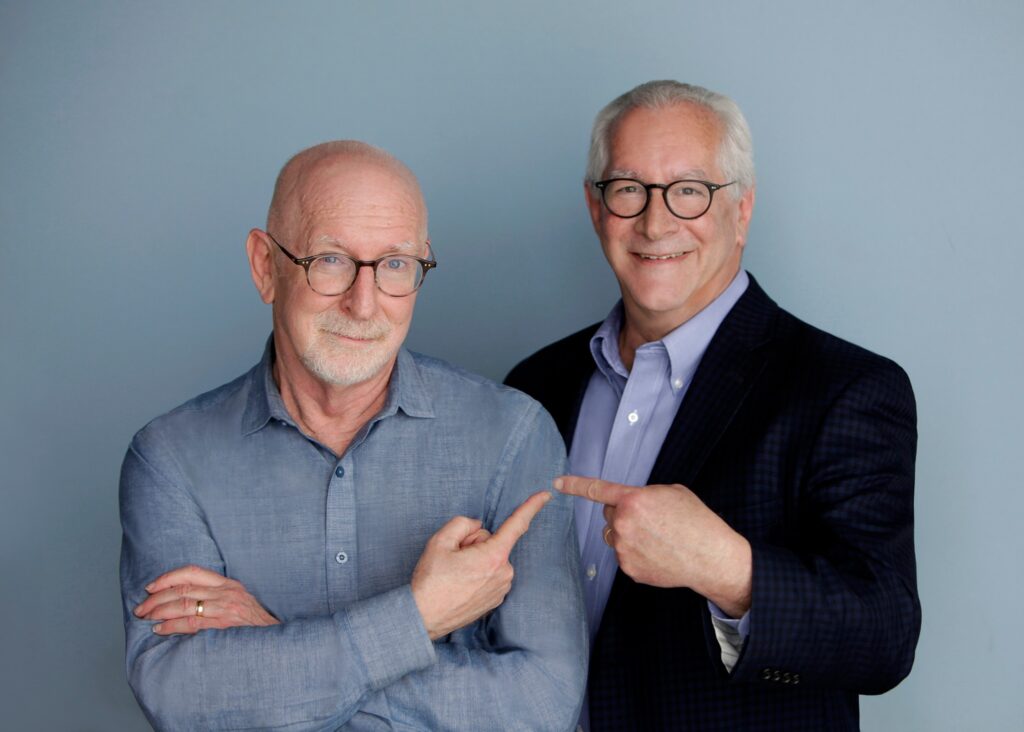
Most know Fred Jacobs as the President of Jacobs Media and a pioneering Radio consultant, but that’s like saying Apple just makes computers. Fred and his team have tentacles in every conner of the audio and entertainment world, from Rock radio to apps, automotive dashboards to digital brands far outside music. Few see the industry’s past, present, and possible future as clearly as Fred, so let’s dive in.
Day-to-Day Reality
Keith: You run a multi-media consultancy that touches everything from radio to tech to automotive. What is the real thing that keeps your clients (and maybe you) up at night right now?
Fred: The things that keep ME up at night? Barrett wouldn’t give you that much space!
As for industry people, most are concerned about the basic fundamentals of the business – which is saying something, because for most of us over the age of 40, you never questioned the efficacy of broadcast radio. Build your brand, do your homework (research!), attract an audience, market your station, and hire well-dressed, knowledgeable people to rep it, and chances are, you were creating a successful, sustainable high-margin business. Today, all those underpinnings – the stability of the radio model – are on very shaky ground. And because the economics of the radio business are so precarious, broadcast owners started skipping key steps that are essential for winning over the long haul. That weakens brands, and over time, the companies that own scores or hundreds of stations lost the advantages of scale.
Along these lines, the digital conundrum also has confounded radio ownership – the degree to which technology has changed the basic ways in which people consume entertainment and information, how to monetize it, and how to compete against the biggest companies in the world that provide many of the same products and services. The world was a simpler and more profitable place when broadcasters just had to concern themselves with their own brand(s) and a handful of radio competitors in the local market, along with a hometown newspaper and the usual network TV affiliates.
Data Blind Spots
Keith: Your annual TechSurveys have been like a reliable GPS tracker for the industry for years. What’s the one finding you’ve been screaming about that radio and label leaders still ignore?
Fred: I’ll give you three of them: a key takeaway and two basic observations from having conducted these every year since 2005.
The big finding is the ongoing power of both personality and “local” year-in-and-year-out in Techsurvey. These aren’t just important to fans of radio; they also happen to be the defining differences between broadcast radio and virtually everyone else. (An aside: In our dealings with automakers over the past two decades, when we tell them we’re in radio and we talk about the value of the medium TO THEM, they always bring up the power and value of air talent and connection to the local community. Every time. What does that tell you about their obvious value?)
The observations? Our sample is a direct function of the email databases of our stakeholder stations. And based on that, we can see the perpetual aging of the medium, year after. Millennial representation if uniformly poor, while Gen Z’s are virtually nonexistent. You don’t need an actuary to explain the implications of this on radio’s future.
The other ignored aspect of Techsurvey and studies like Edison’s “Infinite Dial” is that it hasn’t stimulated more radio companies to wider their POVs and look at the larger media ecosystem their stations compete within. Instead, most competitive conversations and research studies revolve around how we can beat the crap out of The Bull, B97, or Rock 104. Many don’t consider the larger picture. That is what is typically eating their lunch, both on the sales and programming sides.
Radio’s Lost Turf
Keith: Spotify and Apple built personalization on what radio invented in, curation and discovery. Should radio fight to reclaim that ground, or evolve beyond it to something else?
Fred: My sense is radio has inherent strengths (see above) that sets it apart without trying to compete with behemoths like Spotify and Apple. Plus, radio operators cannot seriously compete in these arenas, so why bother? Again, if radio broadcasters were asking the right questions, this wouldn’t even be a discussion.

If Ratings Didn’t Matter
Keith: If Ratings didn’t matter tomorrow, how would stations actually sound? Would they be a little different or like new brands? Do you think that’d be better or worse for listeners?
Fred: What a wonderful world this would be. Seriously, most of the things radio does to program to the ratings work against its competitive energies. Start with cramming all those commercials into just two stopsets. While that practice may make sense in moving meters, it does not create a great listener experience.
Then there are the stations spending what little marketing they have chasing a meter here or a meter there. I’m all about trying to win in the ratings war, but when those actions conspire against presenting the best programming possible, the process becomes self-defeating.
Show Us the Money
Keith: Radio’s revenue model has been under siege for years. Critics say :30s and:60s, and Nielsen estimates feel outdated, while some podcasts and streams are printing money like they’re in Dubai. Have you seen anyone genuinely trying to reinvent the revenue model so it’s listener-first?
Fred: The listener-first concept is so smart, but most broadcasters cannot get out of their own way to make these campaigns come alive. I am a proponent of dragging an empty chair into any and all radio station meetings that represents “the listener.” Too often, stations default to what’s right for the company, the bottom line. While organizations need to deliver on their goals, doing this by creating negative experiences for audience members simply drives more people away.
Broadcasters continue to chase diminishing “radio dollars” rather than prospecting for new money, sponsorships, and local collaborations entities like Apple, Google, and Facebook cannot do. Listeners appreciate when stations do some of the simple things that show they care. Every time I conduct Listener Advisory Groups for client stations, people thank the station for caring enough about their opinions to invite them to these sessions. That provides insights into just how powerful giving the audience a voice can be.
Keith A quick follow up to that. If you could pull one lever to reverse radio’s revenue decline, what would it be?
Fred: I would bring an air personality (or the PD) to every significant pitch. Who better to describe the station’s mission and why advertising on the station or sponsoring event can be so smart? I’ve dreamed of being reincarnated as a client so I could sponsor some of radio station’s best events. It is absolutely shameful how much great feature programming or unique station gatherings go unsold.
Innovation & Identity
Keith: You created the Classic Rock format and it still works. Why hasn’t radio created its next great formats? Is it a lack of creativity, courage, or something deeper?
Fred: I honestly don’t know. If you would have told me in 1985 when Classic Rock started lifting off that aside from Jack and Classic Hip-Hop, nothing new would be developed over what is now four decades I’d have been very surprised.
When I tell you how difficult it was to convince ANYBODY to take a shot on a new format back then, it would discourage even the most optimistic person. I remember some of the early sales meetings I was thrown into to “explain” Classic Rock to the AEs. Invariably, they’d ask, “But what does it sound like?.” I’d explain that it didn’t sound like anything else that was on the radio. Which was the point.
Thank goodness those original stations exploded in the ratings. There certainly wasn’t a whole lot of enthusiasm in those early sales meetings.
Metrics Mania
Keith: You’ve seen it all – diaries, PPM, LPs, Streams, MySpace, and now it’s Impressions, Dashboards and TikTok. What’s the one metric today that tells you and advertisers that fans really care?
Fred: I continue to be a fan of the Net Promoter Score, something we’ve included in every Techsurvey we’ve done for commercial, public, and Christian stations. It’s a simple, but effective, recommendation score that measures word-of-mouth. When a trusted friend, co-worker, or relative sing the praises of a new band, a new TV series, or a new morning show, it overshadows user metrics. For individual radio stations, tracking NPS over years can paint an insightful picture for programmers. Next month, we’ll go into the field for Techsurvey 2026.
We literally chart these scores over 21 years. I find it’s a direct reflection of how stations sound and how well they serve their audiences. Firing a veteran morning show or even a sidekick without some degree of honesty and transparency almost always results in lower NPS marks. And justifiably so.
Radio Talent
Keith: Does radio have a talent problem, a pipeline problem, or a perception problem?
Fred: Yes, yes, and not really.
Many stations don’t lean into the talent they have. There’s a tendency to take talent for granted and load them up with too many endorsements. Let’s get real. When a morning host is shilling for a dozen different advertisers (some of which come up multiple times in the same stopset), it’s just not credible.
I haven’t missed a Morning Show Bootcamp in years. For my money, it’s the best view of radio talent our industry has. I wish more of radio’s corporate officers would attend this event and see the passion, energy, and enthusiasm these people have. Despite industry problems and speed bumps, these folks are excited, energized, and motivated. They want to improve, try different things, and learn from one another. I wish every exec in radio could make it a point to show up to this event.
Then there’s the pipeline. Better put, the lack of a bench, minor leagues, or whatever you want to call it. And it stems from the elimination of those shifts that served as training grounds for fledgling talent – nights, overnights, weekends. Our AQ research studies comprised of commercial radio air talent has been especially revealing in quantifying this key point. The best on-air talent today got their starts doing airshifts that for all intents and purposes no longer exist. We’re going to see more and more shows, teams, and individuals who have been on the air for decades retire – or be retired. Who will replace them?
Keith: Which would you rather have — the loud and polarizing personality, or the consistent one?
Fred: Neither. They both bring something to the table but are flawed. The former may be attention-getting, but at this moment in time, most people aren’t turning on the radio to be shocked, angered, or shaken. Life is hard enough as it is.
On the other hand, a consistent personality without hooks or the ability to truly connect with audiences isn’t a great option either.
There’s no single personality type that guarantees results. But if I was building the “Frankenstein talent” in a lab, I’d be looking for someone with at least some of these qualities: Empathetic, storytelling, wired in to the community, human, self-deprecating, and a good ambassador to the station.
AI
Keith: Are any of your clients using AI in a way that is truly additive to the listener experience? I’m not just referring to backend support or automation.
Fred: I don’t think so. The typical usage patterns revolve around using the technology to eliminate some of the drudge work so that programmers and managers have more time to think and breathe.
I am concerned about how AI will be utilized in the media in general. I know a lot of people from VO talent to on-air personalities to programmers are concerned about the bots taking their jobs. In this regard, I’d recommend everyone pick a copy of Seth Godin’s old book, “Linchpin.”
I’d also suggest that even if AI scares you, you should take the time to learn it as much as possible. It’s not going anywhere. It would be advantageous for any broadcaster to learn how to use it and understand its capabilities.
Future Leaders
Keith: A 25-year-old walks into your office and says they want to reinvent radio like Steve Jobs did Apple and Tech. What’s your advice?
Fred: Write me up a plan, laying out how you’re going to do it. If he/she has a good storyline, rationale, and mission, I’d try to find them a place in my company to sandbox it. More points if they’ve already done it somewhere.
Hiring a 25-year-old and giving him/her the keys to one of our starships seems risky. But when I got into the business, I’d estimate the average age of a rock radio PD was somewhere between 25-30. It often worked out pretty well.
Futurecasting
Keith: You often quote Wayne Gretzky about skating to where the puck is headed. So, where is it going? What does music and media look like in 2035?
Fred: Boy, I wish I knew. I would expect more consolidation in all forms of media and entertainment. The more sources for content, including thousands of YouTube channels, the harder it will be to amass a big audience and make a profit.
I worry about the state of news and the lack of trust that so many news organizations are burdened by. Social media may be fascinating but as a news source, it is problematic.
AI will have to be reckoned with and we’re not off to a good start. When music can be created with this technology and many consumers don’t care one way or the other, that’s a game-changer.
One thing I’ve learned over the years is that questions like this one generally cannot take into account media and tech that doesn’t exist. We had no warning on iPods, smartphones, social media, podcasts, TikTok, Netfix, and ChatGPT. Yet, each of these innovations came along and CHANGED EVERYTHING. There’s no reason why this pattern won’t continue. It’s why Paul and I go to CES every year. As my friend and mentor, Jerry Lee, likes to remind me when I ask him why he’s been to more than 50 of these events, “I don’t want to miss the future.”
The Uncomfortable Truth
Keith: What’s the uncomfortable truth you wish all radio Execs, GMs and PDs would just admit?
Fred: Radio’s dominance in cars – its #1 listening location – is seriously up for grabs. It’s not just because some manufacturers would just as soon stop including an AM and/or FM into their dashboards. We’re reaching that tipping point where more and more drivers and passengers are connecting their phones to their vehicles, thus bringing in their content. Radio is going to have to fight harder to remain relevant in cars. And not to beat a dead horse, but that “secret sauce” might once again prove to be local content and proprietary personalities.
The One Story
Keith: Before you go, what’s your best must tell story? It can be success, nightmare, or pure madness.
Fred: There are SO many that would blow you away. But one of the fun ones was in the 1980s when I first started consulting 91X. Most people associate me with Classic Rock, but I was fortunate to work with that station and its amazing team back in the formative years. (It led me to launching the Edge format).
91X was (is) a Mexican station and its call letters are X-E-T-R-A. Many in the station’s inner circle back then were concerned that if San Diegans knew 91X was in actuality a Mexican station, it might be a deterrent to listen. The call letters had to be spoken in Spanish, and they used a young girl with a “non-radio” voice and buried the legal ID in a produced music and effects piece.
When they hired me, one of my first tasks was to moderate a set of focus groups. The first one on the agenda was 18–24-year-old women. I have become good at playing dumb and letting listeners tell me the story of the radio stations they spend time with. When the topic came around to 91X, the female respondents started telling me all about the station – its music, the jocks, contests, events, everything. And then one of them said, “You know, they’re actually a Mexican station.” And I asked the room how many knew that fact prior to attending the group. They all raised their hands.
So, I asked the woman who first brought it up how she came to know that. She explained, “They do their letters in Spanish once an hour.” Before she could blurt out the Spanish call letters, I asked the room how many of them could knew the ID. Again, all hands went up.
On the count of three, I asked them to recite it. And in unison, I got this:
“EQUIS-EH-TEH-EH-REH-AH-EH-FEH, EH-MEH, BAJA CALIFORNIA, MEXICO”
It was one of the coolest moments of connection I’d ever seen with a radio station. They went onto explain to me how there was a distinct underground hipness that 91X had, stemming from its unusual roots. As I learned from a focus group of young women, 91X was ALTERNATIVE years before we started using that word.
After the groups, it was a foregone conclusion that the legal ID would be untethered from the top-of-the-hour production so it could stand out. And that is still how it is delivered today.
Keith: Anything else?
Fred: Pet peeves. I have 3 of them:
- PDs who refuse to tease (because it “telegraphs commercials are coming”). You have to give listeners a reason to stick around or come back.
- Companies that don’t even ask their people to think about innovation. Employees get the message quickly. If new ideas are unwelcome or won’t be considered, why bother?
- Visibility matters (especially when outside marketing is at a premium). Go where your audience goes, show up, hang out. This is how connections are made and how relationships form.
Barrett Media produces daily content on the music, news, and sports media industries. To stay updated, sign up for our newsletters and get the latest information delivered straight to your inbox.
