Home Blog Page 353

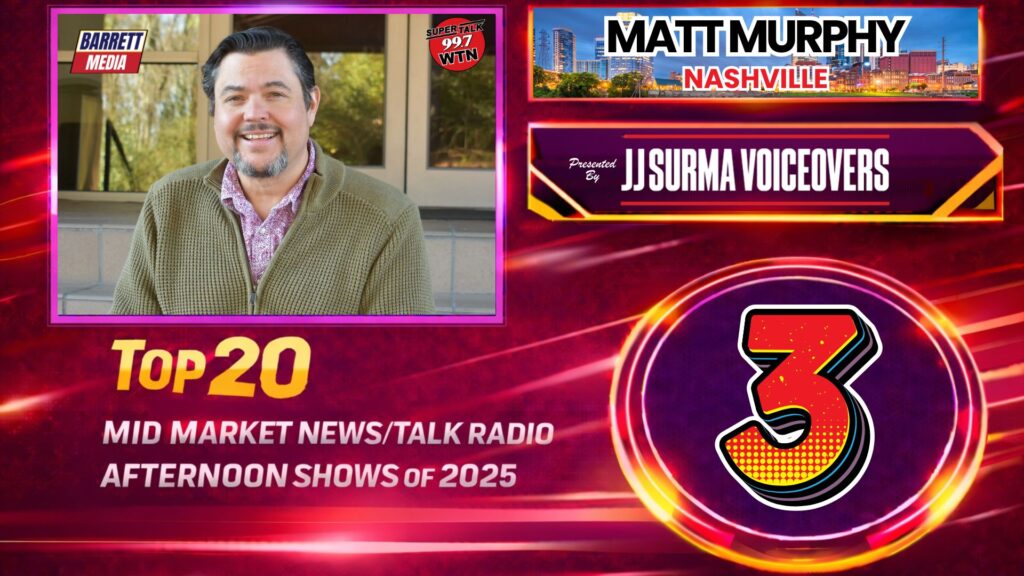
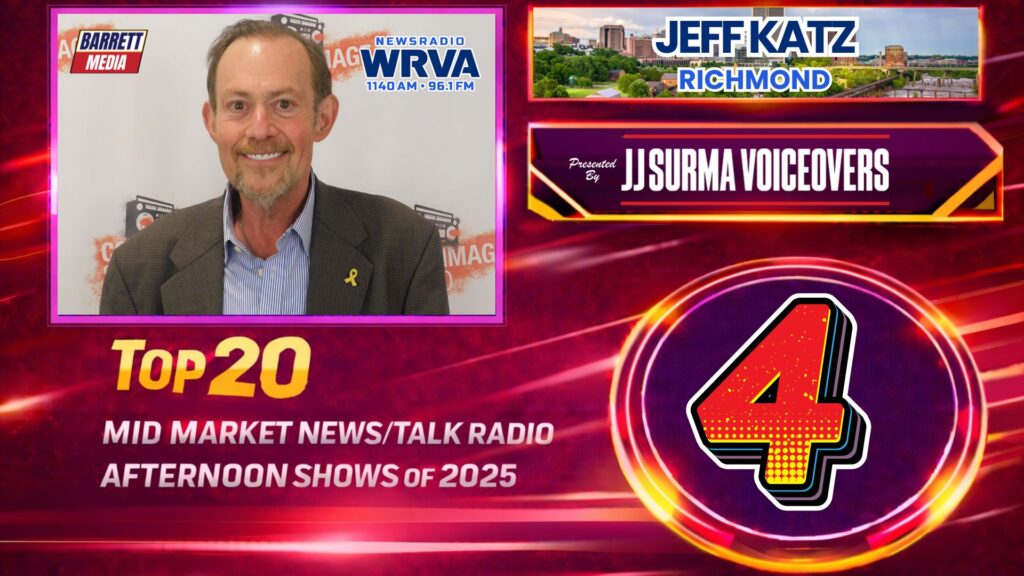
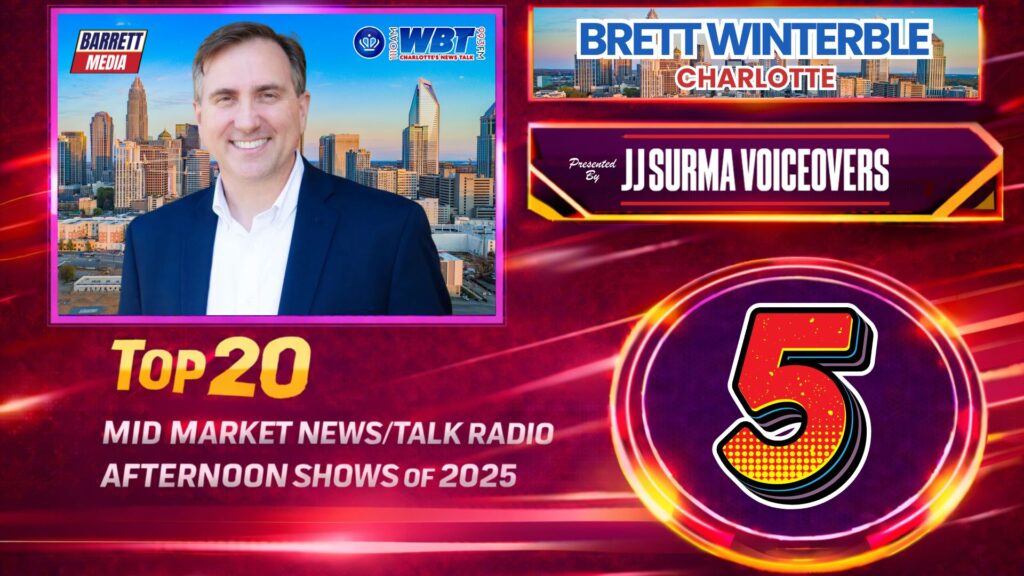
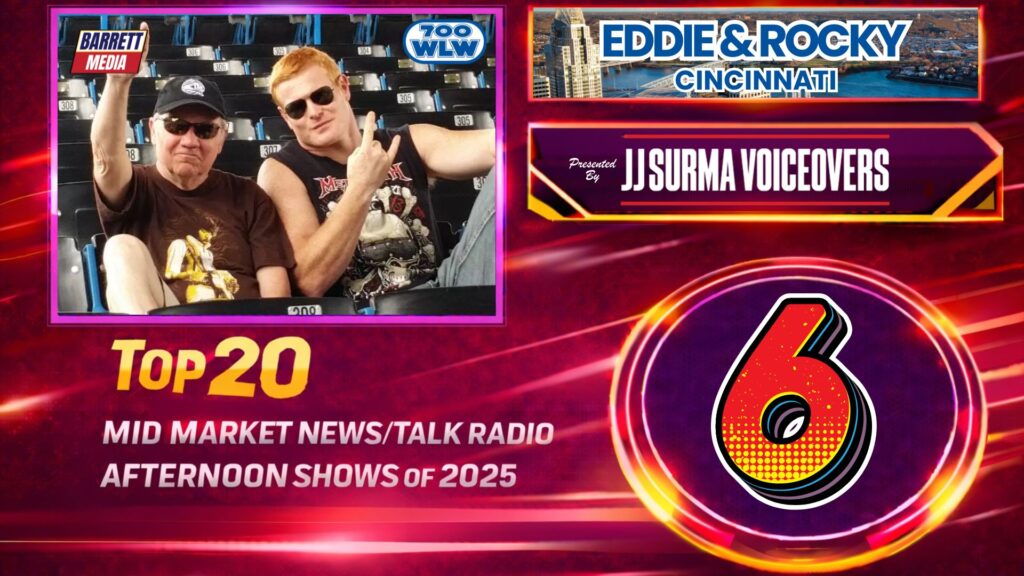
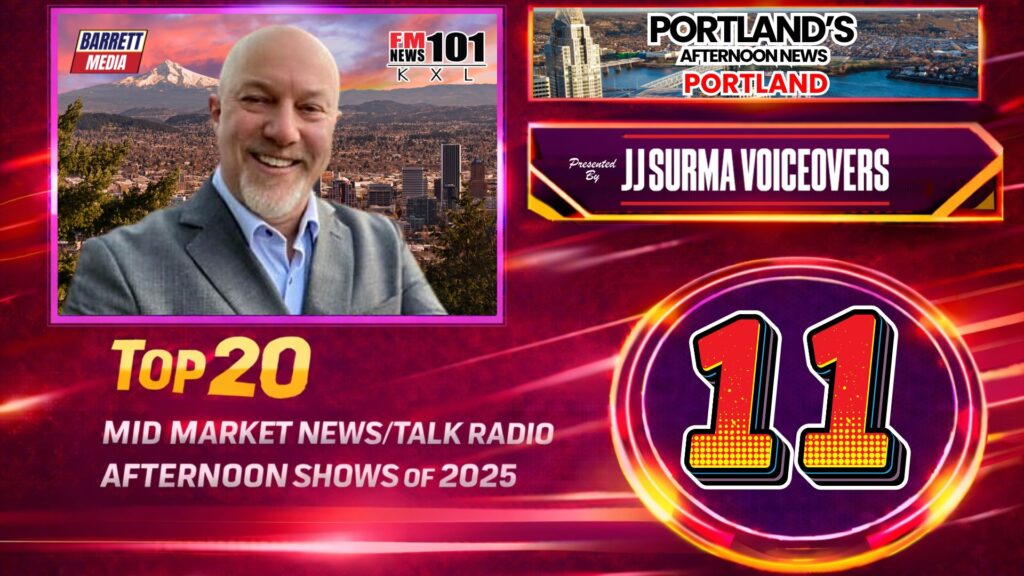
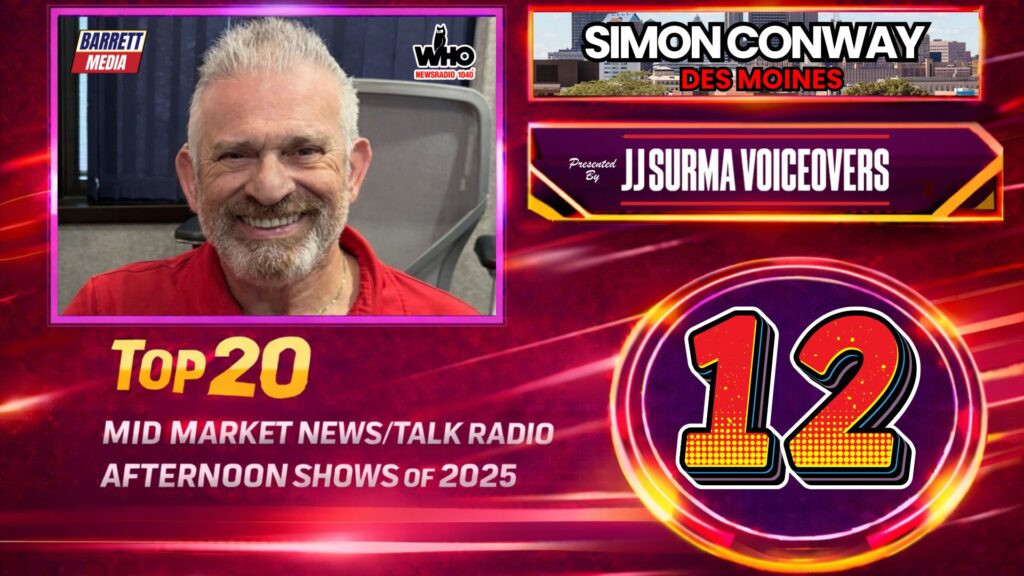
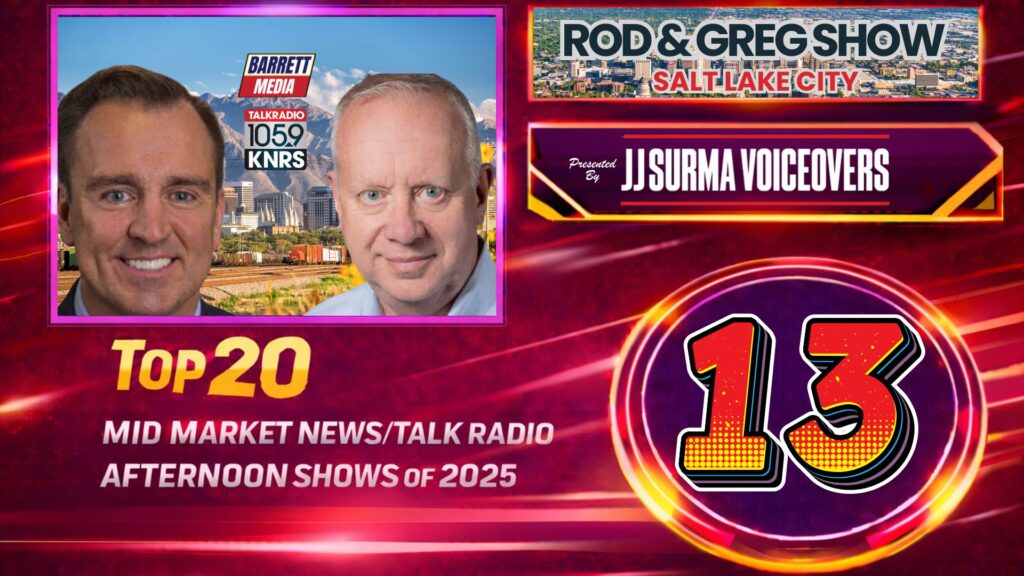
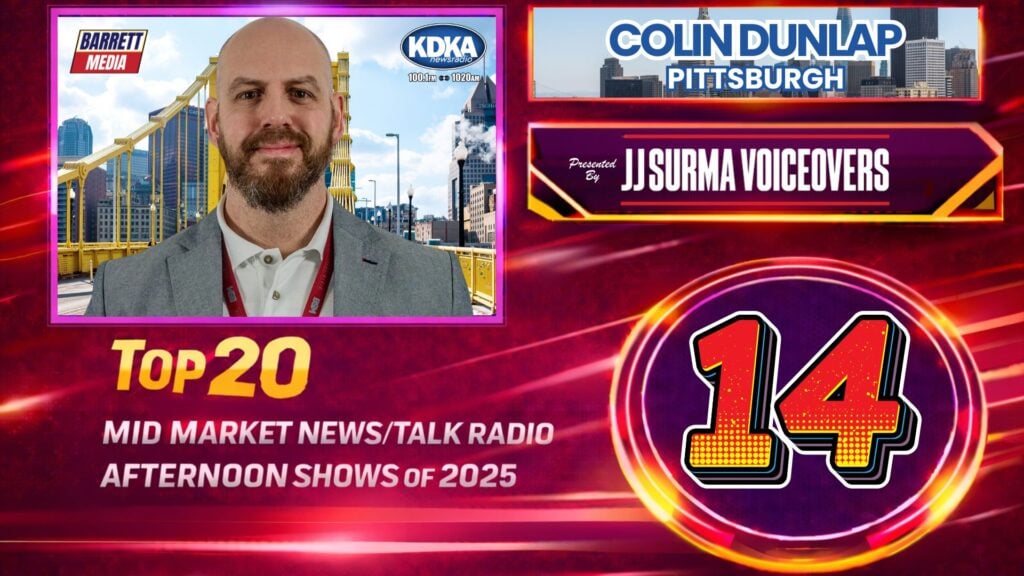
Barrett Media’s Top 20 Mid Market News/Talk Radio Afternoon Shows of 2025

0

Barrett Media’s Top 20 of 2025 for News/Talk Radio is presented by JJ Surma Voiceovers. Be sure to check out JJ’s work and learn how he can elevate your brand by clicking here.

Our news/talk series rolls on today with a look at the Top 20 Major Market Afternoon shows of 2025. To see all of the results, visit our website, subscribe to our newsletters, or follow us on FacebookLinkedIn, TikTok, Instagram and/or X. The full schedule of upcoming releases is listed down below the images. After the Top 20 series ends in March, I will record a video discussing the entire process. That video will be posted on the Barrett Media YouTube page. Make sure you subscribe so you’re notified once the video goes live.

As you review these results, please remember that they represent the collective feedback shared by our industry voters. Barrett Media does not vote in this process. Our role is to assemble the group, collect the votes, and present the information.

Important Information

#1 – These results are based on 2025’s performance. 2026 changes have no effect on the voting.

#2 – We ask our voters to supply photos and logos to avoid headaches. Some comply, but most don’t. It forces us to spend a lot of time digging for images to highlight everyone. For that reason, there are no photo changes unless it involves a mistake. Thanks in advance for understanding.

#3 – Our executive panel consists of forty (40) program directors and corporate executives from radio’s top broadcasting companies. They include Audacy, iHeart, Cumulus, Cox Media Group, Townsquare Media, Hubbard Radio, Bonneville, Radio One, Nexstar Media, Zimmer Communications, Connoisseur Media, Salem Radio Network, Premiere Networks, Fox News Radio, and a number of independently owned and operated outlets. Our voting group is large because we want feedback from all areas of the country. We also try to make sure the results don’t favor any one company.

#4 – The criteria for our voters included the ear test, originality, multi-platform impact, ratings success, clearance (national shows) and industry buzz. Keep in mind, our voters live in different cities, work for different companies, have different tastes, and value certain factors higher than others. This is not a perfect system but it’s one we feel good about using to showcase the industry’s best.

#5 – A total of 47 shows appeared on ballots submitted for voting consideration in the Mid Market News/Talk Radio Afternoon Shows category.

And the Winner Is…

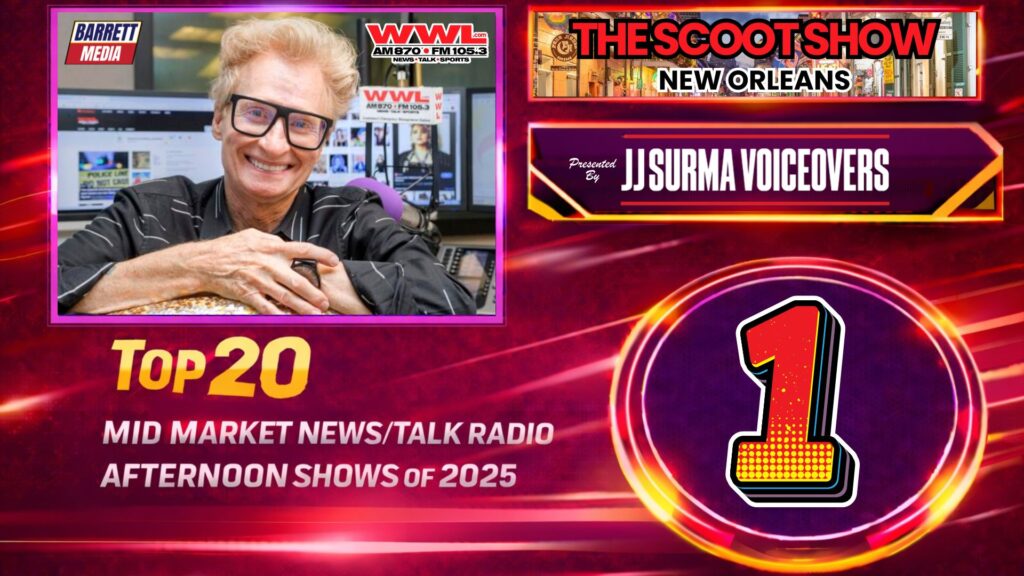
The Scoot Show of WWL in New Orleans. This is Scoot’s first time topping the list since Barrett Media started this series in 2022. Congratulations to Scott Paisant, Diane Newman, Dan Barron and the entire WWL team on the well earned recognition.

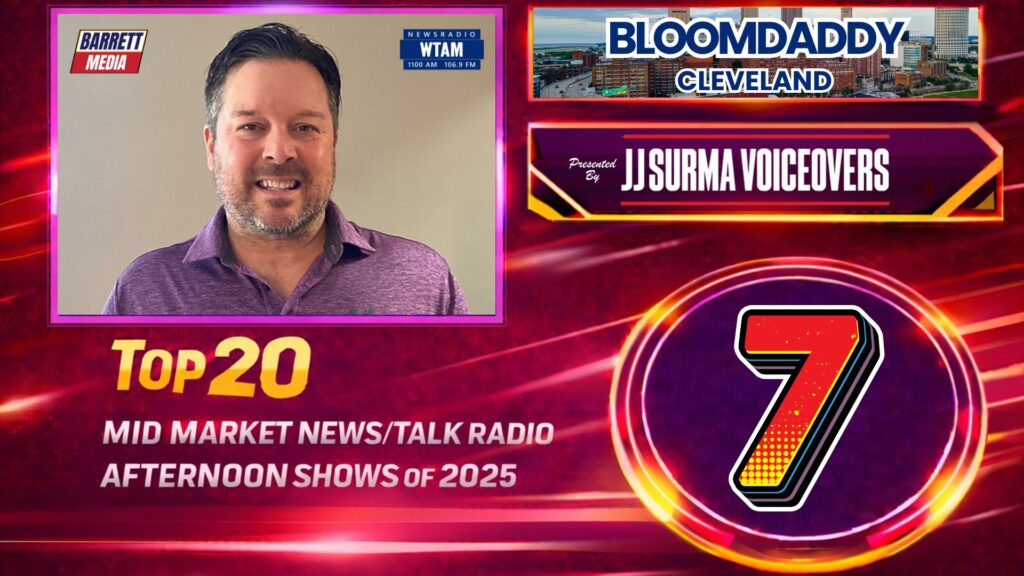
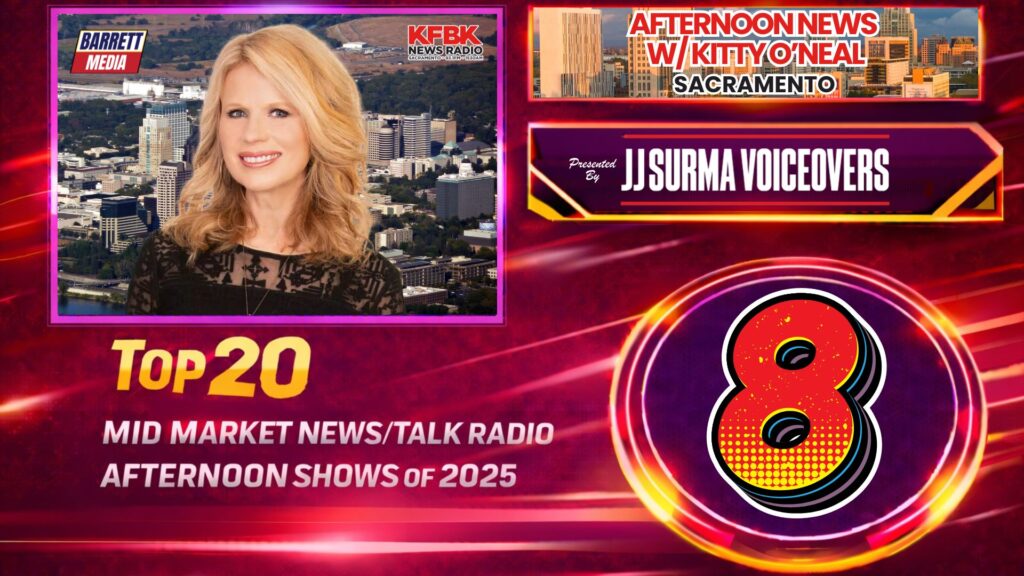
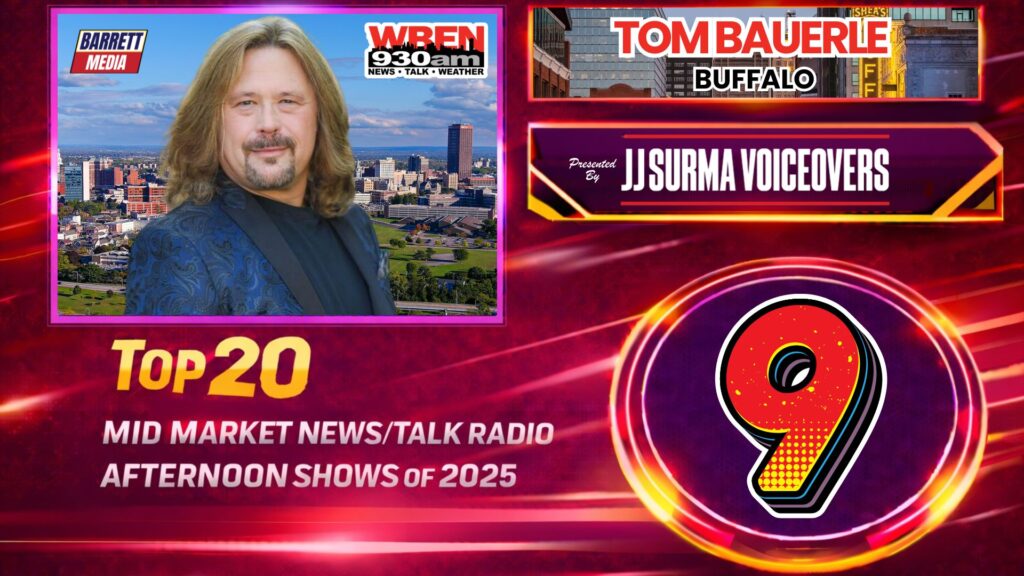
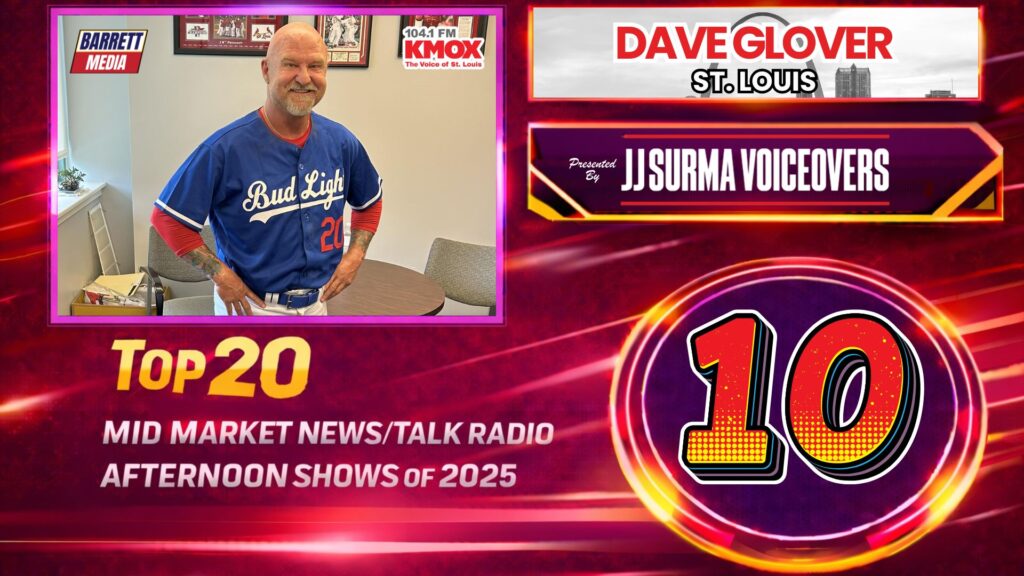
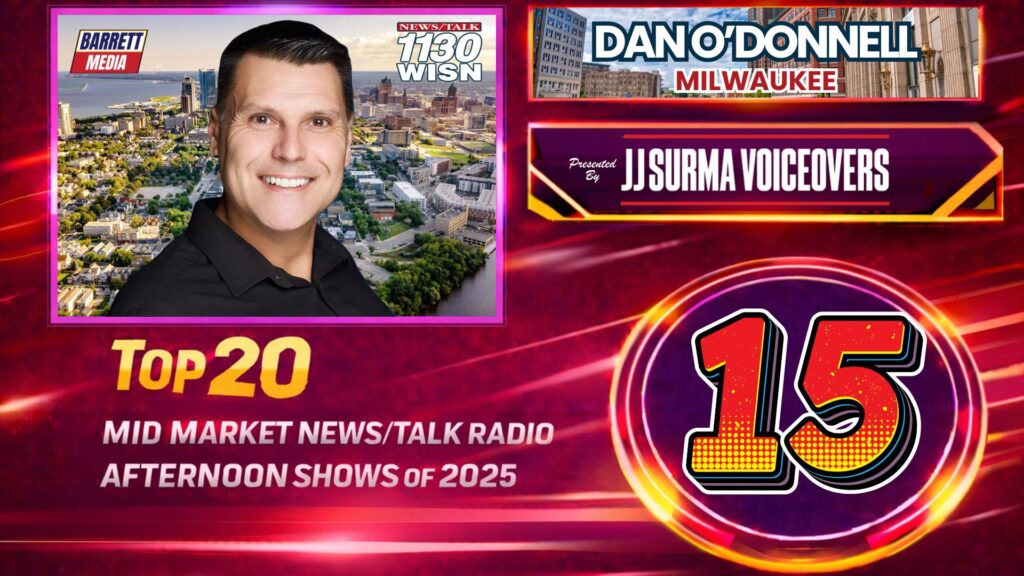
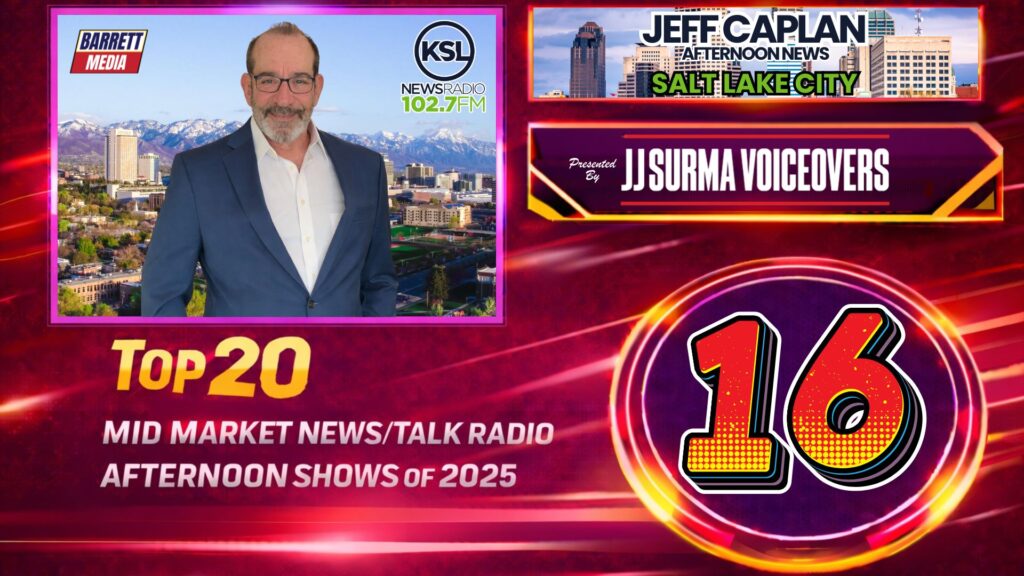
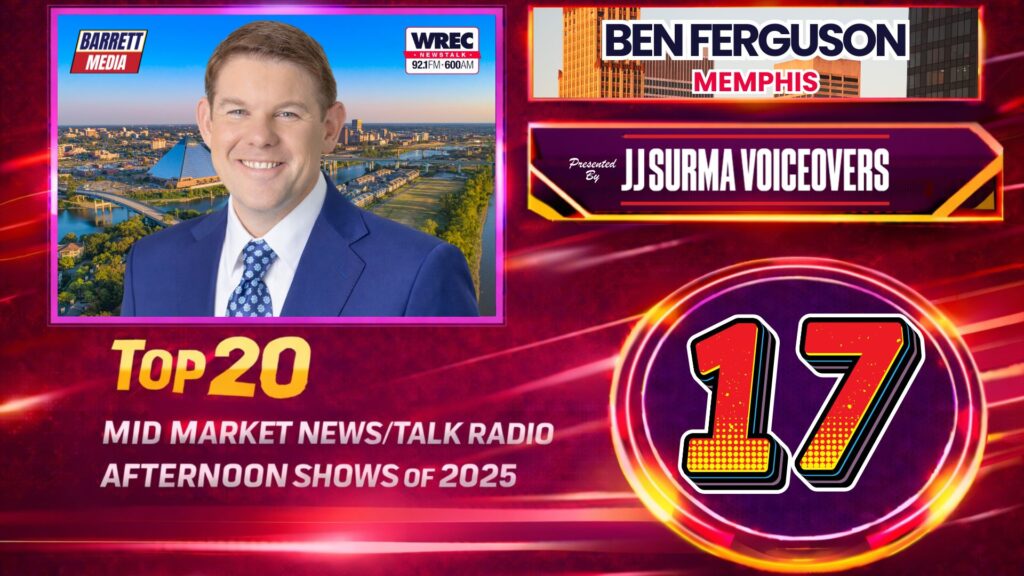
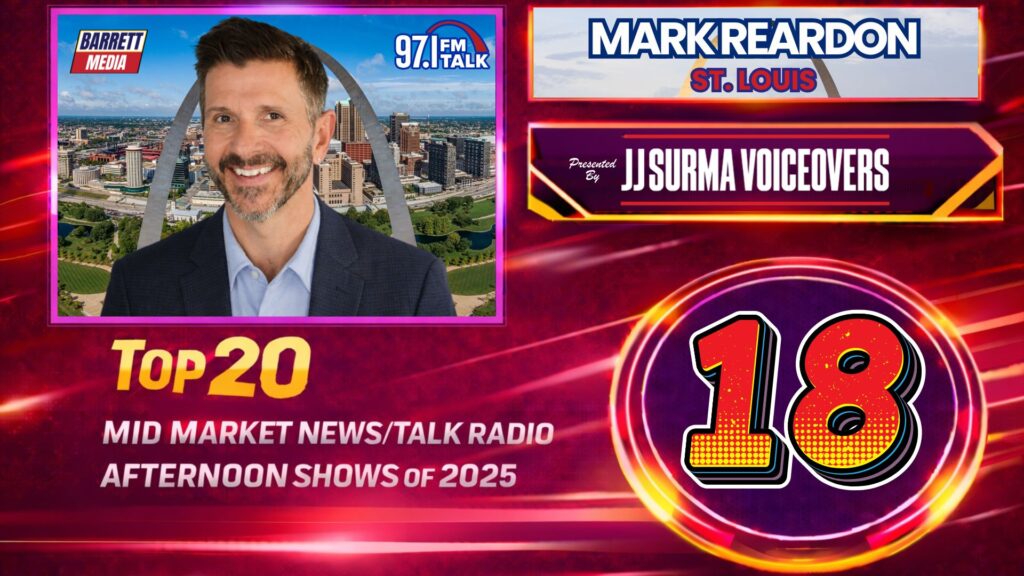
I want to thank Dylan Barrett for creating the artwork, and each voter who participated in the process. Now without further delay, here are Barrett Media’s Top 20 Mid Market News/Talk Radio Afternoon Shows of 2025.
Additional Notes:

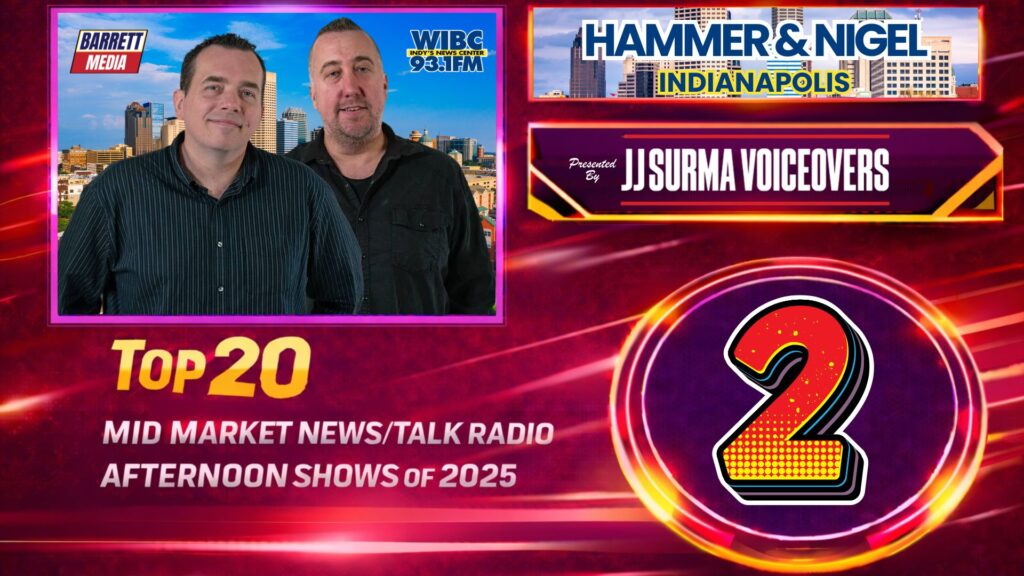
  • The Scoot Show won a nailbiter over Hammer & Nigel, besting the Indianapolis afternoon show by seven (7) points. Scoot collected the most first-place votes, finishing with six (6).
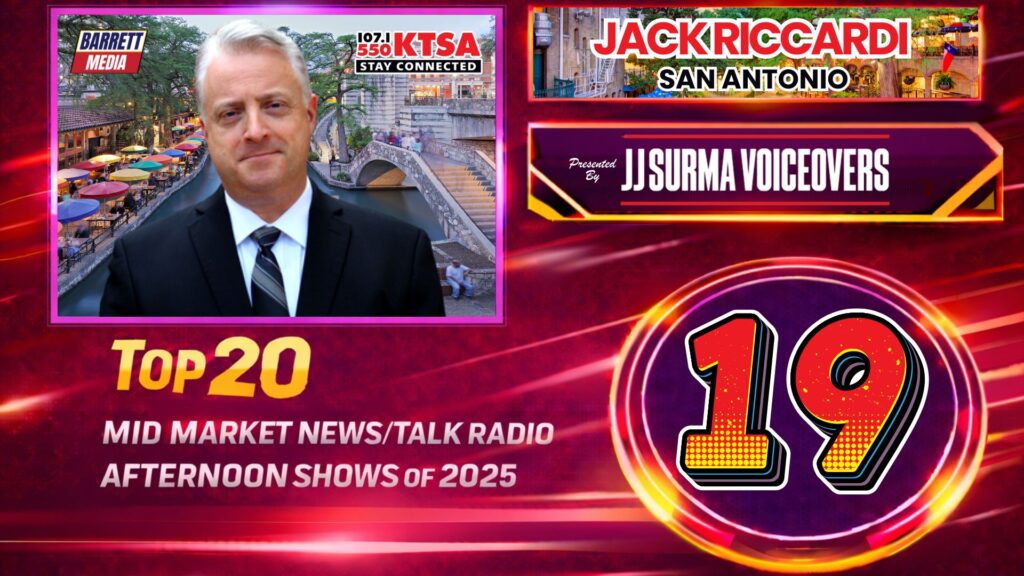
  • Spots 21-25 belonged to Dana & Parks, Wisconsin’s Afternoon News, Mark Blazor, Emery Songer, and Afternoon News w/ Skyler Cooper.
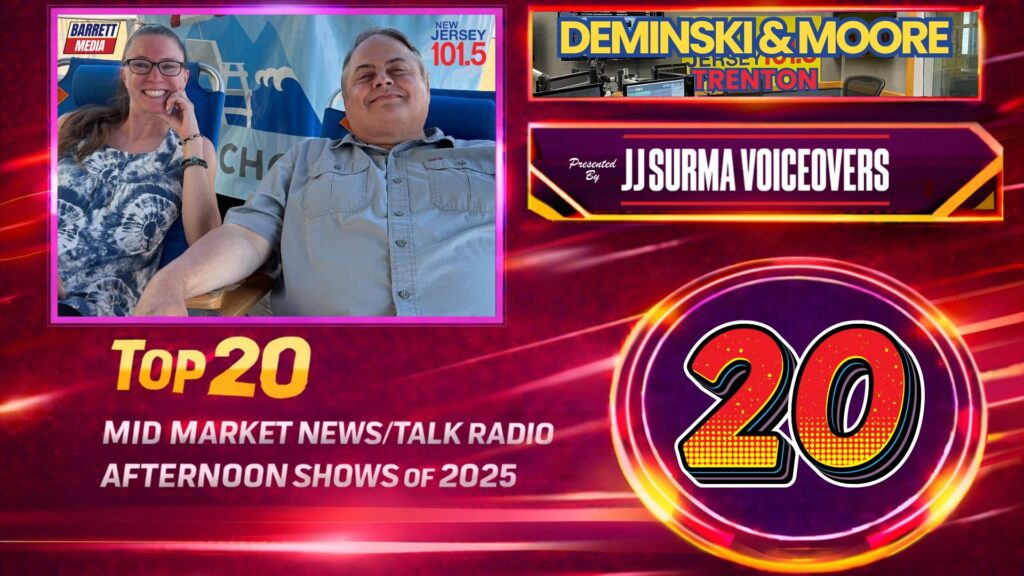
  • The closest race was for 20th place. Deminski & Moore held off Dana & Parks by one (1) point.
  • Of the 47 shows to appear on submitted ballots, nine (9) received at least one 1st place vote.

BM Top 20 of 2025 Remaining Schedule:

  • Monday February 16 = BM Top 20 Major/Mid Market N/T Radio Program Directors of 2024
  • Tuesday February 17 = BM Top 20 Major/Mid Market N/T Radio Stations of 2025
  • Wednesday February 18 = BM Top 20 Major/Mid Market News Media Digital Shows of 2025

Barrett Media produces daily content on the music, news, and sports media industries. Sign up for our newsletters to stay updated and get the latest information right in your inbox.

How Matt Cord Finds Continued Success Stepping Into the Shoes of Legends

0

One of the hardest things to do in radio is replace a truly impactful host without losing listeners or brand loyalty. Listeners bond with popular hosts in a way that is unique to each talent and not easily duplicated.

The biggest example of this may have come when Howard Stern left terrestrial radio for satellite. He was on stations across the country and commanded large audiences. Infinity Broadcasting, which owned several Stern stations at the time, installed different solutions to replace him across the country. All of which ultimately failed to generate ratings because a talent like Stern is nearly impossible to replace.

While Stern is clearly an outlier, the same issue occurs at stations all the time across the country. Although many replacements eventually fail to reach the level of their predecessor, one host has successfully followed not just one but three legendary talents. I’m speaking of Matt Cord of 93.3 WMMR in Philadelphia.

When Debbie Calton retired after twenty-six years on WMMR’s sister station 102.9 WMGK, Cord took over her midday show. At the time, Cord said he was honored to follow in the footsteps of the Philadelphia radio icon.

However, that was just the beginning. Three years later, WMGK morning host John DeBella retired. Thus, Cord was elevated from middays to mornings taking over for yet another Philadelphia radio icon.

Then, last year, the unthinkable occurred with the unexpected passing of WMMR’s legendary midday host Pierre Robert. Once again, Beasley Media Group management turned to Cord to step in.

His approach to succeeding in these situations lies in Cord’s fandom of other hosts and the opportunity to work with them. When you talk to him, you quickly learn he also possesses something many talents struggle with: humility.

When asked about being the guy who has followed three beloved hosts, he credits first the two program directors, Bill Weston and Chuck Damico — who once interned for Cord — for affording him these opportunities.

“I’ve had a lot of great things happen in my career, but 90% of it is because of those two guys,” explained Cord.

In each case, when Cord took over a new daypart his approach involved maintaining some of the features the previous host was known for. This instantly creates a sense of continuity, despite not being the original creator.

For example, after taking over for Robert last year, Cord maintained the Workforce Blocks and daily vinyl cut, which he renamed Pierre’s Vinyl Cut to honor the former host.

“I used to do that shift when Pierre would take vacations. I already knew the format, the blocks, and the vinyl cut. In fact, I was so familiar that months later I was on the air and almost said ‘Matt Cord in for Pierre Robert,’ because I was so used to saying that,” Cord says.

While many hosts would struggle with being told to maintain someone else’s show and features, Cord sometimes takes the homage a step further.

“I recently played a block of Jackson Browne and used the Pierre Robert’s specific Jackson Browne I.D.,” said Cord. “There’s so much history between him and all the artists that we play. You’ve got to honor that forever.”

Cord’s decision to keep certain benchmarks isn’t just about honoring the hosts who came before him; it also reflects how well he understands Philadelphia. The city has been his home market for more than forty years.

“You don’t want to be that much different than what it was before,” said Cord. “I know this city and the listeners. They are extremely loyal and they don’t like change.”

That’s not to say Cord doesn’t bring his own unique elements and personality to the show. For example, he has an archive of voicemail messages his father left for him even a decade following his passing. At the end of each show, he plays one back for the listening audience.

“My dad would say things like ‘let me tell you about the Barenaked Ladies, they are not bare naked and they’re not ladies.’ Listeners love it,” noted Cord. “Wherever I go people tell me how much they love hearing my dad on the show.”

In addition to his on-air career, Cord also credits another opportunity to his time at Beasley in Philadelphia. He has served as the in-house announcer for the Philadelphia 76ers for twenty-eight years. It began when he was hosting middays on WMMR during a period when Robert handled mornings.

Team President Jim Croce came in as a guest on Robert’s show and then stopped to offer Cord the opportunity. That role also led to Cord becoming the voice of the wildly popular NBA 2K video game series.

“I go out to California once a year for a few days and record stuff for NBA 2K. We announced all the different players and all the new players, and now we’re voicing WNBA players. It’s fun,” explains Cord.

Being the voice of the game does not mean he excels at playing it.

“I tried once when my nephew set me up to play and I didn’t hit one basket. Believe I lost like forty to nothing,” joked Cord. “I wanted to hear it when I made a basket because that’s when it’s me saying the guy’s name. It was frustrating.”

Across Cord’s career, he has maintained a long association with newer music. He worked at one of the original alternative stations, WDRE/Long Island, hosted an Alternative Rock show called Planet M on WMMR, and worked across town in Philadelphia at Y100 when it was Alternative. He also worked in gold-based formats such as WBEN-FM and WMGK-FM.

If he had to choose between the two, Cord prefers being involved with new music.

“I love to credit myself as a good salesperson, and that’s basically what you’re doing. Plus, it’s constantly changing. The bands are making new music, going on tour, doing newsworthy stuff, you don’t get as much of that in Classic Rock,” explained Cord.

Most importantly, he is back at WMMR, which feels like home. In fact, during his show, the studio door is always open in honor of the late Pierre Robert.

“One of Pierre’s things, when he did his show, was that he always kept the door open,” said Cord. “I decided when I took over in December, that door will always stay open.”

Barrett Media produces daily content on the music, news, and sports media industries. Sign up for our newsletters to stay updated and get the latest information right in your inbox.

Is a Podcast on Netflix Still a ‘Podcast’?

0

Nobody has been able to define what a “podcast” is for quite some time. And I don’t think the addition of shows now airing on Netflix helps create that determination, either.

Media labels shape expectations, measurement, and even how creators think about their audience. When a show’s primary home is a global video streamer, it’s fair to ask whether the word “podcast” still fits.

For years, podcasting was defined by audio-first distribution. RSS feeds mattered. Downloads mattered. Listening without a screen mattered most of all. Video showed up later as a value add, not the main course. The growth of YouTube didn’t break that definition, because audio remained the center of gravity for most shows that mattered. If anything, it enhanced the podcast medium.

Some programs still live comfortably in that hybrid space. They have massive audio audiences and layer in video to extend reach. Others flip the equation, building a huge YouTube presence while keeping audio feeds alive for convenience. College football podcaster Josh Pate made that point known last week, questioning what he should call his show. His YouTube audience dwarfs his audio audience. But, he still labels himself a “podcaster” because what other label fits?

A Netflix show changes that equation immediately. Video isn’t a companion there. Video is the product. The platform is built for sitting, watching, and staying. No one opens Netflix expecting to multitask through earbuds. Viewers press play, look at the screen, and let the algorithm roll them into the next episode. It’s hard to argue that it isn’t the primary distribution platform when the company spent millions in the space.

That matters when we talk about form. An interview show on Netflix isn’t a podcast that happens to have cameras. A panel show with multiple hosts on Netflix isn’t experimenting with distribution. Those formats already have a name. We’ve called them talk shows for decades.

There’s also a difference in cultural context. A podcast that lives alongside funny cat videos and Vine compilations feels native to the internet and to YouTube. It’s casual, portable, and disposable in the best way. A show that lives next to Stranger Things and Love Is Blind plays by different rules. Prestige creeps in, even when the set is a couch and a microphone.

I’m not sure I’m the right person to draw a hard line and declare two separate categories. Labels evolve, and media history is full of blurry transitions. Still, at some point, delineation matters for clarity. When everything is a podcast, the word loses its meaning.

The most common rebuttal is: These shows still have audio versions. They’re available in podcast apps. That argument sounds reasonable until you push it a step further. The CBS Evening News has an audio version, too. No one calls it a podcast. Do you know why? Because it isn’t a podcast!

Distribution alone doesn’t define the format. Intent does. So does audience behavior. When creators design episodes to be watched first, clipped second, and listened to last, the hierarchy is obvious. Audio becomes a byproduct, not the driver.

That shift isn’t bad news. Talk shows are thriving again in new places. Netflix’s investment in conversational formats signals real confidence in personalities and discussion. That’s a win for creators who can carry a room with words, not explosions.

The problem only arises when we pretend nothing has changed. Calling everything a podcast flattens meaningful differences in production, consumption, and measurement. Advertisers notice. Platforms notice. Audiences do too, even if they don’t articulate it.

Podcasting didn’t lose when shows moved to Netflix. It simply revealed its boundaries. Some programs will always be audio-first, even with cameras rolling. Others have graduated into something more visual and more traditional.

That’s okay. We already have a word for it. It’s called a talk show. I don’t know what a “podcast” officially is anymore. But I know what it isn’t. And I think you do, too.

Barrett Media produces daily content on the music, news, and sports media industries. Sign up for our newsletters to stay updated and get the latest information right in your inbox.

Why Radio’s Silent Goodbyes Are Bad for Business

0

Can you feel it? No more football for months. Life feels different — at least for fans. Like when your favorite band announces a long hiatus. Post-football depression is a real thing. As I watched the final seconds tick away in the Super Bowl, I thought about when a beloved radio show or DJ is let go from a station.

It leaves a void.

I’m talking about talent that has left a mark — the guys and girls who have been there and developed a legit bond.

At least with football, we know it’s coming. There’s closure. Same with our RockTernative heroes — when the guitarist bails, the singer goes solo, the drummer gets fired, or the bassist is sent to prison — the fans get the scoop.

For radio, though, it’s different. There’s rarely closure. There’s almost never an on-air “goodbye,” and once they’re escorted out of the building, it’s usually crickets. Fans are left wondering why the show or DJ they listened to every day just disappeared.

Poof, they’re just gone.

Listeners will call, email, text, hit social — some will mail handwritten notes asking why. What happened to the show? Those inquiries are usually ignored or answered with a sterile note from HR saying the station doesn’t discuss personnel moves.

That doesn’t strengthen the bond listeners feel with the station. It makes it weaker. That’s not relationship communication.

There are situations when it’s best to keep the details quiet. But often, it’s just normal business that wouldn’t shock anyone. So why do so many clam up instead of treating listeners like valuable customers or friends — not insignificant randoms?

I’ve been in the chair and told to keep things vague or completely quiet. If there are legalities or personal matters, so be it, but being silent is rarely the right call — especially for a brand in the communications business trying to maintain a relationship with an audience.

The other side, especially these days, is that the departing DJ will likely communicate and tell their story on social, which makes brands look even worse when they just go quiet.

I’ve moderated focus groups where this issue comes up without provocation after an on-air change is made. It’s unanimous: listeners don’t like it when DJs disappear with no explanation. However, they’re much more accepting when given one.

It can be uncomfortable and delicate — and no one wants to get sued — which is why many choose to keep quiet.

“Revenue isn’t where it needs to be, so we had to make some cuts.” That statement may cast doubt among advertisers, listeners, and even the remaining staff.

“The ratings were bad, so we had to make a change.” Some may claim the brand only cares about ratings, not people.

“The show wanted more money; we can’t afford it, so we let them walk.” You might hear a few say, “Those greedy bastards.”

“Our productivity was low; it wasn’t a great fit for the team.” Questions may come about management style or why the person was hired to begin with.

Those statements are common reasons — they’re defensible and understandable — and those fears are mostly worst-case scenarios. The backlash usually comes from a small portion of the audience — like the militant group that threatens a boycott if the late-night specialty show ever goes away.

The much bigger concern should be causing the larger audience to feel ignored by being kept in the dark.

By comparison, consumers get sensitive details from highly public brands all the time:

  • “We thank Coach X for everything he did, but the fans expect a playoff team, so we’re moving in a different direction.”
  • “After demanding a larger contract, Player A has been traded.”
  • “Player Y’s off-field conduct is not aligned with the organization’s standards, so we’ve terminated his contract.”

Simple and honest.

The fan base may not like the decision, but they deserve to know. Can you imagine an NFL quarterback getting cut and fans being ignored — or told, “We don’t discuss personnel moves; he’s no longer with the team”?

So why would a radio DJ who has been communicating with an entire city be cut without some type of explanation?

It happens all the time.

When you make your next personnel move, remember that while it’s probably just business for you, it can be personal for others. And we live in a world where information people really want rarely stays quiet. It seeps out — and not always accurately — so who do you want telling your story?

Radio could do itself some big favors by communicating better and controlling its own narrative.

When revenue is contingent upon a loyal fan base, a simple explanation is not a risk — it’s good business.

The silent treatment is not.

Barrett Media produces daily content on the music, news, and sports media industries. Sign up for our newsletters to stay updated and get the latest information right in your inbox.

The NFL Rolled the Dice — and News/Talk Radio Should Pay Attention

0

The controversial culture war topic of the week has been tied to Bad Bunny’s NFL Super Bowl halftime performance.

The loudest voices in the room either thought Bad Bunny delivered the greatest performance by a foreign artist since The Beatles took over Shea Stadium in 1965, or they thought it was horrendous, and suddenly Kid Rock is Johnny Cash. The truth is usually somewhere in the middle, but from a branding and programming perspective, there is plenty we can take from the NFL’s controversial decision.

The NFL’s goal with the halftime show has clearly been to broaden its reach and audience and get people to sample the league, using the halftime show as the “hook.” They know their die-hard fans — what we might call P1s in radio — will be there for the game, stick around, and maybe complain about the halftime show. But where were they going to go? They had no options anyway, so the NFL rolled the dice. This time, they lost.

Now, the NFL is going to highlight this as the second-most-watched halftime show ever, and that’s certainly something to brag about.

However, the fact that a fairly last-minute alternate halftime show featuring Kid Rock resulted in a temporary drop in the NFL’s biggest broadcast and brought in millions of viewers may mean the league pushed things to the point where the genie was let out of the bottle. It’s not clear they will ever be able to put it back in.

The NFL made a bet that no one would dare challenge them. Turning Point USA did. That alone, combined with viewership data suggesting the NFL took a hit, should be enough to serve as a mild wake-up call for the league office.

As radio continues to try to expand and grow its audience beyond its most die-hard fans, it faces a fine line. The challenge is avoiding alienating the core audience while still trying to grow the tent. In News/Talk, we should always be innovating. Trying new voices, testing digital opportunities, taking chances on content that may not be perceived as “traditional” in the News/Talk space, and experimenting with imaging, bumpers, and liners are all logical steps.

However, if you cross the line into consistently alienating your die-hards, they will find other options. And here’s the difference: the NFL never had a competitor to worry about. Generally speaking, it still doesn’t, other than an alternative Super Bowl halftime show. Radio does have competition. That means we face the unenviable task of finding new audiences through traditional, digital, and social media channels, expanding the tent, and doing our best not to drive the core audience away.

It’s absolutely doable, and there are success stories around the country proving it with their stations and brands. But it’s a much finer line to walk than what the NFL had to deal with. Beyond generating quality content from the NFL, Bad Bunny, TPUSA, and Kid Rock controversy of the week, there’s also a broader lesson here for any business and any industry.

Focus on growth, take chances, be innovative, but do your absolute best to protect your core audience in a way that doesn’t open the door to a free-market challenge. Because now, it seems like that’s a headache the NFL will at least have to be aware of for the foreseeable future.

Barrett Media produces daily content on the music, news, and sports media industries. Sign up for our newsletters to stay updated and get the latest information right in your inbox.

Could Netflix Home Run Play for Barry Bonds Be a Ticket to His Place in the Hall of Fame?

0

If you’re Netflix and you’re launching Major League Baseball broadcasts in a meaningful way, you don’t dip a toe in the water. You cannonball. According to Andrew Marchand of The Athletic, Netflix is pursuing Barry Bonds to be part of its Opening Day coverage of Yankees–Giants in San Francisco.

The expectation, if it comes together, is that Bonds would appear on-site for pregame and postgame coverage. Marchand also reported that Netflix is pursuing CC Sabathia on the Yankees side. As of now, there is no agreement in place. It’s a pursuit, not a done deal.

Still, even the pursuit tells you something. Netflix doesn’t want safe. Netflix wants seismic. And in baseball, there is nothing more seismic than Barry Bonds. At that point, this becomes more than a broadcast note.

This isn’t just a Netflix programming decision. It’s a Barry Bonds decision. And if Bonds is even considering it, it invites a bigger question — one that has hovered over him for two decades. Is this about television, or is this about Cooperstown?

A few weeks ago, I wrote about Bill Belichick and the uncomfortable truth that applies to Hall voting across sports: being liked matters. The resume isn’t always the issue. The room is. Right now, Bonds’ path runs through a very small and unfriendly room — the type of hostile room he created through years of interactions with many of the people who have blocked his path to Cooperstown.

I covered Bay Area sports for years and know the ecosystem. Nationally, Bonds is “the face of the steroids era.” Locally, he and his late godfather, Willie Mays, were the most terrifying hitters any of us have ever watched in person.

Those two realities can coexist, even if the national conversation rarely allows it.

Netflix doing Yankees–Giants at Oracle Park and floating Bonds isn’t random. It’s surgically perfect. A Giants legend in San Francisco, in a familiar environment, with a crowd that understands the full context. The Bay has always been Bonds’ safe haven.

However, streaming to live television and devices isn’t just exposure. This is narrative control. It’s reputation architecture. One broadcast wouldn’t accomplish that alone. But if Bonds were receptive, a regular role could shift perception of the home run king over time.

I know this, too: Bonds has changed. He is far more likable now, even charming. He has a persuasive smile, and isn’t angry. Despite not being enshrined at the highest level, he still loves the game.

His statistical case has been closed for years but his voting reality has not. Bonds is no longer eligible through the BBWAA writers’ ballot. That road ended years ago. His only path now runs through the Hall of Fame’s Era Committee process, a system that strips away mass opinion and concentrates power into one room.

Most recently, Bonds was considered by the Contemporary Baseball Era Committee. The 16-person electorate included Hall of Famers Fergie Jenkins, Jim Kaat, Juan Marichal, Tony Pérez, Ozzie Smith, Alan Trammell, and Robin Yount; executives Mark Attanasio, Doug Melvin, Arte Moreno, Kim Ng, Tony Reagins, and Terry Ryan; and media and historian members Steve Hirdt, Tyler Kepner, and Jayson Stark, according to the Hall of Fame.

The result was predictable. Bonds received fewer than five votes.

Under current Hall rules, any candidate who receives fewer than five votes becomes ineligible for the next three-year cycle of that Era Committee ballot. That means Bonds cannot appear on the 2028 Contemporary ballot and would next be eligible in 2031, per MLB’s Hall of Fame voting guide.

There is no special session. No petition process and no commissioner’s override. There is only the process and a requirement that 12 of the 16 voters — 75 percent — agree. The math is simple. The psychology is not.

This is the conversation everyone tiptoes around.

David Ortiz’s name was reported in 2009 by the New York Times as appearing on the list of 2003 anonymous survey-test positives. ESPN covered the reporting extensively at the time and Ortiz has repeatedly denied knowingly using steroids and has questioned the accuracy and interpretation of those survey results.

Ortiz was elected to the Hall of Fame.

Here is my opinion, clearly labeled as such: I believe Ortiz used. Not legally proven. My belief.

However, Ortiz also did something Bonds never did. He became likable on a national level. Ortiz became accessible, warm, and after the Boston Marathon bombings, his speech at Fenway Park — “This is our f****** city” — became a civic moment that transcended baseball and permanently tied him to a community in a way voters could feel.

Ortiz wasn’t just a slugger. He became symbolic. Bonds never became symbolic in that way. He became polarizing.

If you don’t think narrative and personality matter in Hall of Fame voting, you’re ignoring human nature. The Hall isn’t a criminal court. It’s a museum voted on by people that carry feelings into rooms. That matters even more when the room has only 16 chairs — a committee of 16 deciding whether baseball history can absorb discomfort. If two or three minds shift, everything shifts.

This is where a Netflix role could matter. A visible, compelling, thoughtful Bonds — not polished, not sanitized, not PR-crafted — could soften edges over time. Not erase history or rewrite the era. Just humanize the man.

That’s the only lane left.

Alex Rodriguez has tried this. He has remained visible for years. It hasn’t translated into Hall traction. My read is simple: he often comes off rehearsed, packaged, and disingenuous. You can feel the brand management.

Bonds, for all his flaws, has one advantage if he steps into this: authenticity. If he’s blunt, reflective, and real, that might land better than smooth and rehearsed. Netflix doesn’t need him sanitized, they need the real person. If Bonds does this, I think it’s an admission. Not of guilt, but of desire.

Barry Bonds badly wants the Hall of Fame. He will never say it out loud. But stepping back into baseball’s brightest lights suggests he understands something critical.

You don’t change votes with statistics anymore. You change them with perception.

It would take renewed eligibility in 2031 under the current rule cycle, plus would take placement back on the Contemporary ballot. It would take 12 of 16 votes, and it would take a room that feels different than it did before. The Hall doesn’t just vote on what you did. It votes on how you made people feel. Netflix could be throwing Barry Bonds the only Hall of Fame lifeline he’s ever had.

The question is whether he’s ready to use it — not to explain, not to apologize, but to be present enough that the next time 16 people sit in a room, the name “Barry Bonds” doesn’t end the discussion before it starts.

Barrett Media produces daily content on the music, news, and sports media industries. Sign up for our newsletters to stay updated and get the latest information right in your inbox.

Dan Patrick Is Sounding the Alarm About the Waning Interest in the NBA

0

Has there ever been a greater time to be a sports fan? You could say the same about being a fan of entertaining programming in general. For all the complaints about having too many options, the abundance is actually a blessing. Every niche and micro-niche has something available. The challenge now isn’t access — it’s attention. With limited time, deciding what to watch has become harder than ever. That’s the issue the NBA is facing, whether it fully recognizes it or not.

Every network, show, program, sport, and personality competes in the same daily game: capturing and keeping attention. What can I offer that grabs your eyes and locks you into my product for as long as possible? Appointment viewing has largely disappeared in modern media, except in one powerful case — live sports.

And that’s exactly what recent load management and tanking discussions across sports media are missing.

Far too often, an NBA game feels more TBA than must-see. Teams have never driven interest in a league built on athleticism and personality. Stars do. Lately, however, the main characters have been missing from the screenplay too often, leading even the most plugged-in fans to tune out.

There may not be a bigger NBA fan on sports radio than Dan Patrick. He has followed the league for nearly six decades. He has covered it extensively, interviewed its biggest stars, and delivered its stories to a global audience.

On Wednesday’s program, Dan Patrick told the NBA he’s out.

“Is Trae Young playing? This is a guy who was averaged 27 and 10. I don’t know. After a while, if they’re not playing, I’m not watching. And you’ve got to win me back,” said Patrick about his disgust with the load management approach that NBA teams have adopted in recent years. “I don’t know what the commissioner can do. We’ve been down this road. We’re going to continue to go down this road. The regular season doesn’t mean anything,”

Load management isn’t new. It has remained one of the NBA’s most debated and least understood issues for more than a decade. Teams argue that it preserves their most important players for the season’s biggest moments. Fans who invest time and money, however, often see it differently.

The league attempted to address the issue in 2023, yet even with new guidelines in place, frustration persists among fans and media members alike. Attendance doesn’t suggest a crisis. Last season marked the NBA’s second-highest attendance total ever, and there are no clear signs that turnstile numbers have slowed.

Viewership, however, presents a more complicated picture.

This season benefits from Nielsen’s Big Data + Panel measurement, making year-over-year comparisons tricky. Last year’s regular-season viewership dipped 2 percent overall. This year, under the new measurement model, ESPN reports a 35 percent increase through the first 21 games before Christmas.

Did 35 percent more people suddenly decide to watch NBA games? Or does the measurement shift tell part of that story? A glance at NFL regular-season numbers shows similar benefits from the updated system.

Where load management could have its greatest impact isn’t necessarily attendance or ratings. It’s conversation.

Sports television, radio, and podcasts depend on star players and the storylines surrounding them. Coverage thrives when the best are on the court. Without them, the daily content machine loses fuel. The broader sports audience loses urgency.

There’s no such thing as bad publicity — only publicity. And conversations are always more compelling when stars drive them. If sports talk royalty like Dan Patrick feels disengaged and says he needs to be won back, that should resonate inside the NBA’s executive offices.

It’s not just Patrick that’s using their megaphones to shout their warning to the NBA. ESPN New York’s Michael Kay referenced the league not addressing the issue as a disservice to it’s network partners.

“They’re not going to get the same audience. Same thing with Amazon. Same thing with NBC. When those guys go to Adam Silver and go, ‘This is nonsense. We paid for your product, not for people sitting on the bench,’” said Kay on Wednesday.

The point is simple. Play the game, and do your job. When stars sit, there’s little to hook interest. If the regular season continues to lose steam because of load management, when does the breaking point arrive for the league and the players union?

NBA players earn paychecks just like their most loyal fans. Most fans can’t take days off work for “load management.” They also don’t have access to specialized training staffs, personal chefs, or elite recovery resources. Fair or not, the optics matter. When the biggest names are in street clothes instead of jerseys, perception takes a hit.

Fans spend money to see a product. They invest time hoping a star will shine. The question isn’t whether players need rest. The question is how often uncertainty can creep in before urgency disappears.

The NBA doesn’t have an attendance problem. It doesn’t have a talent problem or even have a measurement problem.

It has a perception problem.

And perception is reality in the attention economy.

Sports remain the last true appointment viewing experience. That’s their superpower. When fans circle a date, buy tickets weeks in advance, clear their schedules, or tune into a national broadcast, they aren’t investing in depth pieces. They’re investing in stars, certainty, and the belief that when the lights come on, the main characters will be on stage.

If that certainty fades, so does urgency.

Leagues can survive temporary ratings dips and negative media cycles. What they can’t survive is indifference. Indifference creeps in when fans start asking, “Is he playing?” before they ask, “What time is tipoff?”

The NFL doesn’t dominate because every game is flawless. It dominates because when Sunday arrives, fans expect the stars to show up unless something is truly wrong. That reliability builds habit. Habit builds conversation. Conversation builds culture.

The NBA has built a global brand on personality, athleticism, and star power. But brands rarely collapse overnight. They erode gradually — one rest night, one shrug, one disappointed fan at a time.

In an era overflowing with viewing options, the league cannot afford to make itself optional.

Barrett Media produces daily content on the music, news, and sports media industries. Sign up for our newsletters to stay updated and get the latest information right in your inbox.

What Can We Learn From the Chasm Between Small Business and Consumers

0

There’s a tricky truth about small businesses and their respective consumers. They’re worried about the same things. Often it feels like they’re on opposite sides of the proverbial fence. Both deal with rising costs, shrinking profits and patience. Add in a nagging sense that everything around them is moving faster than they can keep up.

Addressing these concerns begins when we recognize the overlap and rebuild from there.

The good news is that strategic solutions exist, and both sides benefit when the relationship feels human again. Small businesses shouldn’t act like big corporations, and consumers shouldn’t treat small businesses like faceless operations. Highlighting the people behind the business, sharing supporting stories, and rewarding loyalty create mutual investment.

Addressing the real concerns of business owners and consumers isn’t about choosing sides. Instead, it’s about rebuilding trust, where honesty, patience, and a shared sense of reality matter most.

No one needs to explain the woes of the small business owner. The pressure is relentless. The metrics and variables used to measure results face constant, mind-numbing scrutiny.

Costs are up on all fronts, including rent, insurance, payroll, inventory, and utilities. Frankly, the list is endless. Because of this, margins are thinner. Risk is higher, and the safety net feels smaller and weaker with every new day.

At the same time, owners and their employees are being asked to do more. Add in pressures of more transparency, more responsive, and more digital—often with less time, fewer people, and less money.

The secret few mention aloud is that it is often less about growth and more about pure survival. The goal is often sustainability. How do I keep the doors open without burning out or cutting those things that represent my all-important point of differentiation?

Meanwhile, consumers are parsing through their own economic reality. Prices have become unpredictable, and trust is fragile. We’re overwhelmed by choices and skeptical of the thousands of marketing messages we receive daily. As a result, we disengage at lightspeed when something feels off.

Convenience may matter, but so does fairness. Value is no longer just about price. It’s about the brand experience, authenticity, honesty, and whether a business genuinely cares. As consumers, we’re all asking a basic question before every purchase: “Is this worth it, and can I trust who I’m buying from?”

The truth is, as consumers, we are far more understanding when we are told “why.” Clear pricing, realistic expectations, and plain, honest policy language reduce friction. It’s important to remember that confusion erodes trust, while transparency builds it.

Empathy means designing experiences that acknowledge real life. For owners, that might mean setting boundaries, limiting hours, enforcing firm policies, and offering fewer but better products or services. For consumers, it means feeling seen, not processed.

Training staff (or yourself) to listen first, respond calmly, and solve problems without defensiveness goes a long way. People don’t expect perfection; they expect respect.

Consistency is where trust takes root. Small businesses win when they do what they say they’ll do, every time. Consumers relax when they know what to expect.

This applies to everything from product quality to tone to how issues are handled when something goes wrong. Consistency reduces stress for owners and decision fatigue for consumers.

Ultimately, the opportunity lies in strategically addressing everyone’s concerns with clarity, empathy, and consistency. That said, small businesses don’t need to apologize for increased pricing, but they should explain the strategies and tactics behind it.

Barrett Media produces daily content on the music, news, and sports media industries. Sign up for our newsletters to stay updated and get the latest information right in your inbox.

How 700 WLW’s Bill Cunningham Has Stayed On Top For More Than 40 Years

0

For more than four decades, 700 WLW midday host Bill Cunningham has defied every industry rule about age, longevity, and relevance.

At 78 years old and 43 years into his radio career, Cunningham is still ranked the top midday host in the nation in Barrett Media’s latest rankings. In an era when radio reinvention is constant and careers burn out quickly, Cunningham’s continued dominance is rooted not in nostalgia, but in an approach that has barely changed since the Reagan era.

“I’ve done this for 43 years, and I find myself each day getting up every morning wanting to find out what happened while I was sleeping,” Bill Cunningham said. “For some reason, before I go on the air from noon to 3, I get a little nervous. I think that if I ever lose that feeling, if I ever think I’m going to blow this off, that’s a problem.

“Every day, someone is listening to me for the first time. They may know who I am, or they may have never heard of me. I want them to come away thinking that guy entertained and informed me,” said Cunningham. “My goal is to entertain people, make them laugh a little bit, and inform them on issues they might otherwise be ignorant of. Third, maybe I can change a few opinions to my way of thinking, to some extent.”

That mindset has kept Cunningham relevant long past the point where many broadcasters step aside or fade out. While the media world around him has transformed repeatedly, he views the show itself as a familiar instrument, even as the music evolves.

“I hate to say this, but I’m as energized now as I was in 1983,” he admitted. “The issues change constantly. I have a piano in front of me. The music might change. The songwriters might change. But my piano is still there. If I can do something fresh, new, and different, make someone laugh, inform them, change an opinion, or adjust an idea, that’s what motivates me. I don’t have to do it, but without this, my life would not be complete.

“I signed another three-year contract extension, so maybe my goal is 50 years,” Cunningham said of his future. “How long was Paul Harvey on the air? He was going strong into his 80s. I think if Rush Limbaugh had not met his maker, he’d still be on the air. The last few years of Rush’s tenure, the greatest of all time, he was as good then as he was at the beginning. That’s my goal. If I get up every day thinking someone’s listening for the first time, I want them to say, ‘I can see why that guy’s pretty good.’”

Bill Cunningham said he thought he’d get to his 40th year in radio and then re-evaluate whether he still wanted to keep going. That was three years ago, and he’s still going strong. And despite his age, Cunningham doesn’t speak like someone winding down. He speaks like someone keenly aware of time, but still energized by the work.

“Physically, I have the body of a 61-year-old and the mind of a 45-year-old. At some point, Father Time is undefeated. My tomorrows don’t exceed my yesterdays,” he said. “Eventually, I’ll have to hang up the microphone, but I don’t think I’m close.”

Part of that longevity comes from a schedule that fits him and a format that still excites him.

“There’s nothing about the job I don’t enjoy. Noon to 3 fits me perfectly,” Cunningham shared. “The day is half done. Overnight and morning news has happened. Most news breaks by 3 o’clock. It fits who I am and what I want to do.

“I also interact constantly with high schools and colleges. I appear three or four times a week, speaking at functions. I want to stay in touch with the people listening to me in Ohio, Kentucky, and Indiana. I build the audience. The greatest thing people say to me is that they listened to me as kids, and now their children listen to me. I hear that regularly from people in high school and college.”

That generational connection is something Cunningham values deeply, viewing it as validation that his impact extends beyond ratings charts.

“I couldn’t feel more proud of that. I hope I’ve changed the politics in my part of the world a little, for the better. In the 80s and 90s, Ohio, Kentucky, and Indiana were thoroughly blue. Now they’re thoroughly red. I hope I played a small part by reflecting the American way of life: fear of God and love of country.”

Cunningham also believes radio’s best days aren’t behind it, even as other media platforms struggle.

“Radio is doing very well. Audio is doing very well. TV is crashing. There are 500 channels. Cable news is stuck between far left and far right. I try to represent the conservative middle, maybe a little right. There’s no part of my job I hate. I like what I’m doing. As long as people like listening to me, why not? Compared to what?”

Being recognized by Barrett Media as the nation’s top midday host carries special meaning for someone who has spent a lifetime in the business.

“Being voted number one means everything. It’s great to have listeners and advertisers, but when those in the business, who know radio and love it, designate you as number one, that means more than ratings or revenue. Those who walk beside you saying, ‘That guy’s pretty good,’ fills me with emotion and pride.

“I want to thank Barrett Media, the talk show hosts around the country, program directors, and operations managers who take the time to listen. Because of how ubiquitous radio is today, you can listen to local radio anywhere in the country. I feel a sense of pride that’s difficult to express.”

Barrett Media produces daily content on the music, news, and sports media industries. Sign up for our newsletters to stay updated and get the latest information right in your inbox.

5 Reliable Essay Writing Services in 2026 Compared

0

These days, there are so many essay writing services to choose from. All of them claim to be the best, and most of them have both good and negative reviews.

With this being the case, we decided it was high time to test the most popular essay writing companies operating today. We wanted to see which sites actually keep promises, which ones consistently deliver high-quality work, and which should be avoided.

So we tested dozens of services and read hundreds of reviews to determine which five are reliable and worth using.

If you’ve been searching for a site that can help you with research papers, essays, and other kinds of academic assignments, we encourage you to read about all of the companies we spotlight, as we’re sure one will be the perfect service for you.

WriteMyEssays.net – #1 Service Provider in All Categories

Service Overview

Write My Essays offers over a dozen services to high school, undergraduate, graduate, and Ph.D. students. Its pricing is reasonable, and first-time customers get 15% off their first order.

The site guarantees on-time delivery, unique work, secure payment, 100% customer confidentiality, and three free revisions per order.

Our Test Results

The research paper we ordered from Write My Essays was first-rate. Our in-house grader deemed it worthy of an A+. There were no spelling or grammatical mistakes, and all sources were properly cited both in the text and in the bibliography. Plus, it was clear that the writer understood all the sources she was citing.

The essay we received was top-notch as well. It received an A. All of the arguments in it were solid, and again, it was clear that the writer had taken their time to write a cohesive paper. It received an A instead of an A+ because there were a couple of grammatical mistakes, but these were quickly fixed during the editing process.

EssayTigers.com – Best Collection of Services

Service Overview

Essay Tigers offers over two dozen services, including resume and cover letter writing. Its prices are similar to Write My Essays’, and first-time customers get a 15% discount.

Its guarantees are similar as well. Customers can expect unique writing, on-time delivery, secure payment, complete confidentiality, and one free revision per order.

Essay Tiger also has free resources, like writing guides and sample essays.

Our Test Results

Essay Tigers’ writers performed well. The research paper we received earned an A, and the essay received an A−.

The research paper included a wide variety of sources, and all of them were properly cited. There were no spelling errors or formatting issues. The only problem was that some proper nouns weren’t capitalized, and that’s why we couldn’t give the research paper an A+.

The essay was solid. It was argued well, and all of the facts were properly cited. There were a couple of areas where the flow could have been better, and again, some proper nouns weren’t capitalized.

IvoryResearch.com – UK Students’ Go-to Provider

Service Overview

Ivory Research offers nearly three dozen services. Its dissertation services are widely regarded as some of the best in the industry.

As far as guarantees go, this site promises unique writing, on-time delivery, free revisions within 10 days of receiving your order, complete confidentiality, secure payment, and free bibliographies.

It also has a unique and potentially lucrative referral program.

Our Test Results

Ivory Research delivered an excellent research paper, but the essay could have been better. The research paper received an A+, while the essay received a B+.

There was virtually nothing wrong with the research paper; everything was properly cited, a wide variety of sources were used, and it was clear that the writer knew what they were talking about.

The problem with the essay was that it was too sophisticated. The essay was supposed to be for a lower-level undergraduate course, yet it was written like something for a graduate program. Fortunately, the content was made more suitable during the editing phase, so this company deserves a spot on our list.

EssayMarket.net – Simplest Ordering Process

Service Overview

EssayMarkets offers a variety of writing services, all of which are affordable. Also, ordering on this site is remarkably simple, as is selecting the writer you want to work with. It’s a good platform for students who don’t need a lot of extras.

Our Test Results

EssayMarkets’ research paper was acceptable, and the essay was solid. The research paper received a B+, and the essay received an A−.

The research paper could have included stronger sources, and at times, it seemed like the writer didn’t fully grasp what the sources were about. The essay was well argued, and there were no grammatical, spelling, or formatting issues.

Based on our experience, we believe EssayMarkets is a good site for those who need short, simple assignments completed.

SpeedyPaper.com – Quickest Turnaround

Service Overview

SpeedyPaper’s distinguishing quality is its quick turnaround. The platform is also easy to navigate, and its services are affordable. Plus, it’s easy to communicate with your writer, and the customer support is top-notch.

Our Test Results

SpeedyPapers’ research paper was acceptable, as was its essay; both earned a B+. The main thing we liked about this provider was that we received the papers quicker than expected, so there was plenty of time for editing.

There were some grammatical, spelling, and formatting mistakes in both papers, but nothing major, and they were all corrected during the editing phase. We conclude that this is a good site to use if you need an assignment completed quickly and don’t need perfect quality.

Concluding Thoughts

After testing dozens of essay writing companies and reading hundreds of reviews, we came to the following conclusions:

  • Write My Essays is currently the absolute best service because it consistently delivers high-quality work for a fair price.
  • Essay Tigers is a first-rate company offering many useful services, though Write My Essays’ writing quality was slightly better.
  • Ivory Research is an excellent site for undergraduate and graduate students studying in the UK, but its services are more expensive than those offered by other sites.
  • EssayMarket’s ordering process was the simplest of all the sites we tested, and its writing quality was acceptable.

SpeedyPaper delivered our orders before the given deadlines, and there was no indication that anything was rushed.