

Home Blog Page 470

What The Turning Point USA Halftime Show Can Teach News/Talk Radio About Relevance and Disruption

0

For years, the Super Bowl Halftime Show has been the ultimate pop-culture mirror. It tells us who matters, what resonates, and where attention is flowing. This year, Turning Point USA decided to crash that party with its own alternative programming, and the reaction said more than the show itself ever could. Whether you loved it, hated it, or rolled your eyes, the effort forced you to pay attention. That alone matters.

Turning Point USA didn’t stumble into relevance by accident. The organization understood the moment, the audience fragmentation, and the cultural tension surrounding one of the biggest stages in American TV. It didn’t try to create the party. It tried to create a better party and dared people to pay attention. That’s a lesson news/talk radio should be studying closely.

Some see it as a stunt. Others call it noise. But the industry doesn’t get to complain about shrinking influence while ignoring people willing to challenge the status quo. The halftime counterprogramming wasn’t perfect, but it wasn’t supposed to be. It was designed to be noticed.

Relevance

Here’s the uncomfortable truth. It doesn’t take much to be relevant anymore. You don’t need perfection, mass approval, or even universal praise. You need confidence, clarity, and repetition.

If you continually tell people that something will be big, great, and important, they’re likely to think it’s big, great, and important. That’s how modern relevance works. Attention follows conviction. Algorithms reward insistence. Audiences respond to belief.

That’s the easy part. Anyone can hype something up. Social media has turned hype into a cottage industry. Radio hosts do it daily when teasing segments, guests, or breaking news. Some do it well. Others overpromise and underdeliver.

Turning Point USA leaned into the hype unapologetically. It framed the show as an event, spoke about it like it mattered, and treated it as something audiences should schedule time around. That framing did half the work.

News/talk radio often forgets this lesson. Too many shows undersell their own importance. They treat content as filler rather than as appointment listening. If you don’t sound convinced that what you’re doing matters, why should anyone else believe it?

Relevance doesn’t require universal buy-in. It requires enough people to care. The halftime show didn’t need to beat the NFL. It just needed to insert itself into the conversation. Mission accomplished.

Disruption

Disruption, however, is an entirely different animal. It’s far harder to achieve, and can’t be faked. Real disruption takes time and consistency. Or better said, persistence.

Should Turning Point USA, or anyone for that matter, want to create a true disruption, it can’t be a one-time swing. One show doesn’t change behavior. One broadcast doesn’t reshape habits. One viral moment doesn’t build a movement.

As Glenn Beck said on his show this week, this was a good first step. That framing matters. A first step implies more steps to follow. It acknowledges the work ahead instead of declaring premature victory.

Radio knows this better than most industries. Successful shows aren’t built overnight. They’re earned through repetition, trust, and familiarity. Disruption comes when audiences change what they do out of habit, not curiosity.

That’s where news/talk radio should really be paying attention. The halftime experiment showed what’s possible when someone challenges a sacred media cow. But it also showed how much harder the follow-through will be.

If Turning Point USA wants this to matter long-term, it will need to show up again. And again. And again. The same is true for radio hosts who claim they want to reinvent the format but keep doing the same show every day.

Disruption isn’t loud. It’s persistent. And that may be the biggest lesson of all.

Barrett Media produces daily content on the music, news, and sports media industries. Sign up for our newsletters to stay updated and get the latest information right in your inbox.

Stephen A. Smith and His Dangerous Myth of Being Untouchable

1

Ask yourself this question. If you publicly dared your supervisor to fire you, would they? Typically, asking that type of question would raise an eyebrow and prompt someone to wonder why you would even pose such an asinine query. That’s essentially what Stephen A. Smith did on his Tuesday SiriusXM program while discussing critics of his commentary on Bad Bunny’s Super Bowl LX halftime performance.

About a month ago, I wrote that Stephen A. Smith must reel in the “straight shooter” persona that helped make him a media star. Consistently barking back and punching down from the top of the mountain only hurts his credibility. Why waste your audience’s time when they come to you for content, not controversy?

However, his latest public defiance against unnamed critics attempting to “cancel” him (his words) over his Bad Bunny commentary should raise alarms. Has it reached a point where networks now accept that Stephen A. Smith is bulletproof?

The facts are these. Bad Bunny’s selection for the Super Bowl LX halftime show was controversial. Critics will always find a reason to object to the entertainment act chosen for the biggest stage in the country.

Yes, Bad Bunny is a Latin artist, with the vast majority — if not all — of his songs performed in Spanish.

Yes, Bad Bunny is currently the most popular and most globally streamed artist in the world.

From a business standpoint, it makes perfect sense for the NFL to bring in Bad Bunny as its halftime act as the league continues to market itself to an international audience. There’s a reason the NFL is going overseas nine times next season, a new record. There’s also a reason Commissioner Roger Goodell said last week that he continues to keep international expansion on the table.

Timing, as always, is everything.

On Monday, Stephen A. Smith credited a singular point President Donald Trump made about the halftime performance being entirely in Spanish. Smith referenced Trump’s Truth Social post and agreed that because the majority of the American viewing audience does not speak Spanish, some viewers felt disconnected.

Apparently, those comments fueled calls from some for Smith to be canceled from his role on ESPN’s First Take. Granted, he did not make the commentary on ESPN programming. Smith elaborated on that during his rant on SiriusXM Tuesday.

“They [critics] got me all over the place with pictures pairing me with right-wingers talking about ‘I was against Bad Bunny.’ I was not against Bad Bunny,” Smith said. “I honor my contracts. I’m not going away. I say stuff on my political channel or my YouTube channel. Why are folks calling ESPN? I didn’t say it on their airwaves… They have nothing to do with what I’m saying. I own this show.”

Smith is correct that he did not make those comments on ESPN programming. He is also correct that he owns the IP of his two SiriusXM programs and his YouTube channel. Where Smith misses the point, however, is that no matter where he shares commentary, it still comes from the same person.

One of the first lessons of becoming a public figure is understanding who you represent. Of course, you represent yourself. More importantly, you represent the people and companies who invest in you and your product.

Stephen A. Smith has built his own media empire, and the value of that property may exceed any paycheck he receives from ESPN. However, he remains an ESPN employee. With every word Smith utters, he represents himself, ESPN, his media company Straight Shooter Media, and SiriusXM.

Public figures do not control how companies respond to commentary they deem damaging to their brand. His Bad Bunny commentary did not cross a line; it simply reflected a moment where he credited the president on a singular point. Was it cancelable? Of course not. But presenting himself as untouchable may be the larger misstep.

“I own both my shows, and I own my own YouTube channel. Why [are] you constantly bringing up my day job? ‘Stephen A. of ESPN.’ Because you want to get me canceled. Why don’t you bring up about me on SiriusXM? Because you know there’s no way in hell Scott Greenstein or SiriusXM is going to cancel me,” said Smith Tuesday.

If you publicly dared your supervisor to fire you, would they?

Positioning yourself as too important to a brand for that brand to fire you is not a winning formula. Smith may argue that the statement was part of a hypothetical. Still, the words stand on their own.

Here’s a better question. Would Smith use that same bravado if another Ray Rice–type incident occurred and he delivered similar commentary to what he once did? ESPN suspended Smith for those comments, and he later apologized.

Reading between the lines of Smith’s recent comments, he appears to believe he is untouchable. He suggests certain employers cannot punish him if he keeps controversial commentary on separate platforms. He even dares executives to fire him because, in his view, he already owns the limelight and the IP. The “straight shooter” continues to fire, and major corporations do not blink.

The most dangerous place any media personality can live is in the belief that they are bigger than the brand that platformed them. Corporations protect their interests before they protect their talent. History — inside and outside of sports media — shows that no contract, no ratings number, and no ego makes someone immune from consequences.

This isn’t about whether his Bad Bunny take was cancelable. It wasn’t. It’s about posture, perception, and understanding that when you cash a corporate check, your independence has limits — even if you own microphones elsewhere.

Smith has every right to defend himself. He has every right to clarify his words. But daring the world — and, by extension, your employers — to silence you is not strength. It’s hubris.

And hubris, especially in corporate media, eventually meets reality.

The “straight shooter” persona built the empire. Believing you’re bulletproof is how empires crack.

Barrett Media produces daily content on the music, news, and sports media industries. Sign up for our newsletters to stay updated and get the latest information right in your inbox.

Why Chris Merrill Couldn’t Say No to A New Midday Show at KFI-AM 640

0

Chris Merrill didn’t need much time to think when the call from KFI came.

For someone who has spent years climbing the ladder in news/talk radio, filling in, grinding weekends, and refining his craft across multiple major markets, the move from KTAR News 92.3 in Phoenix to Los Angeles’ powerhouse KFI-AM 640 felt less like a gamble and more like destiny meeting timing.

As Chris Merrill prepares to take over the KFI midday slot alongside Michael Monks — part of a lineup reshuffle that moves John Kobylt back to afternoon drive and Tim Conway Jr. to nights — the decision came down to one simple decision for Merrill: when KFI calls, you don’t say no.

“Well, anytime KFI calls, it’s the right time,” Merrill said of his reasoning for leaving KTAR. “That’s what it is. But the fact is, I love KTAR, and I love the people there. I think Bonneville is doing some stuff right now that is so ahead of the curve. Their dedication to digital is leaps and bounds ahead of so many other people. They’re really putting an emphasis on trying to grab the listener where the listener is, and that’s something I have huge respect for.”

Still, as much as Merrill loved Phoenix and KTAR, the gravitational pull of KFI was impossible to ignore. In his mind, the comparison was clear and unmistakable.

“Imagine you’ve been floating around, working your way up from high school baseball to college,” the new KFI midday host said. “You get drafted, you’re doing A-league, Double-A, Triple-A, and you love your team. But then the Dodgers call. When the Dodgers call, you don’t say, ‘Yeah, but I really like what’s going on in El Paso.’ The Dodgers called.”

That analogy sums up the emotional weight of the move. KFI isn’t just another station for Chris Merrill. It’s a legacy brand with deep roots, massive reach, and a standard that few others can match. Merrill has long revered the station, not only as an industry observer but as someone who’s already spent meaningful time behind its microphone working as a fill-in and weekend host.

“It makes it a lot more comfortable for me to make the jump,” Merrill said. “Having done the fill-in work and the weekend shift mattered. Honestly, the weekend shift was fantastic because it allowed me to keep my skills up during times when so many of us in radio are waiting for the next break. It let me continue to hone what I was doing to the KFI brand.”

That familiarity wasn’t just about comfort. Merrill believes the years of fill-in shifts, weekend shows, and market-hopping were all quietly pointing him toward this moment. Along the way, he evolved — sometimes painfully — from a hard-charging, rock-style host into a more nuanced communicator.

“I used to come at things really hard,” Merrill shared. “Kind of a rock jock approach. Go hard, go fast, no holds barred, be really raw. Working with Robin Bertolucci changed that. She told me to keep working, keep honing, and do it in our style. It became about taking the edge off without losing who we are. Just being smarter about it.”

That evolution was reinforced by a string of program directors who challenged Merrill to grow rather than coast. Some even fired him — more than once — only to bring him back better prepared than before.

“I’ve been incredibly fortunate with the program directors I’ve worked for,” Merrill said. “They’ve said, ‘Here’s what you’re good at. Let it rip. Here’s where we need to improve. Go to the lab.’ And that’s what I’ve done. The fill-in work especially challenged me to figure out how to talk to everyone, not just one kind of audience.”

That challenge came into sharp focus as Merrill worked across ideologically diverse markets. Feedback from listeners and managers forced him to refine not what he believed, but how he delivered it.

“It pushed me to hone my opinions, not change them,” Merrill shared. “It became less about ‘love him or hate him’ and more about, ‘Here’s Merrill. He’s a good dude. You might not always agree with him.’ That’s a big shift.”

At KFI, that philosophy will be front and center. Merrill’s approach to middays with Michael Monks is rooted in being “smart and fun,” a balance he believes is essential for connecting with today’s audience.

“Everything has to be smart and fun,” Merrill said. “You don’t want people to feel like you’re trying to outsmart them, but you want them to walk away with something. That ‘Oh, I didn’t think of it that way’ moment. That’s the goal.”

He credits influences like Howard Stern’s interview style and Colin Cowherd’s monologues for shaping how he thinks about content, perspective, and storytelling. Add in a deep commitment to local coverage — especially alongside KFI reporter Michael Monks — and Chris Merrill sees enormous opportunity ahead.

“When you’ve got a walking encyclopedia as your partner, you can’t miss,” Merrill said of his new co-host. “Michael knows LA City Hall inside and out. That depth is invaluable.”

Ultimately, the move to KFI is about timing as much as prestige. Merrill believes he’s arriving in Los Angeles as the best, smartest version of himself — shaped by setbacks, mentors, and years of deliberate work.

“Radio isn’t a linear path,” Merrill said. “It’s ups and downs. I’m eternally grateful for everyone who supported me when things weren’t going great, especially my wife and my family. They were there for the downs. I just want to make them proud.”

Barrett Media produces daily content on the music, news, and sports media industries. Sign up for our newsletters to stay updated and get the latest information right in your inbox.

Music Radio Doesn’t Need Better Research — It Needs More Courage

0

The Seahawks sit on the pinnacle of the sports world, and their defense did the job for them. The Super Bowl was all about defense, but our radio stations and radio shows need to be aggressive to be noticed and win in 2026.

I am not suggesting we abandon research, but we must recognize its limitations. Respondents have difficulty providing feedback on something that doesn’t exist yet. You cannot test a song with a hook no one knows or accurately predict the future of a format that hasn’t been launched.

Radio, and entertainment in general, is a mix of art and science. There’s always an “IT” factor that sometimes can never be researched. Take a journey back in radio history. When Howard Stern’s rock station in Detroit changed format to country, did anyone think that Howard would someday change morning radio?

When Jeff Christie was fired as a DJ on KQV in Pittsburgh in the 1970s, would anyone have guessed he would reinvent talk radio under his given name, Rush Limbaugh? If Jeff Smulyan never took a chance on WFAN, would there even be sports radio and Barrett Media today? And how about politically charged Charlamagne tha God, the new No. 1 adult morning show in New York? Visionaries took chances on Howard Stern, Rush Limbaugh, WFAN, and Charlamagne tha God. If those leaders had played it safe, radio’s AQH would be significantly lower today.

Of course, not every risk pays off — radio shows by David Lee Roth and Whoopi Goldberg are reminders of that. In football terms, only a small percentage of Hail Mary passes connect. But when they do, the results are transformative. iHeart was losing its ass in several different formats at 93.9 in Miami before market programming leader Rob Miller launched WMIA with Hispanic talent and mostly soft music in English. It was an instant success in Miami, while nearly the same format can’t get traction in New York.

There may not be a new format opportunity in your market that you’re willing to take a chance on today. But if the FCC loosens ownership rules and allows companies to buy more stations in each market, innovation could dramatically increase. If you purchase your competitor, you can pursue a new format that enhances the value and revenue of your cluster. I just read about a Yacht Rock format launch. Phil Becker has suggested several new formats in this publication, and you may even have one in your head that is not yet on the air.

But if there’s not a format you want to take a chance on, how about a personality? As a former air talent, I’d love to believe hiring an out-of-work veteran is the emotionally correct path to follow. However, someone who has never run a board or filled in on a snowy Saturday afternoon could be your next star. Look for someone with an active lifestyle that connects with your audience.

You’ll never know where they are. Bobby Bones found co-host Amy Brown in a Culver’s. John Foxx “discovered” Katie Neal in his sales department. Audacy hired Bru as a national talent not only for what he did on the air in Detroit, but for his millions of social media followers. While the intern budget at most stations has vanished, I got lucky years ago in New York. Intern Anthony Malerba was a real summer intern at WNEW who stayed with the station as a producer and co-host on Karen Carson’s morning show, where he remains today, 10 years later.

Your next star might not be an experienced pro, but they might be someone with a lifestyle that connects deeply with your audience. Take a chance, talk to strangers, monitor social media, and take meetings with unconventional candidates. Defense worked for the Seahawks, but our industry needs some great trick plays right now.

Barrett Media produces daily content on the music, news, and sports media industries. Sign up for our newsletters to stay updated and get the latest information right in your inbox.

How ‘Basketcast’ Elevates NBA TV’s All-Star Weekend Coverage for the Average Fan

0

With NBA All-Star Weekend upon us and the season starting to take shape, I went looking for an entertaining, fun, and wide-ranging pro hoops show to get my hardcourt heart beating. Then I found Basketcast on NBA TV.

Basketcast is a mix of several podcasts and multimedia NBA-themed shows edited together into one extremely informative program. Nearly every commercial break returns to a clip from a different podcast or production.

I caught a recent episode of Basketcast that opened with The Dunker Spot podcast, hosted by Steve Jones and Nekias Duncan. Jones is an NBA legacy, the son of the late Portland Trail Blazers and national color analyst Steve “Snapper” Jones, a true NBA broadcasting legend.

The younger Jones has made his own bones as a Division I player for UNLV and Arizona State, as well as an assistant coach with the New Jersey Nets and a video coordinator with the Grizzlies. He also coached in the NBA Summer League.

Duncan is a fixture on Yahoo Sports and has covered the NBA since 2015 and the WNBA since 2022.

Like many podcasts being developed today, Jones and Duncan present very casual demeanors. However, their analysis and content are anything but lax. This episode started with a recap of the 2026 NBA trade deadline, focusing on the biggest winners and losers.

As Duncan and Jones discussed the Eastern Conference, a Yahoo Sports graphic showed the current conference standings. The Pistons remain on top and are garnering media love for their youth, toughness, and combination of skill and swagger.

In fact, ESPN NBA analyst Kendrick Perkins recently said that he fears three things in life: healthy food, reality shows, and the Detroit Pistons.

As Jones and Duncan spoke, viewers checked out X post graphics highlighting many of the big trades. While discussing the deal that sent James Harden to the Cavaliers, Jones said that there are some questions surrounding the veteran guard but that opponents still must game plan around him. Jones doubled down, saying that Harden has the ability to both start and end a play and that he helps Cleveland control the tempo at which it prefers to play. Duncan questioned whether Harden would fit into Cleveland’s defensive scheme.

I like the way Duncan and Jones interact with each other. The banter is light, but the discussion carries weight. They dish out their thoughts like Nate Archibald dished out passes—very cool and smooth.

Coming back from the first break, Basketcast shifted to SiriusXM NBA Radio with Justin Termine and former NBA player Eddie Johnson.

Termine is a real talent whose voice is unmistakable. This segment offered a much different tone, fueled by Termine’s excited and powerful delivery. David Aldridge, a columnist for The Athletic and veteran NBA reporter, joined Termine to discuss Anthony Davis. He was asked whether Davis is happy with his trade from the Los Angeles Lakers to the Washington Wizards. Aldridge hesitated before answering. He said Davis is OK with the move. However, as an older player, Davis has questions about Washington’s direction. He also still wants to compete for a winning team.

Following another break, Basketcast returned to SiriusXM NBA Radio with Frank Isola and Greg Anthony. Isola is a multimedia veteran and the de facto top fill-in host on ESPN’s Pardon the Interruption.

The former New York Daily News scribe has transitioned to television terrifically over the years with his straight talk and pointed opinions. I’ve always liked Anthony as an analyst. He played at a high level and enjoyed several strong seasons as a point guard with the New York Knicks. Isola and Anthony also discussed Jayson Tatum being cleared to practice with the Maine Celtics. Tatum is attempting to return from an Achilles injury suffered during last year’s playoffs.

Anthony said it would be good for the NBA to have Tatum back and boldly stated that he believes Tatum will return by March 1. This return, Anthony added, would give Tatum time to reacclimate to the NBA grind before the playoffs. Isola and Anthony, both with hard-edged New York roots, made a nice combo.

Next up on Basketcast was a clip from The Kevin O’Connor Show podcast with the eponymous host and Tom Haberstroh, a national writer who contributes to Yahoo Sports and runs a Substack at TomTheFinder.com. Haberstroh also works on Portland Trail Blazers television broadcasts as an analytics insider. O’Connor, a producer and writer, went back and forth with Haberstroh, again discussing NBA trade deadline moves.

Haberstroh loved the Knicks’ acquisition of Jose Alvarado, saying he will become a very popular player in New York. He also argued that the Knicks can battle with any contender in the Eastern Conference. O’Connor and Haberstroh both liked the addition of Nikola Vucevic to the Celtics.

Moreover, Haberstroh stressed that Vucevic fills a need for Boston as a frontcourt presence.

In addition to the commentary and commentators, another real strength of Basketcast is its variety.

As the show continued, viewers saw clips of the 2006 NBA 3-Point Shootout. The floppy-haired Dirk Nowitzki won that competition, besting Ray Allen and Gilbert Arenas. A graphic then promoted the upcoming NBA 3-Point Shootout, which will air on Saturday.

I’m happy to say that several established NBA stars are scheduled to compete in this year’s event. The group includes Devin Booker, Damian Lillard, Tyrese Maxey, Donovan Mitchell, and Jamal Murray. They will be joined by Kon Knueppel, Bobby Portis, and Norman Powell.

From the promo, NBA TV’s Stephen Nelson and former players Rudy Gay and Iman Shumpert offered their views on the upcoming three-point showcase. Gay picked Lillard to win the competition, Shumpert chose Powell, and Nelson selected Jamal Murray.

In addition to his work on NBA TV, Nelson also serves as a Los Angeles Dodgers broadcaster. The trio then discussed the news that Golden State Warriors legend Stephen Curry will be out through the All-Star break with a right knee injury. Curry has not played since January 30. Shumpert supported Curry’s decision to use the break to get healthy.

In another segment, Gay and Shumpert talked about their favorite coaches, funniest teammates, and the toughest players they had to guard. Gay picked Tracy McGrady, while Shumpert chose Kevin Durant.

Basketcast is aptly named because it offers viewers a cast of excellent basketball pundits all in one basket. The show has intrinsic value because, through the wingspan of NBA TV, it brings these slick pockets of pro basketball intelligence to a widespread national audience.

Barrett Media produces daily content on the music, news, and sports media industries. Sign up for our newsletters to stay updated and get the latest information right in your inbox.

Pat McAfee Hints Potential Field Pass ESPN Alt-Cast Is Possible for Super Bowl LXI

0

As ESPN accelerates its Year of the Super Bowl initiative ahead of Super Bowl LXI at SoFi Stadium, one concept generating early buzz inside media circles involves a potential Field Pass alt-cast built around The Pat McAfee Show — a companion stream that could bring McAfee’s sideline-driven entertainment to the biggest broadcast in American sports.

ESPN will air the February 14, 2027 game on both ESPN and ABC with Joe Buck and Troy Aikman leading the primary call. According to a report by Front Office Sports, company executives continue exploring ways to extend the presentation across multiple platforms and audiences.

The Field Pass model, which McAfee’s crew used during the College Football Playoff, delivered impressive engagement by blending access, humor and real-time reaction without the formal constraints of a traditional booth. That experiment produced tangible results. McAfee and his castmates drew 2.4 million viewers for their Rose Bowl quarterfinal alt-cast, establishing a record for the most-watched alternative broadcast in any sport.

Still, the Super Bowl operates under far stricter broadcast guidelines than any other property on the NFL calendar. Rights approvals, sponsor integrations and league production controls complicate even minor adjustments to the viewing experience. Let alone a roaming, improvisational format built on candid reactions and sideline mobility.

McAfee addressed that potential speculation about guidelines directly on social media.

“BREAKING: Source(s) tell me that the rights hurdle is very hurdle-able,” he wrote via X. “Would be absolutely bonkers.”

McAfee’s tweet signaled optimism that obstacles may not be insurmountable. His confidence matters because McAfee has become one of ESPN’s most influential daily voices since bringing his show to the network, and his audience skews younger and more digitally engaged than traditional linear viewers.

From a strategic standpoint, incorporating McAfee into Super Bowl coverage would align with ESPN chairman Jimmy Pitaro’s broader mandate to leverage the full Disney portfolio while modernizing presentation styles.

Alternative broadcasts such as the ManningCast have already proven that conversational formats can drive incremental reach. A McAfee-led Field Pass at the Super Bowl would push that experimentation further by prioritizing energy and immediacy over polish.

ESPN has not officially released their broadcast plans for the Super Bowl next year.

Barrett Media produces daily content on the music, news, and sports media industries. Sign up for our newsletters to stay updated and get the latest information right in your inbox.

92.3 The Hub Brings Conservative Talk to Lubbock

0

A new conservative news/talk station has launched in Lubbock, as 92.3 The Hub has launched in the market.

The new station will feature nationally syndicated shows from Mike Gallagher, Scott Jennings, Erick Erickson, Will Cain, Larry Elder, and Hugh Hewitt in its daily lineup.

The station had previously been a hip-hop station known as 92.3 The Vibe.

The new conservative talk station now enters the space opposite 790 KFYO and 1340 KKAM in the news/talk radio space in the Lubbock market.

The entire lineup for 92.3 The Hub includes:

5-8 AM: Agribusiness Today with Tony James & Steven Orr
8-11 AM: The Mike Gallagher Show
11 AM-12 PM: Archive West Texas/Lubbock Podcast Today
12-2 PM: The Scott Jennings Show
2-6 PM: The Erick Erickson Show
6-7 PM: Will Cain Country
7-9 PM: The Larry Elder Show
9 PM-11 PM: The Hugh Hewitt Show

92.3 The Hub will also utilize national news updates from TownHall.

Barrett Media produces daily content on the music, news, and sports media industries. Sign up for our newsletters to stay updated and get the latest information right in your inbox.

Jon “Stugotz” Weiner Takes Aim at Colin Cowherd Producer Over Fernando Mendoza Appearance at Super Bowl LX Radio Row

1

Some possible tension inside the FOX Sports Radio family spilled into public this week when Jon “Stugotz” Weiner accused Colin Cowherd and his producer of undercutting fellow hosts during Super Bowl LX coverage.

Speaking on Stugotz & Friends, Weiner criticized Cowherd’s program for landing Indiana quarterback Fernando Mendoza. This followed Mendoza being booked to appear on Covino & Rich, which broadcast live from Radio Row. The dispute centers on whether Cowherd’s show overstepped by redirecting a guest who had committed to another program under the same network umbrella.

Weiner framed the issue as more than a simple scheduling mix-up, arguing that context matters during Super Bowl week because shows that travel to Radio Row invest significant time and resources for access. “For every 10 big guests Colin gets, those guys [Covino & Rich] get one,” Weiner said. “Let them have their big guests. It’s Radio Row. They’re physically there, and grinding it out. They’re doing the shows.”

While the controversy likely is more for show than serious, he contrasted the Radio Row experience with studio-based programs that rely on remote bookings. Suggesting the effort required on-site should carry weight and importance when guest opportunities arise.

“If you go to Super Bowl week and you’re physically there. It’s different than being set up at your normal studio and just having guys filter guests into you,” Weiner says. “Those guys were there grinding. That guest was theirs. It was booked on their show.”

Weiner reserved his sharpest criticism for Cowherd’s producer, whom he accused of deflecting responsibility once the controversy surfaced. While both Covino and Rich say the responsibility lies on a freelance talent booker that worked the week with the company, Stugotz’ ire didn’t miss towards Cowherd’s on site producer.

“I need to clear this up, and I don’t want to hear from Colin’s producer,” Weiner said. “Seriously, take some responsibility for your actions, man. I’m tired of the sports radio game where there’s no accountability. Everyone’s stabbing each other in the back.”

According to Weiner, the decision to pursue Mendoza did not happen accidentally. He alleged that Cowherd’s producer initiated the move and later shifted blame.

“No, it was him,” Weiner said. “He called Colin. He told Colin, ‘Hey, order the Code Red.’”

To their credit, both Covino and Rich played off the moment and used it as a growing lesson. However, Weiner leaned on his own industry resume to explain why he believes the explanation offered publicly does not add up.

“Listen, I’ve done all the jobs, man. I know all the excuses. I know what to say,” he said. “There’s nothing that anyone has done in this industry, is currently doing, that I haven’t done. I know how to weasel my way out of situations like that.”

Barrett Media produces daily content on the music, news, and sports media industries. Sign up for our newsletters to stay updated and get the latest information right in your inbox.

Netflix Reportedly Aiming To Add Barry Bonds to MLB Opening Day Coverage

0

As Netflix prepares to stream its first exclusive Major League Baseball broadcast, the company is aggressively pursuing star power in an effort to make its Opening Day presentation feel less like an experiment and more like an event.

Netflix has held discussions with Barry Bonds about joining its March 25 coverage. The broadcast will feature the San Francisco Giants hosting the New York Yankees. The report was first shared by The Athletic. No agreement has been finalized at this time. If a deal is reached, Bonds is expected to appear on-site for both pregame and postgame coverage.

At the same time, Netflix has explored adding CC Sabathia to represent the Yankees’ perspective in studio coverage, according to The Athletic. Sabathia, a Hall of Fame pitcher, has built a steady media résumé since retiring. He previously appeared on MLB Network programming. He has also logged time on the YES Network.

The streamer already secured Elle Duncan as its lead studio host across sports properties, and she is expected to anchor the Opening Day pregame and postgame shows. The March 25 game marks the beginning of a three-year agreement between Netflix and Major League Baseball, signaling the platform’s most significant step into live U.S. sports.

In addition to Opening Day, Netflix will stream the Home Run Derby ahead of the All-Star Game. The platform will also carry the Field of Dreams matchup. That game features the Philadelphia Phillies and the Minnesota Twins. It is scheduled for August 13 in Dyersville.

Landing Bonds would immediately elevate the profile of the debut broadcast. The all-time home run leader with 762, Bonds spent the final 15 seasons of his career with the Giants and remains one of the most polarizing figures in baseball history.

For Netflix, that edge may be part of the appeal. Other networks have successfully integrated controversial stars into studio roles, betting that name recognition and strong opinions drive audience engagement. If Netflix follows that model, pairing Bonds with Sabathia would give its Opening Day show instant credibility, built-in storylines, and the type of cross-generational appeal that could help convert casual viewers into subscribers as the streaming wars increasingly play out on the sports calendar.

Netflix has not commented on the reporting by The Athletic.

Barrett Media produces daily content on the music, news, and sports media industries. Sign up for our newsletters to stay updated and get the latest information right in your inbox.
Dan Abrams: We’re Keeping Court TV And Expanding Distribution After Law&Crime Network Purchase

0

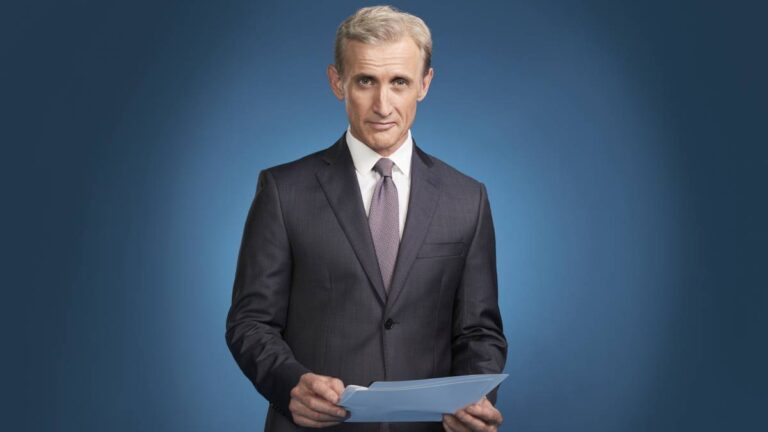
Earlier this week, a surprise announcement revealed that the Law&Crime Network was purchasing Court TV from Scripps. Dan Abrams, founder of the Law&Crime Network, says fans have nothing to worry about.

After news of the sale was announced, reports surfaced claiming that mass layoffs would take shape at the network. Furthermore, some reports stated that the network would be shut down.

However, Abrams says that’s not the case.

In a post on social media, Dan Abrams argued the opposite is true.

“To be really clear, with the acquisition of Court TV by Law&Crime Network, we are keeping the great Court TV network, keeping live courtroom programming and maintaining, and even expanding, its distribution,” Abrams wrote. “These will now be two distinct but complimentary (sic) brands.”

Scripps originally purchased the Court TV brand from WarnerMedia in 2019. It subsequently relaunched the channel as a 24/7 hub for legal news and proceedings.

Law&Crime Network was purchased by Jellysmack from Abrams for what was reported as a nine-figure deal in 2023. He still serves an executive for the brand.

Barrett Media produces daily content on the music, news, and sports media industries. Sign up for our newsletters to stay updated and get the latest information right in your inbox.