Home Blog Page 57

CW Sports To Begin Streaming Live Sports On ESPN App Beginning August 4

0

CW Sports has a date set for their launch on the ESPN App. The new streaming partnership officially launches Tuesday, August 4.

What We Know: The CW Network and ESPN confirmed the date in which the expansion of CW Sports’ reached beyond traditional broadcast. More than 800 annual hours of CW Sports will stream live on the ESPN App for ESPN Unlimited subscribers. The launch begins with a two-hour WWE NXT event on August 4, followed by NASCAR, college football, and another WWE event later in the month. Additionally, The CW already sublicenses ESPN’s ACC football and basketball rights, extending a partnership that predates this new streaming deal.

What They Said: CW Sports President Brad Schwartz (via Barrett Media May 7, 2026): “It’s going to be a CW-branded destination within the ESPN app, just like they have an NFL destination within the ESPN app. We control all of our content. It’s not unlike if it was just a CW app. It gives us that streaming solution that we, fans, and frankly the leagues have been asking us for.”

CW Sports President Brad Schwartz (via Barrett Media May 7, 2026): “We sublicense an ACC package from them, and love working with them [ESPN]. When you have a partner and work together really closely on something, it leads to other conversations. It started with asking if we should stream ACC games. Then it was, should we stream everything? The conversation just grew. This is a first-of-its-kind deal for them, and the same for us. It’s very innovative for all and took some time to figure out.”

What Remains Unclear: Pricing details for accessing CW Sports through ESPN Unlimited were not specified. Similarly, the release doesn’t clarify whether all CW Sports programming will stream, or only select events.

What It Means: This deal significantly widens CW Sports’ digital footprint ahead of its biggest college football season yet. By pairing with ESPN’s massive App audience, The CW gains exposure well beyond its own distribution. Meanwhile, ESPN adds live NASCAR, added WWE, and college sports programming to its Unlimited tier, sweetening its value proposition. Ultimately, both companies benefit from combining fanbases across linear and streaming platforms.

Barrett Media produces daily content on the music, news, and sports media industries. Sign up for our newsletters to stay updated and get the latest information right in your inbox.

Shawn Farash Added to Dan Bongino’s Silverloch Media Podcast Lineup

1

Dan Bongino’s media company is adding another familiar conservative voice. Shawn Farash will launch a new daily live podcast next month.

What We Know: Shawn Farash will join Silverloch Media, the company owned by Dan and Paula Bongino, to host Shawn Farash Live. The program debuts Monday, August 17th, and will stream live each weekday at 1 PM ET. Farash has built a large online following through his political commentary and comedy while also serving as a regular fill-in host at news/talk radio stations, including 1210 WPHT in Philadelphia. He’ll continue expanding his media presence with the new daily show, giving Silverloch Media another original program as the company grows its digital content portfolio.

What They Said: “It’s not about me. It’s about giving a pathway to other people like a pathway was given to me. I’m going to tell you something. I would not be here, and this is categorically true, although these two will not accept any credit because they’re very humble about it. Without Sean Hannity, Mark Levin, and I’ll throw in Glenn Beck, too — because Glenn helped me a lot early — I wouldn’t be here. I’ve been doing this 10 years. They blazed the path for me. They let me guest host their shows. And they had me on as a guest when nobody knew me from Adam. They’re like, ‘Who’s this Dan Bon Jovi guy? He’s not nearly as good looking as Bon Jovi. He doesn’t have enough of his money. He’s not as talented either.’ They had me on.” -Dan Bongino

What Remains Unclear: Silverloch Media hasn’t shared additional details about the show’s format or any planned guests. It’s also unknown whether Farash’s existing podcast schedule will change after the new show launches.

What It Means: The addition of Farash signals Silverloch Media’s continued investment in developing personalities beyond Bongino himself. Moreover, Farash brings experience in both digital media and news/talk radio, giving the company a host with an established audience across multiple platforms. His hiring also reflects the growing connection between podcasting and traditional talk radio as personalities increasingly build audiences in both spaces.

Barrett Media produces daily content on the music, news, and sports media industries. Sign up for our newsletters to stay updated and get the latest information right in your inbox.

Ann Kelly Exits WDUV Mornings After 38 Years in Tampa

0

Ann Kelly retires Friday from WDUV mornings. She closes out nearly four decades in the Tampa market.

What We Know The 105.5 Soft AC personality ends her tenure after 12 years hosting mornings at WDUV. Moreover, Kelly previously spent time at sister station 94.9 WWRM, where she joined the air in 1988 as part of the “Shepherd & Shepherd” morning show with then-husband Read Shepherd. Previously, she worked in Toledo and Syracuse before arriving in Tampa.

What They Said Cox Tampa Vice President and Market Manager Jason Meder praised Kelly’s impact on the community. “Ann’s talent, compassion, authenticity, and unwavering commitment to serving our community have defined what local radio should be,” Meder stated. “While we will miss hearing Ann every morning, her impact on our listeners, our station, and Tampa Bay will be felt for generations.” Additionally, the company highlighted Kelly’s “AnnVenture” approach to storytelling and her popular “Ann Kelly’s Kitchen” blog.

What Remains Unclear The station has yet to name Kelly’s successor. Furthermore, Kelly hasn’t disclosed her specific retirement plans. Additionally, no announcement addressed whether the morning slot shifts format or remains Soft AC. WDUV hasn’t announced any listener send-off events.

What It Means Tampa Bay radio loses a seasoned voice who championed local engagement. Furthermore, WDUV must navigate a significant on-air transition after years of morning stability. Importantly, Kelly’s legacy extends beyond radio through her Lupus advocacy, board work with the Tampa Bay Arthritis Foundation, and support of the Suncoast Animal League. The departure marks the end of an era for Cox’s Tampa cluster.

Barrett Media produces daily content on the music, news, and sports media industries. Sign up for our newsletters to stay updated and get the latest information right in your inbox.


Tony McGinty Takes Afternoons at 107.3 Cleveland Alternative

0

Rubber City Radio has named Tony McGinty as the new afternoon host at 107.3 WNWV (Alternative Cleveland). McGinty arrives after exiting iHeartMedia in recent layoffs.

What We Know McGinty now takes the 2-7pm slot vacated by Carrie Danger earlier this month. His iHeart tenure spanned two distinct periods—2013 to 2020, then again from February 2022 onward. During his most recent stint, he co-hosted mornings at Hot AC 98.1 WKDD Akron and programmed Rock 106.9 WRQK-FM Canton. Additionally, he hosted overnights at Rock 100.7 WMMS Cleveland.

What’s at Stake Program directors across northeast Ohio continually reshape their on-air lineups as competitive pressures mount. Afternoon slots represent critical revenue-driving dayparts for alternative formats in established markets. Strong afternoon talent directly impacts station momentum and listener engagement during key listening hours. This appointment underscores the station’s commitment to maintaining competitive programming throughout the day.

What Remains Unclear The full scope of McGinty’s duties at WNWV hasn’t been announced officially. Details about potential digital or social media responsibilities haven’t surfaced yet. Moreover, industry observers wonder whether additional staff changes could follow at the northeast Ohio iHeart cluster. Beyond these specifics, Rubber City Radio has not disclosed its broader content strategy for the hire.

What It Means McGinty’s move demonstrates how radio continues its talent recirculation following industry layoffs. Importantly, Cleveland’s alternative station strengthens its weekday on-air roster considerably. Furthermore, northeast Ohio listeners gain a familiar voice in an established afternoon timeslot. Ultimately, the hire underscores how experienced talent finds new opportunities despite broader industry consolidation.

Barrett Media produces daily content on the music, news, and sports media industries. Sign up for our newsletters to stay updated and get the latest information right in your inbox.

The Industry According To: Keith Dakin, Connoisseur Media

Thank you for checking out The Industry According To. Every Tuesday, we speak with a different expert or leader from the music industry — label executives, artist managers, programmers, talent, artists, consultants, and beyond. To appear as a future guest, email Keith Blackbox Group at keithblackboxgroup@gmail.com.

Today we sit down with one of the most versatile and respected programmers in modern radio. He is a leader who has worked inside small, fast-moving companies and larger, multi-market organizations. At these organizations, scale and culture truly matter. Keith Dakin has spent over 25 years in the industry, working at several broadcasting companies, including a high-impact run programming the legendary WFNX/Boston. Throughout his career, his stations have been dominant. Furthermore, they have been nominated for more than 10 Marconi awards. Currently, Keith is the SVP of Programming for Connoisseur Media. He oversees a wide mix of formats, talent, digital strategy, and brand development at over 200 stations across nearly 50 markets.

So, let’s dive in.

*Editor’s Note: Answers have been edited for clarity and length.*

Hundreds of Stations Overnight

Keith Cunningham: You go to sleep responsible for a dozen stations. You wake up the next morning responsible for over 200. Many are in markets you’ve never been to. What’s your process for getting to know that many brands quickly? How do you decide which ones need attention first?

Keith Dakin: Ha! It’s been a wild year, for sure. Step one was to figure out who’s who and what’s what. Most importantly, I needed to determine where exactly Saginaw, Michigan is located. Once I finished that task, the summer of 2025 was a summer of a thousand phone calls. I tried to meet, via Zoom, every single PD, OM, and morning show we had. Afterwards, I have, basically once a month, tried to hit one or two markets. I’m writing this from the plane leaving the Bay.

What we found from the start was that Alpha had really cut back these markets. Indeed, OMs and PDs were desperately needed. We started to fill those holes. Ross MacLeod in Portland was our first hire. One of our biggest markets needed a leader. Moreover, he was the perfect fit.

We moved from market to market doing the same thing. Specifically, we targeted San Jose, Palm Springs, Dayton, and Long Island. We adjusted stations, hired people, and tried to focus on our mission. Our mission was to get back to doing what radio does right — connecting on a local level.

Culture Shock

Keith Cunningham: When new owners take over a company, skepticism is usually the default setting inside clusters. What were the first messages you delivered to hundreds of stations? These stations didn’t know you or Connoisseur. Furthermore, they weren’t sure what the future looked like.

Keith Dakin: I made the same joke you did at the start of this article: “Yesterday we had 13 stations. Now we have 213. So bear with us.” My message — and certainly my CEO Jeff Warshaw’s message — has been crystal clear. We are a company that is going to do radio in the way we all grew up loving radio. We are going to be in parades and in front of shows at the amphitheater. Additionally, we are going to stop being wallpaper. We are going to connect on a one-to-one level. Finally, we are going to create and make stars.

Scale vs. Identity

Keith Cunningham: One of the biggest criticisms of consolidation is that stations lose their identity. Consequently, they start sounding the same — same imaging, same promotions, often the same voicetracked DJs. How do you scale without flattening brands into generic versions of each other?

Keith Dakin: Is it having a ton of meetings and saying “stop using AI to make your social media graphics”? Because I’ve certainly done that.

Generic, boring radio will be the end of us. It is not Spotify. It is not corporations. It’s not that young people don’t care. Rather, it is doing cookie-cutter, bland radio. Yes, we have national contesting and DJs that do multiple markets. Yes, we utilize super hi-fi. However, I spend every call encouraging these PDs to disrupt, to create, and to make memorable radio. What did you do this week that someone will talk about in their group chat? If the answer is nothing, then we are doing it wrong.

We can all give away the flyaway to Metallica in the Sphere. Yet, how are you — The Fridge in Dayton — going to make it your own? How are you going to make it stand out?

Evolution

Keith Cunningham: You’re in a rare position. You can drive evolution across hundreds of brands at once. When you think about radio’s next chapter, what’s the first area you believe needs to change?

Keith Dakin: Attitudes. If you think radio is ending, if you think today’s the day you’re getting fired, or if you think that no one cares anymore, then you should do something else.

The news is bad. I get it. However, if you are still here and still get to wake up every morning and work at a radio station, let’s make it the best radio station. We’ve hired hundreds of local salespeople around the country since we started. I need my PDs and jocks to preach innovation, success, and excitement. When you talk to Jazzy at KMVQ in the Bay, you want to go out and sell 15 packages immediately. You are energized! Moreover, I need everyone to be like this.

The attitude that the sky is falling will get us nowhere.

Local Talent in a Voicetracked World

Keith Cunningham: Alpha Media was the first company to put an AI DJ on the air. Voicetracking is decades old. And now companies are offering full 24/7 AI-driven programming. How important is live and local talent to Connoisseur’s strategy now? Additionally, with full-station AI already here, how far do you think this goes?

Keith Dakin: Phil Becker did a lot of things at Alpha. But boy, this is the one that keeps coming up. I hope he does something nuts with Cox, so we can stop talking about this! Ha.

There is a big difference, to me, between having someone like Kenzie — based in Saginaw — voicetrack a bunch of our markets and having a robot do it. I’m 100% anti-robot. Perhaps someday this quote will come back to haunt me (hopefully not in a Terminator 2 sort of way). But I can’t imagine that the public wants a fake person on the air.

Now, if you are a morning show and want a parody song or a quick stinger jingle, and you want to use AI, have it. Many shows use actors as callers anyway. If a robot can do that and sound real, I guess I’m fine. But replacing real jocks? No way.

The argument I keep having relates to listener testimonials. Many PDs I speak with say they want to create them in Eleven Labs. “They sound real,” they say. I just don’t think they do. Do you, fake robot, really love the guitar solo in Even Flow? Isn’t it just so much better to have the street team interview real people at one of your events? These people can say, “I love when PLR plays Jaded after Brain Stew when I’m driving on 95 in New Haven.”

The Talent Pipeline

Keith Cunningham: The talent bench is thin. When you need to fill a slot in a small market, where are you looking? And what do you do if the right person doesn’t exist or doesn’t fit the budget?

Keith Dakin: Talented people are everywhere. For example, our morning show co-host in Portland was a reality TV star. Anna — of the Anna and Raven Show — was a stand-up comic, real estate agent, and English teacher. Furthermore, Iris in San Antonio was the receptionist.

We just need to hunt for them. No one is graduating from Syracuse and sending out 82 cassettes to every alternative station in the country like I did. That part is over. So now we, as programmers, need to find them in our towns.

You have influencers, podcasters, and fake internet celebs in every town — big or small — in America. Go find them. Put them on the air. Then you, successful radio professional, teach them how to be great. Find the stars. Teach them how to run the board.

Data & Gut

Keith Cunningham: While there are countless PDs under your watch, you’re responsible for the performance of hundreds of stations. What data matters most to you when building strategy for brands that are struggling? And when does gut override the numbers?

Keith Dakin: It’s revenue. We have to stop worrying day in and day out about the ratings. I have some stations in two-book diary markets. Is that really a roadmap to success? Oh, we were up in Palm Springs in Fall 2025. But it won’t be until six months later until we get another report card. It is no way to determine where you are at.

So, judging our success by revenue is what makes the most sense. Then we can look at things like: Are the DJs stars in their market? Does the morning show have a million endorsements? Is there a buzz on the street? Do our NTR events sell out? Do people interact with our social?

Z93 in Dayton is my favorite example. We flipped that JACK station to Z. Z was a very successful Top 40 that ended many years ago. The excitement of the return of that brand was like nothing I’ve ever experienced. PD Java Joel and I were basically flabbergasted by the response. Now, almost a year later, it still feels great.

Artists and Labels

Keith Cunningham: Aspiring artists have endless platforms — YouTube, Spotify, TikTok, you know all of them — what advantages does radio still bring to labels and artists that those other platforms don’t?

Keith Dakin: I think we all say it. Radio is the megaphone. You can have a massive streaming hit. But your aunt won’t know it until the radio plays it. When KLLL in Lubbock plays your song, everyone in town now knows it. When WALK gets on a record, you know that you have reached the mountaintop. You will hear that song at every wedding for the end of time.

I also believe that we can still break records if we would just do it. Fifteen alternative stations added Phoebe Bridgers when her new song came out. Her new, accessible, alt-friendly song. Why didn’t everyone? Who is bigger than Phoebe Bridgers in the alt space? She opened for Taylor Swift, sold out arenas everywhere, and basically has been a template for a million new pop superstars. We just have to remember that sometimes we can take chances here. (And by the way, playing Phoebe Bridgers is not taking a chance.)

Lessons From Alpha

Keith Cunningham: Acquiring a company comes with surprises — culture, systems, talent, politics, and the stories that come with any acquisition. What did you learn from inheriting Alpha Media? How did this change or help how you lead today?

Keith Dakin: The number one thing I’ve learned is from watching Jeff. He has made it his mission to go to every market — from Fort Dodge, Iowa to Anchorage, Alaska. He has been clear, concise, and direct with what his vision is. Moreover, he has been clear about what he expects from people.

I think you could take any one of our programmers and say, “What is this company about?” They would all give you a similar answer. There is no grey area here. People know what is expected of them. Furthermore, they know they are here to deliver it.

So knowing the mission from the very top makes it very easy for someone like me to help get us there. I’m sure that all the PDs feel the same way: “I need to be here every day and have urgency, be sales-friendly, and a creative mad scientist. I need to impact the community as much as possible. Perfect. Let’s get it.”

Keith Cunningham: Compared to when you started in the industry, radio has fewer resources, smaller staffs, and less experience inside clusters. What’s the weakest link in radio right now — and what’s the fix that isn’t being fully addressed?

Keith Dakin: It’s simply passion. We just need to get that thrill back.

It starts with market managers. If you have a great market manager that loves the industry and is obsessed with their radio stations, goes to the events, and laughs with your morning shows, then everything else falls in line.

One of our regionals is Kristin Okesson. She is also the direct MM of Long Island and Connecticut. Next week, she will be putting wristbands on listeners at their giant pizza event. Guess what? She’ll be happy to do it.

She has passion. In turn, the sales managers and PDs have it. Then it trickles down to the on-air staff and sales folks. All of a sudden, we are swimming in the same direction. Maybe we aren’t talking about how it was better in 1989.

The Revenue Lever

Keith Cunningham: Programming and sales have never had to work closer together. Given the revenue pressures the industry is facing, what’s the one lever radio needs to pull? How can we grow revenue — not just protect what’s left? Is there one the industry is ignoring?

Keith Dakin: Build big morning shows. Have massive events. These morning show NTR drivers aren’t a fix that is going to save our industry. But will it help us hit August? Maybe. If you have and build stars and believe in them and trust them, the rewards will be never ending. Chaz and AJ in CT never have an event that doesn’t sell out. In four hours, they raised almost 200K in cash and toys for kids. These type of shows make a difference.

If podcasts — PODCASTS! — can sell out theaters, why can’t we?

The Toughest Call

Keith Cunningham: You and the corporate team have had to make some tough decisions. Personnel changes, format flips, station sales. What’s been the toughest call you’ve had to make since Connoisseur acquired Alpha?

Keith Dakin: It’s less of a call but something that has become really interesting to me. People don’t want to move. I’ve had great job openings and talked to some very talented people. But when it comes down to it, they don’t want to leave wherever they live. This is true even if they are out of work. I believe so many radio people have been burned by layoffs over the years. They would rather do a million side hustles than leave Indianapolis or wherever. It has been fascinating trying to hire. At the finish line, I hear: “I just can’t leave where I’m from.”

And believe me, I get it.

The Blank Slate

Keith Cunningham: Last question: blank slate. Say anything you want to any sector of the music industry. What do you want them to hear?

Keith Dakin: Don’t count us out.

Barrett Media produces daily content on the music, news, and sports media industries. Sign up for our newsletters to stay updated and get the latest information right in your inbox.

Inside Sandy Grossman’s Long Road to Immortality at the Pro Football Hall of Fame

1

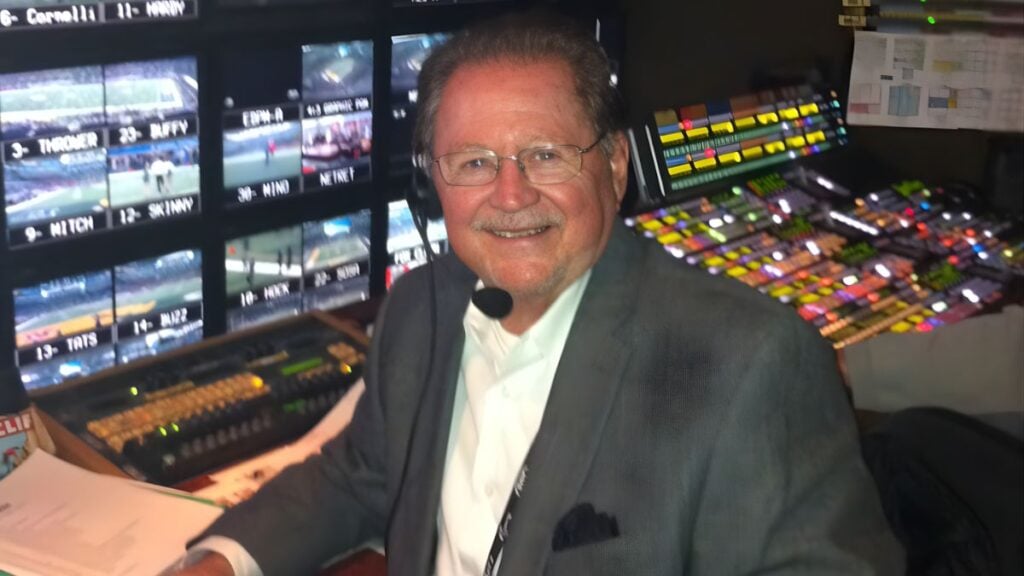
Next weekend, the Pro Football Hall of Fame welcomes the Class of 2026. This year, five NFL legends will be recognized for their accomplishments on the field as their stories become immortalized forever in Canton, Ohio. Off the field, another distinguished honoree will also be recognized. During the Enshrinees’ Gold Jacket Dinner, Sandy Grossman will become the first television director to receive the Pete Rozelle Radio-Television Award from the Pro Football Hall of Fame.

Grossman’s recognition marks a historic first for the Hall. Over a broadcasting career that spanned more than five decades, he directed coverage of a record 10 Super Bowls, 18 NBA Finals, five Stanley Cup Finals and multiple Olympic Games opening and closing ceremonies.

Grossman retired in 2012 and passed away in 2014 in Boca Raton, Florida, at the age of 78. Earlier this year, his son, Dean Grossman, received the call informing him that his father would finally receive one of football’s highest honors.

“I got a text from Rich [Desrosiers] at the Hall asking if I was available to speak in about an hour. So, he called me along with Joe [Hawkins] and Jim [Porter]. I told them I had never been to the Hall of Fame before, and they told me I’m going to get on a plane this year because my father will be winning the Pete Rozelle Award,” said Grossman. “It was very emotional. I hung up and started to cry.”

The Long Road To The Hall

Earning a place in the Pro Football Hall of Fame is one of the most difficult accomplishments in football, whether as a player or broadcaster. The selection process for the Pete Rozelle Award is equally demanding. Candidates require an extensive case for consideration, and only one recipient earns the reward each year.

For Dean Grossman, the journey lasted 12 years following his father’s death. During that time, he worked tirelessly to make the case that Sandy Grossman’s contributions deserved Hall of Fame recognition. Those efforts finally paid off, making the phone call even more meaningful.

Sandy Grossman Super Bowl (Courtesy: Dean Grossman)

“It took a couple of days to sink in. When the press release came out, that’s when it really hit me,” explained Grossman. “I printed the press release and went to the cemetery. I handed it to my father by placing the release in the cracks of the wall where he’s buried. Because I wanted him to know that we did this. He did this from what he did in his career, but we made it happen because we never forgot.”

Grossman said his father never talked about one day entering the Pro Football Hall of Fame. Recognition was never his motivation. Instead, he approached every broadcast with one objective: deliver NFL viewers the very best pictures, sounds and overall viewing experience possible.

Before becoming one of the NFL’s most respected directors, Grossman established himself as the lead director of NBA broadcasts, where he pioneered the use of music during game breaks. Today, that production element remains commonplace across sports television.

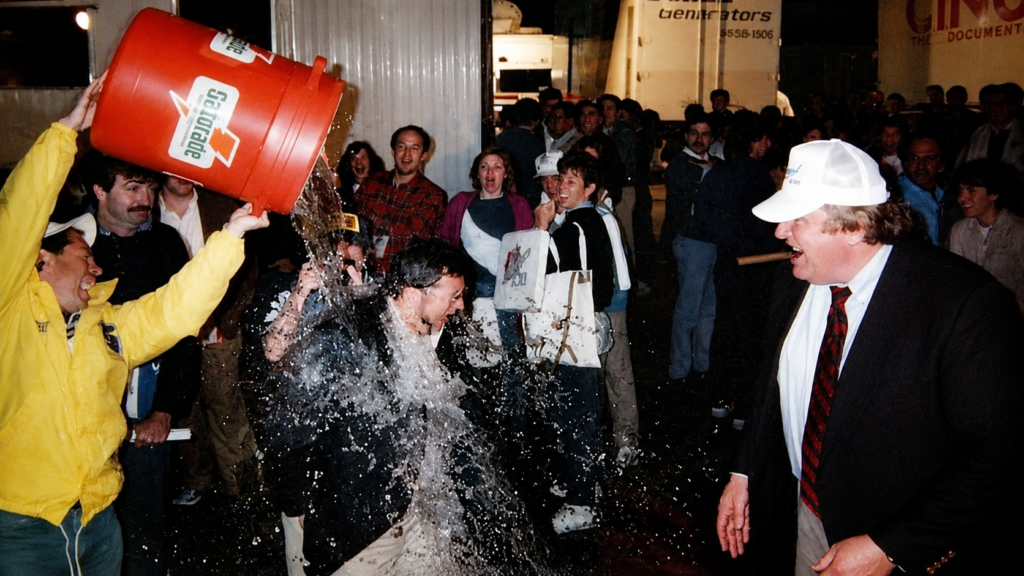
He later became the network’s lead NFL director and spent 21 seasons alongside John Madden and Pat Summerall. Madden credited Grossman with being the first director to widen the standard camera shot to include the outside linebackers, an innovation that enhanced viewers’ understanding of the game and reflected Grossman’s constant pursuit of improving the broadcast.

For years, Dean Grossman heard the same message: his father’s resume was Hall of Fame worthy. He advocated for his father with Hall of Fame officials and others connected to the selection process. Still, as time passed and other deserving candidates were recognized, he began to wonder if the call would ever come.

“Every year, it was your dad is on the short list. He’s going to get there, just not this year,” explained Grossman. “It got to a point where every year I was asking the same questions and still getting denied. I know how so many players on that short list feel when they continually get denied… It’s the highest of honors that someone in production with the NFL can receive.”

Once the call arrived, the planning began.

Honoring The Moment

Grossman knew the date, time and location of the ceremony. But everything else still had to be arranged. Flights, hotel accommodations and event logistics quickly became priorities. As a sports broadcasting agent with strong relationships throughout the NFL and television industry, coordinating those details came naturally.

The most difficult task, however, was writing the speech.

Sandy Grossman (Social Screengrab)

How do you summarize an extraordinary 50-year career in less than three minutes? More importantly, how do you tell the story of not only a pioneering television director, but also a devoted husband, father and grandfather?

“I spoke to several people about the speech looking for advice. The best advice I received was write from the heart,” says Grossman. “I’m speaking about my father on the biggest stage an NFL director can receive an award. I wanted to make sure it was perfect.”

Grossman spent the past three weeks writing and rewriting his remarks. The first draft looked nothing like the final version. He sought feedback from people who worked alongside his father, trusted colleagues and respected mentors. He even used ChatGPT to provide another layer of feedback. Just in case there were ideas others didn’t suggest.

“The first draft was a resume. It was boring and way too long. Then I went back and edited it and shared it with a select group of people,” said Grossman about the writing process. “I knew it was a great speech when my fiancée read it and had goosebumps and started to cry.”

Wanting to ensure every aspect of his father’s life and career was accurately captured, Grossman shared the final draft with the group for one final review.

“I then forwarded it to Dick Stockton. He called me and said the speech is absolutely brilliant and not to change a single thing,” said Grossman. “It’s really spoken from the heart about the father he is, and the director he was. The innovations he introduced and why I felt he was deserving of this honor.”

Grossman also wanted his attire to reflect the significance of the evening.

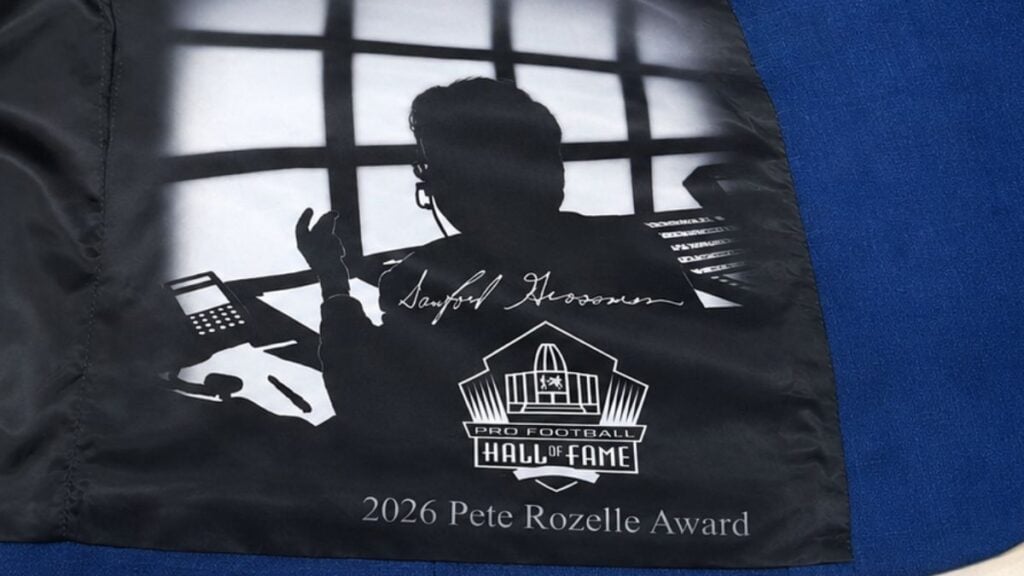
For the first time in his adult life, he commissioned a custom suit. Inside the jacket is a custom-designed piece of artwork featuring a silhouette of his father directing a game, his signature and the Pro Football Hall of Fame logo.

Sandy Grossman Jacket Picture (Courtesy: Dean Grossman)

“It’s something that I wanted to do. I will always remember this memory, and he will always be there with me, us, and my family,” said Grossman. “It came out amazing. I’m sitting on a dais with Roger Goodell, with family, clients, and executives there for my father in Canton. This is a big deal.”

A Lasting Impact

Although Sandy Grossman will soon be forever enshrined in the Pro Football Hall of Fame, he will always simply be ‘Dad’ to Dean Grossman.

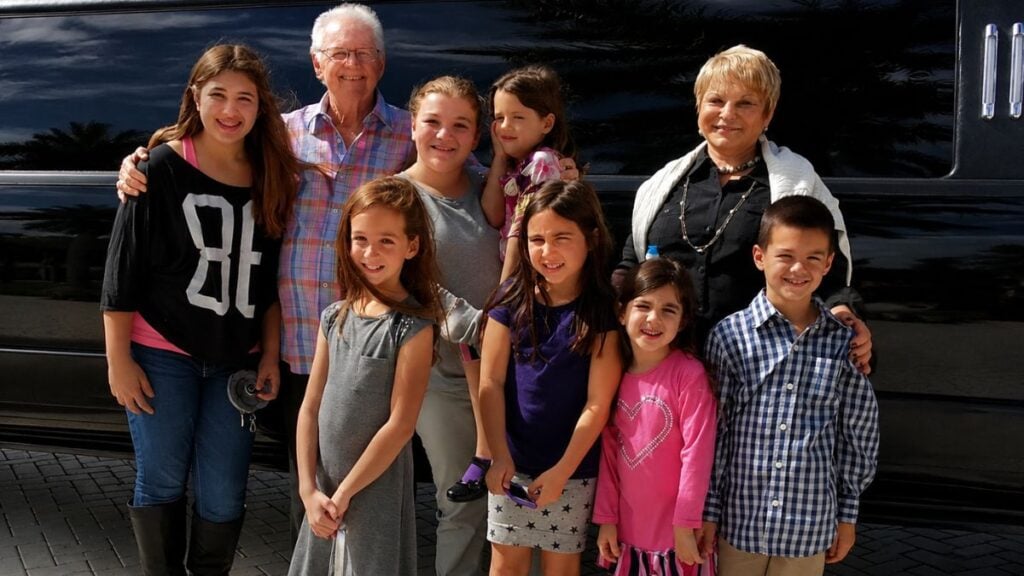
No matter how devoted he was to directing NFL broadcasts, Sandy Grossman never allowed his career to overshadow his family. As the Hall of Fame journey reaches its conclusion next weekend, Dean hopes the lasting memory centers on love, family and a lifelong passion for telling football’s greatest stories.

“He was a kid from North Jersey. A humble and genuine person who loved the NFL,” explained Grossman. “He knew his job was to provide the best pictures to the fans of the NFL. I just want people to know my father did everything he could to provide those pictures, but also be the best father and grandfather as well.”

Next weekend, five football icons will slip on gold jackets and take their place among the game’s greatest players. Their touchdowns, tackles, celebrations and championships will forever be preserved as part of football history.

For decades, Sandy Grossman helped make those moments unforgettable for millions of fans watching from their living rooms.

He never scored a touchdown, threw a pass or hoisted the Lombardi Trophy. Instead, he framed the moments that defined the NFL, allowing generations of fans to experience the game’s biggest stages with greater emotion, clarity and appreciation.

It is fitting that the Pro Football Hall of Fame is now recognizing the man who spent a lifetime ensuring football’s greatest stories were seen exactly as they deserved.

For Dean Grossman, the Pete Rozelle Radio-Television Award is more than validation of an extraordinary broadcasting career. It’s confirmation that the humble father and grandfather he knew at home will forever be remembered alongside the legends whose stories he helped tell.

In Canton, Sandy Grossman’s name won’t simply honor a pioneering television director. It will stand as a lasting reminder that behind every iconic NFL moment is someone whose vision helped make it timeless.

Sandy Grossman Grandkids (Courtesy: Dean Grossman)

Barrett Media produces daily content on the music, news, and sports media industries. Sign up for our newsletters to stay updated and get the latest information right in your inbox.

Clip Culture Is the Necessary Evil Every Sports Media Talent Must Learn To Live With

0

One of the biggest frustrations I ever had while running sports radio stations or hosting shows was being accused of something I knew wasn’t true. There’s nothing worse than having your words or intentions misunderstood, and social media has only amplified that reality. Offer a critical opinion about the local team? You’re a hater. Say something positive? You’re a homer.

Too many people today rush to assign labels before taking the time to understand the full context of what was actually said. That’s especially true in today’s clip-first media environment called ‘clip culture.’ Sports media personalities spend hours each week building conversations with nuance, explanation, humor, and emotion. Unfortunately, those aren’t the qualities social media platforms reward.

Algorithms reward attention, engagement, and curiosity. That’s why every station, podcast, network, and digital creator spends so much time producing Shorts, Reels, TikToks, YouTube clips, and posts for X.

It’s not because they believe 30 seconds tells the whole story. It’s because that’s where today’s audience discovers content.

Like it or not, clip culture has become the front door to sports media. The past week provided two perfect examples.

Discovery Needs Sizzle

ESPN underwent another round of layoffs, impacting several high-profile personalities along with many talented employees whose departures generated far less attention. Days later, LeBron James shocked the NBA world by signing with the Philadelphia 76ers.

Naturally, everyone had an opinion. That’s life in today’s attention economy. Fans open their social feeds looking for information, analysis, entertainment, and reaction. Sports media companies respond by highlighting the strongest moments from their shows because that’s how content reaches audiences in 2026.

Unfortunately, that’s also where context often disappears.

When Ryan Clark shared an emotional account of his departure from ESPN on The Pivot, some immediately dismissed his tears as performative. Critics labeled him soft, fake, or desperate for attention, suggesting the episode of his podcast existed solely to generate clicks.

Maybe they overlooked the obvious. Clark had just lost his job. He was speaking on his own platform to an audience that deserved to hear directly from him.

When 94WIP’s Spike Eskin called LeBron James signing with the 76ers “one of the worst days I’ve ever had as a Philadelphia 76ers fan,” that quote spread rapidly across social media. Without context, it sounded outrageous. With context, it aligned perfectly with weeks of commentary in which Eskin consistently explained why he didn’t want James joining Philadelphia at this stage of his career.

Neither moment changed after being clipped. Only the surrounding conversation disappeared. That’s the part many viewers fail to recognize, the context.

Don’t Hate The Game

Short-form video was never designed to deliver complete context. Its purpose is discovery. A Reel isn’t intended to replace a 30-minute show. A YouTube Short isn’t supposed to summarize an hour-long podcast. The goal is to capture enough attention that someone wants to hear more.

That’s not manipulation. That’s marketing.

According to Podcast Atlas’ new findings, watching clips is now mainstream. 89% of listeners watch them at least sometimes, and 72% do so often or always. YouTube leads engagement at 67%, followed by TikTok at 63%. Roughly a third of clip viewers reliably go on to watch the full episode or become regular listeners. Meanwhile, 74% give clips their full attention, nearly matching full-episode focus levels.

Every successful media company understands that audiences rarely discover new shows by scrolling radio station websites or browsing podcast directories. They discover personalities because a compelling clip appears in their social feed. If stations refuse to participate in that ecosystem, they don’t preserve authenticity. They sacrifice discoverability.

That’s an important distinction because many critics confuse attention with dishonesty.

Creating compelling clips doesn’t automatically mean the original conversation was manufactured for engagement. Sports media has always involved performance. Great hosts know how to tell stories, deliver opinions, create suspense, and entertain audiences.

Performance, however, isn’t the same thing as fabrication. A passionate reaction can still be genuine. An emotional interview can still be authentic, and a strong opinion can still reflect exactly what the host believes.

The reality is that every memorable moment now has the potential to become standalone content viewed by millions of people who will never consume the full show. That’s simply how modern distribution works, and talent needs to understand that reality.

Your complete thoughts may never travel as far as your most controversial 30 seconds. Your explanation may never generate as much engagement as your strongest opinion. In addition, your intent may never be understood by people who only experience your content through a social feed.

None of that feels fair. It’s also unlikely to change.

Accept It

Complaining that Shorts, Reels, TikToks, and social clips lack context misses the point because they were never built to provide it. They were built to earn attention in an increasingly crowded digital marketplace. That’s the trade-off every modern sports broadcaster makes, and there is extreme value to it.

The same clips that invite criticism also introduce your work to thousands of potential new listeners, viewers, and subscribers who otherwise may never discover your show. In today’s media landscape, discovery rarely begins with a radio dial or a podcast app. It begins with an algorithm.

Sports media personalities can spend their careers frustrated that audiences judge them based on 30-second clips, or they can accept that this is now part of the job. The challenge isn’t eliminating criticism. It’s continuing to create honest, authentic content while understanding that not everyone will see the entire picture.

Short-form video isn’t going away. Neither are the labels, assumptions, or snap judgments that come with it.

The best talent won’t waste energy fighting that reality. They’ll embrace the opportunities clip culture creates, trust that the audience seeking deeper context will find it, and understand that in today’s digital ecosystem, relevance often begins with a clip—even if the full story requires much more than 30 seconds.

Barrett Media produces daily content on the music, news, and sports media industries. Sign up for our newsletters to stay updated and get the latest information right in your inbox.

How Ray Stevens Built Listener Trust and Loyalty at WLS-AM 890

0

WLS-AM 890 morning host Ray Stevens believes the fastest way to build a loyal audience isn’t through advertising budgets or billboards — it’s by physically showing up. In a wide-ranging conversation, Ray Stevens made the case that community presence isn’t a nice-to-have for a morning show. That’s the entire strategy.

Stevens didn’t always see that approach modeled at WLS-AM 890. When he arrived at the Chicago news/talk station, he noticed a gap compared to what he’d seen elsewhere in radio.

“There wasn’t a lot going on outside of what we did in the studio, which I thought was odd,” said Stevens. “Big country station, lots of events, concerts, charity work, and I do a lot of that on my own anyway — it was kind of a culture shock that there was hardly anything.”

Building Local Roots in a Big Market

Without a marketing budget to lean on, Stevens decided the show itself had to do the promotional work.

“We don’t have billboards, we don’t have advertising, we don’t have any marketing money,” Stevens said. “So the best thing to do is to take our show and our message out on the road. I think it’s paramount to do that. If you want to make noise, you gotta make it yourself.”

That mindset has already reshaped how Chicagoland listeners interact with the show, according to Stevens. He pointed to his upcoming third year at the Carol Stream National Night Out as an example.

“People come out to these events and you become a piece of that event. They feel a connection with you that they can’t get from a national host or maybe a podcast,” the WLS morning host shared. “That’s where you make the connections. And then you really see it the next year when somebody goes, hey, I remember meeting you out at so-and-so.”

That connection, Stevens explained, is rooted in a simple philosophy about scale.

“I think that when you’re a small station, you got to act big. When you’re a big station, you got to act small,” Stevens said. “So I thought, how can we impact a couple communities? How do you make one of these communities in your listening area the biggest story of that community for the week, month, or year?”

That question led directly to WLS-AM 890‘s most ambitious local push yet. This fall, it is launching a high school football broadcast series.

“Now we’re going to do Friday night lights, where we’re actually going into communities,” Stevens said. “We’re gonna run 12 Friday night high school football games on WLS. And we’re gonna be doing color commentary with a broadcaster from each of the towns, so it’s fair.”

Beyond the ratings potential, Stevens sees the series as a chance to give teenage athletes a moment they’ll remember.

“For somebody’s kid to be on WLS broadcast to 40 states on a Friday night in Chicagoland? Their kid’s gonna be a star,” said Stevens. “How cool is that, to be able to super serve your audience on such a local level? It hasn’t been done around here in a long time.”

Turning Engagement Into Loyalty

Community outreach, in Stevens’ view, doesn’t stop at events — it feeds the show’s content directly. Opening the phone lines for local stories, he said, produces an immediate reaction.

“What you do is you open up your phone lines or your text line and say, okay, moms, dads, grandmas, grandpas, you got any kids playing ball, let us know,” Stevens said. “And it just lights up. That’s what you want — activity on your phones and your socials that leads back to engaged listenership.”

Smaller, one-off moments matter just as much to Stevens as the larger initiatives.

“More than anything, it’s the little things, where people say, hey, we’re doing an event for a family that was affected by a tragedy, would you like to come out and host it,” the WLS morning host shared. “And when you throw in the social media component of people sharing that, it does what we were supposed to do — serve the community.”

Stevens also credited his on-air cast, particularly a newsman he described as unpolished but relatable, with making that connection feel authentic rather than manufactured.

“He’s a little rough around the edges, and people buy into that because he is who he is,” Stevens said. “They know that, and they know me, and they know my producer and my technical director, based on the things that we do on the air. You become part of their lives.”

That familiarity, Stevens argued, matters even more given how thin WLS-AM 890’s live local lineup currently is.

“That’s something that’s been missing at WLS for a while, especially given the fact that we only have one live local show,” said Stevens. “But that one live local show is what’s driving a radio station.”

Asked whether the strategy translates to programmers working in similarly large markets, Stevens pointed back to his time at KCMO in Kansas City alongside Pete Mundo.

“The one thing I learned about being over at KCMO with Pete Mundo was that size market doesn’t matter,” Stevens said. “I used to think, man, I gotta work in Chicago, I got to work in the big markets. But I still don’t know if I’ve worked for a radio station as good as that one.”

His closing advice centered on persistence, even as institutional pushback has grown throughout his career.

“You can’t let people tell you no,” Stevens said. “I’ve encountered more no’s in the last 5 years of my career than I have in the first 25 years of it. Find a way around it. Realize and visualize what you want to do, and then do it — the rest of the station will follow once they see the success that you can bring.”

Chris Cuomo’s NewsNation AI Town Hall Arrives at the Perfect Time

0

Chris Cuomo and NewsNation are stepping into one of the biggest conversations in media right now. The network will air The Future is Now: A NewsNation Town Hall on Tuesday from 8-10 PM ET, and the guest list reads like a who’s-who of science, tech, and culture. Astrophysicist Neil deGrasse Tyson, Prof G Media founder Scott Galloway, television host Mike Rowe, medical futurist Dr. Dan Kraft, longevity researcher Bryan Johnson, Axios senior AI reporter Madison Mills, and Toborlife Robot CTO George Ekas will all join Cuomo for the special.

The timing feels right for the network to shine a spotlight on the topic.

AI dominates headlines on a near-daily basis, yet plenty of people still don’t fully grasp what the technology can do, what it can’t do, or where it’s headed next. That gap between hype and understanding creates a real opportunity for a program built around straightforward questions and honest answers.

Cuomo has built a reputation for pressing guests on hard topics, and this subject demands exactly that kind of scrutiny.

A Bubble Ready to Pop?

There’s a growing belief among analysts and everyday viewers alike that AI and data centers represent a bubble waiting to burst. Google’s second-quarter numbers offer a useful example.

The company posted negative free cash flow during the quarter because of its AI infrastructure spending, and it poured $44.9 billion into AI during that stretch alone. Losing $5.8 billion in a single sector would sink most companies, but Google isn’t most companies, so it can absorb the hit without much visible strain.

Still, the broader question lingers. Nearly every industry now uses AI in some capacity, and companies across sectors keep pouring billions — soon perhaps trillions — into the technology.

How long will it take for that spending to turn a profit? That’s a legitimate and pressing question, and it’s exactly the kind of topic a town hall format can tackle head-on with experts who actually understand the economics behind it.

Closing the Education Gap

Beyond the financial questions, there’s still a significant education gap surrounding AI. Rep. Jim Clyburn (D-SC) admitted last week that he didn’t know what ChatGPT was “until about a week ago,” according to a clip from Vox Media’s America, Actually podcast. It’s tempting to write that off as an 86-year-old lawmaker simply being out of touch, and there’s some truth to that read. But the moment also points to something larger: a lot of people, regardless of age or profession, still don’t understand the basics of how this technology works or why it matters.

That’s where NewsNation’s lineup could genuinely help. Tyson brings scientific credibility, Galloway offers sharp business analysis, and Mills covers the industry daily for Axios, so viewers get perspectives grounded in both expertise and real-world reporting. Johnson and Kraft add a health and longevity angle that most AI coverage tends to overlook, while Rowe and Ekas round things out with a workforce and robotics lens that speaks directly to viewers wondering how AI will reshape their jobs.

When there are as many open questions about a technology as there are about AI right now, leaning into those questions beats avoiding them every time. Networks that shy away from complicated topics rarely earn viewer trust, but ones that dig in usually do. NewsNation seems to understand that, and assembling a panel this broad suggests the network wants substance over soundbites.

Cuomo’s track record as an interviewer should serve the format well, too. He doesn’t shy away from pressing guests, and a topic like AI benefits from someone willing to ask the uncomfortable follow-up rather than accept a rehearsed answer. Given how much uncertainty still surrounds the technology’s economics, ethics, and everyday impact, that willingness to push matters more than usual here.

I’m looking forward to watching the special Tuesday night and seeing how the conversation actually unfolds. Given the scope of the questions on the table, The Future is Now has a real chance to add clarity to a topic that badly needs it.

Barrett Media produces daily content on the music, news, and sports media industries. Sign up for our newsletters to stay updated and get the latest information right in your inbox.

Why Radio’s Best Stories Aren’t Really Overnight Wins

0

I’ll admit it. This probably isn’t where you expected me to begin a Barrett Media column. If you’re wondering whether Jason Barrett lost a bet and assigned me to the golf beat, I get it. Hang with me for a minute because this really isn’t about golf. It’s about success, and one of the best examples of it happened on a golf course this weekend.

Twenty-year-old Jackson Koivun won the PGA Tour’s 3M Open in just his third professional start. To most of us, it felt like one of those magical overnight success stories sports seems to deliver every so often. One weekend, you’re anonymous. The next, you’re holding a trophy while the sports world scrambles to figure out who you are.

But that’s the funny thing about overnight success. We have a tendency to start the clock the day we discover someone, not the day they started becoming great. Koivun didn’t suddenly become a world-class golfer on Sunday afternoon. Rather, Sunday’s victory was simply the moment the rest of us caught up to a journey that had been years in the making.

The more I thought about it, the more I realized radio has been telling the same story for decades. Sometimes it’s an artist who seems to explode out of nowhere. Sometimes it’s a morning show that suddenly becomes the talk of the industry. Sometimes it’s a programmer who lands a dream job and everyone says, “Wow, they came out of nowhere.”

The Stories We Don’t See

Did they? Or did we just finally notice them?

Perhaps that’s why stories like Koivun’s resonate so much. They’re a reminder that the biggest moments in our careers are often built long before anyone notices. The trophy, the ratings book, the No. 1 song, the promotion — they’re the visible part of the journey. What we don’t see are the countless mornings, late nights, small victories, and occasional setbacks that made those moments possible.

Radio has always been full of those stories. An artist doesn’t suddenly write a hit because one song climbs the chart. A morning show doesn’t magically develop chemistry because it landed in a bigger market. Great programmers don’t wake up one day with an instinct for finding talent or coaching personalities. Those things are developed over time, usually without much fanfare and almost never with a spotlight shining on them.

The Quiet Pursuit of Excellence

One of the things I admire about this business is that it’s full of people who quietly go about getting better. They don’t wear their sacrifices on their sleeves. They don’t carry a chip on their shoulder because someone else got the spotlight first. They simply keep showing up, refining their craft, mentoring talent, chasing better ideas, and trying to put out a better product than they did yesterday.

Furthermore, they don’t spend much time reminding everyone how difficult the work is. The alarm goes off early. The show begins. The playlist gets adjusted. The sales call gets made. The talent gets coached. Then everyone comes back and does it again the next day.

There’s something admirable about that. Not because radio people are martyrs or because our business works harder than everyone else. It’s because the best people in this industry understand that the work itself is part of the job. They don’t need to carry it around like a grievance.

The Work That Never Ends

Perhaps that’s why radio has endured through every new technology that has come along. The platforms change. The distribution changes. The competition certainly changes. But the people who consistently succeed are usually the ones who stay curious enough to keep learning and humble enough to keep improving. They understand that development never really ends.

That’s why Jackson Koivun’s story felt familiar. It wasn’t simply because he won in his third PGA Tour start. Rather, it was because it reminded me of something this industry has quietly understood for a long time.

Success usually doesn’t arrive out of nowhere. More often, it quietly introduces itself after years of preparation. We just happen to notice it on the day someone lifts the trophy.

Therefore, maybe we should remember that the next time an artist “comes out of nowhere,” a morning show suddenly catches fire, or a programmer lands the job everyone wanted. Chances are they didn’t become great overnight. We just finally noticed.

Barrett Media produces daily content on the music, news, and sports media industries. Sign up for our newsletters to stay updated and get the latest information right in your inbox.