ESPN has officially announced that its long-anticipated direct-to-consumer streaming platform will launch Thursday, August 21, offering fans a comprehensive way to access the full suite of ESPN content without the need for a traditional cable subscription.
The debut of the standalone service comes at a strategically significant moment on the sports calendar, coinciding with the opening weeks of the college football and NFL seasons. It also aligns with major events such as the US Open in tennis, international soccer fixtures, and the start of women’s college sports including soccer, volleyball, and field hockey. The timing positions ESPN to capture attention across multiple fanbases ahead of the WNBA and PLL playoffs and before the NBA and NHL seasons begin in earnest this fall.
“Timed for a marquee stretch of live sports programming,” the network said in a statement, the new offering is designed to meet fans where they are – with flexibility, personalization, and access to an expansive library of live and on-demand content.
The service will launch with two pricing options, including a flagship “Unlimited” plan for $29.99 per month. That package gives subscribers access to all ESPN linear networks – ESPN, ESPN2, ESPNU, SEC Network, ACC Network, ESPNEWS, ESPN Deportes – plus ESPN on ABC, ESPN+, ESPN3, SECN+, and ACCNX. In total, fans will be able to watch more than 47,000 live events per year, along with replays, studio shows, and original series.
To incentivize early adoption, ESPN is also rolling out a launch offer bundling the Unlimited plan with Disney+ and Hulu for the same $29.99/month price for the first 12 months.
Subscribers, whether through the DTC platform or via a traditional pay TV provider, will also retain access to the network’s full slate of marquee studio shows including SportsCenter, Get Up, First Take, NFL Live, College GameDay, NBA Today, Inside the NBA, The Pat McAfee Show, The Rich Eisen Show, among others. ESPN Originals and the acclaimed 30 for 30 library will also be available on demand.
Accompanying the launch is a revamped ESPN App, which the company promises will deliver a “more personalized, dynamic viewing experience.” New features will include enhanced multiview options, integrated live stats, betting and fantasy content, and a personalized version of SportsCenter called SC For You.
The news of the official launch date comes a day after the NFL transferred ownership of NFL Network, RedZone Channel, and NFL Fantasy to ESPN in exchange for a 10% equity stake in the network. The network also announced a separate licensing agreement is also in place for the NFL to provide ESPN with rights to distribute additional league content and intellectual property.
Finalization of the deal remains subject to definitive agreements, various approvals including by the NFL team owners, and customary closing conditions.
Barrett Media produces daily content on the music, news, and sports media industries. To stay updated, sign up for our newsletters and get the latest information delivered straight to your inbox.
ESPN is having an incredible week. After striking a deal with the NFL for ownership of NFL Network, RedZone Channel, and NFL Fantasy in exchange for a 10% equity stake in the network, ESPN has now secured a five-year agreement with the WWE to bring the company’s marquee live events exclusively to the brand’s forthcoming standalone streaming service starting in 2026.
Under the agreement, ESPN will become the exclusive U.S. home for 10 of WWE’s top events. Among those events include WrestleMania, SummerSlam, Royal Rumble, and Survivor Series. The deal contains rights to air pre- and post-event programming. It also leaves the door open for select events to be simulcast on ESPN’s linear platforms.
“WWE is an extremely popular form of entertainment that has stood the test of time,” said ESPN Chairman Jimmy Pitaro. “This partnership helps us grow our audience — it brings in younger, more diverse, and more female viewers.”
Pitaro added that Disney and ESPN plan to explore additional content extensions around WWE. Those could include crossovers with NBA stars, ESPN/UFL partner Dwayne “The Rock” Johnson, or ESPN talent like Pat McAfee, who has a longstanding relationship with WWE.
The new ESPN streaming platform is expected to launch ahead of the 2026 NFL season. Similar to its approach with the UFC through ESPN+, ESPN plans to integrate WWE into its promotional strategy in order to create early momentum.
“We are proud to reinforce the ‘E’ in ESPN at such an exciting juncture in its direct-to-consumer journey,“ said TKO President and COO Mark Shapiro. “WWE Premium Live Events are renowned for exactly the type of rich storytelling, incredible feats of athleticism and can’t-miss, cultural tentpole experiences that have become synonymous with ESPN. Through our UFC relationship, we have experienced firsthand how transformational an ESPN presence can be. We know this will be an exceptional partnership at a time of great innovation for both companies.”
This isn’t the first time ESPN and WWE have worked together. ESPN aired archived WrestleMania broadcasts to fill its schedule during the pandemic. The brand also featured on-site programming to support WWE live events, conversations on SportsCenter, First Take and other ESPN programs, and articles on ESPN.com. The positive history between the two companies helped lay the groundwork for this expanded deal.
WWE President Nick Khan called the negotiations “quick” and “robust in spirit.” Company officials did not share exact figures, but according to CNBC, ESPN will pay over 1.6 billion over 5 years for the U.S. rights to WWE’s premium live events. NBCUniversal reportedly paid $180 million per year over its prior five-year partnership with WWE. ESPN’s new direct-to-consumer platform will cost $29.99 per month upon rollout.
Despite the ESPN agreement, WWE will maintain relationships with other major platforms. Monday Night Raw will continue streaming globally on Netflix, while Friday Night SmackDown and Saturday Night’s Main Event will remain with NBCUniversal and its Versant Media Group division. WWE’s partnership to air premium live events on NBC Peacock however comes to an end.
As ESPN’s rights deal with UFC nears its 2025 expiration, Pitaro confirmed discussions are ongoing about continuing the relationship. He added, “The track record is just too strong.”
Blonde-haired, blue-eyed mega actress Sydney Sweeney stepped in it. Her jeans ad for American Eagle has sparked a media meltdown, drawing thunderous criticism, with the coverage not limited to just CNN and Fox News. She set off what seems like half of the world against what is being called a “eugenics dog whistle” and “Nazi propaganda.”
Please. It’s an ad for blue jeans!
The controversy even reached the top of the political world. Donald Trump weighed in with an opinion about the Euphoria and White Lotus star, who most recently sold a soap for men infused with her own bathwater. He loves her now that reporters told him she’s part of the GOP.
“She’s a registered Republican?” asked Trump. “Oh, now I love her ad.” And he posted that it was the “HOTTEST ad out there.”
American Eagle stock rose 23% on Monday, and that can’t be all traced to the president’s sudden enthusiasm.
The offending line in the ad triggered minorities who believe it glorifies a racial ideal that white women are superior, and set the media abuzz. People began to accuse the company and Sweeney of promoting white supremacy. Some went so far as to say the video, which has racked up hundreds of thousands of views, promoted eugenics, a discredited white supremacist theory that the world would be better if humans got rid of less desirable traits.
As the camera moves across her body as she squirms while buttoning up her jeans. She narrates, “Genes are passed down from parents to offspring, often determining traits like hair color, personality, and even eye color. My jeans are blue.”
That’s all it took. It’s clearly just a play on words designed to sell jeans. The company defended itself by saying, “It is and always was about the jeans. Her jeans. Her story. We’ll continue to celebrate how everyone wears their AE jeans with confidence, their way. Great jeans look good on everyone.” But it admitted that it contained “clever, even provocative language” and was “definitely going to push buttons.”
The jeans display a butterfly on the back pocket, which the company says represents domestic violence awareness. All of the proceeds will be donated to Crisis Text Line, a charity that offers mental health services. It’s hard to make this point with a social media “race” meltdown on full blast.
On CNN, Ernie Suggs,an Atlanta Journal-Constitution reporter who writes about race and culture, said, “The fact that this happened is troubling. But it also sends a message to brown and black women, sends a message to queer people, sends a message to people who have different body types that our genes are not the same, you know, our genes are not perfect, or jeans are not good.”
And singer Lizzo, posted an AI-generated picture of herself in the ad saying, “My jeans are black.”
The controversy was heavily covered by Fox News. On Jesse Watters Primetime, anchor Julie Banderas commented that the company advertises size 24 jeans, “So what is wrong with advertising for a blonde, blue-eyed person?” She said it’s a double standard and makes no sense. “It’s so stupid.”
The HBO Real Time host, Bill Maher, defended Sydney Sweeney.
“According to the woke people, this means she’s a white supremacist,” he said.
The MAGA crowd weigh-in wasn’t just limited to President Trump, it captured the upper echelon of politics. Vice President JD Vance blamed Democrats for overblowing the meaning behind the ad. “So you have a pretty girl doing a jeans ad and they can’t help but freak out. It reveals a lot more about them than it does us. No question,” Vance said on the Ruthless podcast.”
White House Communications Director Steven Cheung said it’s “cancel culture run amok.” And Sen. Ted Cruz (R-TX) said, “the crazy Left has come out against beautiful women.”
Set “genes” aside. Is it hypersexualized? Yes. TikTok users — including my 17-year-old daughter and her friends — say Sweeney, who has two Emmy Award nominations, degrades women by showing off her buxom body and is just plain gross. Plus, they say the company knew jeans were not the primary message.
These are girls who loved the 27-year-old in the blockbuster hit rom-com Anyone But You. The jeans line was supposed to showcase flattering designs. But my tiny focus group agrees that they didn’t even notice the jeans because the message was designed to promote something else.
Listen, as a blonde-haired, blue-eyed woman, I’ve had my share of being viewed sexually in the workplace, and I know what that’s like. The difference is, unlike Sydney Sweeney, I wasn’t trying to draw attention to my body. She’s brought this charge of oozing sexuality for the cameras on herself, and many of the attacks are understandable.
So why did it unleash a political firestorm, the likes of which we haven’t seen in the advertising world for years? It mimics the extreme polarization of left versus right that has overtaken the country, which some say intensified when Trump first became president.
On CNN, fashion historian Emma McClendon says, “In the current political climate, and then with the invocation of genetics, it feels like it’s just playing on this broader, larger cultural-social grappling we’re having right now with what it means to be American.”
An MSNBC producer wrote, “Our entire culture has moved further right, allowing for this sort of behavior.”
The clear winner is American Eagle. The CEO of Crocs, Inc. — the parent of shoe company HeyDude — said the brand clearly reached its Gen Z audience. It’s been “performing really well.” Sweeney responded last week with a cryptic Instagram post of a photo of a bouquet of pink roses with a white heart sticker.
A close second are the media, whose incessant coverage caused their traffic to soar, all the while showing sexy pictures of Sweeney. It’s the story that nobody can resist.
Barrett Media produces daily content on the music, news, and sports media industries. To stay updated, sign up for our newsletters and get the latest information delivered straight to your inbox.
As the old saying goes: Imitation is the sincerest form of flattery. For generations, brilliant performers on stage and screen have made careers out of impersonations of others—from movie stars, musicians, and sports figures alike. The skill needed to execute a flawless imitation takes talent, discipline, and for Gordon Keith, a desire to find a reason to stay employed at The Ticket in Dallas, TX.
“I know nothing about sports, and I worked at that station. I kind of had to find a way to stay employed up there,” said Keith. “The other guys were all real sports guys, but they’re also really funny. I would just kind of do voices around the cubicle area and crack them up, and we decided to throw them on the air.”
Gordon Keith’s creativity has led him to craft a career for over three decades as a co-host and contributor on The Ticket’s longest-running morning show, The Musers. For over a quarter century, Keith has found different characters to imitate for the program, but none have stood the test of time like one of the most dynamic personalities in all of sports: Dallas Cowboys owner, president, and general manager Jerry Jones.
When ‘Fake Jerry’ Became Destination Radio
Keith recalled the origins of the impression dating back to 1994, when the Dallas Cowboys were amid a run of Super Bowl championship titles.
“Somewhere along the line, we had to interview Jerry Jones. Can anybody do a Jerry voice? So, I kind of did a half-ass Jerry voice, and we threw it on the air. It was just an endless source of entertainment because you could make Jerry say any crazy thing you wanted,” explained Keith. “At the time, they were winning Super Bowls, so it was great.”
The imitation became a fan favorite. Keith has continued to do the impersonation since 1994 and balances its use between in-season and off-season. Off-season appearances of what has been dubbed “Fake Jerry” are limited to when the Cowboys make news, while in-season appearances happen weekly following Cowboys games.
As with any imitation, there’s always curiosity about the subject’s reaction. Jones has not been shy about his approval of the impression.
“There have been several times where he and I have interfaced. He lights up when he realizes that I’m the guy who does the ‘Fake Jerry.’ He gets a big kick out of it,” said Keith. “That’s one of the crazy things about Jerry [Jones]. He is so showbiz savvy that he seems to welcome all portrayals of himself.”
Getting the Call From Cartoon Network
For Keith, the imitation of Jerry Jones as “Fake Jerry” has not only become a staple of The Ticket’s morning show—it’s soon to go national. Cartoon Network’s Adult Swim requested Keith’s impersonation for an upcoming series called Keeping Up With The Joneses, reportedly set to debut in spring 2026.
“I had gotten some emails from a casting director for Warner Brothers Animation, and they wanted to talk to me about a project,” noted Keith. “They were super nice and said, ‘We have this project with Jerry Jones as a character in it. We understand you do Jerry Jones. We’re really interested in you reading for the part.’”
Following an audition over Zoom, Keith landed the part after what he called a “very intimidating” audition. This was the first time Keith had auditioned for a role of this scale, reading for creators whose work he already admired.
“The only reason I wasn’t more nervous was because that’s not my regular job,” joked Keith. “If I get it, that would be wonderful. If not, and they need someone who’s better than I am, that’s fine.”
As a fan growing up idolizing Mel Blanc and David Letterman, Keith found himself in a role he once dreamed about as a child—recording a voiceover for a cartoon character he created in a professional studio in Dallas.
“I always wanted to do cartoon voices,” explained Keith. “The Ticket has been a crazy career turn that I never would’ve predicted and I never desired. It’s been a fantastic job. I’ve stayed with it, but I had to kind of make a place for myself up there because I didn’t have any of the skills that the other guys had.”
The Musers Branching Out to Podcasts
Keith began his career at The Ticket as an intern for Skip Bayless when he hosted mornings on the station. Shortly thereafter, Keith was paired up with George Dunham and Craig Miller to form The Musers.
While the morning trio has been entertaining Ticket listeners for over twenty years, The Musers launched their own podcast in July, simply called The Musers: The Podcast. The weekly episodes are the first time all three members of the program have collaborated on a podcast together, in partnership with the Cumulus Podcast Network.
“We were always caught in a hard decision of when do you decide to start competing against yourself. You have a changing landscape with podcasts on the ascend, but we still love broadcast radio,” explained Keith. “We are certainly aware that time spent listening to us on podcast is time not spent listening to our station.”
Keith noted the program is attempting to find the balance between giving their listeners more of the product they want and also appealing to those who don’t listen to them on the radio. He said he would have liked to start the project five years ago, but didn’t feel he had the time or energy to contribute then.
“This year was when we cut back our hours. We had been doing 4 ½ hours every morning of talk radio,” noted Keith. “We cut it back to three hours a day. That gave us a little bit more energy and time to do a podcast. I don’t think we could’ve been doing it [the podcast] five years ago and still also been doing our 4 ½ hours a day.”
The early returns have been positive. Keith noted that they’ve received up to 100,000 downloads through five episodes. While Keith stated he would have liked to begin podcasting sooner, the concept originated with the talent themselves.
“It was our idea to do it and when to do it. We talked to management and asked if they were interested in partnering with us on this. Fortunately, they said yes,” explained Keith. “I was glad that they partnered with us, because I also didn’t want to deal with any kind of headache or a conflict with another company doing our podcast. We don’t want to conflict with our terrestrial radio job.”
The partnership with Cumulus was welcomed by all parties, with the broadcast company having no reservations about the long-standing morning show venturing into the podcast realm.
“It’s making some little small dent that’s good to build on. We knew it was going to start slow and then build. I’ve been really happy with it,” said Keith.
With the success of a career built on his own unique creativity, Keith says he’s excited to see where the journey takes him next—building a new podcast platform with The Musers while awaiting the debut of “Fake Jerry” to the masses on Cartoon Network.
“I’ve seen some of the early animation with the voices. I love the other voices that the creators are doing,” said Keith. “I’m really excited for our people to see it, because I think they’re just going to get a real kick out of it.”
Barrett Media produces daily content on the music, news, and sports media industries. To stay updated, sign up for our newsletters and get the latest information delivered straight to your inbox.
Who doesn’t love a good self-help book? We all face our own personal issues with how to get through the day-to-day of life. Sometimes picking up a good book, putting on a motivational song, or reading a positive passage from time to time can lift spirits and spark the energy to keep going. When it comes to radio, I love to read how programmers motivate working talent to get through the struggles of the industry.
I came across a posting on my feed the other day which read, “The Motivation Tactics That Actually Work For Radio’s Top PDs.” I thought this would be some exciting stuff—real-time examples of how programmers get in the battle with their talent to win the day and strive for greatness.
What I left the posting with was a shrug of the shoulders and a blank stare. Have radio programmers given up on how to motivate their own talent?
In the posting, there were three submissions from programmers in which they described their best strategies for keeping teams motivated. The online post surmised that fewer meetings and more birthdays would do the trick.
Yes, more birthdays.
More Questions Than Answers
The first submission talked about being supportive—showing your support as a programmer in the talent’s drive to be successful in any way, while providing additional perspective and the occasional guardrails.
Let’s ask a question regarding this submission. Isn’t the job of the programmer to always be supportive of the talent who work under you? When did supporting your employees become a “strategy” instead of “the role of your position”? Of course you’re going to be supportive. It’s the job, it’s the role, and it should be the minimal expectation of the talent to expect that from your program director.
The second submission talked about being collaborative with new idea generation.
I like where this is going already.
The submission talked about always saying yes to make those ideas a reality. It could be on-air, an event, or a promotional idea to drive engagement and audience. Creating an environment that empowers and supports (there’s that word again) the air staff and the freedom to be who they are and to perform.
While collaborating with talent on idea generation is key, always saying yes is not the answer. This isn’t a square peg, square hole type of situation. Not every idea is a great idea. In my experience, most of the talent have ideas that benefit the talent first, station second. The job of the programmer is to think station first, talent second.
To simply “always say yes” is a lie. You can’t, as a programmer, say yes to every idea your talent brings you. The key is finding avenues to not say yes or no, but to work through ideas to where it benefits both talent and station.
The third submission is my personal favorite because I’ve been in the rooms for both the planning and execution of “internal celebrations.”
The programmer explains how always making sure you have contests and events going on with the radio station helps. Letting the on-air talent experiment with content and always reminding them of the impact the station has on their community.
Here’s the line: “Of course, always celebrating birthdays and special events in-house.”
Working in a building for over 20 years, I can’t tell you how many people wish they didn’t have to come into work on their birthday because of the Office Space-like feel a birthday has in-house. Sure, it’s fun to celebrate your teammate, but nothing says celebrate like “Hey, you’re a year older.”
I’d love to know as well how making sure you have on-air contesting motivates your on-air staff. Most on-air contesting is treated like throwaways on-air or pre-recorded bumpers or promos to ramp up excitement for the audience. Plus, if you have contests and events going on all the time, does your talent even have time to experiment with the content? Do you want sponsored or promotional content being experimented with when clients have pre-determined expectations?
Knowing What Talent Want
Call me old-fashioned, but these submissions leave me with more questions than lessons learned. Being supportive isn’t a strategy, and neither is “always” saying yes. Nor is the ability to have contesting and events that don’t come back to the on-air talent.
None of these speak to the true stresses of talent around the country that lead to lack of motivation. Let’s dive into some real-time feedback from on-air talent.
On-air talent want better work/life balance because the average air talent is wearing three hats already, with a third saying they’re wearing four or more.
Is being supportive of an on-air talent taking on another job role going to motivate them to do great work?
The average number of radio stations that on-air talent is providing content for is three, with 28% providing content for three or more stations currently.
When a talent is being tasked to provide multiple stations with multiple things, is a programmer honestly always “saying yes” to ideas? Is that a strategy?
Forty-two percent of those surveyed say they are now in debt or struggling financially, with 78% worried about layoffs with the station or company they work for. Nearly half of all surveyed have taken on a second (or third) job.
The worst metric of all: 83% of those surveyed feel like they are being taken for granted.
I guess celebrating birthdays isn’t working much anymore.
The simple fact is people are a forgotten metric in how radio operates currently. Programmers are no longer just down the hall; they’re being asked to operate stations not just down the hall but in another state. It’s hard to delegate time for even the average programmer to motivate talent anymore because of the duties and expectations now expected with the role.
There’s a simple way to motivate talent: keep them.
Show how much they are appreciated for their skill of being an entertainer by showing effort to address their stresses. Layoffs are now a norm. They have been, and unfortunately will continue to be.
Be open to allowing more work/life balance. Find avenues to get your sales team in a room with your talent, instead of on client calls for national campaigns that have no touch on your local talent. Anytime you can spring for a free meal for a family instead of your listeners—it works.
Showing empathy brings the human-to-human connection to the forefront. You’ll be surprised how creative and motivated people get with a sense of understanding, instead of another meeting or a cheap cake.
That’s a strategy that works.
Barrett Media produces daily content on the music, news, and sports media industries. To stay updated, sign up for our newsletters and get the latest information delivered straight to your inbox.
I was speaking with a respected former Urban programmer last week. Yes, the conversation leaned into the good old days. But what sparked my interest was the pivot they made — the core inspiration behind last week’s column.
When Experience Doesn’t Seem to Translate
I’ve often talked with radio and record folks about how the experience we gain in these industries doesn’t always seem to translate well into other careers. Somehow, the hours of strategy, planning and execution we’ve accumulated over the years don’t seem to correlate — at least in the eyes of others — to strategic roles in different fields.
Listening With New Ears
Now, I’m not a record promoter. I’ve never had the opportunity — or the necessity — to switch from defense to offense. To borrow a metaphor from my favorite sport. Ironically, I was listening to a podcast the other day where a record label marketing executive explained how promotional budgets for artists are calculated as a percentage of their projected revenue, allowing them to craft a strategy based on the budget. My radio ears initially heard, “blah blah blah, play my record.” But the 2025 version of me — the one who has pivoted — heard strategy and planning that fuels execution.
A Programmer’s Balance Sheet
When I think back on the responsibilities I held as a programmer and later as a brand manager, the entries on that balance sheet were all assets — none of which depreciated. That list includes:
Review ratings and analytics for company goals
Participating in promotional strategy and event ideation
Writing promos and liners
Critiquing and coaching on-air talent
Drafting perceptual research questions and presenting findings
Strategically choosing songs for music testing and implementing database updates
Preparing and participating in department head meetings
Leading staff meetings
Collaborating with sales and digital teams
Engaging listeners and interpreting brand perceptions
And I’m sure I’ve left out a few items, but you get the point.
Connecting the Dots — or Drawing the Line
What set me down this path was learning that the ex-programmer I spoke with had successfully pivoted into television, as a producer. I’ve always believed that becoming a TV producer is a natural next step for a seasoned radio programmer. Ideation, execution, talent development, coaching — it’s all there.
While I’ve never pursued a career in TV production, I’ve had trouble getting others in that space to see how the dots connect. But this ex-programmer didn’t just connect dots — they drew a straight line from their experience to the responsibilities of the position they desired. That’s the key.
The Hidden Asset: Reputation
Of course, one important step is landing a face-to-face with the person doing the hiring. And here’s something I’ve purposely saved to bring this home — something that should be at the top of your professional balance sheet: a good reputation.
Your reputation should precede you. It should be in the room even when you aren’t. When it is, it gives you equity with people you’ve never met. But here’s the catch: once you do meet them, you have to be the person they’ve heard about.
Prepare for the Moment
That initial meeting may be the hardest part — but it should motivate you to prepare. Be ready to draw those lines, to demonstrate the value of your experience, and make your pivot.
I’d love to hear about your pivot or plans to make one.
Barrett Media produces daily content on the music, news, and sports media industries. To stay updated, sign up for our newsletters and get the latest information delivered straight to your inbox.
Every two years, news/talk radio has something to grab onto. Whether it’s a presidential election or a hotly-contested midterm, there’s a reason for listeners to check in. There’s excitement in the air, the stakes are high, and political coverage becomes more than just partisan pontificating—it becomes urgent, necessary, and engaging.
But the simple truth is this: major elections only happen once every couple of years. That leaves the format with a fundamental challenge. What is news/talk radio’s next big idea when there isn’t an election on the horizon?
It’s a question that seems to linger in the background of every off-year ratings dip, every so-so quarterly report, and every quiet political summer. While political talk is the bread and butter of many stations, elections are the butter on top of the butter. They drive new audiences, stir conversations, and often deliver a ratings bump.
But without that natural momentum, many stations revert to cruise control, and the results often speak for themselves.
Listen closely and you’ll see many hosts trying to manufacture drama in the absence of real political urgency. You’ll hear contrived outrage over headlines that don’t truly move the needle, long-form rants that wouldn’t last a second in the run-up of an election year, and segments that feel like they’re filling time rather than commanding it. It begs the question: is this really the best we’ve got?
There’s no doubt that news/talk radio is still capable of delivering when the moment is right. And there are still hosts who can turn any subject into Topic A. During a national tragedy, breaking news event, or high-profile trial, the format often rises to the occasion with immediacy and expertise. But those events are unpredictable. They can’t be the strategy. You can’t hope that bad things and breaking news are going to happen and help you carry the day. Hope never has been, and never will be, a plan.
The industry needs to ask itself: are we planning ahead for what to do when there’s nothing big on the calendar, or are we content to wing it until the next political circus comes to town?
The most successful formats in radio don’t rely on the calendar to tell them when their moment is. Sports radio has games every day, outside of the MLB All-Star break…when you could be asking these same questions about that format. Music formats have a revolving door of new releases, touring artists, and pop culture moments to capitalize on.
But news/talk radio too often behaves like a format that can only thrive when the country is in political gridlock or ideological chaos. That might’ve worked in the heyday of Rush Limbaugh, but in 2025 and beyond, it’s not a sustainable model.
There’s no rule that says news/talk has to be political. There’s no mandate from on high that says the only way to drive audience is by hammering Democrats or complaining about RINOs. And yet, there seems to be very little public conversation within the format about what else it could be.
Are programmers sitting in conference rooms and asking, “What’s next?” Or are they merely hoping that the presidential race heats up early enough to bail out next spring’s ratings book?
This isn’t a critique of individual talent or effort. Many hosts across the country are working harder than ever to keep their shows compelling and relevant. But if we’re being honest, the challenge is bigger than one host or one station. It’s an industry-wide question that deserves industry-wide attention. What is news/talk radio’s next big idea?
Are we waiting for someone else to figure it out first? Are we just going to keep filling three or four hours a day with shows featuring the same talking points, hoping a high-profile gaffe or some sort of political circus carries us through the next slow news cycle?
It’s a strange reality to face for a format that’s built on curiosity, urgency, and immediacy. But at some point, curiosity has to turn inward. What does this format look like when the White House isn’t up for grabs? What are we offering to the listener who isn’t tuned into every twist and turn of Congress or the Supreme Court?
The podcasting world certainly isn’t sitting still. YouTube creators aren’t hitting pause every time a midterm passes. Digital platforms are churning out daily content for every imaginable niche and interest — and they aren’t waiting on a governor’s race or a Senate debate to spark their next viral clip.
News/talk radio has the talent. It has the infrastructure. It also has the audience. But if the only real game plan is “Wait until campaign season,” then we’re doing the format a disservice. Because if there’s anything I’ve learned in my time working closely with both sales and programming teams, its that fun, unique, exciting ideas help both. The sales team loves pitching clients on brand new, groundbreaking ideas, and listeners love to hear something new, fresh, and invigorating.
So again, the question stands: what’s the next big idea for news/talk radio?
Is anybody even asking it? Are we actively looking for what’s next? Are we treating the off-years as the opportunity they really are? Or are we just filling time until it’s safe to get excited again?
There are no easy answers here. I’ll admit I don’t have them. But the absence of conversation might be the loudest red flag of all.
Barrett Media produces daily content on the music, news, and sports media industries. To stay updated, sign up for our newsletters and get the latest information delivered straight to your inbox.
Morning Show Boot Camp 37 begins tomorrow at the Austin Marriott in Austin, Texas. As attendees make their way to the Lone Star State today, we wrap up our three-part preview series with insights from two well-known industry voices.
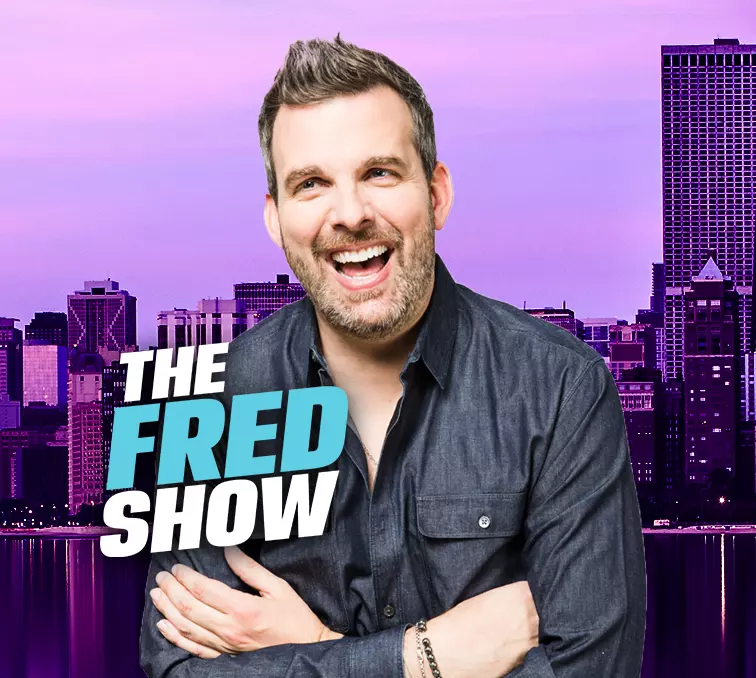
Fred, morning host and leader of The Fred Show on 103.5 KISS FM in Chicago, will be part of a featured panel titled “Masters of the Mic“. He’ll be joined by JohnJay & Rich, Roula from Roula, Ryan and Eric on KRBE in Houston, and Young Joc.
Fred Joins “Masters of the Mic” Panel
“Our panel has been described by the host, Dennis Clark, as an opportunity to ‘share success stories while inspiring the audience of morning radio brethren attendees with positive stories of being an integral piece on a major morning show, building a brand, ratings pressures, being competitive to win, and connecting with the audience, and more.’ I’m honored to be on stage with JohnJay & Rich, Roula from Roula, Ryan and Eric on KRBE in Houston and Young Joc. A special thanks to Don Anthony for his hard work in organizing this event for so long.”
Photo 103.5 KISS FM Website
Steve Reynolds on the Real Value of Boot Camp
Joining Fred in offering perspective is talent coach Steve Reynolds of The Reynolds Group. While he values the formal sessions, Reynolds emphasizes that some of the most meaningful moments happen outside the panel rooms.
“The atypical panels that will tilt how I look at things — and those that will teach me what I don’t know and challenge my conventional wisdom. Honestly, the best part of Boot Camp is the hallway chats with people I know and others I don’t. I trust that there will be many people who ask me a question or share how they’ve evolved their show that will stimulate me mentally and advance my skillset as a talent coach.”
Steve Reynolds reynoldsgroupradio.com
Spotlight on Emotional Intelligence and Mental Health
Reynolds says the conference has continually tapped into the emotional core of what talent is going through.
“MSBC has always had its finger on the pulse of what’s happening emotionally for talent. Their groundbreaking sessions on mental health are a case in point. This year’s session on becoming independent and fostering new ways to stand out and make money is always well-attended and helps remind creative people of the need to have a business plan, too, for success.”
“For me, the biggest takeaways are learning this stuff so I can help my shows, too. And just reconnecting with some standout ‘we not me’ people who are always looking to elevate everyone in radio is what I look forward to.”
Fred Reflects on Connection and Gratitude
Fred shares that the conference is not just about the sessions—it’s about community.
“MSBC is the one time of year when so many people in the industry that I like and respect are in one place. It is also an opportunity to meet some new faces.”
He continued, “It is an honor to be a panelist and to represent our show in front of so many shows, air talent and executives I admire. It is surreal and humbling that so many people I look up to would be interested in my perspective. (they might really be scrolling on TikTok) But I am grateful to be a part of it.”
Advice for First-Time Attendees
For first-time attendees, Reynolds offers encouraging words and a reminder that MSBC is built around accessibility and connection.
“Regardless of how high up someone might be in a company, how iconic a talent might be in their market, or be someone from a smaller market looking to learn, every single person there is open to talking.”
“If you are a first timer, never, ever, ever hesitate walking up to anyone, extending your hand, and introducing yourself. The talent there are believers in radio, as is every corporate person attending. They want to get to know you, so never fear making that bold move — because you will find your people. And when you do, conversations and relationships happen where we all get better.”
Barrett Media Will Be On Site
Barrett Media Founder Jason Barrett and Stephanie Eads will be attending this year’s Boot Camp. They are among those who look forward to connecting with fellow attendees.
Barrett Media produces daily content on the music, news, and sports media industries. To stay updated, sign up for our newsletters and get the latest information delivered straight to your inbox.
White House Correspondent Monica Paige Baldwin moved from OAN to Turning Point USA and has harnessed the power of the new media seat created by the Trump Administration in the White House press briefing room.
The firecracker journalist has her eyes on the future as she takes a step into a new-age media outlet.
“I feel like I had so much more potential and creativity to offer,” Baldwin said.
The move to Turning Point USA also came with a move of seats in the White House Briefing Room. She no longer has to compete with other outlets for a seat and can often be found sitting proudly in the “new media seat.”
“Being in a new media space at the White House is pretty different, too, because we’re in this weird niche where Turning Point USA is strongly — if not already — becoming a household name. But we also don’t have TV presence,” Baldwin said.
Not having a TV presence might actually be helping the outlet’s growth among its target audience because “our main demographic are a lot of young kids.”
Baldwin added that Turning Point’s target audience is those “who are ready to go to college, maybe, or just graduated college, or are kind of stuck in this weird life path where they don’t know what they want to do, but they can’t afford anything.” It’s a niche, but a growing audience group that feels TV and radio outlets typically skew to older groups.
Catering to this group, Baldwin believes, gives her “a lot more opportunities to tell a story. There are so many different angles that I could cover.” It also gives her an opportunity to talk to people on both sides of the aisle. “If you don’t talk to people, then you’ll just believe what everyone’s saying on mainstream media.”
Baldwin went on to say, “It’s so important to talk to those people that may have felt maybe forgotten over the last four years in these really industrial cities that I know the President is really trying to bring to life now, with all these jobs and manufacturing. And, you know, people felt like maybe they were forgotten about. So I think talking to those kinds of people is one thing.”
In her search for truth, Baldwin is armed with a cornicello — an Italian chili pepper necklace — around her neck. It is typically worn in Italian culture to protect against the evil eye. Through our years of friendship, I’ve seen it not only ward off the evil eye in her life but also protect her work as well.
Baldwin says she holds her journalistic integrity to the highest standard, which isn’t always easy. “It takes a lot of guts [and] it takes a lot of grit,” Baldwin explained.
Despite her tedious work, Baldwin’s journalistic integrity has come into question by none other than The New York Times. “The New York Times included me in a piece where they literally said that I was ‘parroting right-wing talking points,’” Baldwin said. The critique came after Baldwin asked Press Secretary Karoline Leavitt a question about how “not one single Democrat senator voted in favor of keeping men out of women’s sports.”
When faced with adversity like this, Baldwin says she prefers to take the high road. “People will call [my hard work] not journalism, even though I do all my research,” she remarked, “but that’s okay [because] I’m glad that we live in a world where people can disagree with me.”
Baldwin went on to note that unlike the Times, Turning Point USA is a 501(c)(3) nonprofit organization, which means, “I can’t be biased even if I wanted to.” Baldwin added, “Every time I write a script or do a story, I have to get it checked: fact-checked, [and] triple-checked, to make sure that I’m covering all sides of things.”
Even though some on the left may see Baldwin as “parroting right-wing talking points,” she thinks there are some things President Donald Trump’s administration can do better. “There are stories that people are really frustrated with, like Epstein files and all that kind of stuff.”
More importantly, Baldwin would like to see the media have even more access to the administration. “The events could be opened up more, like when there’s an executive order signing in the Roosevelt Room or in some of the other rooms in the White House,” she added. “It could be opened up to the press more.”
She also would like to see an expansion of the Press Briefing Room. While she can be found in the new media seat, there are times when she is standing. Calling the room “a fire hazard,” she said getting a question in to Leavitt “can get really competitive [especially for someone like me] who’s 5 foot 3.”
Baldwin believes her journalistic style and work at Turning Point is imperative in today’s world because “you’re being honest with yourself and the American people. That’s what matters the most.”
Barrett Media produces daily content on the music, news, and sports media industries. To stay updated, sign up for our newsletters and get the latest information delivered straight to your inbox.
ESPN and the National Football League have officially entered into a non-binding agreement. The deal will transfer ownership of NFL Network, RedZone Channel, and NFL Fantasy to ESPN in exchange for a 10% equity stake in the network.
A separate licensing agreement is also in place for the NFL to provide ESPN with rights to distribute additional league content and intellectual property. The agreements mark a bold step forward in aligning America’s most-watched sports league with its most recognizable sports media brand.
“Today’s announcement paves the way for the world’s leading sports media brand and America’s most popular sport to deliver an even more compelling experience for NFL fans,” said Disney CEO Bob Iger. “These transactions will add to consumer choice, provide viewers with even greater convenience and quality, and expand the breadth and value proposition of Disney’s streaming ecosystem.”
NFL Commissioner Roger Goodell echoed the sentiment, calling the agreement a continuation of the league’s media evolution.
“Since its launch in 2003, NFL Network has provided millions of fans unprecedented access to the sport they love,” said NFL Commissioner Roger Goodell. “Whether it was debuting Thursday Night Football, televising the Combine, or telling incredible football stories through original shows and breaking news, NFL Network has delivered. The Network’s sale to ESPN will build on this remarkable legacy, providing more NFL football for more fans in new and innovative ways.”
The NFL Network, which launched in 2003, will be fully integrated into ESPN’s forthcoming direct-to-consumer (DTC) service. Under the new structure, ESPN will take full control of linear and digital rights associated with the NFL Network, distribute the RedZone Channel to pay TV providers, and merge NFL Fantasy Football with ESPN’s existing fantasy platform to create the league’s official season-long fantasy experience.
“This is an exciting day for sports fans,” said Jimmy Pitaro, Chairman of ESPN. “We’re creating a premier destination for football fans. This deal helps fuel ESPN’s digital future as we prepare to launch our new DTC service.”
ESPN Chairman Jimmy Pitaro on how ESPN's new agreement with the @NFL will power ESPN's digital future
In total, ESPN will license an additional three NFL games per season to air on NFL Network. Four current ESPN NFL games will shift to the network from the NFL Network. NFL programming will remain on traditional pay-TV and streaming platforms, while also expanding its reach through ESPN’s digital offerings.
The NFL will retain control of key media properties including NFL Films, NFL.com, NFL+, and its 32 team websites. It will also continue to operate and produce NFL RedZone while maintaining digital distribution rights for that product.
Finalization of the deal remains subject to definitive agreements, various approvals including by the NFL team owners, and customary closing conditions.
ESPN to acquire NFL Network and other media assets from the NFL
ESPN and the NFL have also reached new licensing agreements to extend ESPN’s NFL Draft rights. The new multi-year agreement begins with the 2026 NFL Draft. ESPN, ABC, Hulu, Disney+, ESPN Deportes and ESPN’s DTC service will also air the event. A new daily show dedicated to the NFL Draft will also be created. It’s expected to air most days on ESPN2. The plan is to start the show the day after the Super Bowl and air it through each year’s Draft.
The breakdown of the agreement includes the following:
ESPN and ABC to each produce telecasts for Rounds 1-3 on Thursday and Friday—a staple of ESPN’s presentation since 2019. Rounds 4-7 to air Saturday on ESPN, with ABC simulcasting the network’s coverage.
ESPN can add other alternate telecasts across streaming platforms for Rounds 1-7.
Premier football shows, College GameDay and NFL Live, will continue to be on-site from the NFL Draft.
ESPN Radio will continue its live broadcast of the NFL Draft.
Additional Licensing Agreement For NFL Rights Via ESPN’s DTC Service
Separately, ESPN and the NFL have agreed to terms to expand the NFL experience across ESPN’s DTC service and Disney+. Rights for additional NFL content and interactive features are part of the agreement. ESPN’s DTC will stream select out-of-market NFL preseason games during the 2025 and 2026 seasons. The company will also be able to sell and bundle NFL+ Premium, the League’s DTC service that launched in 2022, with ESPN’s DTC service, giving fans the option to watch NFL Network and NFL RedZone through the NFL+ Premium offering.
Additional rights and features that ESPN will offer include:
Highlights for ESPN’s new, innovative, and personalized SportsCenter For You, and the industry-leading ESPN Fantasy Football platform.
Fans can utilize the new ESPN App multiview feature while watching ESPN’s NFL games and shows through the ESPN App.
Deeper customization with enhanced interactive features that engage fans watching and following the NFL, including the ability to view personalized ESPN Fantasy Football team performance, legalized sports betting information and bet tracking, and integrated games stats on their connected television or mobile device.
Exclusive to ESPN DTC subscribers, a video-on-demand Monday Night Football recap.
Additional NFL content on Disney+. This including the potential for select NFL simulcasts for Disney+ subscribers and the inclusion of incremental highlight rights within shows like Vibe Check and SportsCenter+.
Barrett Media produces daily content on the music, news, and sports media industries. To stay updated, sign up for our newsletters and get the latest information delivered straight to your inbox.