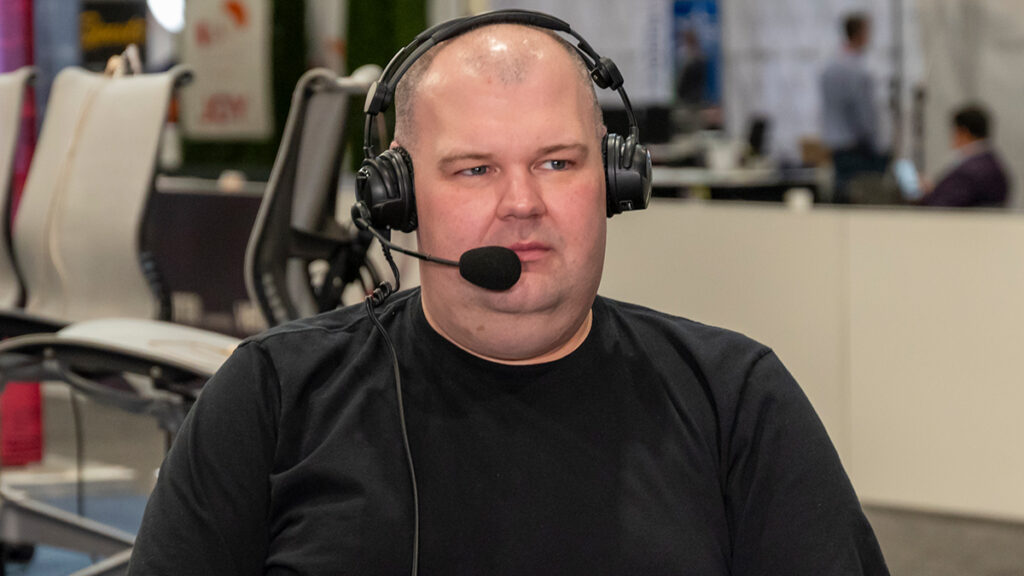
The use of Artificial Intelligence by broadcast companies has been a hot-button topic in recent years. That hasn’t stopped the industry from utilizing the technology more broadly, as a new report shows.
In that survey, it found that 25% of broadcasters are now utilizing artificial intelligence. That shows a large jump from the 9% of those who responded similarly in 2024.
“The findings in this year’s Broadcast Transformation Report reveal both the exciting innovations and the persistent challenges facing broadcasters today,” said Haivision Vice President of Marketing Marcus Schioler, vice president of marketing at Haivision. “From the continued expansion of SRT, 5G and AI to the measured adoption of cloud technologies, broadcast ecosystems are evolving to leverage new tools that drive efficiency, enhance production quality and future-proof their operations.”
Additionally, 64% of those surveyed said they believe AI and machine learning will have the greatest impact on the broadcasting industry in the next five years. That topped 5G (60%) and 4K (28%), among other options.
45% of respondents said they believe AI offers efficiency and productivity gains, with 36% adding it will help in content creation in the future.
Of those broadcasters not using artificial intelligence, 41% claimed that they plan to implement the technology in the next two years. 48%, however, said they had no plans to use AI at this time.
Barrett Media produces daily content on the music, news, and sports media industries. To stay updated, sign up for our newsletters and get the latest information delivered straight to your inbox.
TNT Sports attained an average of 1.8 million viewers for its telecast of the United States facing Sweden in the 4 Nations Face-Off tournament on Monday night, which was broadcast on TNT, truTV and Max. The viewership marks the most-watched non-playoff hockey telecast ever recorded on TNT Sports networks. Moreover, the game was the most-watched hockey telecast on Max in the history of the platform. Although the United States entered the game with an undefeated record, the team dropped the contest by a final score of 2-1, with the lone goal coming from forward Chris Kreider.
Warner Bros. Discovery televised several games throughout the international hockey tournament taking place in lieu of the traditional NHL All-Star festivities, averaging a collective 1.2 million viewers. The games throughout the competition have averaged 1.8 million viewers across all TNT Sports platforms and ESPN. The NHL All-Star Game averaged 1.4 million viewers last season on ESPN, representing a 7% year-over-year decline and marking the second least-watched version of the event on record.
The game surpassed the opener of the tournament between Canada and Sweden, which averaged 1 million viewers on TNT and truTV and was, at the time, the holder of the aforementioned record on Max. Moreover, the game followed a 13% year-over-year decline for the NBA All-Star Game, which averaged 4.72 million viewers on TNT and truTV under a new format. This marked the last iteration of the festivities to air on TNT Sports networks as the company completes its final season as a U.S. rightsholder for NBA games, and it included a tribute to Inside the NBA cast Ernie Johnson, Charles Barkley, Kenny “The Jet” Smith and Shaquille O’Neal.
Warner Bros. Discovery is currently in the fourth season of a seven-year media rights deal with the NHL reportedly worth $225 million per year. Before the 4 Nations Face-Off took place, the NHL Winter Classic between the St. Louis Blues and Chicago Blackhawks represented its largest audience of the season, averaging 920,000 viewers on New Year’s Eve from Wrigley Field. TNT Sports will broadcast the Stanley Cup Final to conclude the 2024-25 season, the second time that the media conglomerate will present the championship matchup under the existing contract.
Barrett Media produces daily content on the music, news, and sports media industries. To stay updated, sign up for our newsletters and get the latest information delivered straight to your inbox.
Chris Cuomo, Bill O’Reilly, and Stephen A. Smith are set to feature a one-night-only live theater show in conjunction with NewsNation next month.
Being dubbed as “Three Americans Live”, the show will take place on Sunday, March 30th at 3 PM ET. The production will be at Westbury Music Fair, the indoor music venue on Long Island.
The three hosts often appear together on Cuomo’s primetime NewsNation show. Chris Cuomo joined the cable news outlet in 2022 before inking a multi-year extension in 2024. O’Reilly serves as a contributor to the network. Meanwhile, Smith makes regular appearances on the channel amidst his duties with ESPN and his podcast, The Stephen A. Smith Show.
It is not the first time O’Reilly has done a live, in-person theater show with another news personality. In 2023, he held a similar event on Long Island with 77 WABC host Sid Rosenberg.
Tickets for the show begin at $113 with VIP packages, including an opportunity to meet Chris Cuomo, Bill O’Reilly, and Stephen A. Smith immediately after show are $227.
Barrett Media produces daily content on the music, news, and sports media industries. To stay updated, sign up for our newsletters and get the latest information delivered straight to your inbox.
I often find myself wanting to share something only to have an event in our business pop up that bears discussion. I was thinking of words of wisdom, idioms, + phrases I’ve retained from conversations with various peers over the years or heard along the way and how they might be applicable to each of us today.
Then, on Tuesday, I caught the news that Gary Stevens had passed away. His career, in and of itself, is a textbook on how to grow, evolve, adapt, and aspire over a lifelong career in broadcast radio.
Gary started his career at a small-town station during his freshman year of college and never looked back. He toiled at several smaller stations before landing at WKNR (Keener 13) in Detroit. If you’re at all familiar with the market, CKLW, WXYZ, and later WHYT dominate much of the narrative about the history of Top 40 in the Motor City, but Keener was a monster through the 60s, often leading the market 18-34 despite a modest signal.
Gary did nights and was such a sensation he caught the attention of WMCA New York who offered him the evening slot. You might be good, but it isn’t every day the Big Apple comes calling you and not the other way around. Gary replaced one of the most legendary jocks of the era B. Mitchell Reed and was in a three-way Top 40 battle against Murray The K on WINS and Cousin Brucie on WABC.
Like Keener, WMCA was not a 50,000 clear channel as his competitors were, but like at Keener, Gary was an instant hit at WMCA, and shortly, WINS left format. While WABC is undoubtedly one of the most important music radio stations that’s ever been on the air, it’s often forgotten that WMCA was, in fact, the market leaning Top 40 for much of the 60s as it was tighter, louder in presentation, was faster with new music and wasn’t saddled with network talk and news as ABC was.
Gary became known for his super high energy patter and song talk ups, his character “the Wooleyburger” and even introduced The Beatles when they returned to Shea Stadium in 1966. Gary was big.
At the height of his success, he left the station in 1968 and had a long career in both radio and TV management and ownership at the local and executive level, followed from Europe to Minneapolis to a long run as top brass at Doubleday Broadcasting, where he was instrumental in many stations including WAPP which made a splash as New York City had its second Top 40 war in 1983.
Most recently, Gary served on the board of Saga Communications, which remains one of the larger companies still committed to local market content, local stations, and personality. A great example for any of us to follow and a career to emulate.
Lastly, I never met or spoke with him, but I did see him speak on a panel and had his name come up. I never encountered anyone who had anything to say but “great jock,” “great guy,” “good talent who became a smart manager,” or a combo of all three.
Gary Stevens was 84. Rest well, sir, and thanks for creating a great radio that lives on forever in memories and airchecks.
Barrett Media produces daily content on the music, news, and sports media industries. To stay updated, sign up for our newsletters and get the latest information delivered straight to your inbox.
It might just be the best kept secret in professional sports. If you not familiar with PBR, it has everything you want in team or individual competition – action, intensity, peril, athleticism, risk, defeat, and victory.
Airing on CBS Sports Network as well as on multimedia platforms, PBR Professional Bull Riding is the perfect remedy for the end of the NFL season, a baseball season yet to begin, and hockey and basketball just entering their respective home stretches.
I checked out a Monster Energy Team Challenge production from Gainbridge Fieldhouse in Indianapolis featuring the Missouri Thunder vs. Kansas City Outlaws. The show opened with a video montage of Indianapolis followed by some of the Outlaw bull riders walking in from the locker room with a healthy amount of swagger.
These guys are, indeed, bigger than life because they literally take their lives in their own hands every time they mount a ferocious bull that weighs anywhere from 1200 to 2000 pounds. Upstart Missouri vs. defending regular season champion Kansas City is just one of the rivalries that was born from PBR Professional Bull Riding team competition. The production values on all of the CBS Sports Network editions are high.
After the initial opening sequence, the program offered terrific video of the bull riders in action with dramatic voice over prose. The eloquent words talked about dedication, drive, heated rivalries, and the “man versus beast” running theme in this ever-growing sport. The Kentucky Derby might be the fastest two minutes in sports, but PBR Professional Bull Riding provides the most exciting eight seconds in or out of sports. It is almost like several 8 second games within an entire competition.
The 2025 Monster Energy Team Challenge has become a popular viewer choice speckled across CBS Sports Network’s program guide. The announcers for this particular production were Craig Hummer and Cord McCoy. This talented and effusive pair set the tone for the broadcast talking about both teams while graphics showing pertinent statistics. One of the focused discussions looked at Kansas City’s Sandro Batista, who had recently ended a bull named Cool Whip’s PBR record buck off streak at 48.
McCoy related that even opposing bull riders in that particular competition were rooting for Batista. PBR Professional Bull Riding is hardly just regional in popularity. The sport is filling large arenas as far north as Worcester, MA and Manchester, NH. I covered an event last December in Manchester at SNHU Arena. The place was banged out with no empty seats and a vibrant and diverse crowd.
CBS Sports Network has created extremely popular productions featuring individual and PBR Teams competitions. The team aspect brings a whole new level of fun as it fosters geographical loyalty as well as rivalries. The Outlaws versus Thunder matchup is a great example of this. On paper, the stats said that Kansas City should win the competition easily, but the Thunder were primed to pull off an upset to win bragging rights in the state of Missouri.
Joining Hummer and McCoy on the talent roster for this production was Kate Harrison, who served as a sideline and on field reporter for the event. Harrison did a really nice job interviewing several of the bull riders as well as team coaches. The CBS Sports Network team of McCoy, Hummer, and Harrison bring all of the unbridled enthusiasm inherent in the sport.
One aspect that draws viewers into PBR Professional Bull Riding is the dramatic slant of the sport and production. There is a palpable professional wrestling nuance and style to the competition and presentation. Most of the events start with some form of musical or dance entertainment. There are also the modern day jovial rodeo clowns and other performers bringing crowds to their feet with physical antics and fun.
In addition, fireworks and light shows spark up the arena and get the action going, creating an amazing atmosphere. PBR Professional Bull Riding is building its foundation on Americana and a fandom longing for throwback, hardscrabble athletes. This feeling is similar to the overall positive response to Team USA fighting Team Canada at the start of a 4 Nations Face-Off hockey tournament game on February 15.
Check out a live or on air PBR Professional Bull Riding event and you will see fans getting into the feel with Stetsons, cowboy boots, bolo ties, vests, team merchandise, and leather chaps. Yes, I said leather chaps. The sport is also clearly tied to the current crossover popularity of contemporary country music. Superstars like Lainey Wilson, Luke Combs, Shaboozey, Morgan Wallen, Chris Stapleton, Kelsea Ballerini and many others are not only stars in the country genre, but overall in American popular music.
PBR Professional Bull Riding on CBS Sports Network has its own roster of stars. In addition to Batista, this event featured popular riders like Paulo Eduardo Rossetto, Koltin Hevalow, Boudreaux Campbell, Grayson Cole, Maikon Calixto Rocha, and Trace Redd. There are also stars of the hooved bullish type with charismatic names like Bayou Bad Boy, Gravedigger, Bad Intentions, Judgment Day, and Cactus Jack. While each individual bull rider scores individual points, the final score of the competition is the cumulative scores of all the riders on each team. Missouri pulled the upset winning 348.75 to 169.
PBR Professional Bull Riding is not regional, it is national. It is not niche, it is expanding. It is not local, it is global. In fact, the organization held a PBR Teams Combine in Icem, Sao Paulo, Brazil this week. The combine was attended by all 10 teams competing in the league. PBR had previously held combines in Colorado, North Carolina, and Texas, but this was the league’s first scouting event outside the United States.
The PBR website (pbr.com) features video clips, stats, and data, as well as promotions for upcoming live events. It also has schedules, results, athlete profiles, team information, and where to watch PBR Professional Bull Riding broadcasts. The organization and sport also has footprints on YouTube as well as PBR RidePass on Pluto TV and the PBR app.
I am all in on PBR Professional Bull Riding on CBS Sports Network, and I am not alone. PBR Teams launched in 2022 and expanded from 8 to 10 teams in 2024. Attendance for the 2024
Teams season increased by 15% over 2023. Moreover, television audiences have also increased. The 2024 season averaged 1.4 million unique U.S. viewers per 2024 telecast, up from 1.1 million in 2022, an increase of 22% in total viewers.
Beyond the numbers, PBR Professional Bull Riding is filled with fast-paced movement, drama, colorful characters, driven athletes, and of course, the specter of the intimidating bulls. As the Outlaws vs. Thunder video montage voice over stated, “The competition is ruthless, the action is unrelenting.”
Barrett Media produces daily content on the music, news, and sports media industries. To stay updated, sign up for our newsletters and get the latest information delivered straight to your inbox.
The year was 2015, and it was the day following President’s Day in Boston, Massachusetts. A balmy, partly sunny afternoon with temperatures climbing into the mid-20s. For Boston sports fans, the buzz surrounded the NBA All-Star Game two days earlier, trade rumors flying around the Celtics were discussing a deal for Denver Nuggets guard Ty Lawson, the Red Sox reporting to camp, and the hangover effects from yet another New England Patriots Super Bowl championship just two weeks prior were still present.
There was no better time or place to be a sports fan on February 17, 2015, than Boston, Massachusetts, when Beasley Broadcasting Group’s 98.5 The Sports Hub decided to add to their lineup a new midday show that for a decade has dominated the market, simply titled Zolak and Bertrand.
“It’s the best place to sort of be a fan, but the best place to host a talk show,” said Marc Bertrand, who was elevated to work with Scott Zolak ten years ago this week, leaving his post as the third voice on the Felger and Massarotti program to co-host middays from 10 a.m. to 2 p.m.
“I would say first of all he (Bertrand) is the bus driver, and I’m the reactor,” Zolak stated when talking about his co-host. “Since day one when Marc and I signed on air, we never struggled.”
It’s no secret that Boston’s rabid sports fandom is considered by many as the greatest envy of sports radio talent and sports media across the country. A passionate collective that, on a random cold Tuesday in February a decade ago, can light a fire for compelling conversation, always demanding greatness from the teams that represented their city.
98.5 The Sports Hub Program Director Rick Radzik, who has overseen the program since being elevated to the position in 2019, says what makes both Zolak & Bertrand work is they truly understand what the Boston sports fan wants from their sports radio hosts.
“Marc grew up here and has never been hesitant to give his opinion, about anything,” Radzik explained. “That can rub people the wrong way at times, but that doesn’t deter him from putting those opinions out there. ‘Zo’ is a fan, he loves sports. He loves the Pats and he doesn’t hide it.”
When you ask Zolak and Bertrand what separates the Boston market from anywhere else in the United States, the terms ‘dedicated’ and ‘passion’ crept into their vernacular.
“You just have dedicated listeners that don’t quit the teams and don’t quit being fans,” Bertrand said. “Even when the teams are not giving them a lot of great reasons to be locked in on what’s going on with the team.”
Zolak, who serves as the color analyst on the New England Patriots radio network since 2012, says there is no comparing the fans of Boston to anywhere else in the country.
“Continued passion passed down generation to generation. It’s not about new kids moving in,” Zolak believes.
Courtesy: Derek Futterman, Barrett Sports Media
The biggest challenge for any sports radio station is to form programs that speak to the culture of their market. Having to match the intensity of a market like Boston served as a test for any program that dared to crack the mic. A decade later, the challenge is still accepted, and programs are continuing to be executed to the highest expectations.
“I wanted our shows to sound like the biggest game of the night is on a Thursday, 86 guys are in here, and we’re talking sports,” explained Zolak. “We’re having fun, we’re eating, and somebody’s making a joke or laughing at that, and nobody’s getting offended. And we leave there saying, ‘Man, that’s the best time we had. Can’t wait to do this again tomorrow.’ That’s kind of what we do each and every day.”
“To still be here 10 years later, I think it sort of speaks to our ability to get along and come at it from different perspectives, and sort of be different people,” Bertrand pondered of the program’s success.
Radzik, who previously served as Assistant Program Director at the station since its 2009 launch, was asked to point to the key piece to the success of the program, it didn’t take long for an answer.
“Chemistry has always been the key to the show’s success,” said Radzik. “Zo, Marc and (Rob) Hardy spent 8 years together, created some great content and memorable moments. Now they are with Tim McKone, and the templet of the show remains. They can be discussing football in one segment, and then 15 minutes later are offering snow removal advice to Celtics coach Joe Mazzula during his weekly interview.”
Zolak and Bertrand’s program continues to be a consistent ratings juggernaut, most recently posting a 15.7 share in the key men 25-54 demo for the fall 2024 ratings book. In an ever-changing industry, they have continued to stay on top of how the audience is changing how they consume the show. Every show is broadcast live not just on the terrestrial 98.5 FM signal in Boston and The Sports Hub app nationwide, but also simulcast on NBC Sports Boston, with show clips produced on YouTube for consumption along with short-form videos posted for social media during the program.
With the adaptation of the video simulcast and social media in recent years, the show has taken itself to a whole new level of consumption and connection, both professionally and personally, with the Boston sports fan and more.
“I think we learned in a pretty short amount of time when we started simulcasting on then Comcast SportsNet (now NBC Sports Boston) that this is a good thing,” said Bertrand. “This is a way to grow audience. This is not a thing that is going to take away from your audience on radio.”
Earlier this month, Barrett Media once again revealed the annual Top 20 rankings, which landed Zolak and Bertrand another finish on top of the midday program rankings for a major market. The #1 ranking won the category for the fourth straight year and fifth time since the inception of the rankings, beating out WFAN’s Brandon Tierney and Sal Licata by 32 points. A panel of 46 program directors and corporate executives from a number of the top broadcasting companies voted The Sports Hub’s midday show the best in the country, which is a recognition not taken lightly by Zolak and Bertrand.
“It means a lot, because every time I leave the building, I see so many people now,” says Zolak. “They recognize me more now than when I had my helmet.”
Bertrand went on to say the reason why he prefers the Barrett Media recognition more than any other award, is because the people who vote each year are the people in the industry who pay attention, and understand what it takes to succeed.
“There may be some of these other awards that, without naming them, are largely political,” said Bertrand. “I don’t think that happens with Barrett Media. It’s voted on every year by qualified individuals. So to me, it’s awesome. I’m thrilled to win that award again this year.”
Courtesy: Derek Futterman, Barrett Sports Media
For Zolak and Bertrand, while they may not feel it, they understand a decade is a long time to be paired with another individual, whether it’s an arranged marriage on the air or a real-life relationship off it. Now, after a decade of dominance, both offered up advice to their peers on what makes a lasting partnership in an ever-evolving and challenging industry.
“You’ve got to bend and be flexible for your co-host,” Bertrand explained. “You’ve got to be able to allow your co-host to be themselves, and if it’s different from what you are, you’ve got to sort of find the space to do that. I think I’ve done a good job of sort of doing that for ‘Zo’ and letting ‘Zo’ be the high-energy guy that he can be, and I think Zo has done the same for me, allowing for the more serious sports takes, and sometimes takes that are more negative than he typically dabbles in.”
“I do think that you’ve got to have that balance,” said Bertrand.
For Scott Zolak, he offered these words of advice for how to accept responsibility as much as you want to dish blame in the rough patches of the working relationship.
“You always got to remember when things go bad, it’s not always the other person’s fault,” he says. “Sometimes it’s your fault. Step back, take a deep breath. You know, we always want to attack, and yeah, we have attacks, we yell at each other, no question. But that’s the best thing about us. We’ll have this massive fight between the show, we walk out of there seven minutes later, and it’ll be like nothing happened.”
A decade of memories, championships, and plenty of laughs along the way has earned Scott Zolak and Marc Bertrand the unwavering companionship of the Boston sports fan every weekday from 10 a.m. to 2 p.m. A radio program that began on a balmy day in Boston ten years ago is still going strong, much like the city they call home.
Barrett Media produces daily content on the music, news, and sports media industries. To stay updated, sign up for our newsletters and get the latest information delivered straight to your inbox.
Bobby Bones hosts Premiere Networks’ syndicated “Bobby Bones Show.” He is also heavily involved in podcasting, concerts, comedy, and philanthropic causes.
Recently voted Country Radio’s #1 show on Barrett Media’s Top Country Shows of 2024 by radio industry programming executives, I wondered how Bones felt about the recognition.
“I am always surprised whenever anybody likes me in general. That’s probably a driver, and all my deep insecurities are probably my biggest superpower. So I was very surprised and very grateful, obviously, especially peer-driven. I mean, that’s the hardest and also the most rewarding because everybody knows what it takes to have any sort of sustained success. So it was really cool.”
Though his show airs across the country, and is very familiar to music radio professionals, gaining affiliates to air the show is a never ending process. The team at Premiere Networks handle those duties, but of Bones had to do the work himself to receive clearance from local outlets, how would he pitch and describe the show? His answer was surprising.
“I did have to do that. When I started syndicating my show, I syndicated it by myself with my own money. It was just me buying Comrex boxes and giving them the show for free. That was part of the pitch.”
“The first market that ever picked us up was Wichita, Kansas. And I said, ‘hey, I’ll do it for free’. I mean, that’s the loudest, most substantial thing that I could possibly say. And then they were listening. So I said, ‘I’ll do it for free. If you give me a year, I can not only promise you that the ratings will be just as good as they are now, but revenue will be up because I’ll make sure it’ll be a priority for me to talk to your local clients’.”
“I think at times, even locally, we kind of take clients for granted. They think, well, they’re here. We don’t have to spend much time with them. Being syndicated has actually shown me how important it is to be hyper-local, not only where I live but to my individual markets. I spend an hour every single day doing local reads, local videos, and any sort of content that markets want for me. So, I would say I will do it for free and hyper-localize around your music.”
The second factor involved the content of the show.
“It was super personality-driven, but the personality will seep through over time. It’s not going to be a humongous splash of personality all at once because, with radio, change is difficult. So that’s how we did our show.”
“We played a bunch of music and had an outlined plan of success based on if we hit this threshold. We’ll then pull back a bit of the music and do more personality. It was free, and it was good in that order. That’s how I pitched the show for a year. We had 14, 15 stations. We were running out of a back room.”
I asked Bones who inspired him to want to do what he does.
“My hero, my inspiration has always been David Letterman. I saw a guy that looked a bit awkward from a part of the country that wasn’t New York or Los Angeles. He lived in New York, but his sensibilities weren’t New York City or Los Angeles. He’s an Indiana guy.”
“I’m an Arkansas guy. So, it felt like if he could do it, there was a shot for someone else like him to do it, which was me, kind of a goofy kid from Arkansas. It was Letterman.”
“I didn’t know anybody in radio. I’m from a very small town, and we didn’t even have personalities that I grew up listening to unless it was Little Rock, which was an hour and a half away. So, my inspiration as far as career-wise has always been David Letterman.”
Philanthropic causes are a big part of what Bones does, particularly St. Jude Children’s Research Hospital. Children’s charities are personal for Bones.
“If I boil it down to why, it’s a very selfish reason. I was in the hospital a bunch as a kid. I didn’t have cancer, but I was in the hospital. We didn’t have any money growing up. So, if it weren’t for people taking care of me when I was a kid when I ruptured my spleen, I don’t know what we would have done.”
“That’s what St. Jude does. It’s a hospital for kids who have cancer. It doesn’t even have to be cancer. They do great work with not only cancer but other diseases as well. And you don’t have to pay for anything. That resonated with me the most and the hardest, meaning they pay for your treatment, food, and travel. That’s why my relationship with them started on such a fundamental level.”
Podcasting is another significant priority for Bones. With the space rapidly growing, creating additional digital audio content is something Bones knows is important.
“The podcasting space is such a priority. I am fortunate in that, much like in the book Outliers, there are examples of people where things just happen to match up randomly. An example that I’ve used before is Bill Gates, who lived in a town where there just happened to be a computer. It was the only computer for hundreds of miles. He was interested in it, and it was close.”
“I was really young in this industry. And I learned and started using technology and podcasting very, very early in our industry. It wasn’t because I was any smarter than anybody else. I was just very fortunate to be very young, and using what I was using anyway.”
“So, podcasting has always been of utmost importance for the past 18 years of our show. That has always been a priority to me, to not only make sure that our show podcast is significant but the ancillary podcasts that we have are too.”
Bones hosts several podcasts, including “Bobbycast,” “Lots to Say with Bobby Bones and Matt Cassell,” a venture with the NFL and former quarterback Matt Cassell, “25 Whistles” with DraftKings, and a “Yellowstone” podcast, among others.”
“For ‘Bobbycast,’ my goal was for it to be a critical piece, not bring on humongous artists, but to bring on songwriters and creatives that people knew, but only through other people. Or it was talking about the big things, but the things they rarely get to talk about.”
“I knew that wouldn’t be a big click generator because it wasn’t supposed to be. But we’ve been doing this show so long now that it’s actually quite a large podcast. And that’s great; that’s a result of consistency more than anything. But right now, it is significant.”
But though podcasting earns a lot of his attention, Bones hasn’t lost sight of the foundation for everything he does.
“If I enjoy it, I spend more time focused on it, and dedicated to it. I think that’s been really fulfilling for me. But the driver of it all is ‘The Bobby Bones Show.’ Without that being at a hundred percent, nothing else happens. I also still know that and have to never reprioritize because that’s the number one focus. I constantly have to remind myself that if that’s not right, nothing else goes right.”
I asked Bones, given all his work, if there was still something on his list he wanted to do.
“The easy answer, the true answer, but also kind of the corny answer, is sleep. There are times when my wife has to check me and say, ‘hey, let’s make sure we’re being healthy’. And she’s right because if I’m not healthy, then I can’t work as hard, right?”
“Initially, it’s let’s just go as hard as you can, get everything done, go balls to the wall. But the problem is if you do that for so long, you will begin to get sick. Then I start to get sick because I’m not getting any sleep.”
“Then I’m not working as hard because I physically can’t. I’ve got to maintain that. And that has become more of a priority over the past couple of years, just to maintain my physical and mental health, which in this industry is a difficult thing to do. I wouldn’t be in this industry if I was mentally healthy. So, there’s a screw loose, but it’s the right screw right now.”
Something that gets discussed on “The Bobby Bones Show” is the mysterious drone that flies over his home.
“It’s one massive drone. It looks like a VW Beetle. It’s humongous. I did some research to figure out what I could do, and the answer is nothing.”
I asked if maybe it was a TMZ-type thing.
“I don’t think I’m famous enough for that. And a couple of people have said that. Honestly, in a town where Keith Urban and Luke Bryan live within seven minutes, why are they flying over my house? You’re going to see one of my dogs pooping in the backyard.”
“And you can’t shoot it. I honestly thought, if it’s over my house, I’ll just take my shotgun and shoot it down. You can’t, that’s illegal. It’s FAA-regulated airspace.”
In closing, I asked if there was anything that he wanted to talk about that I hadn’t asked.
“That’s a good question. I don’t even know how to answer that. I think a lot of people ask and hit me up on DMs, other radio people. And I think that it looks, at times, very Instagram glamorous. If you look at my Instagram feed, it’s a picture of me and George Kittle at an award show. That’s pretty cool.”
“It’s a picture of me on stage doing a comedy song in Atlanta. I just put a comedy special out on CMT, and it’s my first standup special. And so, that’s cool.”
“But I tell people that the main thing has to be the main thing, which is your show. Your show has got to be first and foremost. And then that is the platform that you jump from.”
Barrett Media produces daily content on the music, news, and sports media industries. To stay updated, sign up for our newsletters and get the latest information delivered straight to your inbox.
March Madness and The Final Four are just around the corner. Like the Super Bowl, every staff member should be admonished about using these two trademarked names. In this case, Just DON’T Do it.
I worked at a Classic Rock station where March brought the “Brackets Of Rock.” Choose 68 bands and solo singers and create a bracket.
Feature one bracket at a time, make voting available on the website, and promote heavily on socials.
The last time I did this, I was surprised by a Facebook comment from Peter Frampton, who posted telling people in his particular bracket to vote for Fleetwood Mac instead of him.
Another bracket is the Cutest Pet. Have people submit pictures of their pets. Pick 68 and let listeners vote for the cutest.
Country Music has traditionally been artist-driven. Country stations can create a bracket with albums. Garth Brooks’s “No Fences” vs. George Strait’s “Troubadour” will generate a response, as will Kenny Chesney’s ‘No Shirt, No Shoes No Problem” vs. Luke Bryan’s “Crash My Party.”
With Classic Rock, I was always a fan of theme weekends. It was a good way to put a different presentation on the same songs. Or, as one of my early mentors, Phil Wilson, used to put it, “Same S&$t different shovel.”
I don’t like Block Party Weekends or three or four songs from the same artist. My theory is that if you don’t like U2 and here comes a block of four, I just lost you, and it may be a while before you come back.
The exception might be during March Madness. Make sure to word it carefully to avoid infringing on the trademarks, but a “Final Four Play” is timely and fun.
And just for the record, I can use those phrases since this is in a news and opinion column. I’ve heard some stations that do not allow the news and sports reporters to say, Final Four. That’s not necessary if it’s not a promotion or for marketing purposes.
Have fun with this. I would love to hear what your station does for The Final Four. Email your best to jeff@barrettmedia.com
Barrett Media produces daily content on the music, news, and sports media industries. To stay updated, sign up for our newsletters and get the latest information delivered straight to your inbox.
As she continues to fight for fairness in women’s sports, OutKick host Riley Gaines is over the moon about President Donald Trump’s executive order banning trans women from competing in women’s sports — which she witnessed him sign in person. However, the former college athlete feels more needs to be done at the state and federal levels.
Barrett Media caught up with the host of Outkick’s Gaines for Girls podcast on what needs to come next to protect girls and women’s sports.
Krystina Carroll: What was it like being there, as President Trump signed the executive order to keep biological men out of women’s sports?
Riley Gaines: It was an experience that, number one, I can’t believe it happened. I cannot believe that a sitting U.S. President has to take executive action and time out of his day to declare men and women are different. He did that in an executive order a few weeks prior, and then to further declare that men cannot participate in women’s sports.
It is wild to me that the moral decay that we have suffered from as a society at the hands of the previous administration, but nonetheless it was an experience that, of course, I am so grateful for. I feel totally vindicated fighting really an uphill battle, [personally] the past three years. There’s also recognizing there are women, and I mean people who have fought much longer and harder than I have.
We fought the past three years. We, as women, were just ignored. Because we didn’t have a seat at the table, and then to be there in that visual with President Trump, surrounded by all of those young girls, girls who were wearing their uniforms and their sports bow that they probably wear on the soccer field. It was, I think, one of the most iconic visuals that could possibly come out of his administration.
KC: Does this executive order go far enough for you? If not, what would you like to see done?
RG: The executive order is beautifully and thoroughly written, but the problem with this executive order, or with any executive order, is that it does not absolve the states from doing what they need to do [meaning pass legislation at the state level] and it certainly does not codify it into law. Just as easy as this executive order was implemented, it can also be taken away, God forbid.
We need to see states passing this. About 25 states have passed some sort of fairness in women’s sports law at this point. We need to see more. Which there’s lots on the docket this year to help get that done, through, and onto a Governor’s desk to sign into law. We need this to pass through both legislative chambers, federally. It’s passed the U.S. House with bipartisan support, given two Democrats voted in favor of The Protection of Women and Girls in Sports Act, but it has not yet been heard on the Senate floor.
I would love for this to be a priority of Senate Majority Leader (John) Thune (R-SD). Put this on the floor and — being totally transparent with you, it’s not likely it will pass. Actually, I would be incredibly surprised if it did pass, but nonetheless, we need to put these senators in particular on the record. They, strategically under Senator (Chuck) Schumer’s (D-NY) leadership last year, they didn’t have to vote on this bill, but it is a perfect, perfect indicator. Do our elected leaders stand with women, or do they not? This bill, and how they vote on it would tell you everything you need to know.
Therefore I would love to see this be heard on the Senate floor. That being, said, the NCAA policy that came out following the executive order is incredibly weak. Horrible, actually, policy. It does not comply with federal law. So there’s still work to be done, as it pertains to the NCAA. Making sure this executive order is enforced, and they don’t have unelected bureaucrats going through the back door and interpreting these words to mean what they want them to mean, based on the NCAA’s current policy.
KC: There are still those who believe who don’t believe in your mission. What is your message to them especially those who openly and publicly criticize and harass you?
RG: Harassment is probably putting it kindly. The opposition that myself and other people who stand for women, who stand for common sense, who stand for biological reality have faced. But the message I want to send to those who oppose, whether it’s me personally or the stance that I’ve taken, to be very clear, the stand that I’ve taken is not one that is against anybody. It’s not one that is against anything, any group of people. It is a stand that is for something. I am standing for privacy and areas of undressing, I am standing for safety in sports, and I am standing for equal opportunity, as was enshrined by Title IX in 1972. So coming up on 53 years now.
I’m super optimistic to see just how, in really a short amount of time, in the grand scheme of things, just in how you know two, three years, how this narrative, and how the conversation has shifted. Two years ago, there was not a lot of public support for saying men and women are different.
Now I would say, it’s done a total 180. The overwhelming percentage of the majority, or of the general public, agree that men cannot become women, that tampons do not belong in boys bathrooms, that men should not be playing in women’s sports. With the shift in public opinion, of course, I mean the political landscape, I imagine it will change, I believe. What we’ve seen so far is really these elected officials, Democrats, doubling down.
We’ve seen it from how our elected representatives are voting, to how the media represents this issue. But again, it’s just not representative of society at large. Even amongst the Democratic Party, the majority of the Democratic Party doesn’t agree with this. Knowing that is certainly reassuring. But even if it wasn’t the case, I would still feel totally secure saying what I’m saying, fighting for what I’m fighting for, because again, it’s based on objective truth. As a Christian, it’s [also] based in biblical truth, as well.
KC: Are there other protections that need to be women made for women in education or in the workforce?
RG: Of course there are. This issue of men invading women’s spaces, it’s not the only issue that is negatively impacting women and the list is growing. I can speak to this as an athlete, too. Even specific to what female athletes face in sports, the sexual assault and harassment that female athletes face is certainly still a big problem.
Think of people like Larry Nassar. I had a coach in college, actually two coaches, who were fired for sexual misconduct among the women’s team. So absolutely, there are still issues that women face. But being able to define what a woman is is what I would say is the first step in being able to defend women at large. Because, I mean, if you can’t define it, you can’t defend it.
Barrett Media produces daily content on the music, news, and sports media industries. To stay updated, sign up for our newsletters and get the latest information delivered straight to your inbox.
The Will Cain Show has been a smash hit for Fox News since debuting last month. The program has led the cable news network to an 89% increase in the ratings compared to the same timeframe last year.
You can posit about all sorts of different reasons why the show has been so successful so quickly. Whether you believe it’s the audience’s familiarity with Cain, the fact that basically anything on Fox News is going to perform really well, or the program falls at a good time for the average octogenarians tuning into cable news, there are all sorts of reasons why it could see a great first few weeks on the air.
And while the show’s overall ratings are up, I think an overlooked portion of the ratings success is the 110% uptick in the Adults 25-54 demographic. This definitely isn’t a critique of the former host in the timeslot — Neil Cavuto, who I have the utmost respect for — but a two-fold development for Fox News. It’s that Will Cain isn’t just another old white guy bitching about the Democrats on Fox News, and his show looks eerily similar to what a lot of viewers in the 25-54 demo are used to seeing on YouTube.
It’s a great strategy, so kudos to whoever made the final call for The Will Cain Show to essentially just take the presentation from what it had been doing on YouTube over to Fox News.
First of all, it’s comfortable for Cain. He’s been hosting a day digital video show/podcast for quite some time. And the host being comfortable with the presentation both on-screen and off-screen is undeniably a good thing for a show to hit the ground running, which is always going to be the expectation at a network like Fox News.
Additionally, when your audience has grown accustomed to seeing a presentation like what we see on YouTube — stripped down, not overproduced, without a constant barrage of on-screen graphics and scrolling information that could make even the person with the worst case of ADHD overwhelmed — wouldn’t it logically make sense to transfer that over to cable news?
Sometimes, common sense isn’t so common. I wholly understand getting lost in trying to develop the next great cable news show and how things being complex and complicated make it likely that your show is going to be the next big thing. But, sometimes, less is more. We’ve seen that with the performance of The Will Cain Show since its debut after the inauguration.
Cable news channels want as many viewers as possible, obviously. But when you look at the average age of the current viewers, the data — featuring numbers that start with 7s and 6s — doesn’t necessarily paint a rosy picture for the future. “Cable news” is likely to be a term that’s as relevant as “yellow pages”, “beepers”, and “landline phones” in the coming years. But brands like Fox News, CNN, MSNBC, Newsmax, and NewsNation aren’t just going to vanish when cable inevitably goes the way of the dodo. So investing in the future of the brand by courting those in the 25-54 demographic.
How can they do that? By leaning into the YouTube style. Gone are wild studios with hundreds of monitors, graphics packages in constant motion, expensive lighting, and intricate camera movements. Instead, the focus is on the content. More than one billion hours of content is being consumed daily on YouTube. There’s a reason for that, but part of the reason is because the focus isn’t on anything other than interesting conversations and topics in so many different aspects.
That does require some tempering of egos, though. A feeling of superiority and pretentiousness from legacy and linear media employees persists over those who work digitally. That is changing, however, as it should. In the latest data from Nielsen’s The Gauge, streaming dwarfed both broadcast and cable TV, nearly beating the two sectors combined. Nearly 43% of all television viewership now happens on streaming, and more than 10% of that happens on YouTube alone. So the idea that cable news is somehow above digital content creators is outdated thinking.
Will Cain does a simplistic, more personable approach than the average cable news program in 2025. Much more similar in style to what is produced daily on YouTube than its cable news counterparts at 4 PM ET. In my opinion, that’s the key to the future if the cable news industry wants to capture any of the 25-54-year-olds not currently watching the format, which is the overwhelming majority.
Content has been, and always will be, king. In the past, the cable news style has often been putting lipstick on a pig. The average viewer doesn’t necessarily go for that anymore. People just simply don’t care about the things the cable news industry has prioritized — from a production standpoint — any longer. Does having cool graphics and great camera motions and the most perfect makeup on a host wearing a $3,000 suit still make people look important? Absolutely.
But, collectively, we’re past that. Providing engaging, interesting, compelling, and authentic content in a personable way is how cable news can win going forward. Fox News has that in Will Cain. The only question is: who’s next?
Barrett Media produces daily content on the music, news, and sports media industries. To stay updated, sign up for our newsletters and get the latest information delivered straight to your inbox.