Home Blog Page 821

How Dave LaGreca and the Success of ‘Busted Open’ Convinced SiriusXM to Launch Pro Wrestling Nation 24/7

0

The business of professional wrestling has grown exponentially over the last half-century. What was once considered a regional form of entertainment has now established itself as a global entertainment phenomenon that drives attention with high engagement, morphing the business into a multi-billion-dollar industry. Media coverage of the week-to-week happenings of professional wrestling has also increased by many leaps and bounds, led by the success story of Dave LaGreca and the Busted Open radio program on SiriusXM.

A passion for professional wrestling from an early age led LaGreca to conceptualize moving away from his role with SiriusXM NFL Radio into crafting the defining talk program surrounding all things wrestling. Sixteen years later—and many WrestleManias in between—the satellite radio company expanded on LaGreca’s idea and formed the first-ever 24/7 channel dedicated to the sport of professional wrestling with Pro Wrestling Nation 24/7.

“Pro wrestling right now is definitely in a boom period. Financially, it’s maybe the biggest that it’s ever been, and then the other is the demand from our fans [Busted Open Nation] wanting more,” said LaGreca on why the time was right for a 24/7 dedicated channel on SiriusXM for wrestling fans.

Busted Open was formed in 2009 and grew an immediate audience because of the passion of wrestling fans around the country. The show often ranked as the top sports program for the company and only grew to new heights with the rise of social media and digital media.

Why the Time Was Right for a 24/7 Wrestling Channel

With the expansion of the 24/7 channel, LaGreca was awarded a multi-year contract extension and was thrilled to see something he’d been waiting to see happen for a number of years.

“A year ago, we started the hashtag #BustedOpen247 and it was trending number one in the United States. It was crazy,” explained LaGreca. “Right now, the want is there, but it’s something that we’ve been pushing for a long time.”

As a professional wrestling lifer, LaGreca has seen the dynamics of how people follow wrestling change throughout time. From the territory days through the Monday Night Wars and Attitude Era, and into a new generation embracing social media and digital access, there is no denying that the audience’s desire for professional wrestling conversation has grown massively over time. LaGreca sees the formation of the 24/7 channel on SiriusXM as an example for terrestrial sports radio to follow.

“It’s the biggest hidden secret that there is. The fact that terrestrial radio stays away from it is truly ignorant on their part because it’s global,” said LaGreca. “I’ve been doing this show for 16 years. I still can’t believe that terrestrial radio still has not picked up on it. They’re still living like it’s 1989, and that’s a big reason why terrestrial radio is fading away. They are not picking up on the current trend, and one of the biggest trends right now in 2025 is professional wrestling.”

LaGreca Builds a Talent Roster Fit for the Squared Circle

With the new opportunity to house a 24/7 channel on SiriusXM, the talent roster had to evolve. Additions to the channel include SiriusXM host Sam Roberts bringing his Notsam Wrestling podcast, and former WWE commentator Jonathan Coachman hosting Off the Ropes for a live weekday audience. These additions complement what Busted Open has built a solid foundation on, with room to grow.

“It’s a team effort. I like to say I’m sitting at the table, but there’s a lot of other people sitting at the table as well,” said LaGreca. “Any ideas of how to make this channel bigger and how to get broader appeal—we’re all ears. It’s an open discussion.”

Since the debut of Busted Open in 2009 and the adaptations of digital media, there has been a groundswell of digital creators choosing wrestling to form content on social media, podcasts, and streaming video platforms like YouTube. LaGreca noted that he pays attention to as many voices as he can in the IWC (Internet Wrestling Community) and seeks out who could contribute to content on SiriusXM in the future.

“I feel a lot of pride, and I’m honored that there are people taking an idea that I created and are taking it to the next level,” said LaGreca. “Pro wrestling is a community. We may argue and we may fight, but we’re also a community where we stand with one another and we support one another. I give this platform as an opportunity for other people. I’ve had hosts of other podcasts or YouTubers on this show because I want to support them as well. It’s important that we support our community.”

Balancing Content Approach in a Tribal Environment

While many casual viewers of professional wrestling may only be familiar with one company or another, there have been several longstanding and successful outlets throughout the world. With so many options and storylines, followers of the entertainment do tend to become tribal with their emotional attachment to a certain company or performer.

“Anybody that’s truly passionate—they’re going to talk about it, and they’re also going to speak against the other form of what they think is rivalry or competition. I understand that,” explained LaGreca. “I try not to get caught up in the tribalism. It’s very difficult to do. I watch everything, so I give my honest opinion on every product, show, and company.”

What helps reinforce LaGreca’s position is the cast of former wrestlers on the 24/7 network. Hall of Fame legends such as Bully Ray, Mark Henry, and Tommy Dreamer provide inside analysis, much like any former athlete on any other sports talk program.

“That’s the dynamic of the show. It’s the fan and the wrestler,” said LaGreca. “We’re not always going to see eye to eye; we’re going to have different opinions. I am always going to speak as the fan, and they’re going to speak as the wrestler. That’s the dynamic that makes this brand really work.”

LaGreca Becoming Part of the WWE Wrestlemania Storyline

Last year, LaGreca was not only dissecting the storylines of WWE’s road to WrestleMania with Cody Rhodes chasing his first-ever world championship, but he became part of the storyline. Known for his passionate attachment to Rhodes’ character, when The Rock was inserted into the WrestleMania storyline it led to one of LaGreca’s finest rants of his career. The footage was not only broadcast on social media but also included in promos by WWE leading up to the climactic finish in Philadelphia.

“I was truly pissed off at The Rock. I was upset about the direction WWE was going, and I went on the air and vented. That wasn’t planned. WWE didn’t ask me to do it. The Rock certainly didn’t ask me to do it. That was authentic and 100% real,” noted LaGreca. “I hit The Rock’s Instagram and I saw him cutting a promo on me. I had no idea it was coming out; nobody gave me a heads up. I saw it in real time like everybody else.”

Professional wrestling has always been known for blurring the lines between real and storyline, often termed kayfabe—the portrayal of staged events within the wrestling industry as “real” or “true.” Later this month, WWE will—for the first time—showcase the behind-the-scenes process of how story is crafted in a Netflix series called Unreal. While social media has already chipped away at kayfabe for many years, LaGreca feels this move is a step too far.

“I hate it, I really do,” said LaGreca. “I want to believe in the magic. Do I know pro wrestling is pre-determined? Yes. Do I need it thrown in my face? Absolutely not. Going behind the scenes and pulling back the curtain that far—to me I have an issue with it, and I will always have a problem with it.”

The magic of professional wrestling undoubtedly has brought more consumers to view, engage, and dedicate more time to the industry than ever before. What began with its roots in carnival culture in the early 1900s has now blossomed into a money-making giant in entertainment, sports, and popular culture. The time is indeed now, and LaGreca’s vision for a program to share his passion for professional wrestling continues to expand right along with it on SiriusXM.

“This has been my dream, and it’s become a reality. We’re not taking our foot off the pedal,” said LaGreca. “We have a team that we have assembled that has the same mindset as I do. This is just going to get bigger and better. As time goes on, we want this to be the go-to place for all wrestling fans to get their information from.”

Barrett Media produces daily content on the music, news, and sports media industries. To stay updated, sign up for our newsletters and get the latest information delivered straight to your inbox.

Blanding: The Trend That’s Erasing Brand Identity

Over the past several years, there seems to have been a growing trend across many industries in virtually every category. We have also witnessed this emerging in our own industry over the years as originality has been usurped by convenience.

I cannot be the only one who is disappointed in the branding that has taken a minimalist, near derivative turn. Have you noticed that brand logos have become flatter, color has moved toward neutral, products are losing identifiable qualities, and the uniqueness of brands themselves is becoming uniform?

Many suggest that this shift is the result of a desire for more “clarity, adaptability, and digital friendliness,” but critics (like me) are concerned that it represents a deeper, more serious issue: the decline of creative risk-taking in branding.  

This trend is most evident in this wave of what has become known as “blanding” – a recent term used to describe the tendency of brands to sacrifice distinctiveness in favor of sleek, simplified aesthetics.

If you research logos of once quirky brands, many have abandoned stylized fonts and expressive designs in favor of basic, unexciting sans serif typography, monochromatic palettes, and nearly indistinguishable visual identities.

I should say, though, that many incredibly successful companies that use this technique have done so forever, such as Apple, Airbnb, Facebook, and Netflix. Of course, there are those that use the more traditional approach, like McDonald’s, FedEx, Starbucks, Shell Oil, and Coca-Cola.  

Yes, while some great companies like these may use a “blanding” approach, memorable logos like Nike’s swoosh, Apple’s bitten apple, or Coke’s flowing script are built not only on clarity, but on originality, storytelling, and cultural resonance. They stand out precisely because they took creative risks that paid off. They created promises based on relationships with consumers and created an addictive experience like no other in the category.

In fairness, the rationale behind blanding isn’t entirely without reason. In a “digital-first world,” artwork needs to be legible at all sizes—from a tiny favicon on a browser tab to a social media profile. A minimalist approach may also suggest a more modern, professional design.

My concern is that when every brand takes on that same strategy, we get a blue ocean of “sameness,” which makes it more challenging to tell one from the next.

It’s not only the visual aspect of branding that troubles me, though. It’s non-creative branding that reflects a broader cultural and economic shift. Companies seem so focused on scalability, speed, and short-term ROI over long-term brand equity. In an environment where design templates and AI-generated marketing has become popular, launching quickly often outweighs thoughtful differentiation. Pre-made kits that mimic others in hopes of visual familiarity will rarely translate to valuable credibility.

While these fever-pitched approaches may get a brand started, they may lack a strong emotional connection with consumers.  

Ironically, in trying to be contemporary and appear professional, many become forgettable. Consumers are increasingly savvy and inundated with choices. In such a crowded world where we are all hit with thousands of messages a day, “sameness” is a liability.

Brands that don’t create a truly unique identity risk fading into oblivion. This goes for us in media, as well. What is your branding position? What are you actually selling? Does Apple sell phones and computers, or do they sell an experience that is unique relative to others in the categories?

Does Starbucks sell coffee? No – they don’t! Their mantra since launching has been, “Everyone serves coffee – Starbucks serves People Coffee.” Are you selling a product that a thousand other radio stations are selling, or are you selling an experience that is uniquely your own?  

Great brands don’t need to be loud or splashy. Simplicity and clarity have their place. But there’s a difference between minimalism and uniformity. One is born of strategy, the other from a lack of vision.

My suggestion is to be bold always and inject personality, color, and quirk in all you do. Those who dare to be distinctive will be the ones who are the most profitable. Remember the great Steve Jobs when he began creating the branding of Apple…

“The people who are crazy enough to think they can change the world are the ones who do.” — Steve Jobs.

Barrett Media produces daily content on the music, news, and sports media industries. To stay updated, sign up for our newsletters and get the latest information delivered straight to your inbox.

20 Brands In 20 Days: Robby Bridges 107.1/99.7 The Boss

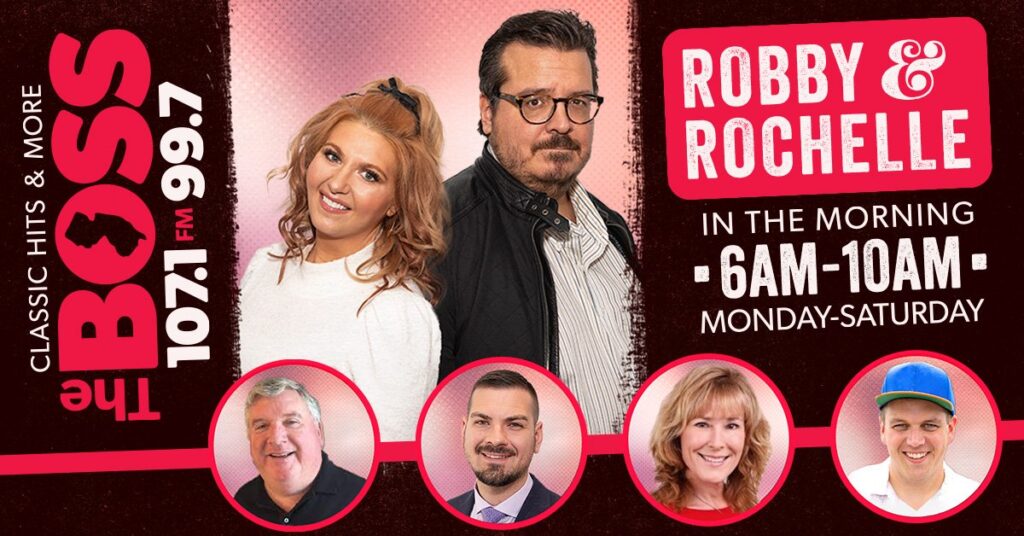
Robby Bridges is Vice President of Programming for Press Communications in Monmouth Ocean, New Jersey. His day-to-day responsibilities include programming and morning show co-host for 107.1/99.7 The Boss, which is today’s featured brand.

I started by asking Bridges to give me some background on the station’s building blocks.

“The Boss signed on before I got here a couple of years ago with the idea that we would be a modernized Classic Rock. An 80s-focused MTV, Bruce Springsteen ‘Dancing In The Dark,’ Bon Jovi Classic Rock station. Then it evolved into more traditional Classic Rock Station, and then when I took over, we hadn’t ever quite gotten to where we wanted to be.”

“The thought was to do a Classic Rock with a classic Top 40 presentation. Play songs that would be palatable to the Classic Rock listener, but also were hits on pop radio. And over time, we’ve evolved into more of a traditional Classic Hits, or you might even call us an Adult Hits station. Because our focus, our bread and butter, is very much the 80s.”

“But as we continue to evolve and the years continue to pass, and 25 – 54 continues to be people born in the ‘70s, which is insane. We’re moving more into the ‘90s and 2K. So, you’re hearing more current stuff, no different than what’s happening on CBS-FM and K-Earth.”

In addition to the music, there is another vital ingredient.

“I would also add the other part of our gumbo, which is very important, is that we’re super hyper local. We’ve got live and local people. There’s no syndication on the station at all. Except for the show that I host, but the audience doesn’t know that it’s not just here with me here. We also have a real commitment to local news, traffic, weather, and sports. We do reports all through the day, Monday through Friday, and in the morning shifts on the weekends.”

Bridges and his wife host “Robby & Rochelle In The Morning.” They openly embrace the idea on air that they are husband and wife.

“We do. I think there are some shows where they define it. They say we’re a married couple who do the show, and we do. We’re certainly up front about it, but it doesn’t define the show. Sometimes it comes up and sometimes it doesn’t is the way I would say it.”

“So it’s the two of us. We’ve got news. Valerie Seagrams, who’s a longtime New York veteran, and Joe Nolan, who was with Dan Ingram at WABC, that’s how far back he goes. And then we’ve got a weather guy, and a kid named Kermit who was Shannon’s producer at CBS FM. We’ve got a big crew of people, and it’s very personality heavy.”

How does The Boss carve out and maintain an identity in the shadow of New York City?

“I think all the time that if New York wasn’t right there, this is still market 52 all by itself. Our primary market is Monmouth Ocean, even though we show up in the Atlantic City book and the Middlesex Somerset book, into the New York City book itself.”

“We think of ourselves as a major radio station and don’t worry about what New York is doing. You’ve got to have a product that stands up to some of the biggest brands in their formats in the world. Whether it’s CBS FM, Z100, or Q1043.”

“I think by the imaging we put out there, the quality of the contests, and the consistency that we do it. By the people we’ve hired here, who are all major market veterans, most of them New York City major market veterans. I’ll put this station up against any of the stations in the city.”

“There are stations in the city that are running sweepers, and that’s where we’re at, as an industry, I guess. We haven’t done that. If you’re somebody who lives in this area and flips between one of those stations and us, you wouldn’t think, oh, they’re a New Jersey station.”

“And to some degree, there are stations here where they sound very small-town, and there’s not necessarily anything wrong with that. But that’s not the approach we wanted to take. We wanted to sound right at home with the big boys, although we don’t pretend to be anything we’re not.”

With a mostly gold-based format, how does Bridges keep it sounding fresh?

“You hear people say this, Jeff, I think, to some degree. These format things and what songs are appropriate for the formats are radio babble, and regular people don’t think that way. The research that we do here shows that people come back and have perceptions of things and songs that they like, which might not match up with what your Classic Hits radio consultant might think would be safe. We’ve evolved. I think that’s probably the most obvious way in which we keep it fresh.”

“It’s important that while younger people still have passion for a lot of those big songs, we have to continue being contemporary. I think the oldies format took too long to evolve. In 2005, there were a lot of stations that were still playing Bill Haley and the Comets. I think that was a mistake.”

“They needed to evolve faster, and so we’re attempting to be at the forefront of that. I’m glad to play a song that’s only a couple of years old. We’ve got some Maroon 5 and Kelly Clarkson and stuff like that.”

Bridges recently launched “Robby’s Top 20 Countdown,” and I offered the opportunity to plug the new program.

“I wanted to do a countdown show, and we just had a three-hour Sunday morning slot, and it’s like, do I really need to have somebody go in there for three hours? Maybe I’ll play around and do a countdown show. I’ve always wanted to do it. I toyed around with the idea for a long time. I finally put it together, and was pretty proud of it.”

“So, I just started reaching out to some contacts and friends and saying I’m doing this. It’s for my station, but I can just send it out to you. Getting two sets of call letters that I think are pretty strong on it, I started pitching it around and trying to blow it up a little bigger. Just this week, I signed a couple more.”

A closing thought?

“I think our station, every station, ought to be very cognizant of not overdoing the commercial loads. We think about it a lot. I wish all my brothers and sisters out there in programming land would do the same. Having too long a spot load is going to be the biggest thing that challenges radio in the immediate future. We need to work on it if we’re going to hold on to radio in the immediate future. And that we need to work on if we’re going to hold on to the audience in these competitive times.”

Reach out to Robby Bridges about “Robby’s Top 20 Countdown” or to share thoughts by email here.          

Barrett Media produces daily content on the music, news, and sports media industries. To stay updated, sign up for our newsletters and get the latest information delivered straight to your inbox.

How Race Taylor Became a Mainstay on WCBS-FM and New York City Radio

0

101.1 WCBS-FM New York morning host Race Taylor is a longtime familiar voice in New York radio. Race spent nearly two decades at 95.5 PLJ and was there for the finale in 2019.

More recently, Taylor was holding down middays at CBS-FM before making the move to mornings last month.

“I am so excited for the opportunity and thrilled that I have the support of John Foxx and the team here at Audacy. I had thought many times throughout the course of my career, from Cincinnati to Dallas, to New York and PLJ, to New York and here. Given how many times I was called on to fill in for a morning show, maybe there would be an opportunity one day to put my name on the shingle. Slap it on the door and we see what happens.”

“And finally, and I just mean that in the best of ways, it has become a reality. It was never on a vision board or anything along those lines. I think anything beyond WHMI and Howell (Michigan) has all been more than I ever imagined.”

How has transitioning from a contemporary format at PLJ to a gold-based format at CBS-F impacted Taylor?

“The common theme for all of it is a focus on the music and an engagement with the audience. It was so exciting to be above Madison Square Garden during that time. I’m trying to think of all the shows that were in town that had musical guests. Letterman was here, and Conan was in New York. Regis was here. It just seemed like there was an open slot for any artist who came to town to do an interview. Our management team, Tom and Scott, could schedule an interview.”

“With anybody we played. Burgeoning artists like Dave Matthews Band, John Mayer, Sheryl Crow, or any of these artists were the core of the PLJ playlist. Just by our zip code, we were an easy visit.”

“We had that instant connection with the artist that we could then share with the listener that was not only in an interview but also in some really intimate and exclusive performance opportunities. That was one of the things that made that radio station very special.”

Race said that at the time, stations were tied to artists.

“It was a time when specific stations owned specific artists. Now a song is released, and all of a sudden, good for the artist, that song is everywhere. It seemed like a lot of the artists that we played were exclusive to our format and part of our identity. And it was so fulfilling to be a part of their career development and watch it happen at arm’s length.”

And now many of those artists live in the gold-based world of CBS-FM.

“I think that is very much true, and also one of the biggest challenges for the format. As we look at Classic Hits going forward, it’s that time marches on. And when you see a song like Smooth from Rob Thomas and Santana from 1999. The reality is that the song is 25 years old and deserves a place on the gold-based format. For a lot of people, that’s a wake-up call because 1999 was just 10 minutes ago, right?”

How does Classic Hits continue to stay fresh?

“Jesse Addy and John Foxx, with the help of our team here, have looked very diligently at answering that question and the many avenues that we could go. I see some stations and other markets leaning a little more into the Hip Hop and R&B heritage, where, for our position here in New York, it might not be the same as theirs.”

“I believe it is still market to market and we’re finding that a song from Train or a song from Kelly Clarkson or an early track from Britney, when perfectly placed in our music log, it fits. It works, and I think it has to be done if you want to continue to live in the advertising world that they’re focusing on from 25 to 54.”

I reminded Taylor of a profile I had recently done with Brian Figula, Director of Programming Operations at Bonneville San Francisco, as it related to Taylor’s reputation for helping lift up others in the industry, and a particular example that Figula remembered.

“I was deeply touched by that story. I believe he mentioned that there was a part of that story that I wasn’t aware of. And you bringing that to light makes me think that I’m just trying to pass the torch. And bring some light to the people who have shown that same courtesy to me.”

“Whether it was Jimmy Steal, my first PD in Cincinnati, who really became a mentor. To Scott Shannon and Tom Cuddy at PLJ. And then Jim Ryan and the team here have all been very nurturing along the way.”

“When it comes to content, when it comes to listener focus, when it comes to sharpening an interview. Those are all skills that you need to sharpen through experience.”

“Having myself had a background in music education and the public school system, when I hear from people who are willing to learn and look at me as a position that maybe I could teach them something, I think, for the benefit of the future of radio, it’s in all of our best interests to try to be that person who can say, you know, you’re on the right path, here’s what you can do to be better.”

In the mentoring vein, what are a couple of tips Taylor can offer to young talent?

“The difficult thing is that a lot of the places that used to be our training ground, those areas don’t exist anymore. But on the flip side of that, everything that we used to learn, we can now literally do on our cell phones.”

“If you want to be a jock with Garage Band, some intros and a USB microphone, you can start practicing that every day. What I’m finding through a lot of my conversations with the mentors in my career is they’re also looking for people who are superstar talent who are from outside of the world of radio, and they’re bringing them in to teach them the things that they need.”

“I would take every opportunity through podcasting or getting on a microphone at your local high school football game, or being the podcast that analyzes all of that. There are more avenues and channels to put your voice, your message or your craft out there now than ever before.”

“I would take every opportunity to do that. And then get that audio in front of the people who make the decisions. And know that at some point in time, someone is going to find the value in what you do. Or see the diamond in the rough and help you craft that.”

I couldn’t not ask for a little “Inside Baseball” and ask Taylor for a Scott Shannon story.

“I have so many because he was such and remains an epic personality both on and off the air. We still text and talked recently. It was one of my first weeks at the radio station, and his wife had been in to visit the office. His office was stacked with CDs, merch, gold records, putters, golf balls, and practice putting things.”

“He called down the hall, and he said Race, get in here. I need to show you something. I thought for sure it was going to be an impromptu air check session. Because when I first arrived in New York, the Yankees were in the World Series. Y2K was happening, and there was so much going on. I thought it was going to be an educational moment with a cassette tape.”

“I walk in the door and he says, ‘What size are your shoes?’ I tell him the size of my shoes. And he says these won’t fit me. And he throws me a pair of Doc Martens that someone had sent him, which happened to be my size. And to prove that I’m just maybe two more gifts away from an episode of Hoarders. I still have those shoes.”

“They are well worn in from lawn mowing and roof fixing and everything else. But it was one of the last things you would ever expect to happen when Scott calls you into the office.”

With radio and voice acting and all that Race has accomplished and continues to do, he acknowledges that he couldn’t have done it alone.

“I want to make sure that I thank my wife, Patty Hargis Bendena, who is the unsung hero of everything that happens in our house. She’s a traffic reporter on 1010WINS. What she has done for our family and for me behind the scenes is really immeasurable. But it takes a village. I’ll get a little emotional talking about it. But in a business that seems to shrink, all of the people who’ve given me an opportunity along the way and still this far down the line, opened a new door for me.”

“It means more than I ever imagined.”

Barrett Media produces daily content on the music, news, and sports media industries. To stay updated, sign up for our newsletters and get the latest information delivered straight to your inbox.
The Downside of Relying Too Much on Nationally Syndicated Shows for Local News/Talk Radio Stations

0

News/talk radio stations love to fill their lineups with nationally syndicated stars. And why wouldn’t they? Name recognition — whether it’s in elections, news/talk radio, or who’s got the best pizza in town — matters. And when you’re able to align your brand with stars, it’s almost always a good thing.

Almost always.

Because when your lineup is full of nationally syndicated shows — meaning, you have no local talent — you’re in a heck of a pinch during local emergencies.

When a crisis hits, communities rely on real-time, local information. National programs can’t deliver it.

The recent flooding in Texas made this problem painfully clear. On Sunday, I pulled up a couple of news/talk radio stations in both Austin and San Antonio to hear how it was covering the flooding, especially the devastating tragedy at Camp Mystic, where 27 campers and counselors were killed.

In some instances, the coverage was fantastic. That station had local hosts and reporters, and was able to deliver important information and also contextualize what had happened and what was about to happen.

On the side of the coin, however, one station resorted to relying on DJs from their music stations because they didn’t have local news talent. God bless those radio talents for doing their best when being thrust into an absolute horrible situation, but when you’re putting the real-life equivalent of Dingo & The Baby on the air to cover a horrifying natural disaster, it might not be the best thing for your brand.

Syndication fills airwaves and reduces payroll. It offers recognizable voices with national reach. But local radio — especially news/talk radio — isn’t just entertainment. It’s a lifeline. We’ve seen real-world examples, like 570 WWNC in Asheville, North Carolina, last year, as being the shining example of what local radio and what local news/talk radio can accomplish when things go wrong in your community.

Texas residents woke up to water rising in their neighborhoods. They needed guidance: routes to dryness, updates on rescue efforts, and warnings about all sorts of other items. They tuned to the local talk station. But they found nationally syndicated hosts talking about politics in Washington, D.C. It’s difficult to connect with a broadcaster to ask for live updates or request help for a stranded friend when that host couldn’t spot your town on a map.

When disaster strikes, stations become connectors. Between both officials and residents, and between neighbors and helpers. You don’t build that trust with syndicated voices cut from the same mold and unaware of your county.

Local news/talk radio requires investment. You have to have reporters — or at minimum, knowledgeable folks — on the ground, relationships with first responders, and accessibility. And many stations don’t have that. They chose nationally syndicated voices over local knowledge, insight, and experience at the cost of saving money.

I’m not here to knock nationally syndicated shows, by the way. There’s a time and a place to institute them. They can absolutely be ratings and revenue juggernauts for stations. And some hosts will go above and beyond in situations like we saw in Kerrville, Texas, over the weekend.

But to truly fulfill a need that separates AM/FM radio from the likes of YouTube, Spotify, and Apple Podcasts, — community service — stations and companies have to dedicate budget for hometown coverage.

The Texas floods were a test, so to speak. One station’s playbook, in my estimation, failed. And the message to listeners was, “When local news breaks and life-saving information is needed, look elsewhere because we don’t have your back.”

Communities deserve more. They deserve a station prepared for the worst, staffed by people who know the terrain.

The fix is simple, but not cost-effective: invest in local talent. Hire anchors who answer to the station manager and residents in town, not New York or Los Angeles. Embed reporters in the community. Commit to footing the bill, even when national shows bring higher ad revenues.

Because when issues arise, history has shown time and time again that your community will tune in. And they need a voice that knows their street name. Not a national voice.

Keep news/talk radio local. Because, sometimes, lives literally depend on it.

Barrett Media produces daily content on the music, news, and sports media industries. To stay updated, sign up for our newsletters and get the latest information delivered straight to your inbox.

AM 560 The Answer Host Dan Proft Addresses Exit of Amy Jacobson: ‘It’s a Business Decision and a Difficult One’

7

Earlier this month, AM 560 The Answer morning host Amy Jacobson exited as part of a cost-cutting move. For the first time, her co-host, Dan Proft, shared his sentiments.

Proft had been on vacation when Jacobson saw her position on Chicago’s Morning Answer eliminated. When he returned this week, he addressed Jacobson’s exit.

“It’s a business decision and a difficult one,” said Proft. “I mean, it’s not like everybody here didn’t like Amy, including a corporate. She was here for more than 15 years, so that speaks to it. But I know that there were people that were surprised, including Amy.

“The nature of the business is once a business decision has been made to take somebody off the air, it’s pretty rare when they get an opportunity to go out on their own terms and have their farewell. And I know that comes across as cold to people. I get it, it could happen to me at some point. Probably will. But that’s just the nature of the business.”

In the wake of the exit of Amy Jacobson, Dan Proft read a letter to AM 560 The Answer listeners from his departed co-host, who didn’t get the opportunity to share her feelings on the air.

Included in the letter was a portion that Jacobson wanted to make clear that Proft had nothing to do with her leaving the Salem Media Group Chicago news/talk outlet.

“Now, there are a few conspiracy theorists who suggested Dan Proft had something to do with my termination,” the letter from Jacobson read. “Nothing could be further from the truth. Dan and I were friends before I arrived at AM 560, and he remains one of my treasured friends. Though at times we might have disagreed or teased, our friendship has never diminished. I will count my years working with him as some of my most cherished.

“Dan is one of the smartest people I’ve ever known, and I will miss working with him immensely,” she continued. “Over the years, he has grown to be more like a brother. I feel I’m a better commentator and journalist for having worked with him. I will miss him terribly.”

Proft concluded his sentiments about Jacobson’s departure with words of admiration of his own.

“It’s been a long-running personal and professional relationship (with Amy Jacobson),” Proft shared. “And those are not some things that you discard very lightly. And I certainly won’t.”

After Jacobson’s exit, Proft is now hosting mornings on AM 560 The Answer by himself.

Barrett Media produces daily content on the music, news, and sports media industries. To stay updated, sign up for our newsletters and get the latest information delivered straight to your inbox.

Robyn Taylor Retires from 101.5 WPDH After 40 Years On-Air

0

Robyn Taylor, a 40-year Hudson Valley personality and morning co-host at Classic Rock 101.5 WPDH, has announced her retirement. Taylor has been with the station since the 1980s.

Taylor has been on a three-month leave from the station and returned to announce that she is stepping away to focus on her health and enjoy retirement. She had been a part of the “Boris and Robyn” morning show for the past 11 years.

The morning show posted this statement, “It’s been a bummer doing the show without Robyn, and I’ve been in denial for a while, keeping ‘The Boris and Robyn Show’ going in hopes that she would come back. But I know this is the best thing for her and I’m happy that she is able to go out on her own terms and enjoy a well-earned retirement.”

Photo 101.5 WPDH Website

Prior to mornings, Taylor spent 20 years as WPDH midday host. Taylor first experienced life-threatening issues in November 2022, and at the time, called into the show to address the issues.

Barrett Media produces daily content on the music, news, and sports media industries. To stay updated, sign up for our newsletters and get the latest information delivered straight to your inbox.

X CEO Linda Yaccarino Leaves Elon Musk-Owned Platform, News Media Reacts

0

On Wednesday, X CEO Linda Yaccarino announced that she would leave the company after being brought on by new owner Elon Musk just over two years ago.

“After two incredible years, I’ve decided to step down as CEO of X,” she shared in a post to the platform. “When (Elon Musk) and I first spoke of his vision for X, I knew it would be the opportunity of a lifetime to carry out the extraordinary mission of this company.

“I’m immensely grateful to him for entrusting me with the responsibility of protecting free speech, turning the company around, and transforming X into the Everything App,” she said of Musk.

She concluded her statement by saying, “I’ll be cheering you all on as you continue to change the world.”

Yaccarino was recruited from NBCUniversal, where she led global advertising for over a decade. She inherited the X platform in turmoil, with weakening ad revenue and heightened brand safety concerns.

Her departure comes one day after Grok — the AI bot developed and utilized by the platform — was seen praising Adolf Hitler and ranting about “Jewish surnames” after it received an update over the weekend.

Reactions poured in after Linda Yaccarino announced her departure. They ranged from praise and admiration to others questioning if the Nazi-related comments from Grok were the final straw. Others questioned if the recent feud between Elon Musk and Donald Trump led Yaccarino to choose sides on the matter.

Meanwhile, Yaccarino also responded to her exit by noting that she remains committed to free speech in spite of her departure.

Barrett Media produces daily content on the music, news, and sports media industries. To stay updated, sign up for our newsletters and get the latest information delivered straight to your inbox.

Joe Cortese Brings ‘Retro Pop Reunion’ to Magic 106.7 Boston

0

AC Magic 106.7 Boston has picked up Throwback Brands’ “Retro Pop Reunion” with Boston market veteran Joe Cortese.

Cortese previously hosted “Back To The 80s Saturday Night” on Mix 98.5 in the early ‘90s. In ’98, he launched “Retro Pop Reunion.

Audacy Boston/Hartford VP/Hot AC Programming Steve Salhany said, “This show, along with Joe’s energy and credibility, is a perfect fit for WMJX. He is a longtime Boston personality, and we are excited for him to bring his unique dynamic to our station with this highly produced program.”

Cortese added, “It’s great to be playing on your home field every week! I’ve been doing this for a long time, and it’s still exciting when you have an opportunity like this.”

Other Boston market stops include 98.5 WROR and Oldies 103.3 WODS.

Photo Magic 106.7 Website

Barrett Media produces daily content on the music, news, and sports media industries. To stay updated, sign up for our newsletters and get the latest information delivered straight to your inbox.

Erin Andrews, Charissa Thompson Land Extensions With FOX Sports

0

Two of the most recognizable faces in sports television are staying put at FOX Sports. According to Front Office Sports, Erin Andrews and Charissa Thompson have both signed new multi-year contract extensions with the network ahead of the 2025 NFL season. The deals ensure that FOX retains two cornerstone personalities in its NFL coverage lineup—both of whom began their broadcasting careers with the company.

Andrews, Thompson, nor FOX Sports have confirmed the report.

Andrews, who serves as the lead sideline reporter on FOX’s top NFL broadcast crew alongside Kevin Burkhardt, Greg Olsen, and Tom Rinaldi, was a free agent following the 2024 season when her contract with the network expired. The network gave a subtle indication of her return when it featured her in its 2025 regular season promotional graphic alongside Tom Brady, Burkhardt, and Rinaldi.

As for Thompson, she continues to wear multiple hats—anchoring FOX NFL Kickoff on Sundays while also hosting Amazon’s Thursday Night Football pregame coverage. She confirmed her commitment to FOX earlier this year on her “Calm Down” podcast, co-hosted with Andrews.

“No, I am not leaving FOX. I was never leaving FOX,” explained Thompson in April. “I don’t know where this took on a life, whereas I was hosting my family here at the ranch this past weekend, four of my family members asked, ‘Well the place looks nice, but how are you going to afford it now that you don’t have a job?’”

Nevertheless, Thompson insisted she’s not going anywhere.

“FOX is my longest relationship,” said Thompson in April. “I have worked there since I was what, 22 years old starting in the HR department. So yes, I love FOX, I will hopefully end my career there in a long, long time. But anyways, it’s not ending anytime soon. That’s a fake headline.”

While the return of Andrews and Thompson brings continuity to FOX’s NFL presentation, other changes are underway including longtime FOX NFL Sunday analyst Jimmy Johnson announcing his retirement in March. Laura Okmin, one of the NFL’s longest-tenured sideline reporters, also announced her exit from FOX to focus on mentoring young women through her GALvanize foundation.

As FOX looks ahead to its upcoming NFL slate—including 11 doubleheaders and marquee games like Eagles-Chiefs and Lions-Packers on Thanksgiving—the network is preparing for another busy year of bringing the NFL to life on the network.

Barrett Media produces daily content on the music, news, and sports media industries. To stay updated, sign up for our newsletters and get the latest information delivered straight to your inbox.