Home Blog Page 829

20 Brands In 20 Days: Jill Strada, 96.1 The Beat

Jill Strada is Executive Vice President of Programming for iHeartMedia. She is based in Atlanta, where her cluster oversight includes Hip Hop 96.1 The Beat, which is featured today in our ’20 Brands In 20 Days’ series.

Atlanta is arguably the Hip Hop center of the United States, so curating the station comes with a lot of eyes, ears and responsibilities.

When I spoke with Strada, the world had just learned the verdict in the Sean “Diddy” Combs trial. I asked if and how the station would react.

“We’re all over it. We have Angela Yee in middays, and she does a great job covering all things Hip Hop and the culture. This is a big story. And that’s how we’re covering it. People love to sound off on things like this. It’s a moment in the culture right now.”

When I approached Strada about being part of this series, I asked her to choose which station in the cluster to feature. While she told me that all were her “babies” and it was a tough choice, she picked 96.1 The Beat for a specific reason.

“The reason I chose the station is I’m so proud of the success its had since I started back in September.

“Where we were to where we are. I’m really excited about the progress and the trajectory. The station is a Hip Hop radio station in Atlanta, which is the most competitive market in the Hip Hop space, period.”

Seeing engagement with the younger generation is exciting for Strada.

“What excites me about it is that the younger generation is interested. For a while there, they were saying radio is dead. Which means the younger generation is not going to embrace radio.”

“When you and I were going through the, Oh, wow, streaming is new and it’s exciting, I got my Spotify account. We’re music people too, so we did all that. But this generation, Gen Z and younger, this is just the norm to them.”

“All the streaming platforms and radio. It’s all part of their selection. When they want music, media, or any other type of content that they want to consume, radio is a big factor in it. And we’re seeing that on The Beat, and I’m really excited about that as well.”

For The Beat, being authentic is mission-critical. The station is anchored by “The Breakfast Club” and Charlamagne Tha God in mornings. So, how do you make it local? She credits Charlamagne and his team for being in the market.

“They’re great at being here locally. DJ Envy, especially. He’s done his car show here. And when we have our big tent pole event, Jingle Ball. We’re the only iHeart market that has an urban-leaning Jingle Ball. It’s exclusive in this space.”

“They will come in and they’ll localize that way by being in the market. We have opportunities for them from just the collaborative perspective with our own local team.”

What goes into the musical curation of The Beat?

“Vladimir Scott is our Program Director, and we have a great team with Doc Wynter. They work together really well and have a great relationship when it comes to anything and all things music.”

The classics or Throwbacks are not a big part of the mix.

“It’s not a big part of the station as far as we lean current. But you have to always pay homage to the classics that make Hip Hop, Hip Hop. The recurrents and gold are part of the fabric.”

Are on-the-ground and on-the-street activations important for The Beat?

“Absolutely. I believe that we’re here to serve the community and any market I go to. It could be giving back to them. It could be whatever is needed in this community. We need to be there to serve that.”

“I think our team does a really good job. They are tied to the community authentically. And again, it goes back to that understanding and that they mean it. They’re not just there to show up and do a couple of hours because they were told to do it.”

“A lot of our team members are creating events or give backs, We’re gearing up for back-to-school. We do something there that’s dear to their heart. And we, as a brand, will support those events and opportunities.”

What are the challenges facing the brand?

“The competitive nature of this market. I think that’s one of the biggest things that I focus on. The blinders are on, and we’re making sure we’re doing everything that we need to do and doing the right thing.”

“Doing right by the community, playing the best music, just any of the experiences that we’re providing on air, on the streets, online. They all have to be top-notch. And always challenging ourselves to the next level. I think that Hip Hop radio in general is very healthy here in Atlanta.”

“We’re all supportive and very supportive of one another. I’m just really proud of the team. So I just cannot not say that because, like you said, when you said pick a station, I’m like, oh, they’re all my babies.”

Barrett Media produces daily content on the music, news, and sports media industries. To stay updated, sign up for our newsletters and get the latest information delivered straight to your inbox.

What Joey Mulinaro Has Done Right With ‘Sports Gone Wrong’

0

Humor is often said to be mankind’s best friend. For all the memories that professional sports provide, there is often humor stuck in the moments of glory. For every catch, there is a drop. For every step, there is a stumble. That’s where VICE Sports is putting its focus in a new series called Sports Gone Wrong, which dives into the absurd, unexpected, and bizarre moments in sports. With comedy at the series’ forefront, the series enlisted the services of comedian and impressionist Joey Mulinaro to serve as the show’s narrator.

“Once they knew I was interested, they came back to me and said, ‘Glad that you’re interested. Would you want to narrate the entire thing?’ I said absolutely, I think that’d be great,” said Mulinaro. “We recorded it in January, February, March—I think like four episodes, three episodes, and three episodes. Some long days in the recording studio, but it’s been a blast to work on, and I’m just excited about it being out now.”

The series debuted last month with each episode blending comedic commentary with archival footage of the biggest debacles in sports. Mulinaro is no stranger to the big stage. Several of his impressions have gone viral on social media, leading to opportunities on programs both in national television and radio. However, for Mulinaro, the opportunity with VICE was a first in his career.

“I’ve had some different voice acting roles that I’ve done that have been real minor things, but this is the biggest and first project that I’ve been able to sink my teeth into and take claim to,” said Mulinaro on his first voyage into narration.

To prepare for the role of narrator, Mulinaro recalled the voices he followed from his sports background. He is an avid fan of the Pittsburgh Steelers and the narration style of John Facenda. Once he received the tone and direction of the series, he pivoted to a more upbeat, high-energy, and quick-paced delivery for the role.

Sports Are Meant To Be Fun and Funny

Sports Gone Wrong is a show that showcases the fun of what makes sports special and unique, but also in a bite-sized and comedic form to appeal to a younger demographic. With many sports programming networks attempting to do the same, while independent digital outlets are already dominating how younger audiences consume sports content, Mulinaro noted that networks should consider changing the formula of their programming to cater to a younger demo.

“I love my teams. I love the games. I love being a part of it, but instead of the mind-numbing debates about arbitrary things that nobody can put their finger on an absolute answer—or the X’s and O’s—instead of that, you’re coming to me to have a laugh about different things that happen on a broadcast or different personalities that you’re listening to on those broadcasts,” suggested Mulinaro. “That’s definitely a way to go about it in a way that’s having a lot of success.”

As a rabid fan of the Indiana Pacers, Mulinaro was keeping tabs through every game of the NBA Finals. While he didn’t watch all the coverage supplied by ESPN surrounding the Finals, he was aware of the criticism the coverage was receiving. Mulinaro’s comedic mind began considering offering his skills to the conversation, as he was confused by the network’s approach to coverage—seemingly harming instead of lifting the game.

“The way that it [NBA Finals] was covered, I just never understood having what the network was providing essentially eating itself,” said Mulinaro. “Talking about how bad of a product it’s going to be, how it’s not going to be a close series, how there’s no star power and no coastal power. I didn’t want to listen to any of that.”

Mulinaro was considering creating a sketch where talking heads on ESPN would be featured live from Gainbridge Fieldhouse in Indianapolis. The sketch would surround discussions about anything but the NBA Finals taking place that evening.

“That’s what it felt like. It’s like, we’re here and this is the reason why we must be here—but who’s going to coach the Knicks?” joked Mulinaro. “What house in Indianapolis or Oklahoma City wants to have that on? It’s nonsense. The bar I was at last night had the slippery stair championships on beforehand. I’d rather watch this. This is more entertaining than listening to the folks up there bicker and moan and talk about how Tyrese Haliburton’s not a superstar. What does that even mean? It’s the most subjective conversations happening at the worst possible times.”

Mulinaro Reflecting on His Time With Barstool Sports

Mulinaro’s skills of impersonation really took off in 2019. He created his impression of Alabama Head Coach Nick Saban explaining his favorite Thanksgiving dishes became a viral sensation. His efforts led him to sign a two-year deal with Barstool Sports in 2020, in which his impressions continued to build attention and audience. Mulinaro left Barstool following the conclusion of his contract in 2022, but is thankful for the opportunity and time he spent with the digital media giant.

“I really enjoyed my time that I was there for two years,” said Mulinaro. “My contract was up, and we just went separate ways.”

Nearly three years after his departure from Barstool Sports, Mulinaro’s audience has followed. He has landed opportunities with brand deals and partnerships with FanDuel and Snickers, among other brands—allowing him the freedom to continue creating his own sketches and characters. He said he still follows and consumes Barstool Sports content on a regular basis.

“I got no hard feelings. I’m appreciative of the opportunity that I had,” explained Mulinaro. “It was a wild run, especially at that time in the world—2020 and in the midst of COVID and everything. It was definitely wild times, but I’m just super thankful that I was able to be a part of it.”

Mulinaro’s approach to his viral impersonations has always been to lift the characters of sports media. He targets talent that he enjoys, and never to take shots with the impression. From Saban to Cris Collinsworth, Rob Gronkowski, and Colin Cowherd, among others, Mulinaro has never received negative feedback on his efforts because of his approach. As he provides his voice—and some impressions as well—for VICE Sports in narrating Sports Gone Wrong, Mulinaro said he’d be open to lending his narration voice to his former employer if there were an opportunity to work together on a documentary idea down the line.

“I’m open to any and all possibilities,” said Mulinaro. “I’m really happy where I am and with what I’m doing. Those folks over there are super talented. I’m sure they wouldn’t even think or need the idea of having me be a part of something like that. If they did, I’d wish them well. But again, I’m open to anything.”

Continuing To Adapt to a Changing Landscape

Following the advice of his father, Mulinaro is adding more pitches to his arsenal instead of just throwing fastballs. His passions for writing, acting, comedy, voice acting, and social media have led him to the opportunity as the narrating voice of Sports Gone Wrong. He’s added a change-up to his approach on the mound—always ready for the next start.

“To be able to have so many different things that I can do and show people what I can do, I take great pride in that,” explained Mulinaro. “I had such a great experience with VICE and everybody on this show. The whole idea of Sports Gone Wrong has been so fun. I’d love to do a Season 2, a Season 3, and run it back. There’s obviously a whole lot of absurdity and craziness that you could keep diving into in the sports world. So I would absolutely, 100% sign up to do it again.”

Barrett Media produces daily content on the music, news, and sports media industries. To stay updated, sign up for our newsletters and get the latest information delivered straight to your inbox.

What’s Next for CBS News and 60 Minutes After $16 Million Settlement with Donald Trump?

CBS News and 60 Minutes have long been viewed as pillars of American journalism. Their reputations were built on fearless reporting, aggressive storytelling, and a commitment to getting the facts right. But in settling a $16 million lawsuit brought by Donald Trump — without going to trial — the network has done serious damage to itself both externally with its audience and internally with its own newsroom.

The decision to pay Trump rather than defend its reporting in court isn’t just a business call. It’s a blow to the perception that CBS stands behind its journalists.

Now, the network must repair trust on two fronts: with viewers and with its staff.

How to Repair the Relationship With Both Conservative and Liberal Viewers

For decades, both CBS News and 60 Minutes have prided themselves on their investigative rigor and commitment to truth. But their recent $16 million settlement with Donald Trump should serve as a wake-up call. This isn’t just a legal loss — it’s a credibility crisis.

The optics — to both sides — are damning. To many viewers, the payout suggests CBS News admitted fault. Despite the fact that the network was adamant that it did not admit to any wrongdoing and will not apologize for its editing of the interview with Kamala Harris last year. But right or wrong, that perception now lives in the public consciousness. And in today’s media landscape, perception is reality.

To the other side, you look weak. You appear as if you bent the knee to the almighty god-emporer Donald Trump. And if perception is reality, you will have difficulty regaining that credibility.

Here’s the hard truth going forward: 60 Minutes doesn’t get the benefit of the doubt anymore.

In decades past, the show was a Sunday night staple. It was where Americans went for serious journalism, conducted by serious people. But in the polarized world of 2025, the days of being a universally respected institution are over.

Here’s the likely playbook going forward: CBS doesn’t need to reveal legal strategies, but they must speak directly to the audience. Explain what happened. Lay out what changes are being made. Rebuilding trust starts with admitting when things went wrong.

Second, the network must re-evaluate its editorial process. 60 Minutes thrives on exclusive access and compelling storytelling. But the temptation to tell the “most dramatic version” of a story can lead journalists into dangerous territory. It’s easy to push boundaries in pursuit of ratings. It’s harder to stay grounded in facts that are legally and ethically bulletproof.

Furthermore, it’s time to stop pretending the media isn’t part of the political story. Viewers aren’t dumb. They know CBS News and other networks have biases, even if journalists refuse to admit them. Instead of denying those leanings, CBS should strive for fairness, even if it’s not popular.

There’s also a business lesson here. Settlements like this one cost more than money. Advertisers grow uneasy. Shareholders worry. The next time CBS News pitches a controversial story, someone in a boardroom who only cares about the numbers being black at the end of the month, quarter, and year will ask: “Is this worth another $16 million?”

And that sucks.

Risk is always going to exist. CBS News, with its deep resources and global reach, is still capable of great work. So is 60 Minutes. But their next chapter has to be defined by humility, not hubris. The only thing worse than losing $16 million in a lawsuit is losing the audience’s trust forever.

Going forward, CBS must ask itself a simple question: Are we in the business of informing the public or influencing it? If the answer is the former, it’s time to act like it.

The road back to credibility won’t be fast. But it is possible.

CBS News and 60 Minutes Need Damage Control Internally

When the heat gets turned up, you’re on your own.

That’s the message parent company Paramount Global told CBS News and 60 Minutes with its settlement.

The lawsuit centered on a 60 Minutes segment that Trump claimed was defamatory. Whether or not the legal case was winnable, we may never know. But that’s not even the most important part. What matters now is that CBS blinked. They didn’t stand by their team.

This is the nightmare scenario for anyone working in journalism today: make one mistake — and many at CBS News and 60 Minutes would tell you it wasn’t a mistake — and then watch your employer fold when pressure comes from someone rich and powerful.

The Trump settlement reveals an uncomfortable truth: when money, politics, or public relations get involved, even the biggest names in media will abandon their own people.

Every story is a risk. Not just to your reputation, but to your employment, your legal exposure, and your future.

What else does the settlement tell you if you work inside the walls of the venerable news organization? That when things get uncomfortable, CBS News may not go to bat for you.

That’s a dangerous precedent. Because if reporters don’t feel supported, they’ll stop doing bold work. Let’s not pretend this is limited to one network. This is a problem across the industry.

In boardrooms, media executives are more focused on litigation risk and brand image than defending the work of their journalists.

Reporters don’t want to chase stories that might get them sued, even if those stories are true. Producers don’t want to book guests who could bring legal headaches. What you end up with is sanitized journalism. Surface-level stories. Softball interviews.

CBS News and 60 Minutes built their reputations by doing the opposite. That courage costs money. It sometimes costs advertisers. But it’s the price you pay.

Settling with Donald Trump might have made the legal department happy, but it will demoralize the newsroom. Because now everyone who works there knows: there’s a line where the bosses stop fighting for you.

It’s not always clear where that line is. And that uncertainty is corrosive.

Let’s also be honest: this makes future reporting on Trump even harder. Not because journalists are afraid of him, but because they’re unsure if CBS — or CNN, The New York Times, ABC News, or any other organization that has the audacity to run afoul of the President’s good graces — is willing to take another punch.

If they aren’t, then every Trump-related segment becomes a legal and editorial landmine.

Do mistakes happen? Yes. Should media outlets be held accountable in those instances? Absolutely. But if the story is accurate, then stand firm. Don’t hand out settlements just to make a story disappear.

Because once you do that, your employees will never look at you the same way again.

The settlement with Donald Trump should spark conversations inside every media company. Not about risk management, but about loyalty. Not about damage control, but about defending your people. If you don’t trust the people inside your organization to produce fair, accurate, well-balanced, fact-based stories, then why are they there in the first place?

CBS News says it’s committed to truth. Prove it. Make it clear to every journalist at 60 Minutes and beyond: We will defend your work. And we will not cave under pressure from politicians, billionaires, or social media mobs.

If that’s not your stance, don’t expect your employees to give you their best work. Because in this business, courage is contagious. But so is cowardice.

Barrett Media produces daily content on the music, news, and sports media industries. To stay updated, sign up for our newsletters and get the latest information delivered straight to your inbox.

Four Rock Moments That Red White & Blew Our Minds

As we head into a long weekend and try not to blow our digits off while celebrating all things BBQ, Apple Pie and ‘Merica. Let’s hop into the Red, White and Blue time machine and remember four of the biggest American explosions that changed Rock music forever. Along with some bonus fireworks that ignited chaos, we’ll never forget.

Jimi Hendrix at the Monterey Pop Festival

The day America first met one of its favorite Rock & Roll sons, Jimi Hendrix. If his jaw-dropping axe slaying and incredible stage presence weren’t enough, the dude lit his guitar on fire – creating one of the most legendary moments in Rock history. Maybe something was hidden in his headband. It doesn’t matter. From that day forward, everything got louder, trippier, and better. The world was put on notice; the Rock revolution was on.

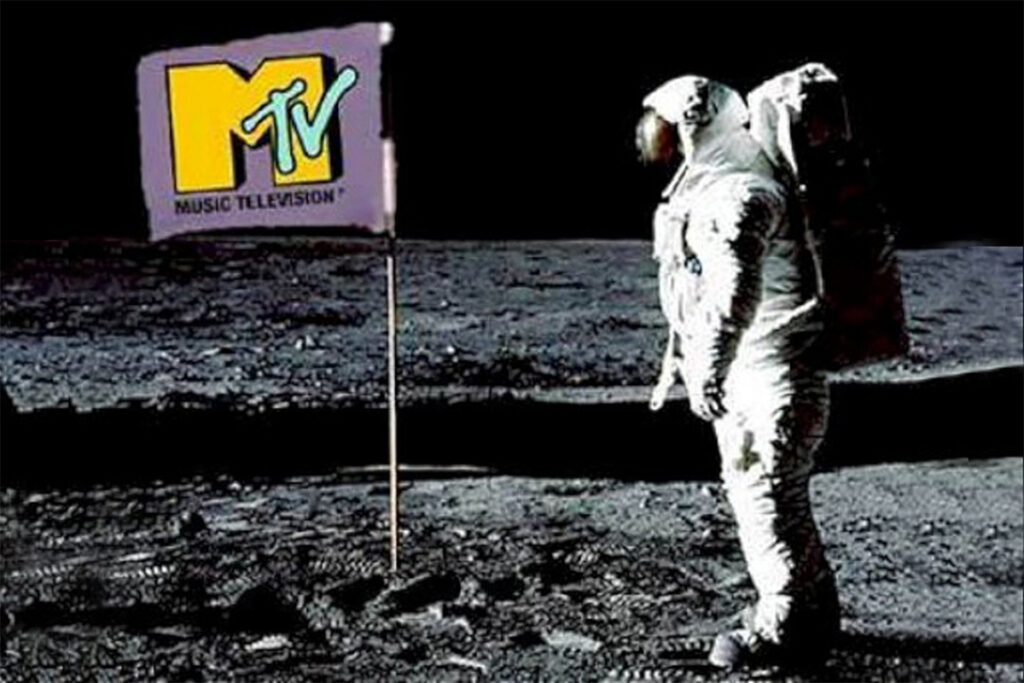
The MTV Moonman Lands

Video didn’t kill the radio star, but it created a new era for Rock, Arena Rock. Haircuts – or the lack thereof – and big-budget videos became the thing: Cherry Pies, Marshall stacks, and girls on cars. Suddenly, the video mattered as much as the music. Equally important, the channel helped generate mainstream recognition and acceptance for so-called Thrashers, and Alternaheads like The Police, Talking Heads, and The Cure.

The Grunge Bomb Drops

Glam Rock died on impact. Nirvana slammed into Radio, MTV and everywhere else, bulldozing a path for partners in crime like Pearl Jam and Soundgarden. Flannel became a fashion statement, and the Sunset Strip never recovered. “Smells Like Teen Spirit” wasn’t just a song, it was an explosion that brought new sounds, raw and dark emotions, and power-angst to the forefront of Rockternative.

The Mainstream Bows to Metallica

The Black Album brought Lars and company more millions than they could have imagined, along with some haters. Bogus cries of “sellouts” came from some of their early-adopter fans. But the California speed freaks were still heavy and loud, and couldn’t be denied. Not even by MTV and Radio. As then-bassist Jason Newsted said, responding to critics labeling them as sellouts, “We sell out every seat in the house, every time we play.” Not sad, but true.

Chaos has always felt at home in American Rock. And all fireworks shows deserve some sparklers and spinners, so here are some (dis)honorable mentions, in no particular order.

  • Elvis Presley caused a nationwide pregnancy scare just by shaking his hips.
  • Jim Morrison became an FBI target after going full frontal and dropping trou in Miami.
  • Alice Cooper, “The Godfather of Shock Rock,” arrived and gave everyone nightmares.
  • Ozzy peed on the Alamo, snorted ants, and bit the head off a dove and a bat. (Yes, he’s British, but it’s the Alamo, it’s Ozzy, this qualifies.)
  • KISS: Fire, makeup, Gene’s tongue, and a merch line from ketchup to caskets.
  • Disco Demolition Night in Chicago decapitated the “Disco Duck.”
  • Aerosmith’s Toxic Twins go from trashing hotel rooms to being cultural icons.
  • Marilyn Manson sparked outrage, protests, lawsuits – he even burned Bibles.
  • James Hetfield was almost blown to pieces by pyro at a show in Montreal.
  • Rage Against the Machine literally shut down the New York Stock Exchange.
  • Guns ‘N Roses and Axl were responsible for multiple riots.
  • Nikki Sixx OD’d twice, died twice, and came back to life twice.
  • Tommy Lee released a famous porn tape andcreated a rollercoaster drum kit that flipped upside down mid-solo.
  • Johnny Cash had the balls to rock Folsom State Prison.
  • Green Day started a massive mud fight at Woodstock ’94.
  • Iggy Pop made “self-mutilation” a stage prop.
  • And Slash and Sebastian Bach, in the bathroom of a Hollywood club in ‘89, allegedly asked a certain Barrett Media columnist where they could score some blow.

Let freedom reign, and may the chaos continue across the RockTernaverse.

Happy 4th!

Barrett Media produces daily content on the music, news, and sports media industries. To stay updated, sign up for our newsletters and get the latest information delivered straight to your inbox.
Radio Ads Work Best When They Tell a Great Story

From the time we are toddlers, we tell our parents, “Tell me a story!” Radio commercials can be incredibly effective at capturing attention, creating emotional connections, driving action, and most importantly, telling a story!

I was recently with a client, and during the CNA, she used a phrase I have rarely heard before from a client. “I simply want someone to tell our story.” She then began to tell me her story. 

If we managers want our clients to return and continue to buy long-term schedules, it is our responsibility to help ensure their messages are compelling and engaging to the listeners.

The key to doing that so that it resonates is what I have told air talent for years. “It’s about stories, not data.” After that, they may often read lists or polls rather than using those lists to tell stories. The story, however, is not the only thing that makes a radio commercial stand out.

Several elements contribute to its success, including clarity, creativity, emotion, targeting, and a strong call to action. All the while remembering that audio is more powerful than video when executed well. Please – more than anything – avoid “ad speak,” which is even in the Oxford English Dictionary and is defined as “ad language and jargon.”

The best commercials respect the listener’s time and attention span. This makes clarity critical. A compelling spot gets straight to the point, uses simple and concise language, and avoids jargon and overly complex ideas. We have all heard the spots that cram 10 pounds of messaging in a 5-pound bag with the typical concluding ad-speak such as, “For all your automotive needs.”  The truth is that multiple messages will dilute the impact.

When I owned Pinnacle Media Worldwide, we used dial methodology to research radio & TV commercials. The respondents would have a dial with a 0-100 scale. If they liked what they heard or saw, they would turn it toward 100. The closer they got to 100, the more they liked it – and vice versa toward zero.

The rule was that if a commercial didn’t get to at least an average of 60 in the first 5-10 seconds, it would never cut through. The radio dial works the same way. Listeners tune out when anything fails to grab their attention within the first few seconds.

That’s why a strong opening is essential. This could be a provocative question, a surprising fact, a relatable scenario, or a unique sound effect. The goal is to immediately engage the audience and make them curious about what comes next. That is the power of audio!

The voice delivering your message is crucial. Whether it’s a professional or the business owner themselves, it needs to sound authentic, genuine, and brand-appropriate. Tone can certainly foster emotional connection, while a humorous or energetic voice may spark interest in other ways. 

Emotion sells extremely well. Just listen to a radiothon for the Children’s Miracle Network or St. Jude Children’s Hospital. Radio is an uber-powerful medium for storytelling. A well-told story can draw listeners in and create lasting impressions. Whether it’s humor, empathy, excitement, drama, conflict or nostalgia, emotional appeal can dramatically increase effectiveness.

We need to focus more on the effectiveness of what we do if we expect advertisers to believe in the power of what we offer. And we cannot continue with a “selling spots” mentality. We sell stories that solve problems and offer marketing solutions. It was Chris Forgy (President/CEO at Saga Communications) who, when GM in Columbus, had a sign outside his building that read, “The Solution Store.”  

Compelling radio commercials speak directly to the intended audience. So obviously, understanding the demographics, lifestyle, and preferences of the target allows us to tailor the message accordingly. Ads on a sports station might use a different style and tone than those on a mainstream AC—the more specific and relevant the message, the better the response.

Very little works as well as sonic messaging. Think of the McDonald’s Sonic logo as a great example. Five simple notes catch you every time. As I have noted in previous articles, sound works on the brain far more effectively than pictures.

Sound is the heart and soul of radio, and a catchy jingle or unique sonic effect will likely make anything much more memorable. Even subtle elements like background music or ambient noise can set the mood and reinforce the message, while not letting it overwhelm the message.

Finally, every radio commercial needs a clear and compelling call to action (CTA). Whether it’s visiting a website or attending an event, the CTA should be easy to remember and act upon.

I’m not a fan of phone numbers. I think websites are far easier to remember, and repeating it at the end helps it stick.

The most compelling radio commercial is one that is clear, emotionally resonant, well-targeted, creatively executed, and even culturally relevant. With these elements in place, the spots will work better and the clients will return and give you more long-term commitments!

Barrett Media produces daily content on the music, news, and sports media industries. To stay updated, sign up for our newsletters and get the latest information delivered straight to your inbox.

Why NBA TV’s ‘Free Agent Fever’ Is Must-Watch for Hoops Fans This Offseason

0

Covering the NBA, NFL, NHL and MLB has become a year-round job for working media, with absolutely no such thing as an offseason. For instance, the NHL has its draft and free agency, with players moving from team to team and even country to country to further their careers and win a Stanley Cup. Similarly, the NFL offseason has become a religious pilgrimage. Once the Super Bowl ends, gridiron mavens look forward to the NFL Combine, free agency, and the NFL Draft—an event that once took place in a hotel ballroom but has now become a true spectacle, moving from city to city with thousands of fans gathered in the street and millions more watching via multiple platforms.

In contrast, Major League Baseball’s offseason used to rule the roost. However, with analytics now dominating the game, big free-agent signings have been replaced by building up the farm system and developing talent to fit the philosophy of a given organization. Against this backdrop, the NBA has taken the number one spot in terms of offseason interest. Almost from the moment the Larry O’Brien Trophy was handed to the Oklahoma City Thunder, podcasts, television programs, radio shows, and all types of internet broadcasts turned their attention to expiring contracts, free-agent signings, and veteran players being waived.

Indeed, 2025 NBA free agency has been positively feverish. Fittingly enough, I caught an episode of Free Agent Fever on NBA TV. The frenetic show open featured shots of Nikola Jokić, Anthony Edwards, and Jayson Tatum, which is interesting since the Nuggets, Timberwolves, and Celtics have played huge roles in NBA free agency thus far. Free Agent Fever began with breaking news that Shai Gilgeous-Alexander and the Thunder had agreed on a four-year, $285 million supermax contract extension through the 2030–31 season.

Of course, it’s not just live, spoken-word news that draws people to NBA TV. Viewers also benefit from the bottom-third crawl providing all types of NBA signing news. In this case, graphics showed that Mason Plumlee had agreed to a $183.6 million deal with the Charlotte Hornets. Shortly after, the Gilgeous-Alexander news was followed by probably one of the most shocking turns of events in NBA free agency this year—namely, Myles Turner leaving the Eastern Conference Champion Indiana Pacers and agreeing to a four-year, $107 million deal with the Milwaukee Bucks.

NBA News, Insight, Perspective at a Rabid Pace

This edition of Free Agent Fever was hosted by Nabil Karim and featured reporter Chris Haynes, ex-NBA standout Greg Anthony, and former Suns executive Ryan McDonough, the brother of sportscaster extraordinaire Sean McDonough. I liked the mix of perspectives on this program. As I was listening to this quartet, I saw the news that Jordan Clarkson was set to be released by the Jazz and sign with the Knicks, and that the Celtics had signed center Luka Garza from the Timberwolves to a two-year, $5.5 million deal—essentially replacing Luke Kornet, who left Boston to sign with the Spurs.

Shortly after, Karim immediately threw to Haynes, who, after speaking with sources, reported that Bucks star Giannis Antetokounmpo was very displeased with Milwaukee’s decision to waive Damian Lillard. Haynes also revealed that Lillard was surprised by his release and found out through the media. McDonough then made the point that such a huge move should be done in concert with a star like Antetokounmpo. It was an interesting assertion—one that really knocks home the player empowerment movement that has been growing over the past few years. Furthermore, McDonough noted that while Turner will help the Bucks, his contract gives the team less flexibility to further improve the roster.

As McDonough continued, we saw the news that the Brooklyn Nets had acquired forward Michael Porter Jr. and a first-round pick from the Nuggets in exchange for forward Cam Johnson, and that Jaren Jackson Jr. had agreed to a five-year, $240 million extension with the Memphis Grizzlies. This is the beauty of NBA free agency: non-stop news, developments, and intrigue. It truly is a delight for fans across the NBA’s worldwide landscape.

Meanwhile, Haynes and McDonough had a nice exchange about upcoming roster decisions that the Thunder face—decisions that will dictate whether they can remain a title contender for years to come. McDonough stated that championship windows close quickly in the NBA, citing the 2023–24 champion Celtics, who traded Kristaps Porziņģis and Jrue Holiday, lost Kornet in free agency, and are now facing the prospect of a season without Jayson Tatum due to an Achilles injury. McDonough is a television natural. I truly see him rising up the media ranks with his knowledge of team building.

Following the first break, the analysis turned to the Houston Rockets, who made a big offseason splash by acquiring Kevin Durant from Phoenix. Anthony, a seasoned NBA commentator who excels at applying his experience as a player to his analysis, said that, on paper, the Rockets look like a team that could win it all next season. However, he added that the challenge for head coach Ime Udoka will be integrating all this new talent into a team effort.

Crunching the Numbers and Explaining the Why

Make no mistake—Free Agent Fever and NBA free agency are all about the business end of the game. The NBA salary cap has been set at $154.647 million for next season, and the tax level for the 2025–26 season is $187.895 million. As the group discussed the Rockets, a graphic showed that the team had agreed to a three-year, $21.5 million deal with center Clint Capela. Immediately afterward, the panel turned its attention to the Atlanta Hawks while a timely graphic displayed the Hawks’ projected depth chart. Similarly, Haynes, Karim, Anthony, and McDonough talked about the San Antonio Spurs and how they could rise in the West. Haynes focused on the acquisition of Kornet, saying that he had talked to a lot of players around the league who like that Kornet is a vocal leader in the locker room.

Then, Karim cut from the Spurs talk to breaking news on X from ESPN NBA Insider Shams Charania, reporting that the Sacramento Kings were trading Jonas Valančiūnas to the Denver Nuggets for Dario Šarić. McDonough said that Denver’s offseason moves give them more salary flexibility while keeping them as a contender in the West.

One of the more interesting teams in the Western Conference is the Dallas Mavericks, who just scored Cooper Flagg with the number one overall pick in the NBA Draft. The panel discussed whether the Mavs might actually be better without their former star Luka Dončić, now with the Lakers. Anthony chimed in, saying that Dallas might have the best front line in the NBA and pointed to Anthony Davis as a key component of that team. Meanwhile, McDonough noted that even though they picked up point guard D’Angelo Russell, the Mavericks still need to find another point guard for depth.

Anthony also stated that depth is a key concern for one of his former teams, the Knicks. He backed up his point by noting that the Knicks’ starters logged more minutes than any other starting five in the NBA last season. Karim, for his part, did a really nice job hosting this program and letting Haynes, Anthony, and McDonough showcase their respective strengths on air.

In conclusion, NBA teams have long used free agency to find a Big Three to lead them to a championship. NBA TV has gone one better with a Big Four roster of talent on Free Agent Fever. Karim, Haynes, Anthony, and McDonough combined all the offseason excitement, intrigue, and adrenaline with expertise, insight, and analysis.

Barrett Media produces daily content on the music, news, and sports media industries. To stay updated, sign up for our newsletters and get the latest information delivered straight to your inbox.

Kannon Debuts New Weekday Show for Top 40 & Hot AC

0

Kannon Worldwide LLC has announced the launch of “The Kannon Show,” a new syndicated weekday program designed for Top 40 and Hot AC stations.

Hosted by Kannon, a longtime radio personality known for his work on the syndicated “Open House Party” and most recently Star 94 in Atlanta. The show promises high-energy, personality-driven content with local market flexibility.

Airing weekdays, “The Kannon Show” is designed to blend with existing music programming. The show will be delivered in segmented form, allowing affiliates to retain full control over music selection, imaging, and clock structure.

“I’m beyond pumped to connect with listeners and share my genuine passion and enthusiasm for the special connection radio creates. Bringing that energy to stations across the country every day. This show is celeb-powered and designed to sound hyper-local. Seamlessly blending into the unique music and vibe of each station,” said Kannon.

Syndication and advertising sales for The Kannon Show will be handled by Key Networks’ Key-United and United Stations.

Kannon

Barrett Media produces daily content on the music, news, and sports media industries. To stay updated, sign up for our newsletters and get the latest information delivered straight to your inbox.

Marcellus Wiley: Stephen A. Smith Wanted Max Kellerman To Be “The White Guy” on ‘First Take’

0

In the latest chapter of the ongoing saga between former ESPN personality Marcellus Wiley and ESPN commentator Stephen A. Smith, Wiley took direct aim at Smith over recent comments made on Smith’s YouTube show, where he denied playing a role in Max Kellerman’s departure from ESPN. Wiley, a former colleague of both men, responded with a fiery video of his own, offering a starkly different version of events—and warning there’s more he’s still holding back.

At the heart of Wiley’s response to Smith was the contention that Smith wanted Kellerman off First Take not just for chemistry reasons, but because of image and control. He claimed that Smith sought a more stereotypical on-air dynamic—a “white guy” counterpart reminiscent of his earlier days with Skip Bayless—and underestimated Kellerman’s intellect and cultural awareness.

“Two things I know for a fact: You wanted Max to be the white guy to talk about the white issues. But Max wasn’t that dude,” Wiley said. “Max is blacker than you, as T.O. [Terrell Owens] told the world. Whether you agree or not, Max knew more about black culture than you did. That bothered you.”

Wiley added that Smith’s desire to dominate debates backfired when paired with Kellerman, whom he repeatedly described as a “genius.”

“You picked the wrong dude,” he said. “You can’t pick Max if you want to out-debate him and outsmart him every day. Not going to happen.”

Wiley continued with his response saying, “You got mad. How do I know that? I watched. People told me. People that watched told me, whatever that means. That don’t mean he blacker than you, but you took it that way because that means you got your own insecurities, partner.”

Smith posted a nearly 13-minute video to his YouTube channel Tuesday in which he addressed a wave of criticism he’s received in recent months. From allegations that he was visibly upset over Max Kellerman landing a high-profile boxing assignment, to commentary on him playing solitaire during NBA Finals coverage, the First Take host set the record straight.

Wiley, who spent more than a decade at ESPN, asserted that he remains in close contact with numerous current and former staffers at the network—people who, according to him, paint a very different picture than the one Smith is promoting publicly.

“Don’t do that,” Wiley said firmly, referencing Smith’s denial. “I didn’t make up one thing about the Max Kellerman story from my old videos. And to be real, I didn’t even say everything I know. Not even half of it.”

Wiley said that while he’s been away from the network for many years, he still gets insights from those inside the halls of ESPN about Smith and the environment of their surroundings.

“You think the people stopped calling me, stopped texting me?” Wiley asked rhetorically. “Come on, man. I protect those cats—the guilty people who don’t like you but act like they do because they’ve got to.”

Wiley closed his remarks by suggesting there’s still more to the story, and hinted that if Smith continues to press the issue, he might reveal it.

“There’s more. And you know there’s more. And if you really want to go there—I don’t think you want to go there.”

Barrett Media produces daily content on the music, news, and sports media industries. To stay updated, sign up for our newsletters and get the latest information delivered straight to your inbox.

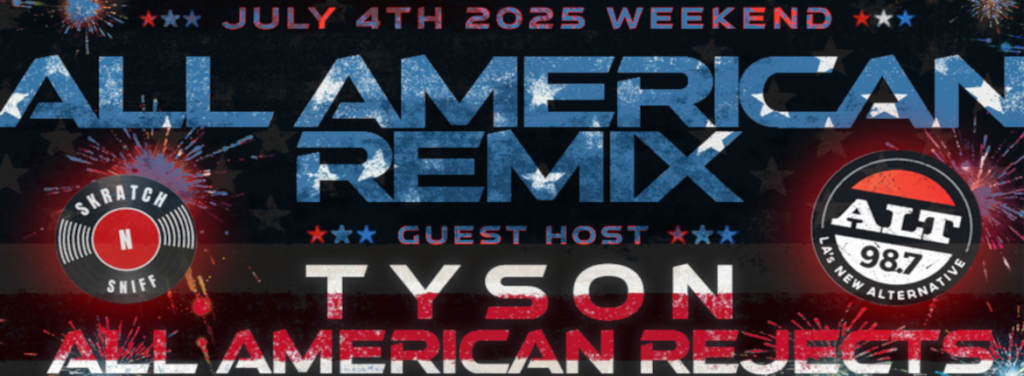
Skratch N’ Sniff Drops Specials for the 4th of July Weekend

0

Skratch N’ Sniff, the only syndicated show that blends rock radio with turntable and mashup twists, is set to energize Independence Day weekend with two special editions airing on Active Rock and Alternative formats.

For Alternative stations, Tyson Ritter of The All-American Rejects takes over as guest host for “The All-American Remix.”

The show will blend party anthems, exclusive remixes, and fan-favorite Rejects tracks. With the band back on tour and releasing new music after a 13-year break, this special is perfectly timed.

Active Rock stations will get the “Five Finger Fourth,” hosted by Ivan Moody of Five Finger Death Punch. Celebrating 20 years of hits, the show features remixed staples from Green Day, System of a Down, and more, including a reimagined “I Refuse” featuring Maria Brink.

Both specials are two hours, commercial-free, and available July 4–6. Contact Doug Ingold at Compass Media Networks.

Barrett Media produces daily content on the music, news, and sports media industries. To stay updated, sign up for our newsletters and get the latest information delivered straight to your inbox.
New Orleans Pelicans Extend Contracts of Joel Meyers, Antonio Daniels

0

The New Orleans Pelicans have announced that the team has signed multi-year contract extensions with television play-by-play announcer Joel Meyers and color analyst Antonio Daniels, securing one of the NBA’s most respected broadcast teams.

Meyers and Daniels have called Pelicans games since 2019, forming a partnership praised for its energy, professionalism, and chemistry.

“We are thrilled to continue our partnership with Joel and Antonio,” said Pelicans Governor Gayle Benson. “They bring energy, professionalism, and an unmatched love for the game that reflects the spirit of our organization and fan base. Their passion, insight, and chemistry have made them fan favorites across the Gulf South region.”

Meyers, a three-time Emmy Award winner and veteran voice of the NBA, returns for his 14th season with the franchise. With more than 40 years of broadcasting experience, Meyers was recently named the 2024 Louisiana Sportscaster of the Year by the National Sports Media Association for his work on the Gulf Coast Sports & Entertainment Network.

“New Orleans has become home for me, and I’m honored to continue calling games for a franchise that’s on the rise in a city I love,” said Meyers. “We have a special group here—on the court and in the community—and I’m thankful to be part of the journey. Our fans are as passionate as any in the league, and I can’t wait to see what’s next.”

Daniels enters his seventh season with the Pelicans. A former NBA Champion, he played 14 seasons in the league, including 61 games with the New Orleans Hornets during the 2008–09 season. He joined the team’s broadcast booth after serving as a studio analyst for FOX Sports Oklahoma and FOX Sports Southwest.

“A heart of thankfulness and gratitude is what I’m filled with,” Daniels said. “It is a true blessing to continue with this amazing organization and incredible fan base. I’m excited and eager about the direction the Pelicans are headed in with a young, exciting team full of talent and potential. The culture is on the move. I am blessed to get to continue telling these stories and sharing my knowledge and insight about the game I love and am so passionate about.”

Additionally, Andrew Lopez will return for his second season as the team’s sideline reporter. A New Orleans native, Lopez joined the broadcast crew after five years covering the NBA for ESPN.com. Prior to that, he spent seven years with The Times-Picayune, covering a wide range of sports including the Pelicans, LSU, Tulane and recruiting.

Meyers, Daniels and Lopez will continue to serve as the primary voices of Pelicans basketball on the Gulf Coast Sports & Entertainment Network as the team enters what it hopes will be an exciting new chapter.

Barrett Media produces daily content on the music, news, and sports media industries. To stay updated, sign up for our newsletters and get the latest information delivered straight to your inbox.