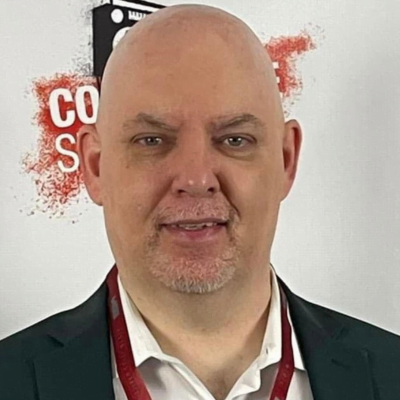
When the news dropped of David Field stepping down as CEO of Audacy, I knew I’d hear from a lot of people. The mood among those I spoke to was a mixture of relief, anger, frustration, confusion, disappointment, and curiosity. That’s to be expected when the leader of an organization steps aside. I considered writing something late last week, but I wanted to take a few days to think, process, and offer a fair, honest and detailed assessment rather than a rushed reaction.
As we sit here today, Kelli Turner is taking the reins on an interim basis. Will it become a permanent move? That’s unclear. I don’t know Kelli so I can’t offer an informed opinion on her vision or management style. However, I hope she does well. The company and those she represents deserve her best. A strong Audacy is better for the entire radio industry. Rooting for them to fail only assures less jobs, less revenue, and more negative attention on the radio business. I don’t want to see that happen.
I know many have piled on David over the past week. Some of it is justified, and some of it isn’t. I have a few criticisms of David that I’ll share in this piece, but I also want to be fair and acknowledge that many of my interactions with him were professional and positive. I won’t let a few issues along the way take away from the overall experience but I also won’t pull any punches.
The Employee Experience
My experiences with David were more frequent between 2011-2015. As the Program Director of 95.7 The Game in San Francisco we had many phone conversations and email exchanges, and a few meetings. In fact, before I agreed to take the job I told my former GM Dwight Walker that I wouldn’t accept it until I spoke to David. The call between us went well. He was engaged, passionate, and knowledgeable, and wanted to build a winner. I was proud to accept the position and help build a strong brand for his company.
When I got to SF, I discovered that PD’s worked without budgets. The explanation provided was that the company didn’t want to limit big ideas. When you’re trying to hire people though, knowing what you have to work with is important. Each decision at that time was dissected and challenged by the legal department including contributor deals that cost a few hundred bucks per month. It was exhausting and frustrating, and resulted in yours truly turning in a resignation letter the evening before Thanksgiving 2011 just five months into the job. The way we were running the business was stifling, and I couldn’t operate that way for four more years.
David was scheduled to come to SF on the Monday after Thanksgiving, so Dwight Walker asked me to think it over while I was in NY with family. I told him that barring a major change, I was done and I’d inform David during his visit. My expectations entering that meeting were low. To my surprise, instead of receiving pushback I was given support. David stepped up, provided a six figure football and baseball season budget, challenged me to operate wisely, and told me that he was committed to investing in the brand, but expected results in return. That’s all you can ask for from your CEO.
I’d get an email or phone call when the ratings grew or an event we created produced buzz. He flew all of the company’s managers to a different city each year to discuss ways to learn from each other, and make the company’s brands stronger. When I wanted to hire Damon Bruce in 2013, and it looked like the deal was dead over the company’s idiotic ratings structure which penalized talent by sticking them with 13-month bonus structures, David got on the phone on a Sunday night to call Damon and made an exception. It showed he cared about winning, and was willing to provide support.
On another occasion, he approved two nights of focus groups for The Game when the station was eighteen months old. Ratings were stagnant, and we were trying to learn what the 95.7 and KNBR audience wanted from the station. The best thing to do was to ask them. David wasn’t sure if my strategy of not being caller driven was right, but after two nights of feedback, and hearing that the lack of calls was a positive, he came over, said ‘nice job’ and told me to stay on track.
We had our share of disagreements, especially over the Rise Guys and preferring to hire Aubrey Huff over Tony Bruno, but more times than not, he was fair and supportive. He also loved the sports format, and that came across during our conversations.
I didn’t understand though why he worried so much about the small stuff. I had to defend Brandon Tierney tweeting about the Yankees, two months after arriving in San Francisco. David wanted him to be fully invested in the Bay Area, which I agreed with, but I also had to remind him that people don’t forget where they came from and drop lifelong allegiances the second they arrive in a new city. It takes time.
Then I got called into Dwight Walker’s office in 2012. David was bothered by a tweet which showed myself and our crew enjoying a dinner at a steakhouse during the week of the Super Bowl. Here we were trying to build a team and culture during our first year in operation, and celebrate a great week where we outshined the local competition, and instead I was defending taking out the staff.
When I informed Dwight that I paid for the dinner out of my own pocket, the noise faded. I asked Dwight ‘are we really going to have to watch every post we put on social media for the next 4 years?’ Dwight smiled, put up his hands in the air to suggest ‘not sure’. Eventually Dwight decided, ‘this isn’t for me’ and retired. The building was never the same after he left.
David’s biggest misfire back then with employees though was in 2012. He sent a company wide email reflecting on time spent in Africa. What was intended to motivate employees to bring their A-game came across as tone deaf and out of touch. While everyone else was dealing with restructuring, jobs being trimmed, and pressure from bosses to raise revenues, here was David talking about an 8-day journey to another country, and sharing a holier than thou message on life. It read like a memo written by someone who was disconnected from his employees.
I don’t want to bore you with old stories, but I’m sharing them for a reason. David wasn’t perfect back then but he was invested, reasonable, accessible and good to work for. It was common at that time to see Entercom’s CEO on social media, sharing posts of brands, congratulating employees, making market visits, and presenting himself like an accessible business person. He spoke more at industry events too, as well as to the trades.
The Relationship Changes
After exiting San Francisco, we interacted a few times by email when I started BSM. I went through a custody battle as soon as I returned home to NY, and after explaining how that influenced my decision to leave SF, David couldn’t have been more supportive via email. The company even brought me on to consult a few of their stations back when Pat Paxton was in charge. I was a fan of Pat. He had my back many times. I then wrote a few pieces that David offered positive feedback on, and we even talked a time or two, once at a conference, and another by phone.
However, it was during one call in 2019 that I heard a different side of David. I reached out to extend an invite to be part of the first-ever BSM Summit in Los Angeles. Given the company’s commitment to the sports audio space, and recent expansion due to the CBS acquisition, I thought it’d make sense to feature him, especially since we had a good relationship. Needless to say, my invitation was treated as if it were an insult. I was caught off guard by his response, but figured there was more to it than he could share.
Fast forward to our 2020 event, and my relationship with Audacy corporate changed. I held the BSM Summit in New York City in February 2020, and spent months building the show, including inviting a number of Audacy programmers and market managers to speak. 5 days before the event, my phone blew up with texts, emails, and screenshots showing that an Audacy executive (not David) emailed GM’s asking them to inform their PD’s that they shouldn’t be attending the show.
I felt stabbed in the back. This executive and I had a decent relationship, and I was consulting the company in multiple markets at the time. It made no sense and was a terrible look for the corporate team. I emailed David to ask why someone up top would do that when I had helped the company as a programmer and consultant. He didn’t respond.
To this day, I don’t know if he supported that decision or not, but it left a bad taste in my mouth. Had it not been for Bruce Gilbert and John Kijowski, I might’ve published a column that’d have been the talk of the industry, but not good for future relationships.
I tried sending a few messages and congratulatory notes to David after that but they remained unanswered. I said hello at an NAB event a few years ago, and he quickly moved along. Even a simple email to ask for a response to Angelo Cataldi retiring, a host on a station I know he loves, needed to be cycled thru PR. It wasn’t the CEO I worked for who was accessible, made exceptions to budgets and bonus structures, and took time to write 5 paragraphs to me after I gained custody of my son and started my business. For some reason he became more distant, and guarded.
The Audacy Perception
Audacy today has many talented market managers, program directors, salespeople, talent, behind the scenes professionals, etc. overseeing some of the industry’s best brands. That’s the positive news.
The negative though is on the corporate end. The tone from executive leaders often reflects David’s personality. There’s little warmth, appreciation, interaction or support. It feels like some are walking on eggshells, and there’s an ‘us vs. you’ mindset especially when it involves employee negotiations. Rarely does anyone reach out to me with anything positive, only the negative. That’s not how it is with other broadcast groups.
Thankfully my relationships with hosts, program directors, PR, salespeople, and market leaders like Chris Oliviero, Mark Hannon, Mike Thomas, Michael Spacciapolli, Dan Barron, and former GM Stacey Kauffman have been the opposite. Jeff Sottolano on the executive side has also been fair to us.
If you analyze the company over the past decade, it unfortunately took page after page out of the iHeart playbook, and wound up in the same spot. The biggest difference is that Bob Pittman had stronger support to retain his CEO role. iHeart changed its name from Clear Channel, created a national app, bought into podcasting, created national networks, went through bankruptcy, and removed/changed a few prominent executives. Audacy traveled down a nearly identical path.
For that reason, I hope the company identifies a leader with a new vision, who understands the importance of relationships. If Kelli Turner is that person, excellent. A new face with new ideas can be a good thing. But whoever it becomes, they’ve got to have a feel for our industry, strong business acumen, and most importantly, an ability to connect with people. Not everyone is out to harm the company or make it look bad.
Few in the business outside of Audacy root for the company to do well. That shouldn’t be the case. Between David’s frequent digs at the ad industry, the gutting of notable brands, the bad reputation earned from legal disrespecting talent during negotiations and the lack of visibility and interaction in the media and at industry functions, it’s easy to see why some want to see them fail. I don’t, and I’m hoping that the next CEO makes it a priority to repair relationships inside and outside of the industry.
Conclusion
For the record, I’m sharing my honest thoughts without concern of how this sits with folks inside the company. It’d be much easier to say nothing, but if Audacy cares about making things better, a dose of the truth is needed. I’ve only scratched the surface. I don’t work with the company in a marketing or consulting capacity, and I’m not writing this to change that. I’ve spent 30 years in this business, the past nine and a half covering the ins and outs of it, and I prefer having good relationships with everybody in the industry, Audacy folks included. With or without their support though, we’ll be just fine.
All executives make mistakes. It’s no secret that David’s decision to acquire CBS hurt and changed the company. Keeping WEEI over 98.5 The Sports Hub was an egregious error, hiring Mike Dee to run sports wasn’t well received, and slashing top performing CBS brands early on crushed the enthusiasm that many felt when Entercom took over. Rather than embracing CBS, the company tried to force CBS to operate like Entercom. You can do that in Buffalo, Memphis, New Orleans, and Portland, not in New York City, Chicago, Los Angeles, etc..
When the news broke of Entercom purchasing CBS, I was happy for David, Pat, Weezie Kramer, Deborah Kane, Tim Murphy and everyone involved. I wanted them to do well. The stock price shot up to near $16 per share early on, and I was pissed because I had just sold all of my shares at $13. I thought I had made a big mistake. Little did I know that within a few years the stock would drop to less than a dollar.
I’m disappointed that things turned out this way for David because I thought he was a decent guy who cared about the radio industry. An executive can be skilled and posses intelligence and confidence, but when relationships fracture and revenues and investments tumble, it’s only a matter of time until things change. David’s exit may have become public last Wednesday, but inside industry circles, this was expected for months. If there’s a lesson to learn it’s to not bite off more than you can chew, treat others well, and stay true to who you are. When you do, many want to see you rise. Once you stop, they can’t wait to watch you fall.