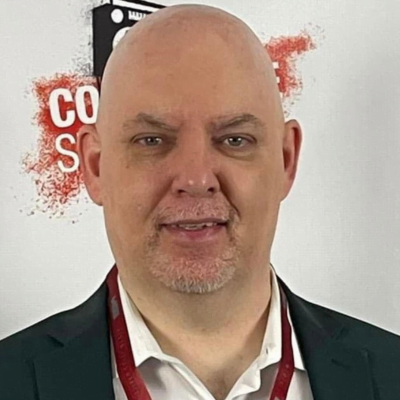
I learned last week that WWE President Nick Khan was on ‘What’s Your Story?‘ hosted by Stephanie McMahon. The WWE/Fanatics show does a fantastic job featuring interesting stories and lessons with WWE superstars. For someone like myself who loves learning more about business, I knew I had to watch the episode because Nick always relays pearls of wisdom for folks in leadership circles.
I’ve been a fan of Nick Khan since 2016 when we first met during his time at CAA Sports. One of the most impressive things about him is that despite his position and stature, he’s very prepared and accessible. Anytime I’ve reached out over the years with a question or a comment, he responds. Most of the time, quickly. In fact, I emailed him last week to let him know that I enjoyed the episode, and within an hour or two he responded.
As simple as that sounds, many executives don’t do it. I’ve been guilty of that mistake myself. If the leader of the WWE’s billion dollar business can make time to respond with everything he has going on each day, there really isn’t an excuse for anyone else.
A fun story, in 2016, Nick reached out to introduce himself, and foolishly, I didn’t answer. A month later I was at media row in San Francisco during Super Bowl week when Scott Shapiro waved me over. He said ‘JB, you need to get back to Nick Khan. He’s good people. You’ll enjoy talking to him’. I told Scott, ‘I just started building a sports radio consultancy, and I thought it was another agent asking me to help them get their clients hired. I’ll follow up.’
I emailed Nick, told him I saw Scott, and offered to find time to chat. Less than an hour later I had an email back and a lunch meeting set for the next day. Nick and Matt Kramer joined me at a local restaurant. Matt and I worked together on a prior radio deal in SF so we knew each other a little bit, and after the early introductions and pleasantries, I asked Nick ‘how can I help you?’
Nick was very straight forward, sharing in great detail what he knew of my career, character, and skill. He knew things that made it clear he had done his homework. I appreciated his style and preparation. He then shared specifics of a project CAA Sports was working on, explained the challenges and opportunities involved, and told me he’d like to find a way to work together if the project came to fruition. A month later, I was in CAA’s New York City office for a video conferencing meeting with Matt and other CAA execs in Los Angeles. We discussed a few next steps, and I then waited for further feedback.
The project, which would’ve made noise across the industry, didn’t materialize, but the dialogue with Nick didn’t end there. He bought a few tickets for CAA employees to attend our first BSM Summit in Los Angeles in 2019, and since then, Nick, Chris Legentil and the WWE have become a partner of the BSM Summit. None of that happens if I don’t answer an email and take a meeting. It’s one of the best lessons I’ve learned since becoming a business owner in 2015. How they run their business makes it easy to encourage my son Dylan to get better at his craft to one day explore a future with WWE digital.
My story aside, you’ll learn a lot during Nick’s chat with Stephanie McMahon. He offers his views on effective leadership, the principles that shape successful careers, why he’s an avid reader, how it helps him in business, plus he discusses the changing landscape of the media business. I’ll cover some key takeaways in this article, but if you have an hour, watch the episode. Nick’s comfortability with Stephanie McMahon and her ability to lead him into personal and professional discussions makes for a great conversation.
Passion vs. Job
Nick Khan draws a sharp distinction between having a job and a career. A job, he suggests, is what pays the bills. A career is a lifelong pursuit fueled by obsession and passion. It’s why he sleeps less than 5 hours per day and works seven days per week. He loves what he does.
“If you’re career-oriented, you have to be obsessed with it every day for decades.” — Nick Khan
Most who work in TV, radio, podcasting, advertising, etc. do it because they love it. They can’t envision doing anything else. Winning in the media business is difficult to accomplish if you treat it as a job rather than a career.
Credit and Blame
When the team succeeds, credit goes to the entire group. If they fail, it’s the leader’s responsibility. That’s Nick Khan’s philosophy. It’s built around accountability and teamwork. He tells Stephanie that he and Paul ‘Triple H’ Levesque fail every day. It’s why his use of the line, ‘the clock strikes midnight and resets for a reason’ is perfect. No matter how good or bad a day was, it’s over. The key employees are those who wake up the next morning ready for a fresh start.
Nick explains that by creating a culture of honesty, employees are less likely to be afraid to make mistakes and ask for help. If someone admits a mistake and needs support, Nick now considers it ‘our problem’. If they say nothing and screw up, he says “you better f*****g fix it or it could affect your tenure.”
Nick also believes it’s important for leaders to genuinely care for their people. As he tells Stephanie, “In order to lead the people, you’ve got to love the people.” True leadership he says happens when no one is watching. Actions come from integrity rather than a desire for recognition.
Risk-Taking and Resilience
Risk-taking is essential for growth in Khan’s opinion. This is the part of the conversation I enjoyed most. I was always comfortable taking risks and didn’t let outside noise influence my decisions. Too many leaders worry about outside opinions, which I believe shows a lack of confidence.
During my programming days, if I made a move that raised eyebrows, others would ask me ‘what if it fails and you get fired?’ I heard that a lot when I put Joe Fortenbaugh in mornings and John Middlekauff in middays in San Francisco despite neither having done radio full time. Those guys had passion and an ability to make people think. What they did or didn’t do previously provided no guarantees for the future.
I believed then and still do that a company will replace you if they can find someone better who costs less. It’s the leaders job to be great and deliver results, and you can’t hit homeruns without taking swings. My outlook was always, ‘if I get fired, I go down doing what I believed in, and I head back to NY to spend more time with my son. Either way I win.’
Nick explained how he empowers the creative team to program for the masses rather than company critics. He believes that if the product is good, the money and the ratings will follow. When asked about finding strength in resilience, he quotes Game of Thrones: “What do we say to the god of death? Not today.” He also shares why being an outsider provides extra motivation to achieve.
The Future of Media is Global
Looking ahead, Khan agrees with UFC’s Dana White that we’re moving toward a world dominated by a handful of global platforms. Netflix operates that way now, and Khan and White believe the landscape will evolve to 5-10 platforms serving the entire world. The advantage is being able to expand the audience, and having a consistent interface available everywhere you go.
Stephanie mentions how Dana White has started exploring blockchain technology by putting Power Slap content on V Chain. Khan credits White for seeing around the corner before others do, pointing out that he was early to the game as well on podcasting. He also draws parallels between the growth trajectories of WWE and UFC.
- WWE moved from niche channels like UPN and Spike to major platforms like NBCUniversal and Netflix.
- UFC evolved from being labeled as “human cockfighting” to a global phenomenon on Disney-owned ESPN.
Copy the Best, Avoid the Worst
Whether in wrestling, boxing, or MMA, Khan sees star power as central to success. He praises talents like Cody Rhodes and CM Punk who have taken risks and built strong personal brands. Having been an agent for Manny Pacquiao and James Toney, he knows how to manage difficult talent. When people suggest that certain wrestlers or broadcasters are hard to work with he reminds them that they’re a walk in the park compared to Toney and Pacquiao.
His formula for success?
- Follow the NFL’s best practices.
- Avoid boxing’s missteps.
- Keep earning your success — every day.
Barrett Media produces daily content on the music, news, and sports media industries. To stay updated, sign up for our newsletters and get the latest information delivered straight to your inbox.