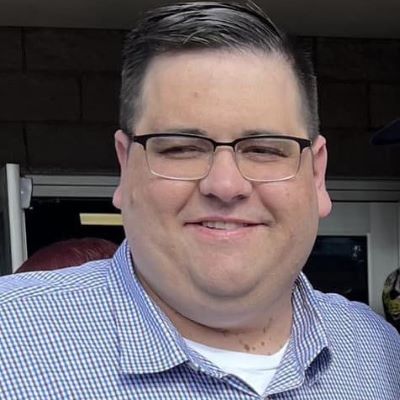
Clay Travis has spent the better part of two decades building a media brand rooted in opinion, preparation, and an unmistakable point of view.
Late last year, the OutKick founder added another chapter to that story with the release of Balls, a book that examines the rise and fall of “woke” culture in sports while tying those cultural shifts to the outcome of the 2024 presidential election. The book followed earlier works, Republicans Buy Sneakers Too and American Playbook.
That momentum has carried into 2026. On Thursday, Travis announced that The Clay Travis & Buck Sexton Show will soon join SiriusXM Triumph, further expanding a program that already reaches millions through terrestrial radio, podcasts, and television.
Since partnering with Buck Sexton following the death of Rush Limbaugh, the show has steadily added affiliates (reaching 555 stations now), downloads, and platforms while leaning heavily into unscripted, real-time conversation.
In the wide-ranging Q&A below, Travis discusses the writing process behind Balls, the relationship between writing and broadcasting, the challenges of live radio, his growth in the news/talk space, and what comes next as he approaches full free agency in 2026.
1 on 1 with Clay Travis:
Garrett Searight: Take me through writing the book from your perspective. How does the process of putting a book like Balls together go from “I have an idea” to completion?
Clay Travis: I had a great editor — Alex Pappas at Hachette. I highly recommend him. He loved the idea of telling the story of how Trump came to win in 2024 through the prism of sports. Alex and I met for coffee in November after the election happened, we got a deal done, and the book, believe it or not, was finished by March. The first draft, anyway.
Editing a book takes a ton of time. But I set aside two hours a day to write and cranked away on it until it was done.
I write fast, so that helps. But this one just poured out in a hurry, thousands of words a day at a time.
GS: What are the biggest challenges in putting a book like this — or any book for that matter — together?
CT: The time it takes. I do around four hours a day, on average, of live media — radio, TV, and digital shows. I’m live on radio alone from 12–3 ET every Monday to Friday.
During football season, I’m still on the road a ton for games.
And, remember, I have three kids too! I try to be at as many of their events as I possibly can.
In terms of actually writing, I love it. There’s nothing more satisfying, to me at least, than sitting down and cranking away on an article or a book. There’s no one else involved, it’s just you and the computer screen.
For me, time vanishes when I write, in a good way. I don’t look at the clock. I’m grinding away, and then I look over at the clock and hours have passed. Writing for me is like that, completely immersive. I love every bit of it. If writing paid like radio and TV, I’d only do it.
But, again, it’s super time-intensive to write a book, especially when you write every word yourself like I have for each of my five books. I think the people who write the best pretty much only write, it’s their full-time job.
GS: What was your favorite part of the process?
CT: Getting to see the narrative arc reveal itself as you write.
I never know how my book will end when I start. But about halfway through the book suddenly, you know, it reveals itself. And that’s just magical to me. Then you can go back and rewrite some of your open and it makes it seem like you were brilliant all along, but it’s just that every story in my experience reveals itself in the telling.
It’s been almost ten years since Colin Kaepernick took a knee, for instance. You have the ability to contextualize something like that, or the University of Missouri food strike protest, Caitlyn Jenner’s ESPY, outside of the immediate histrionics of the emotional instant that it took place, which is what Twitter is for, and sit back and consider these issues in a larger perspective.
I was a history major in college. I love reading history. But the challenge of history is sometimes we don’t know the impact of an event for fifty or a hundred years, until after the lives of everyone who lived through it is past. That’s when you can see the tides of history, when the emotions of the present moment fade and the arc of history reveals itself.
This book, I think, does a good job of writing about the “woke” era in sports as it both began, and as the book argues, ended with Trump’s election. In that way it’s a bit of an echo of what we saw in the 1960’s in sports. I wasn’t alive then, but there’s a great line, history doesn’t repeat itself, but it echoes. I think the woke era of sports we all lived through was the echo of the 1960’s.
Now, I didn’t grow up in that era at all. I lived through the Jordan era of sports, the 1980’s to the early 2000’s. My entire generation of sports fandom was about how awesome sports were and how unifying they were. Michael Jordan and Tiger Woods, I’d argue, really defined that era. Their overarching ethos was, “Republicans buy sneakers too,” which was the title of my prior book.
And I think this book, Balls is sort of a natural trilogy. Republicans Buy Sneakers Too was arguing that we were headed to a bad place in sports. American Playbook gave a roadmap for how to get out of it, and I think Balls tells the story of the triumph of sanity and the rejection of woke identity politics, not just in sports, but in the country as a whole.
Balls opens with that moment when Lia Thomas won a women’s swimming title, what I call the high-water mark of woke sports, that moment in the spring of 2022. I think that Trump’s election in 2024 represented a fundamental repudiation of that event. The thesis of my book is that swim event unlocked the tidal wave of history, which Trump rode to his election victory.
GS: Many folks in the industry have shared that being a good writer has helped them be a good radio host, too. Do you feel similarly?
CT: Yes, 100%.
I tell every kid who asks, and a lot of them ask me now that I’ve been doing this for twenty years, how do I work in sports media? I tell all of them to start with writing.
You’ve seen many sports media figures go from writing, to radio, to TV. I’ve said it before, but Tony Kornheiser was my role model in sports media. I wanted to be good at writing, radio and TV like he was. I think I’ve done that now. But he was the pioneer, the guy I emulated.
You never see anyone go from TV, to radio, to writing, because they’re going from the easiest medium — TV has tons of people trying to make you look good — to the hardest medium.
If you can master writing, which is the hardest of these three disciplines, then you can do radio and TV too.
Now each discipline requires commitment because what works in TV may not work in writing, but I think TV is by far the easiest of these three. I think the only way you can be good at all three is with a foundation of writing.
Ultimately what leads to media success is original thought. And writing, at least writing that people want to read, is founded on original thought.
GS: What “muscles” does writing exercise that working in radio and TV don’t?
CT: A good writer has to build the entire story by themselves. You are in charge of the entire narrative, for better or worse. The cursor blinks until you make it move. In radio and TV someone else turns on your mic or the camera, you turn your computer on, no one else does.
Ernest Hemingway’s metaphor about writing using an iceberg is perfect. Good writing only shows the top of the iceberg, but the foundation has to be there. Most of the iceberg you never see. But if there’s no foundation there, you can’t fake writing.
You can fake TV.
Lots of guys and girls who do sports don’t even watch the games. They read a teleprompter and give a glib take on an athlete or a sport.
If someone doesn’t do their homework, they get exposed in writing. Radio too, because both mediums have expansive terrain and require depth of knowledge to do well. TV is much easier to fake. I don’t think you can fake writing or radio.
Doing radio and writing means I’m ready to talk about anything when I sit down to do a Fox News hit. Lots of times I don’t even know the particular topic and I almost never know the questions in advance. That’s not because I’m not prepping, it’s actually the opposite — because I’m always prepping.
I do three hours of radio a day and am active on social media and with OutKick content all day long.
If I’m not ready to talk about a top story on TV, that’s my fault, not a producer’s or a TV host’s. I remember when I first started doing TV with Fox Sports back in 2013, Charissa Thompson, who is one of the best hosts in TV, leaned over before we went on air to make sure I had been told the topics in advance. I told her, “Ask me anything, I’m good to go.”
She loved it.
That’s radio preparation.
Good radio hosts are always ready for TV. Now we might not be that good looking or dress ourselves well or look at the camera correctly — all those things matter too — but the actual talking? We’ve got that down.
If you told me you can do an entire TV show off a teleprompter or not have a teleprompter at all, I’d pick the latter. I suspect most good radio hosts would say the same.
GS: How much does having the largest news/talk radio show in the country help in promoting the book?
CT: Ha. Immensely.
Our Clay and Buck audience reads. Authors beg to come on our show because when we have guests on, they buy the books. Not many shows can say that.
Fox News is also a monster when it comes to selling books. The combo of radio and TV is the killer app here.
But the reality is unless you’re John Grisham or George R.R. Martin or Michael Lewis, most people don’t write books for money. It’s hard to sell enough books to make a ton of money, especially now. I’ve donated my book money, both of the last two, to charity.
The books aren’t about money. It’s about getting the stories out there, not just for the present moment, but hopefully for the years ahead when historians try to make sense of our modern era.
I’m jealous I won’t get to read the history being written about the present day a hundred or two hundred years from now. That’s what I love about history — it’s a collection of the best stories from all of human history.
I don’t fear death at all, but I do regret all the stories I’ll miss in the future.
GS: How do you feel you’ve grown in the news/talk genre since being partnered with Buck Sexton following the death of Rush Limbaugh?
CT: I think assessing that would be for others to do, for better or worse. I’d like to think I’m continuing to get better at all my jobs — certainly that’s the goal. I’ve told my wife that if she thinks I’m not performing at a high level, to let me know. She’ll see it. Because I think it’s very hard for people in our industry to self-assess. And the more success you have, the more people line up to tell you that you’re awesome.
I’d like to walk away still with my fastball. That’s hard to do, but it’s my goal.
Now what I do know that the data reflects is we have way more listeners today than we did when we started Clay and Buck back in 2021. We’ve added hundreds of new radio affiliates, the podcast and the podcast network get tens of millions of downloads a month. We just added satellite radio, which starts on channel 123 on February 9th. There will be three hours of video of the radio show starting this year.
Revenue for the show and advertiser demand are great. Our bosses want us to sign long-term contracts. Those are metrics that are tangible and they’re all good.
Personally, I think we have the smartest live show in media, irrespective of political perspective.
I really do.
If you listen to us for three hours, you might not agree with us, but all of our facts will be correct. We will have a high-level discussion about current events in the country and it will be completely unscripted for three hours, and we will adjust on the fly for whatever news story develops.
Truly, anything can happen now more than ever, and we are ready to talk about it in real time.
It was an awful story, but we were live on the air when Charlie Kirk was assassinated, the Afghanistan terror attack when our troops were departing the country, school shootings — you name it. We’ve been live on the air talking about those events in real time.
There is no script. It’s live, visceral reaction in real time.
And unlike a taped podcast, for instance, all of it requires hitting the clock correctly, and getting the live reads done. A guest may miss their hit and you have to pivot and fill that time slot when you’d been expecting to be asking questions. It’s a big show — three hours with no safety net every day talking about the biggest and most impactful stories, with often the biggest and most impactful newsbreakers, live every day.
And we have a lot of fun too. Buck and I really get along well and I think the audience sees that.
Plus, the audience experiences our lives.
When we started, Buck was single. Now he’s married and has a baby. Five years ago I had a young family. Now my oldest son is going to college this fall. The audience experiences your life with you. Neither of us is very different off the mic than on it.
It’s funny — when I started in radio my wife couldn’t listen because she was so afraid I would say something that would get me fired. She’d tell me after shows, “You can’t say that!” But I think for better or worse, I have no filter.
I say exactly what I think.
Earlier I was talking about questions on TV. I’d rather not know the questions in advance because I can’t act. I’m the worst actor if you tell me to memorize any lines. They used to make fun of me for it when we would do Fox Bet Live skits promoting the show. I can’t remember the lines. I can’t act at all.
But if you tell me to just honestly react to something, I think I’m as good as anyone in the country at that.
GS: Where do you feel like you can still improve and grow in that space?
CT: I think I can be more efficient. I’m probably doing too much. I work really hard and I basically work all the time. I could probably do less, and by doing less be better at what I do.
I’ve been in media for 22 years and I would say that every year for those 22 years, I’ve done more than I did the year before. I’m 46 now. I feel good, and feel like I can keep doing more. But will that be the case when I’m 56? I have no idea.
In fact, if I were predicting for you now, I’d say I’m going to go hard for ten more years, and then I may retire and travel the world and be unreachable. In a decade my kids will all be out of college, basically.
My wife says I won’t do it because I love what I do too much, but at some point, I may just toss my phone as far into the ocean as possible and be unreachable for a few years.
There are lots of places in the world I’d like to see. I haven’t been to Asia or Africa. There are a ton of European countries I’d like to visit. Spending a few months in Italy doesn’t seem like it would suck. I loved Australia. I’d like to spend more time there, spend a few months going around Asia.
I feel super fortunate. Once we sold OutKick, I was in a position where I didn’t have to work anymore.
I love my jobs, but I’m not doing them anymore to pay a mortgage or put my kids through college — that’s taken care of. Now it’s just a challenge to try and figure out what the most efficient and effective thing I can do with my life is to help make the country as fantastic as possible for as many people as possible. That’s my motivation.
GS: Last year, it was highly publicized that your contract was coming to an end. Where do you sit now that the calendar has turned to 2026?
CT: When I sold OutKick to Fox in June of 2021, they got me for five years as part of that acquisition. It’s been an awesome five years, but yes, come June of 2026, I’m not under contract with anyone for anything.
I’m a complete and total free agent, which I haven’t been for a very long time — 20 years, I think.
Having said that, lots of good things are coming. I’m working on a lot behind the scenes. As I said above, I’m not retiring.
What I’m working on will be coming out in the months ahead, but suffice it to say, if you love me, you’re going to be very happy. If you hate me, you’re going to stay miserable, because I’ll be even more visible than I have been.
GS: I’ve always wanted to ask you this two-part question.
1) When you told CNN’s Brooke Baldwin in 2017 that the only things that have never let you down are the First Amendment and boobs, what did you mean? Some boobs are fake, Clay! You’ve never been let down by boobs?
2) What would it take for you to appear again on CNN?
CT: I can’t do CNN now because of my Fox contract. To be fair to them, they’ve reached out a bunch over the past couple of years asking me to be on, so I’m not banned there anymore. Fox talent just isn’t contractually permitted to do CNN or MSNBC.
I’m sticking to my guns here — boobs have never let me down. Heck, I don’t even buy the concept of “fake boobs.” If it’s inside the skin, it’s real. You don’t say someone who got a knee replacement or a hip replacement has a “fake knee” or a “fake hip.” If it’s inside the skin, it’s real.
The same is true with boobs.
As for the First Amendment, it’s still the most important right we have in the country. And I’ll keep fighting for the marketplace of ideas, as hard as I can, for the rest of my life.
Barrett Media produces daily content on the music, news, and sports media industries. To stay updated, sign up for our newsletters and get the latest information delivered straight to your inbox.