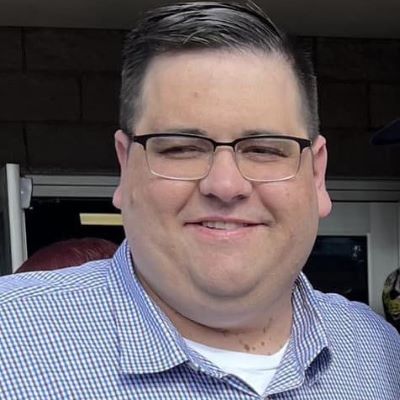
Mary Sandberg Boyle didn’t set out to run one of Chicago’s most storied radio stations. She just kept showing up, working hard, and saying yes. Today, she serves as Vice President and General Manager of WGN Radio — and her path to get there was anything but conventional.
Mary Sandberg Boyle climbed steadily from being the personal assistant to a radio legend to producing some of Chicago radio’s most recognizable voices. Then she attempted a pivot few in her position had tried — moving from programming into management.
No road map existed for that transition. So Mary Sandberg Boyle built one. Volunteering for responsibilities outside her role. Raising her hand at every opportunity. And speaking her ambitions out loud until the right doors opened.
She leads WGN Radio today with the same work ethic her parents instilled in her. No entitlement. No waiting for praise. Just doing the work. She has also become a vocal advocate for the next generation of media leaders, particularly women, and for the role local radio plays in keeping small businesses alive in communities across the country.
To conclude our series celebrating Women’s History Month, we asked Mary Sandberg Boyle if she ever felt as if a pathway to management existed when she started. We also asked what advice she’d give to aspiring leaders. And how an early work ethic has helped her to where she is now.
Garrett Searight: Mary, start me off by going back to the start of your career. When did you know that you wanted to be in the media business?
Mary Sandberg Boyle: When I was a little kid, when I was 9, my sister and I had a radio station, and we did fake radio shows at our house. “KMS Radio” is what we called it. It was Katie/Mary Sandberg, and the only reason why it was lettered that way is that I had to put her name first in order to get her to play radio with me.
But then, by the time, I was in high school and picking a college, I really didn’t have a lot of direction. I was a communication major and studied radio in college, and interned for Kevin Matthews. And I was a talk radio fan. I thought it was the greatest thing ever. But had no idea that I could work in radio as a career. Even though I had interned in it. I was working a regular job after I graduated, because I needed health insurance. Because, back then, once you graduated, you couldn’t just stay on your parents’ insurance.
While I was working for a food brokerage firm, Steve Dahl said on the radio that he needed an assistant. My dad heard it, and I heard it, and he said, “You should apply for that.” And I said, “I’m not going to apply to something I heard on the radio.” But I did, and I got that job, and then I was working in radio.
And even when I was working in radio, I still didn’t know that that was going to be my career. And here I am ever since. It wasn’t anything I planned for, even though I studied for it and loved it my whole life.
GS: When you first got into the business, did you feel like there was a pathway for you to be an executive in the media space?
MB: Absolutely not. I wasn’t even thinking further than what the next day brought. As I said, I interned for Kevin Matthews, and then I worked for Steve Dahl. Shortly after starting with Steve, I was hired as a personal assistant, and then he and his producer decided to part ways. And I became his executive producer very quickly after I started. I was working for a guy I grew up idolizing, pretty quickly. And I thought, “It doesn’t get any better than this! Who would want to do anything else?” That’s how I felt.
I had a meeting — my first and only employee review — a year into that job with our VP of Programming, Drew Hayes, at the time at WCKG. He told me — and I was young — “You should go into management, because you’re very good at handling talent.” I looked at him, and I thought, “This man is crazy.” Any of the managers I knew walking around were all older guys wearing suits. It seemed like no fun, not anything like the programming side. Why would I want to do that? I really liked working on the programming talent side.
So, file that away — that’s about 25 years ago. I kept working on shows and never thought about it again. I continued down the path of being on the programming side. And I went from Steve Dahl, stayed with him for quite a few years, then I was with B96, and then I worked with Steve Cochran at WGN. We also launched a morning business show at WGN called The Opening Bell. That’s when, about 10 years ago, I started thinking, “Maybe I don’t want to just always work on a show. Maybe I should be thinking about doing something more.”
That’s when I just started saying to my managers at the time, I think I might want to start doing something more. But there’s no path to go from being an executive producer to management. It doesn’t exist, really.
GS: And so you built that path.
MB: I built the path. I just kept saying it out loud, to anyone that would hear it. Not in an annoying way. I’d mention it when it would come up. I put my hand up when there were opportunities. We had a Director of News and Operations, and when she’d go out of town, I’d say, “Hey, put me down as the person that handles the call-outs if people are sick. I’ll handle the scheduling.” I could see where I was already filling in those gaps when that person wasn’t available.
Then one day, she got an opportunity and left. And I put my hat in the ring for the position. It was actually a little bit difficult for me to get that role because my career has always been in Chicago, and I knew everybody. Everyone I interviewed with for those roles knew me as always being an executive producer, and they weren’t sure if I was going to make the leap. They wanted to use someone they knew had always been more of an administrator, had already done that kind of job. So it was a longer process than it probably needed to be.
But they took the “risk” — I say that with quotes — because I think I was proven, and I adapted very quickly. A few months into that role, our company was acquired. They got rid of all of our management and made me the interim general manager, and then very quickly after that I earned the role as general manager, and then I became a vice president within the year, all earned under our new ownership.
GS: Who are the people who influenced you the most throughout your career?
MB: Well, before anything, it starts with how I was raised. My parents raised us to be really hardworking. We aren’t entitled, we expect to come to work and work hard, and we don’t do anything for praise or accolades. I think that foundation is really important when you’re setting yourself up for success, and then treating people well.
I’ve been super fortunate that I worked for the most talented people you could work for — Kevin Matthews, Steve Dahl, and then getting to WGN. Even in management, I get to work with Bob Sirott, John Williams, Wendy Snyder, Lisa Dent — just incredibly smart, brilliant broadcasters who understand how to communicate to listeners, but also treat people really well that they’re working with. And that’s something you don’t find with everybody in the business.
They also understand that there’s a business side to this. There are clients and that relationship and how important that is.
GS: When you sit down and think about the next generation of leaders in the radio space, what do you say to those who want to someday be in your shoes, who want to hold executive roles and help lead and manage brands?
MB: I get it, and I’m really excited about it. I think this is probably historically how it’s gone — management came up from the sales side. That was the track. And I think no one would argue that not a lot of general managers come up from the programming side.
I like to talk to people on the programming side about how you actually know more than you think you know — and could go up this way. But you have to be more vocal about getting involved and asking more questions about what’s going on in the sales process. Or involve yourself more and get involved with clients, so that you’re ready for the part that you need to understand in order to be a general manager.
And especially if I’m talking to young women, that part is inserting yourself. I think they’re more eager and more willing to do that work than maybe we were when we were younger, and it’s really exciting. They have better models now. There are more women in management for them to model after. And they’re also more encouraged. Networking is easier to access with social media. They can reach out to anybody they want to.
You won’t always hear back, but I answer every single person who reaches out to me on LinkedIn or Instagram. I think the world is so open that you can get a lot of feedback. That’s something that was a little more difficult 30 years ago. They’re really set up for success now.
GS: If there’s anything I didn’t ask you, or anything you want to include or share, I’ll give you the floor.
MB: Our business gets a lot of attention these days for whether the messaging is being scripted, or if there’s pressure from the people that own you to lean one direction or the other. I don’t think we get enough credit for keeping local businesses — meaning your local construction companies, plumbers, mom and pop restaurants — in business. Because we’re an affordable way for them to advertise and reach their local community.
I just don’t think people give enough credit to that part of the good that we do in our business. We keep those businesses thriving. Your local carpet cleaners, et cetera. We’re very invested in our communities that way, and I just wish that everyone recognized the importance of that. And how it’s really our pride and joy. It makes us happy and fuels us every day to see those local businesses thrive. It’s just important to us.
Barrett Media produces daily content on the music, news, and sports media industries. Sign up for our newsletters to stay updated and get the latest information right in your inbox.