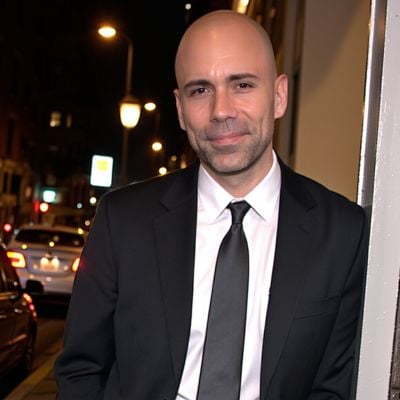
Joel Gouveia wrote a terrific piece this week in The Artist Economy called “Good News: The Hype Machine Is Dying.”
You should read it, subscribe to his Substack, and absorb what he laid out about the music industry hype machine — a place full of meetings where people say “content ecosystem” until someone loses the will to live.
Joel’s perspective is honest, informative, and accurate. I give it my full Phil of the Future co-sign.
He breaks down the retail and chart history of the music business. As somebody smart once said, if you don’t know history, you are destined to repeat it.
Challenging The Chart
Before SoundScan, music charts were not really charts. They were educated guesses wrapped in industry politics. Record companies bought back their own records to inflate numbers. Retailers had bias, and some stores reported whatever they wanted. Additionally, Tipper Gore didn’t want N.W.A. in the hands of a 13-year-old Phil Becker, so we couldn’t have them showing up as too popular.
Where Joel’s article really lands is in showing that we are now living through the digital version of that same manipulatable moment.
Like the candid executive photo from a label dinner, the music business has become addicted to numbers that look impressive in screenshots. Unfortunately, those numbers fall apart under the weight of one of my famous questions as a former corporate PD:
Did real people actually care?
Spotify inflates monthly listener counts. Labels engineer TikTok views. Anyone with a budget can purchase YouTube numbers — ask me how in a DM. Fake bots stuff comment sections, and just like my face in CapCut, someone is cosmetically enhancing those follower counts too.
Joel is asking the smart question: Did we build a new version of the old chart flub? Did the business just make it prettier, give it a dashboard, add some Spintel, and create a place to ruminate over Luminate?
For radio programmers, this should not be discouraging. In fact, I find it liberating.
Programmers can now stop asking, “Is this big online?” and start asking, “What kind of big is this?”
Because there is real big, fake big, paid big, bot big, “they are doing our awards show” big, and “we paid a mixer to do a Fleetwood Mac mashup and now everyone in Topeka thinks this is a hit” big.
Teach Versus Tell
For the 100-plus PDs I’ve had the honor of leading in my career, I’ve always preached that there is a massive difference between exposure and intent.
Exposure is a view. Intent, however, is a save, a search, a completed stream, a ticket purchase, a repeat listen, or a 13-year-old Phil Becker buying a Raiders Starter jacket because MC Ren had one.
That does not mean digital data is useless. Radio should not ignore TikTok, Spotify, YouTube, Instagram, retail charts, or streaming charts. But programmers should ask better discovery questions of their favorite record rep. I smell a new Barrett Media award in the works.
Who is engaging? Where are they engaging? Is it passive or active listening? Is it local, regional, national, or global? Or, is the song being completed or skipped? And why was it odd for a 13-year-old Phil Becker to wear an African medallion because he wanted to be like Chuck D?
James Blake Put It James Bluntly
James Blake publicly called out the music industry in a viral post, saying:
“[You] can’t trust a comment section ’cause it’s full of fake fan accounts saying ‘omg their voice’ to create bandwagon effect. Can’t trust YouTube numbers because labels buy them. Can’t trust streaming numbers because labels pay for bot farms to drive discovery… If you’re an artist, remember that in 2026, there’s not a single part of the system that isn’t faked. You’re probably doing better than you think.”
So, what data can radio trust moving forward?
If a song is supposedly exploding but nobody in your market is searching for it, Shazaming it, streaming it, using it, talking about it, or reacting to it in research, proceed with caution: Slippery When Wet. As in the Bon Jovi album my parents thought I bought, when it was really Ice-T’s Power hidden inside the cassette case.
What Radio Can Trust
Trust multiple signals, not one. A song with TikTok velocity, streaming completion, local traction, and audience familiarity is a very different animal than a song with one unclear metric and a hyped-up label blast using the word “undeniable” in red and all caps.
Trust passion more than reach. A smaller, intense fanbase is often more predictive than a giant, passive number. Ten thousand people who care are worth more than ten million people who were merely exposed to a song while scrolling with half a thumb and no emotional investment.
Trust your ears, but not only your ears. The old programmer arrogance was, “I know a hit when I hear one.” As a two-time A.I.R. competition winner, I do love saying that.
But the new programmer mistake is, “The internet told me it is a hit.”
The future belongs to the programmer who has taste, can hear, reads, questions, verifies, and still makes a brand-fit decision.
And please, for the love of all things still human — the irony that the guy who created AI Ashley wrote that is not lost on me — stop worshipping AI hype decks. A label presentation is not a burning bush. Yes, I grew up on Vacation Bible School and The 2 Live Crew. It is sales material.
Good Versus Great
Radio’s advantage has always been that it is free to listen to and built on an audience’s trust in the skills of a great programmer.
A great programmer doesn’t haunt every artist showcase, sneaking cocktails out of frame before the GM spots them next to the meat-and-cheese tray. A great music programmer understands the difference between a magical musical moment and a music industry data dump.
Joel Gouveia explains in his piece that the hype machine is dying because the audience is getting smarter, the fraud exposure is getting louder, and the tools are getting better. Moreover, the same industry that used data to manufacture heat is now being forced to answer to better data that can expose whether that heat was ever real — or just a fog machine paid for from the indie budget.
It is happening in podcast rankings and in streaming. It is also happening in ratings measurement. I encourage all of you in radio to welcome that.
Talented programmers can lead brands through these manufactured moments with accurate data. The real ones know how to read real audiences, not just music meeting metrics. And when they get it wrong, they should admit it.
See medallion reference above.
Subscribe to Joel Gouveia’s The Artist Economy for the full history lesson and more sharp thinking on where music is headed.
Then come back to your station, open your data, question why Jung Kook somehow has more streams in Fort Myers than San Francisco, and remember:
We are not here to chase smoke. We are here to find fire.
Or get fired. But that’s another article from Garrett Searight a few clicks away
Barrett Media produces daily content on the music, news, and sports media industries. Sign up for our newsletters to stay updated and get the latest information right in your inbox.