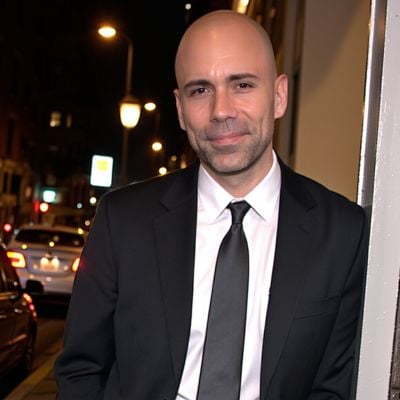
Today, it was announced that I am joining Cox Media Group as Vice President of Audience.
I am grateful for this amazing opportunity, but this is not an article about me. I write those for fun and post them on my fridge.
This is an article about a word in my new title: Audience.
The Department Problem
Radio has spent years building departments: programming, digital, promotions, marketing, sales, research, engineering, and production.
The audience does not care about any of them — at least, not consciously.
They don’t know which team owns the app, who schedules the music, or why someone posted, “What’s your favorite song?” for the 400th time.
They experience one brand — at least, they’re supposed to.
Too often, what they actually experience is a collection of departments completing assignments. A great moment happened on the morning show, so programming did its job. Someone clips it, so digital did its job. The clip was posted, so social did its job.
Then it disappears into the feed without creating new listening, new followers, more sharing, or any meaningful relationship with the audience.
“But Phil, everyone did their job.”
That is exactly the problem. We measured the work, not whether it worked. Fifth Harmony also tried to explain this, but we were distracted by whether “Work from Home” tested with men 35–44.
Creation to Discovery
The first question should not be “was this good on the air?” Instead, it should be “how will someone find it who was not listening?”
“We’ll post it” is not a strategy. Without a hook, a headline, and a reason to care, it’s just content sitting online and waiting to be discovered. Basically, my podcast during its first year.
Discovery to Sampling
Radio can be guilty of creating content for people who already understand the station. We assume they know the personalities, the format, the benchmarks, the brand, and the backstory.
This is going to sound like something you’d hear on your first day at Slytherin, but… new people know nothing!
The industry talks constantly about attracting younger audiences, yet we often present content in a way that requires years of prior listening to understand. Then we wonder why “hey, everyone, it’s [insert interchangeable DJ name here] with some big news” doesn’t stop the scroll.
The only thing it stops is any chance the video had of being watched.
Sampling to Action
After someone enjoys a piece of content, what should they do? Listen live? Watch the full interview? Follow the personality? Subscribe to the podcast? Download the app? Attend an event? Put a Hot Rockin’, Flame-Throwin’ 92 Jamz bumper sticker on their car for the Fantastic Plastic Payoff?
The job is to get attention and move it somewhere — which still requires a memorable presentation between the “stacks of wax.” TM Studios’ new TRIL service is timely proof that sampling starts with real voices, strong writing, and producers who turn sampling into action. Plus, as I make my move to Atlanta, TRIL sounds close enough to Trillville to feel right at home and, fittingly, they deliver “Some Cuts.”
Action to Return
What reason did we give them to return?
People return to patterns: a recurring feature, a useful promise, a personality they know, a story that continues, or a reason to wonder what happens next.
They do not return because we posted “what’s your favorite song?” for the 401st time (honorable mention to “is a hot dog a sandwich?”).
Return to Advocacy
The strongest audience members do more than consume. They recruit.
Hang on. Someone is at my door. Be right back.
Sorry, it was the Jehovah’s Witnesses. Where were we?
Oh, yeah. Recruitment.
They tell a friend, “you need to hear this.”
People don’t advocate for “today’s best music” or “the most variety.” Best is a subjective adjective, and unless you have more songs than Spotify, you do not have the most variety.
Mapping the Full Journey
Here is a useful exercise for every station: choose one strong piece of content from last week and follow its entire path.
Created. Packaged. Published. Discovered. Consumed. Followed. Revisited. Shared.
Where did the path stop?
Programming cannot end at the speaker. Digital cannot end when the post goes up. Marketing cannot stop at awareness. Promotions cannot stop at the entry form. Research cannot stop at measurement.
Ultimately, audience growth is built by understanding what happens next and making sure someone owns it.
Today, “audience” became part of my title, but it should become part of everyone’s job description.
To those who have told me these articles helped renew your belief in radio, thank you for giving me your time, your attention, and your willingness to consider a different point of view. To those who were never quite sure what to make of them, thank you for continuing to read and, when necessary, choosing to grin and Barrett.
Phil Becker
Barrett Media produces daily content on the music, news, and sports media industries. Sign up for our newsletters to stay updated and get the latest information right in your inbox.