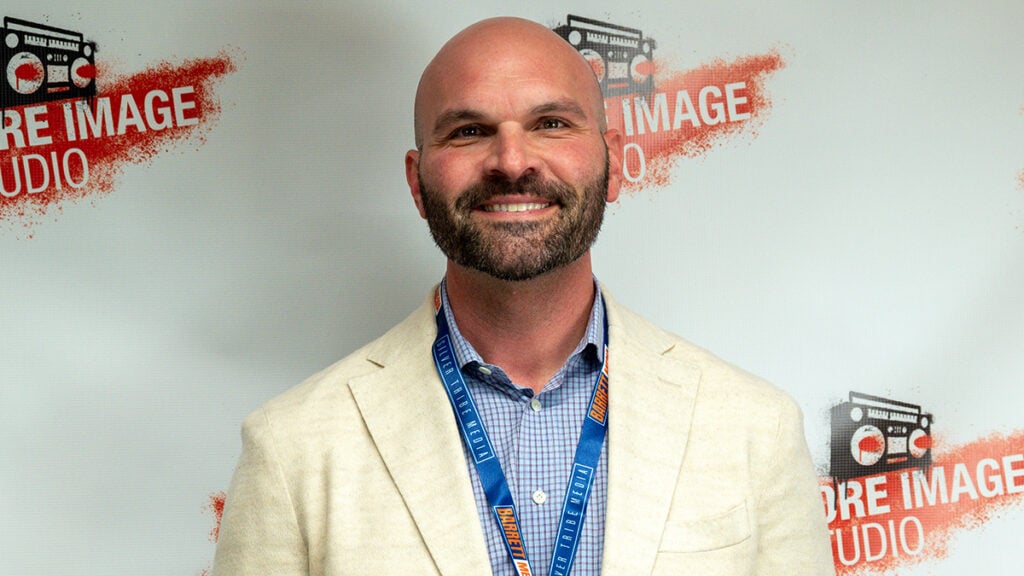
Jon “Stugotz” Weiner’s name is coming off The Dan Le Batard Show with Stugotz as of Monday. Le Batard made the announcement himself, calling the change long overdue.
What We Know: Weiner departed The Dan Le Batard Show with Stugotz after more than two decades alongside Le Batard. His absence has stretched nearly a year, with little public explanation during that time. Le Batard acknowledged the delay was intentional, driven by his own efforts to reverse course. Now, however, the show’s name will officially change when the program returns Monday. The announcement follows Weiner stating nearly a month ago that the two would plan to get together to work something out regarding their standing together.
Dan Le Batard announces the removal of Stugotz name from the program: “This is many months overdue, but I am here to announce, unfortunately, that Stugotz’ [Jon Weiner] name is going to have to come off the show. We’re going to remain a loud, vibrant, colorful thing. But our imaging has gone stale and no longer reflects the show in its current form. So, it’ll be different when we return to work on Monday. With the knowledge that wherever there’s pain, there’s always an invitation to grow.”
Dan Le Batard says he tried any way to prevent removing Stugotz name from the program: “The delay in removing his name and the silence surrounding it has been because I’ve been desperately trying to find all the ways to prevent and avoid it. It’s a costume I’ve been wearing for almost a year now, quietly. It is even itchy or more uncomfortable than the New York Knicks ones I’ve been wearing lately. Feels about as clownish too.”
Dan Le Batard promises to try and continue working towards Stugotz returning: “This is not the correct way to say goodbye after more than two decades with him. He and I will continue to try to figure out a reunion. I remain hopeful he’ll continue to be a part of what we’re doing eventually and know he’ll always be welcome. But I got to admit now we are not what we once were. Pretending otherwise is not loyalty, it’s denial.”
Dan Le Batard on listeners uncomfortable with change: “For those of you who want this show to feel as it always has, familiar and comfortable as your favorite chair, I get it. I understand. But I’m afraid this is where our drift begins. The single surest way I believe to destroy anything or anyone you care about is to stop building with them. Everything from learning to love can die without a commitment to growth. Change is uncomfortable.”
What Remains Unclear: No new show title has been officially announced yet. Additionally, the specific circumstances surrounding Weiner’s original departure remain publicly unaddressed. LeBatard, however, left the door open. “He and I will continue to try to figure out a reunion,” he said.
What It Means: The decision to remove Weiner’s name from the program is much later than it should have happened. Le Batard acknowledged that during his explanation, but is this a sign that the two men agreed to the move? This is a significant identity shift for one of sports media’s most recognizable brands. LeBatard built a loyal, passionate audience partly around the LeBatard-Stugotz dynamic. Nevertheless, LeBatard framed Monday’s change as necessary growth, not surrender. “Wherever there’s pain,” he said, “there’s always an invitation to grow.” We will see if Weiner responds to the move on his FOX Sports Radio program later today.
Barrett Media produces daily content on the music, news, and sports media industries.Sign up for our newsletters to stay updated and get the latest information right in your inbox.
Approaching The Summit is a series of special interviews created in partnership with Point to Point Marketing featuring speakers at the upcoming 2026 Barrett Media Audio Summit in New York City. Follow along with this series as prominent names surrounding the event June 30-July 2 share their insights and expectations for what’s to come in the big apple. The Summit takes place at the SVA Theatre on West 23rd Street. For tickets and hotel room reservations, click here or visit the Summit section at the top of the website.
Matt Moscona is the program director of 104.5 ESPN Baton Rouge and has also hosts his afternoon show, After Further Review, in the marketplace since 2010. Moscona has attended and spoke at the Barrett Media Audio Summit over the past two years, and recently recognized on the BSM Top 20 list for mid-market program directors.
Moscona will be speaking at the event later this month. He sat down with Barrett Media from his office in Baton Rouge, LA.
*Editor’s Note: Answers have been edited for clarity and length.*
John Mamola: What are most excited about in attending and speaking at the Barrett Media Audio Summit later this month?
Matt Moscona: I always go to the summit with the idea of hopefully bringing two or three actionable items back to our radio media group. One thing that I’m be very curious about, which I’m sure will be a focus, is how different groups are using AI. Which is something we implement every day. But I’m just certain there’s got to be people who are doing it better than we are. I’ll be very excited to learn how people are using AI.
A great example, there was one group who used an AI song making app to make a song about Shedeur Sanders falling in the draft. It was awesome. So, I went and downloaded that app and started doing something similar throughout the course of the year. That’s just one example.
As our program director, revenue always interests me. Non-traditional revenue opportunities are something I’m always interested to learn more about.
John Mamola: As someone who has attended in the past, what value does attending the Barrett Media Audio Summit provide someone who hasn’t attended before?
Matt Moscona: The networking aspect is huge. Not only if you’re thinking about different career opportunities in the future. It could be that.
But it’s more so you’re creating a network of like-minded professionals that you can share ideas with throughout the year and lean on each other if and when you need resources. We are trying to implement something similar to Ticketstock in Dallas. The team there in Dallas have been super generous to us. They invited us to come and shadow the whole event. Those are the types of things you wouldn’t have unless if you were at the summit and made those connections.
The networking component is massive. I also think it’s so important to learn what other people are doing successfully. A couple of years ago, I presented our YouTube approach. I still get people that reach out to me that ask me for help on YouTube strategy. Which I’m more than happy to help with.
Similarly, I have learned a lot at that summit from other people who are outstanding at what they do, who I’ve been able to lean on for advice.
I’ll go for as long as they keep having the summit. I feel like I leave for a couple of days every year with a notebook full of actionable items. It’s not similar to a rah-rah event. There’s meat on the bone where I take things that I can bring back to our media group and implement.
John Mamola: What do you hope that people walk away with when you’re on stage participating in the panels?
Matt Moscona: I can speak specifically to the YouTube presentation specifically. I went into that hoping to help people reframe how they thought about YouTube. As far as actually having a strategy and understanding, most importantly, that your YouTube audience is not your radio audience displaced. You are addressing a completely different market that many times does not even know your radio product exists. That was the whole point that I was making.
We post produce 10 hours of radio content every day on YouTube, yet people come up to me, and call me the Saints’ YouTube guy. They have no concept that what they’re watching is a radio show clipped for YouTube.
I’m in a position that’s not altogether unique. It is different that I’m not only our afternoon drive host, but I’m also our program director and publisher of our websites. We now written work component of what we do. I have to not only be a content creator every day. I also have to be thinking strategically about how our company and brand continues to not only exist, but thrive in the digital era.
A lot of the things I’ve learned through a lot of shared ideas from other brilliant people around the country. But what we’ve been able to successfully implement, hopefully I’m able to share some of those ideas with the people in attendance. If you’re an on-air personality, hopefully I can share something that’s worked well for me.
If you’re a programmer or manager, hopefully I can share something that you can take to your home market and implement. Something that’ll help your company thrive a digital era that maybe had considered before.
John Mamola: This year’s summit will be a first for Barrett Media. With three straight days catering to all three different formats of the industry that we cover. Is your plan to sit in on the other two days and see if there’s some nuggets of information that you can apply to your brand in Baton Rouge?
Matt Moscona: My plan currently is to attend the sports day. As I think about it, we do have a news talk format in our cluster which is the only news talk station in our market. It would benefit from learning more about how to gain more market share, but I’m not directly involved with our news talk station.
I’ll be sticking to sports this time, but I can definitely see the value for those who fit both formats. I am open-minded both personally and in my managerial style. I will always try new things, because I never want to be left behind.
So, I certainly think there are things that news talk and music radio do that could be beneficial for me. I’ll be curious to see how this edition plays out. I think the way that this setup is this year is probably a better idea than having it all at one time in one place. Maybe the short side part on my end was not planning to attend all three days. We’ll see how it goes this year, and maybe adjust the future.
John Mamola: You mentioned AI. That likely will be a big topic for a lot of brands on all three days of the summit. What are some other challenges or topics that you hope are a focus during the summit?
Matt Moscona: When I think of some of the presentations that stood out in the past. Ones that have been really impactful for me and our team.
Jason [Barrett] did a presentation last year on the art of interviewing, and that was so impactful. I don’t think many on-air personalities even realize how many critical mistakes they make interviewing, and how much you have hone that skill. That was awesome.
Bruce Gilbert had a presentation a couple of years ago, and he just went rapid fire with items to keep in mind that make a great radio show. There’s always something like that which really resonates with me as a host that I can use. But also as a manager that I can share with the rest of our on-air talent.
I’ll be looking for that presentation this year.
John Mamola: If you had to share a piece of advice for first time attendees to the summit, what would it be?
Matt Moscona: Take notes and ask questions.
I leave every year with a full notebook. You’ll be surprised, but I will continue to reference that throughout the year. Things that I’ve written down. Even things as simple as someone mentioning software, a website, or an app that in the moment sounds really good.
But you’re not sitting there deep diving on that in that moment. Then when you leave you might forget. Absolutely take notes is one. With AI, you can record it and have AI transcribe it plus give you a summary.
Also, I try to sit in the front and my hand is always in the air. I’m surprised by how many people go and maybe don’t want to ask a question. The reason we’re there is to use all of each other as a resource.
So, ask very selfish questions that maybe aren’t good for the whole room, but are good for your group back home. I can’t tell you how many times after a presentation, if something sparks with me and I don’t have the option to ask a question. I’ll run downstairs or catch the presenter backstage to ask my question.
I remember a couple years ago running down Omar Raja who founded House of Highlights. I went and cornered him for like twenty minutes backstage. Then, I pulled out our station’s Instagram and asked him to help me. What do you like? What do you not like? Is that good? What is bad?
We’ve implemented a lot of things from that conversation backstage, which I would never have the opportunity to have if I wasn’t there. Be eager to ask questions. Take notes, ask questions.
Courtesy: Derek Futterman, Barrett Sports Media
Purchase your tickets to the 2026 BSM Summit here, and for more information BarrettMedia.com
Barrett Media produces daily content on the music, news, and sports media industries. Sign up for our newsletters to stay updated and get the latest information right in your inbox.
FOX Sports Radio host and The Volume founder Colin Cowherd shared insights into his process on retirement and the future of The Volume. In an exclusive interview with OutKick, Cowherd shared concepts of scaling back his three-hour daily radio show as a possible move for a new deal with FOX Sports Radio.
What We Know: Colin Cowherd is openly discussing his professional future. At 62 years old, his current FOX Sports Radio deal has approximately two years remaining. He has floated the idea of trimming The Herd from three hours to two in a potential next contract with the outlet. Additionally, he confirmed to OutKick that multiple parties have already approached him about acquiring his podcast network, The Volume.
Colin Cowherd confirms he’s discussed changes to ‘The Herd’ for a potential next contract: “I have thought about, and I’ve talked to Fox about this. About, hey, should I cut it to two [hour show] next contract… Doing a three hour show and some podcasts for The Volume is not that big of a lift. I do think at some point if it worked for the Fox schedule. Hey, maybe I do two hours, not three. That’s reasonable.”
Colin Cowherd on retirement: “I don’t think it’s in the near term. But I would say when I see that seven getting close as the first number [age], we’re probably around the corner.”
Colin Cowherd on potentially selling The Volume: “We have had people [inquire about selling The Volume]. It would have to be the right fit. It wouldn’t necessarily have to be a broadcaster. I think I have enough knowledge in broadcasting, I can handle that side. I don’t need guidance necessarily. It would have to be something that works for our employees.”
Colin Cowherd on what he’s looking for with any potential buyer for The Volume: “I don’t lose sleep at night if I have a bad show. I lose sleep at night because I have 60 employees now with The Volume, and they have families. So, any decision I make, the partner will have to understand that. It will have to be a partner that respects my executive team and respects our broadcasting ability. So, I’m not in a hurry to do it.”
What Remains Unclear: Cowherd didn’t share any timelines in regards to his approach for potentially selling The Volume. He also stated that he’s discussed selling “parts” or The Volume instead of the entire brand with trusted advisors. As for retirement, if he holds to the “seven number” as stated, that means Cowherd likely will remain for roughly another seven years at a minimum.
What It Means: Cowherd is a forward thinker. Always has been, always will be. Surely, he is clearly thinking beyond the next two years. However, his priority remains protecting The Volume’s employees before entertaining any deal. Judging from his comments, he’s in no rush to move on anything. However, by 2028 FOX Sports Radio could look completely different with no Dan Patrick Show and a possible shorter The Herd w/Colin Cowherd. The Volume continues to grow in independent media. Whether or not Cowherd decides to sell could be more of a long term play than his radio program.
Barrett Media produces daily content on the music, news, and sports media industries. Sign up for our newsletters to stay updated and get the latest information right in your inbox.
OWL AI has named Jay Prasad as the company’s new CEO to lead the next phase of growth. The sports AI company is betting on his experience in media and data leadership to scale its live intelligence platform globally.
What We Know: OWL AI has appointed Jay Prasad as Chief Executive Officer and board member. Additionally. the move signals a significant step toward expanding the company’s live intelligence layer across sports broadcasting and the viewing experience. Prasad succeeds Josh Gwyther, who transitions to an advisor role. Founder Jeremy Bloom remains Executive Chairman, guiding long-term vision and strategy.
What They Said: Jay Prasad, CEO of OWL AI: “Every live sporting event generates enormous value that today goes uncaptured — in officiating, production, branding, live experiences, and the fan experience. OWL is building the live intelligence layer that captures it. One platform that turns live video into real-time understanding, deployed across every sport it touches. The technology is already proving itself with leagues and broadcasters, and my job is to take it to the world.”
Founder and Executive Chairman Jeremy Bloom: “When we launched OWL AI, our goal wasn’t only to remove human error in judged and refereed sports. It was to also build the intelligence layer behind every live sporting event. Jay has spent his career scaling category-defining technology businesses at the intersection of media, data, and AI. He is the right leader to help us bring OWL to leagues, broadcasters, rights holders, and live events around the world.”
What Remains Unclear: Any additional specific league and broadcast partnership announcements have not yet been disclosed. It’s also unclear how quickly Prasad’s commercial push will translate into new deals.
What It Means: Prasad brings serious credentials. He previously led Relo Metrics and held founding executive roles at VideoAmp and LiveRamp. Moreover, his background in measurement, data infrastructure, and AI-powered platforms positions OWL for serious commercial scaling. For sports broadcasters and rights holders, OWL’s expanding suite — covering officiating, replay automation, AI commentary, and fan engagement — represents a genuinely new layer of live production intelligence worth watching closely. Moreover, as networks and leagues continue to navigate proper uses of AI for audiences.
Barrett Media produces daily content on the music, news, and sports media industries. Sign up for our newsletters to stay updated and get the latest information right in your inbox.
Ben Stiller is turning his Knicks fandom into film. The actor and filmmaker is directing a multi-part documentary about the New York Knicks for A24 and HBO. He confirmed the news following the Knicks winning the NBA Finals to the Hollywood Reporter.
What We Know: Stiller is partnering with the NBA, A24, and HBO on the project. The documentary will span the full arc of the franchise, from its 1990s era through this year’s championship run. Stiller sat courtside throughout the NBA Finals. He was capturing footage on his phone during the Knicks’ historic title run. The team defeated the San Antonio Spurs 94-90 in Game 5, ending a 53-year championship drought.
What They Said: Ben Stiller (via The Hollywood Reporter): “Obviously I’ve been shooting some stuff on my phone, but it’s kind of gonna be about all eras of the Knicks. There’s a culmination here of something that has been going on for a long time, so it’s super exciting. And it’s great to have had all this access to your team, and we’re gonna probably be shooting a little bit more during next season.”
What Remains Unclear: A release date for the documentary is unknown. Stiller noted the project will come together over the next year, with player interviews still ahead. It’s also unclear how much additional footage was captured during the 2025-26 season. Furthermore, the exact number of episodes or installments hasn’t been confirmed.
What It Means: The New York Knicks run to the NBA Championship is proving to be better than most movie scripts. The NBA Finals viewership figures were the highest since Michael Jordan’s last championship. Therefore, interest for a documentary will be high. A24 and HBO signal this won’t be a standard league creation. Instead, expect a prestige documentary with real creative vision behind it. It will be interesting to see how quickly Stiller, A24, and HBO can turn around the documentary to take advantage of the collective buzz surroudning the championship run.
Barrett Media produces daily content on the music, news, and sports media industries. Sign up for our newsletters to stay updated and get the latest information right in your inbox.
Triton Digital has released its May Podcast Ranker. It showed strong finishes for the likes of Pod Save America and Dan Bongino.
What We Know: News podcasts remained important in the Top Podcasts By Weekly Average Downloads category. Pod Save America fell one place to second behind Stuff You Should Know. The Dan Bongino Show also fell one spot to fourth. The Bulwark Podcast increased its position to sixth, while the Global News Podcast fell to seventh. The Charlie Kirk Show fell out of the top 10, finishing May in 12th. Other news/talk shows in the top 20 included Armstrong & Getty (15th), The Clay Travis & Buck Sexton Show (17th), and Breaking Points with Krystal and Saagar (18th). Making its first appearance in the top 20 was Hey Jonas!, the podcast hosted by the Jonas Brothers.
What the Numbers Show:
Rank
Podcast
Network
Change
1
Stuff You Should Know
iHeart Audience Network
▲ 1
2
Pod Save America
Audioboom
▼ 1
3
My Favorite Murder with Karen Kilgariff and Georgia Hardstark
iHeart Audience Network
▲ 1
4
The Dan Bongino Show
Cumulus Podcast Network
▼ 1
5
On Purpose with Jay Shetty
iHeart Audience Network
▲ 1
6
The Bulwark Podcast
Audioboom
▲ 1
7
Global News Podcast
BBC
▼ 2
8
Love Trapped
iHeart Audience Network
▲ 8
9
The Bobby Bones Show
iHeart Audience Network
–
10
The Breakfast Club
iHeart Audience Network
–
11
Marketplace
American Public Media Group
▲ 1
12
The Charlie Kirk Show
Salem Podcast Network
▼ 4
13
Smosh Reads Reddit Stories
Audioboom
▲ 4
14
Behind the Bastards
iHeart Audience Network
▲ 5
15
Armstrong & Getty On Demand
iHeart Audience Network
▼ 2
16
Betrayal Weekly
iHeart Audience Network
▼ 5
17
The Clay Travis and Buck Sexton Show
iHeart Audience Network
▼ 2
18
Breaking Points with Krystal and Saagar
iHeart Audience Network
▼ 4
19
The Dan Patrick Show
iHeart Audience Network
▲ 1
20
Hey Jonas!
iHeart Audience Network
–
What Remains Unclear: What led to the increase in the Jonas Brothers podcast to vault into the top 20. It is also unclear what led to a slight tumble for The Charlie Kirk Show.
What It Means: While May marked a decline in the cable news ratings, that drop wasn’t as prominent in the podcast genre. Strong finishes from several brands highlight how important the format is to the podcasting space.
Barrett Media produces daily content on the music, news, and sports media industries. Sign up for our newsletters to stay updated and get the latest information right in your inbox.
FuboTV and BIG3 have reached a streaming agreement for the league’s 2026 season. Coverage begins June 20 on Fubo Sports Network, the company’s free ad-supported streaming (FAST) TV channel.
What We Know: Fubo Sports Network will carry 16 live BIG3 games this season, with two games per week. The partnership also includes access to more than 100 archived telecasts from Seasons 6 through 8. Beyond Fubo’s subscription packages, the games will stream free across Amazon Prime Video, Hulu + Live TV, Tubi, Roku, Samsung TV Plus, and several other platforms. Fubo Sports Network additionally reaches viewers via over-the-air stations in nearly 100 U.S. markets.
What They Said: Pamela Duckworth, head of Fubo Studios, Fubo: “BIG3 has made waves across the basketball world since its debut and we can’t wait to bring the hype to Fubo Sports Network audiences for Season 9. Ice Cube is an iconic figure across entertainment and beyond, making him the perfect partner for our growing live sports programming lineup from basketball to combat sports and more.”
Nikki Ambrifi, head of sales & sponsorships, BIG3: “The way fans consume sports continues to evolve, and this partnership allows us to meet them where they are. Together with Fubo, we’re delivering greater reach, deeper engagement and an enhanced viewing experience for both existing and future BIG3 fans.”
What Remains Unclear: No financial terms were disclosed. It’s also unclear whether the deal includes future seasons beyond 2026 or expands BIG3’s presence on Fubo’s primary subscription tier.
What It Means: BIG3 is the 3-on-3 league co-founded by Ice Cube and Jeff Kwatinetz. The league continues to grow its distribution footprint heading into Season 9. The Fubo Sports network is in addition to the agreement the league already has with CBS Sports and Paramount+. The season opens June 20 at Intuit Dome in Los Angeles before touring cities nationwide. For Fubo, the deal strengthens its live sports programming across basketball and combat sports.
Barrett Media produces daily content on the music, news, and sports media industries. Sign up for our newsletters to stay updated and get the latest information right in your inbox.
TNT Sports is adding major names to its NASCAR coverage. The network bolsters its broadcast team for the second annual In-Season Challenge, beginning June 28 at Sonoma Raceway. The additions include a five-week stretch of appearances by ESPN’s Marty Smith, and three appearances by NASCAR legend Jimmie Johnson.
What We Know: Seven-time NASCAR Cup Series champion Jimmie Johnson joins TNT Sports as a studio analyst. He will appear at Sonoma Raceway (June 28), North Wilkesboro Speedway (July 19), and Indianapolis Motor Speedway (July 26). ESPN’s Marty Smith also joins as pre- and post-race host for all five tournament weekends. Notably, Smith recently signed an extension with ESPN last month. His TNT deal is a side arrangement, allowing him to fulfill both commitments simultaneously. Jeff Burton also adds analyst duties for Chicagoland Speedway (July 5) and Atlanta Motor Speedway (July 12).
What They Said: Jimmie Johnson: “Joining TNT Sports is an opportunity that truly energizes me. NASCAR has given me so much throughout my career, and getting the chance to share that passion from a new perspective alongside a fantastic team of NASCAR legends is something I’m really looking forward to. TNT Sports has a long history of bringing fans closer to the action, and I’m excited to help deliver that same level of insight, intensity, and fun as part of their NASCAR coverage.”
Craig Barry, EVP and Chief Content Officer, TNT Sports: “This year, we’re expanding our studio show and adding some of racing’s most recognizable and respected voices to our talented NASCAR broadcasting team. We’re always looking for new ways to create access and bring fans closer to the sport they love. These additions will help us continue to elevate the experience and capture the energy, excitement and culture that make NASCAR so unique.”
What Remains Unclear: TNT Sports has not announced whether Johnson’s role could expand beyond his three scheduled appearances. Similarly, Smith’s specific responsibilities beyond hosting remain undefined.
What It Means: TNT Sports is clearly investing in elevating its approach to NASCAR. By adding Johnson, Smith, and Burton alongside returning voices Dale Earnhardt Jr., Steve Letarte, and Jamie McMurray, it signals a deliberate push to deepen credibility.
TNT Sports Expands Broadcast Team for Second Annual In-Season Challenge
🏁 NASCAR Legend Jimmie Johnson Joins TNT Sports as Special Guest
🏁 Marty Smith to Host Studio Coverage Throughout Five-Week Run
🏁 Jeff Burton to Contribute to TNT Sports’ NASCAR Coverage
Barrett Media produces daily content on the music, news, and sports media industries. Sign up for our newsletters to stay updated and get the latest information right in your inbox.
ESPN secured a new multi-year deal with NFL analyst Jason McCourty before the upcoming season. The agreement keeps the Super Bowl champion exclusively on ESPN’s platforms going forward.
What We Know: McCourty enters his third season at ESPN after joining the network ahead of the 2024 campaign. He regularly appears on NFL Live, Get Up, First Take, and SportsCenter. Following his 2021 retirement, McCourty transitioned into broadcasting, including three seasons calling NFL games. His ESPN role is exclusive, covering NFL programming year-round.
What They Said: Jason McCourty (via X): “Working with great people, talking about a sport I love! Doesn’t get much better! Let’s go!”
What Remains Unclear: The financial terms of McCourty’s new multi-year deal remain undisclosed. Additionally, his specific role in ESPN’s February 2027 Super Bowl coverage hasn’t been detailed. It’s also unclear which studio shows will feature him most prominently during the season.
What It Means: The keyword here is exclusive. ESPN is securing McCourty for their use, and their use only. In an age where streaming platforms are in need of talent to house NFL broadcasts, the word exclusive is key. Good for McCourty, who has performed well in his short time with the network. ESPN has a landmark broadcast year ahead with the network’s first Super Bowl broadcast ahead. Locking him up now signals the network’s intent to build continuity heading into that first-ever Super Bowl presentation.
Barrett Media produces daily content on the music, news, and sports media industries. Sign up for our newsletters to stay updated and get the latest information right in your inbox.
A new global study proves it. Researchers found women are the engine behind live music’s biggest growth wave.
A new global study, titled “Her Frequency,” comes from The Collective and THE·TEAM’s Music group. Researchers surveyed nearly 15,000 fans across 12 markets and 18 genres. The goal: map how women participate, spend, and create value across live music today.
What We Know: Live music attendance hit 159 million fans in 2025, up 5%. Women make up 64% of that fandom worldwide, and 89% typically attend shows with others. Beyond the ticket, 54% spend $100 or more on-site, and 83% drive group decisions as planners, stylists, or coordinators. Five distinct fan segments emerged, ranging from Power Fans to Occasional Fans.
What’s At Stake: Women are projected to control nearly $100 trillion in spending by 2048. Yet only 8% of High-Intent Fans say they spend as much as they want at shows. That gap represents real revenue left on the table for venues, festivals, and brands. Meanwhile, 86% would spend more if experiences felt easier and more rewarding.
What Remains Unclear: The report doesn’t quantify exactly how much revenue better logistics could unlock industry-wide. It also stops short of ranking which fixes — travel bundles, comfort upgrades, social tools — move the needle most. Still, genre and market differences add nuance that brands must sort out.
What It Means: Brands, venues, and artists now have a roadmap, not just data. For years, live music built around men’s habits by default. That tide is turning, and the receipts are already in the room. Marriott, Always, and Levi’s prove what happens next: design for her fandom, not just her attendance.
Barrett Media produces daily content on the music, news, and sports media industries. Sign up for our newsletters to stay updated and get the latest information right in your inbox.