A round of layoffs has been enacted at CNBC as the network works to unify its digital and TV news operations following Versant’s split from NBCUniversal.
The network says that fewer than a dozen staffers saw their positions eliminated. However, it shared that the cuts are more of a reorganization than a downsizing, saying that it plans to add more editorial jobs in the coming months.
”The changes made today are to align CNBC’s newsroom structure for the future, they are not driven by cost cutting,” a CNBC spokesperson said. “We expect to hire more than 40 new editorial roles over the next year across TV, Digital and direct-to-consumer platforms.”
All layoffs related to the reorganization of its editorial department have been completed.
The editorial operations for CNBC are now being helmed by Editor-in-Chief David Cho, who joined the network last year. Cho previously worked in the same role at Barron’s and as the business editor of The Washington Post.
The cuts for CNBC come as Versant prepares to showcase its first-ever financial results next week.
Barrett Media produces daily content on the music, news, and sports media industries. Sign up for our newsletters to stay updated and get the latest information right in your inbox.
The back-and-forth over LeBron James’ wardrobe choices has escalated beyond a simple style critique, as Barstool Sports personality Jason Williams accused Stephen A. Smith of harboring something deeper than fashion frustration during a recent appearance on the “Hoopin’ N Hollerin’” podcast.
Smith recently questioned whether James, particularly while sidelined, should adopt a more polished look when attending NBA games, echoing sentiments about professionalism and presentation that surfaced after the Los Angeles Lakers’ nationally televised loss to the Boston Celtics. However, Williams suggested the repeated commentary signals more than stylistic preference.
“Stephen A. Smith. There’s something so personal with he and LeBron that he’s just going to keep going and going until something crazy happens,” Williams said. “I don’t know what it is. I just think both of them will be better off, maybe not both of them. But Stephen A., I think his life is so good that he shouldn’t be worried about s**t like that, unless it’s so personal that he has to hold on to it.”
Rather than treating the remarks as harmless debate fodder, Williams framed Smith’s ongoing critiques as fixation, arguing that a media figure of Smith’s stature has little to gain from revisiting James’ attire when larger basketball issues dominate the league landscape.
He added that perspective should come with experience, especially for prominent voices who have already achieved professional and financial success.
“Life is shorter than longer,” Williams said. “He’s in the same boat as me, bro. Just live life. The hell with what LeBron and them are doing.”
At the same time, Williams acknowledged the realities of modern sports media. He noted that polarizing superstars consistently drive digital engagement. Mentions of LeBron James often produce audience spikes across debate shows and social platforms. Williams implied that controversy surrounding James almost guarantees attention. As a result, he suggested the topic is unlikely to fade from studio discussions anytime soon.
“Every time he mentions LeBron, just imagine what’s happening to the views and stuff that he’s getting,” Williams said. “That’s never going to stop, but I think his life’s way too good to be worried about little petty s**t.”
Williams also briefly addressed the broader public profile Smith has cultivated, including periodic speculation about political aspirations, and questioned whether someone focused on wardrobe debates would be suited for higher office.
“Stephen A. Smith is a smart human being, don’t get me wrong,” Williams said. “But President? That’s a different level than worrying about what LeBron is wearing.”
Barrett Media produces daily content on the music, news, and sports media industries. Sign up for our newsletters to stay updated and get the latest information right in your inbox.
Star 92.9 in Burlington, Vermont, has announced it has named Adri Stuhr as its new afternoon drive host.
Stuhr joins the station after previously working at country 97.9 WKKW in Morgantown. She was at the station from 2019 until her exit in 2025.
Other stops include time spent in Duluth, Las Cruces, and San Diego, among others.
“Adri is a perfect fit for our Star family and will be a terrific addition to our team on the air, on the street with listeners and in the building!” said Star 92.9 Program Director Mary Cenci. “She radiates an enthusiasm and energy which will be contagious!”
The full Star 92.9 lineup now includes: 5-9 AM: Mike Czarny and Mary Cenci 9 AM-2 PM: Ted Richards 2-7 PM: Adri Stuhr 7 PM-12 AM: Delilah 12-5 AM: Tara Madison
Barrett Media produces daily content on the music, news, and sports media industries. Sign up for our newsletters to stay updated and get the latest information right in your inbox.
Radio lost one of its most recognizable voices this week as longtime Los Angeles personality Uncle Joe Benson died Tuesday, at 76, following a battle with Parkinson’s disease and related complications.
A message posted to the Uncle Joe’s Garage Facebook page confirmed the news, noting that Benson passed away peacefully while dealing with Parkinson’s disease, Parkinson’s dementia and injuries sustained in a fall. The announcement quickly drew an outpouring of tributes from listeners, colleagues and fellow broadcasters who grew up with, worked beside, or competed against the deep-voiced host whose delivery became synonymous with rock radio in Southern California.
Veteran disc jockey Rita Wilde, who shared the airwaves with Benson at both KLOS-FM and KSWD-FM, called him “a radio legend silenced,” to the Orange County Register, adding that she would remember him with love and respect after decades of friendship and professional partnership.
Benson’s radio journey began in 1968 in Dubuque, Iowa, launching a career that would stretch nearly 40 years and traverse some of the Midwest’s most prominent rock stations before he made his mark in Los Angeles. During the 1970s, he worked at outlets including WQFM, WRKR, WZMF and WZUU in Milwaukee, along with a morning stint at WWWM in Cleveland, building a reputation for authenticity and a connection with listeners that transcended playlist trends and ownership changes.
In 1980, Benson arrived in Los Angeles and joined KLOS-FM, where he would spend roughly three decades across multiple stints and become one of the defining voices of the station’s rock identity. Beyond his regular shifts, he hosted specialty programs such as “The 7th Day” and “Local Licks,” platforms that showcased emerging artists and underscored his commitment to the local music scene at a time when consolidation increasingly narrowed the focus of many commercial outlets.
Benson later brought his familiar tone to mornings at KCBS-FM, branded as Arrow 93.1, from 1997 through 2005, and eventually joined KSWD-FM, known as 100.3 The Sound, where he remained until the station signed off in 2017.
Barrett Media produces daily content on the music, news, and sports media industries. Sign up for our newsletters to stay updated and get the latest information right in your inbox.
Stu Burguiere has been hosting Stu Does America for Blaze Media. That’s about to change, with Dave Landau joining the show.
Burguiere has been hosting the program by himself since 2020. Earlier this week, he began teasing the “end” of his show.
“As I’ve gone through the six years, one thing I’ve realized over those six years is that it might be impossible for one man to do all of America,” Stu Burguiere said. “I needed someone else to come in and help me do America on a daily basis.”
However, he revealed that Stu Does America is becoming Stu and Dave Do America in the coming weeks.
“I am happy to be a part of it. It’s hard to just do Dallas, so we’re gonna do America,” said Landau. “I grew a mustache for it, so maybe I thought it was a different kind of show, but I’m excited about it. I’m excited to see what we can do, because America, as we know, is getting better every day.”
Landau is a touring comedian and author. He added that he hopes to bring levity and comedy to the show.
“There is a lot to make fun of … and it’s the only way I feel like you can stay sane,” he said. “Otherwise, you have to focus on the reality. And if you take time to do that, it’s worthless. So the best thing to do is just mock everything. And I’m happy to be a part of that.”
Barrett Media produces daily content on the music, news, and sports media industries. Sign up for our newsletters to stay updated and get the latest information right in your inbox.
We’ve reached the end of week 1 of Barrett Media’s Top 20 of 2025 in Music Radio presented by Strategic Solutions Research. Strategic Solutions Research is celebrating its 20th year providing strategic research, music testing and personality content testing for clients in the US and in 22 countries. Please reach out and give a special thanks to Hal Rood and Kevin Cassidy for supporting the Top 20 series and the entire music radio industry.
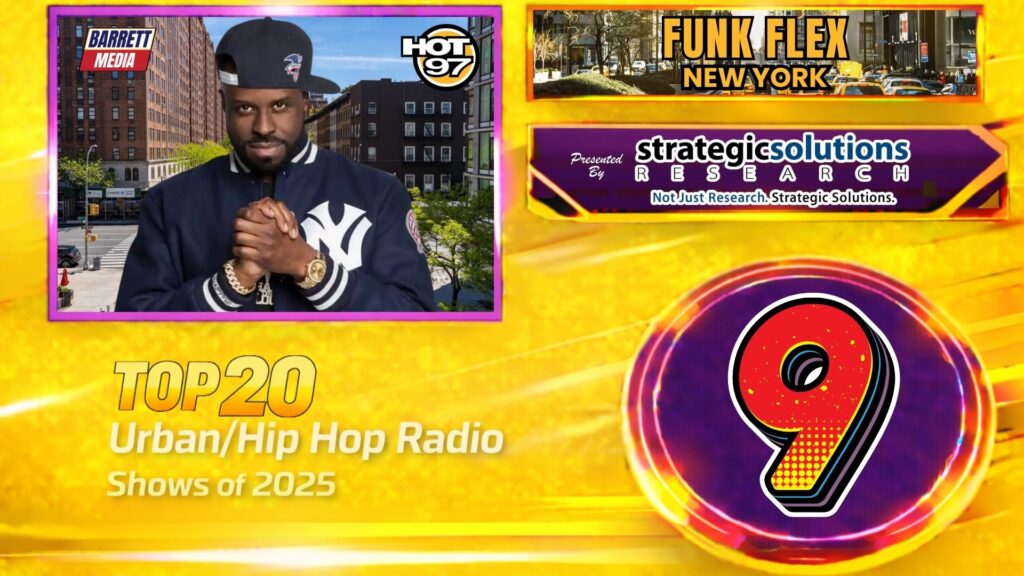
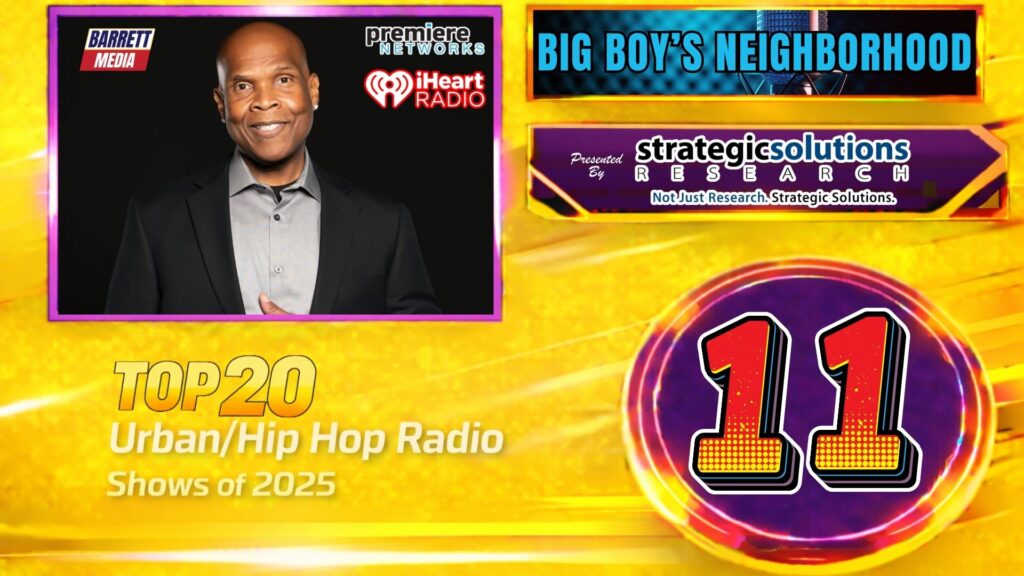
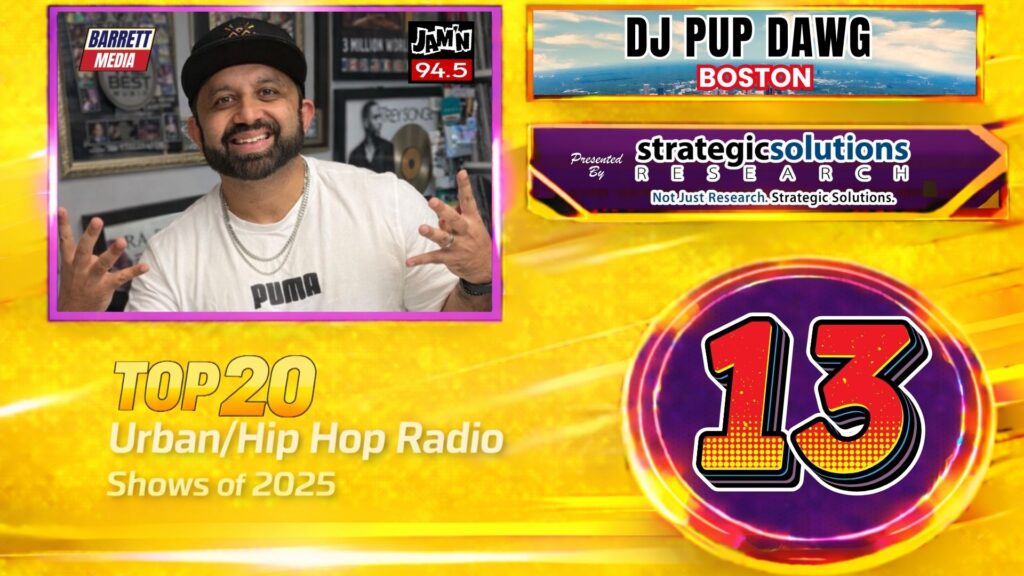
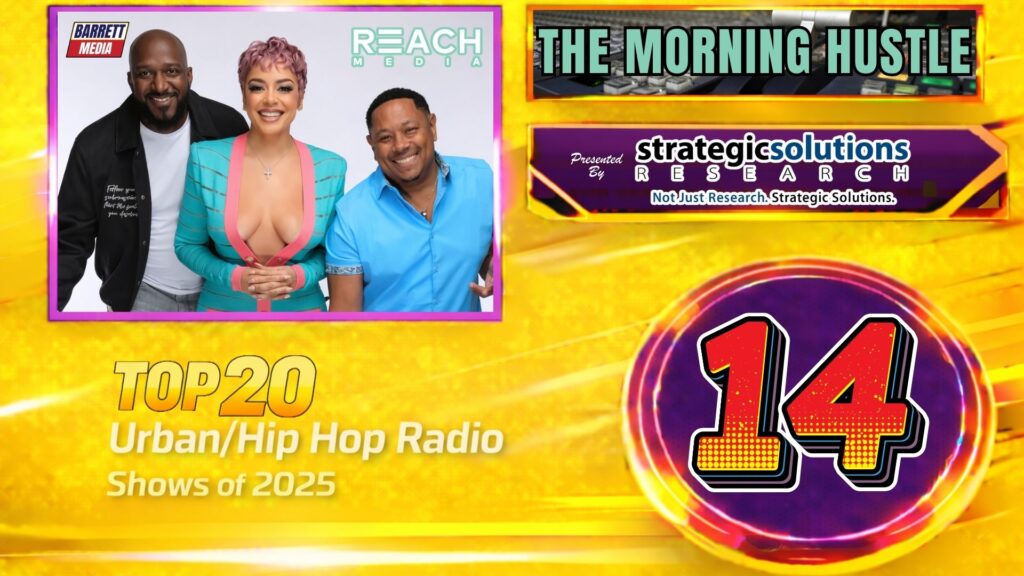
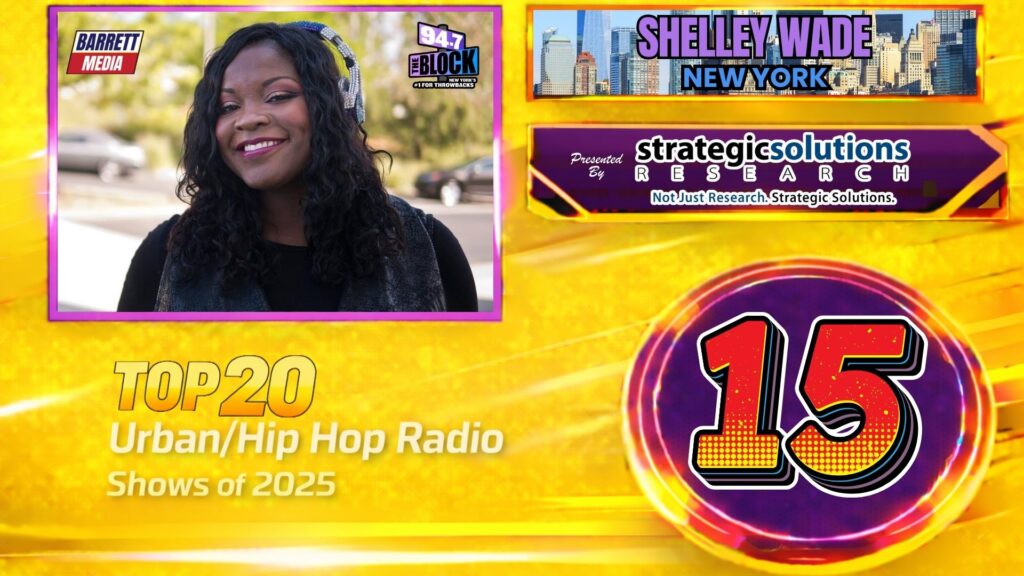
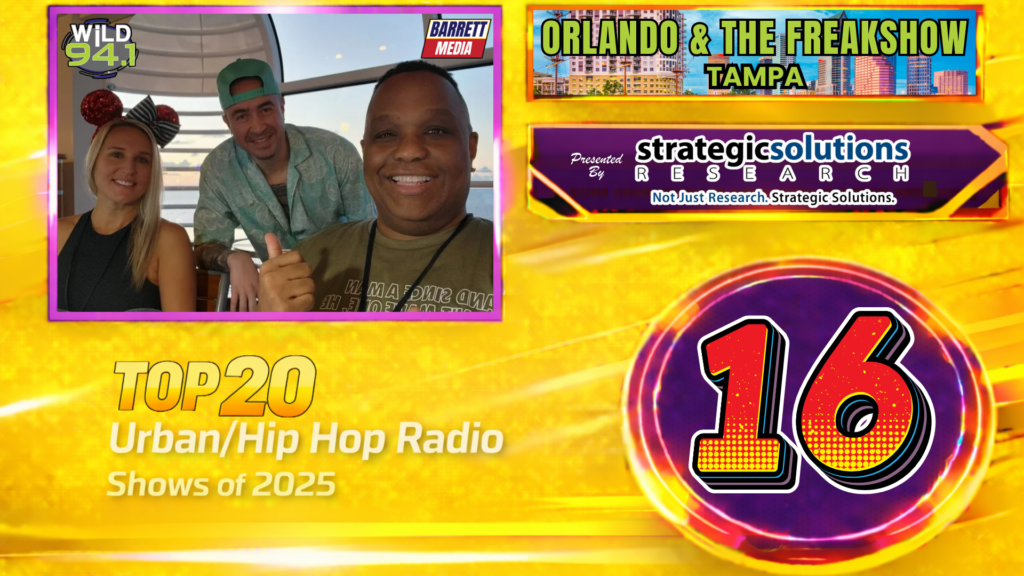
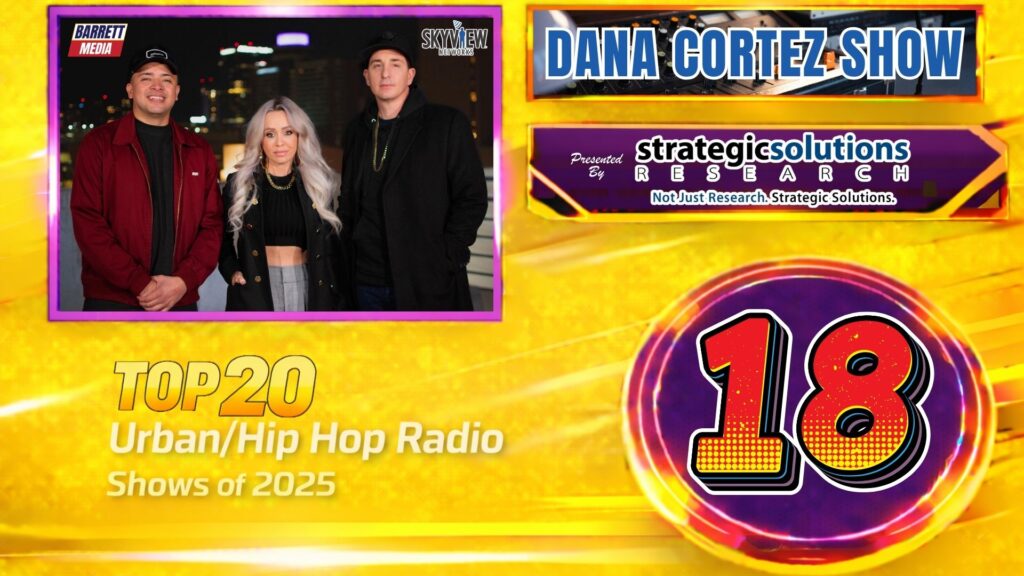
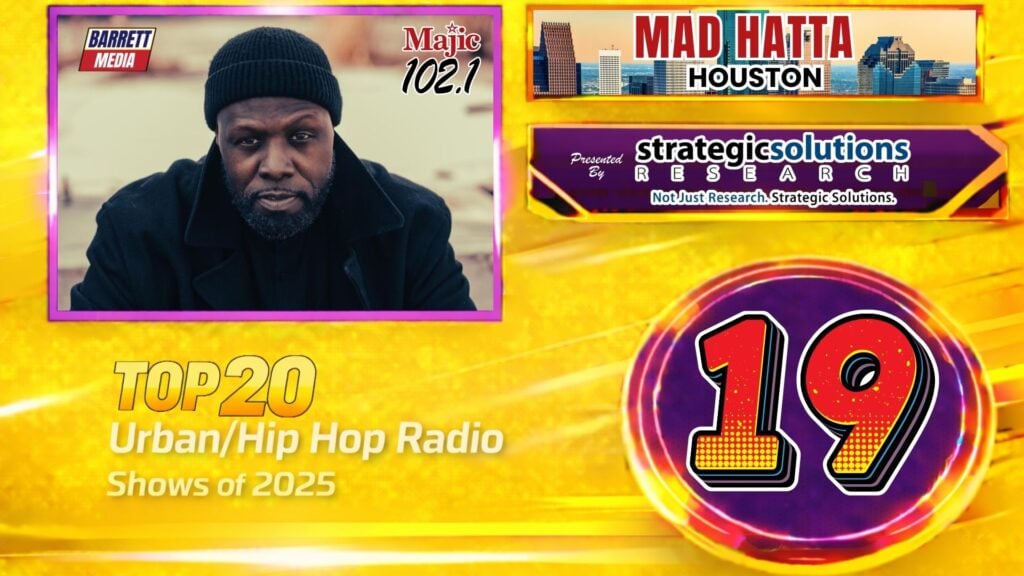
Today the Top 20 series turns its attention to the best Urban/Hip Hop radio shows. All results from this series are available on our website. We also encourage you to subscribe to The Nooner newsletter to receive the information in your inbox each day at 12pm ET. All results are promoted across our social media pages too including Facebook, LinkedIn, TikTok, Instagram and X.
The full schedule of releases is listed down below the images. After this series is done, I will record videos discussing the entire process for music, sports and news. Those videos will be posted to the Barrett Media YouTube page. Make sure you subscribe so you’re notified once the video goes live.
Important Information
#1– These results represent the collective feedback provided by our industry voters. Barrett Media does not vote in this process. Our role is to assemble the group, collect the votes, and present the information. Voting is based on 2025’s performance. 2026 changes have no effect on the final results. Think of it like an MVP race in sports – voters vote on last season’s performance.
#2 – Music radio is a massive space. Shows appear on lists in multiple formats. Programmers run stations in different cities and formats. Changes occur under the radar and without stations updating key information. That makes it difficult when trying to issue proper credit to deserving programmers, hosts and/or brands. We try to get it perfect, but we’re human, and mistakes do happen. If you notice an error, please email Jason@BarrettMedia.com so we can fix it.
#3 – This series specifically focuses on United States terrestrial music radio shows and programmers. Shows and brand leaders with Apple Music, Spotify, Amazon, SiriusXM, YouTube, podcasts and programming outside the United States are not included.
#4 – This series showcases 320 images of radio shows and program directors. There are no photo changes unless it involves a mistake. We understand you may not like the way your left shoulder looks in a photo but such is life. Thanks in advance for understanding.
The Voting Process
A record One Hundred and Ninety Two (192) program directors, corporate executives, and format consultants were involved in this year’s voting. That beat last year’s mark of 173. Like always, there were a few who didn’t weigh in who I’d have loved to include but overall, the support was outstanding. THANK YOU!
Be advised that our voters represent the following companies: iHeartMedia, Audacy, Cumulus Media, Beasley Media, Cox Media Group, Townsquare Media, Hubbard Radio, Bonneville, Radio One, Connoisseur Media, SummitMedia, Saga Communications, MediaCo., Buck Owens Production Company, Pamal Broadcasting, Times-Shamrock Media, Stephens Media Group, Guaranty Media, Lotus Communications, Cromwell Media Group, Midwest Communications, One Putt Broadcasting, Griffin Media, plus numerous consultancies. We involve a large group to assure input is received from all areas of the country and to prevent the results from favoring any one company.
Though 192 voters are involved, the number of people voting on each format is lower. This is by design. We want experts from each format voting on what they know best. Depending on their role and expertise, some vote on all eight formats, others vote on as little as one. For this category, 36 programmers, consultants, and executives voted on the Top 20 Urban/Hip Hop Radio Shows and Program Directors.
Two hundred and fifty one (251) Urban/Hip Hop radio shows appeared on ballots submitted by our voters. We use a point system for this process with a 1st place votes equaling 20 points, and each selection between #2-#10 earning two points less. It’s not a perfect system but it’s one we feel good about using to showcase the industry’s best.
And the Winner Is…
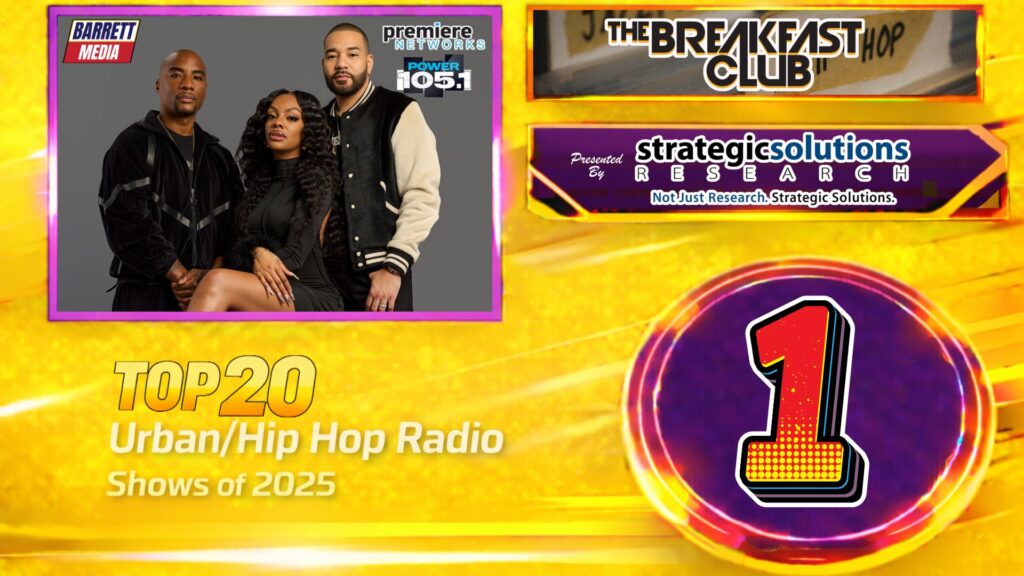
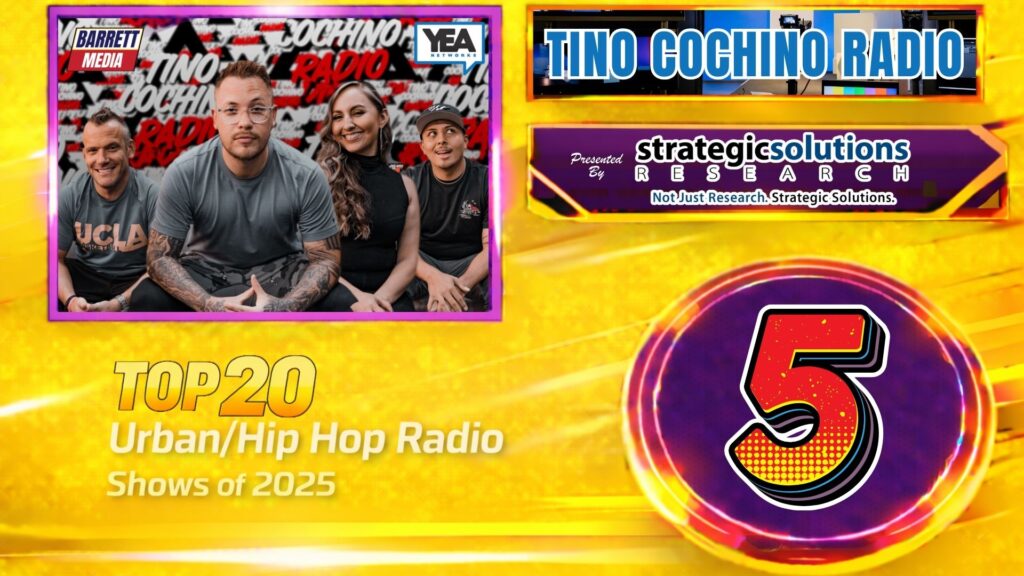
The Breakfast Club featuring Charlamagne Tha God, Jess Hilarious and DJ Envy. Premiere Networks’ massively popular morning show follows last year’s win with another victory. Congrats to Charlamagne, the entire cast and all involved with iHeartMedia and Premiere Networks on the well deserved recognition.
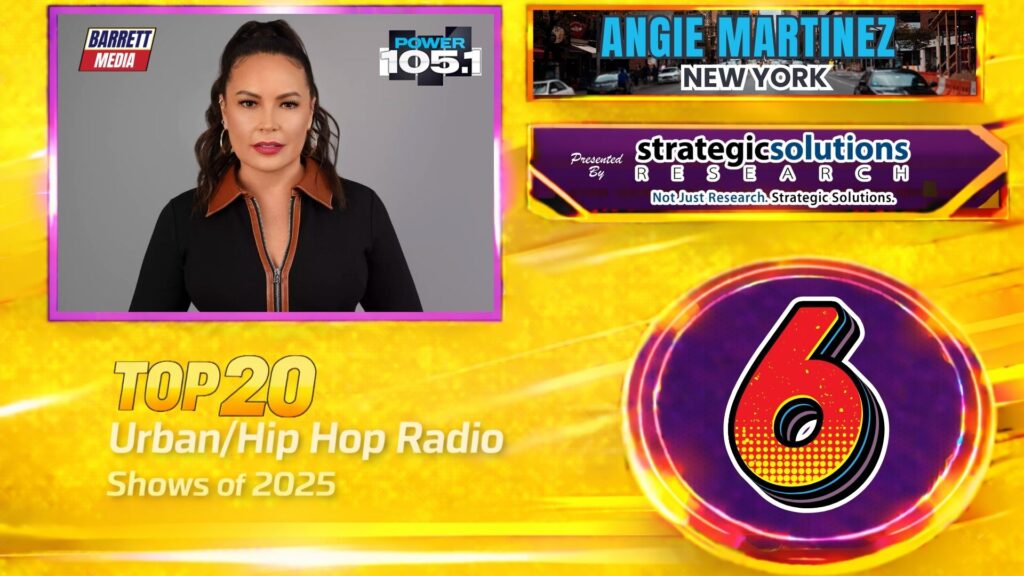
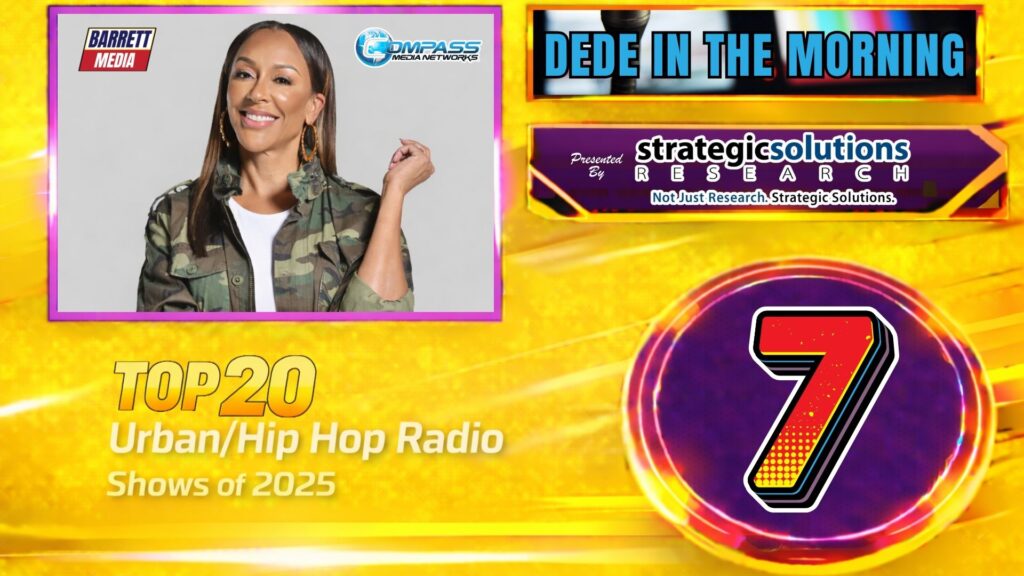
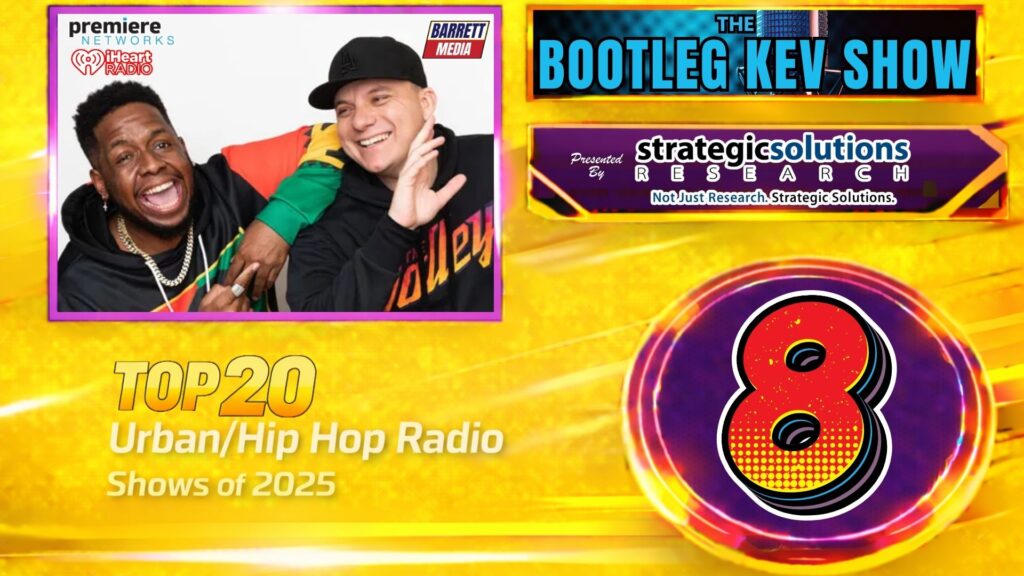
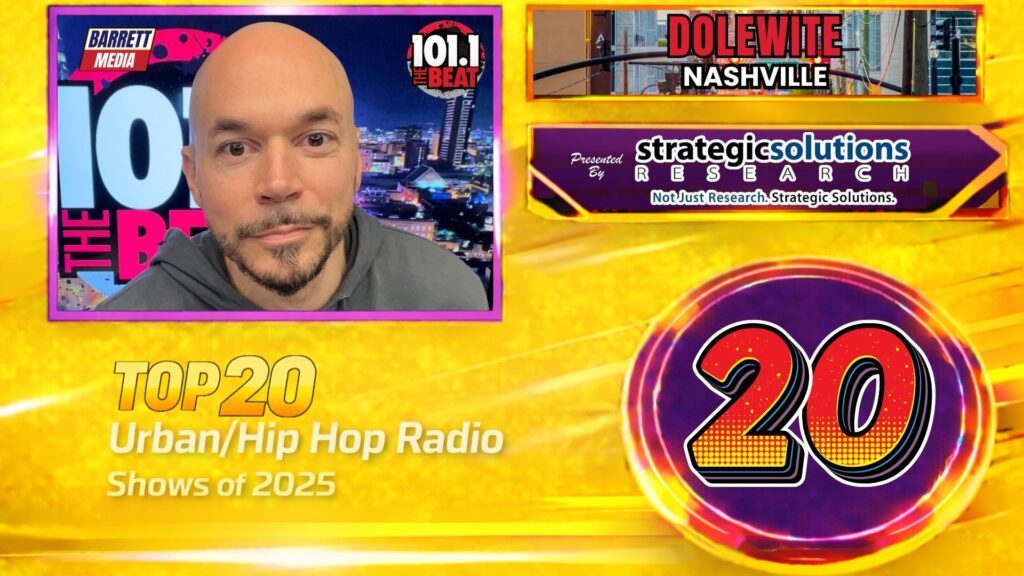
I want to thank Dylan Barrett for creating the artwork, and each Urban/Hip Hop voter who participated in the voting process. Now without further delay, here are Barrett Media’s Top 20 Urban/Hip Hop Radio Shows of 2025.
Additional Notes:
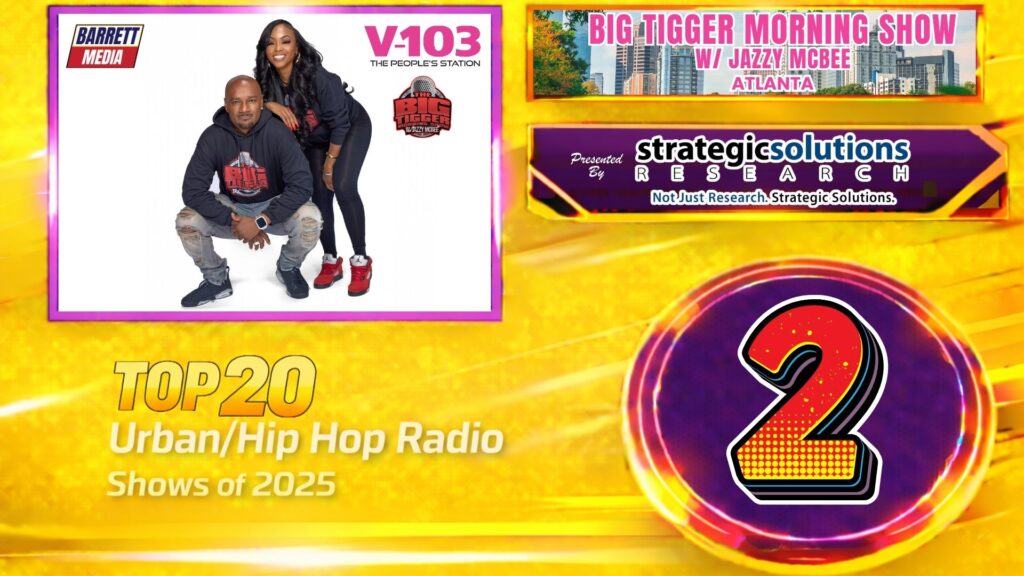
The Breakfast Club cruised to a forty three (43) point win over Big Tigger Morning Show to secure the win. Charlamagne’s show also recorded a category best nine (9) first place votes.
Spots 21-25 went to Mike Street, Greg Mack, Brown Bag Mornings, EBro in the Morning, and Keith ”Papa Keith’ Walcott.
The closest race featured DJ Pup Dawg narrowly defeating The Morning Hustle by two (2) points for 13th place.
Of the Two Hundred and Fifty One (251) shows to earn votes, nine (9) received at least one 1st place vote.
Barrett Media’s Music Radio – Top 20 of 2025 Remaining Schedule:
Monday March 2 = BM Top 20 Country Radio Shows and Program Directors
Tuesday March 3 = BMM Top 20 AC/Hot AC Radio Shows and Program Directors
Wednesday March 4 = BM Top 20 CHR/Top 40 Radio Shows and Program Directors
Barrett Media produces daily content on the music, news, and sports media industries. Sign up for our newsletters to stay updated and get the latest information right in your inbox.
We’ve reached the end of week 1 of Barrett Media’s Top 20 of 2025 in Music Radio presented by Strategic Solutions Research. Strategic Solutions Research is celebrating its 20th year providing strategic research, music testing and personality content testing for clients in the US and in 22 countries. Please reach out and give a special thanks to Hal Rood and Kevin Cassidy for supporting the Top 20 series and the entire music radio industry.
Today the Top 20 series turns its attention to the best in Urban/Hip Hop. A reminder, all results from this series are available on our website. We also encourage you to subscribe to The Nooner newsletter to receive the information in your inbox each day at 12pm ET. All results are promoted across our social media pages too including Facebook, LinkedIn, TikTok, Instagram and X.
The full schedule of releases is listed down below the images. After this series is done, I will record videos discussing the entire process for music, sports and news. Those videos will be posted to the Barrett Media YouTube page. Make sure you subscribe so you’re notified once the video goes live.
Important Information
#1– These results represent the collective feedback provided by our industry voters. Barrett Media does not vote in this process. Our role is to assemble the group, collect the votes, and present the information. Voting is based on 2025’s performance. 2026 changes have no effect on the final results. Think of it like an MVP race in sports – voters vote on last season’s performance.
#2 – Music radio is a massive space. Shows appear on lists in multiple formats. Programmers run stations in different cities and formats. Changes occur under the radar and without stations updating key information. That makes it difficult when trying to issue proper credit to deserving programmers, hosts and/or brands. We try to get it perfect, but we’re human, and mistakes do happen. If you notice an error, please email Jason@BarrettMedia.com so we can fix it.
#3 – This series specifically focuses on United States terrestrial music radio shows and programmers. Shows and brand leaders with Apple Music, Spotify, Amazon, SiriusXM, YouTube, podcasts and programming outside the United States are not included.
#4 – This series showcases 320 images of radio shows and program directors. There are no photo changes unless it involves a mistake. We understand you may not like the way your left shoulder looks in a photo but such is life. Thanks in advance for understanding.
The Voting Process
A record One Hundred and Ninety Two (192) program directors, corporate executives, and format consultants were involved in this year’s voting. That beat last year’s mark of 173. Like always, there were a few who didn’t weigh in who I’d have loved to include but overall, the support was outstanding. THANK YOU!
Be advised that our voters represent the following companies: iHeartMedia, Audacy, Cumulus Media, Beasley Media, Cox Media Group, Townsquare Media, Hubbard Radio, Bonneville, Radio One, Connoisseur Media, SummitMedia, Saga Communications, MediaCo., Buck Owens Production Company, Pamal Broadcasting, Times-Shamrock Media, Stephens Media Group, Guaranty Media, Lotus Communications, Cromwell Media Group, Midwest Communications, One Putt Broadcasting, Griffin Media, plus numerous consultancies. We involve a large group to assure input is received from all areas of the country and to prevent the results from favoring any one company.
Though 192 voters are involved, the number of people voting on each format is lower. This is by design. We want experts from each format voting on what they know best. Depending on their role and expertise, some vote on all eight formats, others vote on as little as one. For this category, 36 programmers, consultants, and executives voted on the Top 20 Urban/Hip Hop Radio Shows and Program Directors.
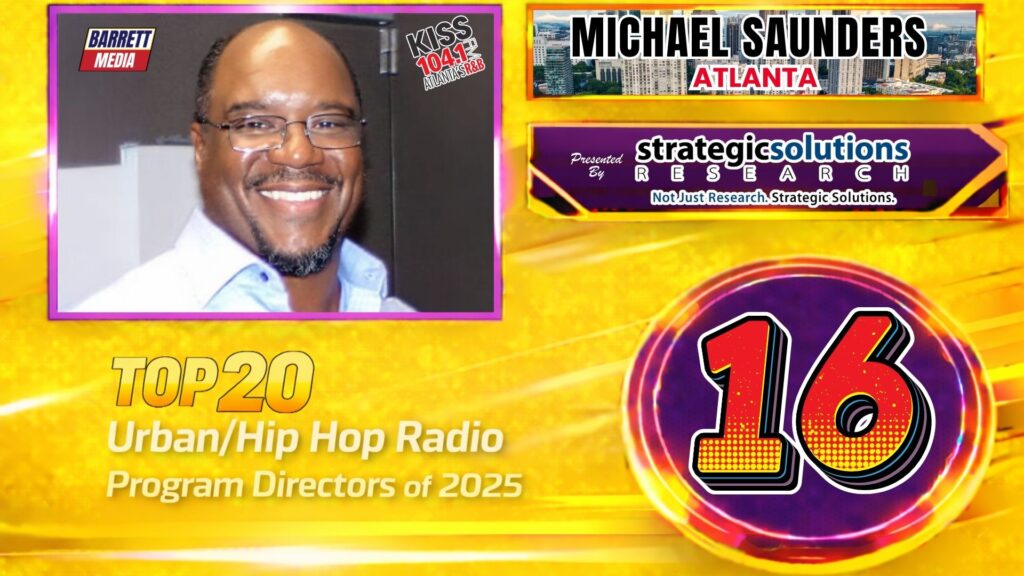
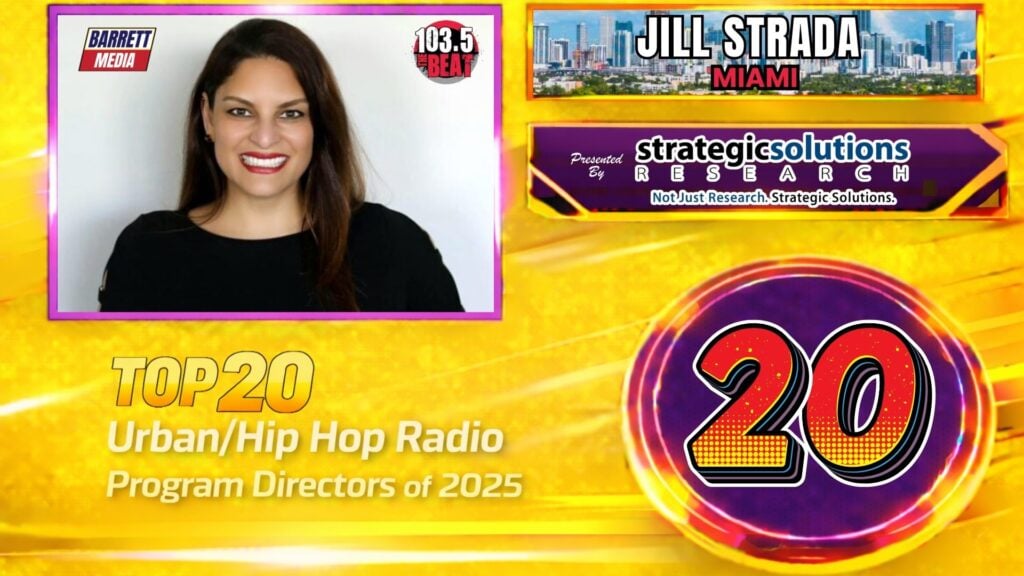
One hundred and eight (108) Urban/Hip Hop radio program directors appeared on ballots submitted by our voters. We use a point system for this process with a 1st place votes equaling 20 points, and each selection between #2-#10 earning two points less. It’s not a perfect system but it’s one we feel good about using to showcase the industry’s best.
And the Winner Is…
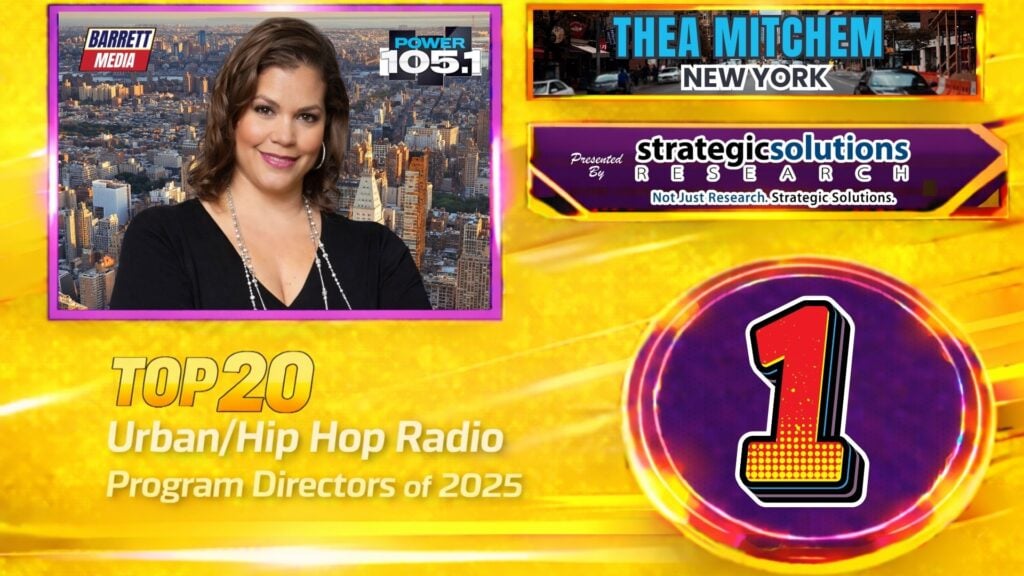
Thea Mitchem of Power 105.1 in New York City. This is Thea’s second straight win in the category. Congrats to Thea and her entire team on the well deserved recognition.
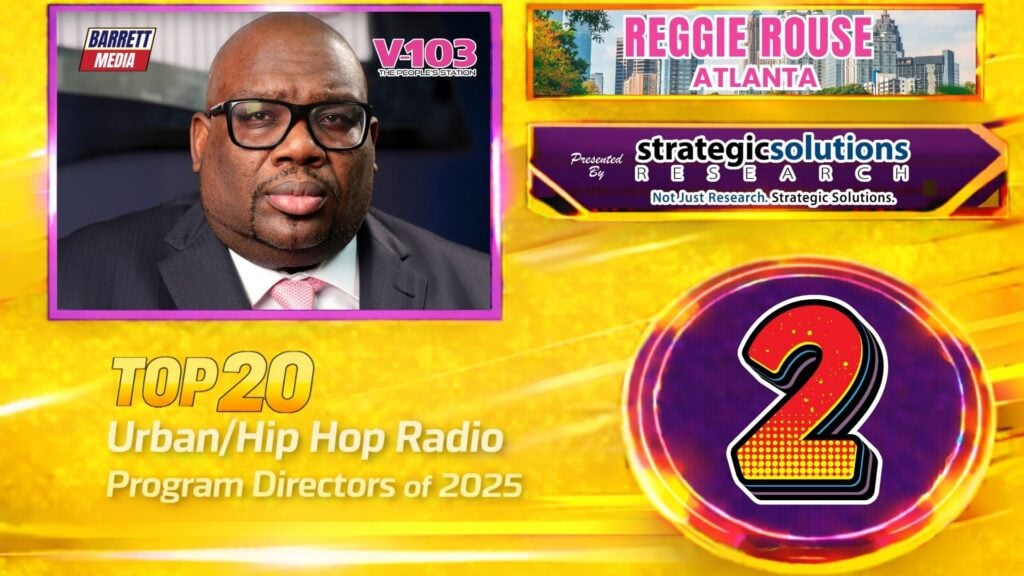
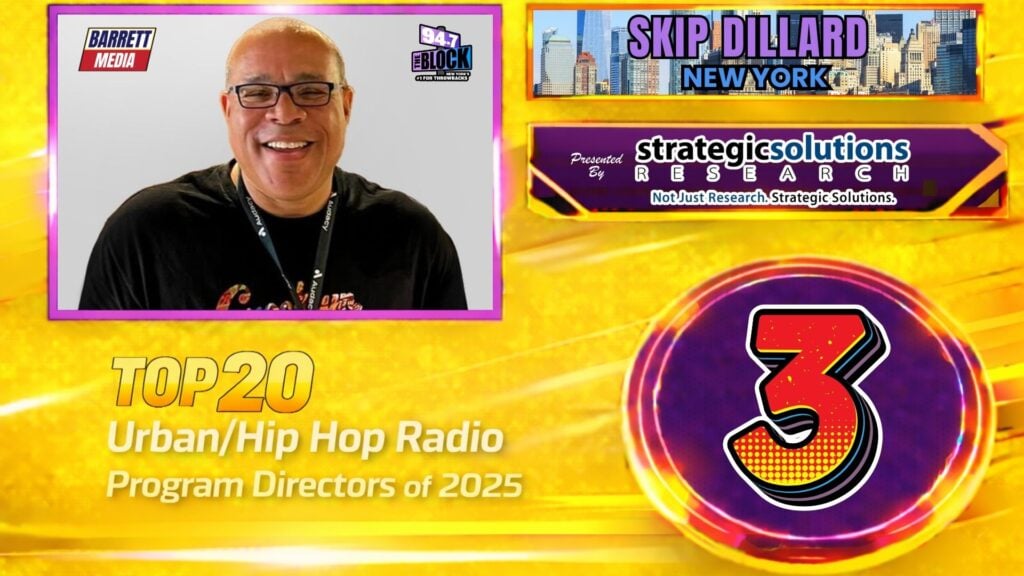
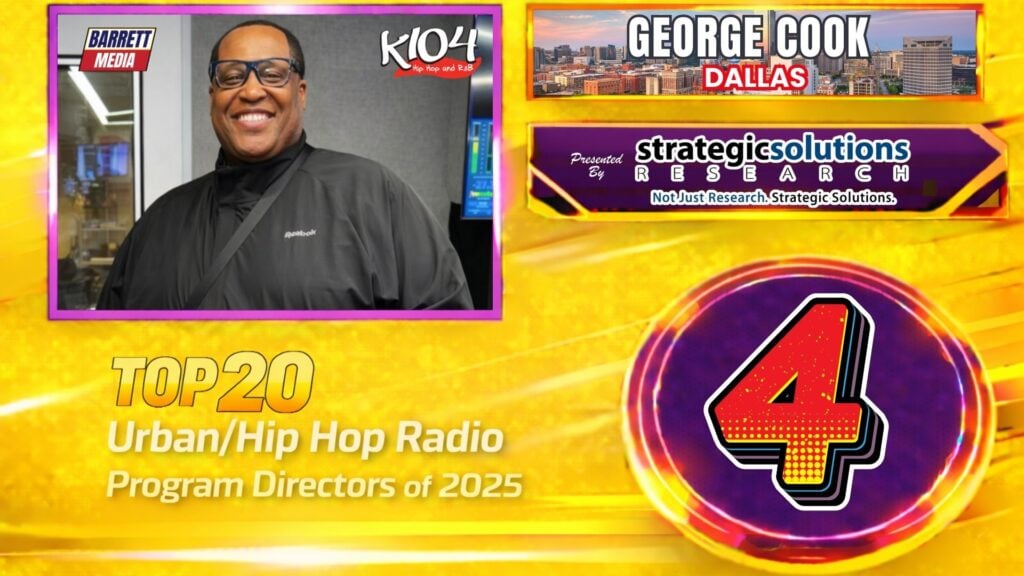
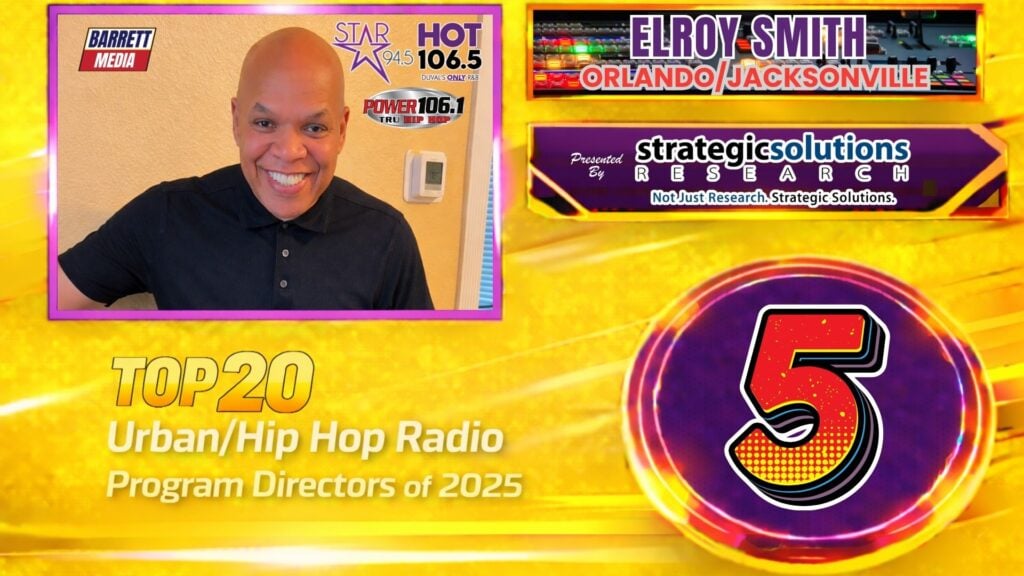
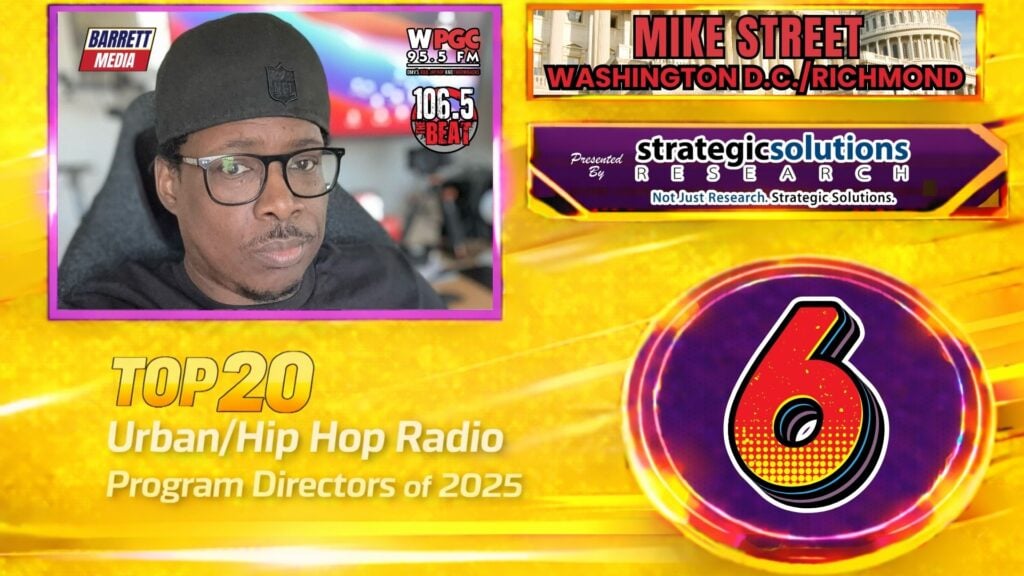
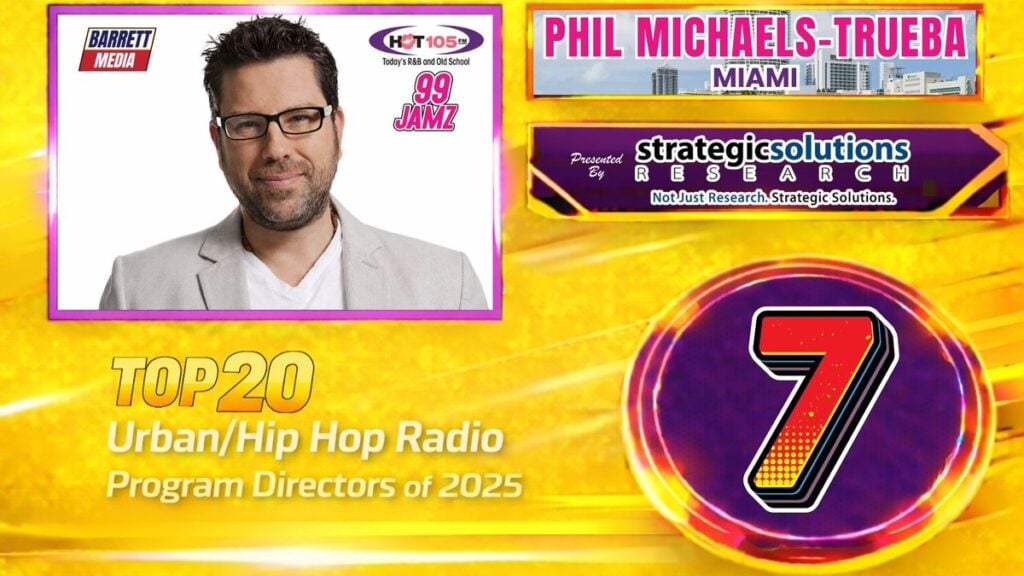
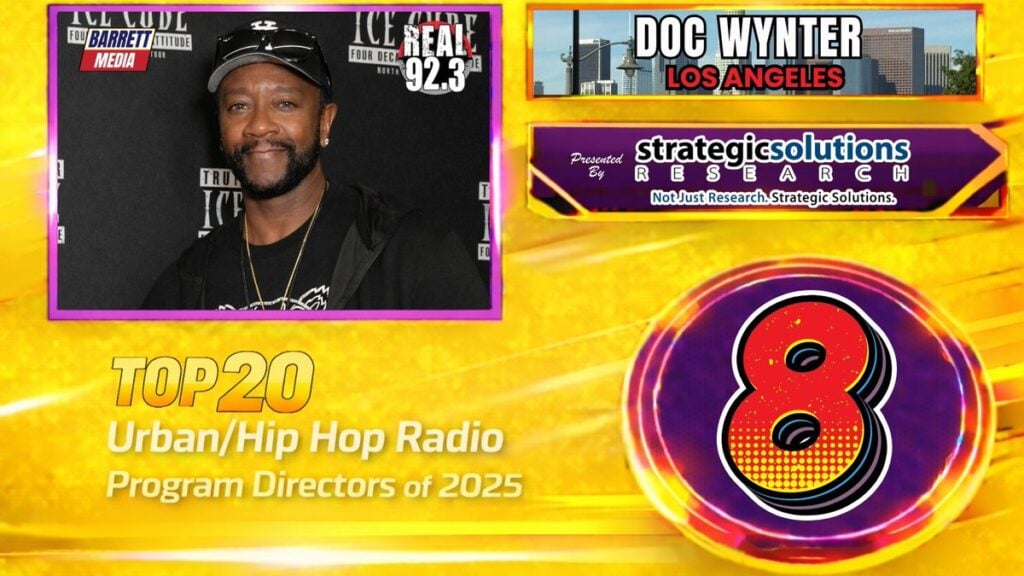
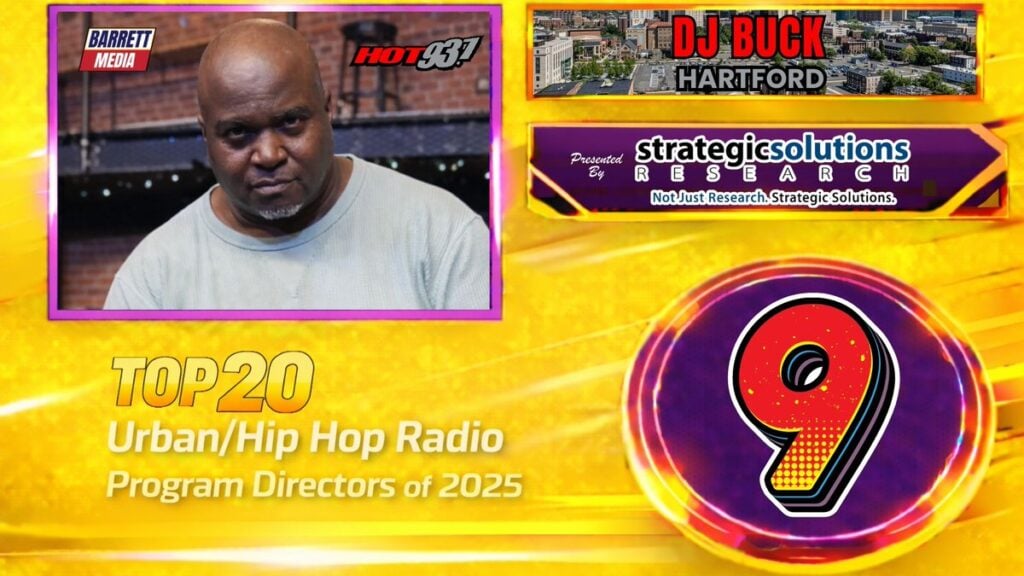
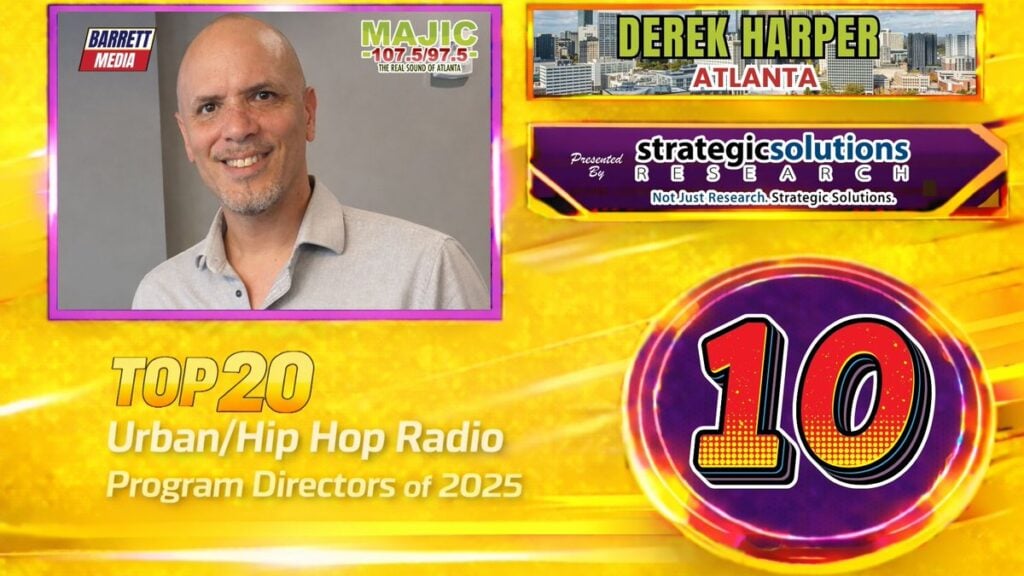
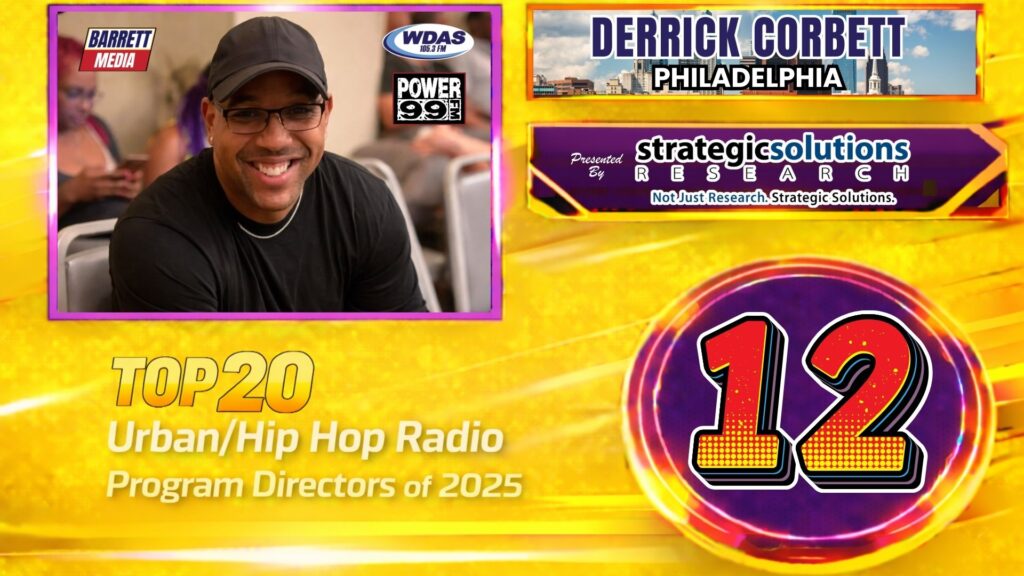
I want to thank Dylan Barrett for creating the artwork, and each Urban/Hip Hop voter who participated in the voting process. Now without further delay, here are Barrett Media’s Top 20 Urban/Hip Hop Radio Program Directors of 2025.
Additional Notes:
Thea Mitchem won a close race against Reggie Rouse. Mitchem snagged the most first-place votes with five (5) to finish four (4) points in front of Rouse.
Spots 21-25 went to Erik Bradley, Orlando Davis, Tutu Durant,Cynthia Smith and Chris Malone.
The battle for 16th was the closest contest of them all. Michael Saunders held off Mark McCray by one (1) point.
Of the One Hundred and Eight (108) programmers to earn votes, fourteen (14) notched at least one 1st place vote.
Barrett Media’s Music Radio – Top 20 of 2025 Remaining Schedule:
Monday March 2 = BM Top 20 Country Radio Shows and Program Directors
Tuesday March 3 = BMM Top 20 AC/Hot AC Radio Shows and Program Directors
Wednesday March 4 = BM Top 20 CHR/Top 40 Radio Shows and Program Directors
Barrett Media produces daily content on the music, news, and sports media industries. Sign up for our newsletters to stay updated and get the latest information right in your inbox.
WFAN host Craig Carton didn’t mince words Thursday when reacting to NBC Sports’ decision to remove longtime NFL analyst Tony Dungy from its game and studio coverage beginning next season, using his platform on The Carton Show to celebrate the end of Dungy’s 17-year tenure with the network while framing the move as a necessary correction for a broadcast he believes had grown stale.
WFAN host Craig Carton used his Thursday show to praise NBC Sports. He said he was “happy to see that NBC took heat off our criticisms of some of their broadcasts.” Carton then pivoted to a pointed critique of Dungy’s on-air style. The shift highlighted how strongly he felt about the move.
“So happy to hear that next year we will not be forced to suffer through the holier than now, soapbox living Tony Dungy and his sanctimonious bull crap that was force fed us for the last 17 years. Good riddance to him,” said Carton.
Although the remarks were predictably provocative, Carton said his frustration focused on Dungy’s performance as a broadcaster. He stressed that his critique did not target Dungy’s character. Carton later clarified that he holds no personal animus toward the Hall of Fame coach. However, he believes the network maintained its commitment longer than it should have.
“Let’s be honest, he brought nothing to the table as a broadcaster,” Carton said, describing Dungy’s analysis as “vanilla” and “milquetoast,” terms that reflect a broader criticism Carton has leveled at studio shows he feels lack urgency, personality and compelling debate in an era when sports viewers increasingly gravitate toward sharper commentary and more dynamic exchanges.
“There’s never any great insight. There was a lot of clichés and generalities. You know, the team that wins the turnover battle’s got a pretty good chance. And he has zero personality,” Carton said, suggesting that the network’s studio format demands stronger, more defined voices capable of cutting through a crowded media landscape.
Still, Craig Carton drew a clear line between critique and character. He said, “He’s a very nice man. He’s very well respected, and people like him a lot, and I have nothing bad to say about him as a human being at all.” Carton then added, “But that was a 17-year run that was like, ‘What are we doing?’”
Dungy, who transitioned to television after a decorated coaching career that included a Super Bowl title, has been a staple of NBC’s NFL coverage since joining the network. NBC has not yet announced who will fill his role next season.
Barrett Media produces daily content on the music, news, and sports media industries. Sign up for our newsletters to stay updated and get the latest information right in your inbox.
Newsmax saw a significant audience increase during President Donald Trump’s State of the Union address on Tuesday evening.
On Tuesday evening, the network amassed 2.8 million viewers. Coverage on Newsmax began with Carl Higbie Frontline at 6 PM ET, leading into Rob Schmitt Tonight.
Beginning at 8 PM ET, Greta Van Susteren and Rob Finnerty anchored the network’s coverage of President Trump’s speech. Former White House Chief of Staff Mark Meadows and analyst Mercedes Schlapp also appeared on the network’s coverage ahead of the address.
The network continued its coverage until the Midnight ET hour. Major newsmakers like Speaker of the House Rep. Mike Johnson (R-LA), Majority Leader Rep. Steve Scalise (R-LA), Health Secretary Robert F. Kennedy Jr., and HUD Secretary Scott Turner all made appearances on Newsmax throughout its coverage on Tuesday.
“The president gave an epic speech and America tuned in, with a big chunk of his audience tuning into Newsmax,” said Newsmax CEO Chris Ruddy. “It was a big night for the president and for us.”
On Newsmax2, the network’s streaming platform, Ed Henry and Bianca de la Garza anchored coverage. That broadcast earned 1.3 million viewers throughout the event.
“Our network coverage was first-rate and was not only on par with major networks but delivered the kind of comprehensive reporting viewers don’t see much anymore,” said Newsmax Senior Vice President of News Gary Kanofsky. “From our anchors in Washington to our contributors and production teams across the country, this was a total newsroom effort,” he said.
Barrett Media produces daily content on the music, news, and sports media industries. Sign up for our newsletters to stay updated and get the latest information right in your inbox.
77 WABC has announced it is adding a new weekend show hosted by former White House Press Secretary Sean Spicer.
Full Court Press with Sean Spicer will debut this weekend. The show will be heard on Sundays from 10-11 AM ET.
“WABC Radio doesn’t whisper, it leads!” said Spicer. “It is one of the most iconic and influential radio stations in the U.S. WABC Radio listeners expect truth, energy, and authenticity, and that’s exactly what I’m going to give them. I couldn’t be more excited to join the incredible 77WABC lineup.”
Sean Spicer is no stranger to media following his days working in the Trump White House. He previously hosted a program for Newsmax from 2020 to 2023. He has also worked as a contributor to NewsNation since 2023.
“Big name personalities define WABC Radio,” said Red Apple Media and WABC Radio owner and CEO John Catsimatidis. “Sean is a powerful addition to our Sunday lineup and another example of WABC’s unmatched ability to attract major talent and deliver must-hear talk. The show is going to be fast, fearless, and honest, with smart conversation, sharp opinion, and honest discussion about the stories driving the country.”
Barrett Media produces daily content on the music, news, and sports media industries. Sign up for our newsletters to stay updated and get the latest information right in your inbox.