Jon Hamm is bringing one of WIBC’s most infamous moments to the screen in a new crime drama based on real events. American Hostage recounts the 1977 Indianapolis standoff that kept a mortgage officer captive for 63 hours.
What We Know:American Hostage is an eight-episode limited series streaming on MGM+. The series debuted late last month and dramatizes the hostage situation involving former car salesman Ton Kiritsis. During the standoff, Kiritsis demanded to speak with WIBC personality Fred Heckman for an on-air interview. Hamm portrays Heckman, while Giovanni Ribisi plays Kiritsis. The series explores the hostage crisis and the role local radio played as the situation unfolded across Indianapolis.
What They Said: “It’s phenomenally well done. Really gets the sense of the ’70s and what life was like back then, and the community that local radio inspired. I grew up in St. Louis in the 70s. We had KMOX Radio for the news. We all listened to KSHE 95 for rock and roll. There was a shorthand that you had just because of the radio, and that was certainly the case with WIBC. I had a lot of friends that grew up in Indy. I had a lot of friends that went to IU, so it was very, very close to my heart in many ways. And I thought we did a great job of relating that wonderful story.” -Jon Hamm
What Remains Unclear: The limited series has dramatized the events surrounding the 1977 hostage crisis, though it remains unclear how closely every element of the eight episodes follows the historical record. Hamm discussed the project with Hammer & Nigel on 93 WIBC while promoting the series.
What It Means:American Hostage puts WIBC and local radio at the center of a nationally notable Indianapolis crime story. Moreover, Hamm’s involvement could introduce a new audience to the station’s role in one of the city’s most unusual hostage situations.
Barrett Media produces daily content on the music, news, and sports media industries. Sign up for our newsletters to stay updated and get the latest information right in your inbox.
Braiden Bell wants his job back with the Portland Trail Blazers. His attorney is now pressing the franchise to reinstate the broadcaster they fired last week hours after the team hired him.
What We Know: Last week, the Blazers hired Bell and fired him the same day. Hours after the announcement, a local KGW reporter uncovered tweets Bell sent in 2012 and 2013, when he was 15 years old. Those posts were insensitive toward women and Asian people. Previously, the 29-year-old called games for the WNBA’s Phoenix Mercury and the G League’s Valley Suns. Now, following his dismissal from the organization, his legal team is ramping up pressure for him to get his job back.
What They Said: Arnie Herz, Braden Bell’s Attorney: “Braiden is not asking anyone to excuse what he wrote. He has owned it, without excuses. What he is asking is whether a boy’s words from fourteen years ago should outweigh everything the man has done since. If that is the standard, there is hardly a person in any organization in America who could meet it. Accountability means owning what you did and showing who you have become. Braiden has done both.”
What Remains Unclear: Still, it remains unclear whether Herz’s campaign can change Portland’s mind. Bell has not commented on the matter since releasing an apology for his tweets following his firing.
What It Means: Ultimately, Bell’s case tests how teams weigh a broadcaster’s digital past as a minor. Herz argues zero tolerance becomes impossible when applied to childhood. On the other hand, Portland insists its values leave no room for such comments. Either way, the outcome could shape how teams vet future hires.
Barrett Media produces daily content on the music, news, and sports media industries. Sign up for our newsletters to stay updated and get the latest information right in your inbox.
Bomani Jones has a new home for The Right Time. The longtime ESPN and HBO voice is partnering with podcast company Playmaker and unveiling a new studio today.
What We Know: The Right Time launched at ESPN in 2018, and Jones acquired its rights in 2021. He continued hosting it alongside his HBO late-night series, Game Theory, which aired in 2022 and 2023. Now, Jones is partnering with Playmaker, which Danish media company Better Collective owns. Additionally, the show debuts a purpose-built studio designed to expand it across video, audio and social.
What They Said: Bomani Jones: “I’ve been doing this show for almost ten years and at this point, I know what I want it to be. What I liked about Playmaker was that they weren’t trying to come in and change the show, they were giving us the resources to do more with it. I still get to make the show the way I want to make it, but now we’ve got a new studio, a bigger setup and the ability to have the kinds of conversations, bringing in the kinds of guests we haven’t always been able to before.”
What Remains Unclear: Terms and finances of the agreement are unknown. No information regarding Jones’ previous agreement with Wave Sports + Entertainment was also released. Jones signed with Wave in October of 2023.
What It Means: Ultimately, Jones joins an impressive Playmaker roster. The company already works with Knicks teammates Jalen Brunson and Josh Hart, Mookie Betts and Shaquille O’Neal. Moreover, the move reflects the industry’s steady shift from audio toward video. For Jones, it’s a chance to grow the show while keeping it his own.
— The Right Time with Bomani Jones (@righttimebomani) October 1, 2026
Barrett Media produces daily content on the music, news, and sports media industries. Sign up for our newsletters to stay updated and get the latest information right in your inbox.
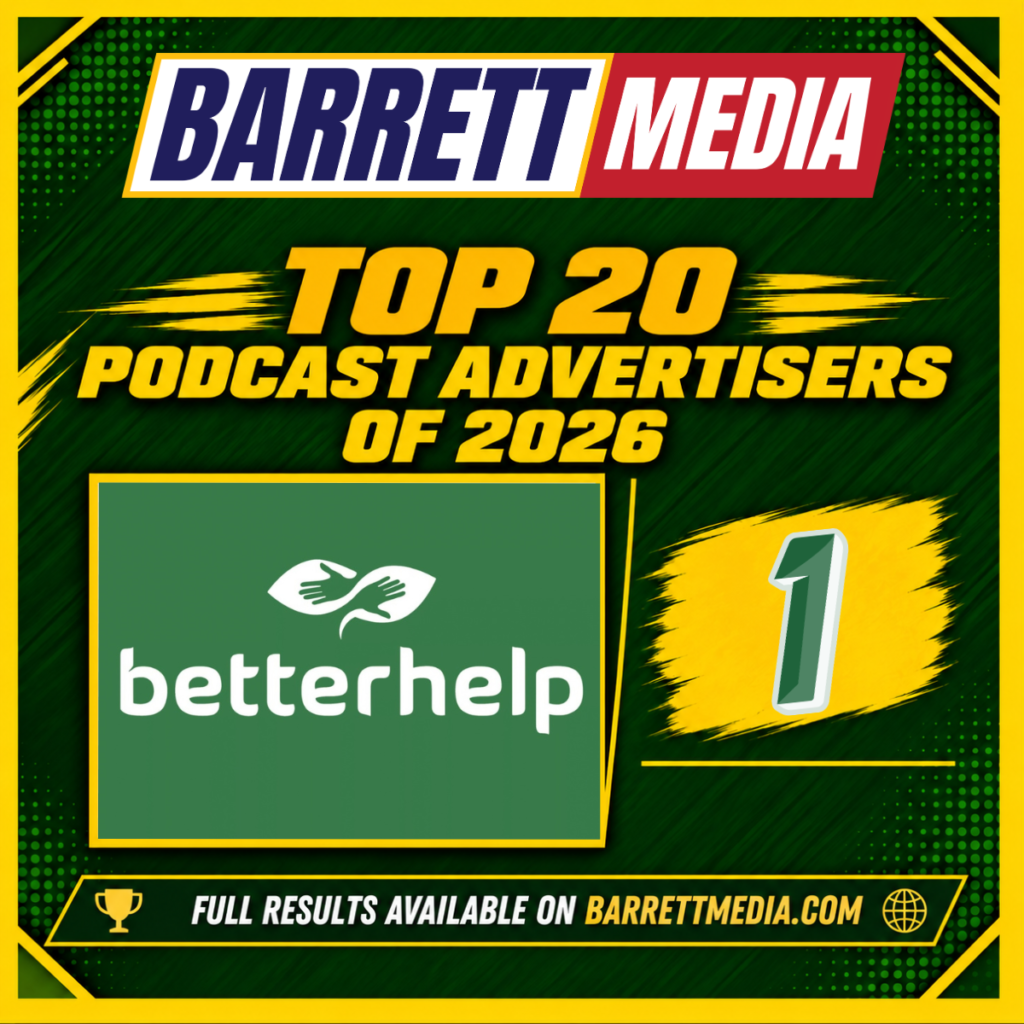
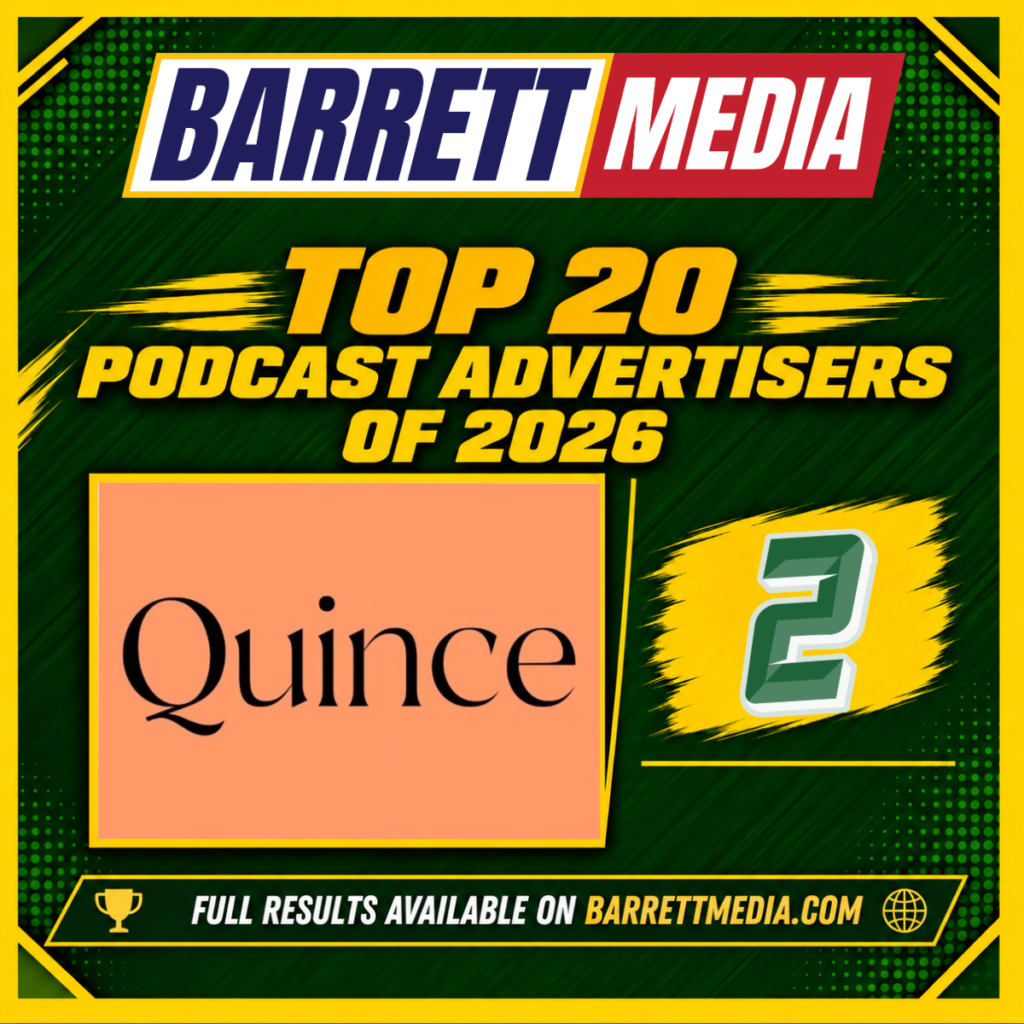
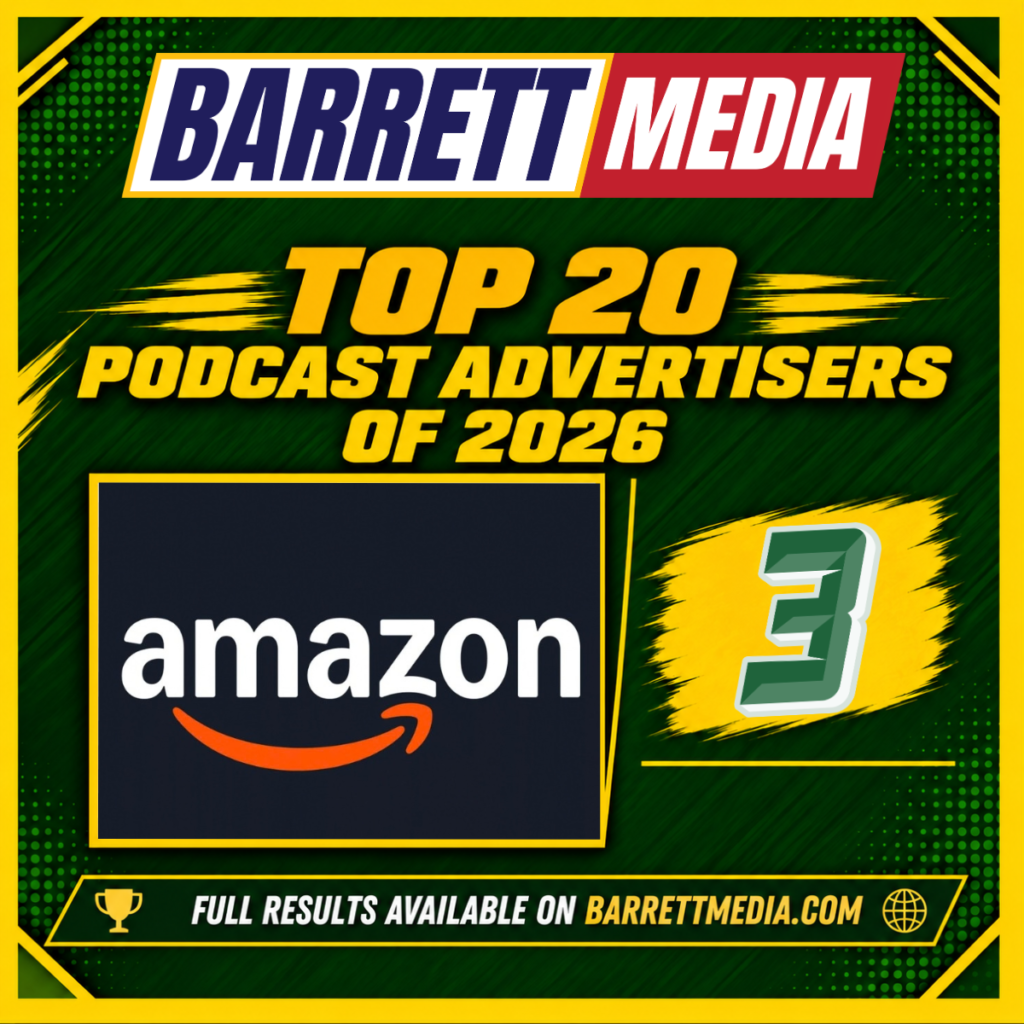
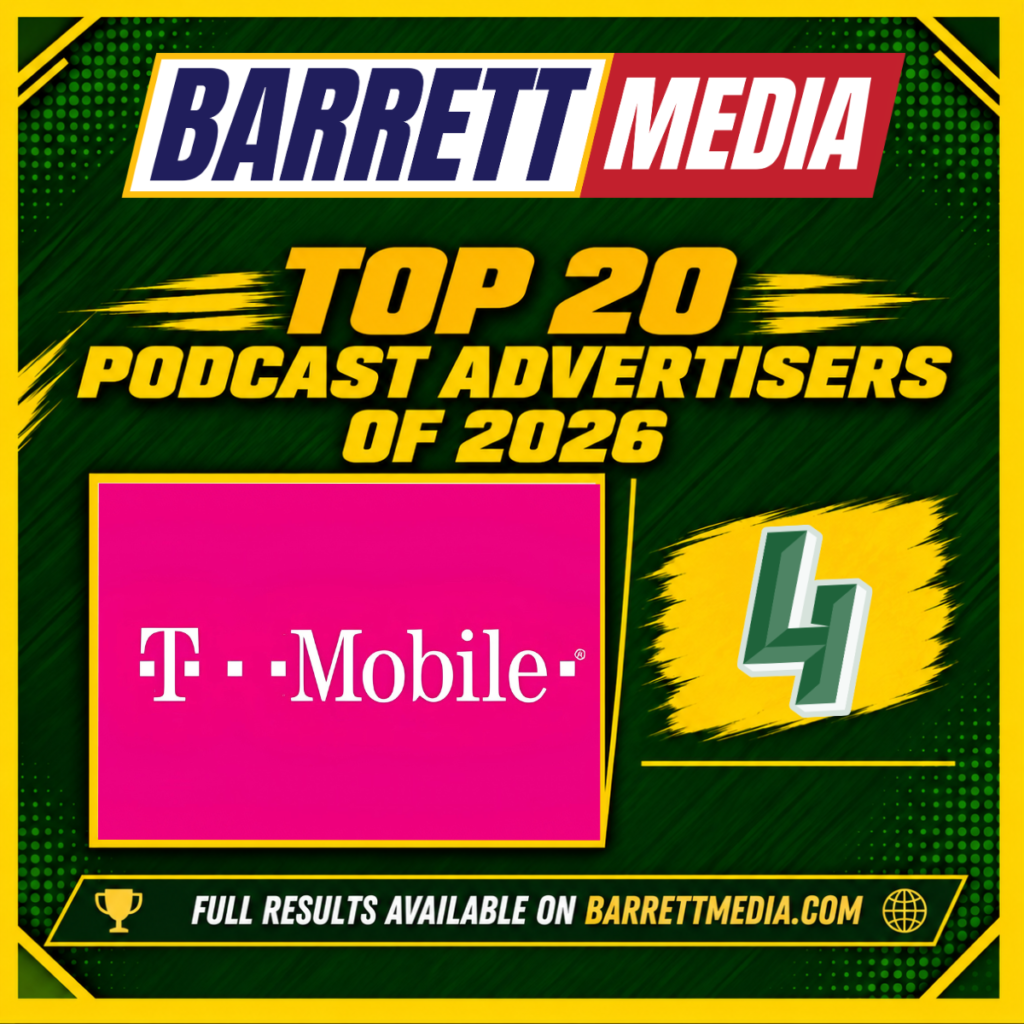
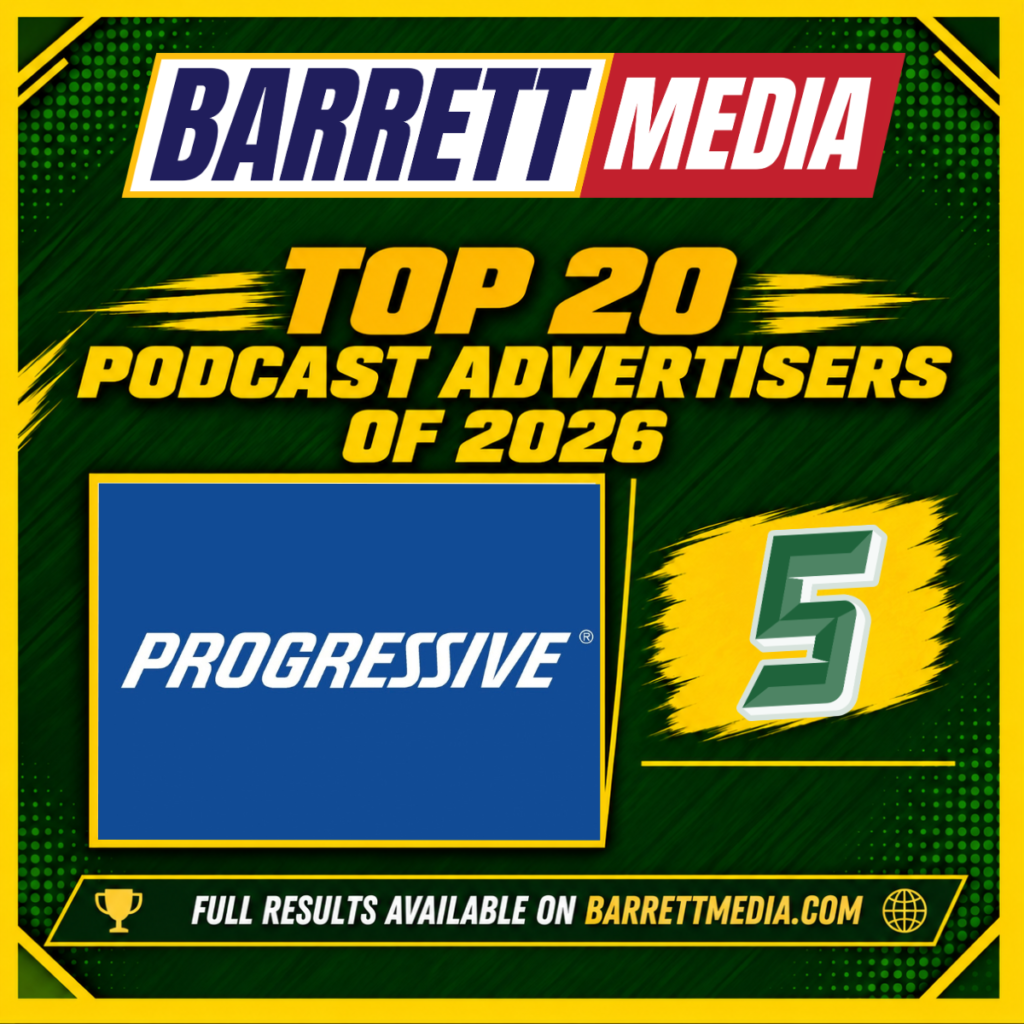
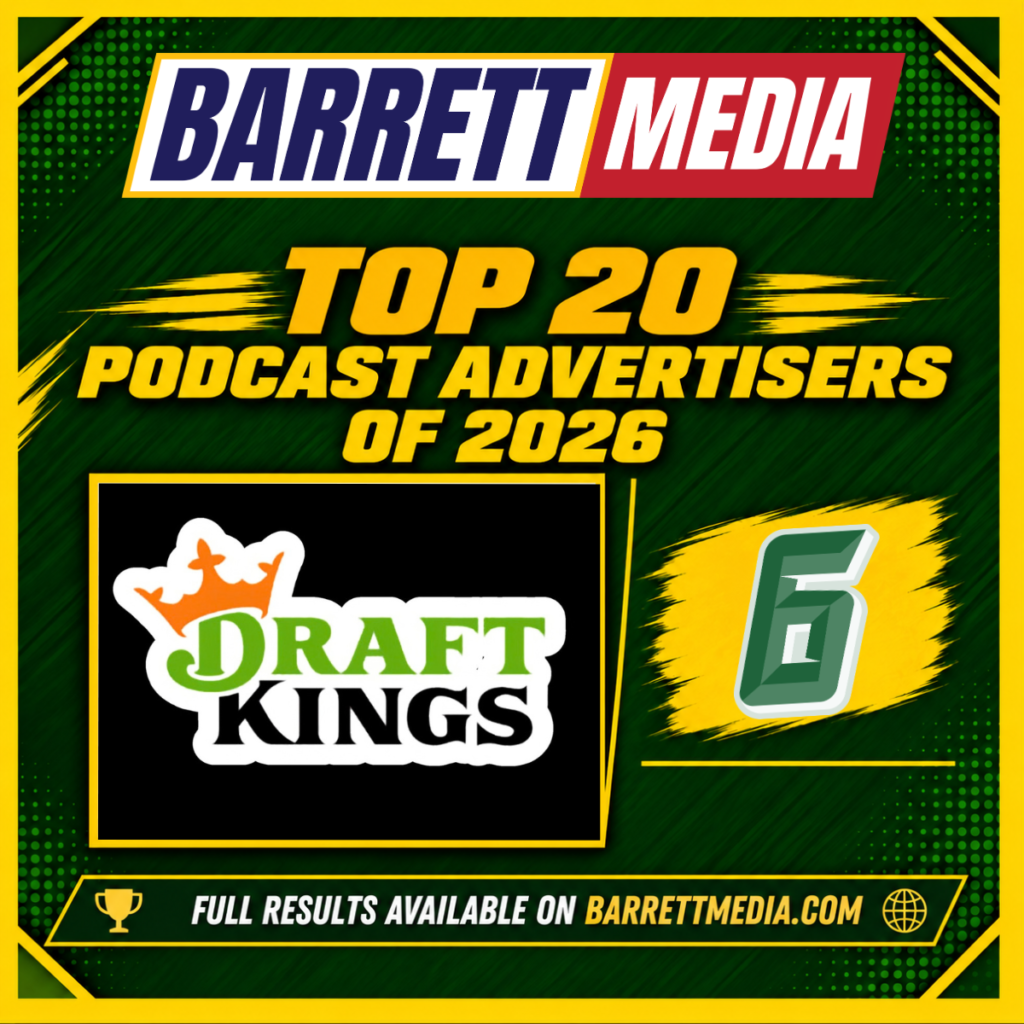
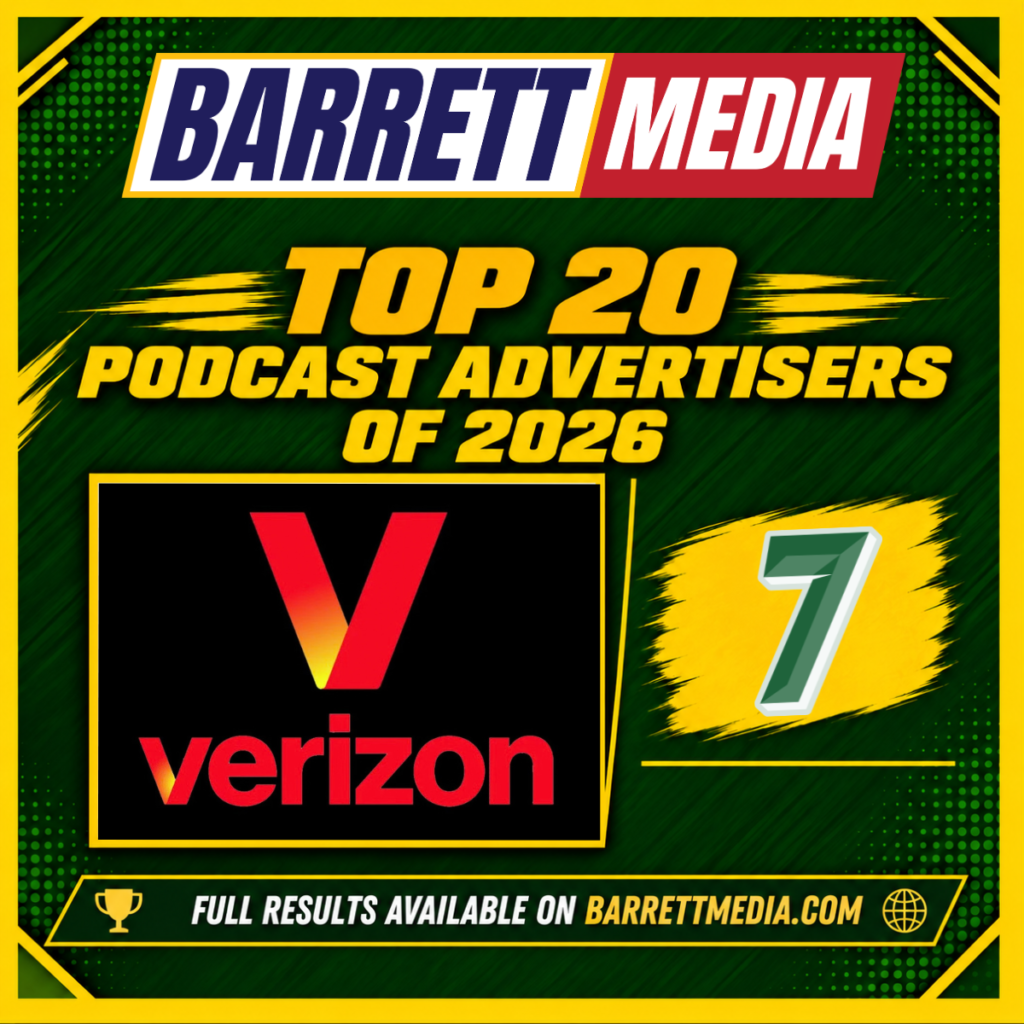
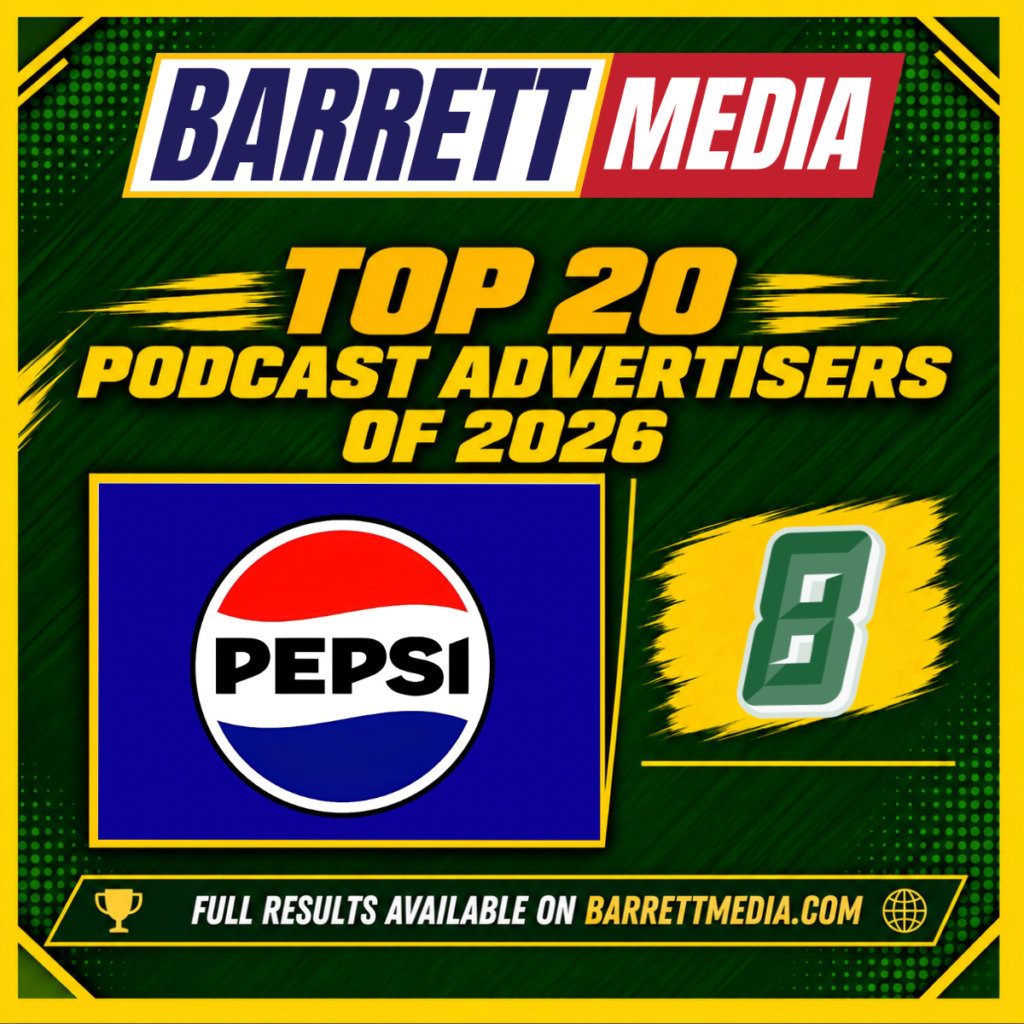
Barrett Media’s Top 20 of 2026 in Audio Advertising advances to day #2. We started this series yesterday with a look at the Top 20 Audio Advertising Agencies (radio and podcast) of 2026. If you didn’t have a chance to see the initial list, click here.
Today, our attention shifts to the Top 20 Podcast Advertisers of 2026. These results represent the feedback supplied by one hundred and forty four voters across the radio, podcast and advertising industries. Our voting committee includes podcasting and radio industry executives, advertising analysts, and radio market managers. It also includes sales managers, account executives, and independent media owners and operators. The voting sample represents sixty one media groups in total.
Important Details
As you review the results, please remember that our voters live in different cities and work for different companies. They have different marketing goals, challenges, preferences, and relationships. They also enjoy different business successes with clients and weigh certain factors higher than others such as total spend, category dominance, campaign consistency, and digital vs. traditional. We involve a large group of voters in this series from various companies in order to avoid geographical and corporate bias.
This series is similar to how we analyze and present our Top 20 in Radio series, which has been in existence since 2016. Each brand, agency and/or individual earns points for votes based on where our voters rank them. A first-place vote equals 20 points. A 20th place vote receives 1 point. We asked voters to answer up to six questions. They shared which agencies, brands and individuals were most valuable to their businesses, in exact order. Barrett Media does not vote in this process. We simply collect the feedback, add up the results, and present the information. Our goal is to showcase the best of the audio advertising industry as recognized by media sales, management, and business professionals.
Lists are subjective, We recognize that. There is no perfect system for presenting a collective snapshot of an industry. However, recognizing businesses, brands and individuals who invest in the audio industry matters as much as celebrating those who create content and connect with listeners. We hope you’ll take a moment to reach out and congratulate everyone recognized this week. Thank them, too, for continuing to invest in and support the audio industry.
I want to thank Dylan Barrett for creating the artwork for this series. I also want to thank every voter who took time to share their feedback. Now without further delay, here are Barrett Media’s Top 20 Podcast Advertisers of 2026.
Additional Notes:
Better Help finished twenty three (23) points ahead of Quince to earn the top spot in this category.
Spot #21 belonged to SimpliSafe.
The closest contest saw AT&T finish six (6) points ahead of Shopify for 12th place.
Nine (9) companies received at least one first-place vote from our voting committee.
This Week’s Schedule
Wednesday, October 7: Top 20 Local Radio Advertisers of 2026
Thursday, October 8: Top 20 National Radio Advertisers of 2026
Friday, October 9: Top 20 Advertising Executives of 2026
YouTube changed the rules again last week. If your video strategy depends on clips, pay attention. The platform shared that its Shorts recommendation system will now favor original content. Channels that re-upload other people’s videos without adding much will reach fewer viewers.
On the surface, that’s positive for many working across the broadcasting business. I know how many media brands and individuals operate and depend on YouTube. The daily process is repetitive: cut a clip, add a caption, slap on a logo, and publish. Repeat that thirty times a day and call it a video strategy. It’s fast, it’s cheap, and it fills the feed.
But the easy path is about to get harder.
What YouTube Is Changing on Shorts
YouTube’s systems are placing more weight on original videos that offer insight and creativity. Channels that mostly aggregate or re-upload other creators’ work will see less distribution in the Shorts feed. Speaking for our brand, Barrett Media, I’m excited about the changes. Between The 4-Cast, Barrett Media Minute, future shows planned, and the hundreds of original conference clips that we feature, original content is a lane we’re comfortable in.
Minor edits won’t save you either. Cropping a video, trimming it, or dropping it into a template doesn’t count as transformation. YouTube is after your voice, your storytelling, or a distinct point of view. If you use clips from others, you need to add real value.
This puts clip channels under the spotlight. Many grew by repackaging podcast moments, interview cuts, and livestream highlights. YouTube is essentially telling them that the free ride is over.
What It Means for Broadcasters
If you’re clipping your own show, you own the original. A station posting its own morning show isn’t the target. But many broadcasters post what isn’t theirs. Press conference videos, network highlights, and reactions to viral moments. Those belong to someone else. Post them with a caption and little else, and YouTube sees a re-uploader.
Many shows have also relied on fan accounts and clip farms to spread their best moments. That free distribution is likely to shrink. And don’t assume your own clips are safe forever. YouTube wants original content. A raw sixty-second cut of a four-hour show adds little. A host looking into the camera and explaining why something matters adds a ton.
In 2025, people watched over 35 billion hours of news content on YouTube globally. Recognizing the industry’s importance, we hosted our 14th News Working Group in NYC to bring together over 100 top global news partners to share their insights. Here are 3 key takeaways from the… pic.twitter.com/TYgWwcPTBh
Radio, television, and podcast should excel here. Opinion, personality, and storytelling are what great brands and hosts deliver daily. Yet many outlets treat YouTube as a dumping ground for leftovers and a testing area for less important content and talent. Decision makers are going to need to look deeper and ask harder questions about which forms of content truly add value. If it’s not worth airing on your radio or television brand, why is it worth featuring on your YouTube channel?
The Monetization Bar Rises in 2027
In August, YouTube revealed that on February 1, 2027, new channels will need 8,000 watch hours to share in ad revenue. That’s double the current requirement. The Shorts path doubles too, from 10 million views to 20 million in 90 days. Existing partners keep their status, but there’s a catch.
To share in Shorts revenue, a channel must hit 10 million Shorts views every 90 days. Fall short and you still earn on long-form video, but your Shorts revenue share stops. How many radio stations, digital brands, and independent content creators reach that number?
YouTube says it expects to pay creators more in 2027 than in 2026. The money though is moving toward channels with scale. For most stations, Shorts is a marketing tool, not a revenue line. Brands and creators can still monetize video direct or through brand deals, but the crumbs you earn from clips may disappear.
More Tools = More Competition
YouTube says creators upload more than 20 million videos every day. Cutting through that noise was already hard but it’s getting harder. People watched over 35 billion hours of news on YouTube last year. Soon, viewers will build custom feeds with a simple prompt. One example YouTube offered was podcasts for a 30-minute commute. That should get every programmer’s attention.
Creators are getting new tools to chase engagement too. One lets you A/B test up to three cuts of the same video. The cut that holds the most attention wins. That sounds great but it could have a negative effect too. For now, have a vision for your videos and stick to it. You can overoptimize yourself right out of creativity.
Winning on YouTube Moving Forwad
What should broadcasters and media executives do with all of this information? Well, I’d start with auditing your channel. Figure out how much of your output is original and how much is borrowed. From there, have an honest conversation with your teams about what actually connects and what is wasted time and effort.
Second, post your videos to the platform with the understanding that success in this space depends on satisfying YouTube more than your own brand, talent, show or client initiatives. Original commentary, context, reactions, and news works well but the timeliness in which it is delivered, who communicates it, and the keywords used to reach people interested in the subject matter are just as critical.
Third, post less and prioritize stronger content. Ten Shorts that are original, creative, and offer a real point of view will beat fifty without one. Furthermore, if you aren’t in the Partner Program yet, move now. The current thresholds disappear on February 1st. These changes are going to impact monetization for many.
This is what it looks like to innovate in the @YouTube Era, where entertainment is built from the ground up by creators and the communities that fuel them.
Finally, build your revenue plan beyond ads. YouTube says channel memberships paid creators over $1.5 billion in five years. Individual creators have no problem asking the public to invest in their work. Why do brands?
YouTube is going to reward those who create while squeezing those who copy. The playing field for platform dominance only gets harder from here. Once we adapt to these changes and finally get comfortable, it will likely change again. Moving forward, brands that treat YouTube like a vital broadcasting distribution center will win. Those who flood the platform with less important clips and flawed strategy will wonder where their views and dollars went.
Barrett Media produces daily content on the music, news, and sports media industries. Sign up for our newsletters to stay updated and get the latest information right in your inbox.
Few names are more tied to the game of football than Payton. For 13 seasons, Walter Payton was a dashing, flamboyant, and charismatic personality who dominated opponents on the field. In a city known for grit and hard work, he commanded the attention and hearts of Chicagoans, earning the name “Sweetness.” The legacy Walter Payton established in Chicago laid the foundation for his son, Jarrett Payton, to build upon.
Following a short-lived NFL career, Jarrett Payton began his journey to craft his own legacy in the “Windy City.” His greatest legacy would come from what he built off the field. He began hosting his own radio program on the internet before shifting to afternoon drive on an FM sports talk outlet called 87.7 The Game. But Payton landed his biggest break in 2015 when WGN Television hired him as a sports reporter and host.
For more than a decade, Payton built his own brand by bringing the stories of Chicago sports into the homes of millions.
“WGN will always be my home. That’s my family. When you do something for so long, sometimes you get into a rhythm. That’s not a bad thing,” said Payton, who announced his departure from WGN in July. “It was definitely easier when I was younger and my kids were younger to do what I was doing. But the main goal for me was to find ways to be around my family more those last two years I was there.”
As competitive as Payton is, he’s a family man first. With two young children beginning to grow into adolescence, he said he searched for ways to remain in the media while spending more time with his family.
“Everyone in that profession talks about how much they miss with their families. It puts a strain on all your relationships, even with your own kids. I didn’t see them at all. I told myself I can’t keep doing this because I’m missing out on way too much,” explained Payton.
The Journey To The Score
While television wasn’t his first passion, the profession grew on Payton. He built connections with players, personnel, and executives and became a respected voice for Chicago sports fans. But with the balance he wanted between work and family, Payton began searching for a new challenge, a new season in his life that could drive his competitive spirit to another level.
Then came the opportunity.
After 104.3 The Score parted ways with longtime morning show host Mike Mulligan and midday host Marshall Harris, Payton took notice. As a longtime contributor to the station and devoted listener, he says the opportunity came at the perfect time in his life.
“I’ve always been in constant contact because I’ve been a longtime contributor with The Score. I can’t even tell you the timetable because it all happened so quickly. When the opportunity arose, it fit perfectly in my life. You have to take advantage of those opportunities when they come into your life,” explains Payton.
Once he was presented with the opportunity, Payton says it took less than two weeks for his family to make the decision together.
“It was just trying to figure out if this was really going to happen. Does it fit well with what we’re going to do as a family? It was a decision that all four of us made together,” said Payton. “My kids were the catalyst for me making a change. They just wanted me home more. Sometimes when you get caught up with work, your brain isn’t always thinking about that. Now, it makes sense.”
Now, Payton’s work schedule allows more time with his family. For the first time in a decade, he can have dinner at home every night and attend more practices and family functions. Despite the way his prior sports radio experience ended with 87.7 The Game, Payton didn’t feel any sense of unfinished business.
Instead, he credits the experience of working alongside former Chicago sports radio hosts Harry Teinowitz and Spike Manton with laying the foundation for his approach to radio today.
The New Guy
As he entered his first day co-hosting mornings with David Haugh on The Score, Payton felt the pressure that comes with a new beginning. Following news of Mulligan’s departure, a fixture in the daypart for almost two decades, reaction was loud and widespread across social media.
“Mike Mulligan is a legend when it comes to sports in general in Chicago. I know how much he’s loved because I listened. It’s always tough when someone loses their job. It’s even tougher when you’re a part of that combination,” said Payton. “That was one of the things that kept me up at night. I have no control over that. All I can control is me. The hardest part was my respect level for him is through the roof, and it’s always tough in those situations.”
Change is hard, and Payton knows that firsthand. He also understands the emotions and difficulties that come with being separated from your passion. Payton was cut before the 2006 NFL season after a second opportunity with the Tennessee Titans. One day, he hopes to connect with Mulligan and have a conversation with him about his legacy in the Chicago market.
Entering the first week of the new program, Payton understood the difficulties of being the fresh face in a proven and successful formula. What helped prepare him for that challenge were the conversations he had with the team at the station, especially his new co-host, David Haugh.
“We talked a lot. His door is always open, and he told me that. So, we talked through it. Everything that we talked about, it’s starting to happen now,” said Payton. “We knew we had to fight through that first week, then we’ll start hitting our groove. It’s all happened.”
Payton says the validation began to sink in during his first tailgate at a Chicago Bears game in Week 2 against the Minnesota Vikings. As he walked around the parking lots at Soldier Field, he heard feedback from Bears fans about the new program with Haugh.
“I was the new guy. I got thrust into this opportunity, and they’ve been together for a long time. For me, it was about finding out how I fit in. The only way I know how to do that is be myself. That’s what I’ve done, and I feel like we’ve bonded and are having fun,” notes Payton. “I really want to cement myself and my legacy in sports media here in Chicago. All the people that came before me, I am so grateful for them laying the foundation for what I’m doing now.”
Building His Own Legacy
Understanding the new show may not be for everyone, Payton doesn’t wallow in negative feedback. As someone who has lived in the public eye for as long as he has, he’s accustomed to not pleasing everyone. However, what he hopes to bring is a true reflection of himself and his own thoughts.
In the opinion business, Payton says he hasn’t compromised at all, regardless of the weight his last name carries in the Chicago market.
“My thing is I’m going to be true to who I am. I’m always going to be honest about how I feel,” said Payton. “When I’m speaking, I hope I’m speaking for the fans. Hopefully when you do say something, you have a loud enough microphone that you’re being heard. If I’m being heard, the fans are being heard as well.”
For Jarrett Payton, this chapter isn’t about trying to live up to someone else’s legacy. It’s about continuing to create one of his own.
The Payton name will always carry enormous weight in Chicago, but Jarrett has spent his career carving out an identity that extends well beyond his father’s accomplishments on the football field. Now, with a new opportunity alongside Haugh at The Score, he has found a place that brings together his experience, personality and passion for Chicago sports while keeping him home for the moments that matter most.
“I never get into everything to go for twenty to thirty years. But where we’re at right now, I’m looking forward to building something with David [Haugh] for the long haul. I look forward to seeing what we can create,” said Payton. “I’m having the time of my life right now.”
There is still plenty for Payton to accomplish. He knows the expectations that come with the name, the scrutiny that comes with entering a new role, and the history of those who occupied the microphone before him. Rather than shy away from any of it, he’s embracing the opportunity.
For more than a decade, Payton brought Chicago sports into the homes of fans through television. Now, he’s back behind the microphone, looking to build something that belongs entirely to him.
The next chapter of the Payton legacy in Chicago is underway. This time, Jarrett Payton is writing it himself.
Barrett Media produces daily content on the music, news, and sports media industries. Sign up for our newsletters to stay updated and get the latest information right in your inbox.
Karoline Leavitt landing at Fox News makes all the sense in the world on the surface. She’s a conservative, and Fox News is a conservative network. Plus, she’ll share her opinions in a variety of roles, on a variety of shows and platforms. Naturally, that’s an enticing proposition.
For Fox News, the hire is a clear win. For Leavitt, the picture gets murkier. Her talents are undeniable, but the landing spot might not showcase them.
This was always the most likely outcome, so the news shouldn’t shock anyone. Everything about her profile pointed toward Fox News. So the announcement on Monday morning wasn’t surprising to me. Perhaps that’s because the move feels so safe, and safe isn’t how Leavitt built her name.
Why Fox News Wins
Fox News gains plenty here. Leavitt arrives with a national profile, a loyal audience and a knack for driving the news cycle. Furthermore, she brings credibility with the Republican base that few new hires can match. The network also gets flexibility. She can pop up on a variety of programs, so executives can deploy her wherever a conversation needs a sharper edge.
Moreover, Fox News doesn’t have to guess how she’ll play on camera. She’s already proven she can handle a hostile room. Meanwhile, the branding value is obvious. A former White House press secretary on the payroll sends a message to competitors and advertisers alike. Her name alone also gives promotional teams an easy hook. Likewise, executives can build segments around her without much risk.
Additionally, the timing helps. Viewers crave familiar faces in a crowded media market, and Leavitt qualifies instantly. In short, the network adds star power without building it from scratch.
The Scott Jennings Role That Got Away
Here’s the part that nags at me. Leavitt built her brand on being adversarial. She’s hostile when the moment calls for it, and she shoots from the hip better than most. Opponents rarely knocked her off her game. That’s why I’d have loved to see her in a Scott Jennings-like role at CNN or MS NOW.
Admittedly, whether those networks wanted her services is another topic entirely. Even so, the idea fascinates me. Imagine Leavitt sparring with the other side of the aisle every night, without a briefing room to protect. Her delivery would’ve fit that format perfectly. She answers fast, pushes back hard and rarely sounds rattled. Cable panels reward exactly that kind of confidence.
Critics might roll their eyes, but I believe she kept at least some decorum behind the podium. After all, she understood what the White House press secretary role demanded. Remove that restraint, and you’d get the most unencumbered version of Leavitt yet. Consider the contrast, too. A Jennings-style seat means defending conservative positions against a panel of skeptics, so every segment becomes a test. Fox News offers a friendlier room, and friendlier rooms rarely sharpen anyone.
What Cable News Viewers Will Miss
At Fox News, Leavitt will mostly speak to a friendly audience. Consequently, the sparring that made her famous could shrink. Conservative viewers already agree with her, so the stakes feel lower. Of course, a debate still needs an opponent.
Barring a recurring show or segment that pits her against Jessica Tarlov, I don’t see that fight materializing. Tarlov, a co-host of The Five, is the obvious foil. Honestly, that pairing would draw eyeballs from across the political spectrum.
Meanwhile, the competitive landscape matters. Cable news audiences fragment more every year, and personalities now travel across television, podcasts and streaming. Still, the platform Leavitt chooses shapes the fights she gets.
Ultimately, the move works on paper. Leavitt gets a big platform, and Fox News gets a big name. But viewers lose the chance to watch her operate without a safety net. That’s a shame — and a missed opportunity — because that version of Leavitt might’ve been the most compelling one.
Perhaps I’m being unfair. Maybe she has more talents than just being the pitbull she’s shown she can be, and I’m viewing her as a one-trick pony. She’s a smart operator, and she may prove me wrong.
Barrett Media produces daily content on the music, news, and sports media industries. Sign up for our newsletters to stay updated and get the latest information right in your inbox.
Bobby Bones read a list of the Top 40 most influential American radio personalities of all time, spanning entertainment, music, news, sports and talk radio, and posted that clip on his Instagram account. It got people talking. Some because Bobby was #21, others about Howard Stern in the #1 slot. Is he really the most influential on a list containing Jack Benny, Bob Hope and Orson Welles?
I suspect radio was a bit different in the days of Jack Benny and Bob Hope. Looking at the top three, I can acknowledge the impact of all of them in my lifetime. I’d have to put them at the top of any list.
Howard Stern Earns the Top Spot
Howard Stern was must-listen radio when he got to New York. But would Sirius even exist today if Howard had not made the move from traditional radio to satellite? He proved that when people have passion for a personality, they will follow him and pay whatever fee is required. Sirius’s market cap is now over $8 billion. So, in essence, his show drew enough revenue through subscribers and advertisers to sustain Sirius through some pretty tough times and be a success today. Given the value of Sirius as a company, Howard may have been underpaid for what he delivered. And don’t forget the 1997 movie “Private Parts.” Bob Hope may have been in movies, but Howard’s movie was all about him.
Casey Kasem and Rush Limbaugh
Casey Kasem was second on the list. While he didn’t have the financial impact of Howard, or even Rush Limbaugh, who ranked third, his American Top 40 was a must-listen and was copied by lesser personalities for decades. Even today, those old shows continue to air. Casey perfected the art of the tease. In working with personalities today, I still quote Casey. He would always keep you listening through the commercial breaks so you could hear more about the artist or song he teased right before the break.
I doubt people would be pushing for an AM mandate in cars today if Rush Limbaugh hadn’t single-handedly created a format perfect for that band years ago. If you never listened to Rush because you didn’t like his politics, you really missed out. He was brilliant, clever and funny. The man did his homework and earned his audience every day. He opened the door for all those programs that now fill the day on so many AM radio stations after a local morning show. I could easily argue that his influence was far greater than Casey Kasem’s. His effect on the political landscape in America impacted the executive, legislative and judicial branches of government.
The Rest of the Top 20
As you scroll down the list, there’s Paul Harvey, Don Imus, Dick Clark and Larry King in the top 10. Syndicated personalities dominate the rest of the list. There’s Steve Harvey and Ryan Seacrest. Delilah is also there. Really brilliant how she (with Mike McVey and Ken Spitzer) changed nighttime radio in America. Elvis Duran, Tom Joyner and Donnie Simpson round out the Top 20.
Those were my highlights from the list Bobby read on air. Here it is — tell me how many YOU agree with…
Barrett Media produces daily content on the music, news, and sports media industries.Sign upfor our newsletters to stay updated and get the latest information right in your inbox.
When this time of year rolls around, sports fans have a continuous smile on their faces. The MLB playoffs are underway. The NFL and college football are now in full swing. The NHL is beginning its chase for the Stanley Cup, and the NBA is right around the corner. It’s sports utopia, where every day brings a new storyline and the radio voices calling play-by-play serve as our storytellers.
For me, baseball is always best on the radio. There’s something special about the hometown call, with broadcasters having the freedom to speak their truth about the local team, for better or worse. But with radio, access is limited. The hometown call can be heard in full, but it can rarely be seen in the same manner. Yet, scrolling through social media, the highlight reels of epic calls routinely generate massive engagement and impressions. The audience clearly has an appetite for seeing the people behind those voices. So, why doesn’t radio play by play go all in?
I raise this idea because of a trend we’ve seen develop in recent years.
Authentic And Raw
Local and national radio play-by-play broadcasts are placing their calls on social media more than ever before. The camera is increasingly finding its way into the broadcast booth. When it does, fans get to see something television can’t always provide: the authentic, immediate reaction of the people calling the game.
Recently, ESPN Radio captured the distraught reaction of Tim Kurkjian as Austin Wells was thrown out by four steps in Game 1 of the ALDS. Who could forget the look on USC radio analyst Shaun Cody’s face when play-by-play voice Pete Arbogast said Oregon quarterback Dante Moore was at fault for a hit to his helmet? Anytime you can see Kevin Harlan react to a touchdown call, it’s simply magic.
Those moments work because they’re authentic. They’re not produced for television and not scripted for social media. They’re simply broadcasters reacting to the biggest moments of a game.
So, why limit that content to a 30-second clip after the fact?
For generations, radio teams have been the glue that keeps the local voice on every game broadcast. While television rights determine which network gets what game or series, the local call remains an important part of how fans consume sports. At the same time, radio companies are constantly looking for ways to build their digital audiences and create new revenue opportunities.
This is where the radio booth could become something more. If you’re already going to the trouble of placing cameras in the booth, why not provide a live video stream of the radio broadcast?
We’ve already seen the second-screen experience work across sports media. Barstool Sports has its gambling cave. YouTube creators host watch-along broadcasts. ESPN and other networks have developed alternate broadcasts that give viewers another way to experience a game.
Why shouldn’t radio play-by-play have its own version? Some colleges have already taken the leap. Florida State have a title sponsor for their video stream with a clean presentation and a live chat feature. You can yell Roll Tide every Saturday with Alabama’s live video stream on Facebook. Both of which have high engagement, view counts, and therefore revenue to be earned.
I’m not suggesting radio needs to become television. Quite the opposite. The appeal would be watching radio be radio.
Give fans a camera pointed at the broadcasters. Let them see the reaction when a home run clears the wall, a quarterback throws a game-winning touchdown or a controversial call changes the outcome of a game. Don’t overproduce it. Don’t turn it into another television broadcast. Let the personalities and the emotion of the booth carry the experience.
Yes. Of course there are legal and contractual considerations involving teams, leagues and media rights. Those issues would have to be addressed. But isn’t the potential upside worth exploring? If your guide is bigger reach, revenue, and audience, why wait?
Imagine if ESPN or ESPN Radio also offered a live video stream of the broadcast booth through YouTube, X, Facebook, Instagram or TikTok. Tim Kurkjian live and in living color throwing his glasses after a bonehead base running mistake in real time.
Imagine the local call of a Monday Night Football game. I can listen to the game through the Westwood One app or find it on a local affiliate. But why not give fans the opportunity to watch Kevin Harlan and Kurt Warner in the broadcast booth while they call the game?
The technology, audience, and cameras are already there. And there’s a business opportunity sitting in the middle of it.
A live booth stream could create additional digital inventory for radio companies, teams, and leagues. It could provide new sponsorship opportunities and would generate more social content. It could give broadcasters another way to build their personalities and potentially bring new listeners to the traditional radio product when they can’t be by the phone.
Most importantly, it creates another reason for fans to interact with a broadcast they already enjoy. That’s not replacing radio. It’s extending the product.
Radio has spent years talking about the need to evolve with its audience. This is a relatively simple way to do it. If we’re already putting cameras in the booth, let’s go the added mile and turn those cameras on for the entire game.
Don’t turn the radio booth into television. Let people watch radio being radio.
The future of sports media isn’t about choosing between radio, television, streaming or social media. It’s about finding ways for all of them to work together. The radio booth has always been one of the most authentic places in sports media. If radio broadcasters are willing to go the extra mile to put cameras in the booth, they should go the added mile and stream those booths live.
Give the audience the opportunity to experience the entire broadcast, not just the moments that happen to go viral. It’s time to let fans see the people behind the voices — from the opening pitch, kickoff or tip until the final call.
Barrett Media produces daily content on the music, news, and sports media industries. Sign up for our newsletters to stay updated and get the latest information right in your inbox.
I spent the weekend poking around Kansas City with my son, and Saturday night we landed at Morton Amphitheater for Five Finger Death Punch. It’s the band’s 20th anniversary tour, so expectations were exactly what you’d think: loud, heavy and unapologetic.
But before Five Finger Death Punch assaulted the stage, Cody Jinks walked out.
Jinks is a country artist — a platinum-certified outlaw country artist, but country nonetheless. On paper, he’s an odd fit for a hard-rock crowd. He gets very little major-market country airplay and has virtually no path onto rock radio. Bring this pairing up in a music meeting, and it probably never makes it out of the room.
It didn’t need to. It worked — 100%.
Not expected, but welcomed. And knowing the rebellious nature of bands like Five Finger Death Punch, it made perfect sense. This isn’t the first time a headliner has reached across genre lines for an opener, and it won’t be the last. But it’s worth asking why live music keeps pulling this off while radio rarely tries.
It Wasn’t About Format. It Was About Attitude.
The pairing wasn’t built on format. It was built on attitude.
Both acts appeal to people who value independence, authenticity and defiance. Both deliver music that doesn’t sound overly polished or manufactured. Five Finger Death Punch has plenty of chart success. Jinks, on the other hand, has built his career largely without the country charts. His music rarely racks up big airplay numbers, but it thrives in person, with an active, loyal core that shows up. The crowd didn’t care where Jinks ranks on a chart. They cared that he meant it.
Cody Jinks walked onto a hard-rock stage as an apparent mismatch and walked off proving that the audience’s musical boundaries may be far wider than radio’s.
That’s the part programmers should sit with. Listeners don’t organize their lives by format. We do. They organize their lives by who they are, what they believe and what makes them feel something.
Radio Has Gotten Very Good at Protecting Itself
Radio has become so disciplined about protecting its formats that it may also be protecting itself from surprise.
I understand why. For years, programmers have been trained to eliminate anything that might cause someone to change the station. I was one of them. Research, clocks, rotations and tight playlists exist for good reasons, and they’ve helped build some great brands.
But in stamping out every possible tune-out, we may have also eliminated some of the moments that make people love a station. The song you didn’t expect. The artist you didn’t know you needed. The “wait, what was that?” moment that sends someone to their phone to look it up.
Those moments build loyalty. And they’re hard to come by in a format that never steps outside its own lines.
A Little More Rebellion, Please
Radio doesn’t need to abandon research or randomly throw unfamiliar songs into rotation. That’s not the lesson here.
A handful of people have already tested this idea under the “rebel country” banner, blending outlaw country, Southern rock and country into one sound. JVC Broadcasting flipped a Panama City Beach station to Rebel Radio 100.1, billed as “Country Music with Grit,” with Southern rock mixed into the library. Pandora built a station called Rebels Hard Rock Country — and Five Finger Death Punch is one of its rock mainstays.
Did any of it work? I’m not sure, and I’m sure people will argue it on either side. But the experiment — the concept — is what really matters here. It’s not necessarily about dedicating an entire format to the idea. It’s about giving yourself permission to break the bounds of what listeners expect to hear coming out of the radio speaker.
In plenty of other formats, that’s called an “oh wow” moment. Here, it’s just called rebellious.
The lesson is that the audience will follow you further than you think — as long as the connection is real. A rock station and an outlaw country artist share more DNA than any format grid would suggest. The same could be true for plenty of other stations and the artists sitting just outside their lane.
So try the unexpected song. Build a feature around an artist from just outside the format. Create a concert pairing that shouldn’t work. Give listeners an opportunity to surprise us.
Some of it won’t land. That’s fine. Some of it will, and when it does, it becomes the kind of thing people are still talking about on the walk back to the parking lot.
Maybe radio doesn’t need to become Cody Jinks. But it could stand to borrow a little of his rebelliousness, take an occasional chance and stop assuming that everything unexpected is automatically wrong.
Sometimes the odd fit fits perfectly.
Barrett Media produces daily content on the music, news, and sports media industries.Sign upfor our newsletters to stay updated and get the latest information right in your inbox.