TikTok and iHeartRadio have partnered to launch Next Up: LIVE Music, a new singing competition powered by TikTok LIVE. Starting July 28 and running through September, the program invites the TikTok community to discover and support rising talent through live performances. Culminating in a finale at the iHeartRadio Theater in Los Angeles on September 26.
This competition puts fans in the driver’s seat, letting them engage with artists during live streams and help decide who moves forward. Progression is based on a combination of fan engagement, including likes, comments, shares, and views, as well as judges’ scores.
“Tiktok LIVE gives fans the power to engage directly, support their favorite performers, and truly shape their journey to success,” said Shen Gao, Head of LIVE Operations, Americas at TikTok. “TikTok has long been a launchpad for musical talent, helping undiscovered artists break through and reach global audiences. Together with iHeartRadio, Next Up: LIVE Music is building on that legacy by turning discovery into a shared, real-time experience.”
Tom Poleman, Chief Programming Officer at iHeartMedia, added, “TikTok and iHeartRadio are powerful engines for artist discovery and showcasing new talent. Together, we’re creating a pipeline that turns emerging voices into tomorrow’s headliners, and with iHeartRadio’s reach, we can bring those artists to the masses.”
The contest unfolds in three stages, all streamed live on TikTok:
Auditions (July 28–August 11): Open to all eligible creators; Top 50 are selected.
Semi-Finals (August 25–29): The Top 50 compete for spots in the final 12.
Finale (September 26): The Top 12 perform live at the iHeartRadio Theater in Burbank, California.
Fans can watch and interact live, influencing the results by supporting their favorite performers.
Open to U.S.-based artists age 18 and up who:
Own at least one original song
Have 50,000+ TikTok followers with active engagement
Are comfortable performing live on TikTok
Can attend the in-person finale (if selected)
Are unsigned or have label clearance to compete
Artists across genres, including Pop, Hip Hop, Indie, R&B, and classical crossover, can compete.
Follow the competition live on TikTok and @iHeartRadio to watch the next wave of music talent rise.
Barrett Media produces daily content on the music, news, and sports media industries. To stay updated, sign up for our newsletters and get the latest information delivered straight to your inbox.
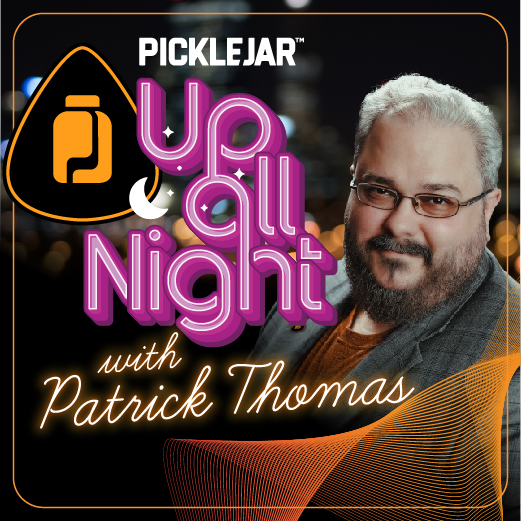
According to reporting by Country Insider, former “PickleJar Up All Night” host Patrick Thomas is suing his former employer. Thomas claims the company behind the syndicated country radio show failed to pay him thousands in promised salary and bonuses.
According to court filings, Thomas was hired with a base salary of $150,000 per year and quarterly bonuses amounting to roughly 20% of that figure. However, after the show abruptly ended in December 2024, Thomas claims that PickleJar stopped paying what he was owed, including his final paycheck and performance bonuses.
The suit, filed in federal court, alleges that Thomas repeatedly reached out to PickleJar CEO Jeffrey James regarding the unpaid wages but received no meaningful response. It also claims the company never issued any of the contractual bonuses owed to Thomas during his run as host.
While the lawsuit doesn’t specify a dollar figure in damages, it estimates that the total owed exceeds $75,000, not including interest and attorney’s fees, which Thomas is also seeking.
Though “Up All Night” was broadcast from the studios of Cumulus Media’s 103.3 Country WKDF in Nashville and distributed across Cumulus-owned affiliates, the broadcaster is not named in the lawsuit.
PickleJar has yet to file a formal response. District Court Judge Eli Richardson has referred the case to a magistrate judge in hopes of reaching a settlement before trial proceedings begin.
Since the show’s cancellation, Thomas has not returned to radio. He currently co-hosts a monthly live comedy event, One Time in Nashville, at Zanie’s Nashville comedy club.
Barrett Media produces daily content on the music, news, and sports media industries. To stay updated, sign up for our newsletters and get the latest information delivered straight to your inbox.
Fox Business Network is set to debut a new reality series featuring Camping World CEO Marcus Lemonis helping save failing businesses.
The Fixer is set to launch on Tuesday, July 29th at 8 PM ET. New episodes will be featured on the FOX broadcast network, with the program re-airing each Tuesday on Fox Business Network until the season finale on September 16th.
“I’m proud to be a part of the Fox Business family, where investors, business leaders, and aspiring entrepreneurs turn for real-time market data and a no-nonsense approach to all things money,” Lemonis said.
Additionally, the series will be made available on the FOX Nation streaming platform.
The series will focus on small businesses in need of wisdom from Marcus Lemonis. It is not the first reality series featuring the Camping World CEO. For eight seasons, his program, The Profit, was featured prominently on Fox Business Network rival CNBC.
He also made appearances on the CNBC program The Partner, as well as reality shows Celebrity Apprentice and Secret Millionaire.
Barrett Media produces daily content on the music, news, and sports media industries. To stay updated, sign up for our newsletters and get the latest information delivered straight to your inbox.
Charles Barkley isn’t holding back when it comes to his frustration with TNT Sports and how the network has handled the looming end of Inside the NBA. During an appearance on Pardon My Take, the Hall of Famer turned Emmy-winning analyst expressed deep disappointment in how TNT’s executives communicated — or failed to — during the uncertainty surrounding the NBA’s new media rights deal and the future of their program on TNT.
“TNT, our bosses, they sucked. Plain and simple,” Barkley said bluntly. “We literally were playing golf during the playoffs, looking at the internet. On story said we lost it, the next story said we still were in negotiations. TNT never came to us like grown folks.”
As reports swirled about Warner Bros. Discovery potentially losing NBA rights to NBC and Amazon, Barkley said those working on Inside the NBA were left in the dark. Even more troubling to him was the emotional toll it took on longtime colleagues who were concerned about their financial stability in the near future.
“These people I genuinely like and love. I’ve been with them for 25 years,” Barkley said. “To hear them talk about losing their jobs in six month. As it got closer, you can see the concern. I thought TNT, our bosses did a s***y job. They did an awful job of keeping us abreast.”
Rather than hear the news internally, Barkley revealed that he found out about the rumored “trade” of Inside the NBA talent to ESPN from the very people at the new network.
“I get a text from Scott Van Pelt, Brian Windhorst, Elle Duncan and Bob Myers saying, ‘Welcome to the family. I’m sitting there like, ‘What family,’ said Barkley. “An hour and a half later, I get a call from TNT when the story broke. I told them you probably could have given us a heads up. You traded us to ESPN, and we had to hear about it on the internet. That’s just not the way you do business.”
Although Barkley did credit TNT for acknowledging a recent pilot episode taped with the Inside the NBA crew as “awful” and getting rid of it, he made it clear he doesn’t want the show’s legacy tarnished by misguided creative decisions.
“They’re trying to do something. We don’t know what it is yet. We taped a pilot, and it was a s*** pilot,” Barkley admitted. “We did axe throwing, and then finger painting. We did four-fifteen minute sections. I was sitting there saying I think this is stupid. I don’t know how stupid it’s going to be till I see it. When we walked outside the studio that night, we’re like that’s the stupidest s*** we’ve ever done.”
Despite his candor, Barkley still expressed love for his coworkers and appreciation for what Inside the NBA has meant to fans.
“People love our show. Don’t just do something stupid just to do it,” he said.
Details of Inside the NBA and how it will be included in ESPN’s coverage of the NBA next season has yet to be released.
Barrett Media produces daily content on the music, news, and sports media industries. To stay updated, sign up for our newsletters and get the latest information delivered straight to your inbox.
In 2025, the crypto industry is no longer a paradise for speculators, but is becoming an important infrastructure for the new global wealth system. Bitcoin has repeatedly set new highs, the Ethereum ecosystem has been fully upgraded, capital and technology have continued to increase, and the way ordinary people obtain digital assets is also undergoing profound changes.
In this trend-driven era, the traditional “time for money” model is being eliminated. More and more people are beginning to establish stable income through systematic and automated methods, and Find Mining is the representative of this new model: a one-stop cloud mining platform, users do not need to understand technology, do not need to buy mining machines, just a mobile phone, can easily access the global mining network, open an exclusive “automated income system”, and earn up to $9,000 in passive income every day.
What is Cloud Mining
Cloud mining is a remotely managed digital asset mining method. Users do not need to purchase expensive equipment, build computer rooms, or handle maintenance work. They only need to rent computing power through the Find Mining platform, and the platform will be responsible for all background operations, including power dispatch, mining machine operation and maintenance, and profit distribution.
You only need to choose the right package, and the system will automatically generate Bitcoin or other cryptocurrencies for you, and settle the daily income into your account. No need to watch the market, no need to operate, truly “using technology to make money for you”.
How to join Find Mining
Step 1: Register and Receive a $15 Bonus Visit www.findmining.com and register with your email address to get a $15 cloud computing power bonus and start earning mining income immediately.
Step 2: Choose a Mining Plan The platform offers flexible plans starting from $100, covering short to long-term periods. You can choose freely based on your budget and goals.
Real Earnings Examples:
Mining Plan
Minimum Investment
Duration
Estimated Total Return
Initial Trial Plan
$15
1 day
$15.60
New User Test Plan
$100
2 days
$108
Short-Term Plan
$1,000
7 days
$1,110
Mid-Term Plan
$5,000
20 days
$6,580
Enhanced Plan
$12,800
30 days
$19,366
Advanced User Plan
$23,000
35 days
$37,490
Step 3: Activate and Earn Daily Once your plan is activated, the system runs automatically. Daily earnings are deposited into your account. Once your balance reaches the minimum threshold, you can withdraw or reinvest to grow your income further.
This is an investment, but also a trend
If you are still looking for a stable and sustainable income channel, Find Mining does not provide a speculative opportunity, but a long-term way to accumulate digital assets. Passive income is no longer exclusive to the rich, but a realistic tool that anyone can have.
While others are still struggling to catch up with their income, your digital asset account is already working for you silently.
Summarize
In 2025, when the digital wave is accelerating, truly smart wealth builders no longer rely on time, labor or luck to achieve growth. They choose to use systems to replace physical strength, use technology to improve efficiency, and use cloud mining to connect the future. Find Mining is a key link in this transformation – it helps users overcome technical barriers and access the global mining network at low cost through a highly automated and intelligent computing power scheduling system, thereby obtaining a stable passive income of up to $9,000 per day, truly creating a “digital cash flow system” for ordinary people.
This is not only a new way of earning, but also a new life strategy. Here, wealth growth no longer comes at the expense of life, but is quietly accumulated and automatically cashed in the background. Choosing Find Mining is choosing a sustainable, replicable, and scalable future. From now on, let the computing power work for you and make passive income a core component of your asset map.
Veteran sports radio host Scott Ferrall is reportedly out at SportsGrid, ending a five-year run with the 24-hour sports wagering network. Multiple on-air personalities also announced their departures this week, although the company has yet to issue an official statement regarding the changes.
Ferrall, known for his signature gravelly voice and high-energy delivery, had been hosting Ferrall Coast to Coast and other programs for SportsGrid since 2020. A message posted Sunday to the official “Ferrall on Grid” X account confirmed the show’s cancellation.
“For everyone who has been asking, the show is unfortunately no longer on the air. Thank you to all the fans who have followed us over the years!” the post read.
The veteran host, 59, became a staple on national airwaves in the early 2000s, with previous stops at CBS Sports Radio and Howard Stern’s channels on SiriusXM. His move to SportsGrid coincided with the network’s aggressive pivot toward sports betting content following the legalization of online gambling in several states.
In addition to Ferrall’s exit, several other personalities confirmed they had parted ways with the network. Hosts and contributors Mike Carver, Jo Madden, Mathias Berbel, and Brian Ciano each shared messages on social media announcing that their time with the company had ended.
Longtime host Gabriel Morency revealed his SportsRage show would no longer appear on SportsGrid TV, though he plans to continue the program in podcast form. Morency added that he would remain a contributor to other SportsGrid shows moving forward.
Ferrall’s departure leaves a notable void in the network’s lineup. With decades of national experience and a loyal fan base, his presence had helped give SportsGrid credibility during its rise in the crowded sports media landscape.
The veteran host posted to social media over the weekend that he’s now placing his daily picks through Prophetable.tv, saying in the post “no more rules, no more filters, no more suits.”
No further information has been made available about Ferrall’s next move or potential replacement programming at SportsGrid.
For everyone who has been asking, the show is unfortunately no longer on the air.
Thank you to all the fans who have followed us over the years!
Barrett Media produces daily content on the music, news, and sports media industries. To stay updated, sign up for our newsletters and get the latest information delivered straight to your inbox.
I’m on the road this week for an important last-minute client project. My assignment is to help a new radio program director learn what goes into the role and develop a content, imaging, and digital strategy with him. Having done it many times over the years, it’s something I enjoy and consider a strength. I take pride in helping brand leaders become strong, well rounded executives. Companies who provide that level of support to new managers send a message, they care about their development. That matters to people.
As I thought about the project, I kept asking myself “why don’t more groups focus on developing future programming leaders?” There are some exceptions but many companies prioritize today over tomorrow. PD’s rarely reach out to champion their people for programming openings, behind the scenes folks who want to move up tell me frequently how little training they receive, and a few who I’ve helped land jobs to lead brands, have stepped into them knowing how to produce but lacking awareness of what goes into running a brand.
Companies have done a good job promoting market managers from within. Internal development for programmers on the other hand needs more work. This isn’t solely on corporate management though. Individuals like to cite a lack of training and opportunity, but how are they overcoming those obstacles themselves if they’re not available internally?
If you want to lead a brand, have you asked other programmers for feedback? Have you tried talking to former leaders who may have more availability? Are you listening to how other stations work, reading or watching videos related to the job, asking execs like Bruce Gilbert, Greg Strassell, Justin Chase, Tom Poleman, Brad Hardin, John Zellner, Phil Becker, Jeff Sottolano and others what you need to do to move up, or contacting me or another industry consultant for advice?
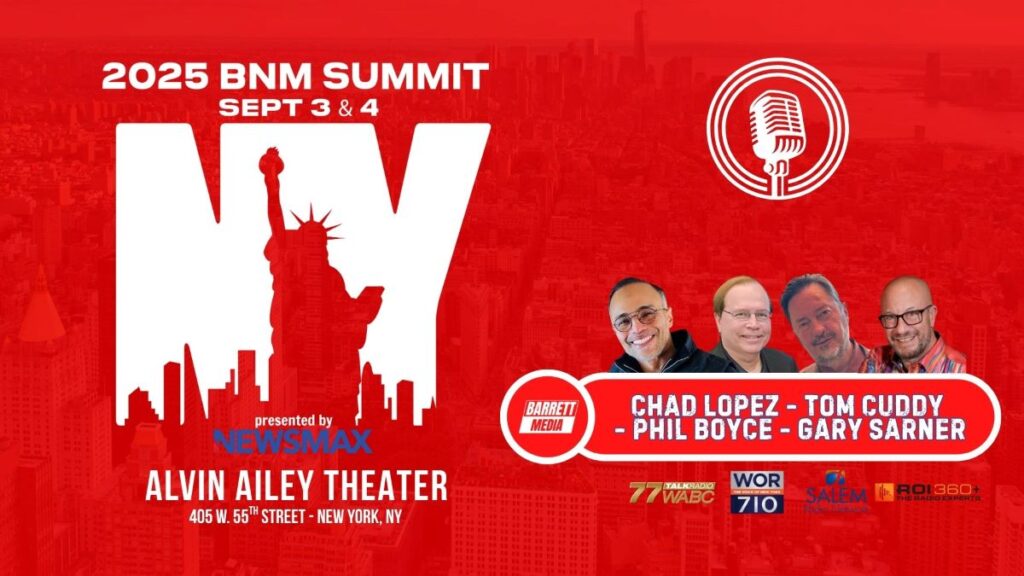
Barrett Media is hosting its third news media conference in September. It’s a great event, and our first one in New York City. A strong group of programmers, market managers, executives, talent and advertising professionals attend these shows and discuss how they manage various situations to grow their businesses. Doesn’t it make sense to be in the room, soak up their knowledge, and build relationships with those who could hire you? I see a lot of accomplished people in our rooms, but the lack of attendance from behind the scenes folks is staggering. Where else are you going to gain relationships outside your office or studio and the education needed to advance your career?
One future broadcaster attended our NYC sports summit 2 years ago and said he learned more in 2 days at the show than the prior 2-3 years inside of his radio station. After thanking him for the kind words, I asked him to spread that word to others because most don’t understand what they’re missing by not putting themselves in different rooms and situations, and around other professionals.
I’m not sharing that to convince people to attend the BNM Summit. I’m doing so to point out that there are options available for those who want to learn and become brand leaders. If it’s not our event, go to MSBC, CRS, the NAB Show or another industry show. You’ll get better. Knowledge and connections are available everywhere.
Creating excuses is easy. Finding solutions is harder. But they do exist. Whether you choose to invest the time necessary to grow professionally is a different matter.
AI is rapidly becoming a key tool for executing tasks. It will gain even more traction moving forward. If less roles exist because of it, where do future leaders come from? How incentivized are managers going to be to help you develop if your progress could cost them their position?
The beauty of professional sports is you see many teams comprised of older veterans, middle of their career stars, and emerging rookies. It takes a mixture of all three to win now, and win later. The best teams and organizations understand this, and compete year-after-year for championships. You can find that reflected in a radio station’s on-air lineup, but in the coaching department, not so much.
Grooming future leaders is essential otherwise the industry will continue recycling folks who were great to navigate past problems, but aren’t built for the next wave of evolution. As the world changes, the only way to assure we stay ahead is to create a path for those who can lead us in new directions. If it started with experienced leaders sharing their knowledge and promoting their people for larger roles that’d be great. But if that option isn’t available, it’s on you to invest in your own development. Your growth in the industry depends on it.
Barrett Media Changes
Dylan Barrett has spent the past month making videos of professionals who’ve spoken at our shows during the past 7 years. He’s also been creating new promo videos for different things we do, working on a new daily video to summarize the news of the day, plus we’re working on a few additional video projects for after the BNM Summit and Barrett Bash. Don’t be surprised if you see myself and a few of our editors in video form more often.
In addition, Barrett Media is now on these nine social media platforms below. Starting Friday, you’ll find content from us regularly on all of them. Click any of these links and you’ll be directed to our pages: X, Facebook, LinkedIn, TikTok, Instagram, YouTube, Rumble, Threads, Bluesky. You can also find all of our content on Newsbreak.
Strengthening our writing team is always a top priority, and I’m excited to welcome sports radio veteran John Lund as a new weekly sports media columnist. John and I worked together at 95.7 The Game in San Francisco and he has hosted in Dallas, Portland, Pittsburgh, Detroit, Salt Lake City, and nationally on ESPN Radio. He’s even programmed in a few cities. His first piece hits the website Friday August 1st.
I’m also pleased to welcome back Krystina Alarcon Carroll as a news media features writer and columnist. Krystina’s first new contribution will hit the website on August 6th.
As happy as I am to add John and Krystina, we’re saying goodbye to our friend Andy Masur. Andy has been with me for over 6 years, and has done a lot of quality work during that time. He’s a total pro, and though I’m sad to see him go, I’m glad that he’s doing well at WGN in Chicago.
Hiring hasn’t been a key focus due to planning for the BNM Summit and Barrett Bash, and managing my normal duties. That said, I believe our sales, and sports and news television expertise can be better. I’m also trying to improve our music radio coverage and will be talking to professionals in Austin, Texas next week at MSBC to learn how we can deliver a better experience. Professionals with a passion for writing and sales can inquire via email at Jason@BarrettMedia.com.
I shared a few weeks ago that we’re going to start packaging our music radio columns and features and re-distributing them to music radio folks on Friday’s. That starts on August 1st. The new weekly newsletter will be titled The Nooner and will be distributed at, you guessed it, Noon ET.
BNM Summit Additions
We’ve already announced 14 news/talk professionals for the 2025 BNM Summit, and we’re adding a few more heavyweights today. I’m thrilled to welcome Red Apple Media and WABC Radio President Chad Lopez to this year’s show. I’ve gotten to know Chad in recent years, and his passion for the format and business is awesome. Attendees will have a chance to hear it on display on Wednesday September 3rd.
Another gentleman with a ton of passion for the business is ROI360+ founder Gary Sarner. Gary will share his insights on advertising at the Summit, and will be in attendance for the Barrett Bash. Given how much he invests on behalf of his clients across the radio industry, executives will want to hear what he has to say.
On the programming end, we’re honored to welcome two men with many skins on the wall. SVP and Director of Spoken Word Formats for Salem Radio Network Phil Boyce returns to the stage to join a power panel alongside Drew Anderssen, Chris Berry and Pete Mundo. Also joining the lineup is 710 WOR PD Tom Cuddy, who will slide in alongside Ken Charles and Ann Thomas. It’s a pleasure to have both men involved.
On the business front, my thanks to Red Apple Media/WABC Radio, Hofstra University, and Salem Radio Network for joining us as partners of the 2025 BNM Summit. It’s also a pleasure to have Red Apple Media/WABC Radio and Core Image Studio sign on as partners of The Barrett Bash. We only have a few sponsorship opportunities left for the Summit, and a few more for the Bash. Those interested in opportunities can learn more by contacting Stephanie Eads at Stephanie@BarrettMedia.com.
We’ll have more names to announce in August for both events, as well as our award recipients for the Gold Standard in Business, Leadership and Programming, and a new award, News Media’s Lifetime Achievement Award. A huge thank you to Premiere Networks for supporting the awards ceremony.
If you haven’t yet bought a ticket to the Summit or reserved your hotel room, log on to BNMSummit.com. Those attending the conference automatically receive an invitation to the Barrett Bash. Nearly 150 have already registered for our special 10-year anniversary party.
The Passing of Hulk Hogan
Hulk Hogan died last Thursday at the age of 71. As a wrestling fan for over four decades, the news saddened me. I watched his entire career, met him twice during radio tours, and interviewed him twice when I hosted shows. The interactions every time were exceptional. He valued the support, and understood how to engage and entertain an audience. Nobody has had a greater impact on professional wrestling than Hogan.
When he passed away, many wasted no time spitting on his grave. There’s an old saying, if you have nothing good to say, say nothing at all. Why some who don’t know a celebrity on a personal level feel a need to flock to social media to trash them is beyond my understanding. It may boost your impressions, comments, likes, and traffic, but how many see what you write, form an opinion that you’re classless, and either unfollow or make a mental note to never support your work again or discuss future opportunities with you? How much more is lost vs. gained when you show a lack of decency when someone dies?
You don’t hate journalists enough.
Gawker lost because what they printed was so wrong that it tanked the publication. pic.twitter.com/OmfkaU4tZn
I understand that Hogan didn’t live the perfect life. His remarks in 2015 were awful but he did far more good than bad, and many have since forgiven him. He also accepted Christ into his life in 2023. When a person passes, most just want to pay their respects and share a memory or two of how the individual affected their lives. They’re not looking for a legacy examination or someone to trash the recently deceased.
Quick Hits
My thanks to Jason Whitlock for the invite to appear on his show Fearless last week alongside Steve Kim and Ryan Glasspiegel. The episode covered a plethora of sports media issues. I’m not a big prediction guy but to borrow a line from Phil Mackey, a little reckless speculation never hurt anybody. Check it out when time permits.
The best stat I saw last week came from Edison Research. When you read that time spent listening to podcasts has increased by 355% since 2015, rising from roughly 170 million hours per week to 770 million hours per week, or an increase of 603 million hours per week over the past decade, that gets your attention. Let’s hope the advertising industry noticed.
Another great piece of data this week came from Nielsen. Among Adults 25-54, average quarter-hour (AQH) audiences in Portable People Meter (PPM) markets jumped 19% compared to Fall 2024. That’s consistent across all demos, with AQH audience growth ranging from 17% to 19%. Nielsen shared that 23% of listening occasions fell within the 3-4 minute window and would’ve previously gone unmeasured. Many beat up Nielsen when the news isn’t good, but when the signs are good, they deserve credit too.
Condolences to Ron Chase and Radio-Online on the passing of co-founder Lisa Chase. Lisa passed away on Sunday following complications from pneumonia after an eight-year battle with cancer. She was 67. On behalf of Barrett Media, we extend our deepest sympathies.
I’m wishing Vinny DiMarco nothing but the best moving forward. Vinny exited Good Karma Brands New York in June after previously leading ESPN 880. He was always good to me and our team.
The New York Post published a great article on Sunday featuring a conversation with Jay Leno. Leno explained how Late Night television has prioritized politics over comedy, making it difficult to reach the entire audience. It’s worth your time if the topic interests you.
I’ve shared before how artificial intelligence has many positives for improving our business, but that doesn’t mean there aren’t concerns. The wrong tools landing in the wrong hands can do irreversible damage. OpenAI CEO Sam Altman warned this week that a fraud crisis could be on the horizon. If you’re interested in the topic and haven’t listened to him speak, click the video below.
I stumbled upon a great story about audience building last week. It came from Nathan Barry on LinkedIn and explained how a newsletter created for an audience of one, Tom Brady, turned into content many more wanted. A great lesson for professionals in any area of the media industry.
Barstool Sports Chicago is looking for an Executive Producer, Segment Producer, and Video Coordinator/Editor for its new daily live show in partnership with Fox Sports. Those interested in learning more, click here.
It may be the cool thing to do but you won’t find me on X asking Grok who the most famous person to view my profile is.
If you haven’t watched the Billy Joel documentary, And So It Goes, you’re missing out. HBO crushed it.
There were a few new releases last week that were outstanding. First, the latest From Ashes to New, New Disease is outstanding. I must’ve listened to it 5-10 times over the weekend. Another instant hit is Luke Combs‘ Back in the Saddle Again. I love how Combs created anticipation for the song a few weeks ago on X by sharing a one-minute clip of it. Like him or not, MGK is a hit maker, and Miss Sunshine is no exception. Last, if you’re a fan of Three Days Grace, you’ll enjoy Kill Me Fast.
Barrett Media produces daily content on the music, news, and sports media industries. To stay updated, sign up for our newsletters and get the latest information delivered straight to your inbox.
When the NFL Network launched in November of 2003, there were many questions. Could a league-owned entity be able to provide coverage about a sport whose regular season and playoffs lasted less than 50% of the year? Is the passion for football-specific content going to garner an audience to compete against the traditional sports networks such as ESPN? Will coverage be slanted to protect the league since the real estate is owned and operated by the NFL?
Twenty-one years later, with access to less than 50 million homes, the NFL is waving the white flag on the NFL Network. This week, reports surfaced that the NFL and ESPN are in talks for the worldwide leader to take ownership of some of the NFL’s media arms, including the NFL Network and NFL RedZone. The reports state this is part of a deal where the NFL would own up to a 10% stake in ESPN.
While analysts are speculating that this deal could signal a potential spin-off of ESPN away from Disney, I’m more concerned about a league investing in a media company that covers the league. Does this benefit the viewer, and will this change how ESPN covers the league?
Let’s look at the playing field. ESPN is currently owned by two entities. Disney owns 80% of ESPN, while Hearst owns the remaining 20%. If the NFL becomes a 10% partner in the ownership of ESPN, you can see that it will still be the lowest minority owner of the network.
How an NFL Investment Benefits ESPN
This would provide Disney—or ESPN—a leg up in any broadcasting rights negotiations with the NFL. It’s a smart play for ESPN, as the league has opt-out provisions with most of their rights deals following the 2029 season. These include Amazon, CBS, FOX, NBC, and of course, ESPN.
According to reports, while these agreements all last through the 2033 season, Commissioner Roger Goodell considers the league’s media deals undervalued because of the mass viewership that NFL games bring to these networks.
If you look at 2024’s most viewed programs, 72 of the top 100 telecasts in the country belonged to the NFL, including the top 11 broadcasts—all belonging to football. Only three broadcasts from the NBA made the list, and five games of the Dodgers vs. Yankees World Series made the list.
Sorry NHL, you didn’t make the list.
For comparison’s sake, this year the NBA is set to begin their new media rights deals with Walt Disney (ESPN/ABC), Amazon, and NBCUniversal for a reported $76 billion, which represents a 165% change from their previous rights deal, according to Sportcal.
Think of what the NFL’s asking price could be based on what the NBA gained in their last media rights deal.
That’s why ESPN giving up a percentage of their business makes sense. You earn cash off the purchase from the league, only to turn it around and reinvest in rights to showcase the league. Currently, ESPN already pays $2.7 billion per season for 25 games a year, mostly on Monday Nights. It will have ESPN’s first Super Bowl on its platforms, including its sister network, ABC, in February 2027.
Do you think that the NFL will charge the going rate to a network they have a percentage stake in? Common sense says no. You would think the NFL would indeed treat ESPN differently than FOX, CBS, NBC, Netflix, or Amazon because they need eyeballs to come to the product to get the return on their investment.
Does this benefit the viewer? With cord-cutting not slowing down anytime soon, this makes the pressure to perform on ESPN’s DTC product even more important. Would having the NFL as a minority owner provide more access or programming options to upsell the consumer to invest in ESPN (the DTC product)? Possibly, and it would be a signature piece of how ESPN could market ESPN if they could secure something that no other network can provide.
Would the NFL allow NFL RedZone to be streamed on ESPN’s DTC product and their NFL+ DTC product? Would ESPN want the consumer to have a choice, pitting partner against partner?
Will NFL fans have to pony up even more money to watch NFL games in a time where costs are rising across the nation on everything?
Does an NFL Investment Change ESPN?
The bigger question to ask about the NFL investing in ESPN is how the league will be covered by the network as a partner. In a time when journalism seems to be more questioned than respected, could the league have some influence on how their product is portrayed on the largest sports network in the country?
As I’m writing this on a Saturday morning, I decided to check out the top stories on ESPN.com’s NFL page and NFL.com. On ESPN.com’s NFL page, there are headlines such as “NFLPA doc: Financial actions could be criminal” and “Sources: Around 100 NFLers face SB-tix penalty.”
On NFL.com, neither of those stories are on the front page nor in the news section. However, if you’re interested in Manti Te’o’s top ten linebackers this season or 13 veterans who could lose their starting jobs at training camp, the NFL is right there for you.
What’s to say that investment leads to influence leads to suppression? It’s a fair question to ask if the most powerful sports league in the country could land their thumb on the scale of a network that they own a minority stake in.
This past month, when Pablo Torre and Mike Florio exposed potential collusion between the NFL and the NFLPA to keep player salaries down, networks with partnerships and investments in media rights with the NFL stayed silent. If the NFL is an owner in ESPN, does that story—or one similar—ever see the light of day on the network?
Who Benefits?
Does an NFL ownership stake in ESPN benefit ESPN? Yes.
Does ESPN taking over the NFL Network and NFL RedZone benefit the NFL? Yes.
Will fans have to shell out more money to watch NFL product if this purchase is made? Probably.
In the end, the only ones likely to benefit from this potential purchase are the NFL and ESPN. The consumer will likely be overlooked, asked to pay more for the same product they already enjoy which will require more hoops to jump through to find it—all in the name of business.
Proving once again that NFL football will continue to serve as the king of American sport.
Barrett Media produces daily content on the music, news, and sports media industries. To stay updated, sign up for our newsletters and get the latest information delivered straight to your inbox.
To list the accomplishments of Nik Carter would take the majority of this feature. His LinkedIn profile summarizes his skills as follows: Musicologist, Voice Acting, Radio Presenting, Talk Radio, Dialects, Voice Over, Musicologist in Pop Culture, Expert in Pop Culture, Interviewer, Improvisational Comedy, Comedian, and Dog Enthusiast.
He currently holds down afternoons on 95.5 KLOS Los Angeles. Among other things, Carter is known for his interview skills.
I began by holding up the mirror to him, asking, “If you were sitting down to interview Nik Carter, what’s the first question you would ask?” Carter laughs at the idea.
“No one’s ever asked me that. I don’t know because I don’t see myself as that particularly interesting,” he says.
Yet, for decades, Carter has been one of the most dynamic voices in radio and television. Known for his ability to connect with anyone. Artists, listeners, industry veterans. Carter’s career has defied the mold of the Rock personality. A syndicator once called him “a chameleon,” a label Carter embraces.
“She said, You can talk about anything; you could talk to anyone. And I said, well, that was just my role model when I came up. I came up through the ‘90s, and my immediate default comparison was Howard Stern, because I was on a station with a really tough Rock battle against Opie and Anthony. I had to go a bit edgier.”
But it wasn’t Stern who really caught Carter’s attention.
“As much as I worshipped him in certain regards, my role models were always guys like Larry King, Tavis Smiley and Tom Snyder who could literally talk to anybody. I remember I would see Tom Snyder talk to Joe Strummer one night, and then the next night he would talk to Moshe Dayan. That was the blueprint for me.”
Carter’s wide-ranging curiosity and refusal to be defined by genre or demographic assumptions have allowed him to create unexpected, meaningful connections with the audience.
“I am just a pop culture, music, information, real estate, and political nerd. I think people have always programmed in a linear fashion with this idea that people are one-dimensional. If you’re on a Classic Rock station, people think that your only reference is other Classic Rock artists. I just whipped out, started singing Snow ‘Informer’ on the air to a listener the other day. He chimed right in. You have to pick your spots. I feel like there are a lot of people out there who are not even pop culture, but sort of cultural, societal sponges like myself.”
As far as being a “fearless interviewer” as he is described on the 95.5 KLOS website, Carter isn’t sure.
“I don’t know. One of the demos that I sent to them was an interview demo. And I asked some questions that I know people want to know about artists. Being a man of color in Alternative throughout most of my career and then Active Rock and then Classic Rock, I know that artists would come around, and they wouldn’t see anyone who looks like me for the most part. So, they were really sort of thrown off.”
That dynamic became crystal clear during his days on VH1.
“I used to joke; VH1 Classic hired a spiky-haired black guy to play Classic Rock to a bunch of red states. What could possibly go wrong?”
Carter added that they were accustomed to “The guy with the gray hair, the ponytail and the Hawaiian shirt.”
“I remember I was talking to Heart. They had had a bad experience with VH1 Classic, and they didn’t want to come in. When they came in, they were shocked that I not only knew them, but I was respectful. I would say things like, I thought I knew about the mushroom story, but after reading the book, you guys have been through some shit. And they just opened up like a flower.”
Carter’s secret sauce isn’t shock value or controversy but empathy and curiosity.
“I remember the first time I talked to Rob Halford. I had heard people say, yeah, man, when you guys got sued for a kid trying to commit suicide, that must’ve sucked. And of course, who wants to talk about that first of all? And second, who would respond to that?”
“I remember asking Halford, after the trial, how that affected your perception of America? Because I think America’s the only place where you could be sued in the way in which you were, and it wouldn’t just be immediately dismissed out of hand. And he talked very openly about it. That’s a great setup, though.”
Carter thrives on going beyond the obvious. He recalls a conversation with Huey Lewis, during which he was asked to provide questions in advance due to Lewis’s hearing issues.
“I also knew that whenever I did that, I could get you to go beyond just the 10 questions that we were charged with asking. So, I started asking him about his relationship with Phil Lynott (Thin Lizzy), and he lit up.”
“I said, dude, you’re on ‘Live and Dangerous,’ that’s insane. The average person who’s rocking to ‘Power of Love’ has no idea. But I said to him, so at the ‘We Are the World ‘ session, you got your solo line because Prince didn’t show up, right? And he looks at me, goes, Nik, how do you know that?”
Photo Nik Carter Instagram
Carter’s path to Classic Rock was not straightforward.
“I came up in Alternative, and that was my passion. At the time, Classic Rock seemed like a death sentence. I got offered jobs in the format, which I avoided like the plague because I was so turned off by the format for a long time.”
“My first foray into the format, I worked for a very well-known Classic Rock programmer who exemplified everything that was wrong with the format. For the longest time, it was a format programmed by and for boomers.”
“Those who were born with the standard self-importance champion. I would get, you can’t talk over the music, the music is sacrosanct, and I’m like, it’s Jackson Browne and Steve Winwood and ‘Blue Morning, Blue Day.’ I respect all those artists, but it ain’t that deep.”
“My boss said to me I learn something new listening to you every day. Another member of the programming cabal said, I think you’re the most prepared jock I’ve ever worked with. I feel like you prepare more than anyone else. Unless that’s just mostly stuff that’s just ruminating in your head. I said, yeah, a lot of it is. A lot of it’s just factoids that have been sitting there looking for an outlet.”
Despite his eclectic interests. Music, pop culture, and yes, his dog, who often outperforms him on Instagram. Radio remains Carter’s first love.
“I’m a complete radio nerd. I just love radio. I love to listen to air checks. “When I moved here, KLOS was interesting because it’s in a cluster with Power 106, KDAY, and Cali.”
“And just sort of culturally, too, we’ve always kind of been siloed apart from those other stations. Everybody’s very nice and everybody gets along, but I spend a lot of time on that other side of the building, the Power 106 and KDAY side, because as much as I love everything we play on KLOS, I love that stuff too.”
“Whenever I meet listeners, they’re like, hey man, I love your show. My default answer is, I’m just trying to have a good time, and I hope that it rubs off on a few people.”
Barrett Media produces daily content on the music, news, and sports media industries. To stay updated, sign up for our newsletters and get the latest information delivered straight to your inbox.
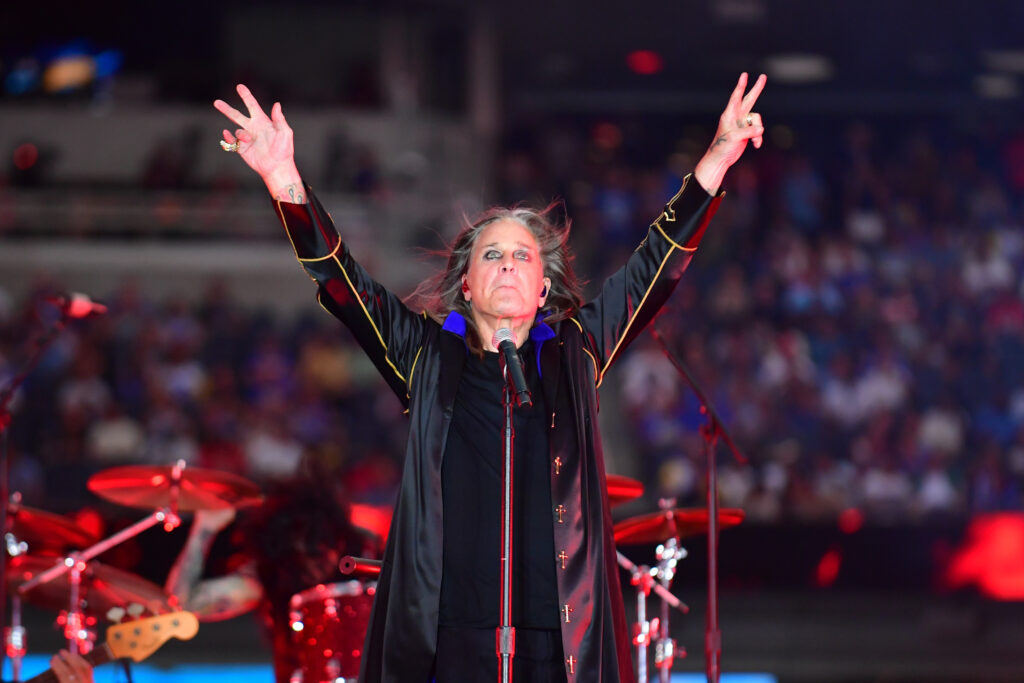
A lot has already been written about the unexpected passing of Ozzy Osbourne. Keith Cunningham wrote a great column about how to handle losing a legend on the air, where he stressed the need to make it personal. Add that to everything else that’s been written about Ozzy, and I’m not sure there’s a lot more to say.
What we do need to discuss is the reality that this is going to continue happening. Classic Rock is built on a foundation of artists who are all aging. Beyond the people we’ve already lost, there are, unfortunately, many more to come. Which leads me to ask the important question: are you ready?
I don’t know how much or how little your station had to scramble when the news about Ozzy hit. But I’m betting in a lot of cases it was a massive disruption. And I have no doubt we could do a better job of planning for these terrible moments. It’s not fun, but we need to prepare for the worst. So here are a few thoughts to get you started.
You Need a Plan
I want to be sensitive here, but much like your station has core, secondary and tertiary artists, there are bigger names whose loss will be as gut-wrenching as what we felt last week when Ozzy died. Others that aren’t as beloved but still deserve an on-air tribute. And some who only require a small mention because, while sad, they will not be as relatable or important to your audience.
Even if you think you know who is at each level, take some time and make lists. Considering how many different approaches there are to the format, these lists will vary quite a bit. One good gut check is to involve other staff members in this part of the planning. See if they agree with your opinions on how much or little to disrupt your regular programming in each case.
Then develop a plan for what each level of celebrity tribute will look and sound like. Is it all music from that artist for a few hours? A day? More?
Or is it a couple of songs an hour to hit listeners with the news as they cycle in and out? Whatever you think is appropriate, deciding ahead of time helps take doubt or guesswork out of the equation and allows you to act quickly.
Create a list of songs broken into primary, secondary and tertiary levels that relate to each artist so you can easily turn your music log into an appropriate tribute without having to dig around or make decisions.
Ideally, do this for all your main artists, but at the very least, focus on the biggest names so you are ready.
It’s also a good time to make sure all the songs you need are in your library and your scheduling system. Having songs organized will save you from potential mistakes like I almost made, suggesting a Dio-era Black Sabbath song for airplay when Ozzy passed.
Solid preparation will also stop you from choosing songs that heavily feature the wrong band member. Making sure you have the songs that best represent the person we lost will make your station sound more credible.
Prepare the Production
You can’t produce individual tributes for everyone who could die. It’s an impossible amount of work. What you can do is create a couple of shells that you can easily customize each time we lose someone. That way, if your station voice is on vacation or in the wrong time zone, you already have what you need to start producing a stellar audio tribute.
Gather Your Digital Assets
Digital is an important part of reacting quickly to an artist’s passing. There was a long period after the news about Ozzy broke that I still didn’t see anything on radio station websites or social channels. Take the time to gather up assets that you can use and keep them in a place where everyone who might need them has easy access to help get posts out.
Next Man (or Woman) Up
Once you have a disaster plan, make sure it’s clear who is going to execute it, including what happens if you, the Program Director, are unavailable. Know who is responsible for making things happen, and if that person is unavailable, who’s next on the list.
Further, depending on your level of staffing, decide what is getting delegated and to whom and who their backups are. Finally, if you use out-of-market voice trackers, make sure they understand your plans and expectations in these sorts of situations.
I realize that level of detail might feel excessive, but trust me, these things always happen at the worst possible times, and it’s when our audience needs us the most.
I realize what I’m asking you to do. I warned you at the beginning that it’s not fun. And it’s a bunch of extra work, which is something no one needs.
That is, until you need it like we did last week. The more prepared you are for moments like this, the more you’ll be able to focus on doing what Keith suggested, interacting with your audience.
Barrett Media produces daily content on the music, news, and sports media industries. To stay updated, sign up for our newsletters and get the latest information delivered straight to your inbox.