There are many different approaches in sports talk radio so keep that in mind as you sift through this column. For some Programmers and Shows, they want nothing to do with guests or features on their airwaves, For others, they believe they’re vital to the station’s success. If you’re on the side of not wanting guests or regularly positioned features to appear on your airwaves then this piece probably isn’t for you because from where I sit, I believe they have very strong value when it comes to growing your ratings.
First, the host in my opinion is the main attraction that the audience is coming to see. To truly showcase him or her in a big way though, listeners expect to hear multiple things occur inside of a show. This is why callers are introduced, Facebook, Twitter and Text messages are read, soundbytes are used to further add emotion to stories, features are executed to showcase the show’s creative side and of course, guests appear to provide new information, entertainment and opinion on the day’s top stories. When it involves guests, I want people on the dial who fit the day’s angles, are recognizable to the audience and can speak clearly and offer information and an interesting viewpoint. It’s then up to my host(s) to do their part and pull the good stuff out of them.
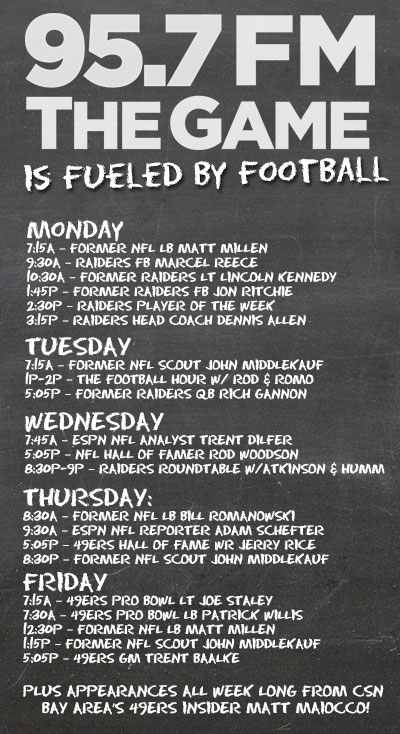 When you look across the sports radio landscape today, you’ll notice many stations beefing up their programming regulars for football season. As an example, check out what WEEI in Boston put together for the fall (click here). I’m sure you’ll agree, it’s very impressive. Why do station’s do this? Because football drives the largest numbers for the format and every station wants to close out the final four months of the year in strong fashion so advertisers have something to feel good and excited about as they make decisions for the upcoming calendar year.
While adding NFL guests of significance can help your station improve during the fall when football takes center stage, it has less impact if the guests are not heard in a regular position. In today’s PPM world, ratings are achieved much more by driving occasions than they are by recall and happenstance. When a station heavily promotes the appearance of a well known guest for a set day and time, they’re doing so because they believe the audience behavior will adapt and that particular quarter hour of the guest’s regular appearance will generate strong ratings measurement. I believe in this same approach and it’s worked for me.
If the goal is to give the audience a reason to tune in consistently, then I have a difficult time understanding why a station would take an opposite approach and make the audience work to find the guest or creative benchmark. I’ve heard hosts, producers and programmers talk about not wanting to be predictable and while I can respect that and understand it, you can’t show me a specific ratings spike for unpredictability. Radio stations are measured by data the last time I checked, not perception from those who work inside of it.
 Can you imagine if other businesses operated with that approach? Imagine if a roofing company told you they’d come by to fix your roof when they felt like doing it rather than providing a specific day and time. Try going to the dentist and see if you can get in when you feel like it. If it’s not scheduled, you’re not getting in unless it’s a major problem. Lastly, how about your local pizza company. Some places give you a window of time and promise to deliver your food by then or they’ll refund your money. What if they just told you “you’ll eat when we get it there”?
Is that really the best way for radio to treat its audience which has limited time already and doesn’t “need” to use us but instead “wants” to?
Remember, the radio station is taking on an expense by paying someone to appear each week. They believe the individual has a strong enough importance to the audience to be featured weekly and the content that they’ll be discussing has enough of an appeal to continue being highlighted for somewhere between 20-26 weeks. By positioning the guest on a set day and time, the station now gets the increased benefit of promoting it heavily via promos which makes it easier for the listener to find it plus the sales team now has a chance to sell a sponsorship with an adjacency commercial, which only helps increase the possibility of the client’s message being heard. That’s important because without satisfied clients, you don’t have the benefit of these types of opportunities.
 If you’re booking someone with minimal value regularly, I’d ask you why you’re wasting money on them and tying up a quarter hour on your show. You don’t need to “fill segments” with guests who provide average return on your investment. You need to secure strong guests who matter to and connect with the audience. If you do that, then it’s the host’s job to maximize the opportunity. The good ones not only deliver strong quarter-hours with their regulars but they also work at getting to know them even better. By doing so, it strengthens the relationship and makes for an even more compelling and informative conversation. Let’s face it, people are more likely to open up and share things when they feel more connected to the person they’re speaking with. It’s all about comfort.
For the past 3 years in San Francisco and my previous 2 years in St. Louis, I’ve done deals with athletes, coaches, analysts and executives who I felt could help the programming team improve its performance. This approach has helped my employers see increased ratings and it’s given my staff and our shows a leg up when heading into their daily talk shows. While each market and guest opportunity is different, I don’t waver much on positioning people in regular spots because the top contributors typically outperform the show’s ratings and that has a lot to do with making sure the audience knows where to find it. Very rarely have I seen success come from weekly guests who weren’t offered in a set position.
For example, when I was in St. Louis, our afternoon show would deliver between a 6-8 share and place themselves consistently in the top 3. Those numbers were always at their peak during football season which was also when former Rams Running Back Steven Jackson would appear on the show every Monday at 4pm. Steven was the team’s top star at the time and he was the type of guy who fans either loved or hated so it wasn’t difficult to recognize that having him on regularly would lead to increased listening.
 I remember looking at the quarter hour appearances for when Steven’s segment ran and they’d always be in the double digits. There was one specific appearance where he showed up and the segment registered a 26 share (back in 2006 after he got into a heated exchange on the field with Aaron Curry of the Seahawks) which was insane. In addition to that, the show would get lift in its next quarter-hour because the momentum from Steven’s interview would carry over. That’s the type of value that a great contributor can provide your show. Once the afternoon crew saw how Steven was helping them lead people to the dial, they became even more energized from it and worked diligently to find ways to make it even better. That’s the goal of what you’re trying to do with a regular weekly appointment.
Look at it like this, if you have a 4-hour daily talk show registering a 6 share and the contributor is strong enough to influence growth in two quarter-hours per day (one during the interview and one the segment after), that’s roughly over 10% of the show’s performance being lifted. If the show is 2-3 hours in length, the percentage is even higher. Now if you add more than 1 strong contributor per day to your station’s lineup, you’re slanting the odds in your favor even more and that’s ultimately what this game is about – playing the odds to give yourself a chance to win.
I have an old saying that I’ve used with some of my people over the years and I still believe in it to this day – when you look at a superstar athlete on your local team you should see one thing – dollar signs! On every team there is at least one superstar who people in your market are excited to cheer for. They buy tickets, merchandise, watch games on TV and listen to them on radio all because of this guy. If you have the ability to develop a relationship with that individual and grow it to the point where it leads to a regular position on your show, you’re going to see it pay off in a big way when it comes to growing your ratings, revenue and external buzz.
 I’ve seen it happen with Steven Jackson, Buster Posey, Jerry Rice and countless others and it’s not going to change anytime soon. People today care more about what exists outside the lines than what happens inside the lines and they’re not just interested in the performer they see on the field, they want to know everything they can about the individual. The best way to do that is through a set regular appointment.
Every focus group and listener survey I’ve ever been a part of, guests usually generate a very high response. Your audience wants to hear from people they like, cheered for and have interesting opinions and insight to share on the subjects that appeal most to them. Usually the ones inside the radio station who want no part of the bigger guests are the people who either don’t want to do the leg work to track them down or those who feel that the appearance of the guest could upstage their own relevance.
In both cases, I think that’s ridiculous. When all is said and done, a strong high profile guest with great content to offer enhances the image of the host and the extra effort invested behind the scenes to get it done, leads to a measurable win for the show. To do big things takes hard work and if you’re not doing it, trust me your competitor will.
 As I started out at the beginning of this piece, not everyone agrees with booking regular appointments and that’s ok. You’ve got to take the approach that you feel most comfortable with. For me though, I believe your shows start off feeling more confident because they know they have something strong and unique each day that the audience will enjoy. I know the advertisers like it because it allows them to be connected to high profile personalities which helps showcase their brand in a better light and I know the audiences support it because if the content has strong appeal and is easy to find, they’ll prefer routine over unpredictability.
At the end of the day, we’re in the ratings and revenue business and regular appointments help both sides of the operation deliver results. All we can go on is the evidence we’ve accumulated and as long as the data suggests that it helps us win, it’s our job to use it to help our shows and companies. After all, isn’t that what we’re in this for?