If you’ve ever watched the show “Shark Tank” or “The Voice“, you’ve watched people present themselves in front of the coaches or sharks, hoping to get them excited about what they do. If they perform well, multiple people on the show could be vying for their services and within a matter of seconds, they’re forced to make a decision on who they wish to partner with. If they make the right choice, it could pay huge dividends. If they choose poorly, they’re back to square one and kicking themselves for not reading the room differently.
Well it’s no different in our business. One of the toughest decisions we face is the decision to accept or reject an opportunity of employment. If you’re in a manager’s shoes, you also have to decide whether or not someone is a good or bad fit for your brand. On a personal level, people want to make a good living so they can take care of their families and they want to be surrounded by people who they respect and like working with. They want to perform for a company with a good track record and be seen as a valuable member of the organization but too often during the process, they allow personal friendships and large sums of money to cloud their decisions. They stop doing their homework on the people and companies they may work for because a few good pieces of feedback and a high salary number that meets or exceeds expectation, is enough to turn a blind eye to some potential warning signs.
 Equally in danger is the employer. They’re the ones having to decide whether or not you’re worthy of leading the organization, being the face of the brand or an individual worth attaching a client’s message to. They have to be sure that an employee is a reflection of what their company represents and they’re the ones on the hook for large sums of money. They also have to endure battles and have their ducks in a row when explaining the brand’s results and personnel choices. If they don’t pan out or fail to meet expectation, they then have to address those same subjects internally and externally and figure out solutions to get things fixed.
I’ve learned over the past 9 years of programming that the process for hiring someone is much harder than anything you might imagine. I’ve hired people who walked in the door with baggage and I’ve been rewarded strongly for it and I’ve hired people who appeared to be clean as a whistle, yet ended up being dirty. That said, one thing I take pride in and consider extremely important is doing my homework on anyone I hire. I may not end up being right all the time but it won’t be for a lack of due diligence. In numerous cases I’ve spent months evaluating someone before pulling the trigger on hiring them and usually when I’ve operated that way I’ve made smart choices.
 In my opinion, this is a big part of every manager’s job. Not being privy to what every building and company does, I’m not sure if every programmer, personality or radio executive values this the same. Often personalities get blinded by the lure of a bigger time slot and paycheck which feeds their ego and makes them feel more important. General Managers, Sales Managers and Corporate Executives will sometimes look at a person’s track record of ratings, market size and industry reputation and move forward with that person quickly out of fear of losing them rather than dig through the weeds to find out what that person’s background is like.
One of my favorite situations during my career took place in April 2011. I was brought into San Francisco by Entercom to discuss the PD position for what is now known as 95.7 The Game. The discussions and meetings I had been involved in up to that point had been fantastic and I was excited by the possibility of competing in market #4. I knew the company’s reputation and commitment towards doing local sports talk throughout the county was strong and I felt the offer to join them in San Francisco would be to my liking.
 On Friday night, my girlfriend Stephanie and I headed to a Sharks playoff game with my former General Manager Dwight Walker and on Saturday we were given time to scout the area and make sure it was a good personal fit. I was blown away by the market and knew I wanted to live and work here for the next 4 years. I also was excited about the possibility of working for Dwight and I sensed he felt the same way about having me lead his operation.
Then on Sunday morning, Stephanie and I joined Dwight for breakfast to put the finishing touches on a deal which would bring me to San Francisco. Before we could get to the end of the process though, my girlfriend asked if she could ask a question. I was sitting there thinking “don’t screw this up for me Steph” and after Dwight gave her the nod to ask away, she asked him “why do you want to hire Jason“? It was a simple question but yet very important because it would tell me a lot about what Dwight really knew about me and the way I work.
 To his credit, he responded by talking about my passion, leadership qualities, track record and values and I could tell he had done a good job of reading me. However, he wasn’t aware of how I operated on a daily basis. My girlfriend then asked “Are you prepared to receive a 6 paragraph email at 2am telling you what needs to be fixed with the radio station to make it perform better? Can you handle it when people in other departments start complaining to you because he has a vision and won’t let them get in the way of it, especially if it relates to the on-air product? What will you do when you hear him passionately getting into it with an on-air personality because he expects stronger preparation and better performance out of them“?
I sat there both stunned and impressed because she knew what my style was like and how much I put into my work and she wanted him to be sure he knew what he was getting into. To Dwight’s credit, he handled it perfectly and said “I guess I’ll have to read more, ask him to keep it down a little from time to time and I’m not interested in hiring someone who can win popularity contests, I want someone who can lead us to the top and stop at nothing to get there. If Jason comes here he will have my full support to do what we need to do to win“.
 To his credit, he lived up to every part of that during our time working together! Because we both did our homework on one another and felt comfortable with what we were each getting, the radio station was built and put in a position to succeed. Anyone who worked inside those walls during the time Dwight and I worked together knew that he and I were on the same page and the expectations were to work hard, continue to grow and not stop until we were a success.
Often when people interview for a job, we react to what they did previously and it’s easy to get caught up in how good they look on paper. We’ll point to their track record and say “He was in the top 3 in market X, sold a ton of endorsements and his style is perfect for this place“. While success in other places is important, it doesn’t always mean it will translate to another market.
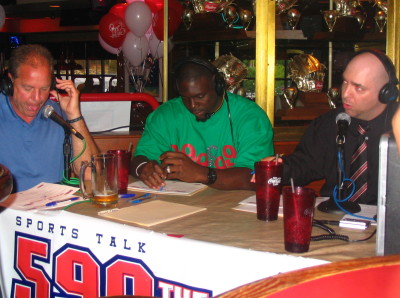 For example, I under performed and socially did not connect in St. Louis during my first 2 years there. I spent a ton of time feeling like a fish out of water and was counting the days until I could exit 590 The Fan KFNS and go someplace else. I walked into a situation where my employer was struggling, the morale inside the building was low and I wasn’t completely locked in the way I needed to be. It was a difficult situation for all involved. Here I was, as an East Coast guy living for the first time in the Midwest, going through a divorce and being separated from my son, and all I wanted to do was have enough success to get the heck out of here. I was emotionally drained and unsure if my east coast style was a good fit in St. Louis.
Then one of the best things and turning points of my career happened. I reached an agreement one year later to leave KFNS and spend 6 months on the sidelines clearing my head. Being unemployed for the first time in 10+ years wasn’t easy but I needed to hit the reset button and find out what I was about and what I wanted. It was also the first time in a while that I had failed at something and I had to either pick myself up off the ground and learn from it or continue blaming everyone and everything else for what transpired.
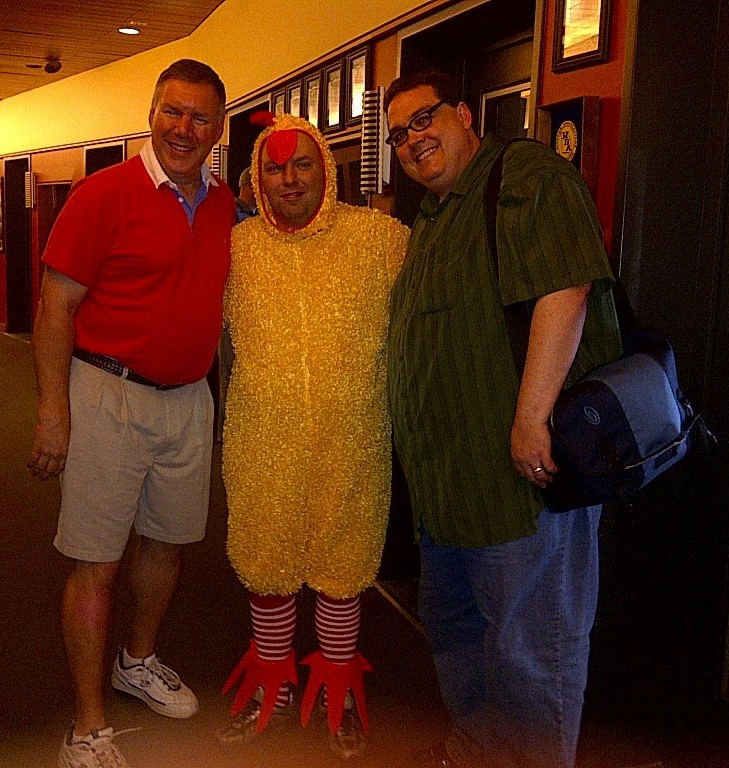 I was positive I would leave St. Louis and put it in my rear view mirror and I thought for sure I was going to go to Detroit or Houston but as luck would have it, my next opportunity would be less than 5 minutes away. When I accepted my next job working for Bonneville as the first programmer of 101 ESPN, I went into it mentally focused, appreciative of a second chance and excited about where I was living and much more confident in my abilities to perform there. I learned from the mistakes I made during my first run with KFNS and built a special culture inside the walls of 101 ESPN which continues there today. I also learned that there were a lot of good people in St. Louis who loved radio like I did and I was thrilled that I didn’t allow one bad situation to define my opinion of the market. After going thru that experience, St. Louis became very special to me and when I was faced with a decision to leave, it was really hard to say goodbye.
When I reflect back on those two experiences, there’s one valuable lesson that I learned – doing your homework is vital! When I accepted 590 The Fan’s offer I did so while knowing that my family were unhappy in Philadelphia, they felt more comfortable in St. Louis and there weren’t any other PD jobs available. I was also blown away by the company’s performance in Atlanta but I didn’t consider that just because they were performing strong in one place didn’t mean they would succeed somewhere else. Both markets were very different. I was also a big baseball fan and I loved how passionate St. Louis fans were towards the Cardinals and I figured I’d fit right in and have a chance to succeed if I could tap into that connection. Altogether it took me less than 3 weeks to complete the process going to KFNS and my lack of research on what I was getting into put me in a bad spot. That’s nobody else’s fault but my own.
 On the other hand, when I went to work for Bonneville in St. Louis we spent nearly 3 months talking and going over various scenarios before the job was offered. I encouraged my former General Manager John Kijowski to do his homework on me and he did. He talked to people who knew what I was about professionally and I asked him to talk to people who weren’t fans of mine too. I wanted him to know what he was getting if he brought me in. I also did my homework on the company, John and the entire market to make sure I could create a plan that would work. There was no hesitation on either end when we reached the finish line together and by going through an exhausting hiring process, Bonneville got my very best and I benefited by working for a great company which supported, trusted and helped me.
If you’re a programmer, sales manager, corporate executive or GM, think back on some of the decisions you’ve made on talent, producers, board operators, reporters, anchors or any other member of your organization. When you’ve hired people to work for you, have you truly done your due diligence? The ratings story can be deceiving and your former co-worker may have great things to say about an individual but do you really know the ins and outs and critical pieces of information that you need to know about who you’re hiring? If a situation hasn’t worked out, why didn’t it? Did you go against your gut and ignore the signs or were you under pressure to get something completed that you rushed to judgment? If you’ve gone through a failed experiment (we all do), how have you learned from those situations and how are you more prepared now when you make hiring decisions than you were 2-3 years ago?
 Too often in this industry people read press clippings and form opinions off of them and while I understand the importance of researching information based on what’s been written, there’s always more to a story than what you read. If you’re going to hire someone great who moves the needle, don’t be surprised if they produce a few unpopular opinions online when you google their name. If the job is to generate an audience and create buzz for a show, those with strong opinions who toe the line and sometimes step over it are going to be on your list of targets.
For example, I am glad that I didn’t allow a few articles and media critics to influence my decision to hire Damon Bruce in San Francisco. Most great talent have their legion of fans and critics and Damon is no exception. At times he’ll say some things that ruffle a few feathers and we’ve had a few passionate disagreements along the way but I also know him as a person off the air and how much he puts into his work. When I did my homework on him I asked numerous people for feedback and I spent months examining whether or not the fit would make sense. When I reached my decision I felt very comfortable with bringing him on to our team and without question it’s been paid dividends and benefited all involved.
I’ve also nearly hired Tony Bruno and Sean Salisbury during my career and if you google their names you’ll find an unflattering story or two but if you got to know them, what they’re about, how they work and how they perform, you wouldn’t even question whether or not they can help improve your product. All you need to do is look in Philadelphia and Houston and you’ll see them having success and being valuable members of their respective organizations.
 The same can be said for other top personalities such as Scott Kaplan, Mike Missanelli, Chris Dimino, Stephen A. Smith, Dan McNeil and Sid Rosenberg. All of them possess outstanding talent and strong track records but all have a blemish or two on their resume. Some of them I know well and I wouldn’t hesitate to hire tomorrow if I had a need and they fit my market and brand, and some of them I don’t know and would need to do more homework on. That said, that’s why you go through an extensive hiring process to make sure you’ve given yourself, your company and the candidate the best chance to have a successful relationship together.
While it’s easy to shine the light on this situation from a programmer’s point of view, if you’re an on-air talent there are things you should be examining too before accepting an opportunity.
- Do you analyze how the company operates and performs in other markets?
- Do you talk to people involved with those stations to find out how they like working for the company?
- Do you talk to current or former employees who’ve worked for your potential PD to see how they feel about them?
- Do you ask advertisers what their perspective is on the company and why they do/don’t buy the product?
- Do you talk to the local teams or the networks that the radio station partners with to see how they perceive the brand?
- Have you directly asked the PD or GM what their long-term plans are with the operation?
- Have you checked into whether or not the company may be looking to sell?
That’s a lot of questions but each one is critical in helping you make a decision about whether or not to explore working for someone.
 If you’re accepting an opportunity based on money and a higher profile time slot you’re setting yourself up for disappointment down the road. An employee-company relationship is a two way street and I remember my friend Pete Gianesini at ESPN Radio once telling me “you’re interviewing them just as much as they are interviewing you” and that’s so true. This is your life and your career and this next move could be the catalyst to something big for you professionally or it could be the start of a downward spiral. While the best of intentions may exist today, that’s not always the case tomorrow and both sides need to know what they’re getting into. If you don’t, then it’s going to eat at you again and again if it doesn’t work out!
I stress this not only to the on-air people but to the folks on the company side as well. Whether you’re a GM, Sales Manager, Corporate Programmer or CEO, every sales person, engineer, traffic person, programmer or on-air personality hired, is a reflection of what the company stands for. These people represent you and your brand and that should matter a great deal because you earn or lose respect with every decision that’s made.
 Here’s a few questions to consider.
- Are you trusting your managers to hire people independently or are you talking to the candidate as well?
- Do you know why a person who’s had success or failure in their career had those experiences? Was it a result of their performance or the company’s decisions?
- Do you know which people inside your building are future leaders and why they’re capable of stepping up or are you just listening to someone who you like/dislike and allowing it to influence how you think?
- Do you talk to people inside your building to get a read on how they’re connecting with their manager or do you just assume everything is fine and rely on the manager’s feedback to impact your thoughts?
Managing is not easy and nothing puts a bulls eye on your reputation more than the decisions you make. Company’s who are generating millions of dollars are trusting their hosts, programmers, sales executives, GM’s and support staffs to create products that will help them make even more money and you need the right people to implement the plan. No company is in business to not be profitable and one wrong decision can cost you millions if you miss! If you’re going to risk a few million dollars on your next decision, don’t you want to know everything you can possibly know before you act on it?
Do you know what really stings? Having to go to sleep at night, not being able to do the job you love anymore because you skipped a few steps, made mistakes and damaged the brand you represented. Take it from someone who’s been to both ends of the spectrum, the view is much better from up top! So be smart and do your homework. Regardless of how it turns out, you’ll sleep much better at night knowing you did everything in your power to get it right.