I’ve just returned from my first BSM Summit held last week in Chicago. It was an excellent conference. Jason pulls together great content, and unlike some other conferences I’ve attended, he keeps the trains running on time. OK, maybe Ozzie Guillen was an exception, but he was entertaining. Regardless of where the BSM Summit is held next year, if you’re involved in any way with sports media, plan to go. Even if it is to learn plenty more about research and ratings information from Nielsen.
Whenever I attend a conference like this, my goal is to jump-start the brain cells. That happened the first day during the “Mid Majors” panel. Andy Roth, the PD of 680 The Fan in Atlanta, made some pertinent comments about Nielsen and crediting. Brad Carson from 92.9 ESPN in Memphis echoed them but then professed his love for Nielsen, tongue firmly planted in cheek. They argued that Nielsen is 20 or 30 years behind, and they have a point.
Having been around for a long time, I always start with history. Let me take you back to the days before PPM when every market used the Arbitron diary. Streaming of radio stations was becoming popular and it raised a conundrum as more stations put content on the internet but in some cases, sold the stream separately from the air signal.
The old Arbitron Radio Advisory Committee met three times a year back then, and the meetings could get testy. In this case, the issue was that if a diarykeeper wrote down “WXXX on the internet”, editors were instructed to give credit to the air signal.
The cry of “fraud” was heard in the meeting room, mostly from one member. The rest of the group didn’t go that far, but understood that Arbitron would be giving credit when the spot could not have been heard. The advertiser was not getting all of the audience they had paid for. As a result, Arbitron promulgated the simulcast rules for streams that have been in place ever since with little, if any, modification.
It’s been 15 years since the PPM rollout was completed to the 48 metros which caused even more twists and turns with respect to the rules, none of which make a PD’s job easier. As stations go increasingly digital, it’s time to revisit the rules.
Andy’s request was a simple one: give me credit for wherever my content is heard, which can also mean viewed on YouTube and elsewhere. That makes sense to me and if you’re a PD in just about any format but especially spoken word (and that includes all-talk morning shows on music stations), I’ll bet you agree.
Talent does, too. One talent in the BSM Summit audience asked about how this affected his bonus. He’s bonused on Nielsen, but what about all his other audience coming from digital platforms? Shouldn’t talent get credit for the audience they bring to the station, however that audience consumes the content?
I’ll save my proposals for next week because we first need to understand how the competition is measured, especially digital.
One BSM Summit presenter noted how flimsy the crediting system is for digital. If you start checking online, you’ll find some amazing things. For example, a Nielsen document from 2023 states what is needed for a digital ad to count as an impression: Current digital media viewability guidelines to qualify an impression stipulate that an ad must be at least 50% in focus on the user’s screen—not hidden behind another window, for example, or playing in the background—for at least 1 second for display ads and 2 consecutive seconds for video ads.
You read that correctly. One second and 50% in focus for display ads or two seconds for video ads. It takes me at least two seconds to find the “X” to cancel out the ads that show up on my screens! I can’t tell you the names of the advertisers but because I find the ads to be annoying when I’m trying to read something, I look for the “X” which typically appears in the upper right corner. Nonetheless, I’m another impression.
Now let’s talk about ad fraud, digital’s dirty little secret. It’s not the pseudo-fraud of the incredibly loose viewability standards, but rather outright fraud. In 2023, Juniper Research released a study suggesting that over 20% of all digital advertising spend worldwide was wasted due to fraud. In dollar terms, that’s $84 billion. Further, this could double by 2028. Here’s Juniper’s chart:
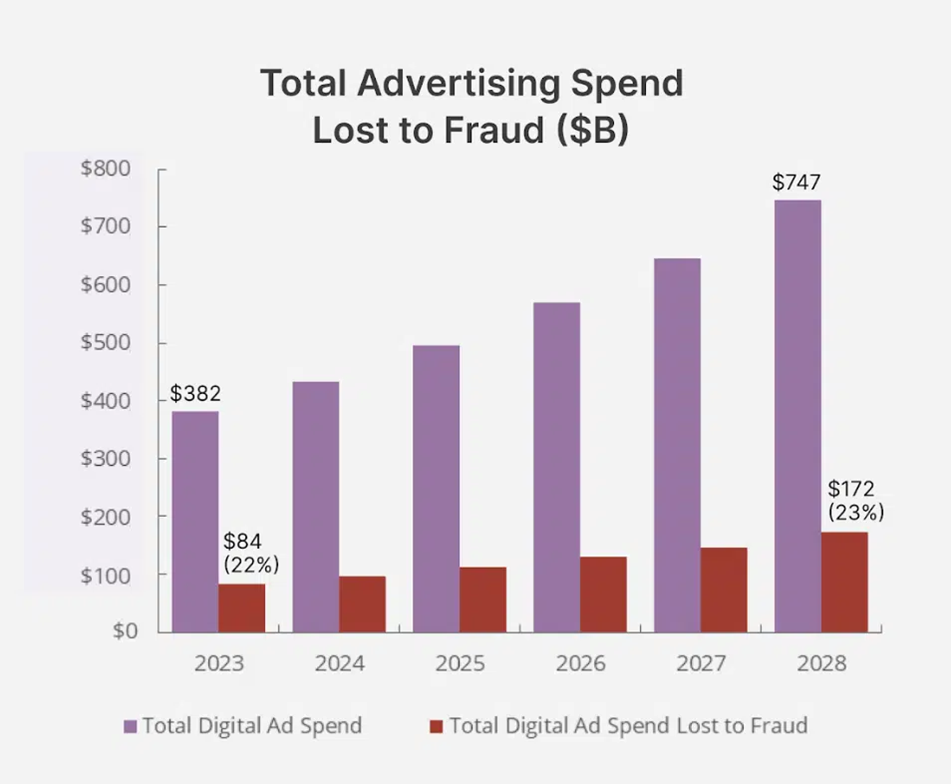
Let’s see: digital advertising is taking over, but better than 20% is fraudulent, and the criteria for counting an impression are pathetic. If you owned a business and got wind that over 20% of your money was being stolen, I’ll bet you’d do something about it and quickly. The Juniper report is not unique if you start searching the web for similar reports. But be careful because you’ll no doubt hand over a batch of impressions to our digital competition.
And we have trouble getting advertisers, agencies, and even local direct stores to not just buy, but even consider radio.
What digital does have going for it is attribution. When it’s not fraudulent, you can track that someone saw an ad and took action, such as visiting the advertiser’s website. However, while useful, that works for fast actions. What if I visit the site three days later, after multiple messages across multiple media? It’s a tough one to measure.
Next week, I’ll make some suggestions about how we can ensure that radio, whether OTA or digital, can get full credit for all listening, tracking the evolution of the medium and perhaps better compete with digital.
Let’s meet again next week.
Barrett Media produces daily content on the music, news, and sports media industries. To stay updated, sign up for our newsletters and get the latest information delivered straight to your inbox.