YouTube is repositioning its AI content labels. The Google-owned platform is making disclosures more visible across desktop, mobile, and Shorts.
What We Know: YouTube has required AI-generated content disclosures since 2024. Now, however, the platform is upgrading where those labels actually appear. On desktop, the label moves above the video description. On mobile, it becomes a direct on-screen overlay. Additionally, YouTube is layering in an automated detection system that will apply AI labels independently. But only if photorealistic content goes undisclosed by creators.
What They Said: YouTube creator liaison Rene Ritchie on the new approach to AI labeling: “The goal here is context at a glance. If it looks real but was made with AI, viewers will know immediately. This is purely about giving viewers the right information at the right time. Most importantly, for creators, these labels alone do not affect how our videos are recommended or whether they can earn money.”
What Remains Unclear: The automated detection system is still maturing. Consequently, false positives remain a real possibility — though YouTube is allowing creators to contest incorrect labels through YouTube Studio. Furthermore, it’s worth noting that YouTube’s deepfake-detection tool, already available to users 18 and older, is largely positioned for public figures rather than everyday creators.
What It Means: Transparency is clearly becoming a competitive priority for YouTube. The platform is no longer relying solely on creator honesty to inform viewers. Instead, it’s building enforcement directly into the product. For broadcasters and media brands uploading content, understanding these label triggers — especially around photorealistic AI visuals — will matter more going forward.
Barrett Media produces daily content on the music, news, and sports media industries. Sign up for our newsletters to stay updated and get the latest information right in your inbox.
The NFL built an empire on Sunday football. Now, according to 98.5 The Sports Hub’s Fred Toucher, the league is quietly dismantling it in the name of greed.
What We Know: The NFL’s streaming expansion continues to grow. For the upcoming 2026 NFL season, the NFL will pair games on Prime Video, Netflix, and Peacock. The league will not be partnering with YouTube this season after the league’s debut on the platform last year. Currently the league is facing criticism of the amount of games on streaming platforms by President Donald Trump and scrutiny from the U.S. Justice Department. The NFL still claims that roughly 87% of its games broadcast on free broadcast networks such as FOX, CBS, ABC, and NBC. Toucher believes that recent shifts in scheduling games on days outside of Sundays plus more games on streaming platforms is running a big risk for the league.
What They Said: Fred Toucher on his concerns about the NFL shifting away games on Sundays to other days of the week: “The NFL is pivoting away from the traditional Sunday games. Which I happen to think is a little dangerous for business. You’ve built something unique, and you’ve gone into this unprecedented height. Then you start changing what inherently might be the reason it’s as popular as it is. You could make an argument that the weekly habit of Sunday football is part of the reason the NFL has become as popular as it is. It’s not every day. There is a exclusivity to it, and there is a routine and the habit that the people have.”
Fred Toucher believes NFL owners are acting too greedy for the league’s own good: “It seems like a quick money grab. It seems like they’re trying to grab as much money as they can, because they’re all old. Since the owners, for the most part, are so old. They’re not really interested in the legacy of the NFL or it’s staying power. They want to make as much money as possible as soon as possible.”
Fred Toucher believes NFL owners are taking advantage of “desperate” streaming platforms: “This is the time to get in on the streaming channels. They’re desperate and they’re throwing a lot of money around. Because you know they’re not going to be in like the next cycle. They’re going to be more established, or there’s going to be more options. They [NFL owners] have a greedy company [streaming platforms] with a ton of money in its hands, ready to throw it at them. Who doesn’t care about the ratings of it. They just want to put the NFL on their product.”
What Remains Unclear: The National Football League has made it clear that it is open to exploring new distribution options with streaming platforms. Current NFL media agreements also include opt-out clauses over the next several years. That has created concern that the league could shift even further from broadcast television to streaming. So far, however, the NFL has not announced new deals with additional streaming platforms. As for Toucher’s criticism, NFL owners are focused on maximizing revenue from future media rights agreements, regardless of whether streaming companies are involved.
What It Means: Toucher’s critique cuts to the core of a real tension. The NFL is the most powerful media property in America. Yet convenience and habit built that power. Fragmenting games across multiple platforms tests fan loyalty. Moreover, more games on more days throughout the week does ruin the uniqueness of owning Sundays. As Toucher suggests, owners chasing short-term streaming revenue may be risking the league’s long-term cultural dominance for a quick payday. The bigger concern, however, is what happens if streaming companies eventually pull back. If that occurs, broadcast networks may no longer have the financial strength to absorb the rising cost of NFL rights packages.
Barrett Media produces daily content on the music, news, and sports media industries. Sign up for our newsletters to stay updated and get the latest information right in your inbox.
What We Know: DeLucia joined the station in 1983. He later moved to mornings in 1990. He originally got into the radio business at the age of 17. Scott DeLucia’s final show as a member of The Infomaniacs is set for Friday, June 5th.
What They Said: “It’s been the tradition of the show generally that when one of us leaves to go do something different or not do anything at all we kind of announce it ahead of time. And so today it’s my turn … I figure if I’ve done it for 59 years it’s probably enough … Everything’s fine, my health is fine. My wife’s health is fine. We’re just deciding that it’s time to go enjoy the rest of our life that won’t include getting up at 4:20 in the morning. So we’re going to do that. I’ll get to sleep late — like I do on the weekends — until six o’clock.” -Scott DeLucia
What Remains Unclear: Who will step into the chair after DeLucia exits.
What It Means: It’s a changing of the guard at WTAW. Scott DeLucia has been an institution in the market. His work in the Bryan/College Station market is legendary. His work helped lead WTAW to the 2025 Marconi Award for Small Market Station of the Year. Few hosts get to go out on their own terms. DeLucia sounds ready to ride off into the sunset and enjoy his next chapter.
Barrett Media produces daily content on the music, news, and sports media industries. Sign up for our newsletters to stay updated and get the latest information right in your inbox.
FanDuel TV is adding original programming ahead of next month’s World Cup. According to Front Office Sports, the network’s new show, Coaches Corner, features three former U.S. Men’s National Team coaches and FOX Sports host Rob Stone.
What We Know: FanDuel TV confirmed to FOS the 10-episode series begins June 1. Gregg Berhalter, Bruce Arena, and Bob Bradley will join host Rob Stone. The show will aim to break down matches, tactics, and personal stories from their USMNT tenures. Notably, FanDuel is pressing forward with studio programming despite recently announcing its Racing network will wind down by end of 2027. Coaches Corner will stream across YouTube, Tubi, FanDuel Sports Network, FanDuel TV Extra, Spectrum LA, and MSG.
What They Said: FanDuel TV SVP and executive producer Michael Shiffman told Front Office Sports: “Major sporting events on the calendar, like the World Cup, present an opportunity for FanDuel to bring fans unique perspectives through original programming. Coaches Corner is the first example of what we expect to become a recurring model around major moments throughout the year.”
What Remains Unclear: With the addition of Coaches Corner, could this signal that FanDuel TV is still committed to content creation despite recent challenges? The company has not announced additional programs beyond Coaches Corner. However, the involvement of Rob Stone from FOX Sports is notable. Existing shows like Up & Adams and Run It Back also remain on the air. Even so, questions continue surrounding the company’s long-term investment in original content.
What It Means: FanDuel TV is clearly positioning itself around live sports moments rather than linear infrastructure. That raises another question. If the production infrastructure already exists for content creation, could FanDuel pivot toward partnerships with streaming platforms that share a similar event-driven content strategy? Ultimately, Coaches Corner serves as a proof of concept. If it connects with audiences, expect FanDuel to replicate the model quickly and aggressively. That expansion could also include partners that provide additional investment and distribution.
Barrett Media produces daily content on the music, news, and sports media industries. Sign up for our newsletters to stay updated and get the latest information right in your inbox.
Margaux Rentzel has grown to be an important part of the KDKA afternoon drive show. That will end, however, as she’s departing the station next month.
What We Know: On Tuesday, host Colin Dunlap revealed that Rentzel, who has served as a producer and news anchor for the station, will depart the Pittsburgh news/talk station. Rentzel originally joined the station two years ago. She was one of the inaugural members of the KDKA’s Next Take show. That program is hosted and produced by University of Pittsburgh students. Rentzel’s final day at KDKA Radio will be on Friday, June 5th.
What They Said: “I have had a lot of fun. I never dreaded coming to work, which I know is crazy to say. But I have a lot of fun with my coworkers. I have a lot of fun here. It’s been a great time … I’ve had a great time on this show. I’ve had a great time anchoring and doing all the things. But that time has come to an end.” -Margaux Rentzel
What Remains Unclear: Who will step into the role vacated by Rentzel’s departure at KDKA Radio. Additionally, Rentzel — who shared she was moving closer to her hometown of Philadelphia — did not share firm details on what her next move is. She did share that her next endeavor is outside of the radio business.
What It Means: The reason KDKA’s Next Take was created was to help build the next generation of radio hosts, anchors, producers, and staffers. While Rentzel is departing her full-time role with the station, it’s clear that even producing one full-time member of the staff shows the success of the program.
Barrett Media produces daily content on the music, news, and sports media industries. Sign up for our newsletters to stay updated and get the latest information right in your inbox.
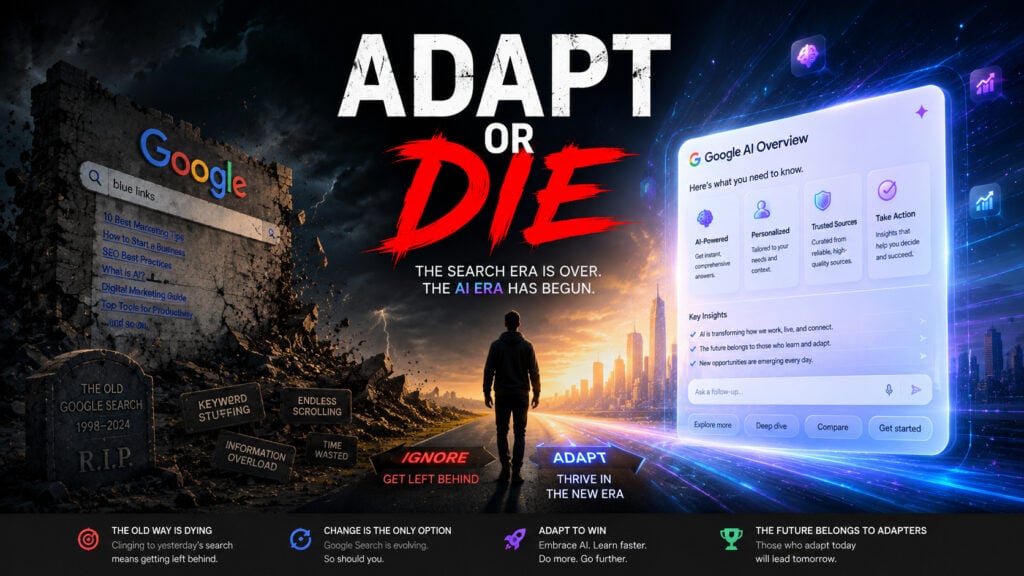
Google search as you know it is over. That’s not a clickbait created headline — it’s what Google announced at its I/O 2026 conference. The news may be unsettling, but it’s further confirmation that the industry will continue to rapidly change. When it does, you either adjust or suffer the consequences. Technology and business leaders don’t care about your feelings. They want long-term relevancy and larger profits.
Last week Google shared that the traditional search bar — the one that has driven traffic to media websites for nearly three decades — is being replaced by an AI-powered experience that condenses information, builds interactive tools, and dispatches background agents to track changes on your behalf. These changes will likely further decimate Google referrals to publishers.
Most who produce written content won’t be surprised by that. They’ve already suffered from declining referrals due to AI Overviews. It has led to some ad-dependent media operations going out of business.
Read that last line again. Out of business.
If you run a radio station, a television network, or any media brand that depends on website traffic for revenue — this development should have your full undivided attention. Larger discussions between executives, managers, and digital departments will be forthcoming. Until then though, let’s examine the situation a little deeper.
What the Numbers Already Show
First, this is not a future problem. The damage is already happening. Organic click-through rates have seen a sharp decline thanks to AI Overviews. Recent studies find that queries have dropped by 61% and paid click-through-rates are down 68%. Zero-click searches now lead the way, with nearly 60% of all Google searches ending without a click. In the US, Google search referral traffic to publishers has dropped by roughly a third.
Since AI Overviews were introduced, some websites have experienced search traffic declines ranging from 20% to 40%. Consequently, every media brand that built its digital business on Google search traffic is operating on a foundation that is actively eroding beneath them.
For radio and television brands specifically, this creates a mess. Host opinions, interviews, sports scores, news updates, music discovery — these are categories where AI Overviews are most aggressive. Google does not need to send a user to your website to tell them what happened on your airwaves. They already know. They just sift through your content at lightning speed, find the key details, and answer the users question without you.
What This Means for Revenue and Jobs
Digital departments were built to satisfy the existing economic model. They’ve focused on creating written content, ranking high on Google, generating traffic, and relying on programmatic advertising and direct sales to capitalize on that traffic. But if Google’s AI condenses your information, builds interactive tools, and dispatches background agents to track changes, the incentive for users to click through to your website declines further.
That diminished incentive doesn’t just hurt your pageviews. It directly threatens programmatic advertising revenue, sponsored content deals, and headcount justification for digital teams. Jobs in SEO, digital content production, and web strategy become more exposed. This is happening at a time when most media companies are already dealing with reduced digital margins.
The brands at risk most are those who built digital strategies entirely around Google traffic without developing owned audience relationships. This is why I sounded the alarm last week on the lack of content and business strategy for newsletters. It also carries over to apps, podcasts, and social communities. These are all areas that can survive a world without search referrals.
What Media Professionals Should Be Doing Right Now
The answer isn’t to gut your digital department or start panicking. It’s to get a firm understanding of what’s happening, and be ready to adapt. Then it’s time to accelerate in four directions.
First, build your owned audience aggressively. Diversifying your traffic sources is a must. If you didn’t see this train racing in your direction over the past two years, where were you? Facebook did this before. So did Twitter (X). Why would you assume anything you don’t own won’t change the rules and make it more difficult at some point? The pivot you’re going to have to make involves building a presence across AI search platforms, social media, email, and direct channels. Every newsletter subscriber, every viewer or listener, every app user is an audience relationship that algorithms don’t own. AI queries will be important for the near term until they too change the rules down the line. This is why I’ve said many times that one of radio’s biggest mistakes was devaluing the medium it owned over platforms it doesn’t.
Second, the brand position you own is going to matter a lot. Brands cited within AI Overviews earn 35% more organic clicks and 91% more paid clicks than those that aren’t. The goal is no longer about ranking — it’s about being the source Google’s AI trusts enough to cite. That requires authority, depth, and original reporting rather than volume-based content production. This is good news for sports and news brands with strong recognition and local content. Music stations lacking on-air personalities or original online content could be affected.
Third, rethink why your website actually matters. When Entercom was recruiting me to build 95.7 The Game in 2011, Pat Paxton asked me “why do we need a website”? I initially thought “what type of crazy question is that?” Upon thinking deeper though I understood his point – the website mattered to the audience to listen live and download a podcast to hear a prior show. Few people flocked to a radio station website to read show pages, AP articles or to see which promotional photos were uploaded.
Is your website primarily a traffic vehicle for programmatic ads? If so, that model is going to deteriorate quickly without a paid media plan. If they access your website directly rather than through search — it has a durable future. This is why your listen live button, podcasts, and videos are important. Those drive large audiences and provide advertising opportunities. Build for that type of website and be ready to explore advertising relationships that support those content sources.
Fourth, treat AI tools as operational infrastructure not optional enhancements. A new SEO trend called Generative Engine Optimization is becoming popular in 2026. GEO focuses on optimizing content for AI-generated search experiences instead of only traditional rankings. The brands that understand how AI systems evaluate and cite content will have a structural advantage over those still optimizing for a search experience that no longer exists.
Finally, do your homework on what type of content social platforms will and won’t push to your followers. I see so many stations still littering platforms with article posts. They don’t work. 3% or less of your audience see them. Referral traffic is small unless someone with a large following shares it or your brand pays to boost it. If you think the answer to search decline is flooding X, Facebook, Threads, Bluesky and LinkedIn with more article posts, guess again. Shouting in an empty forest only means nobody hears you. Study what types of content platforms reward with reach, and serve your audience that type of content. Sales and digital teams are going to have to adapt.
Photo Credit: ChatGPT
Final Thoughts
The media brands that survive this shift will be the ones that moved before they had to. Publishers have little time to adjust. A new search box is being rolled out this week and generative UI is coming this summer.
The window is not closing. But it is being resized and reshaped. The sooner you get comfortable with that, the quicker you’ll fall in love with your home again. You might even have some extra nickels left for additional upgrades.
Barrett Media produces daily content on the music, news, and sports media industries. Sign up for our newsletters to stay updated and get the latest information right in your inbox.
There’s a moment in every great radio partnership when the chemistry just clicks. It’s when two voices find each other across a microphone and something undeniable happens. For Anna and Raven, that moment came during their very first audition together.
“We were funny,” Raven says, simply. “We were funny together. We had an instant comedic rapport. We were funny from the moment we cracked the microphone together.”
Eleven years, one syndication deal, and 87 markets later, that chemistry hasn’t faded. The Anna & Raven Show — heard weekday mornings on annaandraven.com — has become one of the most successful syndicated AC morning shows in the country. But the road to get there was anything but straight.
A Hip-Hop Kid Who Ended Up in Rock Radio
Raven’s path into radio wasn’t exactly conventional. He came up as a hip-hop guy — “the only thing I knew about rock and roll was glam metal, the eighties stuff” — but found himself breaking into Active Rock at WCCC in Hartford, Connecticut. What he lacked in format knowledge, he made up for in attitude and hunger.
Hartford’s rock radio scene in those years was a full-on war. WCCC squared off nightly against WMRQ Radio 104, a station Raven remembers as seemingly untouchable. “I thought you guys (WMRQ) were doing it right in every single way,” he recalls. “You (WMRQ)had the girls, you had the parties, you had everything we wanted — the nice building, the downtown location, the gigs. And here we were, the doormat of rock radio in Hartford.”
WCCC (Social Media)
But losing taught him more than winning ever could. He studied the competition obsessively, picking apart breaks, learning the craft of the tease, and developing the instinct for storytelling that would define his career. An early colleague, jock Stacy X, told him something that stuck: “You can kill yourself with all this stuff. But you’ve got a thing people can’t put their finger on — you’re cool. And that’s not something you can teach.”
He carried that with him through Active Rock stops in Boston at WAAF and a morning show run in Providence at Alternative station WWRX. A brief detour pouring concrete followed, then a stretch in Las Vegas, before he came back home to Connecticut — and eventually back to WCCC.
The Audition That Changed Everything
When WCCC was sold, Raven found himself at a crossroads. His entertainment business was thriving. The last thing he wanted was to return to a corporate structure with “four, five, six bosses.” Then a friend mentioned that someone was trying to reach him on Twitter — a platform he’d barely touched in years.
It was the Connoisseur Media team: Kevin Begley, Keith Dakin, and company. They had an opening and wanted to talk.
What followed was roughly six weeks of interviews, callbacks, and auditions. It was complicated by a family tragedy that had Raven questioning whether he wanted to re-enter radio at all. But the process moved forward, and then came the audition with Anna.
“Personally, it took us some time to get everything totally on track,” he admits. “But we were funny the second we picked up a microphone together.”
He was hired on April 20, 2015 — a date he remembers not for any particular significance, just because it happened to be 4/20. The show launched as a hyper-local morning show in Fairfield County, Connecticut. It went head-to-head not just with local competition, but with the biggest morning shows in the country broadcasting out of New York City.
Building Something That Could Travel
From the start, Anna and Raven brought different strengths to the show. Anna — detail-oriented, hyper-focused, deeply connected to the audience they were chasing — became the anchor of the show’s tone and compass. Raven, by his own affectionate description, got to be “the kid making a mess in the sandbox.”
“She’s the demo,” Raven says of Anna, who speaks directly to the women-led audience the show is built around. “It was hard at first to just let your partner decide what makes sense and what doesn’t. But she’s living it. She is the audience.”
That division of strengths, combined with their genuine comedic rapport, built a loyal audience. The show expanded to include the New York market — specifically Long Island — making it regional. At the start of the COVID-19 pandemic, Connoisseur pulled the trigger on full national syndication.
Anna & Raven (Social Media)
“It kind of became a decision that made sense on multiple levels,” Raven says. “Maybe they didn’t even necessarily believe we were completely ready at that moment. But they were kind of like, well, we’re doing this.”
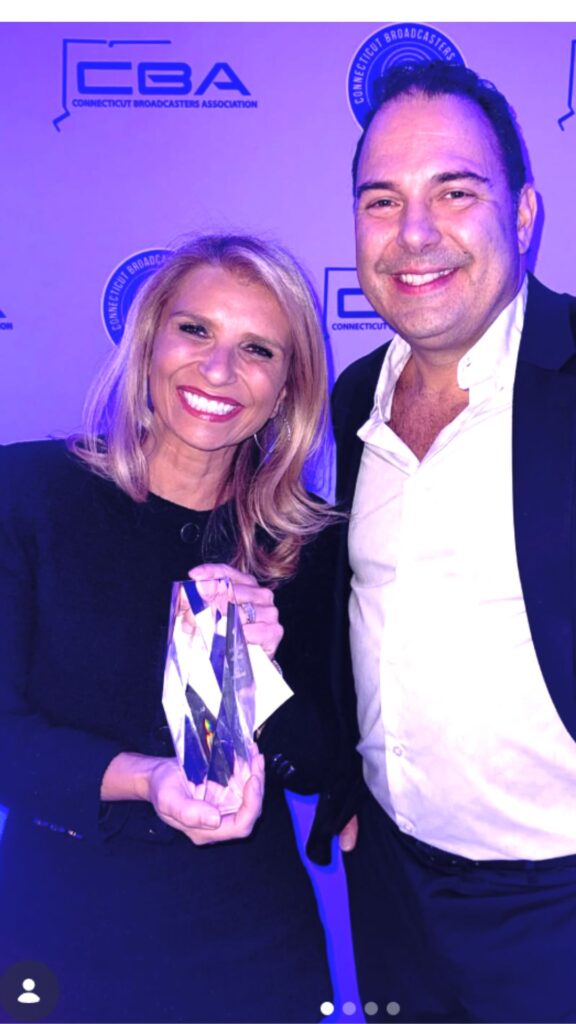
Today, The Anna & Raven Show airs on 87 stations across the country, with more on the way. The show’s reach and quality were recently recognized at the 51st Annual Gracie Awards, where it was named winner in the Entertainment/Talk Program category for nationally syndicated commercial radio. The Gracie Gala — presented by the Alliance for Women in Media Foundation —took place May 19, 2026, at the Beverly Wilshire in Beverly Hills.
Staying Local at Scale
The challenge of syndication — particularly for a show built on personality, specificity, and connection — is how to stay real when broadcasting from a studio that exists, as Raven puts it, “in a parallel universe. There’s no weather. It’s not hot today, it’s not cold tomorrow. It’s just people and what they’re going through.”
Their answer is a combination of genuine curiosity and relentless availability. Every affiliate that wants to engage gets engaged, through programming meetings, Zoom calls, and in-person events. Producer Sophia handles liner requests, videos, and local materials — with a guaranteed 24-hour turnaround. A technical producer handles anything that breaks.
“We do deal with every one of them that will deal with us,” Raven says. “And we’re there eight, nine, ten hours. We don’t leave.”
On the question of AI and automation, Raven is clear-eyed. Technology makes distribution cleaner and audio quality better. But it cannot replicate what a human presence brings to a market. “You can have AI spit out a town pronunciation. It’s not the same as somebody that’s been on the ground for twenty years who loves what they do. When you love something, you’re thinking about it all the time.”
What He Had to Unlearn
Moving from rock radio to AC wasn’t just a format change. It required Raven to rewire some deeply ingrained instincts — ten-minute breaks, edge for its own sake, and talking at an audience instead of with one.
“I had to pull back, shut up, and listen a little bit more,” he says. “My demo changed completely. I went from male, 18-to-34, and had to learn a female-led audience. And so I had to really run things through that filter.”
The filter, more often than not, is Anna.
He also credits Connoisseur owner Jeff Warshaw with giving him the confidence to make that transition without fear. “When you have an owner that believes in what you’re doing — but more importantly, believes in where you’re gonna go — that gives you the confidence to really swing away.”
The Long Game
Ask Raven what keeps him going after eleven years, in the same show and the same partnership, and he circles back to something simple. He’s still having fun, and he still wants to compete.
“Anna and I are still gonna wake up the next day and do everything we can to attack, to grind, to compete,” he says. “We don’t celebrate all that much. Something comes in, we’re like — great, we still gotta be here tomorrow. And we’re laughing while we’re doing it. But that’s real.”
He feels lucky, and he knows it’s rare. Finding two situations in one career where a whole team is genuinely pointed in the same direction — genuinely invested in something bigger than any individual on the mic — doesn’t happen often. The first was the scrappy underdog era at WCCC. The second is this.
“A lot of people will never experience that even one time,” he says. “And I’ve had it twice.”
Barrett Media produces daily content on the music, news, and sports media industries. Sign up for our newsletters to stay updated and get the latest information right in your inbox.
The Dan Patrick Show is considered one of the best weekday sports radio products in the industry today. The program is annually recognized at or near the top of the Barrett Media national sports radio rankings and has earned multiple Sports Emmy nominations over time. What many may not realize is the program began in the attic of Patrick’s home, with the assistance of producers Paul Pabst and Patrick “Seton” O’Connor.
Nearly twenty years later, the Dan Patrick Show has grown from Patrick’s attic into an expansive studio in Milford, Connecticut. Pabst and O’Connor still find themselves guiding the program alongside their patriarch, Patrick. However, in 2023, when Patrick announced he had signed his final contract with FOX Sports Radio, change was in the air. It was a change that O’Connor knew would alter his career forever.
“Once you put an end date on things, it’s sort of always looming,” said O’Connor about the conclusion of the Dan Patrick Show coming in February of 2028. “For those of us who aren’t Dan, who aren’t retiring. It’s like what am I going to do now.”
Seton O’Connor’s journey with the Dan Patrick Show began while he was still working at ESPN in Bristol, CT. As Patrick began conceptualizing his independent radio program, a simple outreach led to an email that changed O’Connor’s outlook on his career.
“I was producing his show on ESPN when he left ESPN. After about two weeks, I sent him an email to check in on him. He wrote back to me, ‘Are you happy,’” explained O’Connor. “I knew right then I had a new job. From reading those words just asking are you happy, I was all in. I put in my notice and started working in his attic.”
Preparing For Change
What started in an attic became a talent-to-producer relationship that lasted nearly two decades. However, once Patrick revealed he would be retiring, it was time to begin thinking about the next phase of O’Connor’s media career. Last month, O’Connor announced he was departing his role as a producer on the Dan Patrick Show to focus on growing a digital content wing for the program.
He described the decision not as walking out the door, but as building a new room onto the house. Ironically, O’Connor has been spending much of his time away from the Dan Patrick facility building his own home studio for podcasting and original content.
The decision for O’Connor to step away didn’t come suddenly or lightly.
“The biggest adjustment is not being on the radio every day,” explained O’Connor. “It was really difficult because it’s a medium that I love. I love the art of painting the picture for the audience, leave them wanting more and layering sound to help the product. There’s a real freedom of expression in radio… Based on my family structure and Dan’s upcoming retirement, this is as good a time to move forward and start building something post Dan Patrick Show.”
O’Connor admits Patrick’s decision to retire did speed up the process of determining his next steps. In fact, he doesn’t clearly remember whether Patrick informed his production staff in 2023 that it would be his final contract.
Growing Digitally
The concept for O’Connor to focus more on digital content outside the program began a couple of years ago during sponsored trips to sporting events across America. The experience sparked new interest from the audience, which wanted more real-life content surrounding the personalities on the program.
“I’ve always talked to Dan about the other 21 hours of the day and how we create content out of those 21 hours. I’ve always been a builder, and I like building new projects to see what works,” said O’Connor. “By combining listening to our audience looking for more real-life content, it’s a project that I’m really excited to be building to enhance connection with the show.”
After seeing success with the road trips, the program had a proof of concept. It’s also a project that O’Connor says he thoroughly enjoyed and wanted to expand. However, balancing those trips with the daily demands of producing the program proved too difficult.
“I wanted to do both, but having a foot in both buckets wasn’t fair to either process,” noted O’Connor. “Dan noticed I really enjoyed making the content, and he felt I was good at it. He saw a real future there and insisted I dive headfirst into it and make a full go at it. Create content for the show, build a new side of the business, and check in on the radio show whenever it fits.”
Looking ahead, O’Connor is focused on growing the program’s digital platforms. With less than two years remaining before the final Dan Patrick Show, there are still plenty of questions about the direction of the other members of the famed ‘Danettes.’
O’Connor notes that he hasn’t spoken with his fellow producers about their futures following the show’s conclusion. However, he continues to have conversations with Patrick about potential opportunities beyond the program.
“I’ve spoken to Dan many times about continuing to work with him after he retires,” said O’Connor. “If you look at the things he’s doing around the show, and not just in the show. It’s clear he doesn’t plan on doing the daily radio show every day. But I think that’s all he’s retiring from. I know Dan, and he likes to stay busy. He doesn’t like not having something to do. I’ve spoken to him about possibilities in podcasting after the show ends and actively having those conversations all the time.”
Saying Goodbye to Dan Patrick
The countdown continues, as the final program will take place in Atlanta the week prior to Super Bowl LXII. Patrick told Barrett Media in March that he plans for the week to be business as usual. Covering the Super Bowl from every angle imaginable with signature interviews to bring the audience closer to the game itself.
O’Connor doesn’t share that approach. In fact, he hopes the week becomes a career retrospective that celebrates Patrick’s impact on sports media.
“I want him to get sixty points like Kobe [Bryant]. Go big,” explained O’Connor. “I want it to be a week of appreciation for Dan. All of his friends to check in, and maybe some of the white whales of guests that we’ve never had on the show that week. I want it to be a huge celebration of Dan and the show. I hope Andrew Perloff can make it, along with fitting as many people in for the week. That’s what I’d like to see.”
(L-R): Patrick “Seton” O’Connor, Todd Fritz, Dan Patrick, Marvin Prince, Paul Pabst Courtesy: Derek Futterman, Barrett Sports Media
As the days until the curtain drops for a final time, Seton O’Connor is looking ahead in search of his next project. In many ways, O’Connor’s next chapter mirrors the origin story of the very show that helped define his career. A leap into the unknown. Fueled by instinct, creativity, and a willingness to build something from the ground up.
The attic may be long gone, replaced by a state-of-the-art studio and a nationally revered brand, but the spirit that powered those early days still lingers in the DNA of the Dan Patrick Show.
As the calendar inches closer to February 2028, the end of one era is undeniable. However, for Seton O’Connor, it’s less about an ending and more about evolution. A chance to apply everything learned over two decades to a new frontier.
If the past is any indication, the next “room” he’s building won’t just expand the house—it may very well redefine it.
Barrett Media produces daily content on the music, news, and sports media industries. Sign up for our newsletters to stay updated and get the latest information right in your inbox.
Mike Breen has been calling the NBA Finals for the last 21 years. That’s slightly fewer years than he has spent as the local television play-by-play voice of the New York Knicks. For the first time in Breen’s career, those two jobs will intersect on the NBA Finals stage as the Knicks return to the championship round for the first time since 1999.
For as long as I’ve worked in sports media, there has been one consistent complaint from sports fans when it comes to national broadcasts. Fans almost always believe there is a bias against their team on the national call. While no broadcaster has ever provided proof or admitted to that notion, the perception continues to persist. Expect it to resurface during the NBA Finals.
However, Breen is a professional. He’s been the voice of the Finals for more than two decades. He’s also served as ESPN/ABC’s lead NBA broadcaster for just as long, including during playoff series involving the Knicks. The four-game sweep of the Cleveland Cavaliers is the most recent example.
With the Knicks returning to the Finals comes added expectations from fans and especially from those in sports media. While criticism of Breen’s performance is rare, it will likely surface in the coming weeks. Still, Breen is no stranger to the role. He understands the added spotlight that comes with being the voice of the NBA Finals.
That spotlight grows even brighter when the team he covers every season is involved.
Adapting for “Bias”
So, the question becomes whether Breen will alter his approach in any way to cater to the expected criticism of bias. Would it be a mistake for Breen to approach this Finals differently than he has in previous years?
"I've been rooting for the Knicks since I've been 7 years old and to have a team like this is pretty darn special." – Legendary @NYKnicks broadcaster Mike Breen on the Knicks heading to the NBA Finals.@McNuttMonica | #AlwaysKnickspic.twitter.com/n9ma2hbovW
Perhaps the best example I can provide comes from someone else currently working within ESPN’s walls.
Joe Buck was on the call for FOX Sports in 2006 when the St. Louis Cardinals defeated the Detroit Tigers to win their first World Series since 1982. The 2006 Fall Classic marked the eleventh World Series Buck called in his career. He would ultimately call twenty-four.
However, the 2006 series marked the second time Buck called a Cardinals World Series. Just two years earlier, the Boston Red Sox erased the “Curse of the Bambino” by defeating St. Louis.
Buck is a St. Louis native who grew up idolizing his father, Jack Buck, who called Cardinals games for decades. He followed in his father’s footsteps into the broadcast booth while also becoming FOX’s national voice for baseball.
Years after delivering the final call of the Cardinals’ 2006 championship, Buck admitted he regretted changing his approach. In a 2024 interview, Buck acknowledged that he overthought the moment and adjusted too much in an effort to eliminate any perception of bias.
“I hear them win the 2006 World Series. My voice is so flat and so monotone and so not excited because I’m trying to prove to everybody in Detroit I’m not rooting for the Cardinals,” said Buck via the Nothing Left podcast. “Look, here’s the most boring call ever to end a World Series. It was a good learning moment for me because I heard it back. I was like, ‘Man, that’s just not fair. That’s not fair to fans in St. Louis.”
Buck said he took the bait. He bought into the idea that viewers were simply waiting for a moment to accuse him of bias.
“I don’t think Twitter was around in 2006, but it got in my head,” explained Buck. “I’m sad that it did because it was the Cardinal’s first World Series in over two decades and the guy calling it on TV who grew up rooting for the Cardinals went so far the other way that it’s just not a good call.”
If lessons can be learned from prior experience, Mike Breen should pay attention to the one his ESPN colleague shared.
Meeting the Moment
The audience tuning into the NBA Finals doesn’t need Breen to become someone different for two weeks in June. Fans don’t need him forcing neutrality to satisfy social media critics waiting to dissect every inflection or signature “Bang!” call.
They need the same broadcaster who has earned the trust of basketball fans for more than two decades.
That’s what made Buck’s reflection years later so powerful. In trying too hard to avoid criticism, he lost the authenticity of the moment. Moments are why fans remember great broadcasters in the first place.
Breen has spent a lifetime building credibility as one of the best play-by-play announcers in sports. That credibility wasn’t built because he sounded robotic or detached. It was built because he consistently delivered the emotion, energy, and gravity that the biggest games deserve.
The Knicks reaching the Finals doesn’t change that responsibility. If anything, it reinforces it.
Fans may still complain. Some will inevitably hear bias no matter what comes through their television speakers. That’s part of modern sports discourse. However, the worst thing Breen could do would be to let outside noise alter the style and instincts that got him to this stage in the first place.
The Finals are supposed to sound big. The emotions should feel real. And if the Knicks happen to win a championship with Mike Breen on the call, the moment should sound every bit as memorable as the journey that led there.
Win or lose.
Barrett Media produces daily content on the music, news, and sports media industries. Sign up for our newsletters to stay updated and get the latest information right in your inbox.
I have a friend who’s a veterinarian. She adores her job. Being a Negative Nancy, I once asked her what the worst part of her job is. She didn’t hesitate. She said it’s when pet owners bring their dogs or cats to the office to be put down, and then leave before it’s over. You wouldn’t believe the sadness and confusion in their eyes, she told me, as they understand their lives are about to end — and the one source of comfort isn’t there to be with them as it happens.
That’s an apt description for how CBS News Radio ended last week, largely without being heard on Audacy’s all-news and news/talk stations.
CBS News Radio was synonymous with the heritage brands now under Audacy’s umbrella. Obviously. Many of those stations used to be owned by CBS, so the connection ran deep.
Even after Entercom — now Audacy — took over those brands, the two remained important partners. CBS News Radio needed the large-market access Audacy’s stations provided. Audacy’s stations needed a reliable network news partner like CBS News Radio.
Until they didn’t.
A Parting That Made Sense — Even If the Timing Didn’t
Audacy switched its stations to ABC News Radio. That’s an obvious choice, and I’ve got no qualms with it. The business logic is sound, and ABC News Radio’s a strong operation. Network affiliations change. That’s radio.
My issue isn’t with the decision. I understand the reasoning. It’s with how the end actually transpired. Going into a holiday weekend, when one network was ceasing operations completely, you want to make sure everything’s set up correctly. Otherwise, chaos will ensue at one of the more inopportune times possible. That rationale makes sense on the surface.
But idealistic as it might sound, flipping the switch early left CBS News Radio dying in a room by itself — with sharply decreased exposure during its final hours. The transition essentially pulled the plug before the patient was gone.
Some stations did air the final moments. I listened on the Audacy app to WWJ 950 in Detroit while driving on a road trip, catching the end of the network at 11:31 PM ET. It was something. It just wasn’t enough.
A Bastion of News Radio Deserved a Proper Send-Off
CBS News Radio wasn’t some regional curiosity. It was a pillar of American broadcast journalism — one that shaped how millions of listeners understood the world around them for decades. A network with that kind of legacy deserved better than a quiet fade into a long weekend.
Both sides would’ve been well-served to see things through to the end. The audience would’ve been better served, too, in my opinion. It would have been a strong reminder to the audience that radio is the most intimate medium. It’s especially intimate at night. Ask any radio professional how they fell in love with the business, and there’s a real decent chance their answer includes something related to nighttime programming.
The moment deserved some pomp and circumstance, in my opinion. Instead, a bastion of news radio ended with a whimper. Maybe that’s simply how it was always going to go. Heritage doesn’t guarantee a graceful exit in this industry. Ratings, revenue, and operational logistics win out every time.
Still, it stings a little. It was sad to listen to. Knowing that not as many people were there as probably should have been. Sort of like those dogs and cats — alone in a room, wondering where everyone went.
Barrett Media produces daily content on the music, news, and sports media industries. Sign up for our newsletters to stay updated and get the latest information right in your inbox.