iHeartMedia announced the 2026 iHeartRadio Music Festival lineup on June 2. The two-night event hits T-Mobile Arena in Las Vegas on September 18 and 19.
What We Know: BTS, Cardi B, Kenny Chesney, Lainey Wilson, and Snoop Dogg headline the festival. Benson Boone, Goo Goo Dolls, Major Lazer, Muse, Weezer, and Zara Larsson round out the announced bill. Ryan Seacrest returns as host. Additional artists are still to be announced ahead of the September dates.
What’s at Stake: This festival is one of iHeart’s most visible annual programming investments. The lineup spans CHR, country, hip-hop, rock, and dance — a direct reflection of iHeart’s full station portfolio. Capital One returns as presenting sponsor, with Audible, Burlington, Hyundai, and Oreo also on board. Live broadcasts will reach more than 150 markets nationwide.
What Remains Unclear: The full lineup isn’t set yet, so marquee additions could still shift the story. Night-by-night artist assignments haven’t been revealed. It’s also unclear whether the Disney+ and Hulu livestream will carry the full performance or an edited broadcast window.
What It Means: This lineup signals iHeart is playing offense in the live events space. The genre diversity isn’t accidental — it protects every format cluster iHeart operates. BTS’s return from military hiatus adds genuine global draw. For radio programmers, this is a content engine for the brand.
Barrett Media produces daily content on the music, news, and sports media industries. Sign up for our newsletters to stay updated and get the latest information right in your inbox.
Mark Anderson has left Audacy Pittsburgh. His departure ends a tenure spanning more than 15 years with the company.
What We Know: Anderson held dual corporate roles — Regional VP of Country Programming and VP of Programming for Pittsburgh. He also served as Brand Manager for Country WDSY (Y108), Top 40 WBZZ (100.7 Star), and Urban WAMO 107.3. His exit was initially reported by Country Aircheck and later confirmed by RAMP.
What They Said: Anderson reflected on his run with clear pride. “I am very fortunate for such a long tenure,” he told RAMP, citing ACM nominations, seven appearances on Radio Ink’s Best Country PDs list, three Billboard Country Power Player nods, and a NAB Crystal Award for Excellence in Community Service. He added he is “looking forward to what comes next,” signaling his focus is firmly on the future.
What Remains Unclear: No successor has been announced for his programming roles. It is also unclear whether Audacy plans to backfill the corporate VP titles or restructure responsibilities across the market. Additionally, no timeline has emerged for his next move.
What It Means: Anderson’s exit leaves a significant void in one of Pittsburgh’s most influential programming chairs. Beyond that, it raises broader questions about how Audacy manages multi-format leadership in mid-sized markets going forward. His track record suggests he will attract serious interest quickly.
Barrett Media produces daily content on the music, news, and sports media industries. Sign up for our newsletters to stay updated and get the latest information right in your inbox.
What We Know: Salisbury joined Portland in June 2022 as Content Director for then Alpha Media-owned KBFF. He earned the additional PD title at KUPL in September 2025. Before Portland, he programmed Cumulus Top 40 KKMG in Colorado Springs for two years. His broader resume spans stops at KDWB/Minneapolis, WZPL/Indianapolis, WXSS/Milwaukee, and several other markets.
What They Said: Salisbury addressed his exit with candor and grace on social media. “There’s a saying in this business: ‘You’re not really in radio until you’ve been let go,'” he wrote. He added, “I don’t know what’s next. I don’t know if I’ll ever work in radio again. What I do know is that for the last 14 years, I’ve woken up every day excited to do this job.”
What Remains Unclear: No successor has been announced at either station. It’s also unclear whether Connoisseur plans to backfill the roles or consolidate programming responsibilities further. Meanwhile, Salisbury has not indicated a specific next move.
What It Means: The elimination of a dual PD role signals continued pressure on mid-market programming budgets. Still, Salisbury’s track record — 14 years across multiple formats and markets — makes him a credible candidate wherever he surfaces next. Radio has a history of recycling its best talent quickly. This situation likely won’t be an exception.
Barrett Media produces daily content on the music, news, and sports media industries. Sign up for our newsletters to stay updated and get the latest information right in your inbox.
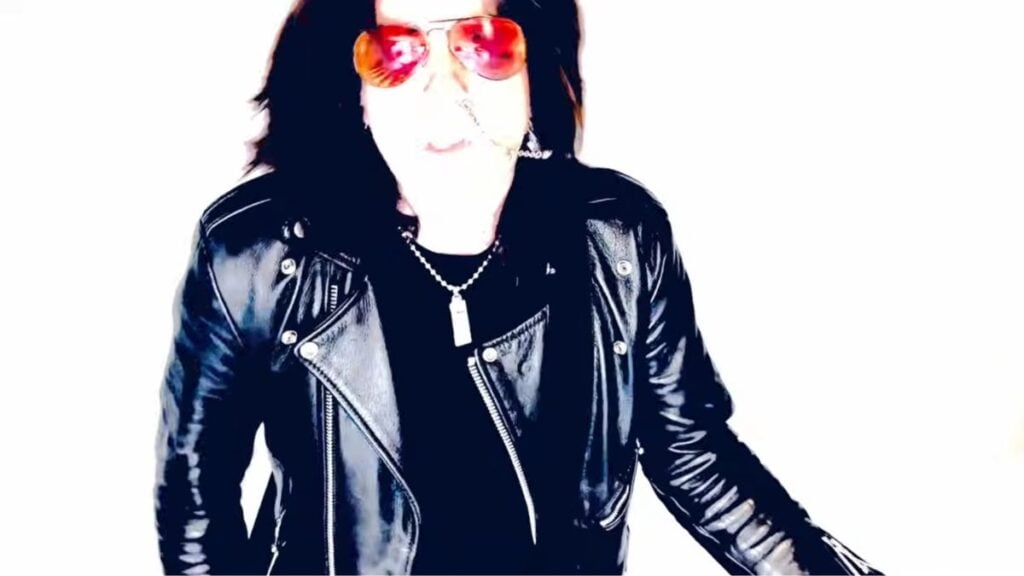
New Jersey folks are storytellers by nature. We just are! So when I sat down for a “story telling session” with Skid Row bassist (and now solo artist) Rachel Bolan, I knew there would be tales to tell.
After 4 decades in music, Rachel is releasing his dynamic debut solo album BOLAN — “Gargoyle Of The Garden State” on earMUSIC. It’s a punk-infused, slam dunk that features a little help from Rachel’s friends. Guest appearances include Corey Taylor (Slipknot/Stone Sour), Danko Jones, Nuno Bettencourt (Extreme), Damon Johnson (Brother Cane/Lynyrd Skynyrd), members of Skid Row, and more.
It also features the side of Rachel outside Skid Row — his grit, stylized vocals, songwriting, and influences.
The Skid Row Singer Search Continues
Skid Row recently called for open auditions on Sweetwater, and the videos from potential new singers haven’t stopped! So sitting down with the New Jersey Gargoyle himself had me asking some questions. Is “Gargoyle Of The Garden State” a punk rock love letter to New Jersey? How did Rachel get so many talented musicians to play on his solo record? What was it like to do this record with super producer Nick Raskulinecz? How did James from New Jersey become Rachel? How far along is the Skid Row singer search, and how many auditions have they received online? We cover a lot of rock and roll ground this week on my Carr Stereo Podcast.
*Editor’s Note: Answers have been edited for clarity and length.*
Terrie Carr: I’m with New Jersey legend and icon Rachel Bolan. When I originally looked up the album title I was like, where did he get this? It’s the best album title I have heard in years. So let’s start right there. Where did you get it?
Rachel Bolan: It’s interesting. My first idea was to call the album “Gargoyle.” I love gargoyles, and I love the fact that most people don’t really know that each one has a purpose they serve — some kind of mythical purpose, not to sound all weird.
Terrie Carr: I did not know that.
New Jersey Gargoyle
Rachel Bolan: There are thinking gargoyles, and gargoyles for protection. My sister actually got me a thinking gargoyle for Christmas. She says it’s me because I’m always thinking. I always loved it and the fact that people just walk by them and look at them like, “oh, a gargoyle,” and have no idea what purpose they actually serve. That always struck a chord with me. I was going to call it “Gargoyle.” In the meantime, my wife and I moved back to New Jersey after being gone for almost 25 years. I was like, “I’m going to put those two together. It’s kind of a tongue twister when you first say it, which I think is kind of cool too.”
Terrie Carr: In Jersey, we’ve always been good storytellers. This is what we freaking do in Jersey. We tell stories!
Rachel Bolan: We’re natural born storytellers.
Terrie Carr: So is this almost a love letter to New Jersey? To me it’s like a punk rock love letter to New Jersey.
Rachel Bolan: You could say that for sure. Lyrically, there’s a lot of regional references. Like you said, we’re storytellers — we’re natural born storytellers. My dad had a saying. When guys would tell a story and talk too much, he’d say, “if you ask that guy the time, he tells you how to build a watch.” That’s kind of all of us. So if someone starts telling you a story in New Jersey about whatever, get comfortable, because you’re going to hear the whole thing. That kind of translated into some of the songs. A lot of it is just about my experience in my home state. The beauty of songwriting, I think, is I could talk about whatever I want and write about whatever I want. It may relate, or I may interpret it completely differently from how you interpret it. That’s the beauty of music. That’s the beauty of art.
Terrie Carr: So when as a kid do you become “Rachel Bolan”? When did you as a Jersey kid have this vision for your life?
Rachel Bolan: I remember being a little kid, and once I saw Kiss, my whole life changed — everything changed. Once I saw them live — getting turned on to them at about 10 or 11 — I was just completely immersed in what they were doing. I just saw the visual. I was an Alice Cooper fan too, and I’m fourth out of four kids, so there’s always music around the house. Then it got to the point where I was just drawing fictionary bands and giving them names. Once I started playing out a lot in my teen years, I’m like, “I’m going to use a different name. I want a stage name.” I always loved Alice Cooper, loved the fact that it was a guy with a woman’s name. Then, I just started taking all my family members’ names on the male side of my family — my brother Richard and my grandfather Manuel. I was just crossing out letters and I was like, “Rachel, perfect. What is my last name?” I never gave it much thought. I’m just such a huge T-Rex fan. I’m like, “I’m going to cop his last name.” That’s how it all came together.
Terrie Carr: So let’s talk about some of these friends that you have on the record. Let’s start with Danko Jones, because I think the collab and first single with Danko is just incredible — “At War With Myself.” So is the video.
Rachel Bolan: I was so happy that all these guys said yes. It’s not like I wrote songs for them. For “At War With Myself,” I was talking to Nick, who produced the Danko Jones record years back. I’m like, “I’m going to call Danko and see if he’ll sing the second verse, and then we sing the choruses together.” So I texted Danko, and of course he was on tour because he’s always on tour. He was in Europe and he goes, “I’m in”!
Check out the full interview with Rachel Bolan. For a dose of straight ahead, no holds barred, in your face rock, check out BOLAN — Gargoyle Of The Garden State,
Barrett Media produces daily content on the music, news, and sports media industries. Sign up for our newsletters to stay updated and get the latest information right in your inbox.
Country radio has a choice to make this week. Taylor Swift is returning to country music. She has a new original song, “I Knew It, I Knew You,” for the Toy Story 5 soundtrack, and it returns her to her country roots.
That sound you hear is every Pop PD cracking their knuckles. They’re ready to drop every Taylor liner, artist ID, and friendship-bracelet promo on the Country PD who has been calling her “too pop” since 2014.
Country Built The Big One
This is the biggest artist in the world stepping back toward the format that broke her. The format that made “Tim McGraw,” “Teardrops on My Guitar,” “Our Song,” “Love Story,” and “You Belong With Me.” Before the stadiums. Before brands learned the phrase “Easter egg.”
Country radio helped build the rocket. Then it wandered off like Rex looking for confidence.
Should’ve Said Yes
There were chances to bring her back. “New Year’s Day” was sent to country radio in 2017. Most programmers passed like her name had faded from the bottom of the boot.
Then came “Betty” in 2020. Harmonica. Storytelling. Acoustic. Taylor brought country radio a genuine country song. Stations treated her like Forky wandering into the room asking if he even belonged there.
Then, in 2021, “I Bet You Think About Me” arrived with Chris Stapleton. Country radio still looked at Taylor like Buzz Lightyear walking into Woody’s room for the first time. Threat detected. Belonging denied.
Be The Sheriff, Not The Deputy
You do not need permission from a label priority sheet. You do not need a regional rep to bring chai sugar cookies and a spin story. She is Taylor Swift.
Your listeners love her. Their kids love her. Their spouses love her. The guy pretending he does not love her loves her. Lotso people love her, and yes, that pun was sitting right there.
If This Is A Coincidence, It Has A Publicist
Also, the timing is almost too perfect. It is CMA Fest week. Nashville is full of artists, managers, label people, radio people, executives, programmers, and consultants. There are enough credentials in town to wallpaper the Ryman. What a homecoming this could be — the biggest artist in the world returning to the format that helped raise her. Throw around a few NDAs, put some country programmers on planes, and use Fan Week to hide Taylor in plain sight. That Friday release window is right there.
I want to live in a world where I’m floating in 13 clouds and Taylor Swift closes on all 158 Mediabase country stations on Monday.
And with three versions dropping, programmers can even play A&R guy if they need to feel useful. Original version. Acoustic version. Piano version.
Radio has spent decades making room for alternate mixes, pop remixes, wedding versions, and duet versions. Don’t overthink adding her record this week. End up overthinking it and you’ll look like a Barrel of Monkeys at a music meeting.
Country radio does not get many chances to jump into a truly global cultural conversation. The claw is coming down. This is your moment.
To Infinity And Beyond — Which, In Radio Terms, Means CBS, Entercom, And Audacy
Buzz is on the launchpad. Jessie is saddled up. Woody is looking at the format saying, “Reach for the sky.” Country radio is either going to grab the moment or stand there like Mr. Potato Head missing his eyes and ears.
Let Taylor Swift back into the format. Or watch the Pop PD down the hall laugh at you when they see your ads on Monday.
Your choice, partner.
Barrett Media produces daily content on the music, news, and sports media industries. Sign up for our newsletters to stay updated and get the latest information right in your inbox.
There’s a number in some recent industry research that should make every radio programmer and music executive stop and re-read it twice. Only about one-third of 16-to-19-year-olds have regular conversations about music with their friends and family — at least once a month. That makes today’s teenagers the least likely age group to discuss music, trailing even listeners 65 and older.
At the same time, those same teenagers stream more music per week than any other age group.
More consumption, less conversation. That’s not a paradox — it’s a warning.
The Algorithm Knows You. It Just Doesn’t Know Your Friends.
Streaming platforms have spent the last decade perfecting the art of serving each listener their own algorithmically tailored world — personalised playlists, AI DJs, hyper-specific recommendations. Spotify made it the centerpiece of its Investor Day last month, presenting itself as “moving from curation and recommendation into an era of generation,” where the platform won’t just surface music that fits your taste but potentially create it outright. The modern DSP experience is all about you.
The risk, as analyst Tatiana Cirisano recently argued, is that streaming platforms are stripping away one of music’s most powerful functions: bringing people together around shared identity and culture. Fandom and cultural meaning don’t emerge from passive, individual consumption. They emerge from belonging.
What Radio Has That Spotify Doesn’t
For radio, that question isn’t academic. Shared listening has always been radio’s core value proposition. You hear something in the car, you talk about it at work. A morning show reacts to a song drop and listeners feel like they’re in on the moment together. That sense of collective experience — of a culture moving in the same direction at the same time — is what separates broadcast from a playlist. It’s also, increasingly, what streaming is eroding.
New research into the entertainment behaviors of the crossover generation between Gen Z and Gen Alpha finds that today’s teenagers inherited a digital-first world defined by ubiquity, hyper-personalisation, and fragmentation — and are quietly pushing back against it. They want more balance. They’re looking for connection, shared identity, and experiences that pull them off the screen rather than deeper into it. The iPod is selling again. “Dumb phones” are a conversation. These might be micro-trends, but they’re pointing toward a lasting generational shift in what young listeners actually want from entertainment.
The irony is that what they’re craving sounds a lot like what radio used to offer.
Disposable Attention vs. Devoted Fans
The music industry is already feeling the downstream pressure. Streaming hours going up is a deceptively healthy-looking metric when the cultural engagement underneath it is hollowing out. As Cirisano puts it: “Passive, algorithmic listening is often disposable attention — listeners scroll, consume, and forget.” What matters more is devoted attention — the engaged fandom that keeps listeners coming back, buys the ticket, wears the shirt, and justifies the subscription. That doesn’t grow from an algorithm. It grows from belonging.
Spotify isn’t entirely blind to this. Features like About the Song and SongDNA add artist context that deepens the listening experience. A new Reserved ticketing program moves the platform into live, physical territory. A just-announced deal with Universal Music Group will let users remix existing songs — an interesting middle ground that has the potential to build genuine fan connection rather than just generate isolated content consumption.
But these are features layered onto a platform whose core engine still optimises for individual satisfaction over shared experience. Fixing the paradox isn’t a feature; it’s a philosophy.
Radio’s Moment — If It Takes It
Radio’s relevance to this conversation is often undersold. The medium took its share of criticism during the streaming decade for being passive, predictable, and algorithm-resistant. But those same qualities look different in a world where 16-year-olds are drowning in personalised content and starved for something to talk about with their friends.
The challenge for broadcasters is whether they can lean into that advantage credibly — not by pretending it’s still 2005, but by making the communal, reactive, live nature of radio feel essential again to a generation that’s never really experienced it that way. Morning personalities reacting in real time. Local culture that an algorithm can’t replicate. The sense that something is happening right now and you’re part of it.
Gen Zalpha didn’t abandon shared music culture. They just haven’t found where it lives yet.
Barrett Media produces daily content on the music, news, and sports media industries. Sign up for our newsletters to stay updated and get the latest information right in your inbox.
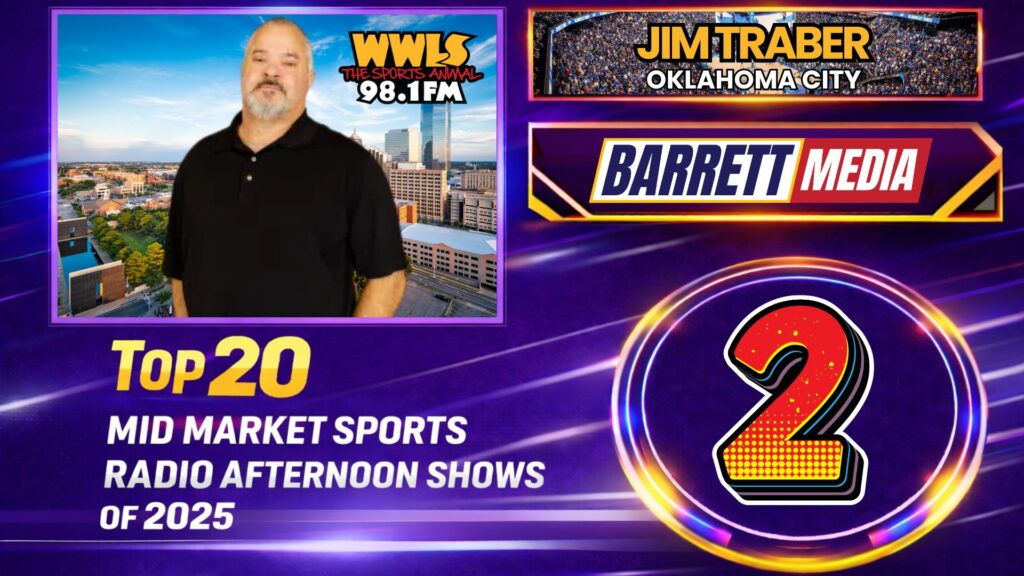
The song ‘My Way’ is a classic track. From Frank Sinatra to Elvis Presley, the single became a legendary anthem for many and recognizable across several generations. Written as a reflection on living life on your own terms, taking responsibility for your choices, and remaining true to yourself until the very end, the song mirrors the approach WWLS afternoon host Jim Traber has taken throughout more than three decades in Oklahoma City.
“I’m a very unorthodox guy doing sports radio,” explained Traber while describing how he has never once listened to outside coaching about his on-air approach. “I get in trouble sometimes from my bosses, but I don’t do sports radio the way most people do sports radio.”
Traber’s journey into sports radio is as unorthodox as his approach to the format. A former MLB player, his broadcasting career began the same day he walked in for an interview. He followed the suggestions from the beat reporters who covered him during his baseball career. It only took a single meeting, and Traber found himself on the air just hours later.
Since then, Traber has built himself into the sports radio destination in Oklahoma City. Dubbed “The Ultimate,” he has never viewed his role through the lens of fandom. Instead, he has carved out a reputation as an independent voice, delivering original opinions, calling balls and strikes evenly, and holding local franchises accountable.
“I take pride in my approach. The people that want objective opinion have tuned in forever to hear what I have to say. 50% of the people who listen to me love me, and the other 50% hate me. But they’re listening,” said Traber. “I don’t want to be compared to small town radio. Despite the market size of Oklahoma City.”
Traber is a throwback, a talent who reflects the early days of sports talk radio. Loud, brash, and unafraid to welcome controversy, every opinion is unscripted, raw, and authentic. He’s never shies away from informing his audience that if they don’t like what he has to say, they can change the channel.
He admits his style is rare today in an age of endless content options.
“It’s hard for some people on the radio to separate being a fan and telling the truth. Heck, there’s people that want me out of the Oklahoma State hall of fame because I’m not a homer for OSU. There’s no one way to do radio, but my way of doing sports radio is dying off,” explained Traber.
Sticking to What Works
Traber’s afternoon program serves as the pulse of sports in Oklahoma City, with affiliate stations stretching across the state. Guided by his no-nonsense approach, Traber’s profile has only grown alongside the success of the Oklahoma City Thunder, who recently lost in the Western Conference Finals.
Over the last 18 years, the Thunder have reached the NBA postseason 13 times and won one championship. For Traber, the team’s arrival and success have provided a tremendous boost to his program because of the inclusivity the franchise brings to the local community.
“It’s crazy because the Thunder have brought together OU (University of Oklahoma) and OSU (Oklahoma State University) fans to the same team. They’re all learning the game in real time,” said Traber. “It’s been a very interesting evolution to witness, and I love it. It’s also been an incredible thing for the city, state, and sports radio.”
Despite the success the Thunder have enjoyed, it hasn’t changed Traber’s approach or the authentic feel he provides his audience. He admits that while he “bows down” to the organization itself, the games on the court remain fair game for criticism.
Sticking to his philosophy, he calls it exactly as he sees it and receives plenty of criticism from listeners for not being a “homer” for the local team.
“The Thunder fans cry a lot,” notes Traber. “I’ve been hard on Thunder for years. I never go personal. We’re the Thunder’s radio flagship station but not once have they told me to stop with anything. That’s awesome, and the way it should be… They realize what my job is, and what their job is. I’m not paid by them. But I appreciate how they’ve treated that relationship.”
Bucking the Trends
Traber is not an Oklahoma City native. He grew up playing baseball in Columbia, Maryland, before heading to Oklahoma State in the early 1980s. A two-sport athlete with the Oklahoma State Cowboys, Traber was a 21st round selection by the Baltimore Orioles in the 1982 MLB Draft. He then went on to play parts of four seasons with the club.
Currently, he calls Oklahoma City his home for more than 35 years, but hasn’t lost his Northeast roots. Traber admits the two teams he still shares strong ties with are Oklahoma State baseball and the Pittsburgh Steelers.
However, Traber has noticed changes in sports radio that he doesn’t believe have benefited the industry. He feels some personalities feel held back by concerns over access, relationships, and the business realities of the industry.
“I’ve seen sports radio change a lot. I’m proud to say that I haven’t changed. There aren’t many people on our station that do it the way I do it,” said Traber. “I’m not saying our way is the right way to do sports radio. It’s just the way I’ve done it… There’s people all over the market that are homers. Go listen to them.”
Traber believes sports radio is shifting in a different direction, one he considers too laid back for what the format should be. In his view, spirited debate has increasingly been replaced by predictable conversation.
“There’s no more arguing on sports talk radio anymore. There are points that must be debated and conveyed in certain manners from time to time,” says Traber. “If it’s just me on one side, so be it. I’m not doing it to get people fired up. I’m doing it because that’s how I feel.”
Enjoying the Ride
His approach may be a throwback, but the results speak for themselves.
Traber is annually recognized in the Barrett Media rankings released each February. In prior years, his name regularly appears among the top twenty mid-market afternoon drive shows. This past year he finished as the second-best program in the format, trailing only The Afternoon Team with Poni and Mueller on Pittsburgh’s 93.7 The Fan.
“I love it, because those that vote aren’t sitting and listening every day. They’re looking at everything involved with the program from top to bottom. That makes me really happy that people recognize the program,” says Traber. “I’ve been doing this for over thirty years. To know I’m not dying off yet, it’s pretty cool. When your peers say you’re doing a good job, that feels good.”
That recognition is meaningful, but Traber wouldn’t have it any other way. More than three decades after stepping into a sports radio studio for the first time, he continues to prove why he’s known as “The Ultimate.”
“I love working, and don’t plan on stopping anytime soon,” said Traber, who will turn 65 this coming December. “Not many people get to say they like doing their job. My goal is to have a seven in front of my age when I decide it’s time to walk away. But we’ll see, you never know what can happen.”
In an era when sports radio often feels safer, more polished, and increasingly predictable, Jim Traber remains something different. He doesn’t chase approval, worry about being liked. He also doesn’t bend his opinions to satisfy teams, listeners, or industry trends. Whether audiences agree with him has never been the point. Authenticity has.
In many ways, My Way feels like the perfect soundtrack for Traber’s career. For more than thirty years, he’s built one of sports radio’s most successful brands. He credits trusting his instincts, embracing disagreement, and refusing to sound like anyone else.
The industry around him may continue to evolve, and the style he champions may become increasingly rare, but Traber doesn’t appear interested in changing course.
After all, “The Ultimate” has spent an entire career proving that success in sports radio doesn’t require following someone else’s playbook.
It simply requires having the conviction to do it your way.
Barrett Media produces daily content on the music, news, and sports media industries. Sign up for our newsletters to stay updated and get the latest information right in your inbox.
You may not know who Brad Galli is, but his story is becoming increasingly common in sports media. As audiences shift to more platforms for content than ever before, Galli is hoping to stay ahead of the curve. On Monday, Galli launched his new independently owned venture, The Brad Galli Show, a digital-first platform delivering exclusive interviews and original sports storytelling from the Detroit area.
When you hear about sports media talent going independent, it typically involves layoffs and cost-cutting. But Galli’s story is different. Instead of falling victim to the red pen, he sought out independence. He left a role he spent 15 years building and chose to go out on his terms rather than someone else’s.
Many would consider the move inspiring. It’s a great story about someone who built a reputation in a market, then left to pursue a new opportunity in independent media. However, what it should be is a massive alarm for local television networks and radio stations with established talent.
Galli isn’t the lone example. He’s simply the latest one.
For years, local television stations and radio companies benefited from a simple reality: Talent needed them. Broadcasters relied on station brands for distribution, promotion, credibility, and audience reach. If you wanted to become a recognizable sports personality in your market, the most effective path was through a television station or radio brand.
That’s no longer the only option.
Endless Opportunity
Today, technology allows talented broadcasters to build direct relationships with audiences across YouTube, podcasts, newsletters, social media, streaming platforms, and mobile apps. The barriers to entry have never been lower, and the opportunities to monetize an audience have never been greater.
That’s why Galli’s move should be viewed as another warning shot.
I’ve noticed this shift with my own children. Growing up, I rooted for the Chicago White Sox, Bulls, Bears, and Blackhawks. Today, my kids root for Steph Curry, Lionel Messi, and TimTheTatman. Loyalty has shifted away from traditional brands and toward the individuals who create the strongest connections with audiences.
The same trend is currently occurring in sports media. People follow personalities, not logos or stations.
Why Galli’s example is so unique is because he’s a broadcast veteran who built a following while working under a well-established local television brand. He’s betting that the relationship he built with his audience will follow him into independent media. More importantly, he’s betting he can grow that relationship without needing a traditional broadcaster as the middleman.
It’s a crossroads that many television and radio companies face more and more every day.
As budgets tighten, staffs shrink, and expectations increase, many companies are asking their remaining talent to do more than ever before. Hosts and reporters are expected to create content for radio, television, websites, podcasts, social media, video channels, and live events. Yet in many cases, compensation, support, and long-term opportunity haven’t kept pace with those added responsibilities.
The result shouldn’t be surprising. The most talented people in the industry are beginning to realize they have options.
Can Legacy Media Save Itself?
As television and radio’s megaphone continues to shrink, the smartphone has become more powerful. Audiences can access their favorite personalities whenever and wherever they want. The platform matters less than the connection.
That’s not a prediction. It’s already happening.
The question for legacy media isn’t whether audiences are changing their habits. They already have. The question is whether broadcasters are willing to change how they value the people responsible for attracting those audiences in the first place. For decades, local television stations and radio brands held the leverage. They provided the platform, distribution, marketing, and visibility. Talent needed the station more than the station needed the talent.
Today, that equation is rapidly changing.
That’s what makes Brad Galli’s departure so significant. He didn’t leave because he was forced out. He left because he saw a better opportunity to grow his audience independently. The technology and distribution tools available today allow him to serve Detroit while simultaneously expanding his reach far beyond it.
And if you’re a television station or radio company, that should be concerning.
The future of legacy media won’t be determined by transmitters, call letters, apps, or even ratings books. It’ll be determined by whether organizations can convince their best talent that staying offers more opportunity than leaving. Because once a personality develops a direct relationship with an audience, the station is no longer the destination. It’s merely one stop along the journey.
If brands can’t retain top talent and become secondary for audience, less people will desire to be a part of that brand. The brands that survive won’t be the ones that simply hire great talent. They’ll be the ones that invest in it, empower it, and create reasons for it to stay.
If not, more talented broadcasters will follow Galli and those before him, betting on themselves rather than waiting for someone else to determine their future. Every time that happens, legacy media loses a little more of the advantage it once took for granted.
Barrett Media produces daily content on the music, news, and sports media industries. Sign up for our newsletters to stay updated and get the latest information right in your inbox.
Turn on conservative news/talk radio this week, and you’d hear a consistent refrain: Scott Pelley is a whiner, 60 Minutes is a liberal institution in decline, and the whole CBS News situation is just another example of the mainstream media melting down because they’ve lost control of the narrative.
It’s a clean, satisfying story. It also misses the point entirely.
Nobody’s arguing that Scott Pelley is above reproach. Nobody’s arguing that 60 Minutes hasn’t had its biases over the years. But that’s not what this fight is actually about — and conservative hosts who’ve framed it that way have done their listeners a genuine disservice.
The core of Pelley’s frustration isn’t ideological. It’s institutional. His outburst, directed at incoming 60 Minutes executive producer Nick Bilton, reflects something more fundamental than partisan grievance: the sense that unqualified people — installed by a billionaire owner and his hand-picked deputy — are now making consequential decisions about a program that has shaped American journalism for five decades.
The Qualifications Problem Nobody Wants to Talk About
Before leading CBS News, Bari Weiss had never worked a single day in television. That’s not a political statement. It’s a fact. Nick Bilton, her selection to run 60 Minutes, is similar. He brings no television experience. And no managerial experience. To a role that has traditionally demanded both in abundance.
There’s a critical distinction here between unqualified and unfit. Unqualified doesn’t mean they can’t succeed. People beat long odds every day. Nobody should assume failure. But it’s entirely reasonable — and frankly responsible — to point out that the people now steering one of the most impactful news programs in television history arrived without anything even remotely resembling the credentials the job has long required.
Conservative hosts have mostly skipped past that distinction. Instead, they’ve treated any criticism of Weiss or Bilton as ideological hostility dressed up as professional concern. That’s a lazy read. Experience requirements aren’t partisan. Nobody would hand a newsroom of dozens of journalists and a multi-million dollar budget to someone who’d never managed so much as a staff meeting — regardless of their politics. The outrage over Pelley’s comments would look very different if the names attached to CBS News right now leaned the other direction.
What Pelley Was Actually Saying
Pelley’s argument isn’t that CBS News should stay politically where it’s always been. His argument is that a billionaire owner and an unqualified executive shouldn’t have unchecked power to reshape the show without accountability.
That argument should appeal to conservatives, not repel them. Concerns about concentrated ownership, outside forces overriding editorial independence, and powerful people making decisions they aren’t equipped to make — those themes show up constantly in conservative media criticism of the legacy press. Yet somehow, when Pelley raises them from the inside, it becomes proof of liberal entitlement rather than legitimate institutional concern.
If you want to debate whether Pelley staged his outburst to manufacture a martyr moment or build legal leverage, fine. That’s a fair and interesting conversation. But calling his frustration unwarranted — or reducing it to nothing more than a liberal crying because he’s lost control — ignores everything substantive he actually put on the table.
Conservative radio hosts got this one wrong. They had an opportunity to engage seriously with a story about media ownership, editorial independence, and professional standards. Instead, they defaulted to the easier narrative. Their listeners deserved better — and so did the story.
Barrett Media produces daily content on the music, news, and sports media industries. Sign up for our newsletters to stay updated and get the latest information right in your inbox.
Longtime 60 Minutes correspondent Scott Pelley lashed out at new 60 Minutes Executive Producer Nick Bilton during a Monday meeting. Now, he’s out at the network.
What We Know: During Monday morning’s meeting, Bilton attempted to impress upon the staff that things were ok following a mass exodus of employees. In the process, Scott Pelley pressed Bilton on the vision of the program. He pointed out that the new executive producer has no television experience nor managerial experience. When Bilton attempted to share Bari Weiss’ vision for the show, Pelley took issue with the insinuation. He argued that Weiss is “murdering” the news magazine. He also noted Bilton was not qualified for the job he was hired for.
What They Said: “Yesterday, you hijacked my first meeting with staff to disparage me, my qualifications, and my intentions with remarkable incivility and contempt. I welcome a diversity of viewpoints and respectful debate among the team, but this was nothing of the sort. Yesterday’s performative display of hostility—enacted in front of the staff instead of in a civil, private conversation—demonstrated that you have no interest in contributing to the future success of the show, or approaching my new tenure with a mind open to collaboration and progress. I am here to deliver first-in-class news programming, not to make headlines about newsroom drama. I am eager to work alongside those who share this goal.
“Despite yesterday’s misconduct, I had hoped that in sitting down with you today we could find a path forward together. You made clear that you are not interested in such a path. Your antipathy to the future of the show has come through loud and clear. And I have heard you. I therefore write on behalf of CBS News, Inc. (“CBS”) to inform you that your employment with CBS is terminated for cause effective immediately.” -60 Minutes Executive Producer Nick Bilton in a letter to Pelley
What Remains Unclear: Pelley has yet to publicly respond to the termination. It is also unclear if Pelley will fight the termination for cause with a legal battle.
What It Means: The development will keep 60 Minutes in the headlines for the foreseeable future. Pelley becomes the fourth correspondent from the past season to exit the show since it ended. His exit will now become the most high-profile due to his stature with the show. Scott Pelley has been a 60 Minutes correspondent for more than 20 years.
Barrett Media produces daily content on the music, news, and sports media industries. Sign up for our newsletters to stay updated and get the latest information right in your inbox.