Home Blog Page 346

Radio Not Playing Bad Bunny is Bad Programming

0

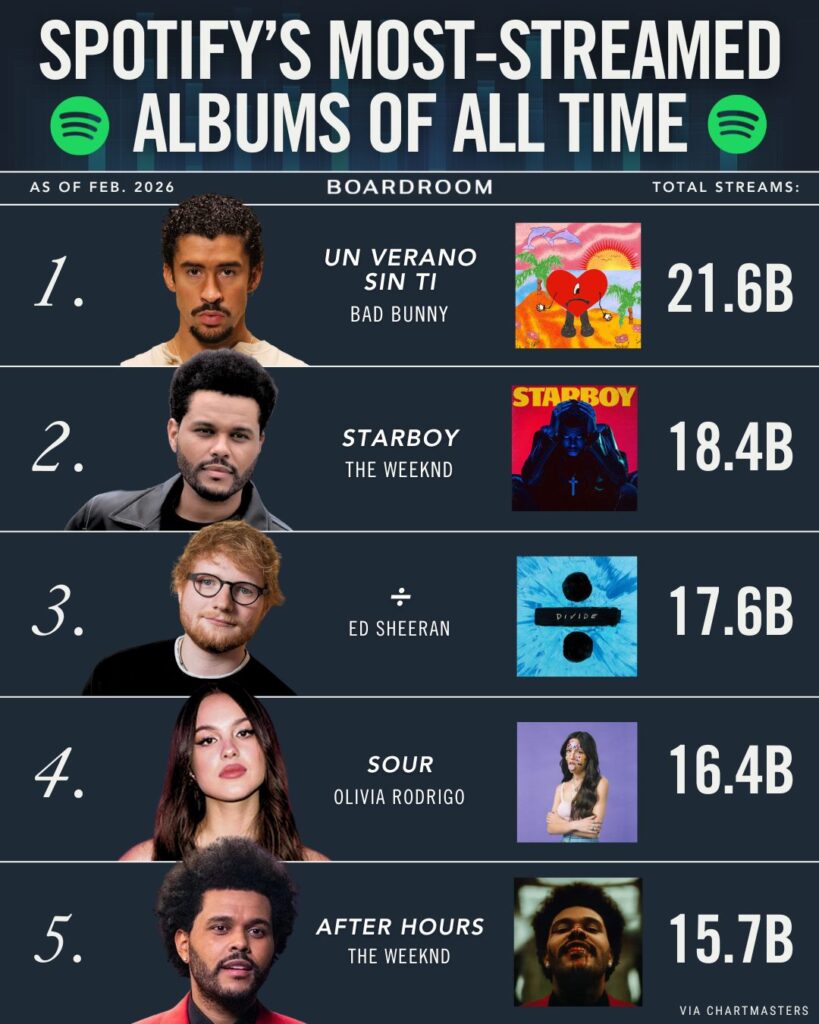
There has never been a moment like this. Within 14 days, an artist performs at the Super Bowl halftime show, wins a Grammy for Album of the Year, posts 170 million U.S. streams in seven days, holds six of the Top 10 streamed songs in America…and doesn’t have one song in the Top 40 on mainstream radio.

If you program pop radio in America and you’re not playing Bad Bunny, we need to talk.

The 170-Million-Ton Elephant in the Room

Let’s start with my least favorite subject: math.

170 million streams in one week in the United States (and not during Super Bowl week, for the doubters). Six of the Top 10 streamed songs in America. That’s mainstream. You know, the way your sales team describes your format.

Yet 222 reporting CHR stations have chosen to not give double digits spins to the biggest artist in America. Chosen to say, “not for us,” or “he doesn’t wave the Top 40 flag.” Maybe you missed that during the Super Bowl Halftime Show he had dozens of flags waving.

Maybe you think he’s not a pop artist. You must have forgotten that “pop” is short for popular (unless you’re in the Midwest).

Too Busy Playing What’s Being Worked & Not What’s Working

Radio has drifted from “what’s hot?” to “what’s being serviced?” The promo rep has become more effective than most programmers.

Programmers, in many cases, are reacting to label priorities, airplay pressure, comfort, fear, and corporate programming mandates (culpable de los cargos).

Instead of responding to actual demand, actual audiences, actual cultural relevance, and dare I say it, actual data. Ah, there’s that unarguable math thing again.
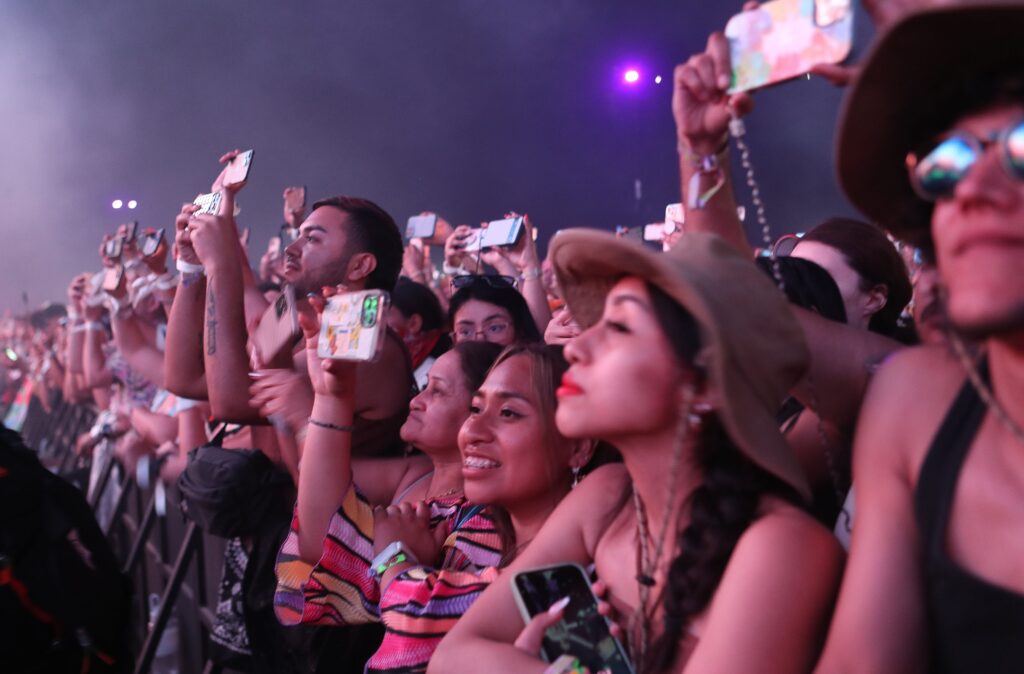
Fans watch Bad Bunny perform at the Coachella Valley Music and Arts Festival’ photo credit: Jay Calderon/The Desert Sun/USA TODAY NETWORK via Imagn Images

So what is it?

Is he underplayed because the songs are in Spanish?
Is it because he’s operating outside traditional label machinery?
Is it fear of alienating a perceived core demo?

Here’s what we know:

America is not confused.
America is not hesitant.
America is not waiting for the song to come back in your callout.

“But Phil, My Market Is Different.”

Ah yes. The classic: “My market is different.”

You’re right. Your market only has five Bad Bunny songs in its Top 10 streamed songs. The other market has six.

Pull the local streaming charts in almost any CHR market. You’ll find him at the top. Multiple times. Multiple titles. Multiple albums.

The audience already voted. You just haven’t counted the ballots (not that ballot boxes are ever rigged).

Those Who Get It

Let’s give credit where it’s due. Jazzy Jim Archer — I’m a fan — at KMVQ has Bad Bunny spinning 60+ times a week.

iHeart has well over a dozen mainstream Top 40 stations playing him in double digits, right in line with their newly announced podcast partnership with Bad Bunny. The types of people I heart are people who heart all types of people.

For the other 200+ Top 40 PDs not playing Benito, you are making your station’s relevance finito (and, yes, I know that’s Italian; “how dare he put three languages in the same article!”).

The Language Barrier

Yes, his songs are in Spanish. So?

Streaming eliminated language as a barrier. TikTok did that. Netflix did that. K-pop did that. Reggaeton did that. Heck, “Macarena,” “Gangnam Style,” “La Bamba,” and “99 Luftballons” did that, decades ago.

Remember when you played “Despacito” and “Gasolina”?

Sidenote: “Despacito” was the most-streamed song of 2017 and tied the record for most weeks at No. 1 on the Billboard Hot 100 (16 weeks). So there must be more at play here than the language objection.

The Political Climate Argument

“We  don’t want to appear political.”

When did playing a global superstar become a political stance? Let’s not pretend neutrality is a strategy.

Taylor has a political view. Bono has a political view. Bruce Springsteen has a political view. Nicki Minaj has a view. Right Said Fred has a political view. Do we need to stop playing them?

The Independent Label Theory

Another theory: he’s not being pushed in traditional ways.

No promo army.
No call blitz.
No coordinated “add week” theatrics.

Translation: programmers have to make an independent decision. That’s uncomfortable for some. We’ve built a system where “worked” often trumps “wanted” (no pun intended).

The Real Risk

Every time you ignore an artist this big, you train your audience to go somewhere else.

When a listener opens Spotify or Apple Music and hears what they want immediately, then gets in the car and doesn’t hear it, you’ve just reinforced the perceptual idea that radio is behind.
This is bigger than Bad Bunny. This is about programming philosophy, you know, that thing you used to have to submit with your resume when you were looking for a job.

Have we reached a point where politics matter more than product? Where labels matter more than listeners? Where traditional matters more than remarkable?

I don’t believe programmers are ignorant. I don’t believe they’re arrogant. But I do think some are trapped inside systems built for a different era.

Not Playing Bad Bunny Is Bad Programming

When 170 million weekly streams say “play this,” and the programmer says, “we’re not sure,” the audience answers, “cool! We’ll go somewhere that is.”

And that, my friends, is how $20 at a time terrestrial radio funds its own competition.

Barrett Media produces daily content on the music, news, and sports media industries. Sign up for our newsletters to stay updated and get the latest information right in your inbox.

T-Bob Hebert Details How Creative Culture Is Fueling ‘Wake up Barstool’ for Growth on FS1

0

When Barstool Sports announced their partnership with FOX Sports last summer, many speculated on what to expect. The agreement meant that Barstool would have a weekly presence on the network’s flagship college football pregame show, Big Noon Kickoff. The other aspect of the agreement was a two-hour morning program curated, hosted and produced by Barstool for distribution on FS1. A month prior to the agreement announcement, T-Bob Hebert joined the Barstool Sports brand with some unsettling nerves about what his role would be.

“I had all these show ideas that I was ready to pitch. Then my first day working there, Big Cat [Dan Katz] called me and said they [Barstool] have a deal in the works with FOX that they feel I’d be a great fit for,” said Hebert. “That was a wild pinch myself moment. On my first day of work, I was basically told that there could be a potential national show on FS1 that they wanted me to be the host of.”

Months later, Wake Up Barstool launched on Labor Day, leading into the first week of the NFL regular season. The show is hosted by a rotating cast of Barstool Sports personalities, with Hebert serving as the most consistent presence. Hebert is no stranger to hosting morning programming. Prior to joining the digital content factory at Barstool, he hosted morning radio on 104.5 ESPN Baton Rouge for several years.

Leaning on his experience in morning radio helped Hebert adapt to the new structure his role at Barstool would provide. He says the best thing about working for Barstool is how collaborative and creative the entire staff is, with everyone pulling in the same direction and finding new avenues for content with nearly no restraints on support.

“It is a building filled with super creative people. I wasn’t sure how the environment was going to be at first, because it’s definitely competitive. Thankfully, it feels more collaborative,” said Hebert. “This place is crazy. If you have an idea, they’re like go do it and we will give you the resources to try it.”

Planning Ahead

It’s been nearly six months since Wake Up Barstool launched on FS1. The program airs live from 8 to 10 a.m. It then replays on the network before The Herd with Colin Cowherd at noon. Unlike many Barstool Sports properties built for a digital-first audience, Hebert said Wake Up Barstool is produced primarily for television.

He credited the football season with giving Wake Up Barstool a strong runway to find its footing in a network-style presentation. Now, with the NFL season complete, the offseason challenge begins. The former LSU Tigers football standout said he looks forward to the test. He plans to build on the foundation established this fall.

“The worst thing that we can do is think that the show is good now, and just keep doing what we’ve been doing,” said Hebert. “We’ve already had a ton of meetings about ways to expand and things we want to try. We’re not afraid of doing things, but I feel good coming out of the football season with an offseason filled with a billion things to talk about.”

The reception from FOX through the beginning of the program has been positive, according to Hebert. He credits the partnership with the network for allowing them to have full reign over the content direction and style of the program. Working in partnership with FOX has also granted exclusive interviews with FOX talent and unique access to FOX broadcast events.

For Hebert, he remains mindful that a television audience on FS1 may not fully align with the Barstool Sports brand. He said his approach is to create a welcoming environment. That mindset holds even when content on Wake Up Barstool leans heavily into insider conversation.

“Things can be so large and take over the entire Barstool workplace that everyone’s talking about. Somebody watching may not have a clue what the f**k we’re talking about,” explained Hebert. “I understand that. We’re doing a better job of translating why things are funny through showing the audience, instead of just referencing it… Sometimes some things are just unescapable and nature of the beast.”

Defining Success

Hebert says the model for Wake Up Barstool was never to try to replicate anything from ESPN’s morning lineup. Although initial viewership reports drew criticism, including from Barstool Sports founder Dave Portnoy himself, the goal, according to Hebert, isn’t viewership but engagement.

“I don’t know what the numbers are. I’ve never been terribly numbers motivated, but we are a social media clip factory here,” explained Hebert. “My first success metric is am I proud of what we just did? That’s something that can bounce from day to day, but the goal is to have fun and a good time.”

Since launching in September of 2024, Wake Up Barstool has gained over 186,000 followers on social media, earning over 346 million views across Barstool channels in that timeframe. In January alone aided by the NFL and college football playoffs, Wake Up Barstool increased it’s following by 15% while seeing 1.2 million engagements across platforms.

Despite that growing following on social media, one goal for Hebert is finding new avenues to grow the program’s YouTube platform moving into the spring and summer months. So far, he has been impressed with the social media engagement Wake Up Barstool has generated, despite the struggles of early traditional viewership metrics.

“Good social media numbers make me feel good. Because I want to stay on air and keep doing the show. If that element is going well, let’s keep doing that. But it would be really cool to see that the linear numbers are making people happy. Who wouldn’t enjoy that,” said Hebert. “If that’s where you start as your motivation, I personally feel that’s a recipe for disaster creating a show that’s not authentic.”

Be Entertaining

That authentic approach has always guided Hebert, from the locker room at LSU to sports radio and now to building his global persona at Barstool Sports. Although he hasn’t finished his first year of a two-year agreement with Barstool, he still considers the sky the limit and has no plans to move on.

As someone who grew up witnessing Barstool’s rise from the outside, he now has a new appreciation for the brand from the inside. It’s one he feels some in sports media often overlook.

“I think people paint with a broad brush at times about the character of Barstool Sports,” said Hebert. “In my experience, Barstool has a lot of kind-hearted people from all over the country. A ton of different backgrounds and beliefs that are just trying to make something that people want to be entertained by.”

In many ways, Wake Up Barstool is still in its infancy — a show born out of an unlikely partnership between a digital disruptor and a legacy sports network. For Hebert, however, the growing pains are part of the appeal. Building something from scratch, especially under the bright lights of FS1, is exactly the kind of challenge that fuels him.

For Hebert, the mission remains simple even as the platform grows larger.

Be authentic. Be creative. Keep building.

Barrett Media produces daily content on the music, news, and sports media industries. Sign up for our newsletters to stay updated and get the latest information right in your inbox.

The One Thing Sean Hannity Must Accomplish For New Fox News Podcast to Find Success

0

Sean Hannity isn’t exactly hard to find.

Between his nationally syndicated radio show and his primetime perch on Fox News, Hannity is on the air for four hours every weekday offering his worldview. That kind of exposure is a gift, but it’s also a trap when launching something new.

That’s why the success of Hang Out with Sean Hannity won’t hinge on reach, promotion, or even curiosity. The audience is already there. What will matter is restraint. There’s no shortage of ways to get opinions from Sean Hannity, and that’s precisely the one thing this podcast can’t become if it wants to matter.

Fortunately, it doesn’t sound like that’s the plan. Early descriptions suggest something closer to a conservative version of Bill Maher’s Club Random than an extension of Hannity’s radio monologues. If that’s the case, there’s real opportunity here. There’s space for a long-form, personality-driven podcast that lets conversations breathe without chasing daily outrage.

Podcasting rewards something different than radio and cable news. Listeners don’t press play for structure, clocks, or predictable talking points. They show up for tone, curiosity, and authenticity. That’s where Hannity has to shift gears slightly. The audience already knows what he thinks about Biden, Trump, the media, and the left. They don’t need another venue for the same arguments.

Instead, the podcast needs to lean into conversation over commentary. The best moments in shows like Club Random come when the host steps back and lets guests wander into unexpected territory after getting them to let their guard down. Hannity doesn’t have to agree with everyone, but he does have to listen. That’s a muscle he hasn’t needed to flex much in his existing roles.

And that’s not a shot or criticism as much as an observation. When you’re doing four hours of opinion-based commentary every day, listeners and viewers are showing up specifically for you. When you’re the star of the show, it’s easy to fall back into the trap of making yourself the star when on a conversational podcast.

Another key will be guest selection. If Hang Out with Sean Hannity becomes a parade of the same conservative voices who already rotate through Fox News, the novelty evaporates quickly. Those conversations are familiar. The podcast should aim wider. Cultural figures, entertainers, athletes, business leaders, and even ideological opponents would all add texture. Some of the biggest headlines Hannity draws is when he welcomes those he disagrees with, like conversations with Gov. Gavin Newsom (D-CA) or liberal talk radio host Stephanie Miller.

There’s also value in vulnerability. Hannity the broadcaster is polished and controlled. Hannity the podcaster can afford to be looser. Sharing personal stories, failures, influences, and off-air interests would humanize him in a way his current platforms don’t allow. That’s often what hooks podcast audiences and keeps them coming back.

Pacing mattersm too. Radio trains hosts to fill every second. Cable news is as much about efficiency as anything else. Podcasts benefit from silence, pauses, and moments where nobody rushes to the next thought. Letting conversations drift isn’t a flaw. It’s the feature of the format. If Hannity resists the urge to steer every exchange toward a point, the show will feel more organic.

Having the “Sean Hannity” brand on the podcast backing gives it instant credibility and visibility, but it shouldn’t define the content. The show has to feel distinct from Hannity’s cable brand and radio show. If listeners feel like they’re just getting a stripped-down simulcast without commercials, they’ll check out quickly.

I think the concept sounds interesting. There’s room for a show like this, and room for it to succeed, especially if it offers something different than Hannity’s existing platforms. The appetite for long-form conversation isn’t partisan. It’s personal.

That’s why I’m looking forward to checking it out when it launches early next month. If Sean Hannity treats the podcast as a completely different opportunity rather than another soapbox, Hang Out with Sean Hannity could become a smart addition to the crowded podcast space. If it turns into just another outlet for his opinions, it’ll be exactly that: another way to get something listeners already have plenty of.

Barrett Media produces daily content on the music, news, and sports media industries. Sign up for our newsletters to stay updated and get the latest information right in your inbox.

Apple’s Video Podcast Shift Must Be a Wake up Call for Sports Radio

0

Podcasting has come a long way in just over two decades. The concept was simple, but its impact has been enormous. The idea that a taped piece of audio, ready for anyone to consume on their own time, could become one of the most revolutionary concepts in the history of audio changed everything. It eliminated the shared experience that radio once provided, allowing full control and choice for the user based on personal preference and timeline.

In more recent years, video has become the new normal. Audiences are flocking to podcasts on video streaming platforms like never before. Netflix recognized the massive appeal and began paying large sums of money to top podcasts from Barstool Sports, iHeartMedia, and The Ringer to secure exclusivity for their video products. Platforms see the opportunity, and more money will follow.

However, Monday’s news that Apple Podcasts is embracing the video trend should serve as a warning sign of another industry evolution. One that sports radio can no longer ignore.

There will always be debate about how many people watch podcasts versus consume the audio version of the same product. Every user is different, and so are their habits. Some listen on the go, while others enjoy podcasts like any other form of entertainment at home or in the office.

Without question, the audio side of podcasting had roughly a 15-year head start in shaping consumption habits. For years, it was the only way to consume the product, with every cell phone and computer acting as a personal distribution hub.

However, since Spotify began pushing into video during the pandemic, habits have shifted quickly. Spotify CFO Christian Luiga said Tuesday that video podcast consumption on Spotify has increased more than 90% since the launch of the Spotify Partner Program. She also noted there are now more than 530,000 video podcast shows on the platform.

Since Spotify began its video push, platforms such as YouTube and Netflix have aggressively entered the space, compensating podcasters for their content. iHeartMedia announced last month that it is adding full-length video podcasts to iHeartRadio at no cost to creators. Now Apple, long synonymous with podcasting itself, is fully stepping into the video format as well.

The speeding train of video podcast consumption isn’t slowing down anytime soon.

According to Edison Research in July, 51% of the U.S. population has watched a video podcast. 37% have done so in the past month, and 26% are weekly viewers. Video consumers skew younger, are more racially diverse, and are more likely to use multiple devices and platforms for podcast consumption.

In 2025, Edison reported 158 million Americans as monthly podcast consumers. If more than half are watching on video, what does that say about the health, stability, and long-term future of audio-only podcasting? Netflix isn’t interested in audio. Neither is YouTube. Now add Spotify, iHeartRadio, and Apple to the video revolution.

Do sports radio stations see the writing on the wall?

Sports radio has long played catch-up in the podcast revolution. When Apple began building its industry model, sports radio allowed it to claim its real estate without resistance.

How long did it take broadcast companies to truly understand and develop strategy around time-shifted and on-demand audio?

How many sports radio stations still fail to properly package their on-demand content for a podcast audience?

How many sports radio talents still don’t produce a separate product outside of their daily show?

Now add video to the equation. Are sports radio stations even close to being prepared for this battle?

Not every sports radio brand operates the same way. Some companies fully invest in staff and technology to produce a product that rivals the best video podcasts in the space. Others place a camera in the room and tell staff to figure it out. Still others haven’t attempted it at all, even as consumer behavior clearly shifts toward visual platforms.

Sports radio cannot afford to let this train leave the station the way it did when podcasting first emerged. The megaphone radio still possesses risks becoming an antique as digital innovation continues reshaping audience habits.

The goal of video isn’t to provide an additional option. It’s to change habits. When consumers enjoy their favorite podcast, adding visuals enhances the experience. That enhancement can shift how the product is consumed, even if it doesn’t change whether it’s consumed.

A message to sports radio stations. Video is no longer optional. It’s the expectation if sports radio hopes to compete in an evolving podcast ecosystem. When audiences want to see you, you must be seen. Every research trend shows increasing demand. The question is whether sports radio is paying attention.

The platforms aren’t experimenting anymore. They’re committing, investing, and reshaping habits. And habit drives everything in audio.

Sports radio once owned the daily ritual. The commute. The office. The background noise of a fan’s life. Podcasting chipped away at that control by offering time-shifted convenience. Now video reshapes it again by adding connection, personality, and shareability in ways traditional audio alone cannot.

This isn’t about abandoning radio. It’s about expanding it before someone else replaces it.

The brands that win over the next decade won’t debate whether video matters. They’ll focus on executing it better than anyone else. They’ll understand that visibility drives discovery, discovery drives engagement, and engagement drives revenue.

If sports radio waits for certainty, it will be too late. The certainty already exists.

The audience has shown its hand. The platforms have placed their bets.

The only question left is whether sports radio is ready to play.

Barrett Media produces daily content on the music, news, and sports media industries. Sign up for our newsletters to stay updated and get the latest information right in your inbox.

Why the Epstein Files Remain a Focal Point For TV News Brands

0

The Trump Justice Department has released a staggering cache of Jeffrey Epstein files — thousands of videos and millions of pages — exposing the inner workings of his secretive, sickening world. And the fallout, from members of this once-untouchable circle losing their jobs to an avalanche of media coverage, has been swift and relentless.

The high and mighty who associated with the late pedophile after his first conviction in 2008 for soliciting child prostitution are falling like a house of cards. The dogged denials by Epstein’s associates, from famous celebrities to power brokers, are folding. Some of them flat-out lied.

Television is lapping up these videos, and it even seems to rival the massive coverage of the heartbreaking disappearance of Today show host Savannah Guthrie’s 84-year-old mother, which is now in its third week.

The disturbing private moments and bizarre scenes from Epstein’s homes, his island, and his social circle make for TV rubbernecking, as viewers get a raw glimpse of a previously coddled world. Tabloids have long known that regular readers delight in seeing famous people get their comeuppance. It makes them feel good knowing that at least their lives aren’t that bad.

This is the beating heart of the story — why we can’t look away from the twisted steel of a highway accident. Even when I’m sick of the revelations, with their strange mix of toxicity and titillation, of networking and nude photos, I look. And so do millions of others following the story on TV and the web.

The Epstein coverage is dominated by prominent businessmen, moguls, entertainers, former Harvard president Larry Summers, former Prince Andrew, and a Trump Cabinet official who are now facing the music as part of his sleazy network. Even Woody Allen, perhaps the most famous film director on the planet, got his daughter into Bard College after Epstein appealed to the school’s president. Victims say Epstein introduced them to acclaimed model Naomi Watts at parties and that they saw her on his island.

On Monday, billionaire Thomas Pritzker resigned as executive chairman of Hyatt Hotels, saying that in his dealings with Epstein he had exhibited “terrible judgment.”

Finally, we’re seeing firings, resignations, and investigations of the rich and powerful. The media and public are taking them to the woodshed for fawning over the convicted Epstein.

The larger story has become a fixation for cable news and Sunday shows, all aimed at the mystery of why these members of the elite establishment would aid this despicable child molester years after his 2008 guilty plea.

But it’s not just about bold-faced names outside of politics. Journalists are hitting the administration hard about President Trump and Pam Bondi’s involvement in the Epstein case.

Chris Hayes of MSNBC spent a lot of time on his show discussing the revelation that, according to an FBI interview, Trump called the Palm Beach police chief in 2006 and encouraged him in his investigation of Epstein and Ghislaine Maxwell.

He played a recent clip of press secretary Karoline Leavitt saying she couldn’t confirm or deny the call, but if it happened, she told reporters, “I’m sure many of you are thinking, wow, this really cracks our narrative that we’ve been trying to push for several years.”

Hayes responded: “Totally exonerated? No wrongdoing? Really?”

He then played a clip of Trump, asked by reporters in 2019 if he had any suspicions about Epstein and young girls, saying, “No, I had no idea.” Why did he forget about his call to police discussing his friend abusing underage girls in a way that was so well known that he later said everyone knew about it?

Democrats are demanding the resignation of Commerce Secretary Howard Lutnick and accusing him of lying after the billionaire was found to have visited Epstein’s infamous island, despite previously denying this to Congress.

CNN’s Jake Tapper said Attorney General Bondi filibustered before the House committee about the Epstein files. “She repeatedly refused to engage on a number of pressing issues, including the Justice Department’s handling of the Jeffrey Epstein files and her accidental release of information identifying victims.”

The sweetheart plea deal in Florida in 2008 precluded Epstein from facing any federal prosecution, and he served just 13 months. Bondi was Florida’s attorney general at the time.

Tapper challenged Bondi’s deflections as 11 Epstein victims sat behind her. “You were asked about a child rape sex ring. Why would we talk about the Dow?” Bondi called the hearing a distraction from the Dow breaking 50,000.

Tapper then quoted conservative radio host Erick Erickson: “When the attorney general of the United States is asked why she has prosecuted no one related to Jeffrey Epstein, and this is her answer, she should be fired or resign. But neither will happen, which is another reason the Democrats are going to have a good election year.”

There is also pressure on Bondi to publish more Epstein files after she claimed in a six-page letter to Congress that “all” of them have been released.

On State of the Union, three victims couldn’t contain their outrage. Liz Stein, who says she was sexually abused and trafficked by Epstein in the mid-1990s, said, “Over and over and over again, this administration has tried to discredit us. Epstein had a network. It makes my brain explode.”

In contrast, Fox has barely covered the release of additional Epstein information and did not air the hearing live. Much of its reporting emphasizes government statements about the release process, redactions, and legal compliance rather than details from the files themselves. The coverage often spotlights partisan responses — particularly Republican criticism of Democrats’ actions around the files and the DOJ’s defensive posture.

The disclosures have ignited fresh scrutiny in Washington, as lawmakers demand answers while the public grapples with what has been revealed, and what remains hidden.

This goes far beyond mere gossip. It’s democracy in action. We see who was involved and can hold them accountable. Making sure the public knows exactly what went on behind closed doors could prevent future abuses of power — showing that no one is untouchable.

It’s a good thing these secrets didn’t stay buried forever. Bring on more.

Barrett Media produces daily content on the music, news, and sports media industries. Sign up for our newsletters to stay updated and get the latest information right in your inbox.

How Radio Can Correct a Broken Music Discovery Experience

0

In a world where playlists, algorithms and streaming have taken over, the opportunity for radio has never been greater. Once again we are realizing that despite being more interconnected than ever before thanks to the Internet and social media, humans have never felt more alone or abandoned.

This is especially true with music and music discovery. Despite having access to hundreds of millions of songs via platforms like Spotify, listeners still feel stuck. Smart radio programmers need to take advantage of this clear desire from the audience to feel something real and pivot their approach.

After all, much of radio still has that one thing that streaming and AI doesn’t. A human touch.

iHeartRadio Plays to the Listener’s Heart

iHeart Media recently released a comprehensive study regarding listeners’ opinions of AI. In a memo sent to the entire company, iHeart’s research found that 90% [of listeners] want their media created by real humans. Also nine in ten listeners say human trust can’t be replicated by AI.

As someone who grew up in the social media age and continues to follow and report on it, I can definitively say that their results are entirely accurate.

There is a growing backlash to social media, especially X. The unregulated “AI slop” is often seen in deepfake videos and AI-generated content. Unfortunately, too many people find themselves duped by it. Those negative sentiments and frustrations are now carrying over into other aspects of one’s relationship with media.

For example, we are seeing growing resentment toward the ridiculous number of streaming platforms available. How many times have you scrolled through Netflix, HBO Max and Amazon Prime, and still asked yourself why isn’t anything on?

“Sometimes you have to pick a side, we’re on the side of humans,” iHeart Chief Programming Officer Tom Poleman recently explained in a memo announcing the broadcast company’s new “Guaranteed Human” initiative.

The pivot couldn’t have come at a better time.

“When listeners interact with us, they know they’re connecting with real voices, real stories and real emotion. That’s our superpower,” Poleman continued.

Believing In The Risk

It’s now up to individual program directors to take that human element and run with it. They will never be able to beat the streaming platforms, but maybe they don’t have to. For the most part, the majority of music listeners and potential audience members listen while commuting or at work.

When doing so, they have three basic music-related options. Podcasts, AI-curated playlist streaming platforms (Spotify, Apple Music), and radio.

If radio wants to survive, it should take the best elements of the other two listening options and incorporate them into its broadcast.

The best way to do this would be to utilize human DJs and on-air personalities. The goal should be to bring in an audience through entertainment mixed with education. Essentially, lean into contextualizing the artist and the song. Radio needs to embrace not only playing the artist, but also explaining to the listener why they or their songs matter.

Storytelling Is Key

In recent months, we’ve learned that virality is not sustainable. As great as TikTok once was for music discovery, those 15-second clips have gone to the wayside. You can thank a constantly changing algorithm that even the platform itself doesn’t seem to understand.

As a result, this has only led to more fatigue among music fans. Algorithms will never be able to tell a story the way personality-driven music radio can.

Music directors need to embrace live and local while also educating their audience. It’s one thing to inform the listener that so-and-so is coming to town for an upcoming tour. It’s another to give fun facts or behind-the-scenes stories about the artist or the songs.

Essentially, take the best parts of the aforementioned podcast listening option and incorporate those elements into your radio programming delivery. Humans will never stop loving being the focal point, i.e., learning something and then being able to tell their friends or family about it.

With so much social media slop full of unhinged comment sections, music fans are becoming extremely exhausted. Social media is literally a combination of a cesspool and a minefield. It’s empowered by an algorithm that has no problem constantly feeding users the same thing over and over.

Radio can serve as the music listener’s escape while also allowing for entertaining discourse and conversation. These methods can ultimately lead to radio becoming a destination for music discovery that doesn’t feel manufactured and forced as streaming platforms often do.

Being part of New Music Friday used to mean something years ago. Now? Not at all. There are simply too many different force-fed playlists and options. However, imagine if you have a human DJ explaining why a new song made a station’s playlist. Conceptualize if you can help an artist build a legitimate following. Imagine bringing legitimacy and validation to not only your station, but the medium itself.

The opportunities are there. It’s just about going out and doing it.

Barrett Media produces daily content on the music, news, and sports media industries. Sign up for our newsletters to stay updated and get the latest information right in your inbox.

6 Medical Mistakes That Can Shrink a Car Accident Settlement

0

After a car crash, the medical side of your life turns into evidence. Every visit, note, and prescription becomes a story about pain, recovery, and limits. Insurance companies read that story line by line. If the timeline looks messy, they argue the injury is minor, unrelated, or already resolved. This is how real injuries turn into low-value claims.

Your goal should not be chasing more treatment, but to get the right care, at the right time, with clean documentation. Here are medical mistakes that can shrink a car accident settlement.

1.   Waiting too long to get checked out

Adrenaline can hide pain, so you may try to tough it out. Then a week passes, then two, and you finally book a visit. Insurers love that delay. They argue the crash was minor or that something else caused the symptoms.

Get evaluated quickly, even if it is urgent care. Mention the crash date, where you were hit, and what parts of your body took the force. If you are unsure what to do next, a Houston car accident lawyer can help you keep the early steps focused and well-documented.

2.   Downplaying symptoms in the first appointment

A lot of people soften the truth at the first visit. You do not want to complain, and you may still be rattled. The problem is that this note becomes your starting line. If the chart says ‘minor discomfort’ and later you report stabbing neck pain, daily headaches, tingling, or memory lapses, the insurer will call it inconsistent.

Be calm, but be complete. Explain pain location, intensity, and what triggers it. Be sure to also mention dizziness, sleep disruption, nausea, mood swings, and any new fear of driving. Share what you cannot do now that you could do before the crash.

3.   Gaps in treatment that make recovery look optional

A long break in care is one of the fastest ways to lose leverage. Insurers treat gaps like proof you were fine, or that the injury was minor. Gaps happen for practical reasons, money pressure, time conflicts, and fear of what it will cost. Still, you should protect your timeline.

Before you leave an appointment, book the next one. Stick to the schedule your provider recommends for therapy and follow-ups. If you miss a visit, reschedule quickly and note why. If money gets tight, request written notes that confirm your diagnosis, restrictions, and next steps. Additionally, avoid stopping care the moment you feel a little better.

4.   Ignoring referrals, restrictions, or home instructions

Doing the opposite of what your provider recommends can damage both your health and your claim. Examples include returning to heavy lifting with a lifting restriction, stopping medications early, or refusing specialist referrals without a reason in the chart.

Insurers love noncompliance because it suggests your pain was not real. If a plan is not working, talk to the provider and adjust it together. If side effects are a problem, report them. A documented change is different from a silent quit, and it protects your recovery while removing an easy talking point for the insurer.

5.   Getting treated without a paper trail

Insurance does not pay for your pain; it pays for what your records support. If a visit leaves no notes, no diagnosis, and no billing detail, it is easy for the other side to pretend it never mattered. Paying cash is not the issue. The issue is walking away with nothing documented.

In addition, informal care, like massage with no charting, or advice from a friend in health care, does not carry weight. Choose providers who keep proper notes with dates, exams, and progress. Make sure to ask for itemized statements and copies of imaging reports. You should also keep discharge paperwork, work restrictions, and therapy updates.

6.   Hiding prior injuries or leaving out key history

People fear being blamed, so they avoid mentioning an old back issue or a previous concussion. Insurers dig through past claims and prior medical records. When they find a hidden condition, credibility drops, and settlement leverage drops with it.

Be truthful, then frame it clearly. Explain your baseline before the crash, including work ability and activities. Ask your provider to document that baseline and the change after the collision. If the wreck aggravated a prior issue, request language that separates ‘before’ from ‘after’ in simple terms.

Endnote

A car accident settlement is about what your records prove and how clean the timeline looks. Start care early, keep it consistent, and follow medical advice while speaking up when barriers appear. Build one simple folder, paper or digital, and add something after every appointment. These small habits can protect your case when negotiations get tight.

From Saloons to Streams: How Poker Became Part of Online Entertainment and Esports Culture

0

Poker takes its character from its players. While its rules mostly stayed the same, the settings where they play shaped how non-players learn and understand those rules and the action that comes with each round.

And for most of its history, poker lived in physical spaces, from saloons and card rooms to casinos and even homes. These places shaped the culture and the competition, bringing life to each gaming session.

But as time went on, poker found another space where it could thrive: online.

Nowadays, people can watch (and play) poker through their screens, via broadcasts, streaming platforms, and digital tools that extend beyond the table.

With these changes, poker evolved from an in-person game to an important part of online entertainment.

Why Early Poker Stayed Local

Poker grew through direct, in-person play. Players learned by sitting in the same games for long stretches, watching patterns, and remembering previous hands. Decisions unfolded at a slow pace. Feedback often arrived weeks later instead of immediately.

This environment created strong local games but limited growth. Player pools remained small, and geography controlled who could join or observe. Outside of major tournaments, poker offered little to spectators. Anyone interested in following the game usually needed a seat at the table.

Because of these limits, poker functioned more as a social activity than a repeatable form of entertainment.

How Television Changed Public Understanding

Television changed how people understood poker. Broadcasts introduced hole card cameras and commentary that explained decisions, risk, and outcomes as hands developed. Viewers could finally see a hand from start to finish and understand why each choice mattered.

Poker still moved at a steady pace, but it no longer felt closed off. Clear visuals and consistent explanations held attention. Weak production lost it. This period showed how presentation could shape interest almost as much as the competition itself.

How Online Play Expanded Access and Skill

Online play removed many physical limits. Players no longer needed a nearby casino or a private group. They could choose formats, stakes, and opponents across regions at almost any hour. For many people, online poker became their first real exposure to the game.

Larger player pools raised the overall skill level. Mistakes surfaced faster, and strategies spread through shared hand histories, discussion groups, and analysis tools. Small advantages became harder to protect. Players began judging progress over larger samples instead of short sessions.

Access increased, but success depended more on discipline, emotional control, and game selection.

Streaming and Poker’s Public Voice

Man streaming an online poker game; photo credit: Freepix.com

Streaming added a more personal layer of visibility. Individual players shaped how poker appeared to the public by sharing live sessions and talking through decisions as they happened. Many viewers followed specific players instead of scheduled events.

Poker streams operate differently from most esports coverage. Sessions move slowly, and every decision carries direct financial risk. Results take time to develop. Viewers often treat streams as learning tools rather than pure entertainment. They watch how experienced players handle routine situations, losing stretches, and long hours at the table.

This looks at everyday play challenges the idea that exposure leads to easy profit.

Where Poker Aligns With Esports

Poker shares several traits with esports-style competition:

  • Skill determines results over large samples
  • The more prepared the player, the greater their chances of winning
  • Small advantages build over time

Important differences remain:

  • Variance shapes short and medium-term outcomes
  • Viewers never see the full information during play
  • Financial risk exists in every decision

Poker and esports are different, but they exist alongside the same entertainment space. And when you understand its context, you’ll be able to enjoy its competitive nature.

Evaluating New Formats and Exposure

While its rules stay the same, new poker formats pop up once in a while.

And they add more uncertainty to the game itself.

However, there isn’t enough data on retention or stability, so most insights come from player results, not formal studies.

Players often consider questions such as:

  • Whether faster formats justify higher swings
  • How learning curves affect bankroll planning
  • Whether audience interest supports lasting player pools

These questions encourage careful testing rather than quick commitment.

How Players Tend to Handle These Changes

Greater visibility does not require full participation. Many players engage selectively. They watch streams to learn, test unfamiliar formats at low stakes, and keep most of their volume in games they understand.

Common approaches include:

  • Are faster games worth it?
  • How hard is the game to learn?
  • Will enough people keep playing?

As access expanded through online poker, disciplined players learned to separate exposure from expectation.

A Measured Future

Poker has not replaced its foundation. It has added new ways to reach players and audiences while relying on the same principles that guided earlier generations. Preparation, emotional control, and realistic expectations still shape outcomes.

Poker’s role in online entertainment may continue to grow, but results still follow the math. Players who review their own data, set limits, and treat new formats as experiments give themselves room to adapt without forcing decisions they cannot yet judge.

Netflix Announces Ronda Rousey, Gina Carano Bout Coming In May

0

A long-anticipated showdown between two of the most recognizable figures in women’s mixed martial arts is officially set, as Ronda Rousey and Gina Carano will square off in a featherweight bout on May 16 at Intuit Dome in Los Angeles, with the event streaming exclusively on Netflix.

Most Valuable Promotions, the fighter-first promotion co-founded by Jake Paul and Nakisa Bidarian, confirmed the matchup Tuesday. The announcement marks the company’s first major move into MMA. Until now, it had focused on building a presence through high-profile boxing events.

While MVP built its brand by centering fighters and embracing streaming distribution, this announcement marks a strategic pivot. The company now aims to create a crossover spectacle. It hopes to attract longtime MMA fans. It also seeks to capture a broader entertainment audience.

Rousey returns to competition for the first time in nearly a decade, having last competed in the UFC following consecutive stoppage losses to Holly Holm and Amanda Nunes. During her hiatus from MMA, she transitioned to professional wrestling and became a featured performer in WWE, which expanded her mainstream visibility and further cemented her place as one of combat sports’ most influential stars.

Now, she returns to the cage on Netflix. She called it the biggest super fight in women’s combat sports history. She framed the bout as both a personal mission and a celebration of the sport’s evolution.

Carano, meanwhile, has not competed professionally since suffering her lone defeat to Cris Cyborg under the Strikeforce banner in 2009, yet she remained a central figure in the sport’s early rise and later built a successful acting career.

Recent training footage sparked speculation that a comeback could materialize, and that momentum culminated in Tuesday’s announcement.

In a statement, she characterized the fight as an honor and acknowledged the shared history that links their respective careers, while expressing confidence that she would emerge victorious despite anticipating a difficult challenge.

“Ronda came to me and said there is only one person she would make a comeback for and it has been her dream to make this fight happen between us,” Carano said.

For MVP, the bout represents more than a single event. Jake Paul and Nakisa Bidarian said their company plans to disrupt traditional promotional models. They also intend to use their partnership with Netflix to stage live events with cross-generational appeal. The executives cited Ronda Rousey’s past drawing power as proof. They argued that women’s combat sports can anchor marquee programming on a global platform.

The promotional tour begins March 5 with a press conference in Los Angeles. It marks the start of what fighters and promoters expect to be an aggressive marketing push. They believe it will build toward one of the most discussed returns in MMA history.

Barrett Media produces daily content on the music, news, and sports media industries. Sign up for our newsletters to stay updated and get the latest information right in your inbox.

Westwood One Sports Tabs TM Studios, Core Image Studio to Elevate Its Network Sound

0

Westwood One Sports is utilizing a powerful tandem to handle the network’s sports imaging. TM Studios and Core Image Studio are collaborating with Westwood One to deliver a modern sound for the new 24/7 National Sports Network.

TM Studios created a new thematic jingle package featuring a wide variety of high energy contemporary thematic show opens and beds, all built around a brand new, unique four-note sonic signature. Sources close to the situation say the packages were custom-built in record time. It reinforced TM’s reputation for elite customer service on tight deadlines and maintaining focus on creativity and originality.

Core Image Studio meanwhile was summoned to bring it all to life. Justin Dove is managing the network’s production, building WW1’s sports updates, show intros, and show promos for radio affiliates.

“Working with the TM team is such an invigorating creative process,” said Bruce Gilbert, SVP Sports, Cumulus/Westwood One. “We started with the conceptual overview of what we believed Westwood One Sports meant to the consumer. Then we identified some sounds that we felt spoke to that consumer. The team at TM was able to masterfully blend the trap beats of hip hop, the high energy of EDM, and the catchy melodies of pop to formulate a modern sound that fit the contemporary presentation of Westwood One Sports. Justin Dove is now utilizing those pieces to make sure Westwood One Sports sounds modern and unique.”

TM CEO, Greg Clancy, said, “Westwood One approached TM to create a new sonic identity, both with a new logo and a specific feel, to capture the vision of the Westwood One/Audacy sports powerhouse. Once we knew Bruce Gilbert was leading the charge, we were all in.”

Core Image Studio’s Justin Dove also chimed In. “Working with a sports radio legend like Bruce Gilbert, along with Armen Williams and the Westwood team is a dream come true” shared Dove. “The icing on the cake, was utilizing TMs jingle work in the imaging. Dave at TM is crazy talented. The jingle package he created is cutting edge. It helps make the network sound big, and elevates the work I do for the entire WW1 team.”

Westwood One Sports is utilizing accomplished voice talent Steve Kamer for on-air voiceovers. Listeners can hear the entire package on Westwood One Sports’ hundreds of radio stations. Programming is also available via Sirius/XM Channel 375 and the Westwood One Sports app.

Barrett Media produces daily content on the music, news, and sports media industries. Sign up for our newsletters to stay updated and get the latest information right in your inbox.