Throwback 2K with Chris Cruise is set to enter national syndication with Skyview Networks on weekdays later this month.
The move to weekdays comes after the five-year anniversary of the show’s launch. Previously, the show was only available in a Friday through Sunday offering.
“Hold on, so you’re telling me we’re now going to be playing throwbacks from the 2000s during the week too? That’s so fetch,” said Chris Cruise.
“Our affiliates have been asking for more Chris Cruise for years, and with the addition of this new show, we’re happy to give them more great 2000s throwbacks, combined with their own playlist, to solve some of their programming needs,” added Throwback Brands founder and CEO Tony Lorino. “Chris has been creating great radio and multi-platform content for years, and Throwback 2K Daily will help us connect that via their on-air and social channels in more ways than ever.”
There are currently 75 affiliates nationwide for the weekend show. The new weekday version of the show will be available for Top 40 and Hot AC stations.
“Throwback 2K has proven itself as a standout program with a highly engaged audience, and this weekday rollout takes that value even further,” said Skyview Networks Executive Vice President of Strategic Business Operations for Skyview Networks. “The growth into weekdays delivers increased scale and frequency for network advertisers, while giving affiliates a customizable product that strengthens both ratings and revenue.”
Barrett Media produces daily content on the music, news, and sports media industries. Sign up for our newsletters to stay updated and get the latest information right in your inbox.
The ongoing saga of whether Netflix or Paramount Skydance will acquire Warner Bros. Discovery has entered a new phase.
After signing a deal with Warner Bros. Discovery, Netflix is allowing Paramount Skydance a week-long window to negotiate with the company and attempt to prove why its bid should be accepted.
In an appearance on CNBC’s Closing Bell: Overtime with Julia Boorstin on Tuesday, Netflix CEO Ted Sarandos laid out the company’s reasoning for why it’s allowing this step.
“We have the only signed deal with Warner Bros. to acquire Warner Bros. Studios, Warner Bros. Television Studios, and HBO,” said Sarandos. “That is a signed deal that we have. Paramount had been making a ton of noise, flooding the zone with confusion for shareholders, so they don’t really understand the deal, including floating all these hypothetical offers and talking directly to the shareholders and bypassing the Warner Bros. Discovery board. So we have given the opportunity to get those shareholders exactly what they deserve, which is complete clarity and certainty about what the value of these deals are.
“And what we’re certain is, is that the Netflix deal to acquire these assets is the best deal, creates, and generates the best value for their shareholders,” he continued. “And they think so, too. That’s why they recommended the deal and why they reiterated recommending that deal post this. So give them seven days to put their money where their mouth is.”
Some have argued that the deal between Netflix and WBD could be viewed as a monopoly. But Sarandos argues it wouldn’t even make the streaming video giant the top company in the space.
“We have 9% of the television business. When you include HBO, we’re going to grow to 10%. Today, YouTube is at 13% and growing very fast,” said Sarandos. “And so if you want to be equipped not to let big tech companies run away with the entertainment industry, you’ve got to be able to compete. So, today, I’d say that the business has never been more competitive and more diverse. And the way that consumers pay and the way they spend time is also increasingly diverse. So the great thing is, there’s choice.”
Sarandos added that he believes the Paramount Skydance owners, Larry and David Ellison, are “flooding the zone with misinformation” when it comes to that company’s bid being more likely to receive regulatory approval for the transaction.
“I don’t know why the Ellisons would insinuate they have some inside track in the Department of Justice, but I can assure you they don’t,” he shared.
Barrett Media produces daily content on the music, news, and sports media industries. Sign up for our newsletters to stay updated and get the latest information right in your inbox.
Country Radio Seminar (CRS) 2026 is taking shape with a strong mix of recognition, mentorship, and forward-thinking conversations for the industry. The event returns March 18–20 at the Omni Nashville Hotel in Nashville, TN.
Honoring Jelly Roll
Country Radio Broadcasters have announced Jelly Roll as the recipient of the Artist Humanitarian Award. The honor recognizes artists whose philanthropic efforts drive meaningful impact beyond music. Jelly Roll’s work in addiction recovery, mental health, and community outreach has become a defining part of his career.
The award, established in 1990, has recognized many of the format’s biggest stars. Past honorees include Eric Church, Luke Combs, Kane Brown, Jason Aldean, Luke Bryan, Kenny Chesney, and Carrie Underwood. The recognition adds a powerful moment to an already packed CRS agenda.
Content Plans
Beyond the excitement of Jelly Roll being recognized, the scope of CRS 2026 will extend three full days of content and meetups dedicated to the evolving landscape of country radio.
Wednesday’s programming will spotlight growth and professional development. The Y’all Means All Breakfast starts at 8am CT. Amber Anderson of WSM-AM will moderate the “Expanding the Audience” panel, which features Al Farb, Ty Herndon, James Marsh, and MŌRIAH. The session will focus on strengthening listener connections and increasing cultural relevance.
Networking is a key priority at CRS 26. Attendees of ‘The Programming Happy Hour‘ will be able to connect and converse with experienced program directors. Mentors will include Drew Bland, Christi Brooks, Kevin Callahan, Ashley Morrison Layfield, Brent Michaels, Dylan Salisbury, Dawn Santolucito, and Jill Strada. The session encourages mentorship, skill-building, and idea sharing.
Additional plans for CRS 2026 include the 6th Annual Digital Music Summit, Label luncheons, Bob Kingsley’s Acoustic Alley, the BBR Music Group/BMG Nashville Late Night Event, and The New Faces of Country Music Showcase.
Attending CRS 26 Key Details
Online registration is closing, and on-site pricing for the full event will increase to $799 after today (February 18th). Limited single day passes are available for $349. New Faces of Country Music tickets will be sold separately for $110 and remain limited.
Barrett Media founder Jason Barrett will be in attendance for the show. Industry professionals looking to connect in person can email Jason@BarrettMedia.com to schedule on-site meetups.
Barrett Media produces daily content on the music, news, and sports media industries. Sign up for our newsletters to stay updated and get the latest information right in your inbox.
Detroit Lions and 97.1 The Ticket will remain aligned for years to come, as Audacy’s Detroit sports powerhouse has secured a multi-year extension to continue serving as the flagship radio home of the franchise.
Audacy confirmed that 97.1 The Ticket will carry every preseason, regular-season and postseason game, reinforcing a relationship that has become foundational to the station’s identity and to the club’s weekly connection with its fan base across Michigan and beyond.
Debbie Kenyon, senior vice president and market manager for Audacy Detroit, framed the extension as more than a business agreement, describing the Lions as a civic institution that reflects the toughness and pride of the city itself.
“This extension underscores our deep commitment to the team and to delivering the most authentic and highest quality game-day experience to the dedicated Lions fans across the region and beyond,” said Kenyon.
From the team’s perspective, the continuity offers stability in a crowded media marketplace.
“We are grateful to continue our partnership with 97.1 The Ticket as the radio home of Detroit Lions football,” said Rod Wood, President and CEO, Lions. “This is a partnership that ensures a strong connection to our fans through the most prominent sports station in the area for years to come.”
Beyond live game broadcasts, the agreement ensures that shoulder programming remains a central part of the weekly content strategy. The Lions Review Show, hosted by Lions Radio Network play-by-play voice Dan Miller alongside station personalities Will Burchfield and Bob Wojnowski, will continue airing Monday evenings during the season.
The station also will feature regular appearances from key figures within the organization, including quarterback Jared Goff and head coach Dan Campbell, who are scheduled to join morning and midday programs throughout the campaign.
Costa & Jansen with Heather occupies the early slot, followed by The Karsch & Anderson Show, giving the franchise multiple daily touchpoints with listeners during peak hours.
The renewal further underscores Audacy’s broader sports strategy, which spans dozens of owned-and-operated stations, hundreds of streaming channels and an expansive podcast network that supports professional and collegiate partnerships nationwide. In Detroit, however, the focus remains local and intensely personal, as Lions football continues to serve as both appointment listening and communal ritual.
For 97.1 The Ticket, the extension preserves one of the most valuable assets in sports radio: exclusive play-by-play of a team that commands regional loyalty and national intrigue. For the Lions, it maintains a familiar and trusted audio home at a time when sustained success has elevated both the stakes and the spotlight.
Barrett Media produces daily content on the music, news, and sports media industries. Sign up for our newsletters to stay updated and get the latest information right in your inbox.
As the Boston Red Sox continue preparations for the 2026 season in Fort Myers, a familiar voice inside the WEEI studios will soon become a new one on the radio broadcast.
During Wednesday morning’s edition of The Greg Hill Show on WEEI, Brand Manager Ken Laird announced he will make his Boston Red Sox radio play-by-play debut on March 8 when the club faces the Pittsburgh Pirates in Grapefruit League action. The spring training matchup will air on the Red Sox Radio Network, giving Laird an opportunity to move from behind-the-scenes leadership into one of the most visible roles in Boston sports media.
“When the spring training schedule comes out of announcers, it’s always kind of piecing it together,” explained Laird on WEEI Wednesday. “I’m down there for our suite holders weekend with our clients. So I suggested I just do that game. This is the team of my youth, the Pirates and the Red Sox. So it was suggested to Red Sox brass, and they said, you know, it’s a good idea.”
For listeners in New England, Laird’s name is hardly unfamiliar. He has been a fixture at WEEI for years, contributing on-air while also helping guide the station’s programming strategy during a competitive and evolving era for sports radio.
However, calling a Red Sox game represents a different level of responsibility, particularly in a market where baseball coverage carries generational weight and daily scrutiny.
“I got a call a couple days ago from Colin Burch of the Red Sox. He said if you really want to do that game, we can make that happen. So I thought, well, that’s kind of cool,” explained Laird.
The March 8 broadcast serves as a springboard moment. While spring training games often provide room for experimentation and guest appearances in the booth, they also function as auditions of sorts, especially within a flagship property as significant as Red Sox baseball.
Laird clarified he didn’t choose himself for the role, and attempted to not take opportunity from others. The role provided was based on timing, location, and availability. Laird’s lone play-by-play experience lies two decades ago with the Washington Wild Things of the Frontier League.
Barrett Media produces daily content on the music, news, and sports media industries. Sign up for our newsletters to stay updated and get the latest information right in your inbox.
As Main Street Sports Group moves toward a complete winddown, DAZN has reportedly begun reaching out directly to the 13 NBA and 7 NHL franchises tied to the regional sports network operator to explore whether new local media rights partnerships could take shape ahead of next season, according to a report by Sports Business Journal.
The outreach comes as uncertainty intensifies around where those teams will land once Main Street completes its legal process. This is creating an opening for distributors and digital platforms eager to strengthen their foothold in the U.S. marketplace at a time when the RSN model continues to evolve under financial pressure and shifting consumer behavior.
Although DAZN previously explored a broader investment in Main Street Sports Group, those talks ultimately did not produce a transaction. Instead the global streaming service has reportedly pivoted toward a team-by-team evaluation strategy that would allow it to selectively pursue local rights agreements while aligning with league-level media objectives already in motion.
DAZN already existing international relationships with both the NBA and NHL position the company as a credible long-term partner. The platform distributes NBA games in several European territories, operates NHL TV globally, and manages NFL Game Pass outside the United States while also sublicensing much of ESPN’s college sports programming internationally.
According to the report, conversations about DAZN’s interest have extended beyond individual clubs, with league media executives. This includes NBA President of Global Content and Media Distribution Bill Koenig and NHL Executive Vice President of Media and International Strategy David Proper.
Both leagues, similar to the path Major League Baseball has pursued, are widely expected to examine a more centralized structure that bundles local rights under a unified framework. DAZN reportedly has signaled a desire to participate in those conversations should a rolled-up model emerge that combines streaming distribution with local broadcast components.
Main Street has said it would carry NBA and NHL games through the regular season. The company has missed rights fee payments. It has also asked teams to accept reductions and deferrals. Those moves raised concerns among creditors and league officials.
Barrett Media produces daily content on the music, news, and sports media industries. Sign up for our newsletters to stay updated and get the latest information right in your inbox.
Following his arrest for being present at a protest inside a Minnesota church, Don Lemon has seen an increase in his YouTube and Substack subscribers.
In the days following his arrest on January 30th, Lemon has seen a 73% increase in Substack subscribers. His total number of followers on the platform has surpassed 140,000. Lemon’s substack includes a paid tier of $8 per month, which he has labeled as “Lemon Nation.”
Furthermore, Lemon has added an additional 140,000 subscribers to his YouTube channel. The channel has just under 1,250,000 subscribers after the recent influx. He has also gained 300,000 followers on Instagram since his arrest.
Don Lemon covered and live-streamed an anti-ICE protest at Cities Church in St. Paul on January 18th. Following the coverage, many argued that Lemon had run afoul of the FACE Act, which prevents such activities.
Lemon has continually argued that he was covering the protest as a journalist, not participating in it. Lawyers for the former CNN anchor have argued that he is protected under the First Amendment. He has pleaded not guilty to the charges and has vowed to challenge them.
Barrett Media produces daily content on the music, news, and sports media industries. Sign up for our newsletters to stay updated and get the latest information right in your inbox.
Lotus Communications has announced a promotion for Larry Mac, where he’ll now serve as the Director of Operations and Programming for the company in Tucson.
Mac has spent the past 19 years with the organization. He will continue to host afternoons on 96.1 KLPX. With his new role, he’ll provide oversight for La Caliente 92.1 & 95.7, La Buena 94.3, MixFM 94.9, ESPN Tucson, Hank FM 93.3, and 102.1 KFMA.
“I’m excited to take on this new challenge with Arizona Lotus and continue building great radio across Southern Arizona,” said Mac. “I’m grateful to Lotus Corp and General Manager Dee Anne Thomas for the trust and opportunity, and I look forward to working closely with Enrique and his team to strengthen our programming and connection with listeners.”
“We’re excited about the continued growth of our Spanish-language and General Market stations under this collaborative leadership structure,” added Lotus Arizona General Manager Dee Anne Thomas. “Larry brings more than 19 years of experience and a deep commitment to our Tucson operations.”
Barrett Media produces daily content on the music, news, and sports media industries. Sign up for our newsletters to stay updated and get the latest information right in your inbox.
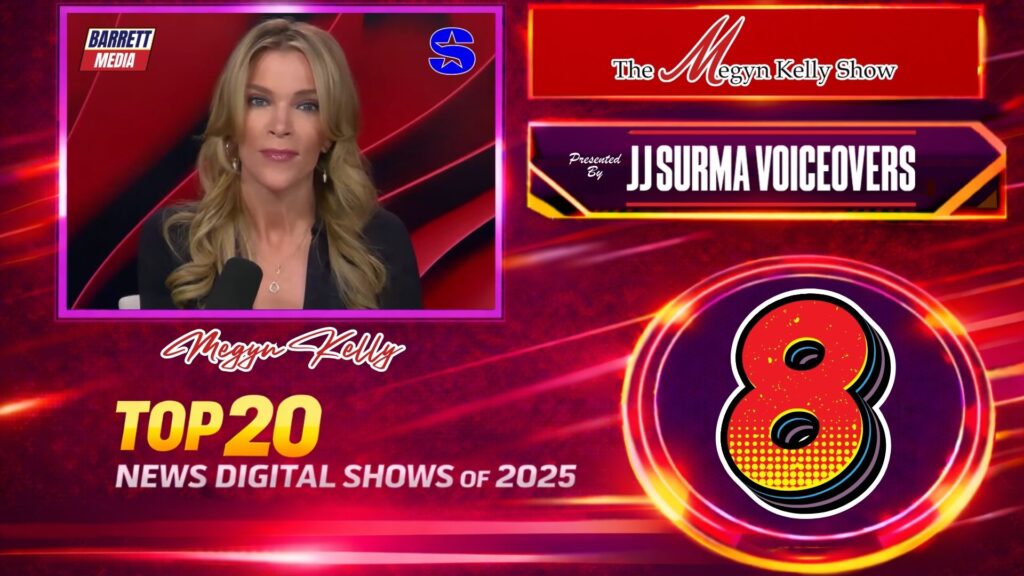
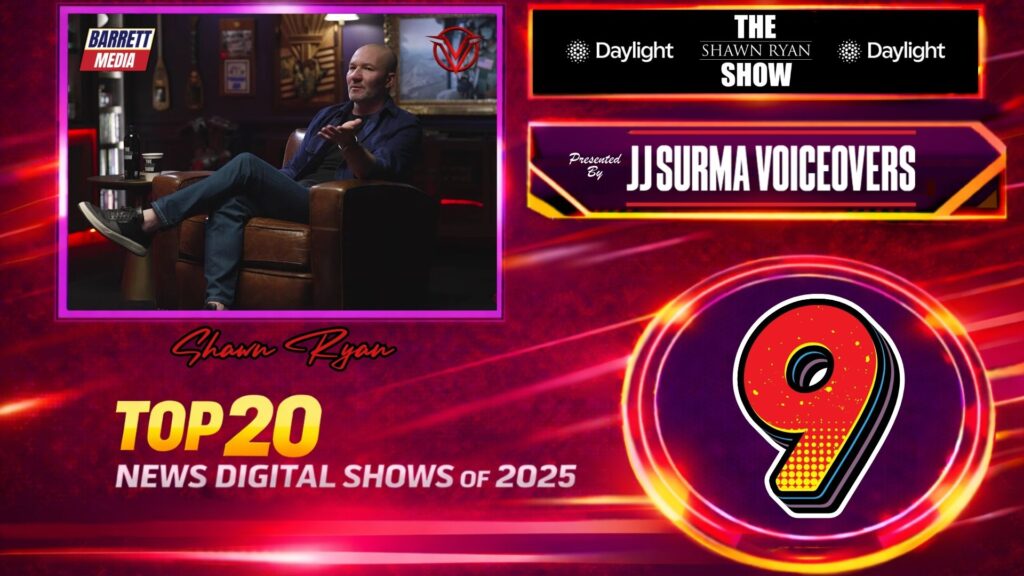
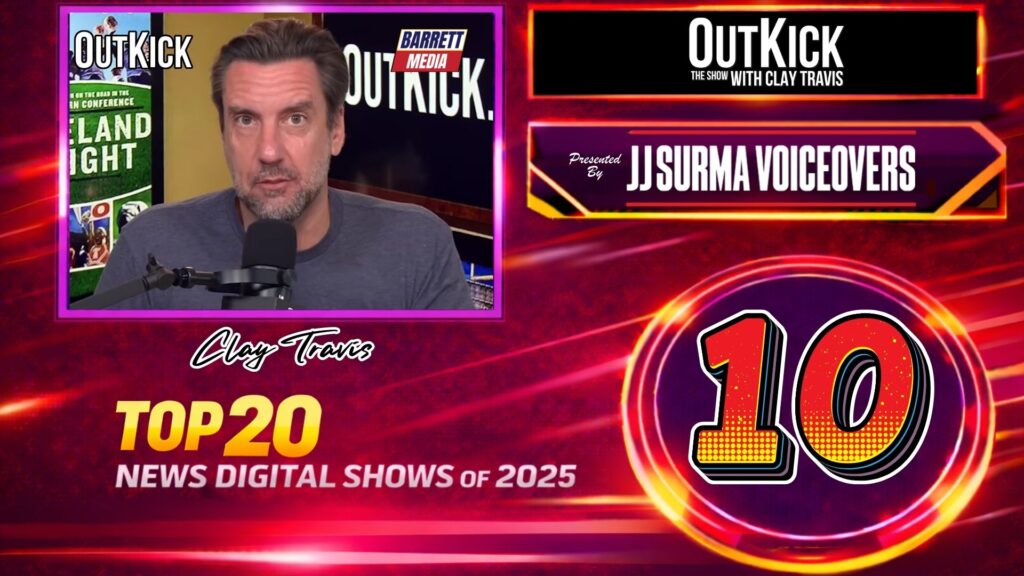
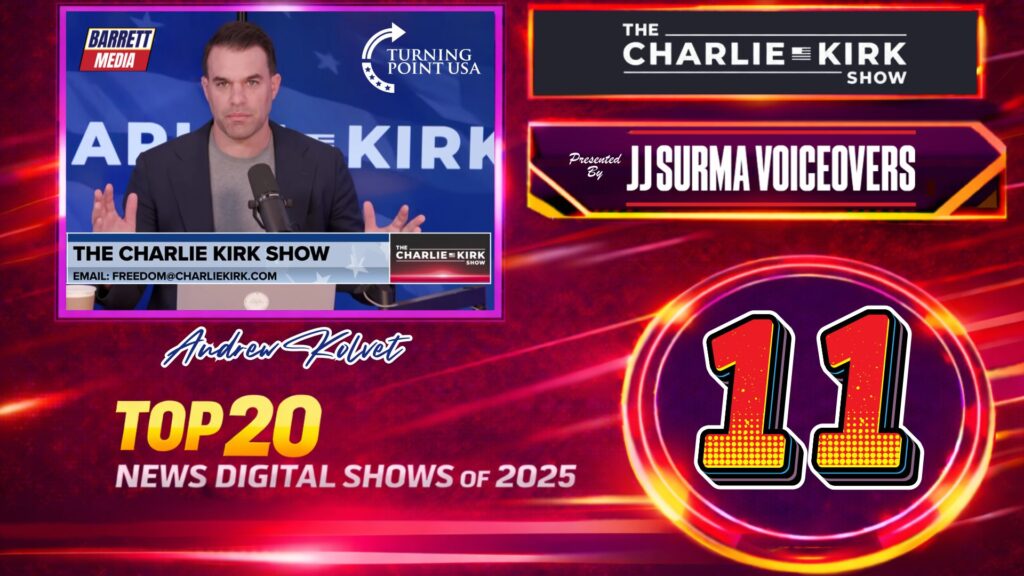
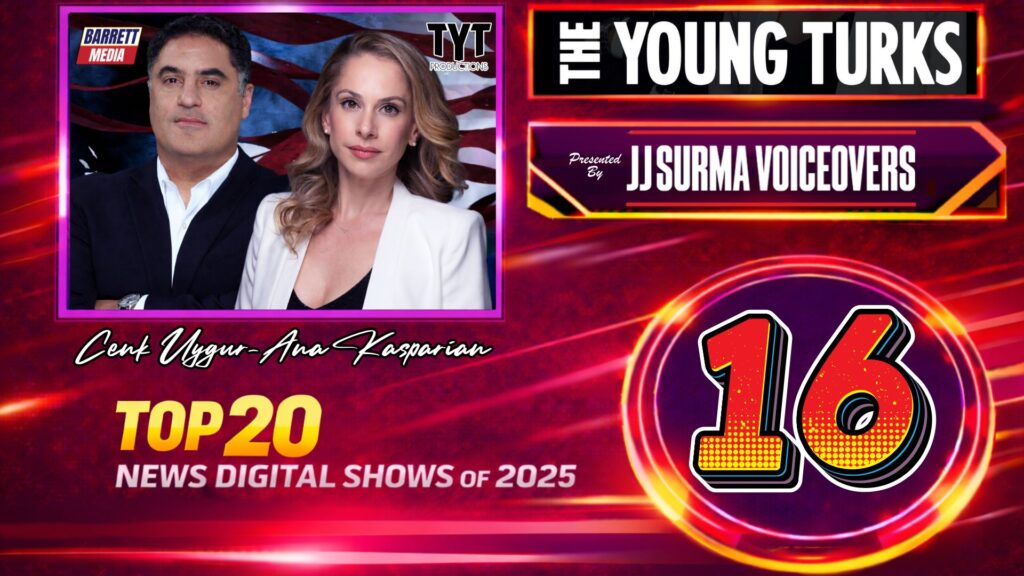
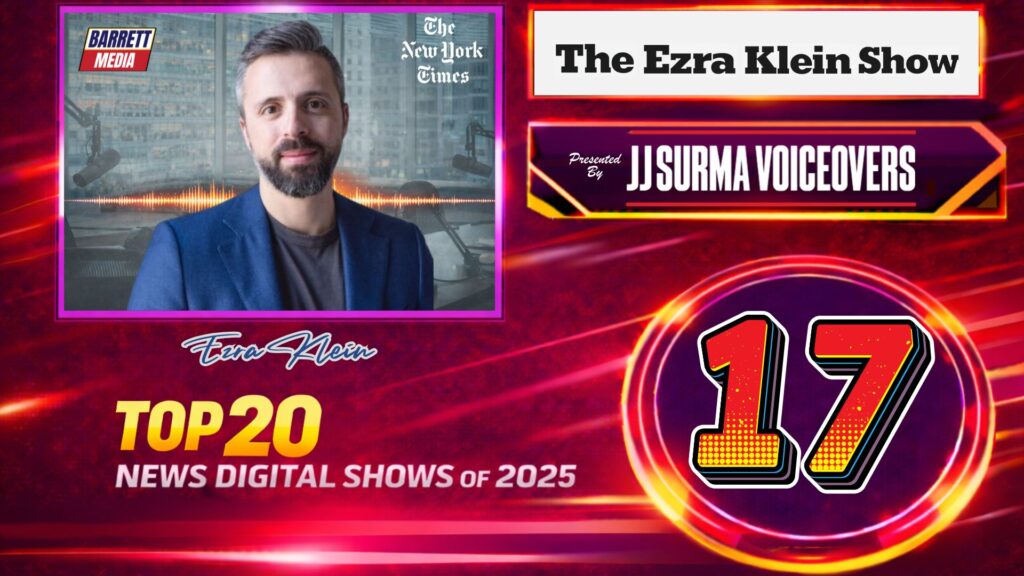
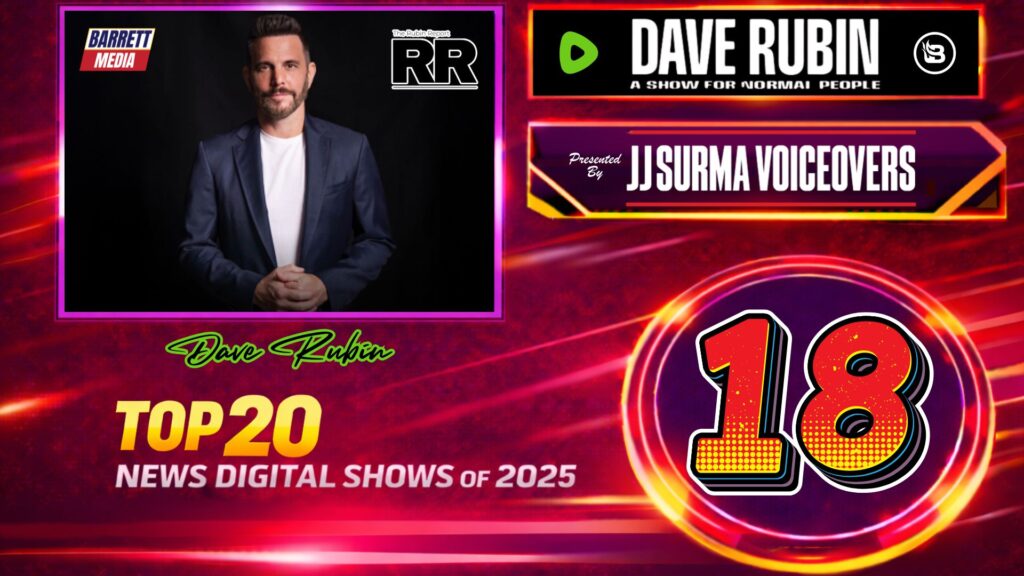
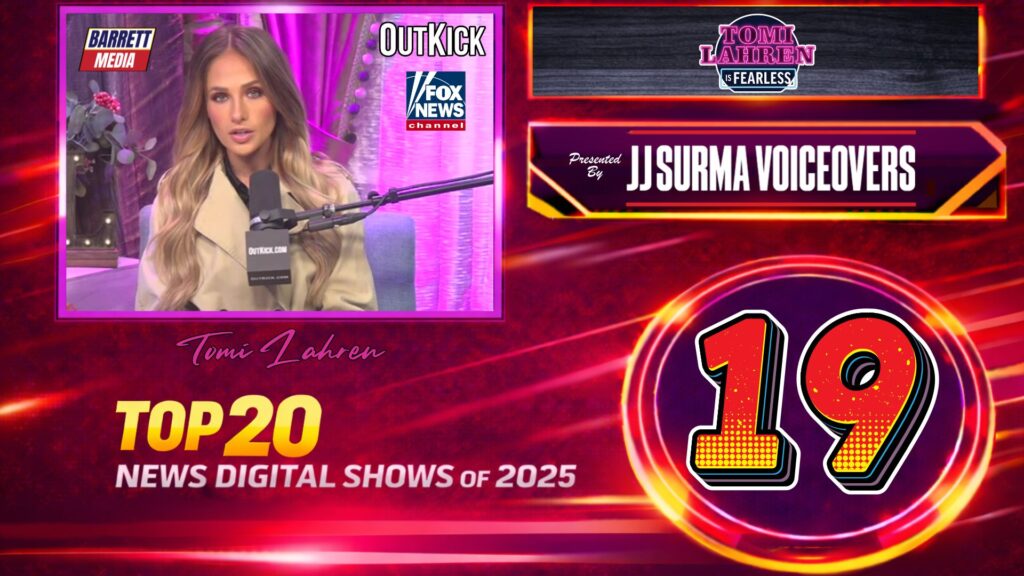
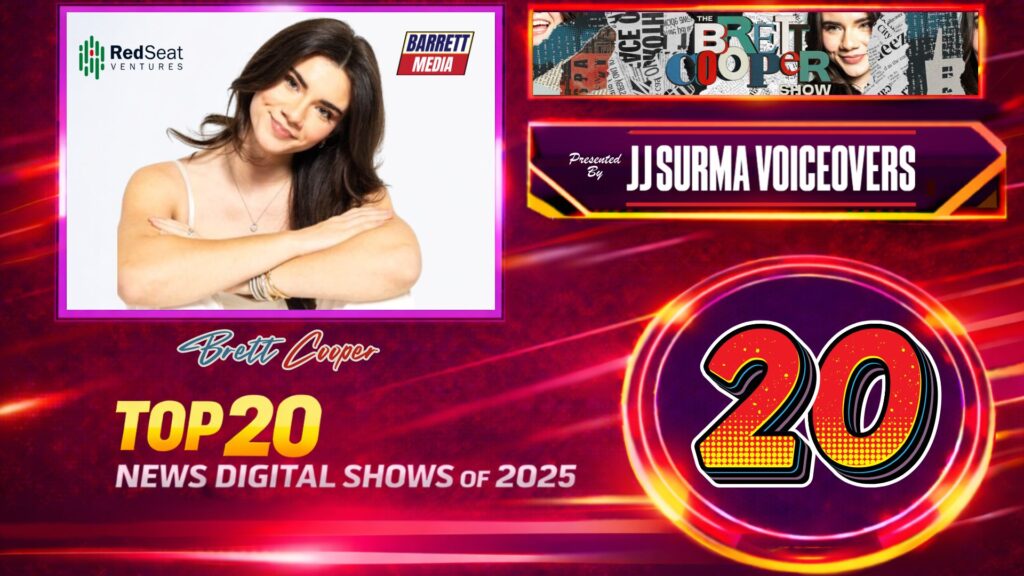
Barrett Media’s Top 20 of 2025 series continues with a look at news media’s top digital shows. To learn of upcoming results or revisit some of the different categories we’ve already presented, visit this website, subscribe to our newsletters and/or follow us on X, Facebook, LinkedIn and other social channels. At the conclusion of this series, I will record videos for each area of the Top 20 to address key takeaways. The videos will be posted on the Barrett Media YouTube page so be sure to subscribe.
If this is your first time checking out our Top 20 series, welcome. What makes our Top 20 unique is that the votes are decided by media industry movers and shakers. Twenty three (23) executives from 18 companies took part in the voting process. Our voting committee work in podcasting, research, news television, and ownership/CEO roles. I appreciate each of them making time to provide their input.
As you review these results, please remember that they represent the collective feedback shared by our industry voters. Barrett Media does not vote in this process. Our role is to assemble the group, collect the votes, and present the information.
Important Information
#1 – These results are based on 2025’s performance. 2026 changes have no effect on the voting.
#2 – Our voting process is similar to how writers cast votes for awards in professional sports. A first-place vote equals twenty (20) points. A 20th place vote equals one (1) point. We do this to keep things balanced and avoid situations where the results favor one or two companies.
#3 – The criteria for our voters included Quality of Show (the ear test), Multi-Platform Reach/Strategy, Chart Positions, Monthly Downloads, and Ability to Create Buzz. Keep in mind, our voters live in different cities, work for different groups, have different tastes, and value certain factors higher than others. This is not a perfect system but it’s one we feel good about using to showcase the industry’s best.
#4 – A total of 158 shows were eligible for voting consideration in the News Digital Shows category. Shows in this category prioritize news, politics, business, and cultural conversations. Most of these programs are digital-first shows with little or no additional distribution via radio or television. Some have the benefit of larger distribution but are exceptional digitally regardless of their employer or the platform.
And the Winner Is…
The Joe Rogan Experience. Spotify’s hit show continued to dominate the news media landscape. Over 20 million subscribe to the show’s YouTube channels, downloads are reportedly around 200 million per month across all platforms, and the amount of buzz produced across social media and mainstream print, TV and radio by the show set it apart from an impressive field of programs. Congratulations to Joe and his team on the well deserved recognition.
I want to thank Dylan Barrett for creating the artwork for this series. Now without further delay, here are Barrett Media’s Top 20 News Digital Shows of 2025.
Additional Notes:
The Joe Rogan Experience won this category handily by forty (40) points. Rogan also scored the most first-place votes, seven (7).
Spots 21-25 belonged to The Bulwark Podcast w/ Tim Miller, No Spin News w/ Bill O’Reilly, The Michael Knowles Show, Up First, and The Sage Steele Show.
The closest battle was for seventh place where Ben Shapiro edged Megyn Kelly by one (1) point.
Of the 158 shows to appear on submitted ballots, six (6) received at least one 1st place vote.
BM Top 20 of 2025 Remaining Schedule:
Music Radio = February 23-27 and March 2-4.
Barrett Media produces daily content on the music, news, and sports media industries.Sign upfor our newsletters to stay updated and get the latest information right in your inbox.
He’s pragmatic, approaches America’s problems with tough love in mind, and is almost always right. Adam Carolla is more than just a podcast host. He is an American treasure with two New York Times best-selling books, a star on the Hollywood Walk of Fame, and an IMDb profile bigger than President William Howard Taft’s waistline.
“I’m pragmatic. I come from a pragmatic world. If you come from a world where you build, you tend to be pragmatic,” said Carolla, a featured host at PodcastOne. “You tend to look at things as they are. You don’t dream about what they could be. And you have to figure out the logistics of them and how to pull it off.”
Carolla, who’s been working in the media industry since the 1980s, didn’t start his adult life behind the mic. Instead, he worked in the extremely pragmatic world of construction. “There are lots of rules when it comes to building, and you have to follow those rules whether you like them or not, or agree with them. You just have to follow them.”
He gave a prime example of how pragmatism from the construction world applies to politics today:
“I’d go to people’s houses when I worked in construction, and they’d say, ‘Oh, I want to take this wall out and that wall out. I want one big great room. One big wide-open room.’ And I would say, ‘Well, we’ve got to pick up the load for the second floor, so we’ve got to put a post down at some point.’ They’d say, ‘No, I want it to be wide open.’ And I’d say, ‘Yeah, I know, but we’ve got to put a post in to pick up the load for the second floor.’ And they’d say, ‘Well, I don’t want to do that.’
“So then I’d say, ‘Okay, well, we can pass in a big piece of steel, like an I-beam or something. We can span it, but that’s going to be really expensive and hard to do.’ And they’d say, ‘Well, I don’t want to do that.’”
“And I’d say, ‘Well, those are your choices. Not a world where you dream of a super open room with no post and no I-beam. It’s just rules, and physics, and gravity. We’re going to have to live in that world, and we’re going to have to make decisions based on that, with that in mind, not a world that you dream of.’”
“Now, politicians are all dreaming of a world with no ICE, defund the police, and open borders, because no one’s illegal. But that’s a dream world you guys are living in.”
“We have to come up with a world where there are consequences, gravity, and rules. We have to work within those parameters, not the parameters of your dreams.”
Consequences, rules, parameters, whatever you want to call them, Carolla believes following these ideals is just one way to show tough love.
“Tough love is just love. For example, I want my boy to be in good shape, so every morning we’re going to do 30 push-ups together before he goes to school. Then you go, ‘That’s a little tough, isn’t it?’ And it’s like, ‘No, but that’s love.’”
Carolla reasoned, “Love is, I’m not going to let my kid have a donut for breakfast. I’m going to make him scrambled eggs. Then you go, ‘Yeah, but the kid wants a donut and is actually crying now because he’s being told to eat the scrambled eggs.’ That’s tough love, but that’s love.”
“Doing what everyone wants to do all the time, and giving people what they want, sometimes at their own detriment, that is not love. That’s being soft, and it’s also being nice.”
He went on to say, “Letting homeless people expire on the street, giving them clean needles, and creating safe injection zones is not love. Scooping them up and putting them somewhere so they don’t overdose, so they can beat their habit, is tough love, but it’s really love.”
While Carolla is extraordinarily humble about his success, his impact on the industry is undeniable. His industry debut came in 1996 as co-host of Loveline with Drew Pinsky. He later helped create several shows, including The Man Show, Crank Yankers, The Car Show, and The Adam Carolla Project. Many of these programs aired on different networks, including MTV, SPEED, and TLC, showcasing his ability to connect with a wide range of audiences.
He is also an accomplished voice actor, lending his talents to characters such as Super Death on Family Guy, Wynnchel (the éclair) in Wreck-It Ralph, and Commander Nebula in the Buzz Lightyear of Star Command series and video games.
His creativity not only defined a generation’s appetite for television, but also proved that no one can be pigeonholed into a single media role or ideology if they are willing to challenge their own ideas.
For those who believe they are lucky, funny, and creative enough to follow in Carolla’s footsteps, his advice is simple: “Find your voice. Make sure you have something to say. If you don’t have something to say, don’t bother. There are enough people just talking with nothing to say. We don’t need more of that.”
Once you find your voice, Carolla believes you need to refine, nurture, and develop it. “It’s not just about talking,” Carolla said. “It’s about trying to distill what your voice actually is. Be your own biggest critic and try to poke holes in your own theories.”
He added, “Find other people whose voices you appreciate. Tell them your theories and your thoughts. Let them hear your voice and critique it. Find cracks and fissures in your ideas, and test them with people who may not be like-minded.”
Testing ideas with people who are not like-minded is essential, Carolla explained. “You need to build a little muscle through some grappling. You can’t just have people falling down when you touch them. There needs to be back and forth. And you need to strengthen yourself and your ideas. Being in an echo chamber is probably not a good way to do that.”
The Adam Carolla Show is available Tuesday-Friday on all digital audio platforms. As of January 26th, the show now provides same-day distribution of the podcast to SiriusXM’s ‘The Megyn Kelly Channel’ (111).
Carolla also continues to perform standup across the country. For a list of upcoming dates, go here. Adam remains in business with PodcastOne on distribution and advertising of his show. The two sides recently agreed to a multiyear contract extension to continue their working relationship.
Barrett Media produces daily content on the music, news, and sports media industries.Sign up for our newsletters to stay updated and get the latest information right in your inbox.