Home Blog Page 379

Warner Bros. Discovery Partners With X For Winter Olympics

0

Warner Bros. Discovery is expanding its social media footprint around the Olympic Games through a new partnership with Elon Musk’s X ahead of the upcoming Winter Olympics in Italy.

According to a report by Deadline, the collaboration will place Warner Bros. Discovery’s sports and entertainment brands directly into X’s real-time Olympic conversation, with exclusive behind-the-scenes content, select highlights and event clips distributed across multiple X channels during the Games.

Branded handles for Eurosport, TNT Sports and HBO Max will serve as key distribution hubs throughout the competition.

Under the agreement, X will prioritize Warner Bros. Discovery’s Olympic-related content across its feeds, with localized versions tailored for audiences throughout Europe. Advertisers and brand partners will also gain access to in-game moments and premium event footage, allowing campaigns to align directly with live Olympic action and trending conversations.

The deal builds on momentum from a similar partnership during the Paris Olympics, when X reported massive engagement across its platform. According to the company, the Summer Games generated trillions of impressions, billions of sports-related posts and hundreds of billions of video views, highlighting the growing influence of social platforms in shaping how fans consume major global sporting events.

Executives from both companies framed the partnership as a strategic blend of premium sports rights and real-time digital engagement. Warner Bros. Discovery emphasized its position as the primary home of the Olympics across Europe, while X highlighted its role as a central hub for live sports discussion and cultural moments.

Scott Young, executive vice president at WBD Sports Europe, said the partnerships reinforce the company’s ability to reach fans wherever they consume content. He noted that combining premium, localized storytelling with global social platforms creates new opportunities for immersive fan engagement and brand integration during the Games.

X’s global head of content partnerships Mitchell Smith echoed that sentiment, pointing to the value advertisers gain by aligning with live Olympic moments. He said the collaboration places brands at the center of the Games’ most compelling narratives while fostering authentic connections with passionate sports fans.

The Winter Olympics will run from February 6 through February 22 in Milan.

Barrett Media produces daily content on the music, news, and sports media industries. Sign up for our newsletters to stay updated and get the latest information right in your inbox.

Charles Barkley Disappointed in NBC Sports’ Use of Michael Jordan

0

Charles Barkley did not mince words when discussing NBC Sports’ use of Michael Jordan during the network’s NBA coverage this season, calling the approach disappointing and damaging to NBC’s credibility.

Appearing on SiriusXM NBA Radio, the longtime Inside the NBA analyst voiced frustration with Jordan’s limited involvement. He said the heavily promoted role amounted to little more than a single interview stretched across months of programming

“I was excited to have Michael because Michael Jordan is the reason we all make this money from the NBA,” Barkley said. “We need Michael Jordan affiliated with the NBA. But now you see this thing coming out with NBC and you’re like, ‘Wait, you all did one interview five months ago and you’re all gonna sprinkle it throughout the season?’ Come on, man.”

Barkley has long believed the NBA benefits greatly from Jordan’s presence. He went further by calling the strategy misleading to viewers. He said fans were led to believe Jordan would play a meaningful role throughout the season.

He described the execution as disingenuous and said it fell far short of expectations created by NBC’s promotional buildup.

“That’s disingenuous by NBC,” Barkley added. “That’s crazy. I’m so disappointed at the way that worked out.”

Criticism of the Jordan segments even reached NBC Sports play-by-play voice Mike Tirico who opened up about his series of Insights to Excellence segments last week. He acknowledged that while the segments might not have answered every fan question, the value of hearing Jordan’s perspective firsthand was undeniable.

“Was it what everyone wanted? Probably not. Was it better than not having Michael Jordan? You’re damn right it was,” said Tirico via the SI Media Podcast with Jimmy Traina.

Barkley’s criticism highlights a broader issue facing sports media companies as they lean heavily on star power to attract audiences. With Jordan remaining one of the most influential figures in sports history, his association still carries enormous weight decades after his final NBA game. When networks advertise that level of involvement, industry observers often expect consistent, original content rather than recycled material.

According to Barkley, NBC had ample opportunity to deliver on that promise. He questioned why the network did not arrange regular sit-downs with Jordan, suggesting that even monthly interviews would have justified the hype surrounding his involvement.

“It’s a bad look for NBC, it’s just a bad look, plain and simple,” Barkley said. “They couldn’t fly to Michael like once a month and do a new interview? That makes NBC look really bad, plain and simple.”

Barrett Media produces daily content on the music, news, and sports media industries. Sign up for our newsletters to stay updated and get the latest information right in your inbox.

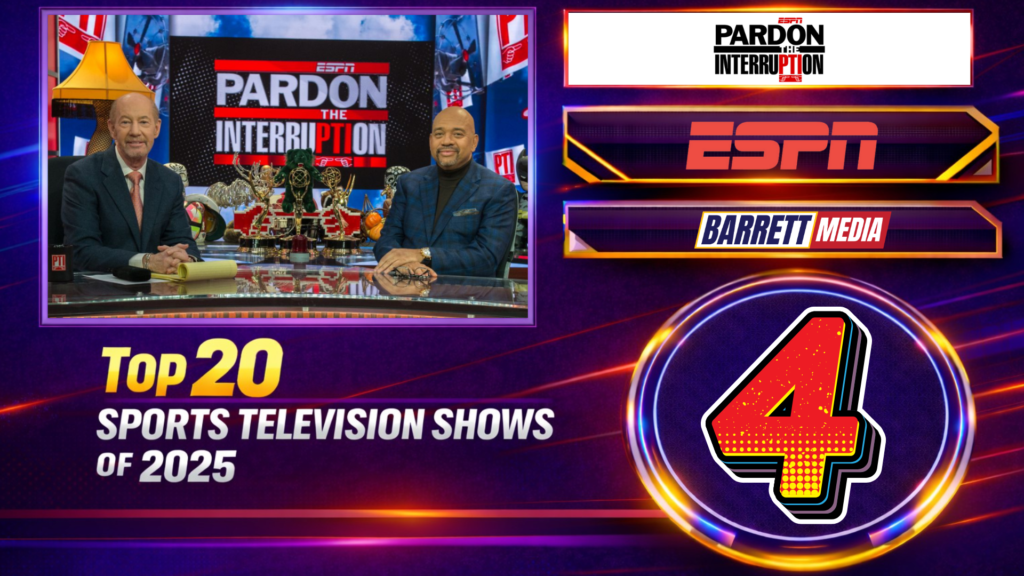
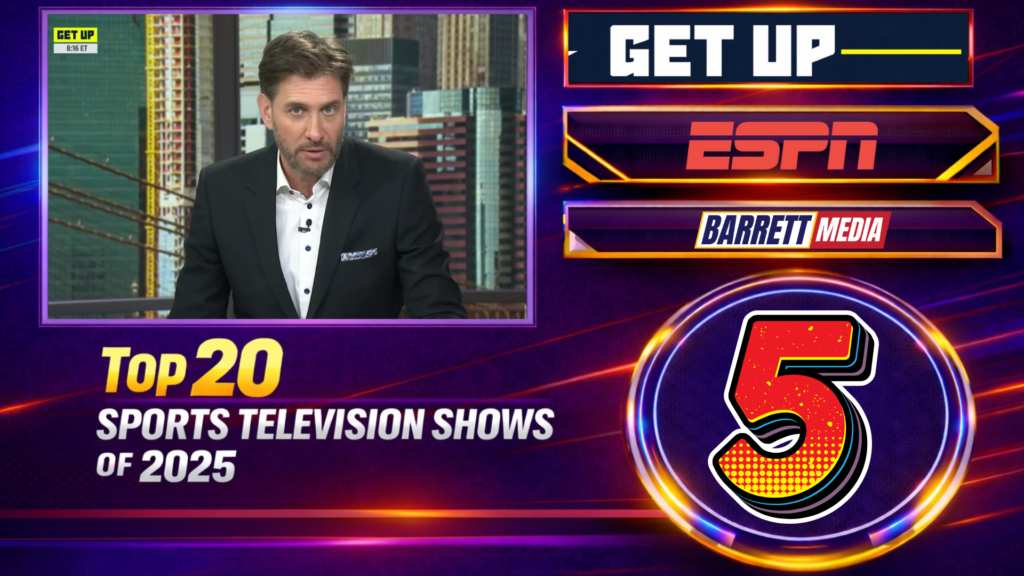
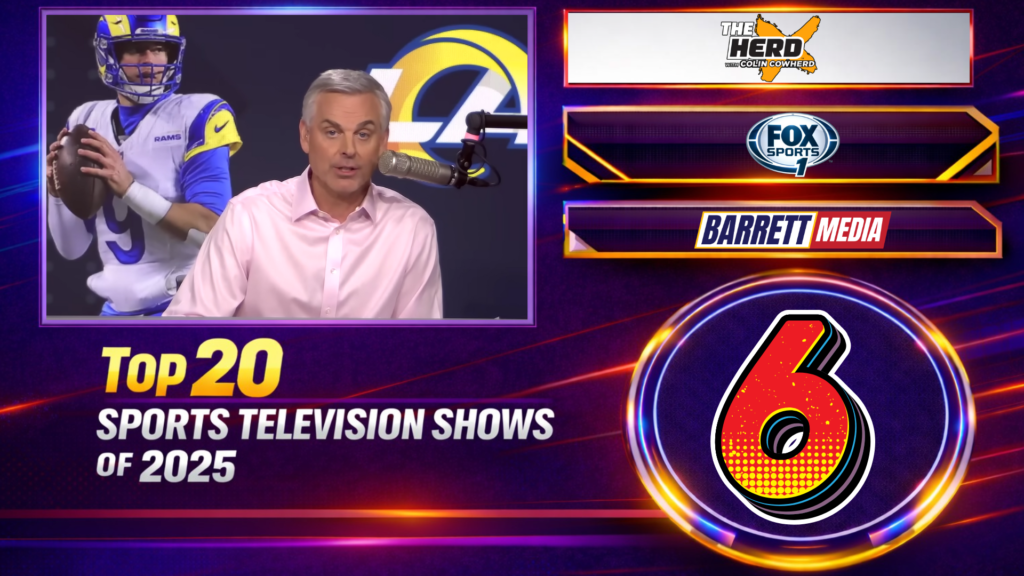
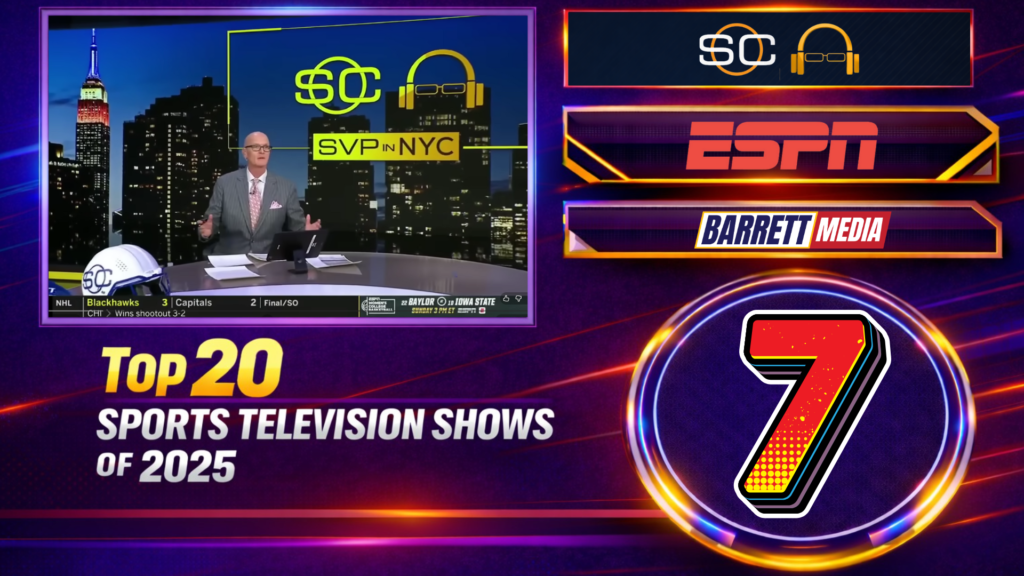
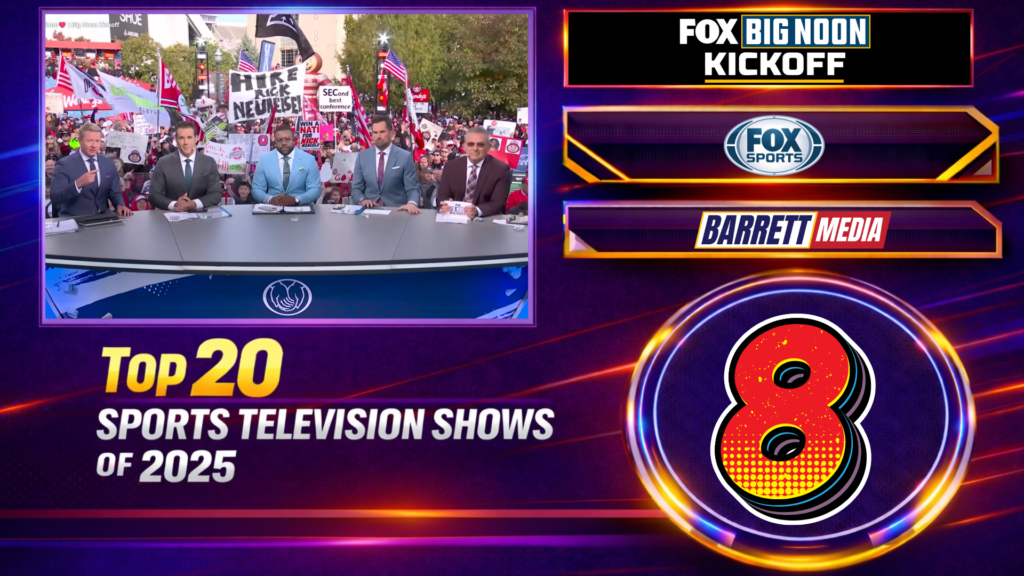
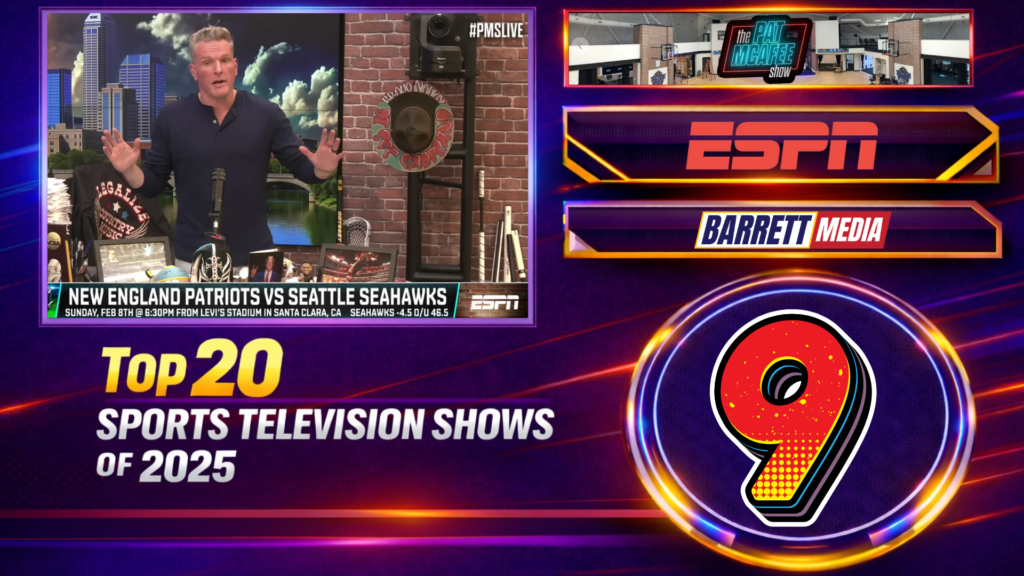
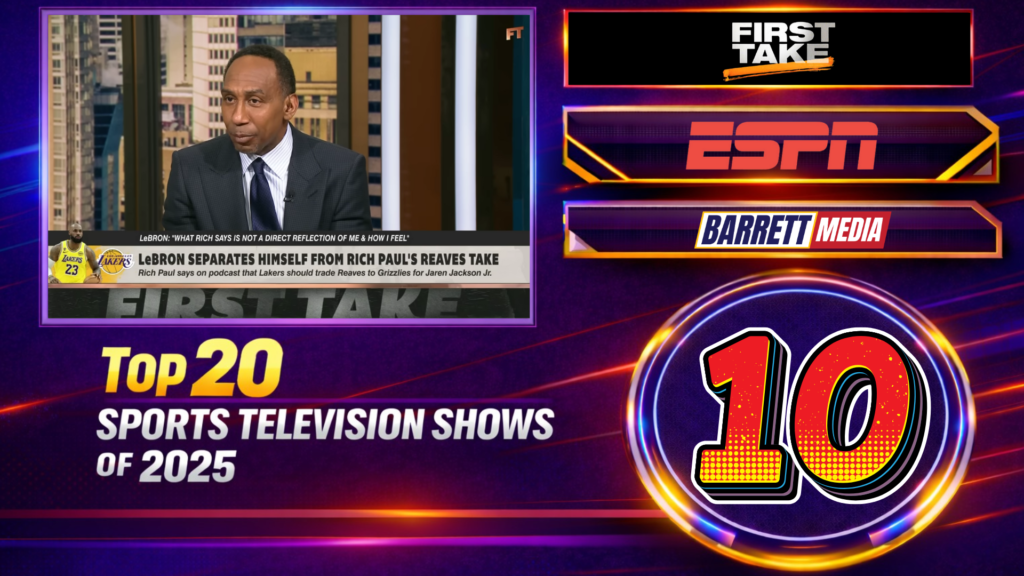
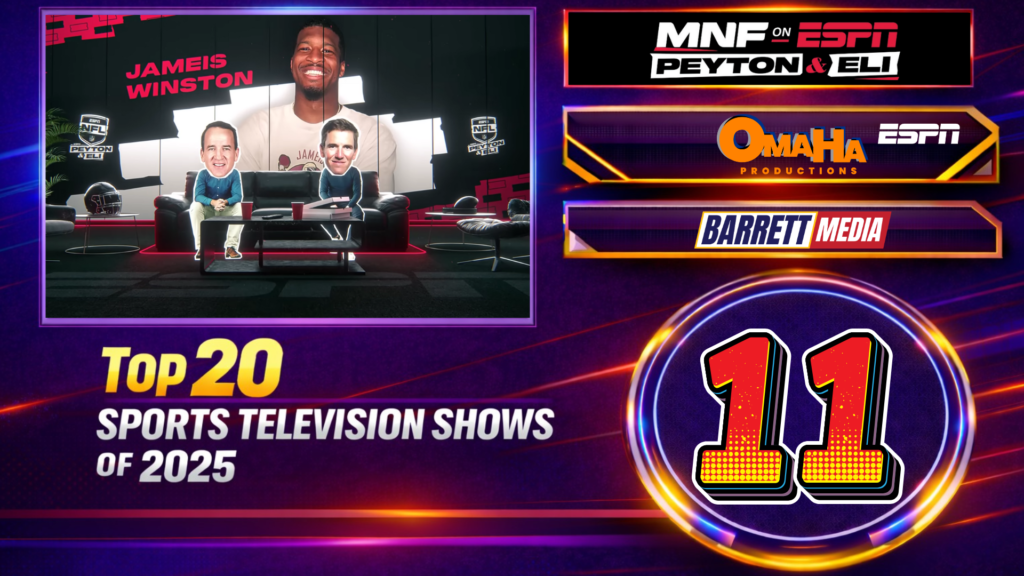
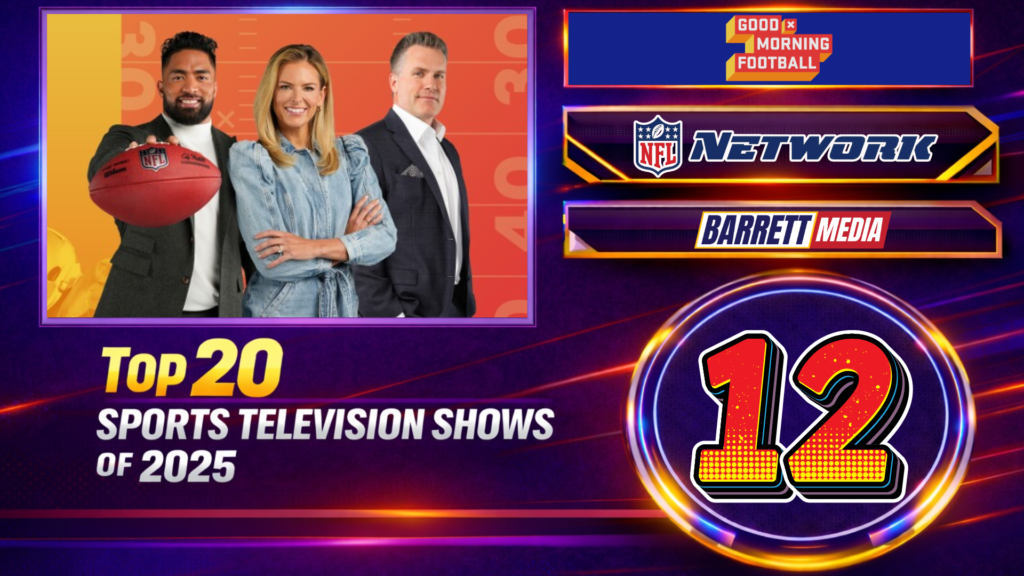
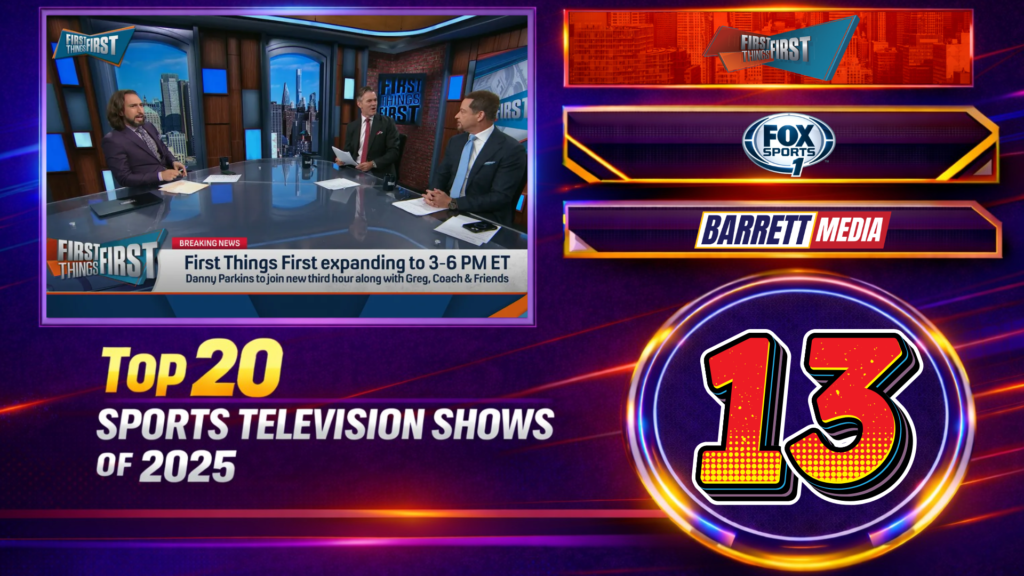
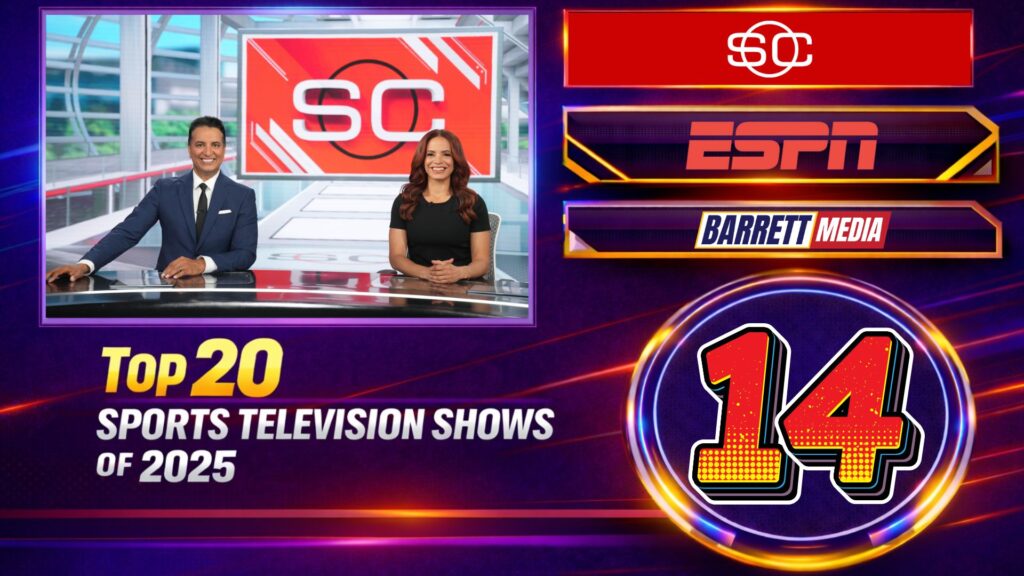
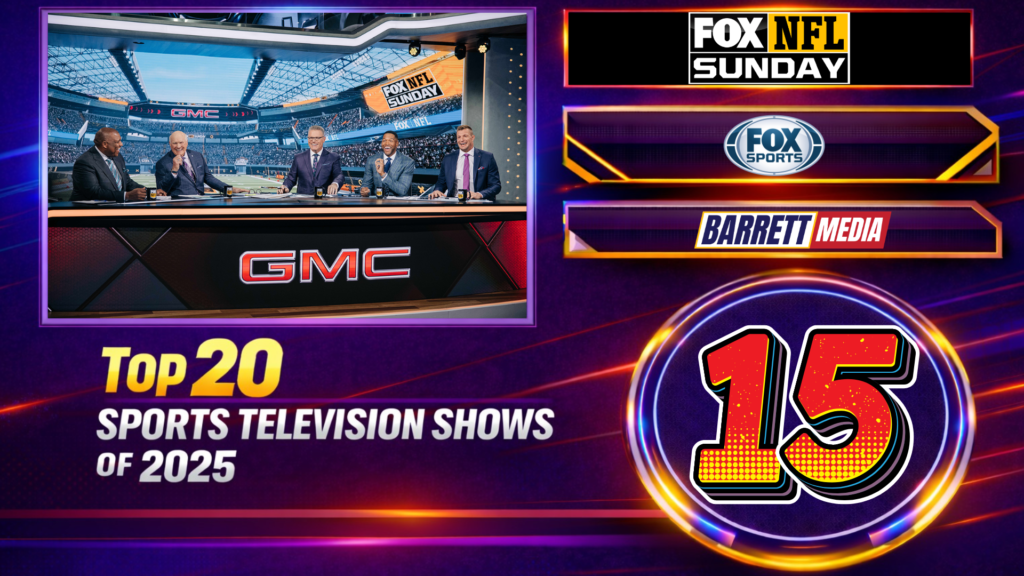
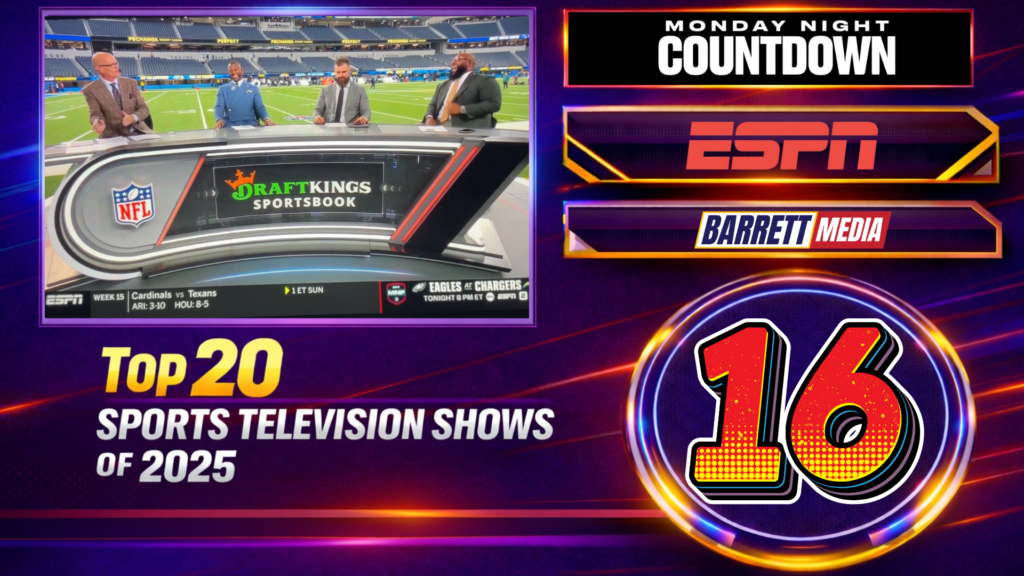
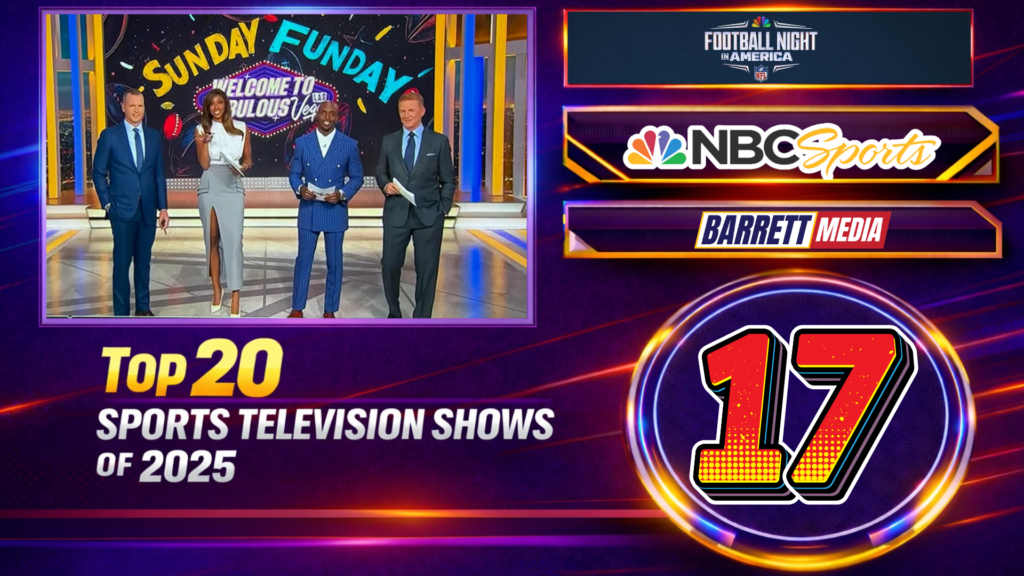
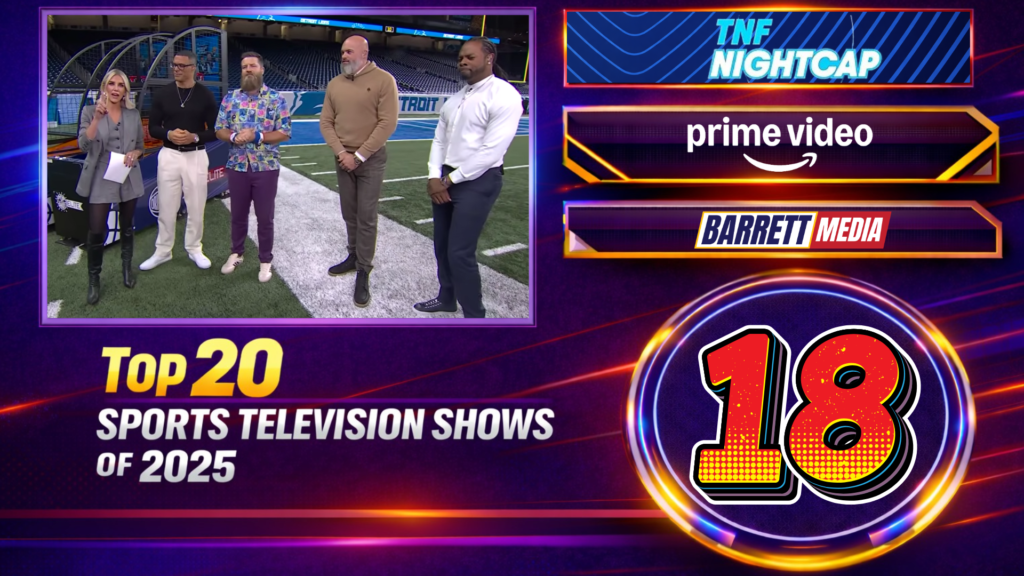
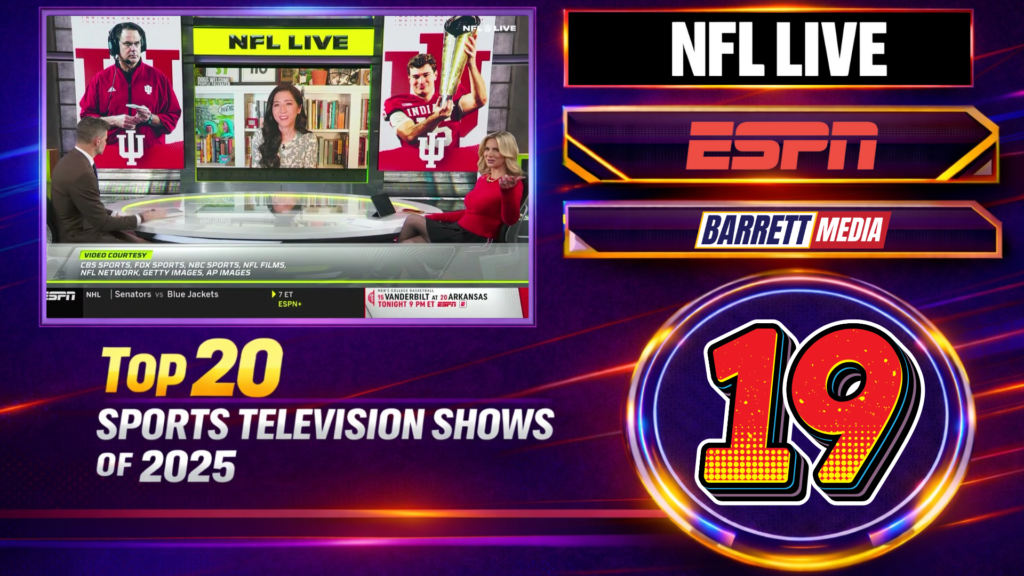
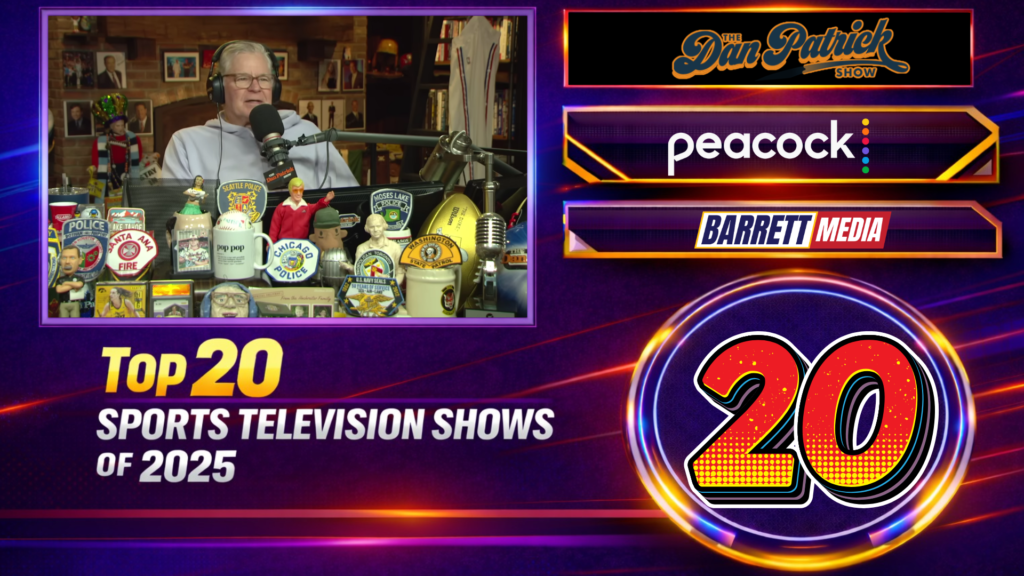
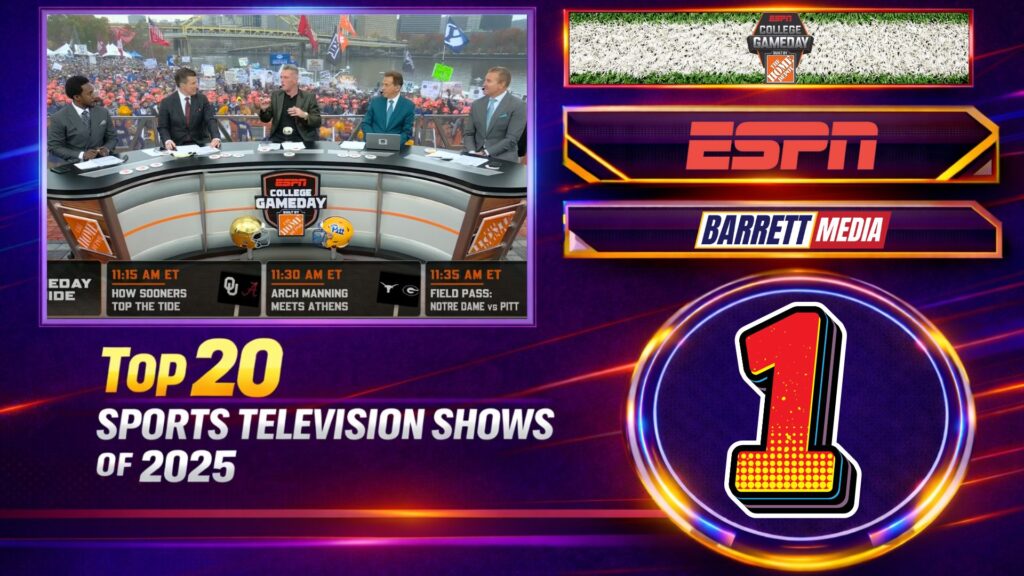
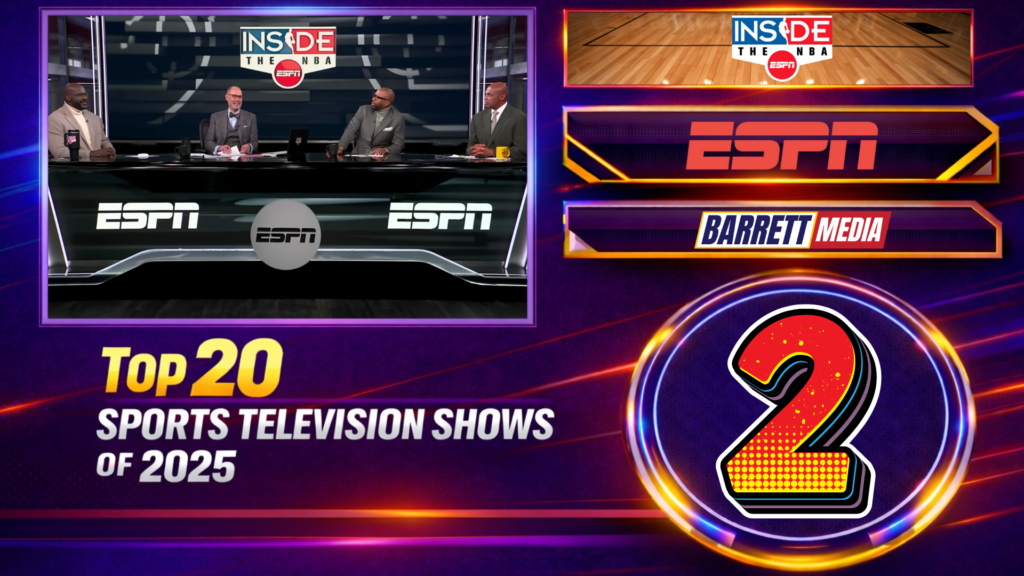
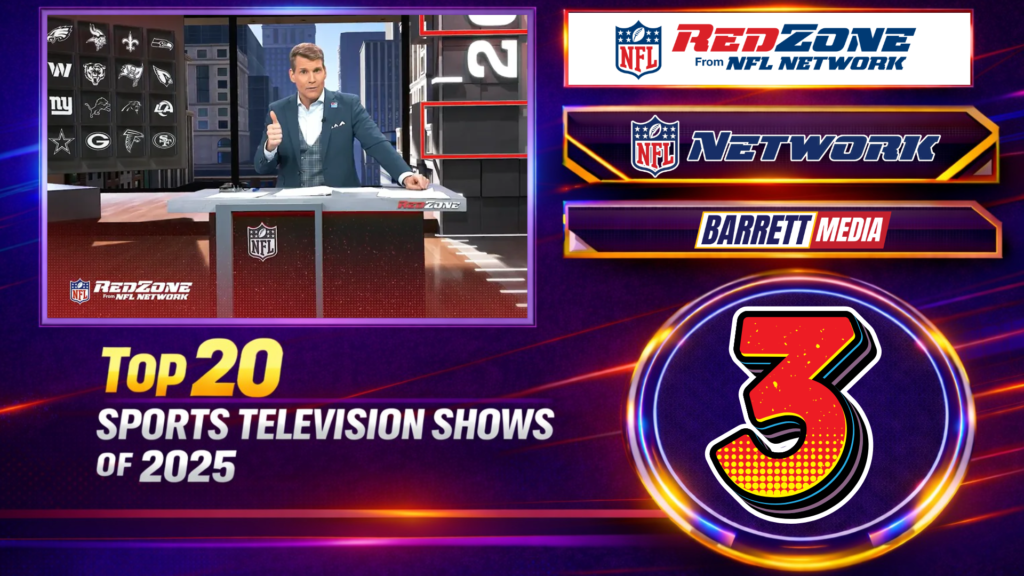
Barrett Media’s Top 20 Sports Television Shows of 2025

Welcome to day two of Barrett Media’s Top 20 series for the 2025 calendar year. This series is well regarded across sports radio, news/talk radio and music radio, and for 2026, we’re expanding it into other areas. Each month, we’ll feature different categories as voted on by leaders in those respective areas. Stay tuned to this website, our newsletters or XFacebookLinkedIn and other social channels to learn what’s coming next. We will also provide commentaries on the Barrett Media YouTube page so be sure to subscribe.

Today marks our first venture into presenting the Top 20 Sports Television Shows with votes provided by industry decision makers. 39 executives took part in the voting process which was excellent. Our goal for next year is to increase that total to over 50. Our voters work for numerous companies including ESPN, Fox Sports, NBC Sports Regional Networks, Paramount Skydance, Nexstar Media, Sinclair Communications, TEGNA, Warner Bros., Omaha Productions, NFL Network, MLB Network, Yahoo Sports, Red Seat Ventures, The Volume, Bleav, and Blue Duck Media. Executives from a few other groups were asked to share input too but did not provide feedback by our deadline.

Important Information

80 national sports television studio shows appeared on lists prepared for our industry voters. Rather than splitting it up by sport and/or weekly vs. daily shows, we asked industry leaders to rank them all. We knew that some would value talk shows, informational shows and/or pregame/postgame shows differently. That’s no different than what a viewer does each time they turn on their television.

Our voting process for this series is similar to how writers cast votes for awards in pro sports. A first-place vote equals twenty (20) points. A 20th place vote equals one (1) point. We do this to try and keep things balanced and from becoming too lopsided should one company be more active than others.

Keep in mind that our voters live in different areas, work for different companies, have different tastes, and value certain factors higher than others. This is not a perfect system. However, it’s one we feel good about using to showcase the industry’s best.

Closing Comments

As you review the results, please remember that these results represent the collective feedback shared by our industry voters. Barrett Media does not vote in this process. I want to thank Dylan Barrett for creating the artwork, and every voter who participated in the process. Now without further delay, here are Barrett Media’s Top 20 Sports Television Shows of 2025. Congrats to all who appeared on this year’s list.


Additional Notes:

  • College Gameday cruised to a twenty four (24) point victory over Inside the NBA. CGD was though tied with Inside the NBA and NFL Redzone for the most first-place votes with each snagging six (6).
  • Spots 21-25 belonged to NHL Tonight, Sunday NFL Countdown, The NFL Today on CBS, MLB Tonight, and The Rich Eisen Show.
  • The closest battle saw Monday Night Countdown edge Football Night in America by one (1) point to grab 16th place.
  • Of the 80 shows to appear on submitted ballots, eight (8) received at least one 1st place vote.

Barrett Media’s Upcoming Top 20 of 2025 Schedule:

  • Friday January 30: The Top 20 Sports Television Talent of 2025
  • February 2-6 and 9: The Top 20 Sports Radio Shows, Stations and Program Directors of 2025
  • February 10-13 and 16-17: The Top 20 News/Talk Radio Shows, Stations and Program Directors of 2025
  • February 18-20: The Top 20 News Television Shows and Talent, and News/Talk Digital Shows of 2025
  • February 23-27 and March 2-4: The Top 20 Music Radio Shows and Program Directors of 2025

Barrett Media produces daily content on the music, news, and sports media industries. Sign up for our newsletters to stay updated and get the latest information right in your inbox.

Referral Program Creation Platform Checklist: Rules Engine, Rewards, and Fraud Prevention

0

Most referral programs don’t fail because customers don’t want to refer. They fail because the program is unclear, unprofitable, or easy to exploit. That’s why the three areas that decide whether a referral program scales are always the same: a rules engine that prevents confusion and protects margin, rewards that motivate without turning into a discount leak, and fraud prevention that stops the program from collapsing under abuse.

This article is a practical checklist you can use to evaluate any referral program creation platform.

Why these three areas decide whether your referral program scales

A referral program is basically a mini-economy. If the rules are unclear, customers won’t trust it. If rewards aren’t structured, margins will disappear. If fraud isn’t controlled, the program becomes a liability.

  • Rules engine prevents confusion, protects margin, and enables segmentation
  • Rewards drive motivation and conversion, but can destroy profitability if uncontrolled
  • Fraud prevention keeps the program from being exploited and losing internal trust

A strong referral program creation platform makes all three easy to set up and easy to manage without developers.

Eligibility rules

Eligibility is where referral programs either stay clean or become messy fast. Your rules should be explicit and enforceable.

Referrer eligibility (who is allowed to refer)

A good rules engine should support conditions like:

  • Must be a customer or account holder
  • Minimum order count or spend threshold
  • Account age requirement (basic anti-fraud)
  • Optional: only verified email/phone users can refer

If your platform can’t enforce referrer eligibility, it’s not a scalable referral program creation platform, but a link generator.

Friend eligibility (who can be referred)

Your platform should allow you to choose:

  • New customers only vs. all customers
  • Per-household or per-address uniqueness rules
  • Geographic restrictions (e.g., UK only, EU excluded)

Edge cases matter. For example, household rules must be configurable because families and shared addresses can be legitimate customers too.

Offer rules (what qualifies as a successful referral)

This section decides what triggers rewards and protects you from paying out on low-value or unintended orders.

Qualifying event rules

Your referral platform should support different success definitions depending on your business model, such as:

  • First purchase only
  • Subscription started
  • First invoice paid / trial converted (SaaS)

Basket/plan thresholds

Profit protection typically requires:

  • Minimum basket value
  • Minimum plan tier
  • Exclusions (to avoid rewarding low-margin orders)

SKU exclusions

You need easy controls for:

  • Sale items
  • Gift cards
  • Bundles
  • Restricted categories

Stacking rules

Your platform must answer clearly things such as:

  • Can referral offers stack with email codes, sitewide promos, student discounts?
  • If multiple promos apply, what’s the priority logic?

Stacking is one of the biggest hidden margin leaks. A real referral program creation platform makes stacking rules explicit, rather than figuring it out later.

Attribution rules (how referrals are credited)

Attribution is where referral programs either feel fair or turn into “why didn’t I get my reward?” support tickets.

Attribution method options

A strong platform supports multiple options:

  • Referral link
  • Unique code
  • Account email match (friend signs up later and purchases later)

Attribution window

You should be able to set windows like:

  • 7/14/30 days

Cross-device support

People often click on mobile and purchase later on desktop. Your referral platform should handle cross-device scenarios.

Limits & caps

Caps keep the program sustainable and protect you from fraud.

Per-referer limits

  • Max rewards per month / lifetime
  • Max referrals per day/week (velocity cap)

Per-friend limits

  • One-time use only
  • One reward per household (if you choose)

Program-level limits

  • Budget caps
  • Seasonal caps
  • Pause switch (you will need this at some point)

Without caps, you’re essentially running an uncapped discount program disguised as referrals.

Segmentation & targeting

Segmentation is where referral programs become smarter, not just bigger.

Different offers by segment

Your rules engine should enable “different offers for different people,” for example:

  • VIP vs. regular customers
  • Categories purchased
  • Region
  • Acquisition channel cohorts

Trigger rules

Referral prompts work best at high-satisfaction moments:

  • After delivery
  • After a 5-star review/high NPS
  • After a repeat purchase
  • After support resolution with high CSAT

A mature referral program creation platform lets you build these triggers without custom development.

Rules engine demo tests

If the following can’t be demoed quickly, it’s a sign the engine is limited.

  • Show me how to create: new customer only + min basket + exclude sale SKUs + no stacking.
  • Show me how to run VIP tier rewards without a developer.

Rewards Checklist

Rewards are the reason customers act. But rewards also create financial liability. The right system balances motivation with controls.

Reward types supported

Double-sided incentives (friend + referer)

Double-sided rewards usually lift both:

  • Friend conversion (clear benefit)
  • Referrer motivation (worth sharing)

Reward options to demand

Your platform should support, at minimum:

  • Percentage discount
  • Fixed amount off
  • Store credit
  • Free gift/free product
  • Free shipping
  • Points (if loyalty-connected)
  • Cash/PayPal (optional; higher fraud risk)

Not every business needs every type, but a flexible referral platform lets you match reward type to margin and customer psychology.

Reward configuration (profit-first)

Different reward values by segment/tier

Examples include:

  • Higher rewards for VIPs (because their friends convert better)
  • Lower rewards for low-margin categories

Reward caps + diminishing returns

A tiered system protects margins and increases repeat referrals:

  • 1 referral = small reward
  • 3 referrals = bigger reward
  • 5+ referrals = VIP status/early access

Reward expiry rules

Expiry encourages redemption without carrying open-ended liability.

Pending vs. approved logic

You want configurable approval rules, such as:

  • Approve after delivery
  • Approve after the return window

Budget visibility

A serious referral program creation platform should give you reward liability reporting options (outstanding credit, pending rewards).

Fulfillment experience

Rewards only motivate customers when they trust they’ll actually receive them.

Must-have UX features:

  • Automatic application at checkout
  • Reward wallet/status tracker: sent → clicked → purchased → pending → approved → redeemed
  • Notifications (email/SMS) when a reward is earned and when it’s ready to use

This reduces missing reward tickets, and increases participation, because the program feels reliable.

Reward abuse prevention built into the system

Rewards should not pay out on bad outcomes. Controls to demand include:

  • Block rewards on refunded/returned orders
  • Cancel rewards if chargebacks occur
  • Prevent reward stacking loopholes
  • Prevent gift card purchases from triggering rewards (if needed)

Reward demo tests

  • Show me a tiered program: 1 referral = £10, 3 referrals = £25, 5 referrals = VIP access.
  • Show me how rewards get reversed if an order is returned.

Fraud Prevention Checklist

Fraud is not an edge case. Referral programs attract opportunists because rewards are directly convertible into value.

Core fraud types you must be protected from

  • Self-referrals (referring yourself)
  • Friend-ring abuse (small groups cycling referrals)
  • Coupon site leakage (codes posted publicly)
  • Fake accounts/bot signups
  • High-velocity referral bursts
  • Payment fraud/chargebacks linked to referrals

A real referral platform should not treat these as manual monitoring. It should be built-in.

Detection signals the platform should use

Identity and device signals

  • Device fingerprint matches
  • IP patterns (with care—shared networks exist)
  • Same payment method
  • Same shipping address or near-match
  • Email similarity patterns

Behavioral signals

  • Unusually high referral rate in a short window
  • Low-quality traffic patterns (no browsing, instant checkout)

Code leakage signals

  • Redemptions without clicks
  • Sudden spikes from coupon/referral sites

Detection should feed a risk score, not just a vague alert.

Controls & actions

A good system should support:

  • Automated flags and scoring (low/medium/high risk)
  • Reward holds and delayed approval (until delivery/return window)
  • Manual review queue with evidence view
  • Auto-block rules (velocity caps, one reward per household)
  • Optional country/IP restrictions
  • Blacklists/whitelists (known abusers, trusted VIPs)
  • Reversal tools (claw back credit, void pending rewards)

If the platform can detect fraud but can’t act on it, it’s incomplete.

Monitoring & reporting

Fraud needs visibility and auditability.

Must-have reporting capabilities include:

  • Fraud dashboard: flagged referrals, blocked rewards, “savings prevented”
  • Audit logs: what rule triggered, when, and what action was taken
  • Exportable reports for finance/legal

Fraud demo tests

  • Show me a self-referral detection example and what evidence is stored.
  • Show me how you detect code leakage and what actions can be automated.

Implementation Checklist

Even a perfect rules engine fails if implementation is messy.

Tracking + integration essentials

  • Ecommerce integration: orders, discounts, customer status (new vs returning)
  • Email/SMS integration: triggered referral prompts
  • Analytics: UTM handling + attribution window controls
  • Deduplication rules: referral vs. affiliate vs. paid promos (avoid double paying)

Deduplication is especially important if you already run affiliates or heavy discounting.

Operational controls

  • Roles and permissions (marketing vs. finance vs. support)
  • Support workflows:
    • Missing reward claims
    • Referral disputes
  • Legal/compliance basics:
    • Clear T&Cs
    • Disclosure of eligibility and reward rules

The more clearly the platform expresses rules to customers, the lower your support load.

The go/no-go scorecard (fast evaluation)

Score each area from 1–5 to compare vendors:

  • Rules engine flexibility (1–5)
  • Reward controls + user experience (1–5)
  • Fraud detection + prevention tooling (1–5)
  • Reporting + exports (1–5)
  • Integrations + implementation effort (1–5)

This scorecard is what keeps vendor selection from becoming “the prettiest dashboard wins.”

Conclusion: if rules + rewards + fraud aren’t strong, referral rate won’t scale safely

A scalable referral program is not just an incentive. It’s a controlled system.

  • Rules engine = control + personalization
  • Rewards = motivation + conversion
  • Fraud prevention = margin + longevity

If any one of these is weak, the program will either underperform or become too risky to scale. That’s why evaluating a referral program creation platform should start here—not with surface-level features.

David Samson is Navigating ‘Nothing Personal’ Through His Own Personal Struggle

0

David Samson’s life has always been governed by the clock. His career has been arranged around time to meet deadlines, closing bells, or business obligations. The experience of navigating a career from Wall Street to an MLB executive drew him into a love for sports media.

Since 2019, Samson has been the host of the sports business program Nothing Personal with David Samson. The program is designed to take the audience behind the scenes with an experienced look into how the world of sports business operates. Samson has kept a demanding schedule for years to provide daily content to the audience he has built. However, life disrupted Samson’s clock in early September when his daughter became ill.

“I just wasn’t able, after my daughter got sick, to give proper attention to the show,” explains Samson. “It is supposed to be a distraction, unfortunately it hasn’t ended up that way. There is not a moment during the show that I’m not thinking about my daughter or my two other kids.”

In May 2025, Meadowlark Media, the content company launched by Dan Le Batard and former ESPN President John Skipper, extended its relationship with DraftKings through a multi-year deal. As part of that arrangement, Samson’s program would continue to air live every weekday morning while also expanding by an additional hour.

Work/Life Balance

Samson knew the added hour would be difficult to manage but also felt he often left content on the table. The elements of the show remain simple. No prompter. Live. No edits needed. Samson embraces the concept of authenticity by allowing the audience to consume him exactly as he is.

When he learned of his daughter’s illness, Samson took a two-week hiatus from his daily program. Rather than taking an extended leave, he chose to return to work in a reduced role.

“I could no longer do a show every day, because my life has changed in a significant way in terms of the care my daughter needs,” said Samson. “Right now, I’m doing three days a week, but I miss the daily routine of the show. I feel like I’m letting down the audience, DraftKings, and Meadowlark Media. At the end of the day, the world I’m in now with my daughter is the opposite of routine.”

With a shortened schedule, Samson now had more time to focus on caring for his family. He noted that Le Batard and DraftKings have shown him considerable grace, consistently asking why he would not consider taking a leave from the program.

“The reason I haven’t taken a leave is the relationship that I have with the audience. I already feel like I’m letting them down not doing ten hours a week,” said Samson. “I don’t want my other two children to see I’ve stopped working. Additionally, I want them to understand that we have this tragedy to deal with, and all deal with it differently.”

Samson says he has often chosen work over family throughout his career and has been open with his family about that reality. He does not regret those choices and has always maintained honesty about how he balanced his professional and personal lives.

Relationship With Le Batard

He takes nothing for granted with his work on Nothing Personal. Samson understands that an audience’s time is the most valuable asset a content creator can receive. He cherishes the flexibility Meadowlark Media and DraftKings have provided. That freedom has eliminated any reckless desire to return to sports management, as he has no aspirations to make that move again.

Over the past two decades, Samson developed a relationship with Le Batard while serving as an executive with the Miami Marlins. During that time, the two discussed working together, though Le Batard expressed hesitation. According to Samson, his profile among Le Batard’s Miami-based audience was not a positive one. That reality left Le Batard navigating how to build a professional relationship while staying true to his Miami roots.

“What’s happened over time is his cast has come to realize how additive I could be to his show. They’ve come to respect what I’ve done with Nothing Personal, and as a bonus, they’ve actually gotten to know me,” explained Samson. “My job in Miami was not who I was.”

As those relationships strengthened, Samson also became a trusted resource for Le Batard. While he does not hold a reporting position with Meadowlark Media, Samson noted that Le Batard frequently seeks his business insight based on his background in sports and media operations.

“It’s normal to think and conclude that as anyone would. When you have a resource, you would use that resource. Has Dan spoken to me about the business? Of course,” explained Samson. “Are there decisions that are made and that he asks about and we talk them through? Absolutely. At the end of the day, it’s Dan and Skipper’s company. Being involved on air and helping them off air was always what I offered, and what they’ve taken me up on over the years.”

Samson noted that he was not personally responsible for any changes to The Dan Le Batard Show. However, the program underwent significant change over the past year with Jon “Stugotz” Weiner’s departure.

Cheering All Success

Following his exit, Weiner launched his own podcast network and later reached an agreement with FOX Sports Radio to host afternoon drive.

“I’m super proud of him [Stugotz]. It’s something he wanted to do, and thought about doing for the past several years,” said Samson. “I absolutely understand his desire to break free of The Dan Le Batard Show with Stugotz and have it be the Stugotz Show with Stugotz.”

Samson expects Weiner to return at some point. He credits Weiner’s ability to quickly build a loyal audience as a key factor in his successful transition back to terrestrial radio.

“I want people to have success outside of me,” noted Samson, recalling others who advanced beyond his leadership with the Marlins. “I think it’s a compliment to your leadership when people are able to be successful outside of what they did for you.”

Success has always driven Samson, as it does for many creators. While wins and losses defined success in Major League Baseball, different metrics shape success for Nothing Personal. Downloads and sponsorship dollars matter, but engagement remains the priority. Samson welcomes it all, whether positive or negative.

“You don’t want indifference. It never bothered me when people hated me or the Marlins. It meant that they had emotion and were engaged. I feel the same way about the Nothing Personal audience,” explained Samson. “I am perfectly fine with people who hate listen. In fact, those people are just as important to me that love listen.”

Building For The Future

When crafting content, Samson does not focus solely on fans who love the show. Instead, he remains reactionary but genuine, drawing from his experience. As interest in sports business continues to grow, he is intentional about expanding the show’s reach.

“I want to expand to people who listen to the show that are not sports fans,” noted Samson. “You don’t have to be a sports fan to appreciate sports business. You can just be a person. There are stories that can do that… My goal is to engage with more people on Nothing Personal with issues that they didn’t know they were interested in. It’s up to me to do that.”

For now, his focus remains unchanged: producing quality content for a dedicated audience while prioritizing growth. Remaining live is essential to the program’s success, as is embracing mistakes and the human element they reveal. Despite the personal challenges of recent months, David Samson remains driven to be a guiding voice for sports media consumers.

“We all have the same 24 hours,” noted Samson. “The fact that the audience is willing to invest in me over the last six years, I don’t want to let them down and will continue to do the best I can.”

Barrett Media produces daily content on the music, news, and sports media industries. Sign up for our newsletters to stay updated and get the latest information right in your inbox.

Can ‘The Dan Le Batard Show’ Relationship With Stugotz Be Revived?

0

What’s going on between The Dan Le Batard Show, Meadowlark Media, and Jon “Stugotz” Weiner? That question continues to be asked, with little to no answers revealed by any of the parties involved. For more than two decades, The Dan Le Batard Show with Stugotz has been a trend-setting outlier in sports media. Yet in 2026, significant cracks appear in the foundation of that partnership.

Like any long-term relationship, the bond wears down over time. A partnership only survives if all sides work together to maintain it. Right now, the two central figures, Le Batard and Weiner, appear to be positioning themselves as if the responsibility lies with the other. It feels reminiscent of the Spider-Man pointing meme that has circulated endlessly on social media and in group texts.

What has unfolded over the past month has been unsettling for longtime followers of the Le Batard product. That reality brings the question continually back to the forefront, still without a clear answer: What is really happening between Dan Le Batard and Weiner?

Much of the conversation sounds like it revolves around divorce. For all intents and purposes, the separation of Weiner from his role as a full-time co-host was gradual. It began with him spending more time away from the show before evolving into a negotiated arrangement for appearances.

That transition conveniently coincided with Meadowlark Media co-founder John Skipper leaving the company after four years, followed weeks later by DraftKings renewing its partnership with Meadowlark Media.

Since then, Weiner has built his own podcast network with God Bless Football and Stugotz and Company. He landed a title sponsor with FanDuel and recently signed on to host afternoon drive on FOX Sports Radio. The move away from Le Batard’s program has proven successful. Weiner continues to expand his own media footprint, building off the brand he helped create alongside Le Batard and during his time at 790 The Ticket in Miami and beyond.

Le Batard publicly supported Weiner’s decision to go on his own path. In an interview with Barrett Media last July, he said he understood Weiner’s desire to pursue solo work and was excited to see how it would develop.

At the time, it seemed reasonable to believe the relationship remained intact, without lingering resentment.

Then came the first visible crack.

During the final episode of God Bless Football under the Meadowlark Media umbrella in May, Stugotz told listeners that if they were unhappy about the show moving elsewhere, they should blame Meadowlark Media. He added that the blame should fall specifically on Le Batard and David Samson, who hosts Nothing Personal with David Samson for Meadowlark.

The comment was delivered with a smile, but the timing and impact were hard to ignore. It should be noted that Samson told Barrett Media earlier today that he was not personally responsible for any changes to The Dan Le Batard Show.

From there, Weiner accelerated his independent growth. Audience size, revenue, and reach followed. A return to radio soon came as he continued strengthening his personal brand. Meanwhile, Le Batard carried on building Meadowlark Media’s existing momentum.

In October, optimism briefly returned. Weiner told Wake Up Barstool on FS1 that he would be doing several shows with Le Batard in the near future. It felt like progress. Perhaps the relationship was heading toward a meaningful reunion.

Just before Christmas, listeners received another update. Weiner announced he had agreed to appear on The Dan Le Batard Show nine times during January 2026. He was careful, however, to manage expectations.

“If, for whatever reason, after the new year, you don’t hear me nine times in January on the show with Dan, then that is a decision not made by me,” Weiner said. “That decision will be made by Dan [Le Batard] and Meadowlark.”

The statement raised more questions than answers. Why would Le Batard offer the appearances only to potentially walk them back? Was the relationship truly healing, or was it still fractured beneath the surface?

That marked the final mention of any Weiner appearances until earlier this week, when Le Batard said the door remains wide open for his return. After making a flippant remark about Jonathan Zaslow earning the “new-gotz” label, Le Batard clarified his intent.

“If it appeared flippant to our audience in any way that the Stugotz thing is something we are enjoying here privately as you react and get annoyed, please understand that I love Stugotz. I will always love Stugotz,” Le Batard said. “We invited him to our (Miami-Indiana) watch party, we’ve been inviting him all month to be on the show, and we want him around here. The door is wide open for him.”

Those comments came just days after Weiner described how deeply the split has affected him.

“Whatever went down with me and Dan was deeply hurtful. It took me to some really strange and dark places. And I’m still trying to claw my way out,” Weiner said on his radio show last week.

And so the confusion remains. The Dan Le Batard Show with Stugotz still carries Weiner’s name months after his departure. Weiner says he agreed to nine January appearances, but insists any absence is not his decision. As of now, he has yet to appear, despite Le Batard saying the door is open.

Is this business, or is it personal?

It is hard to imagine DraftKings or Meadowlark Media blocking an appearance solely because of a competing sportsbook sponsorship. It is equally hard to believe Weiner would stop taking calls from Le Batard after more than two decades of success and friendship.

Could Meadowlark have failed to fully advocate for Weiner during DraftKings extension talks in the spring? That possibility could certainly cause resentment. Still, it raises another question: Why agree to appearance dates months later?

It is also possible DraftKings preferred other talent, such as David Samson or Pablo Torre. Even that scenario, however, does not explain how Stugotz successfully built his own network, secured sponsorship, and expanded his platform elsewhere.

Whatever the truth may be, the public breakup and stalled reunion of one of sports media’s most iconic duos remains puzzling. Radio is an art form built on performance and entertainment. Could this all be part of a storyline? Perhaps. Yet authentic emotion is difficult to fake.

For now, all sides appear to be pointing fingers while no one speaks plainly. For a show known for transparency, the silence is jarring.

One of sports media’s great partnerships did not end with a bang. It faded into uncertainty. Until someone finally tells the full story, that uncertainty is all the audience has left.

Barrett Media produces daily content on the music, news, and sports media industries. Sign up for our newsletters to stay updated and get the latest information right in your inbox.

Why Bill Belichick’s Hall of Fame Snub Is an Insult to NFL History

0

Opinions, insults, and excuses have been flying like the Wright Brothers since ESPN’s Don Van Natta Jr. and Seth Wickersham reported that Bill Belichick failed to receive 40 of the 50 necessary votes for induction as a first-ballot Pro Football Hall of Famer. While some media personalities have cited possible reasons for the six-time Super Bowl champion head coach’s snub, a shared viewpoint generally persists: the omission was complete garbage.

It does not take a fully functioning cerebellum to agree. Belichick earned those six rings guiding the Patriots, but he also won two more titles as a defensive coordinator extraordinaire for the New York Giants. His 333 total regular season and playoff wins are second only to Don Shula, who, by the way, won just two Lombardi Trophies.

In my view, the 50-person coach/contributor/senior voting panel favored cannabis over Canton by failing to induct Belichick unanimously. Yesterday, the Get Up panelists aired their views, ranging from host Mike Greenberg to Jeff Saturday—the former Colts’ center who engaged in many heated rivalries against Belichick’s Patriots—as well as Domonique Foxworth and Kimberley Martin. All of them blitzed the vote as ridiculous.

Greenberg, while making it clear that Belichick deserved first-ballot status, offered several rationales for why voters passed on the perceived GOAT of NFL head coaches this year. These included Belichick’s terse and icy relationship with the media, the Spygate and Deflategate controversies, and the possibility of Belichick returning to the NFL as a head coach in the near future.

None of these excuses compare to Belichick’s credentials. To paraphrase Foxworth, if a guy wins six Super Bowls, you should vote him into the Hall of Fame.

In addition to the league titles, Belichick’s Patriots claimed more division and conference titles than the Cromarties had kids. The franchise dominated the NFL for two decades. Belichick filled out a championship-caliber roster year in and year out, even while losing players to free agency and assistant coaches to other clubs looking to duplicate his success.

Some media commentators will claim QB Tom Brady was the main reason for the greatest dynasty in NFL history—except, of course, Brady himself.

The current FOX game analyst expressed candid disgust toward the voting committee. Brady stated, “If he’s (Belichick) not a first-ballot Hall of Famer, there’s really no coach that should ever be a first-ballot Hall of Famer … There’s no coach I’d rather play for. If I’m picking one coach to go out there to win a Super Bowl, give me one season, I’m taking Bill Belichick.”

There were five finalists in the coach/contributor/senior category, of which the committee could choose three. The remaining candidates include Patriots owner Robert Kraft, who, like Brady, expressed dismay at the Belichick news, as well as DE L.C. Greenwood, QB Ken Anderson, and RB Roger Craig.

Inductees will be announced on February 5, 2026.

Outside of Kraft, none of these candidates possess Belichick’s resume. However, let’s be honest: this is not about what Belichick did; it is about what he did not do—namely, kiss the collective behinds of players, media, or his opponents.

Case in point, Belichick was the biggest fan of legendary wide receiver and current ESPN gabber Randy Moss. He specifically targeted Moss to come to New England for the 2007 season, and Moss helped the team to a 16-0 regular season and numerous offensive records.

Three years later, Belichick had a decision to make. Following the 2010 trade sending Moss to the Vikings, Belichick stated, “Over the course of the past several months, I have spoken with Randy and his representative about Randy’s place on our team and his future in football. It has been honest, thoughtful and with great mutual respect.”

Belichick said he would keep every detail of the internal conversations with players and staff, he added “these are complex and often difficult decisions, but it is my responsibility to make them based on what I feel is best for our football team, in both the short term and long term.”

Some will call this type of chatter cold or uncaring, but like many of Belichick’s quotes over the years, I found his words enlightening and refreshing. Football is a game, but the NFL is a business. The leader of any organization must think about more than just the individual player involved.

I am sure Bill Belichick would have loved to give a fat contract extension to Moss and many other favorite players, but he had to make tough calls regarding the bottom line as well as the sideline.

This was not Fantasy Football where he could create a whimsical dream team. If it were, Moss, Brady, Lawyer Milloy, Drew Bledsoe, Willie McGinest, Ty Law, Richard Seymour, current Pats’ head coach Jerod Mayo, and many others would have had lifetime lockers at Gillette Stadium.

Two very disturbing parts of the Van Natta Jr. and Wickersham report are closely related.

First, sources said the Patriots’ Spygate and Deflategate controversies played a role in the decision. Second, former Colts’ GM Bill Polian reportedly told fellow voters that because of the perceived cheating, Belichick should wait a year for induction.

According to the ESPN story, Polian denied the allegation and shockingly claimed he didn’t remember if he voted for Belichick or not. Really? Just know that cheating comes in many forms—for example, piping artificial crowd noise into a domed stadium to give a defense an advantage or tanking the 2011 season to get a shot at Andrew Luck.

Bill Polian may not remember those things either.

Let’s just ignore the committee members who did not cast a vote for Bill Belichick. “Ignore” is the right word, as it is etymologically related to “ignorant.” Instead, we should mention the names of those who felt shocked and outraged at the snub: Hall of Famer Deion Sanders, CBS analyst J.J. Watt, Chiefs’ QB Patrick Mahomes, and FOX analyst Jimmy Johnson, all of whom expressed dismay on social media.

Johnson’s viewpoint did not just arise with this recent foolish vote. In 2007, when asked what made the Patriots special, he responded, “The reason they are the best is because Bill Belichick is an outstanding coach. He coaches new players, young players, rookies, free agents and then on top of that, he coaches his coaches. He lost Charlie Weis, he lost Romeo Crennel, Eric Mangini. What does he do? He grooms young coaches to take their place.”

That same year, Johnson’s FOX colleague and fellow Hall of Famer Howie Long discussed stopping the powerful Patriots’ offense. His answer? “I think the only person that can stop New England’s offense is the guy whose game plan stopped the ‘Greatest Show on Turf’ in Super Bowl XXXVI and also the guy whose game plan sits in Canton, Ohio for stopping the Buffalo Bills in Super Bowl XXV. That would be Bill Belichick. If this team goes on and wins another championship, I think you have to mention Belichick and Tom Brady in the conversation for best ever at what they do.”

That comment preceded not one, but three more New England championships with Belichick at the helm. But who’s counting, right?

Apparently, only a few reporters and opponents whose feelings were hurt by the most successful coach in NFL history. It’s sad that their sensitivity decides immortality.

Barrett Media produces daily content on the music, news, and sports media industries. Sign up for our newsletters to stay updated and get the latest information right in your inbox.
How Ken Charles Prepared 95.5 WSB for a Winter Storm for the Ages

0

As winter weather threatened the Atlanta area over the weekend, preparation at 95.5 WSB began days before the first drop of precipitation fell, driven by a careful, deliberate plan led by Director of Branding and Content Ken Charles.

The effort was not about reacting in the moment, but about anticipating every possible outcome in a sprawling and unpredictable metro area.

“So we started planning officially at 9:30 Tuesday for a storm that was targeted for Saturday,” said Charles. “We had daily 9:30 meetings that included my news director, our meteorologist, morning anchor, assistant program director, and, honestly, anybody else who happened to be floating around and wanted to join. We started then. But we were not panicking the world like TV was. Nothing gave us an indication it was going to be catastrophic, but we knew we were going to get something.”

From the outset, Charles emphasized measured realism rather than alarm, even as forecasts varied widely. The goal was to prepare for the worst without overstating the threat to listeners who rely on the station for calm, accurate information. That balance was especially critical in a region where a slight change in geography or temperature can produce vastly different results.

“This was definitely a storm for Atlanta,” Charles said. “Two degrees and 25 miles was the difference between what Athens and Gainesville got, which was an inch and a half of ice, and what we got, which was rain, some ice, some disruption, some power outages, but nothing major and nothing catastrophic. Still, we had to prepare for the worst and hope for the best. So we had daily meetings every morning at 9:30.”

That uncertainty shaped every layer of planning, particularly because the Atlanta metro spans dozens of counties with distinct microclimates. WSB’s reach extends well beyond the city, and Charles said that responsibility weighed heavily in decision-making.

“If it’s going to be North Georgia, look, there are 20 counties that comprise the Atlanta metro, which is a really big area,” the 95.5 WSB leader shared. “You can have Cherokee, Forsyth, North Gwinnett having one thing, and then the southern part of the metro outside the perimeter getting nothing. We had to be prepared for everything. Because of how big the metro is, and also the responsibility of WSB, that 750 AM signal gets everywhere, and we’re the only station that’s going to be covering whatever was going to happen 24/7 around the clock.”

Charles framed that responsibility not as added pressure, but as a core part of the station’s identity and culture. Serving as a lifeline for communities inside and outside the metro is something WSB’s team expects of itself, long before severe weather arrives.

“Spider-Man said it right: with great power comes great responsibility,” Charles continued. “It’s what we do, it’s what we’re designed to do, and it’s what we train to do. Is it a responsibility? Absolutely. Is it more pressure? No. It’s what we signed up to do.”

Experience also played a role in shaping preparations. Charles pointed to lessons learned from past disasters, while acknowledging that no two storms are ever the same.

“Whether it’s an earthquake, a tornado, a hurricane, or in this case an ice storm, there are lessons you learn from the ones you covered before,” Charles said. “Still, each one is different because each one is going to throw different things at you. The areas are going to be different. The effects are going to be different. Every storm is different, and you have to be ready and take account for that in your planning, preparation, and execution.”

Beyond programming decisions, Charles said his responsibility extended inward to the safety and well-being of the staff expected to deliver wall-to-wall coverage. Staffing plans were built around shifting weather conditions, freezing temperatures, and the realities of travel after long shifts.

“We had to plan who was going to be here Saturday, Sunday, and Monday, and when they were leaving,” Charles said. “Those who came in for the next shift overnight, we knew regardless of how much precipitation we got, it was going to freeze. I had to make sure they had a hotel because the last thing I want is somebody to work eight hours and then go out into freezing rain or icy roads and jeopardize their safety. If they’re worried about that, they can’t do their best work.”

On the air, the plan centered on clearly defined thresholds that would determine how aggressively the station covered the storm. News, not talk, drove every decision.

“It’s strictly news,” Charles continued. “If the metro hit 100,000 power outages, we were committed to doing big tops and bottoms 24/7. If we hit 250,000 or it looked like it was rising fast, we would go into continuous coverage. We were live and local from 5 a.m. Friday morning and didn’t go off the air with local news until 11 p.m. Monday night.”

Even familiar talk voices were used in service of that mission, integrating listener reports and official information into a news-first framework.

“We used our talk talent to add a talk element by integrating calls from listeners about power outages and conditions in their neighborhoods,” said Charles. “They would also do interviews with Georgia DOT, Georgia Power, the governor, and the mayor. Those big tops and bottoms became 15 minutes instead of six or seven. We’re a news station that does talk, and news came first regardless.”

Inside the building, Charles worked to remove as many distractions as possible so staff could focus on serving listeners. That meant flexibility, compassion, and turning the station into a temporary home.

“I’m proud of our team. Not one person shied away,” Charles said. “One team member had a dog and didn’t want to leave it home alone in case of power loss, so we made that work. Family is part of the team. I don’t want people worrying about their family while they’re here taking care of other people’s families.”

Drawing on memories from previous disasters, Charles said the approach was simple: take care of the people doing the work.

“We turned the station into a little village,” Charles continued. “Air mattresses, offices, conference rooms, people with spouses, kids, pets. We brought food in because you don’t know what’s going to happen. Everything to make sure our staff was covered and able to do what we needed to do.”

In the end, Charles said the motivation behind every decision came down to trust and service.

“Regardless of what you do, when the weather is at its worst, we have to be at our best,” Charles said. “People depend on us when trees are falling and when power is out. If we let them down once, they’ll never trust us again. That’s what we do.”

Barrett Media produces daily content on the music, news, and sports media industries. Sign up for our newsletters to stay updated and get the latest information right in your inbox.
Music Radio Needs More QBs Like Josh Allen Who Credit the Team

0

The past few weeks have been great for avid football fans. When you watch Fernando Mendoza give up his body to score a touchdown, or read of Josh Allen crying at his locker after a playoff loss, you know how driven these athletes are.

In the countless interviews with coaches and players after these games, the word “team” is so often repeated. Quarterbacks thanking their defense, running backs saluting their offensive line, and players of the game saying it’s a team effort. When you look around your building, can you honestly say you’re a team?

I was struck on Friday night when I saw a post from an Atlanta morning show, Kevin and Taylor at WSTR. They posted that they would be on the air Sunday night during the anticipated ice storm in Atlanta. Their programmer, Emily Bolden, told me that since they were staying in a hotel to make sure they could be on Monday morning, they volunteered to go into the station, talk to listeners, and do a live show. No bonus, no overtime, just an extra shift for the station, for the “team.”

On Monday morning, going up and down the radio dial, there were many stories of talent sleeping in the radio station so they could be on the air for their listeners. Yes, there were a few absent as well. I wonder if they were too entitled to feel discomfort, or if they simply felt they were not part of a team.

CJ Robinson is a team player who is on his way to success. He is brand manager of WOMX in Orlando and hosts the CJ and Jenn morning show with Jennifer Lopez. He also does afternoons on WMXJ in Miami (because he really wanted to) and appears on the company’s Channel Q. I got to know CJ while coaching his morning show and was immediately impressed by his work ethic.

While doing everything a brand manager has to do, he navigated multiple live broadcasts and a radiothon during the holidays. When I congratulated him on his fundraising efforts, he immediately credited the team, just like Drake Maye after his playoff win.

Chris Oliviero doesn’t get enough press for his team leadership. I was fortunate enough to work with Chris for many years at CBS and then Audacy. The yearly budget process was always about Chris trying to find a way to take care of the lowest-paid people on the team. Yes, the highly compensated on-air quarterback was special (he was a real quarterback — I’m talking about Boomer Esiason). Chris knew he needed a team around all his “quarterbacks” so they could shine.

I always prided myself on being the first in the office and the last to leave. When I would run into Chris as I was heading out and he was coming back to the office after a sales dinner, I realized I had met my match. It’s like the stories about Tom Brady beating everyone into the practice facility to study film. When the team leader will do whatever it takes for the team to win, everyone is inspired. There’s a reason Chris went from intern to chief business officer.

Are you a Chris Oliviero or a CJ Robinson? If you’re in upper management, is there one in your organization? Traditional media needs to excel now more than ever, and we need great leaders to take us into the future. We need to encourage and inspire those on the way up. Leaders build teams with hard work and dedication. There’s a reason Mike Vrabel’s Patriots won 10 more regular-season games this year and are on their way to the Super Bowl. Yes, he credited the team in his victory speech.

Barrett Media produces daily content on the music, news, and sports media industries. Sign up for our newsletters to stay updated and get the latest information right in your inbox.
Why the New Audacy Programming Structure is a Godsend For News/Talk Radio

0

You could argue that Audacy has spent the better part of the last few years being talked about more than listened to, and that’s never the goal.

So when CEO Kelli Turner announced a new content-focused leadership structure that shifts programmers away from reporting to local market leadership and toward format captains, it felt less like a press release moment and more like a philosophy reveal.

This is a company saying, out loud, that content matters enough to organize around it.

That’s not nothing.

Under the new structure, programmers will now report to format leaders with deep experience in the lanes they oversee. In practice, that means news/talk professionals are guided by people who have actually lived in newsrooms, worked breaking stories, managed strong opinions, and dealt with the daily realities of spoken-word radio.

For a format as nuanced and demanding as news/talk, that alignment matters more than most people outside the building realize.

Anyone who has worked in radio long enough has seen the opposite model. A market or operations manager who has a favorite station, brand, or format. Sometimes that favorite is based on ratings success. Sometimes it’s nostalgia. And sometimes it’s just vibes and their format of choice. The problem comes when that preference turns into influence over formats they don’t fully understand. Suddenly, decisions are being made by someone who likes the station but lacks the experience, knowledge, or expertise to guide it responsibly.

That dynamic rarely ends well. It puts the programmers and hosts in a hell of a spot: either tell someone above them that they don’t know poop from apple butter (and who knows how that’s gonna go), or do what someone who has no business calling the shots says.

This new structure removes that person from the equation. It replaces personal preference with professional perspective. Instead of reshaping stations in someone else’s image, Audacy is putting experts in a position to share wisdom built over years or decades. That’s not just good management. It’s respect for the craft. In news/talk, where credibility and consistency are everything, that respect shows up on the air.

There’s another benefit here that shouldn’t be overlooked. This model opens real lines of communication across the company. Radio companies love to say they share ideas. In practice, that sharing is often limited by markets, egos, or internal competition. How many times have you heard someone inside a radio station say “We’re in the communication business, and we’re not communicating!” (And you have to fight the natural urge to make this face.)

Even within the same organization, programmers can feel isolated, solving the same problems in parallel without ever comparing notes.

Putting the onus on format captains to lead can change that math.

Now there’s a built-in mechanism for collaboration. Ideas, insights, and hard-earned lessons can move horizontally instead of getting stuck locally. What works in one market can be stress-tested, refined, and adapted elsewhere. What fails can be discussed honestly, without fear that it reflects poorly on a single station or manager. That kind of environment encourages smarter risk-taking, not safer radio.

For news/talk in particular, this is a big deal. The format faces constant pressure from politics, platforms, and public perception. Having experienced leaders who understand those pressures, and who can guide multiple teams through them, gives Audacy a better chance to stay both relevant and responsible. It also creates a clearer career path for content leaders who want to grow without abandoning what they’re best at.

A rising tide lifts all boats, and this structure is designed to raise the tide. By putting its best minds in positions to succeed, Audacy is betting that strong content leadership can drive better outcomes across the board. That’s a smart bet, especially at a time when many companies seem more focused on spreadsheets than storytelling.

Credit is due to the leaders of the organization for prioritizing content when it would be easier to prioritize plenty of other things. This move won’t solve every challenge overnight. No leadership structure can. But it sends a clear message about what matters and who should be trusted to lead.

In radio, that clarity is rare. When it shows up, it deserves to be recognized.

Barrett Media produces daily content on the music, news, and sports media industries. Sign up for our newsletters to stay updated and get the latest information right in your inbox.