Last week, longtime Houston sports radio host Fred Faour passed away. Today, his friend and former colleague, Barry Laminack who is a touring comedian and a former host at ESPN Radio in Houston, will have a tribute show in his honor.
The show will be aired on Laminack’s YouTube and Twitch channels from 2p-5p CT today and will be available afterwards to view on-demand. Guests for the show include Houston media talent and former colleagues including John McClain, Jerome Solomon, Dave Tepper, AJ Hoffman amongst others along with pre-recorded messages from Glenn Davis, Joel Blank, Nick Sharara and more.
Laminack posted to his X account, “Come early for the pre-show slide show, stay for the Fred Faour “greatest hits” video. I’m putting together some of Fred’s greatest bits, sound bites, bloopers, and more.”
Laminack noted Faour’s family has set up a GoFundMe to pay for funeral expenses and he will use the live show as another way to raise some money to go to the fund.
Faour’s body was found at his apartment by Houston firefighters, who were called to the scene by a neighbor. Reports say Faour had been in ill health for several months, and the neighbor was making a routine check when his body was found.
Faour was the host of The Blitz on ESPN 97.5 in Houston until 2021, when he moved to SportsMap Radio alongside Fred Davis. After beginning his sports media career answering phones at the Houston Chronicle, he eventually ascended to the role of Sports Editor for the newspaper in 2005. He left the Chronicle and joined ESPN 97.5, where he hosted a program with Matt Dean before being paired with AJ Hoffman for The Blitz. The duo initially began in middays before shifting to afternoon drive, where they saw strong ratings for the Gow Media-owned station.
(1/6)
Hey all, as promised here are the details regarding the tribute/memorial show for the Falcon @FredFaour that I’m putting together for tomorrow (3/18).
This is a thread with multiple pages so please read them all!
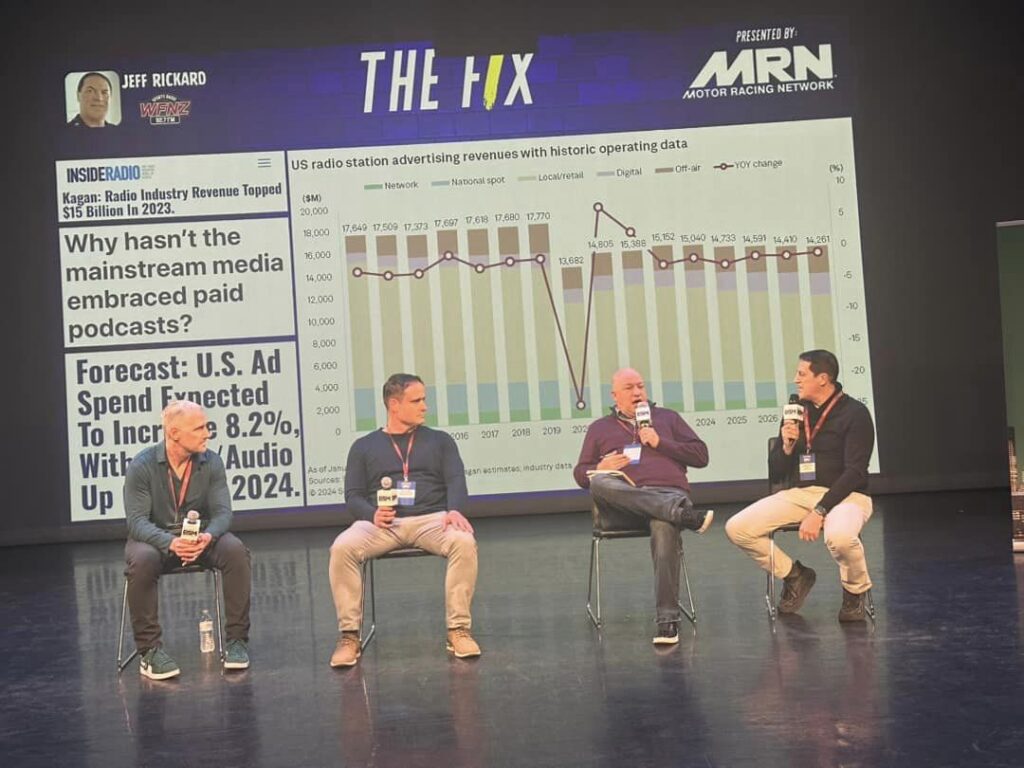
The BSM Summit is in the books. I’m physically and mentally exhausted from it but that’s the price to pay to deliver a successful event. I want to thank all who attended, supported, and spoke at the show. We’ve done six of these conferences and they get better each year. I can always find things to improve but last week’s show was a great success. We now have to decide if we’ll head to Chicago, Las Vegas, Los Angeles or San Francisco in 2025. To vote, click here.
Before you ask, we recorded the entire show and will make all sessions available via on-demand. Those who were in NYC will receive a free login to the show. Those who didn’t attend and wish to see what they missed will be able to purchase on-demand tickets for $99.99. Once everything is ready, I’ll alert the masses.
Looking back, we had a strong mix of sessions. The Power Panel, Game Changers, Strictly Business, Riding The Revenue Train and Experts on the Digital Expressway all offered great insight on what executives are dealing with and where growth is coming from. We also had Annie Agar, Andrew Marchand, Damon Amendolara, Bonnie Bernstein, Maggie Gray, Kevin Clark, Dave Greene, Mike McVay and Bruce Gilbert host sessions, which kept the show fresh and interesting. Bringing together Nick Wright, Danny Parkins, Andrew Fillipponi and Damon Amendolara together was another highlight for the show.
I hosted a number of sessions too with some incredible industry titans. Caroline Beasley was excellent, offering honest feedback from the CEO’s chair. She was the first radio CEO to appear and speak at the BSM Summit. David Field, Bob Pittman, Mary Berner, Bill Wilson, Jennifer Witz and others, I’ll see you down the road.
Caroline explained why the radio business is viable despite what Bell Media said, however she reminded folks that the industry has been healthier. We’ve got to work to get back to that level. Her insights on how she manages Boston and Philadelphia differently, Beasley’s approach to diversity, the challenges with measurement, and the rise of artificial intelligence were all valuable. It was great talking business with someone as accomplished as Caroline.
I was also blessed to reconnect with John Skipper. We had a blast talking business in 2022 and this time was even better. Whether we got into Meadowlark Media’s progress, industry layoffs, the state of podcasting, the ESPN-FOX-WBD streaming deal or artificial intelligence, John was ready to share insightful answers. My favorite line though was when I asked him about AI. In classic John fashion he said, ‘I’m 68. By the time this takes off, hopefully someone else can deal with this shit.’ I know many who feel the same way.
Among the talent talks I hosted, Michael Kay and Peter Rosenberg were tremendous. Michael admitted that going through GM and PD changes has been hard, and the move away from the FM dial and Nielsen will take time to get used to. At the same time, he’s impressed with Good Karma Brands and wouldn’t have signed another contract with the company if he didn’t have complete trust in their people and approach. Given how many GKB folks were in the room, Michael could have given politically correct answers. Instead, he was honest. We need more of that. Playing it safe doesn’t address issues. Honest dialogue does.
Last but certainly not least, Stephen A. Smith and Paul Heyman were simply outstanding. I’ll start with Stephen A.. I’ve been looking to sit down and chat with him at the Summit for six years. The timing worked out, and I’m glad it did. He was electric. Having Stephen A. and Paul cross paths backstage too was great. The tweet they put out blew up.
Before going on stage with Stephen A., I was ready to do 35-minutes. I know he has a ton on his plate, so I didn’t want to abuse his time. As we’re heading out, he says ‘Let’s do 45. I’m good with 45.’ I said, ’45 it is’. We took the stage, discussed his schedule and prep, knowing when First Take needs to pivot, the rise of his digital show, his future plans, management diversity, etc., and as I’m about to wrap with questions, he says ‘I’ve got time for 3 more questions.’ An hour later, we end day one. That was awesome. It’s easy to see why he’s the best in the game.
What a treat it was to have Paul Heyman with us. His insight on creating promos, and writing shows as both a leader and underdog were outstanding. Even better was his feedback on the Tribal Chief character of Roman Reigns being born from Marlon Brando’s Apocalypse Now. I could’ve talked business with Paul for another hour. He also promoted his appearance prior to the Summit, sharing posts with millions of followers and getting the WWE behind it. I never expect that but when it happens, it says a lot about an individual. The WWE has to get ‘The Wiseman’ at more industry conferences. He gets the business and makes the room smarter.
The session I received the best feedback on that wasn’t tied to stars was ‘Making Sports Radio Work on YouTube‘. Make sure to read Dave Greene’s column today about it. I knew the session was going to be a hit as soon as I saw Phil Mackey and Matt Moscona’s slides. They did a great job showing what does and doesn’t work on YouTube and how to monetize the platform. When I said last month that the mid-market voters screwed up leaving Moscona off the BSM Top 20 PD list, this was why. What these guys are doing in Minneapolis and Baton Rouge should be paid attention to. They’re crushing it and doing so without a large corporate push.
Another session that was popular was ‘Secrets to Social Success‘. Annie Agar, Omar Raja, Steve Braband and Josh Fendrick know the social space and were excellent sharing thoughts on how to create impact on specific platforms. I also love how the session ended with Logan Swaim of The Volume asking the group to draft their top 2 platforms from a group of X, Facebook, Instagram, Threads, Snapchat, TikTok and YouTube. The one surprise, no one picked Facebook.
This Summit had stronger attendance from GM’s than ever before, almost 300 total people registered, and a ton of different companies were in attendance. One of those groups, Good Karma Brands continues to impress me by how they use the event to unite their teams and use the gathering to make their local markets better. I was thrilled to be back at the Ailey Theater, the home of our 2020 show. The stage and screen are huge, and the seating is great. The only challenge was getting people back into the room after they flocked to the hallway to network.
There was though one thing missing at the Summit that I want to see change in the future; stronger representation from the advertising industry.
This conference isn’t just for radio hosts and program directors. It’s for everyone and anyone who works in the media business. We explore ways to make money, grow audience, deliver impact for partners, examine and excel on new platforms, and explore new technology and key changes affecting the media business. These are relevant issues for advertisers/media buyers not just content creators/managers. I tried to offer tickets and speaking opportunities to get media buyers and marketers involved and the response was light. I’m calling on advertising professionals to step it up in 2025. This conference and room benefits you too.
As I drove home with my son, Dylan, he asked ‘how do you even come close to matching this one? Is there anyone left?’ Without hesitating I said, ‘Did you see Dave Portnoy there? Big Cat and PFT? Bill Simmons? Joe Buck? Troy Aikman? Mr. Beast? Mark Cuban? Jim Nantz? Dan Le Batard? David Berson? Adam Silver? Elon Musk? Jeff Bezos? Mark Zuckerberg? Daniel Ek? Tim Cook? The Kelce Brothers? Peyton & Eli? Shaq? Charles Barkley? Bob Costas? Dan Patrick? Gary Vee? He looked at me, cracked a smile and said, ‘I guess there’s always more you can do.’
My next challenge, building the 2024 BNM Summit in Washington D.C. this September. Thanks again to everyone who made time to join us, speak and sponsor the show. It really means a lot.
Andrew Salciunas: It’s great to see 97.5 The Fanatic giving ‘Choonis’ a bigger opportunity. Andrew did a nice job alongside Anthony Gargano, he was ready to be elevated, and he’s respected by the local competition. Adding him to mornings with John Kincade gives the morning show new energy while adding a new wrinkle to middays. WIP remains the dominant brand in Philadelphia, and these moves don’t guarantee anything changing. However, putting a talented broadcaster with a bright future in a bigger role is a good start.
The Kelce Brothers and Shannon Sharpe: The iHeart Podcast Awards took place last week and two award winners couldn’t have been more deserving. The Kelce Brothers earned the honor for podcast of the year. Shannon Sharpe won Sports Podcast of the Year for his show Club Shay Shay. The Kelce’s and Shannon are blowing up in the digital audio space. iHeart nailed it with these two recipients. Congrats to both. The more they each succeed, the more it’s going to make the athlete creator economy an even bigger part of sports media’s future.
Travis Hancock: Mark Baker from Gastonia, NC is a dedicated listener of WFNZ in Charlotte. The longtime caller and Charlotte sports radio consumer has been in a hospital battling serious health issues which have included needing surgery for a stomach problem, treatment for a heart condition to survive the surgery, and a large, cancerous tumor that could end his life soon.
Rather than offering prayers and hoping for the best, Travis has called on the Charlotte sports community to offer encouragement to lift Mark’s spirits. Tons of current and former Panthers, Hornets, and media personalities have shared uplifting messages for Mr. Baker. One scroll through his feed on X and you’ll see tons of messages from Greg Olsen, Paul Finebaum, Luke Kuechly and many others.
There has been tons of video messages to @MarkBaker6060 the last 3 weeks but this one from an old friend in Chapel Hill may hit different. You keep winning each day and guys like this will notice.
Mark from Gastonia’s road ahead remains unclear. Travis is doing his part to provide words of encouragement to help him get through the day, and raising awareness of his GoFundMe to help cover medical expenses. Here’s to hoping Mark recovers and is able to listen to and call his favorite sports radio station, WFNZ, one more time.
Thumbs Down:
Deadspin: The brand was sold last week by Gizmodo Media Group to a European firm, which plans to take a different approach to content. Deadspin was once a take-no-prisoners brand, stepping on anyone and everyone in their way. But those who fueled that fire to make the brand respected and feared departed. The crew that followed had some of that venom but not as much. Crushing people and reputations may generate attention but eventually flames burn out. When the ones responsible for financing chaos pull the plug, it’s harder to find others hungry to do business with those who made a living trying to take them down.
#Breaking@Deadspin sold to European firm Lineup Publishing Note from CEO Jim Spanfeller to staff below: — "I do want to make it clear that we were not actively shopping Deadspin," he said. pic.twitter.com/X3bgrpc58w
Diversity Zealots: For 8 years, I’ve written columns about sports media’s diversity challenges. I believe the industry can be better in this area especially in management. It’s a subject I’ve put focus on at Summit’s in three different cities with multiple executives including our latest in NYC. In fact, Jeff Rickard remarked last week how this year’s event had the strongest female representation we’ve ever had, something I’m proud of because we’ve worked hard on it.
More importantly, I continue to help women, and Black and Hispanic professionals get hired in key roles in sports media. Yet there are uninformed people in our business and some who are now on the outside looking in who like to flock to social media when the diversity issue comes up or when they see a poster or panel about our show promoting white people involved in it.
First, rather than running your mouth and sounding stupid, how about doing your homework? A simple look at the show schedule would’ve shown you there were a lot of women taking part. Secondly, how about actually making a difference yourself? Who have you hired? Who have you featured on stage at an industry event or welcomed on to your show to explore the issue further? What exactly are you doing to make things better in the industry besides sitting behind a computer complaining on X or Facebook? It’s easy to spew nonsense but harder to actually solve problems. Stop talking, start doing.
Coming in to the 2024 BSM Summit in New York it was clear who the headliners were going to be. WWE’s Paul Heyman and ESPN’s Stephen A. Smith hit it out of the park with their sessions on Wednesday afternoon. I could listen to the two of them speak for hours.
The way Heyman described feeling a crowd and where to take a promo. The connection you have to have with an audience and the way he can make everyone in a large arena and the millions watching on television feel like he is talking to them, individually. He truly is one of the best television characters of all time.
Stephen A. and his passion for what he does is incredible. Love him or hate him, you watch him, and you are interested in what he has to say. His delivery is part of what makes him so special and on this day, he really captured the room as he talked a lot about what he still feels he wants and needs to do in this business. His confidence and his work ethic can never be questioned.
The keynote conversations with Caroline Beasley and John Skipper were both excellent and Skipper may have had the thought of the week when he said, regarding Artificial Intelligence, “It’s going to create a lot of disruption. I’m still more fond of intelligence that walks with two legs. I am 68 and thinking maybe I can get through life without this sh**”
However, it was the session that came about 35 minutes after Skipper’s conversation with Barrett Media president Jason Barrett, which stole the headlines. This is where SKOR Noth’s Phil Mackey and Matt Moscona of 104.5 ESPN in Baton Rouge did a panel entitled, Making Sports Radio Work on YouTube.
Based on the response most everyone I talked to had about this session, this was the “light bulb moment” for most during the Summit. I know everyone that was in that room to hear the session took something they could use immediately back to their stations, if they were someone who is in a market without a video/YouTube strategy or even for those that already do.
Now, there is a couple of things to dissect here. The first thing is for those without a video/YouTube strategy in 2024, WHAT ARE YOU DOING?!? This has been my biggest pet peeve for a long time in that the industry is so slow to react rather than step up and be the leader. You have the content, you have the audience, you have the talent, the talent has the relationships and trust with the audience. Meanwhile, digital content creators came along and built better, stronger relationships with audiences with attribution right on the screen and took millions and millions of dollars in advertising along the way. Then, and only then, did most respond and by then it was too late and it was time to play catch up.
Sorry, that just needed to be said. Don’t even get me started on Podcasting and the missed opportunities there.
I digress. This is why the BSM Summit is held, to share ideas and to learn new things you can implement.
What Phil and Matt did in this panel was break it down very simply. Phil shared five things they have learned since launching on YouTube which included: producing for YouTube, knowing “niches get the riches,” using SEO-friendly headlines, having great thumbnails, and using product placement which has great value for local direct advertisers.
Matt laid out two things very clearly that can make a gigantic difference when it comes to YouTube. The first being a great thumbnail and the other being a great title. He pointed out that YouTube is a search engine, and it is second only to Google in that regard. Therefore, you must think about what your audience is searching for when they are using the platform.
This session was equal parts valuable information and presented in a very simple way for folks to understand and take back for their teams to implement. Many of you will be having YouTube strategy meetings soon (trust me) and my suggestion to you is to do a couple of things. First, if you were not at the BSM Summit I know a replay opportunity will be out soon for you to view on-demand. I highly suggest you do so, not just for this session, but if you do not have a video strategy, this is 35 minutes you need to see.
Secondly, Matt Moscona noted in the presentation that they spent time looking at what the best stations around the country were doing and other digital outlets and how they looked and how they engaged with the audiences, etc. This is important because you should be doing the same thing. So many others have tried, adjusted, tried again, pivoted, tried again and you have the luxury of going to YouTube.com today and seeing where they landed. That would be a suggestion for a first step, go take a look and see what can be done, relatively inexpensively, to create an entirely new revenue stream and the best way possible to engage with and super-serve your audience.
Being in New York most of the week, I wasn’t able to listen to or watch much sports programming. However, I did spend time with several of the brightest minds in our industry. The best thing I heard this week was the amount of positivity around sports radio, sports television and digital sports coverage and conversation.
Yes, there are problems. Oy, are there problems. But there is so much to be looking forward to in this space.
I talked with several young content creators at the BSM Summit, and it was energizing. It was great to hear their enthusiasm for what is going on and I think, frankly, a lot of that has to do with the new companies that have come into the space. These people didn’t spend time in a tired, old radio or television environment where they are content trying to teach old dog’s new tricks. They are working for forward-thinking companies who are allowing them the space, time and resources to create.
On Friday morning as I was traveling back from New York, I had the chance to read a terrific piece from John Molori, Sports Media is in its Golden Age for Women. John’s column centers on just a few of the women who are succeeding, big time, in sports media today. John highlights Erin Andrews, Pam Oliver, Hannah Storm and Cari Champion while mentioning several others. I am sure John felt like he could go on and on with this column.
John writes, “March is Women’s History Month, and at no time in the history of television have there been more talented and capable women in the sports media field. Viewers are blessed to enjoy the work of time-tested and experienced personalities, and equally fortunate to see an endless stream of young and driven women who want to make a mark in the industry.
“The once male-dominated field has been plowed down like the cornfield in Field of Dreams. In its place is a wide-open and diverse roster of broadcasters whose gifts transcend any gender labels.”
Senior Reporter, Author, and Change Maker. For nearly 18 years Julia Boorstin has graced the airwaves of CNBC covering media and technology. But she’s innovated so much more including the outlet’s annual ‘Disruptor’ list and their new ‘Changemakers’ list.
“I just love being able to be entrepreneurial within this big organization.” Boorstin said over a Zoom call, adding, “The fact that I’ve been here for so long is really a testament to the fact that I’ve been able to create things and build things, and partner with my colleagues and feel like we’re building valuable things together.”
Straight out of college, Boorstin got her first gig as a reporter at Fortune Magazine. “I had a really great luck to work with great editors there who really trained me, on everything. Not just how to write a profile thousands of words long on a CEO, but also really how to read documents and balance sheets and dig into the numbers.”
She added, “I sort of think that I got a thorough business school boot camp of sorts, working with legendary editors, including Carol Loomis who is an amazing editor and role model.”
While at Fortune, Boorstin appeared as a contributor on CNN. She said of the time, “I was only 22 years old, and I thought it was kind of crazy to be on live television. But I didn’t get nervous. Because of my ability to be quick and fast on my feet, they asked me back to become a contributor. So I became a contributor to CNN and CNN Headline News.”
Joining CNBC in 2006, the Princeton graduate was a general assignment reporter before being given a choice of working a media beat or a retail beat. “I’d done various stories in both of those areas at the time and the media industry was really starting to transform.” Boorstin added, “We were seeing the rise of YouTube and Netflix as a force. We were also seeing the emergence of these powerful social platforms, like Facebook. So I said, ‘Media seems really interesting. There’s a lot of change and transformation. I really want to cover this beat.’”
In 2007, Boorstin moved to L.A. to focus on media.
With technology changing the media, Boorstin has also developed a passion for reporting on Artificial Intelligence. “In the past year and a half or so, since the launch of ChatGPT, I’ve been really focused on trying to report on how AI is going to impact and disrupt all of these different sectors.”
“I think the industry, the entertainment industry is going to be very careful, mostly because [AI] does threaten a lot of jobs and was the source of a lot of concern around the actors and writers strikes last year,” she later added. “So there are legal concerns, but there are also just structural concerns.”
One of those “structural concerns” is protecting intellectual property (IP). “How do we experiment with AI in a way that’s not going to expose our IP to these models? We don’t want our content being used by these models and then used by other people down the road. So there’s sort of the legal concerns of protecting IP and not violating their deals with the actors and writers,” Boorstin said.
Over the years, the veteran reporter has witnessed many evolutions in the media space. In turn, it transformed her reporting.
“After covering the Facebook IPO, I realized we needed a better structure at CNBC to talk about fast-moving, disruptive startups before they went public.”
She went on to say, “Around the time of the Facebook IPO, I proposed to my bosses that we should create a Disruptor 50 list. We should create a list of the 50 fastest-growing private companies and put it in the language that is relevant to our viewers and say, ‘Either these companies are going to be the next public giants, or they are already disrupting the current public giants.’”
This May will be the 12th annual Disruptor 50 list.
A new list debuting on CNBC this year is another Boorstin pitch: ‘Changemakers.’
“The idea of Changemakers is to talk about women who are transforming business. It’s an annual list. We just launched our first one. It’s 50 women. It is unranked because we are not interested in ranking women,” she shared.
“We just want to highlight their success stories. And these women vary across industries, but they also vary from women who you’ve heard of, like Taylor Swift and Naomi Osaka, to women who are maybe accomplishing things that you’re less familiar with.”
While Boorstin did not make her own list, she has made a huge impact on CNBC and the way media is covered. Her advice to those looking to follow in her footsteps is, “You don’t know what you’re going to like doing or what you’re good at unless you try it. The industry that I’m covering now didn’t even really exist 20 years ago. So I think it’s just important to be open to trying different things. I didn’t know that I would fall in love with business news, until I was a year or two in at Fortune Magazine.”
Boorstin went on to say, “I think looking back at all the women I interviewed for my book and the women ChangeMakers, but also the men I interview is that no one succeeds without a growth mindset. I really increasingly see a growth mindset is just the combination of confidence that you can keep on learning and changing. Whether it’s a personal scale of leadership or the actual like the content itself, that we all need to have that confidence that we can keep learning and changing and growing.”
She added, “Also the humility that we don’t already know everything, we’re not going to naturally be good and all the things. We need to not feel discouraged when, when stuff gets hard, but also just know what sort of part of the process.”
With just over one month to go until the 2024 NFL Draft, Field Yates is entering the final stages of his year-round preparation process. Amid an NFL season that concluded with a thrilling Super Bowl resulting in a second-consecutive championship for the Kansas City Chiefs, Yates was balancing real-time coverage with shrewd prognostication and evaluation of the next generation of stars. There has been anticipation regarding who the Chicago Bears will select with the first-overall draft pick and the other franchises thereafter to welcome a new class to the league. For this draft alone, Yates has compiled projections for 322 players that has involved meticulous film study, analyzing quantitative data and interviews with the athletes and their surrounding personnel.
As an NFL insider for ESPN, Yates consistently remains in the know on all things pertaining to the game of football. The new league year begins just after the Super Bowl, and he ensures to enter its confines ready to tackle free agency and the NFL Draft before offseason workouts lead to training camp.
During the season, Yates is in conversation with relevant sources from around the NFL to gather information about additional qualitative considerations that could impact the draft position of a player. He periodically authors mock drafts in articles that outline how he believes the three-day event will play out as well. While Yates and other NFL insiders help fans become more informed and engaged with tentpole events throughout the season, there is a different kind of ambiguity surrounding the NFL Draft that can lead to unexpected outcomes.
“I compare it to studying for – not that I ever took this – but I would say it feels like studying for the LSAT,” Yates explained. “You could study every hour of every day, but ultimately once the actual event begins, there’s specific problems that you have to solve; or in the case of the Draft, I’m going to study more players than are actually drafted, and I’m going to have players in my mind going in certain ranges.”
There are unpredictable occurrences that take place over the course of the NFL and collegiate seasons with the potential to alter the overall draft order. For example, Yates emphasized that most people did not expect LSU quarterback Jayden Daniels to project as a top-five selection entering the season. Yet after a breakout year in which Daniels led college football in quarterback rating and threw for 40 touchdowns and 3,812 yards, he caught the attention of several teams in the early first round.
“He had a remarkable season, so there is this balancing act of sort of taking all the information you had going into a year, but making sure you’re not married to it,” Yates said. “You’ve got to be mindful of how things can change once the season begins, and you sort of have to adjust your board accordingly.”
More than 54 million fans watched last year’s NFL Draft with an average audience equating to 6 million consumers per day. The average viewership figure was up 12% year-over-year, which was a harbinger of things to come for the league’s regular season and playoff slate of games.
Yates was involved in this coverage throughout the year, which included television hosting and analysis, two original podcasts, writing and reporting. Although his endeavors in these media center around football, he brings a different approach as to how he presents the information, imagining the cluster of platforms as if it were an accordion. Writing provides Yates the ability to start and stop, whereas his radio appearances generally last eight to 15 minutes and lead to real-time dissemination of his findings and opinions.
“I always think about every topic through a couple of different prisms, but generally speaking if you have one initial thought that comes to mind, you better have that one ready for TV,” Yates said, “because in TV, sometimes you get 30 seconds on a topic and sometimes you get more, but you better be prepared to have a truncated answer on TV because it’s the one medium where you have this finite period of time that is usually just one show window.”
During the previous summer, Yates hosted ESPN’s daily studio program, NFL Live, while Laura Rutledge was on maternity leave. Being able to fill in for Rutledge, someone who Yates considers a close friend and as good a host in all of television, was a task for which he was honored to take on. While he generally displays his football acumen on this program in a contributing role outside of its main cast, he suddenly found himself responsible for setting up the deep roster of analysts and also delivering his own opinions over the course of a show.
“NFL Live is one of those shows that when I was there, my mindset was, ‘Let the stars of the show do their thing,’” Yates said. “As far as the analysis role, we weren’t as reactionary to the news of yesterday because there weren’t that many games that you’re reacting to.”
Before he started covering football on a regular basis, Yates was a tight end and linebacker for his high school football team and was named to the All-Independent School League. From there, he attended Wesleyan University where he played on the football and lacrosse teams while majoring in psychology. For parts of high school and college, Yates interned with the New England Patriots and ultimately narrowed his focus to coaching and scouting, ultimately trying to prove his worth to remain in the NFL. In the end, he was hired by the Kansas City Chiefs as a member of its scouting and coaching department where he spent games in the coaching box and eventually helped chart defensive plays.
Experience working in the NFL is not a necessary prerequisite in order to serve as an effective analyst or commentator, Yates affirmed, but he is cognizant of the fact that it did give him an inherent advantage to decipher nuances of the sport. In fact, he refers to his time in the league as his “football Rosetta Stone,” carving a stele from which he decodes different facets of the sport.
“It allowed me to understand a little bit deeper some of the things that I probably was aware of but was able to kind of crystallize,” Yates said, “like what specifically I was looking for in players and kind of what went into the process of scouting a player at a very, very, very basic level, sort of understanding what went into a game plan.”
Yates enjoyed his work at the NFL level, but he quickly realized that the outline of events made it difficult to attend events such as weddings and his five-year high school reunion. He was making sacrifices to work in football, and while he knows that he may have felt differently about it at another time in his life, he began to ponder over making a change.
“It’s a schedule that does not work around you; you work around it, and I just sort of felt like there was a little bit more balance for me out there in the world of sports media, which all these years later I feel validated in saying,” Yates conveyed, “because while I absolutely 100% love everything that goes into the scouting process in so many ways, I do have some balance in my life that I’m not sure would have been afforded if I stayed in that world of scouting.”
After moving on from his job in football, Yates earned his real-estate license and thought that the field would serve him better in a career. Six months later though, he felt a yearning for sports and was looking to find a way back into the industry in a role that would better serve his aspirations.
Once he realized that sports media could prove to be optimal, he began sending emails to Mike Reiss, an NFL reporter for ESPN who covers the New England Patriots that became a mentor who accepted him early on in the business. After freelance writing for several football blogs and websites, he was hired by ESPN and worked on its Boston coverage, covering his first NFL Draft at the age of 24 from Gillette Stadium.
“I kind of point to that to where it sort of began,” Yates said. “It was the first opportunity for me to be inside of a professional media setting amongst a bunch of people that I either had grown up reading or had followed on social media; things of that nature. Mike really kind of helped me get my first sort of stepping stone into the world of sports media.”
When he was working in Boston, Yates was the co-host of two ESPN Radio shows centered around football while also writing articles for the outlet’s official website. He gradually made the transition towards covering the league nationally and started to contribute to both NFL coverage and fantasy football content.
Seth Markman, who serves as a vice president of production for ESPN, assisted Yates in understanding the means of comparison and contrast within the dichotomy of these two subject matters. As a result, he discerned what aspects of the sport were applicable between these focuses and began to further excel in his work. Before he was named the host of Fantasy Football Now, Yates was an NFL insider on the show and would cogently fuse these two areas together.
“I can’t say that every single thing that I learned in scouting I have used to this day in fantasy football, but there’s definitely a lot of stuff that I feel has been useful when you’re trying to evaluate sort of the real or not real nature of player performance,” Yates said. “A guy has a monster game in Week 1 and you’re sitting there wondering, ‘Alright, I haven’t really thought about this player that much,’ or, ‘I hadn’t really thought about this player that much. What do we see in this player and how real is or is it not?’”
Yates monitors metrics in real time on Sunday afternoons when he is situated in the ESPN War Room watching games around the league with his colleagues. Located within the network’s Bristol headquarters, he views the action alongside Chris Berman, Adam Schefter and other ESPN personalities, monitoring the latest developments and building camaraderie.
Over the years in the War Room, Yates has vivid memories watching games with ESPN NFL reporter Chris Mortensen, who worked at the network for over three decades. Mortensen stepped down from ESPN last April, but throughout his time at the network he built relationships with his colleagues and was always accessible to them. Earlier this month, Mortensen passed away at the age of 72, news that saddened his colleagues, competitors and sports fans around the world.
“I remember whenever I talked to Mort on the phone, it was always a lot longer than I anticipated or he anticipated it might be, so a call that began with a text that said, ‘Hey, do you have a couple of minutes to catch up?,’ usually turned into about an hour or so,” Yates recalled. “We already do miss Mort a lot, and I think it’s going to feel that much different in the fall on Sundays.”
Although ESPN no longer airs Fantasy Football Now, he continues to share his insights regarding the space on several ESPN television programs and the Fantasy Focus Football podcast. Yates co-hosts the audio offering with Daniel Dopp, Mike Clay and Stephania Bell, all of whom bring unique concentrations to the air that help create a compelling, engaging final product. There are a plethora of outlets producing fantasy football content, but Yates believes that the rapport between the on-air talent ultimately sets them apart.
“If Christian McCaffrey has four touchdowns on Sunday, we’re going to talk about it on Monday, and probably every other podcast will as well,” Yates hypothesized. “What’s going to hopefully make us different is the entertainment value and the camaraderie and the chemistry that makes you say, ‘Yeah, I know I can hear about Christian McCaffrey anywhere, but I really want to hear from the Fantasy Focus crew.’”
With the NFL Draft rapidly approaching, Yates is continuing to extrapolate his insights in that niche of coverage on the twice-weekly First Draft podcast with ESPN senior NFL Draft analyst Mel Kiper Jr. The show allows them to deliberate topics at length, satiating the appetite for more detail and protracted discussion for those looking for such content. These podcasts, along with his radio appearances, television responsibilities and the written word, excite Yates and keep him enthused about football coverage going forward.
“While I feel like we have near around-the-clock coverage for football, I just feel like we’re going to have even more and more and more going forward,” Yates said. “The digital space is so great, but it’s an opportunity for all of us to continue to grow, and that league has become must-see TV, 365 days a year.”
From the moment Yates arrived at ESPN, he immediately felt welcomed by people at the company who emitted a sense of gratitude and thoughtfulness. Looking back, he acknowledges that they could have told him to “go kick rocks,” but they did the opposite instead and forged meaningful relationships that have helped enhance the quality and breadth of programming.
With the whirlwind of free agency slowly winding down, Yates is beginning to see the illuminating lights of the NFL Draft stage glowing in downtown Detroit. The filled-in draft board will resemble an answer key of sorts for Yates to review before he moves on to studying the next iteration of the event. Through it all, he will watch as the league receives a new class of budding stars looking to contribute to teams around the league as they work to realize championship aspirations.
“I find pure joy in being a part of the ESPN family and covering football like I do,” Yates said. “No day feels like work for me, and it’s something that has allowed me to meet some incredible people along the way. I’ve been at ESPN for over a decade now, and I feel real camaraderie and feel a real loyalty and bond at the company, and that to me is motivation enough to want to continue to do it for a long, long time.”
The verbal sparring going on between WFAN’s Tiki Barber and ESPN’s Ryan Clark has branched out into others chiming in. One of those speaking out is Barber’s WFAN teammate Gregg Giannotti. Giannotti had talked recently on Boomer & Gio about his feelings on Clark, after Clark had put out a rather interesting social video about his contract negotiations with ESPN.
Giannotti said, “He goes on his podcast, whether his or somebody else’s, and just destroys Tiki Barber for no reason, whatsoever…he’s claiming that ‘Tiki taught me how not to be a veteran’…like, OK Ryan…I’m just putting my two cents in here… Ryan Clark was a d-bag in that locker room…If Tiki Barber taught you how not to be, then Tiki Barber was doing the right thing in the locker room because you were a di**”
Giannotti went on to tell the story about seeing Clark go off on a newspaper reporter when he was a member of the Pittsburgh Steelers. He said a reporter from a smaller newspaper was talking with Clark and “asking him a legitimate question. Ryan, I saw it with my own two eyes, Ryan Clark just undressed this man verbally and made him feel like a piece of crap. He said, ‘You just don’t like the fact that I’ll be able to do your job better than you in three years when I retire.’ [And he was] pointing in his face and stuff. So, you’re the classy guy? My ass you are…So, don’t sit up on some high horse thinking that you’re the professional in the room and Tiki Barber is some jerk that didn’t treat you right…Just stop.”
Earlier this week, Barber was taking some heat for his opinion on New York Giants running back Saquon Barkley leaving the team to join the Philadelphia Eagles. Clark was on an episode of The Pivot podcast and weighed in on Barber’s comments. He said, “SaQuan earned that deal to Philadelphia, what he had to go through in New York to get through this point being a franchise tag last year. Now we’re going to get to Tiki. Tiki taught me what I didn’t want to be as a veteran. Tiki taught me how you don’t make a young player feel welcome, how you don’t make a young player feel like this could one day be his team. The way he made me feel as a young rookie and a second-year player, I said I don’t ever want to be that dude. And he’s continued to be that person.”
Barber replied to what Clark said the next day on WFAN, saying, “Wow. Ryan Clark, you are making blank up. Because you don’t know me like that, dude. What is he talking about? I didn’t embrace young players? Ask Brandon Jacobs…if I embraced him,” Barber said, adding he “honestly doesn’t remember interacting” with Clark when the two were teammates on the New York Giants. “Now that he’s a big wig at ESPN, he thinks he can just take shots and his word is gospel? He’s making a story that fits his agenda.
“He doesn’t know me well enough to talk about me. So shut the hell up, Ryan Clark. Please. You sound like a fool. You think it’s cool and trendy to make me the bad guy because it makes you cooler and trendier. By all means, shoot away, Ryan.”
Tiki Barber continued his takedown of his former teammate by claiming the ESPN NFL analyst is ignorant.
“He’s uninformed. He doesn’t know me that he doesn’t know me like that. Don’t talk about me like that. You don’t know me like that. You don’t know my relationships with my team, my former teammates, the organization, but you act like you know. You speak in a nice, calm, controlled way. It’s not true. It’s an opportunistic shot that he’s taking because he thinks that he’s gonna gain advantage by being a jackass to me. Congratulations, Ryan. Good luck in your career, as well.”
Sports Media Watch has reported that despite the “Kay-Rod” broadcasts coming to an end, 98.7 FM ESPN New York’s Michael Kay will continue doing baseball play-by-play for the mothership. The report says Kay will be on the call for ESPN’s MLB World Tour: London Series broadcast when the Mets and Phillies play in June. He will also call a Wild Card playoff series although it is not known yet who his partner will be.
Alex Rodriguez, who completed the “Kay-Rod” duo, is no longer with ESPN as he has moved exclusively to FOX. Rodriguez joined the ESPN Sunday Night Baseball team in 2018 and he and Kay had the alternate broadcast for the last two seasons.
It is also reported that ESPN will resume airing “Statcast” alternate presentations of Sunday Night Baseball this season. Those statistics heavy broadcasts will now feature Baltimore Orioles play-by-play voice Kevin Brown.
Kay has spent three decades as a play-by-play voice for the New York Yankees, including 10 years on radio and over 20 years as the television voice of the Yankees on YES Network, a role he has held since the network’s launch in 2002.
Earlier this week, Don Lemon revealed his contract for a digital video show on the X platform was canceled by Elon Musk. Musk defended the decision but says the deal could still be a lucrative one for the former CNN host.
After it was reported that Lemon would still be publishing episodes of The Don Lemon Show to the social media platform, Musk quipped that the former CNN host would still be entitled to advertising revenue generated from the program airing on X.
“Even though I think Don (Lemon) is a pompous fool who spouts nonsense, he is still free to upload his show to X and will receive advertising revenue,” Musk wrote in a post to X.
Even though I think Don ???? is a pompous fool who spouts nonsense, he is still free to upload his show to ???? and will receive advertising revenue https://t.co/K5LiG3WiI5
Musk reportedly decided to end the contract with Lemon — which he reportedly failed to sign — after a tense interview for the debut episode of the program.
In a snippet shared with CNN, Don Lemon is seen asking Musk questions about his financial support of Donald Trump, and also about the billionaire’s alleged drug usage.
More sports content is headed to Prime Video, this time courtesy of premium podcast network Wondery. Wondery’s sports podcasts, including Six Trophies with Jason Concepcion and Shea Serrano, Over the Top with Beadle & Rosenberg, and Alternate Routes hosted by Trey Wingo and Kevin Frazier are among the shows that will be available on Prime Video.
Beginning Monday, Mar. 18, Prime Video subscribers can access every episode of these podcasts via their Prime Video account.
“Prime Video is a huge go-to destination for sports, so we’re excited to bring our premium shows to fans who already come to Prime Video for their sports news, analysis, and entertainment,” said Marshall Lewy. “Six Trophies, Over the Top, and Alternate Routes have already developed great fan bases and now being on Prime Video will help them connect with even more sports fans.”
Sports have been a recent focus for Prime Video — and not just live sports, though there’s plenty of that. Documentaries like Giannis and the recently-announced Allen Iverson documentary and new live content like rumored NFL playoff games, New York Yankees baseball games, and Premier Boxing Championships join Thursday Night Football, existing studio shows, and movies to offer a ton of content for sports fans.
NewsNation host Chris Cuomo featured a two-part, sit-down conversation with former Fox News host Tucker Carlson this week. He shared the method behind his madness after the conclusion of the made-for-TV event.
While discussing his interview with Carlson on his program, Cuomo revealed he had received pushback both personally and professionally for his decision to sit down with Carlson. However, his rebuttal was two-fold, claiming that he believes in conversing with those you disagree with, but also the idea that giving Tucker Carlson a platform was preposterous.
He shared that the main criticism of his was that “I’m enabling the distribution of lies and bad ideas by having Tucker Carlson. Here’s the problem with that idea: Carlson has a bigger platform than anyone who is telling me to not have him on,” admitted Cuomo. “That man and his crazy cackle is bigger than most major outlets. So the idea that you can censor your way into some kind of selection of arguments that you like or don’t like so, and simply demonizing what you disagree with, is not making it better.”
Chris Cuomo continued by noting that Carlson became incredibly popular for one particular reason.
“Carlson is not unique, except maybe for that cuckoo cackle. But as far as ideas, he has an audience because millions feel the same way. This is the same mistake that many in the media made with Trump. And when I was talking to Trump early on, I was getting the same criticism. Why? Because many would rather silence what they don’t agree with.”