The nominees for the 61st annual ACM Awards for country radio have been announced, with several stations earning multiple nominations.
Winners of the ACM Awards in the radio portion will be announced at Country Radio Seminar (CRS) on March 18th through 20th in Nashville.
The 61st annual ACM Awards ceremony is scheduled for May 17th at the MGM Grand Garden Arena in Las Vegas.
The complete list of radio nominees is below.
NATIONAL DAILY ON-AIR PERSONALITY OF THE YEAR
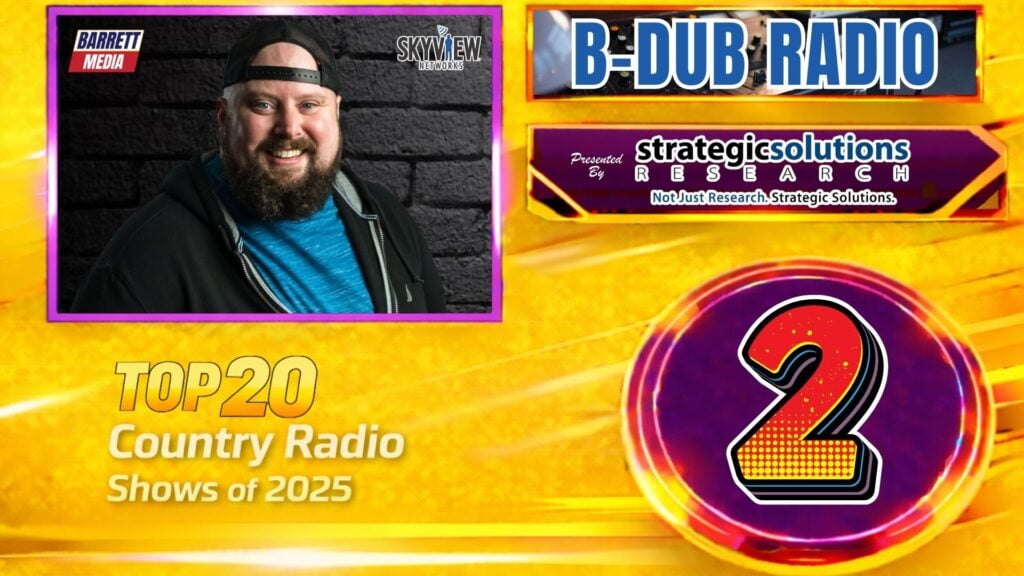
B-Dub, B-Dub Radio
Cody Alan, Highway Mornings with Cody Alan
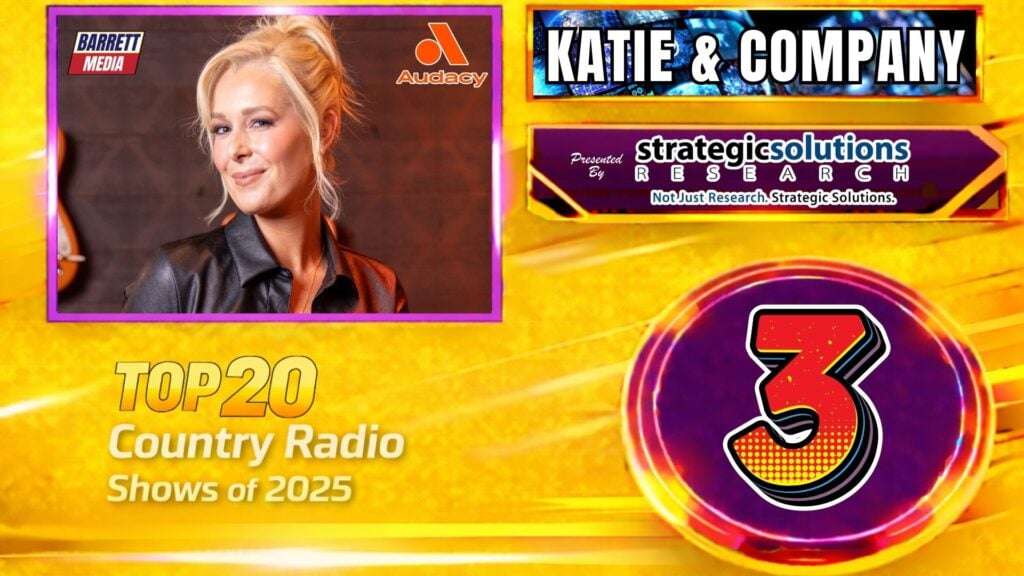
Katie Neal, Katie & Company
Rob Stone and Holly Hutton, The Rob + Holly Show
Steve Harmon, Steve Harmon Show
NATIONAL WEEKLY ON-AIR PERSONALITY OF THE YEAR
B-Dub B-Dub Radio Saturday Night
Big D, Bubba, Shaffer – Honky Tonkin’ with Big D & Bubba
Heather Froglear – 90’s Country with Heather
Kelleigh Bannen – Today’s Country Radio
Ryan Fox – American Country Countdown with Ryan Fox
ON-AIR PERSONALITY OF THE YEAR – MAJOR MARKET
Angie Ward – Angie Ward, WUBL-FM, Atlanta, GA
Chris Carr & Company – Chris Carr, Sam Sansevere, Dubs, KEEY-FM, Minneapolis, MN
The Coop Show – Coop, WKIS-FM, Miami, FL
Erik & Jenny –Erik Scott Smith & Jenny Lee, KCYY-FM, San Antonio, TX
Frito & Katy – Frito and Katy, KILT-FM, Houston, TX
Niko + Cheyenne – Niko + Cheyenne, KMLE-FM, Phoenix, AZ
Rachel Ryan – Rachel Ryan, KSCS-FM, Dallas, TX
ON-AIR PERSONALITY OF THE YEAR – LARGE MARKET
Heather Froglear – Heather Froglear, KFRG-FM, Riverside, CA
Jesse & Anna– Jesse Tack, Anna Marie, Jake Thomson, WUBE-FM, Cincinnati, OH
Kelli and Anthony – Kelli Green and Anthony Donatelli, KFRG-FM, Riverside, CA
Mad Dawg in the Afternoon – Big Dave, Stattman, WQDR-FM, Raleigh, NC
Maria D’Antonio – Maria D’Antonio, WDSY-FM, Pittsburgh, PA
ON-AIR PERSONALITY OF THE YEAR – MEDIUM MARKET
The Bee Morning Coffee Club – Billy Kidd, TJ Sharp, Hope Breen, WBEE-FM, Rochester, NY
The Doc Show with Chewy – Doc Medek, Chewy Mede. WGGY-FM, Wilkes-Barre, PA
Julie and DJ in the Morning – Julie K and DJ Thee Trucker. WPCV-FM, Lakeland, FL
Mo & StyckMan – Mo & StyckMan WUSY-FM, Chattanooga, TN
Steve & Gina in the Morning – Steve Lundy and Gina Melton, KXKT-FM, Omaha, NE
Tug Cowart Show – Tug Cowartm WCKN-FM, Charleston, SC
ON-AIR PERSONALITY OF THE YEAR – SMALL MARKET
Ben & Arnie – Ben Butler, Arnie Andrews, WCOW-FM Sparta, WI
B-MO in the MO’rning – Brian “B-MO” Montgomery, WCKK-FM, Walnut Grove, MS
Dan Austin – Dan Austin, WQHK-FM, Fort Wayne, IN
The Dr. Shane and Tess Show –Dr. Shane and Tess, WPAP-FM, Panama City, FL
The Eddie Foxx Show – Eddie Foxx and Amanda Foxx, WKSF-FM, Asheville, NC
RADIO STATION OF THE YEAR – MAJOR MARKET
KILT-FM, Houston, TX
KSCS-FM, Dallas, TX
KSON-FM, San Diego, CA
WPOC-FM, Towson, MD
WXTU-FM, Philadelphia, PA
RADIO STATION OF THE YEAR – LARGE MARKET
KFRG-FM, Riverside, CA
WLHK-FM, Indianapolis, IN
WMIL-FM, Milwaukee, WI
WSIX-FM, Nashville, TN
WUBE-FM , Cincinnati, OH
RADIO STATION OF THE YEAR – MEDIUM MARKET
KUZZ-FM, Bakersfield, CA
WBEE-FM, Rochester, NY
WHKO-FM, Dayton, OH
WLFP-FM , Memphis, TN
WQMX-FM, Akron, OH
RADIO STATION OF THE YEAR – SMALL MARKET
KCLR-FM, Columbia, MO
KFGE-FM, Lincoln, NE
WCKK-FM, Walnut Grove, MS
WXFL-FM, Florence, AL
WYCT-FM, Pensacola, FL
WYOT-FM, Rochelle, IL
Barrett Media produces daily content on the music, news, and sports media industries. Sign up for our newsletters to stay updated and get the latest information right in your inbox.