I’ve always thought that nothing would be worse than a career I disliked. I even taught my kids to find something they enjoy doing every day because waking up to a job you hate would be hell. Certainly, I have been blessed in that way, and honestly, I think most of us in this industry feel the same way.
I remember in my younger days people would ask, “What’s it like to do what you do?” Usually, I answered, “Well, it’s certainly better than digging ditches for a living!” In truth, maybe ditch diggers love that but I love being in media a lot more than that statement suggests. I should’ve said, “I LOVE doing what I do, and I am blessed to be doing it.”
Do you love what you do? As a boomer, I usually express frustration with Millennials and GenZ because it has always seemed that they don’t have the same passion or work ethic of my generation.
I recently realized that assumption really isn’t fair. I have been judging them against my own core values and what I was taught. I have two Millennial sons and a Gen Z daughter I have come to understand that it’s not for me to judge what is important to them.
They all have respectable careers; in fact, my oldest son is a social worker and going for his Masters while my younger son is a highly skilled electrician, and we all know how the service industry is desperate for trained, skilled journeymen.
My daughter is in customer service, and I’m not sure she enjoys her work very much, despite the fact that she does it well and earns an excellent living. She is so much better at focusing more on life balance than I ever have. I’m in radio for cryin’ out loud! I’m embarrassed to say that I’ve been divorced twice, and in my younger years, very little mattered more than reaching my goals.
The traditional model has definitely given way to a more dynamic landscape where the significance and meaning of work are most important. Today, balance between professional goals and personal values and passions matter more.
Younger people seem to examine their core principles and beliefs that guide their decisions and actions in life. As I continue to pen this article I have become even more ashamed to admit that I have never chosen a career move based on my values or principles. Yikes! And I’m the one judging others?
Young people seem to shape careers and specific jobs on who they are and what they stand for. They actually ask themselves what they care about most. Is it creativity, innovation, social issues, helping others, the environment, or financial stability? These values serve more and more as a compass, directing many to work in fields that resonate with their inner selves.
Passion often is the driving force behind what we choose to do, but today, it is often driven by social and cultural issues. When you talk to those making decisions based on more selfless issues, you may find that what they do are the same topics they talk about for hours without losing interest, even during personal time.
It’s fair to say that when your job brings you joy, those passions are also shared with purpose. It just seems that younger people today find their passion in a larger universe, and they want careers that align with those passions.
Pursuing work that “matters” is not without challenges. It might require stepping out of your comfort zone, taking risks, and sometimes making sacrifices. The most common sacrifice may be financial. In fact, GenZ seems less concerned about finances than they are “life balance”.
If they feel they’re making a difference in the world, that may be just as important as earning a good living. My own daughter has often said, “I just want to make enough to live.” (We’ll see if that feeling lasts as her earning power accelerates through the years.)
There might be periods of uncertainty and setbacks, but these should be viewed as part of the growth journey. They have been for all of us – even those driven more by career passion than social relevance. Being resilient and maintaining a positive mindset are essential. Remember that every step, no matter how small, brings us closer to the work that truly matters.
Through my years of walking the path of introspection, finding and engaging in work that matters has become more important. But, if I’m to be honest, I’m just not sure if it’s because I can afford to be more discerning or if I have truly become more altruistic.
I do know that the rewards of doing meaningful work are immeasurable, leading to a fulfilling and purposeful life. So, whether you’re a boomer or GenZ – maybe it’s time to embark on the journey towards doing work that truly matters to you.
Barrett Media produces daily content on the music, news, and sports media industries. To stay updated, sign up for our newsletters and get the latest information delivered straight to your inbox.
This industry guest column is from Josh Lewin. Lewin is an accomplished radio and television sports play-by-play broadcaster for many outlets including the NFL, NBA, NHL and MLB. Currently, he is the voice of UCLA Athletics for JMI Sports and iHeart-Los Angeles. He can be reached through his website, JoshLewinProductions.com
“I tell you what they should do; they should combine the two jobs of cop and garbage man. I see cops walking around with nothing to do… grab a broom! Start sweeping!” – Jerry Seinfeld
For those of you who’ve heard my play-by-play broadcasts, you’ll know I never miss a chance to use an antiquated Seinfeld reference. For those who haven’t, nice to meet you. We are now nearly thirty years since Jerry, George, the Soup Nazi and the rest were in their prime, which is a telling place to begin what’s essentially a position paper.
The position: “The traditional play-by-play person had better pick up a broom.” So to speak.
I started out as a baseball and hockey play-by-play guy a million years ago (well actually, the very season the Seinfeld pilot aired, 1991.) Back then a play-by-play guy did… play-by-play. Hours and hours were spent going to libraries (remember them?). Reading newspapers (remember those?). Having long talks with players and coaches (which is still the best way to get good information after all this time; sorry, whatever we’re now calling Twitter.) Don’t get me wrong: The fundamentals will never change. A good play-by-play man or woman will carbo-load with as much information as possible in an effort to inform, educate and entertain.
However, since most prep work is now done easily on-line, and since players are largely inaccessible due to the changing landscape of public relations staffs, there are now many more available hours in our workdays. (Quick aside on media relations staffs, or as they used to be called at colleges, “sports information directors.” Have you noticed the shift from offense to defense in that space?
Back in the era of Kramer and Elaine, these folks were friendly and proactive. They pitched us ideas and asked what they could do to help us tell their stories better. Now – as I shake my fist at a passing cloud – the job has become to seal us off, redirect us or ask, “why would you need to know that?” A play-by-player’s research has become largely DIY. Many of these folks dismissively shrug and remind us “it’s all available online.”
That’s true — albeit often behind a paywall — but that’s another column some other day.
Point is, we are now doing more research on our own, and we are doing it quickly and efficiently. If I announce two UCLA basketball games per week, I’m at maybe 12 hours of research and five hours of actual announcing. That’s a 17-hour workweek. So, before the robots come for our phony baloney jobs, I’m going to suggest we find a way to be productive with the other 23 hours before those in charge figure out the math. Beat ‘em to the punch.
If I was an employer, I would be keenly aware that my team is in a content arms race that escalates every week. I would ask “how can I strengthen the connective tissue between my franchise and my fan base? How can I grow my brand? How can I control my narrative and tell our story so twenty other random podcasters aren’t stealing all the oxygen from the room?”
If I was said employer, I would ultimately land on this thought: “Wait. Isn’t the play-by-play person my hired ambassador in the first place? The tour guide of my factory? The docent of my museum? And isn’t he or she connected to and friendly with other announcers, beat writers, players, and coaches? If indeed that’s the case (as it certainly should be), why not ask this person to spend those other workweek hours churning out content that moves the needle with my customers?”
My play-by-play person could turn out the following “value-adds” gathered from the cutting room floor of all that precious research done before each game. A post-game wrap-up podcast. A pre-game preview podcast. A “Where Are They Now” interview with a former player. A longform essay about a special season from the past. A recorded Zoom interview with a prospect at triple-A or in the G League. It’s no different than the modern sports talk host being asked to multi-task and not just do a four-hour show.
That ask is coming, y’all. If it isn’t, that team or university is passing up a golden opportunity to hand a broom to the cop-on-the-beat. On average, baseball play-by-play is on the air for a team 17 hours per week in-season. Hockey for 8 hours per week. Basketball for 8 hours. Football for 3 hours. Do you know how many hours are in an actual week? 176. (I looked it up on the aforementioned interwebs.) As fans continue to clamor for more food at the all-you-can-eat content buffet, if I’m a marketing/broadcast director for one of these teams, I’m trying to keep up with the demand. That’s just good business.
So, on the play-by-play side, I invite you to pull the rest of this thread to its logical conclusion. Sure, this marketing VP could hire a couple of people to help him/her build out those podcast and YouTube platforms that have become so essential. But that would add to the company head count and cost them money. And whomever these newcomers are, they wouldn’t be as connected (nor as talented) as you are. The solution at which they’ll arrive to maximize value and performance is to hand you that broom and have you sweep in your spare time. So, we’d do well to prepare our janitor’s closet accordingly. We are now more useful being Jomboy than Jim Nantz.
Last year, I decided to get ahead of the game on this. I created a company, Josh Lewin Productions, and hung out a shingle that says “sure, I can do play-by-play, but I can also produce, perform, and edit podcasts and documentaries, tip to tail. I can write for the website, host Twitch and YouTube meetups, and give fans multiple reasons to join the content campfire we’ve created.”
The days of a play-by-play person doing just play-by-play are ending, guys. As Kramer said in the ill-fated Seinfeld finale, “yeah, there’s something in the air today.”
The good news is that the result of this industry pivot may end up being a win/win. Remember that lack of player access I whined about a few paragraphs ago? If I’m the Clippers, I want my podcast/blogger/embedded journalist to have a direct line to these guys so they can spread the sugar to the fans. I want them to buy a Terance Mann jersey, and the best way to their wallets is to make them fall in love with Terance Mann. Suddenly, that in-depth interview for which the play-by-play guy ‘s been longing? Why, Dorothy, it’s been there all along.
I say let’s embrace the change. Learn how to tell stories across multiple platforms besides pure play-by-play, and make ourselves indispensable; safe from the army of content creators and A.I. bots gathered on the horizon. We are in a content economy. The way content is getting consumed these days, the more clubs we can have in our golf bag, the better.
If we can deliver quality “alt” value to the leagues, teams, or schools for which work, we will all live happily ever after.
Barrett Media produces daily content on the music, news, and sports media industries. To stay updated, sign up for our newsletters and get the latest information delivered straight to your inbox.
There’s a lot of emotions that go into your ‘first.’
Do you remember the anxious excitement you experienced on the precipice of taking that ‘first’ leap of faith into a new career, relationship, or life moment. Remember peers and fellow talent always sharing the sayings about your ‘first’ impression and how important making a lasting one is? Those moments where you mentally put unwavering pressure upon yourself to be everything you want people to believe you are, in that very ‘first’ moment.
With gratitude, I want to welcome you to my latest ‘first’, a column for Barrett Media.
For those that don’t know, as a veteran of sports radio for over twenty years I’ve served in every aspect from an intern to a multi-brand program director. I’ve experienced many ‘first’ moments over that span including everything from grabbing coffee for talent, producing live play-by-play broadcasts, covering Super Bowls, hiring people, firing people, and my latest ‘first’ being a victim of cost-cutting this past November.
Some ‘first’ moments you can plan for, but more often than not you have a couple of ‘first’ moments you have to simply react to.
Since early November I’ve had the blessing to take a step back and survey the industry I once called a career, and reflect on where it is currently to where it used to be.
It’s no secret that the industry faces the same challenges that other traditional forms of media face ranging from diminishing margins, escalating costs, big tech and others. It’s also no secret that talent and management in the industry are putting out more fires than starting them, leading to overworked people who are being asked to do more for less and eventually fall out of love with their passion for the industry.
I’ve been in your shoes, and I’ve walked a mile if not an entire marathon or two in them.
When it was offered by Jason Barrett to write a weekly column for Barrett Media, a million thoughts went through my brain on exactly what the ‘first’ column should focus on. I’ve always enjoyed the work of the numerous columnists that have put pen to paper for the publication, always leaving me with something to think about and how I can apply that to my own line of work.
With that said, what I’m aiming to leave you with today is this.
For anyone who works in a traditional sports radio setting, a new ‘first’ is not only recommended but it is necessary for your survival.
Furthermore as our world continues to evolve technologically, attention spans shortening, and the on demand content space expanding, ask yourself what ‘first’ can you pinpoint that you can work to learn in the coming new year.
It shouldn’t come as a shock to the system that digital and podcast listening continues to grow year after year, while traditional methods of consumption fall.
Video is the freshest player in the content space as YouTube, Twitch and Spotify battle it out for video broadcast/podcast supremacy. Don’t be stunned if streaming services like Netflix and Amazon Prime get into the game, if they haven’t already.
Did you notice the NFL rebranding “radio row” at this past Super Bowl as “media row?” If that wasn’t a sign of the times we live in, you really need to awake from your sports radio slumber.
The competition of attention is the hardest game to win in the current content age we live in. The field of play is no longer just the market you call home, it’s the landscape of what the consumer has told you what media they want and where they get it.
Ask yourself, where do you fit in?
The biggest challenge I ever faced as a programmer is attempting to coach any talent a new skill, or encourage them to find that ‘first.’ Too often there’s a fear of putting themselves “out there” even if they’re fully comfortable talking behind a microphone for hours on end. More times than not I was hit with the phrase “I don’t know how to”, which is an easier way of saying “I haven’t thought about it” or feel it’s not important enough to dedicate time to learn it.
Sometimes the smallest ‘first’ step you take could be the biggest step of your life.
Have you recorded a ‘first’ podcast separate from your traditional program?
Have you tried a ‘first’ short-form video? Do you even know what I’m talking about and what that means?
Have you gone to your ‘first’ influencer event and asked questions to people who may not share your same experience level in media but have a massive digital following that drives their awareness and revenue?
How about downloading your ‘first’ video-editing software? OBS streaming platforms anyone? Maybe a simple ‘first’ graphic design or marketing for your own show/brand?
Have you networked with a local or national podcast for your ‘first’ appearance on it to promote your brand?
If you’re nodding your head or rolling your eyes to any of these questions I just raised, here is why I ask.
Read Derek Futterman’s piece about his experience on “media row” at this past Super Bowl. After finishing the piece, I got the sense that the ‘old dogs’ felt radio will be fine in our current digital age where others stated radio won’t keep pace. For example, Chris “Mad Dog” Russo said he “doesn’t know enough about the digital media world” while Stephen A Smith says he thinks the digital stratosphere is “something to be fully cognizant and aware of.”
Without question those are two of the biggest names in national sports media, and that single discrepancy in their comments is the foundation of why now more than ever finding a ‘first’ is necessary for survival. Who do you relate more with?
While only seven years apart and both highly successful in their own manner, Smith and Russo I feel are light years apart in how their content is modeled for their individual audiences and platforms, the distribution of it both in traditional and digital methods, and the trajectory of their individual brands into the next decade of consumption.
All because Stephen A. Smith took a step that Russo did not, taking the time to be aware and understand how the consumer speaks in a digital media world.
A ‘first’ if you will, and while some may say a small ‘first’ step the results speak for themselves.
In closing my ‘first’ column for Barrett Media, I hope this message brings out some anxious excitement as you begin your path in finding your personal ‘first.’
Whether you are a talent, podcast host, social media influencer, producer, program director or market manager, today is a new day for your ‘first’ in the ever long battle for the attention of the consumer.
This is not the ‘first’ time you’ve heard that, and it won’t be the last.
Your ‘first’ step towards your personal evolution and survival is to decide that you’re not going to stay where you are doing what you have been doing. Our industry requires more, and the consumer demands more.
I encourage you to make today the day for your ‘first.’
Barrett Media produces daily content on the music, news, and sports media industries. To stay updated, sign up for our newsletters and get the latest information delivered straight to your inbox.
I don’t know how it is where you live, but as we welcome you into our sales meeting this week, I am looking at a couple of inches of snow and ice and it just looks gross out. It gives me the blahs which might explain why I decided to write about our nemesis this week – rejection.
Rejection is an inevitable part of sales. No matter what it is you are selling, you will face objections, refusals, and outright dismissals. How you handle rejection can significantly impact your success in sales, not just in terms of numbers but also in maintaining motivation, confidence, and long-term growth. The best salespeople are those who do not fear rejection but embrace it as a necessary step toward success.
As you well know, at its core, sales is a numbers game. Even the most skilled sales professionals close only a fraction of their leads. You know what they say about baseball players – if you FAIL 70% of the time at-bat, you are generally considered a Hall of Famer. In sales, I think it is closer to 80%.
So, if rejection is an unavoidable part of the process, it makes sense to develop the ability to deal with it constructively. Did you know the success rate of cold-calling is 2%. TWO! 98 out of 100 calls might end in rejection. Instead of seeing this as failure, the successful salesperson sees this as an expected reality and focuses on the positive outcomes that will come from the remaining 2%.
Once you accept that rejection is part of the job, it removes the emotional weight that often comes with hearing “no.” Move on quickly and stay focused on your goals rather than dwelling on a missed opportunity – which may not always remain a missed opportunity.
One of the most valuable traits in a salesperson is resilience—the ability to bounce back quickly after disappointment. Every “no” provides an opportunity to refine your approach, learn from mistakes, and improve. Handling rejection well will also strengthen your mental toughness, which is absolutely necessary for a long and successful career in sales. If you think about it, we do see a lot of people struggle to handle the mental part of this job.
If you let rejection discourage you, you will eventually lose confidence, and you cannot sell without confidence. Lack of confidence leads to hesitation in pitches, reluctance to reach out to new prospects, and ultimately, fewer closed deals.
Rejection also provides valuable feedback. Every time a prospect says “no,” there is an opportunity to analyze why. Was it the pricing? The product features? The timing? The way the pitch was delivered. Instead of seeing rejection as failure, successful salespeople treat it as an opportunity to learn.
By reviewing those unsuccessful sales conversations, you can identify patterns and make improvements. For instance, if multiple prospects say or imply that they don’t see the value in the product, you might need to improve how you communicate the benefits of what you are selling. If rejections stem from budget concerns, you have either not prospected well or need to consider talking more with the client about long-term planning and what happens if they do not invest in their business.
It’s easy to become discouraged doing what we do each day, and that can lead to a negative attitude. However, a negative mindset can quickly become self-sabotaging. If a salesperson begins to expect rejection, that lack of confidence will come across in their tone, body language, and approach, making future rejections even more likely.
Great salespeople develop the ability to stay positive despite rejection. They understand that each “no” brings them one step closer to a “yes.” They maintain enthusiasm, ensuring that rejection from previous conversations does not affect future interactions. This makes a BIG difference in closing deals.
Those who master rejection use it as an opportunity to deepen relationships rather than burn bridges. They maintain a positive connection with prospects, leaving the door open for future sales opportunities.
Think of each rejection as an invitation to try a new approach. You cannot simply accept “no” at face value, you have to understand why and adjust your strategy accordingly. This fosters creativity and adaptability—two crucial traits for success in sales.
Some of the most successful sales professionals use rejection as fuel to push harder. Instead of seeing a lost sale as a ‘loss’, they use it as motivation to improve. This mindset changes rejection from an obstacle into a driving force for success.
Whether you are new to sales or been at it a long time like me, developing a healthy approach to rejection will ensure that you stay confident, improve, and thrive in this ever-competitive world of sales.
Barrett Media produces daily content on the music, news, and sports media industries. To stay updated, sign up for our newsletters and get the latest information delivered straight to your inbox.
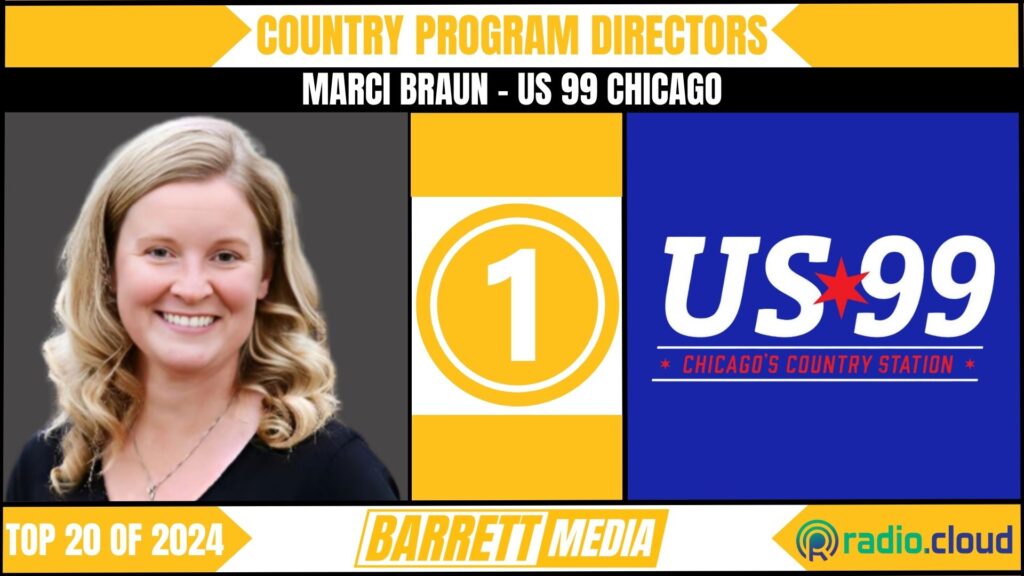
Marci Braun is the Program Director for Audacy’s US 99 WUSN Chicago. Her peers and industry executives recently voted her the number one Country Programmer in Barrett Media’s Top 20 Country Programmers.
I talked to Braun about both landing the top spot and her thoughts on The Country Radio Seminar.
“I was blown away, Jeff. It was so wonderful to be recognized by the industry, and I, in no way would have ever thought that I would be at the top of the list. It was just so cool.”
Braun enjoyed hearing from industry colleagues regarding landing the top spot.
“I love the reach that Barrett has because you hear from people outside of your format and people who have been in Country but left. I heard from a ton of people. It was very sweet. It was a great couple of days.”
CRS opens today at the Omni Nashville Hotel in Downtown Nashville. One thing that Braun looks forward to is all the music.
“The first time I went to CRS was as a music director, and for years and years, I was MD/APD. So, at the core, CRS is a wonderful chance for me to get exposed to new music and new artists and who the labels are rolling out. That has always been first and foremost for me. And I love it. I try to soak everything up, and I just get reinvigorated and excited again.”
Networking also rates high on the list of things Braun looks forward to.
“I love the networking, chatting with people, and hearing what they’re doing. I love hearing ideas of what they’re doing on the streets, on the air, and just checking in on friends.”
“You think with social media you keep up with everybody. You see what they’re doing on Facebook or Instagram, and you feel you don’t need to reach out to them because this is going on with so-and-so. But it’s always just really good to hug people’s necks and see them in person and make sure they’re doing well.”
Braun remembers a particular networking experience early in her career with Becky Brenner, now of Albright & O’Malley & Brenner consultants.
“When I was a baby at WNCY in Green Bay, I looked at the agenda and didn’t even know what the panel was about. I just knew Becky Brenner ran the world and was head of everything. She was on all these boards, and I had to meet her. I went to it and then hung out afterward and introduced myself.”
“It is very weird and very cool that now Becky and I are friends, and we hang out and we run together at CRS. Becky can stay out later than anybody, which is amazing. And trying to keep up with Becky Brenner is one of the fun parts of CRS as well.”
Braun encourages people to make the most of those opportunities.
“Don’t hesitate for a second; scan the rooms, the badges, and the name. And because you might not know what everybody looks like, there’s nothing wrong with looking at somebody and quickly looking down at the badge. There’s absolutely nothing wrong with that.”
Braun will be a part of this year’s Women’s Mentoring Breakfast.
“The wonderful thing about the Women’s Mentoring Breakfast is that it’s not just for women; guys come by too. It’s just a chance to sit one-on-one with people. It’s kind of like speed dating. You sit at a table with somebody in programming, marketing, records, promotion, or whatever.”
Braun remembers one mentee in particular.
“Paisley Dunn-Banks. She came over and sat at my table, and what I got from her was more than I think I gave her because she came in so wide-eyed and so excited about being at CRS and being around everybody and just absorbing all she could to take back to her market. And just her telling me how passionate she was about radio, why she got into it, and all that stuff. I took that to heart so much, as well.”
“I think that probably through networking, one of the most important things I’ve learned, and it’s just being around everybody at CRS, is to treat your people well. You hear the good and the bad at CRS. I love my job, or I’m struggling because of X, Y, Z. It’s really about taking care of your staff and your people and always having their back.”
I asked about memories that stand out over the years.
“I’ll say that I miss the Sony boat. I really do. I loved that. That moment when Trisha Yearwood was on Sony and she sang ‘Blue Bayou.’ Dead, killed me dead. It was fantastic. And I remember one of the first years I got invited on the Sony boat when they brought Martina McBride over to say hi and meet me. That was just mind-blowing.”
One common thread through this series is how valuable the annual research project is.
“The research presentations are invaluable. That is just learning where our listener’s heads are these days. It’s just super important.”
What advice does Braun have for first-time attendees?
“Don’t stay out too late—pot kettle black. I learned from Becky Brenner that you stay out; you’re still up for the first thing in the morning.”
“Don’t miss things. Plan ahead. If you’re lucky enough to go with somebody else from your building or your company, divide and conquer because there are going to be times when you want to go to two sessions at once, and it’s impossible. So, you say, hey, you go to this one, I go to this one, let’s meet up afterward to compare notes and share.”
I hope you have enjoyed the Countdown To CRS series. Enjoy your time in Nashville, have fun, and have a great seminar.
Barrett Media President Jason Barrett and Director of Strategic Partnerships Stephanie Eads will be there. They would both welcome the chance to meet you and say hi.
Barrett Media produces daily content on the music, news, and sports media industries. To stay updated, sign up for our newsletters and get the latest information delivered straight to your inbox.
As the Philadelphia Eagles hoisted the Vince Lombardi Trophy inside Caesars Superdome victorious as Super Bowl champions, the city of New Orleans, La. made history hosting the championship game for the 11th time. FOX Sports sideline reporter Jen Hale played a major role in the festivities from her hometown as she welcomed visitors to the city as a community champion. Hale and her contemporaries promoted messages of positivity and took part in volunteer initiatives to benefit the area surrounding the Big Game.
“You won’t find a culture like this anywhere else,” Hale said. “There’s so much personality, there’s so much unique experience to soak up while you’re here, even if it’s not Mardi Gras time. Just the melting pot that is New Orleans, the way that we do things.”
Throughout the week, Hale fulfilled a variety of roles and attended numerous events, including serving as a host of the NFL Media Party at Mardi Gras World. Reflecting on the assemblage of football fans and media members in the region earlier this month, she remarked that the metropolis maintains the feel of a big, small city that is facile to navigate. In fact, people are able to do multiple things in an afternoon and evening voyaging to several destinations in the area while forging invaluable connections and becoming immersed in traditions and customs.
Hale considers the week to have been a massive victory for the city that gave an authentic view of the spirit within New Orleans. As someone who has an avidity and passion for the city, she was honored to be involved in the proceedings with a list of responsibilities.
“It’s something I’m going to remember forever to have gotten to be part of all of that as a community ambassador,” Hale said. “I’m very involved in the fabric of New Orleans – I have a foundation here – so to see all of that come full circle and to have all of those points hitting at the same time for the Super Bowl, it was definitely a moment that I’ll carry with me for a long time.”
More than 6,000 media professionals were credentialed for the game, and there was significant coverage of the action generating impressions and engagement across digital media platforms. Furthermore, the NFL Foundation and New Orleans Super Bowl Host Committee contributed $3.5 million in grants to 65 nonprofit organizations in the area.
On top of that, FOX Sports broadcast the game and attained an average of 127.7 million viewers for its presentation, marking the all-time record for the most-watched television program ever recorded in the United States. Tubi accounted for an average minute audience of 13.6 million consumers, marking the most-streamed Super Bowl in history as FOX Corporation develops a direct-to-consumer streaming service.
“I think people are looking for escapes and reasons to come together, and sports is one of the few things that can provide that outlet,” Hale said. “So I think a lot of people who maybe aren’t necessarily the biggest football fans or aren’t football fans of the two teams that were in it – the Chiefs and the Eagles – it’s still a bonding moment to be with friends, family, to come together and forget the troubles of the world.”
Hale worked her 14th season on FOX NFL games, pairing this season with play-by-play announcer Chris Myers and analyst Mark Schlereth, and she became one of eight sideline reporters to reach 200 games. Commensurate with innovation in the sports media business surrounding technologies and points of distribution, the role has evolved to yield more comprehensive access and insights surrounding a given contest. Hale considers herself to be an extra set of eyes and ears for the production team during the game.
“If you’re having weather, field conditions are always huge. ‘Is there a drain system for the field? When was the last time the turf was replaced?,’” Hale prognosticated. “Folks aren’t going to just offer that up. You have to know those questions to ask, and then you have to know those sources to go to and you have to put in the time and effort to do it.”
Although some storylines are clear ahead of time, there are instances where reporters need to react to new developments and enterprise in real time. For example, when Antonio Brown decided to abruptly storm off the field at MetLife Stadium, Hale described what was happening and amassed more information. During her postgame report, she divulged that Brown was no longer a member of the Tampa Bay Buccaneers, and it marks the last game he played in the league before formally retiring last April.
“He was melting down with Mike Evans to begin with, and then that meltdown of course continued into what we all know it now was,” Hale said. “So you have to trust your eyes, you have to trust your gut, you have to develop sources. The NFL is a very protective world, a very suspicious world that people in that world don’t trust easily.”
Having a background in political coverage has assisted Hale in networking and developing sources throughout the league. While matriculating at Northwestern University to receive her master’s degree in broadcast journalism, she covered Capitol Hill for KNOE-TV and was later hired by the station. Over the years, she worked at several local outlets in the region, including WAFB-TV in Baton Rouge and WVTM-TV in Birmingham, honing her skills and gaining tangible experience.
“I think it was a real blessing to be honest with you because sports journalism these days, it’s not just about game analysis,” Hale explained. “There’s so much about sports that transcends life, so learning to ask the hard questions, learning to dig, learning to do your research, learning to be thorough, learning how to interact with people – they were all tremendous lessons that benefitted me whether I was covering sports or news, and now it’s a lot of fun.”
Hale worked as a correspondent for MSNBC and was assigned to cover Hurricane Katrina, and she was initially stationed in Mississippi since it aligned with the eye of the storm. When the levees broke though, she was moved to New Orleans and brought her institutional knowledge of the area to broadcasts for six months. Once learning that she would be reassigned to cover wildfires in California, Hale decided to stay in the area and contribute to the recovery.
In volunteering for various organizations in the area, she noticed a lack in entities focusing on young women in the area. This finding served as the impetus to create Sideline Pass, a charitable organization that supports scholarships and professional development for young women who excel in academics but have economic challenges.
“I’ve always loved the city, and it was important to me to be part of that process,” Hale said. “It felt like something bigger than you, and I think a lot of people who came to help felt the same way. We had a real influx of folks not from Louisiana, not from the south, who came in to do relief work and fell in love with the city, and so I ended up staying.”
Hale began anchoring a morning show with WVUE-TV with a 2 a.m. wake-up call, after which she would drive to Baton Rouge to work for free on select LSU Sports broadcast assignments. In a fortuitous string of events after additional work covering the New Orleans Saints, she was hired by FOX Sports as a sideline reporter without ever having to apply for the job.
“They saw that and offered it to me, and I say that with an asterisk because believe me, I have knocked on a million doors in my career – millions of blind résumés,” Hale said. “That was definitely a one-off, but it was funny. If I hadn’t volunteered and done those jobs pro bono, I probably would never have gotten my opportunity with big FOX.”
Upon joining the company, Laura Okmin and Suzy Kolber allotted time to speak with Hale on the phone to walk her through different facets of the role. It is a gesture for which she remains grateful, and she considers both of them to be mentors in the business to whom she receives inspiration and advice.
“As a female, you’re going to be criticized much more harshly for mistakes, so you’ve got to be uber-prepared, you’ve got to be uber-ready,” Hale said. “You’ve got to prove yourself in a different way. Every time you step on that field of play, pun intended, you’ve got to come with your game face on. There isn’t the margin for error for a female that there is for a man.”
One year after starting with FOX Sports, Hale received a chance to contribute to local broadcasts of New Orleans Pelicans basketball as a host and sideline reporter. The proposition was appealing since it was her local team and would not necessitate a move. At the time she accepted the position, there were rumors about the team potentially leaving the city, and she found it important to support the organization and safeguard a prospective departure. Hale has always enjoyed basketball, but there are clear differences between viewing both sports.
“With football, believe it or not being on the sidelines, a lot of times if you want to actually see the Xs and Os, being higher up, seeing that All-22 view [is] a better thing to watch 22 different players and the ball, what’s happening, where it’s going,” Hale outlined. “Basketball, you can see the strategy unfold from the sideline a lot easier than you can for football, and it’s a beautiful game.”
Hale recently transitioned away from the reporting role and currently works as a part-time host for Gulf Coast Sports & Entertainment Network. Reflecting back on the intersection of her local and national jobs, she articulates that it was a lot to balance two full-time obligations at once. Even so, she found a means to thrive in this arrangement through an unrelenting dedication to the craft.
“There’s just something about being part of a live game, even a small part, that’s just an irreplaceable energy,” Hale said. “It’s something you can’t manufacture in studio. If you’re experiencing fatigue, you’re in the wrong business.”
As the sports media ecosystem continues innovating and adapting with emerging technologies and altered consumer proclivities, Hale avers that a need for great reporting will always exist. Developing and possessing a versatile skillset allows business professionals to fill more positions and take advantage of these platforms. Even though Hale hopes to continue reporting on football in her career, she also wants to be able to have chances to take part in new ventures in the business surrounding game coverage, carrying a perdurable connection to the Big Easy.
“With all of these emerging platforms with this shifting workplace technology, the business is going to look very different in five or 10 years than it does now, and that’s exciting and you want to be ready for it,” Hale said, “so you want to be as diverse in your skillset as possible and ready and willing to pivot.”
Barrett Media produces daily content on the music, news, and sports media industries. To stay updated, sign up for our newsletters and get the latest information delivered straight to your inbox.
Few people on the planet have written about radio as much as “Creating Powerful Radio” author Valerie Geller.
The longtime news/talk radio host, programmer, and consultant has authored several books about being the best radio and podcast host you can be, with her latest endeavor — “Beyond Powerful Radio” — releasing its third edition recently.
In the latest edition, new sections are dedicated to aspects like podcasting, social media, storytelling, artificial intelligence, and platform synergy, among others.
As you might expect, things have changed slightly since the original release date of “Creating Powerful Radio” in 1996.
“In the beginning, I wrote a book just based on notes and columns that I had put together with ideas that worked,” said Geller. “Because when I got into the business, there wasn’t a book and the way you learned was you either succeeded by trying things or those things didn’t work. And so you learn the hard way. So I wish there had been a book somebody had given to me. So I wrote that book. And all these years later, it’s been translated into 11 different languages and sold hundreds of thousands of copies around the world.
“The reason why is because it’s not really a book about radio; it’s a book about communication and growing audiences, storytelling, engaging, how to hold up a mirror and reflect life. Because radio is just the vehicle. It’s really life, and stories, and people, and information, and entertainment, and all the rest that radio encompasses. And now podcasting. These are just delivery systems. So that’s why the book resonated.”
But the biggest change since the original debut has been technology and the attention span of listeners.
“Once upon a time, when radio, TV, magazines, and newspapers were really the way people got their information, that was really it. And now we’re in a very different position, where they have a very, very short attention span. You get maybe three to five seconds before the audience zone out or two tune out if you don’t engage them instantly.”
Valerie Geller noted, however, that there is a remedy to that problem that she addresses in the latest edition of “Beyond Powerful Radio.”
“We have to have instant engagement. Instant engagement,” she reiterated. “You can’t afford one boring second. So from the minute you open the microphone, you actually need to answer the question ‘Why should I listen to this?’ or ‘Here’s why you need to listen to this.’ We have to make it all about engaging the audience through the power of not being boring. All the work I do is based on three things: tell the truth, make it matter, and never be boring.
“Part of never being boring is peeling back every subject or topic or interview guest and saying, ‘How is it relevant? How does it matter and how do you care about it? And then how are you going to make the listener care?
“The difference now is no longer are we sitting on the mountain telling people what they’re going to be listening to. We have to engage the audience and almost make a bid for their attention. And we have to get, keep, and grow audiences by making it all about them.”
The key to engaging the audience is a simple mindset, Geller argued.
“There are techniques to never be boring. The number one technique is just to use the word ‘you’ instead of ‘I.’ ‘Have you ever’, ‘can you imagine’, ‘if you were standing here’ instead of, ‘I’m standing here my kids,’ make it your kids that you’re talking about. And that makes a real difference. And these are solid techniques, and they can be used in news, talk shows, hosts, producing, and messaging. Or any kind of online messaging.
“But it’s always about what the listener gets and what the audience gets, and just never being boring … One of the beautiful things about radio and podcasting is that it’s the imagination medium.”
Geller noted that while many podcasters would never consider themselves radio hosts, and vice versa, the two mediums aren’t dissimilar. She shared that all of the updated techniques in “Beyond Powerful Radio” apply to both the radio and podcasting spaces.
“The core essence of focus, engage, opinion, position, storytelling — which is one of the models — speaking visually, engaging the listener, never being boring, being authentic, being real (all align for radio and podcasting). I think that the digital world has changed our tolerance for fake. We have no tolerance for fake. The audience wants real. They want to feel like they have a trusted friend or someone they know that’s on the air.
“They want to feel a connection. And they want to be informed, entertained, inspired, persuaded, and connected, and feel that they know you. The hallmark of a great host is if the person hosting is a total stranger, but you listen to the show — whether it’s a podcast or broadcast — and you feel you know them because you hear the program.”
Barrett Media produces daily content on the music, news, and sports media industries. To stay updated, sign up for our newsletters and get the latest information delivered straight to your inbox.
It’s all about the biggest topic of the day: Topic A! It is the biggest cume generator that we have. It just is. If your news/talk radio station is not on the story of the moment, you are leaving dollars on your desk.
If there is something big going on, you must be talking about it. This is easy for me to write and sometimes it is an art to find the biggest thing.
The biggest news story is most likely not some happening at the legislature. Most people very rarely get riled by happenings in the state or federal Capitol. This is not at eye level with their concerns of the moment. I am often surprised by how tone-deaf many great hosts can be on the minor interest in doings at the Capitol. I am not saying to not discuss it, but it is rarely the biggest topic of the moment. In fact, I find that the Capitol has easy pickings for actual topics which sometimes requires minimal show prep.
I also know that many news/talk radio hosts have a certain affinity for politics. Very rarely does this provide legitimate Topic A. Be careful about confirmation biases. Since hosts are often talking about politics, it is easy to connect any feedback as confirmation that we are discussing the biggest story of the day.
Some of us have had big winter storms hit over the last couple of weeks. Schools are closed and people are trying to get out of the house to work. Did you take calls on how the snowplows are doing? Does everyone have power? Did your community open warming centers? What games do you play with the kids on snow days? There are a dozen topics and perhaps a dozen ways to approach each one. I can also guarantee that your local TV station is covering this poorly. It is a win for news/talk radio. When there is a big news story, it is automatically an opportunity to grow your audience. If you are discussing the education subcommittee vote while your community is receiving a foot of snow, you have failed.
When we are handed a huge local news story, occasional listeners will be checking your station out. If you are discussing something completely different, you have lost a listener. Have you looked at your station’s cume ranking? A lot of hosts brag about their show’s time spent listening figures. If you compare the number to cume, that figure is not that impressive. Every host and program director in news/talk radio needs to be really honest about the truth. Our format features: news, traffic, and weather. These ingredients are cume Magnets. How much cume does your station have?
Every big story is your station’s free marketing to grow your audience. Most news/talk radio stations do not have a huge marketing budget. How do you add new listeners? Two ways: perfect execution of Topic A and sports. If your station has the big college or pro sports rights, that will bring new listeners to your station. Speaking of sports programming, sadly, many college contracts give little to no inventory to promote your station’s product. With the professional team avails, claw back some inventory for station promo inventory. This is your station’s marketing budget. Make those promo avails magical.
Growing cume should be at the center of your station’s strategy. This is not a wish upon a star moment either. It is a conscious mindset for all of us to consider and implement. If your station’s demographics are rapidly aging, it is imperative. I have been doing this for a hot minute. It really was not that long ago when news/talk radio stations were in the top five in the Men 25-54 demographic. That is almost a pink elephant in 2025. We can go over the reasons but ultimately it is that as a format we never changed our presentation.
We also have been universally focused on politics and not Topic A. We also stopped talking about the lifestyle of people in their 40s. It was apparent with the disconnect following Kendrick Lamar’s Superbowl Halftime Show. Kendrick Lamar has been a known commodity for almost 15 years. Hey, he is not my cup of tea, but I know why the NFL invited him to perform the halftime show.
The median age for an NFL television viewer is around 55 years of age. The NFL understands that their future is with people who are somewhat under the age of 55. We have challenges in our format. You, yes you, have the imagination and the talent to carve the future path of the news/talk format.
I want to give you a challenge. Close yourself off for one hour a week to think through your station’s execution or show’s execution. What can you do better? Is my station focused on the biggest thing of the moment? Imagine what is next.
Barrett Media produces daily content on the music, news, and sports media industries. To stay updated, sign up for our newsletters and get the latest information delivered straight to your inbox.
CNN is a liberal news organization that wants to watch America burn, and The Lead with Jake Tapper is part and parcel of that mission.
I don’t believe that. But lots of people who — I truly also don’t believe they mean it — say it somewhat frequently in conservative media circles.
Few cable news personalities outside of Rachel Maddow capture the ire of conservative media members like CNN host Jake Tapper. Is it warranted? I set out to find that out by watching a recent episode of his show.
The first thing that caught my eye about the program was something I don’t think I’ve ever really noticed before about a cable news host or anchor. And it’s that Jake Tapper is keenly aware that he’s on television. I recognize that that’s a “No s—, Sherlock” statement, but Tapper uses his facial expressions in a way few other hosts, if any, do.
I’m a sarcastic and skeptical person by nature. It’s clear in the way that Jake Tapper operates that he is in the same boat.
And I think skeptical is a good quality for a medium member to possess. I don’t think we should just take people — whether it be lawmakers, elected officials, or those in the news — at their word. Jake Tapper certainly doesn’t during his program.
Tapper featured conversations with members of both sides of the political aisle, which felt like an important thing to do in the wake of Vice President JD Vance’s comments in Europe and a report that the United States asked Ukraine to hand over half of its future mineral reserves. In a question to Rep. Mike Turner (R-OH), Tapper shared details of a report from The Washington Post detailing that allegation. He concluded it by simply asking “Is that correct?” It’s a closed question, which is supposed to be a bad thing during an interview. But it is also — more importantly — as direct of a question as you can ask. “Is this true?” isn’t asked enough these days, in my opinion.
And you can see on his face that he is intently listening to the response from the Congressman. He nods at times when it makes sense to nod, he looks skeptical when it makes sense for him to look skeptical. And in his follow-up question, he gave the representative a chance to clarify: “So no one in the delegation gave (Ukrainian President Volodymyr Zelenskyy) a paper to sign?”
It nails Turner to his answer. It is a yes or a no. And the Congressman said, “No, we did not.” That means someone is lying. It’s either the reporter from The Washington Post or a United States Congressman. That feels rather newsworthy, to me
Which, ultimately, is Tapper’s job. To hold people — anyone, really — to account. If a document someday presents itself, or we see footage of American government officials attempting to get the Ukrainian President to agree to this deal, Turner looks like a fool, a liar, and a flat-out scumbag. If no further evidence ever shows up, then Turner told the truth, and Tapper allowed a sitting U.S. Representative the chance to exonerate themselves.
So, while it might not be a popular way to operate, it appears to me as if Jake Tapper is in search of the truth. And in today’s incredibly partisan news media landscape, we could really use some more of that.
Now, is The Lead with Jake Tapper the chief anti-Trump show? In some aspects, yes. But that doesn’t instantaneously make it wrong. Believe it or not, and I know some MAGA media members will never believe it, not everything Donald Trump does it perfect and correct. The idea that Jake Tapper is some enemy of the state because he points out things that are obviously going poorly, or are obviously hypocritical doesn’t make him some “left-wing activist with a press pass,” as I’ve heard him described. It makes him a logical and rational human being.
Is there a liberal bias in his show? Sure. But I don’t see conservative media members complaining about a right-wing bias on Fox News. If you’re principled in your stances and thought processes, you don’t want any bias from any news outlet. But that’s not what gets ahead in the news media in 2025. So, Jake Tapper has picked a side. Just like so many dissenters. And if you take umbrage with that, I think taking a look in the mirror is as necessary as criticizing someone else.
Barrett Media produces daily content on the music, news, and sports media industries. To stay updated, sign up for our newsletters and get the latest information delivered straight to your inbox.
Nexstar Media Group has announced the appointment of Samantha Osborne Reynolds as its new Vice President of Political Sales.
Osborne Reynolds joins after spending the past 17 years in political strategy, advertising, communications, and sales. She most recently served as the Vice President of Political, Advocacy, and Automation for the E.W. Scripps Company, after joining as the Senior Director of National Sales.
At Scripps, Samantha Osborne Reynolds was based in Washington D.C., and helped launch the company’s connected TV political sales team.
“Nexstar has an unmatched collection of television and digital assets, the ability to reach every TV household in the country, and unique product offerings that are second-to-none,” said Osborne Reynolds. “My years of experience have prepared me well and I am looking forward to building a talented, innovative, and aggressive political sales team, creating new ways of approaching political advertising, and expanding upon Nexstar’s legacy of success. We will deliver impactful results for local, regional, and national candidates and campaigns, and I look forward to making the most out of this new opportunity.”
“Sam is a strategic thinker, deeply experienced, and the perfect person to lead our new political advertising sales division,” added Nexstar Senior Vice President of Advertising Sales Jon Camera. “Her dynamic background and innovative approach will help us to sharpen our focus on national, digital, and connected TV political advertising sales and enable us to provide customized solutions to meet the changing needs of our political clients. Nexstar has a history of success in driving results through political advertising, and I am confident this new political sales division will thrive under Sam’s leadership.”
Barrett Media produces daily content on the music, news, and sports media industries. To stay updated, sign up for our newsletters and get the latest information delivered straight to your inbox.