Chicago is a fascinating city with incredible views and strong spirit. It’s one of my favorite places to travel to in the country. So when I learned that the Podcast Movement Conference was being held there, I knew it was a trip I had to make. The feedback on last year’s event was positive and as the world’s appetite for audio grows on a daily basis, I figured there’d be some valuable lessons to learn.
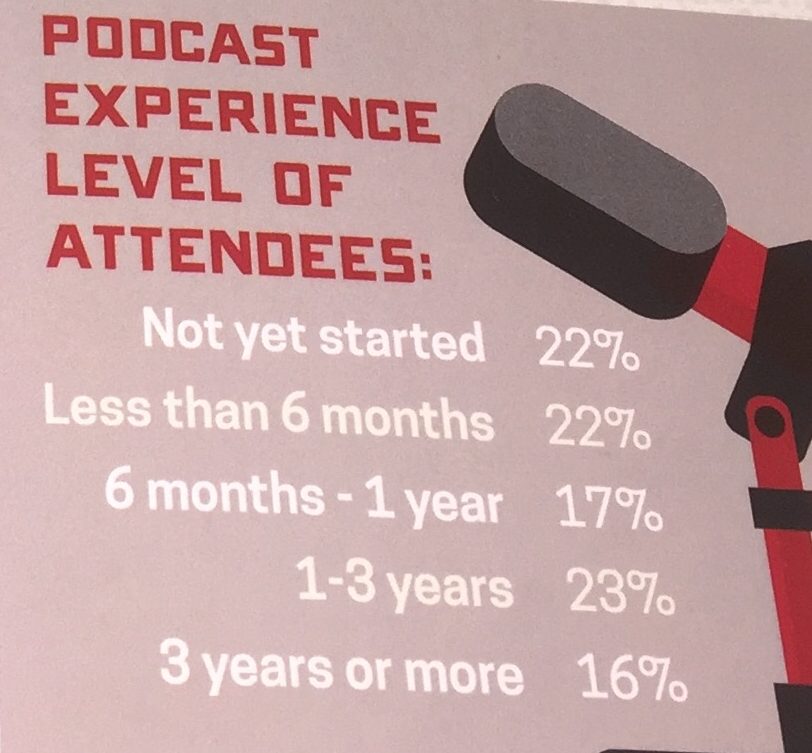 Although the windy city was transformed for a few days into the home for heat and humidity, that didn’t temper the enthusiasm inside the halls and rooms of the Hyatt Hotel. People were genuinely excited to be in town for the event and many of them were relatively inexperienced in the podcasting space but hungry to learn more.
From session to session content creators and podcasting executives discussed the benefits of storytelling, passion, artistry, self-expression, and engagement. Observers listened and asked questions geared towards helping them produce better content to further connect with audiences and advertisers. There was even a stronger showing of support from the radio industry which many who I spoke to considered a positive step for the podcasting industry.
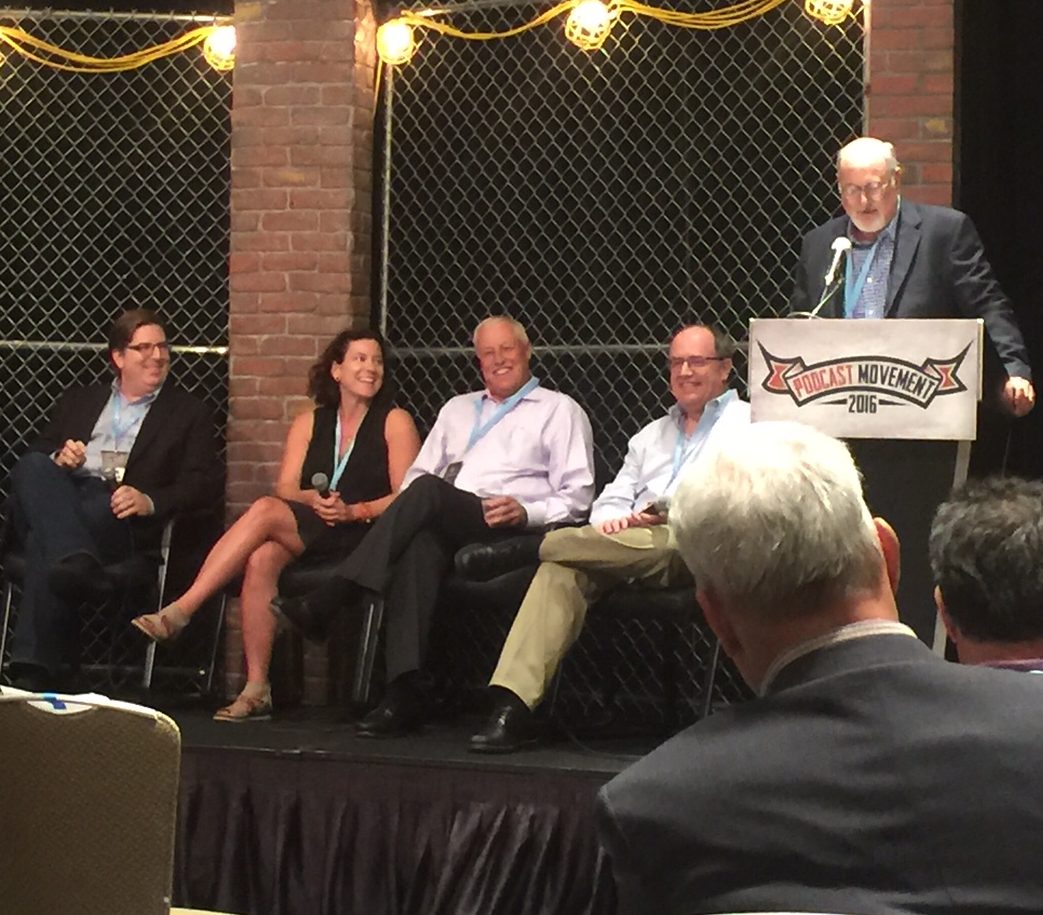
Much of the credit for the event’s success belongs to Dan Franks and his staff. The sound quality was excellent, the speaker’s were great, the light displays and stage structures looked sharp, and the materials given to those who attended were helpful. Even the sign in process was smooth. They say preparation is half the battle in delivering a great event and the organizers of the conference had their act together.
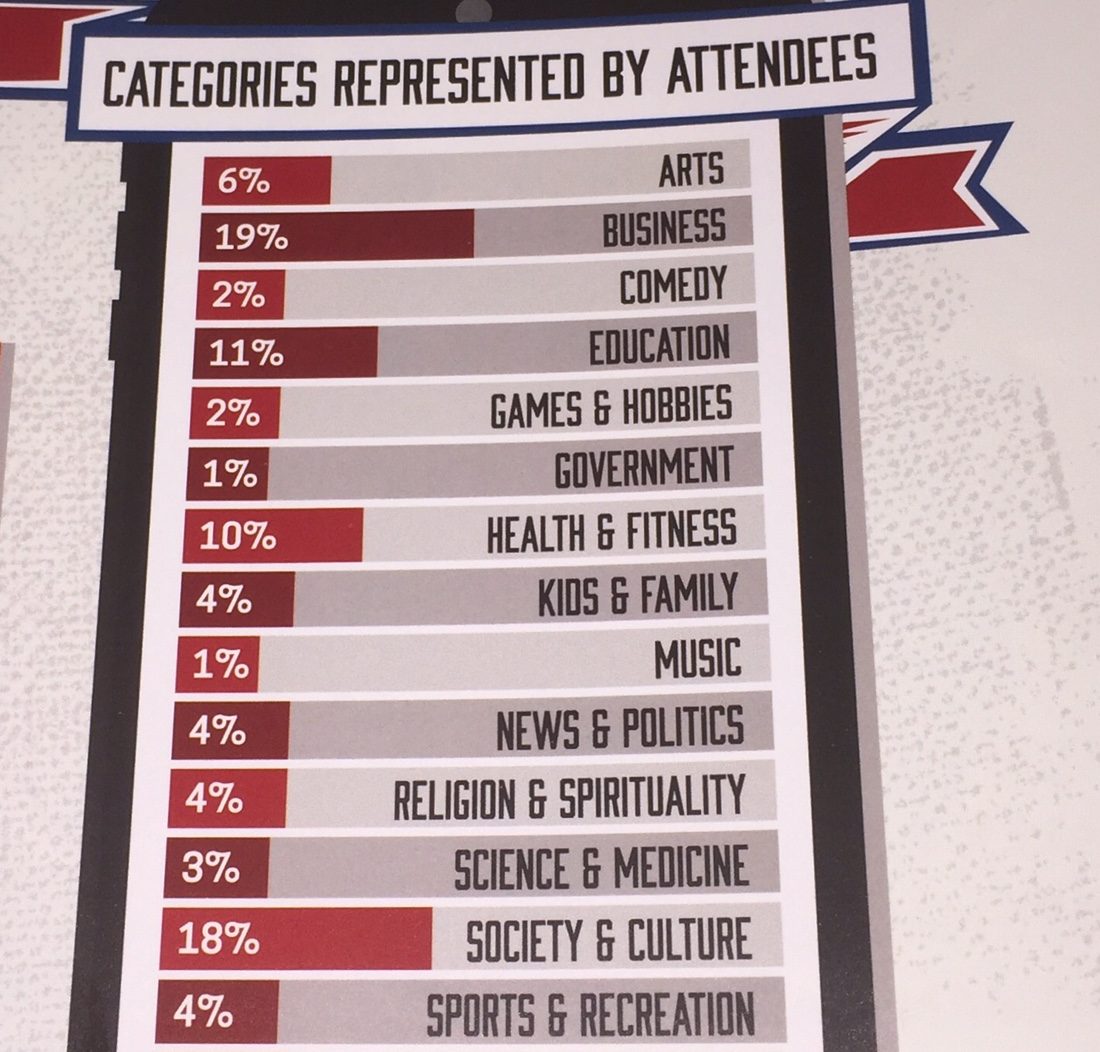 However, there were a few things that I believe can still be improved, specifically in the sports radio universe. Did you know that of all the attendees at this year’s conference, only 4% came from the sports and recreation field? If myself and wrestler Colt Cabana didn’t attend I wonder if that number would’ve been 2% or lower. Aside from the weak showing by sports attendees, there were a few other items that caught my attention. Some were positive, some were not. Here are some of those key takeaways.
Attendance/Enthusiasm – One of my favorite parts of this experience was simply observing how invested people were in the conference. There were nearly two thousand people in attendance and a genuine joy was felt throughout the room. Attendees were eager to listen, ask questions and take the knowledge back home and apply it. Some of that is the result of inexperience but it also reminded me that the passion for creating and listening to audio programming remains alive and well.
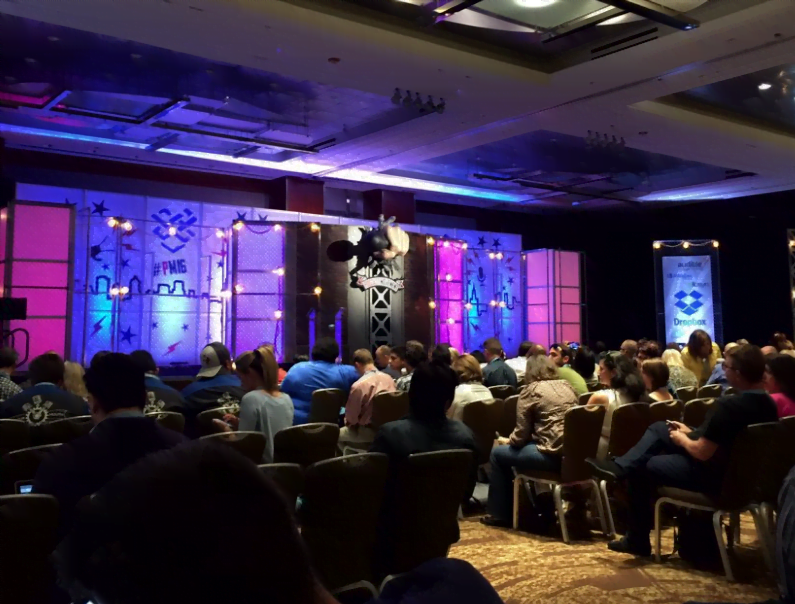 Compared to most radio conferences I’ve attended, this one had a better energy in each room. People valued the advice being provided by each expert, and seemed proud to be associated with the event. It felt like a three day celebration for a family of podcasters.
This is an issue for many current radio conferences. Industry folks attend them with preconceived notions of what will take place and they leave without being surprised. The same old cliches are offered repeatedly (content is king, distribution is queen, play the hits, radio is a thriving business, etc.) and it’s debatable whether the majority of people are excited to be there or view it as an opportunity to get away from home for a few days and reconnect with industry friends outside of each session.
Networking is certainly important but a better presentation on-stage featuring some new names, faces, and voices might keep people a little more interested.
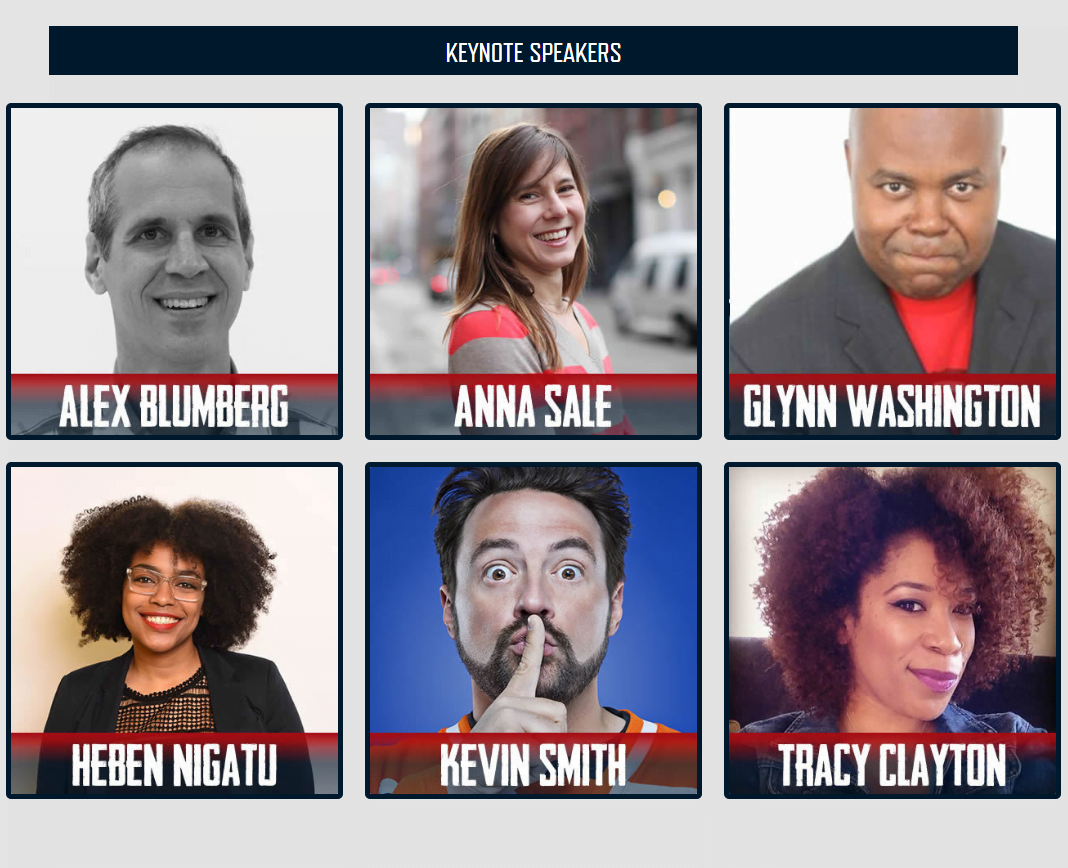 Speakers and Panels – Upon entering this conference I knew only one of the featured speakers – Kevin Smith. His performance alone is worthy of an entire column but that will have to wait for now. I didn’t get to hear everyone, but I did walk away impressed by Smith, Glynn Washington, Alex Blumberg, and Anna Sale. Each focused on something unique and important to them and gave those in attendance a lot of information worth using and sharing.
Sale, hosts a podcast called “Death, Sex, and Money” and focused on the similarities between creating a podcast and having a baby. She shared advice on starting a show, building a community, developing a brand, and improving the content. Her point about each host needing a good editor and being willing to share their messy drafts and accept critical feedback was on point because it’s exactly what a good talk show host does when working with a producer. If you think a producer’s there simply to screen calls, dial up the guest and fetch you coffee, then you’re missing out on the benefits of their involvement.
Washington meanwhile, hosts a podcast called “Snap Judgment” and instantly got my attention when he uttered the line “I don’t care about podcasting….I care about stories“. Given that we were at a podcasting conference, the room quickly took notice. He focused his time on the power of storytelling and shared details of his personal experiences while providing a few interesting video samples. One in particular of storyteller Josh Healey really stood out. You can watch it by clicking here.
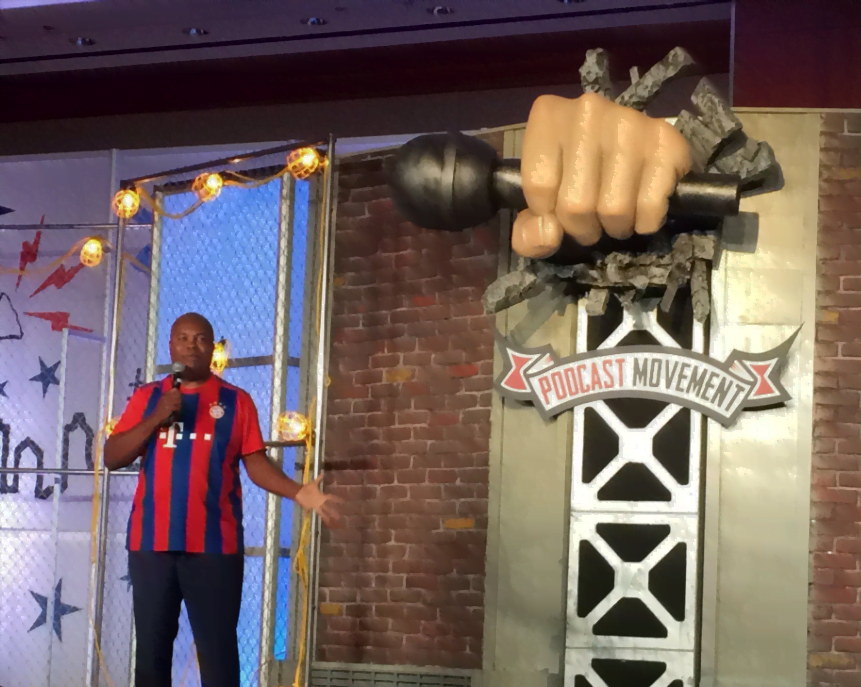 What I loved about Washington’s speech was that it was deep, authentic, and powerful. He dove into the troubles happening in the world and described how storytelling can help in the healing process and influence change. He compared telling a story to picking scabs, and reminded the room that the best stories are developed from smaller events.
Then came my personal favorite, Kevin Smith. The filmmaker and actor took the stage to explain why he loves podcasting and how he got started. From the second he took the microphone to his final word, he had the audience on the edge of their seats. Smith was passionate, informative, funny and unfiltered and caused many to laugh, listen, and even cringe as he worked in at least one F-bomb every 5-10 words. His swearing was so over the top that attendees took to Twitter to engage in dialogue with others in the room about how many curse words he’d deliver by the end of his session.
Tossing out F-bombs doesn’t make a speech unique, but his style and insight was refreshing. Kevin talked about his enthusiasm for the podcasting platform and related his success at it to the way he navigated through a successful filmmaking career. He offered a lot of life advice and memorable quotes that could have easily filled up the walls of many NFL locker rooms.
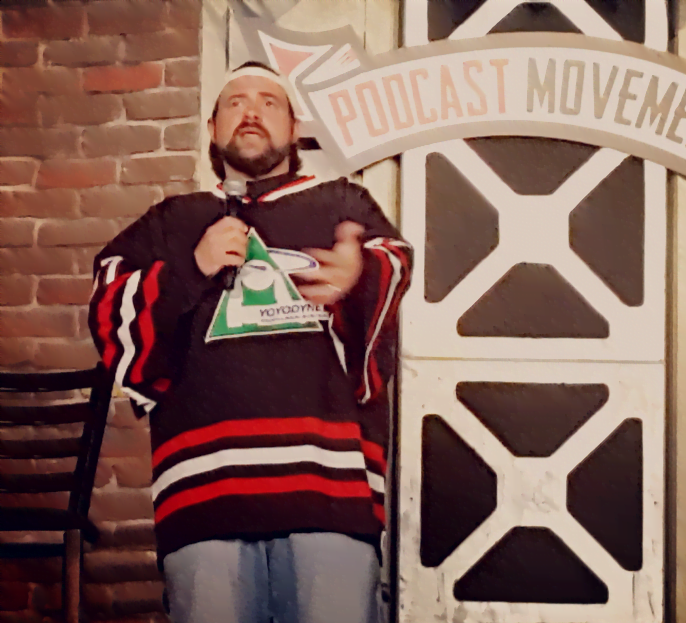 Along the way Smith served up some doozies including ‘failure is just success training‘, ‘there are two paths, creation and destruction‘, and ‘the first step to self-expression is losing the fear‘. He encouraged people to not be afraid to create a podcast and reminded them that the beauty of doing it is that it doesn’t require talent. As many wondered aloud how that could be, Smith brought it home by adding ‘it takes talent to build the walls inside this room and get stuff not to fall down, but it doesn’t take talent to have a conversation…it doesn’t even take talent to stand on a movie set and play Batman. Ben Affleck f’ing did it.’
Blumberg closed things out by discussing the future of podcasting, the reasons people seek out audio content, and the buzz words that are part of a successful podcast. His line “The first golden age of audio was radio, the second is podcast” drew a strong response and it was clear that he’s very optimistic about where the podcasting business is headed.
I particularly enjoyed his discussion on the power of empathy and how audio/radio can be an agent of empathy and understanding to help the world heal. He highlighted audio’s ability to provide stronger narrative and companionship than any other form of media and his mixture of humor and intelligence struck the right balance and perfect tone for closing out a successful three day event.
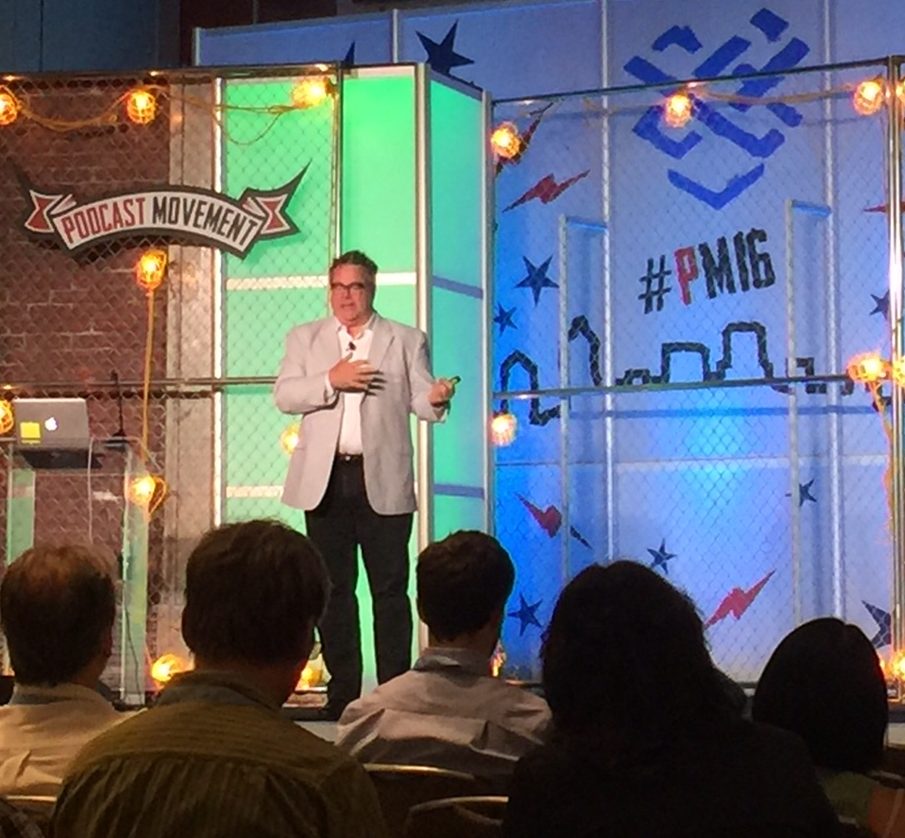 Too Much Quantity Not Enough Quality – It’s no secret that the word ‘podcast‘ has become trendy in audio circles. Everyone is eager to do it and as much as I love the fact that there are thousands of new options for people to enjoy, it’s difficult to separate the good from the bad. Eric Nuzum who oversees the Audible division for Amazon put it best when he said it’s like going to a flea market and sifting through the trash to find the treasure.
In some ways it’s no different than YouTube where millions of people upload video content and some become future stars and others remain invisible. Does that matter? Should it matter? That depends on who you ask.
For the business to make a dent long-term it needs to offer more Adam Carolla’s and Bill Simmons’ to advertisers and audiences, and less Johnny and Freddy Broadcaster’s. It also needs to continue prying great talent from terrestrial radio, just as satellite radio has done over the past decade.
One area where this is a real problem is in the sports audio space. The quality of sports talk talent on radio compared to podcasting isn’t close. Podcasting companies don’t seem to be focused on sports even though it’s a massive business. I sat in sessions where Audible, Gimlet, Midroll, Spotify and other groups shared tips, ideas and details of forthcoming projects and none covered sports programming. The only time I heard it even mentioned was during a session which featured Traug Keller of ESPN Audio and Greg Strassell of Hubbard Radio. Why sports isn’t a bigger focus I’m not sure.
 Revenue and Growth – Arguably the biggest statement of the entire conference was that radio is a 2 billion dollar annual business whereas podcasting is a 100 million dollar industry. Even if those numbers are slightly off, there’s a huge disparity between the two. That begs the question, is podcasting really the next big thing or a cool niche idea? Most people don’t disagree that on-demand audio interest is rapidly growing and being a content provider is important but whether or not it can be monetized and developed into a thriving business remains questionable.
In watching many of these sessions, I learned that it can be very uplifting for people to hear thirty minutes of positives about the industry they’re in. There’s something invigorating about being a podcaster and having control over your own storytelling, self-expression, authenticity, and not being a slave to advertisers. It’s sort of like being a writer and being able to blog without a newspaper editor reining you in. Or being an independent musician and playing the songs you feel like playing rather than the hits that label representatives require you to so they can sell your next album or single.
 But here’s your reality check. The world isn’t all sunshine and rainbows, and the economic returns in the podcasting world are low compared to radio. If the financial numbers echoed throughout multiple sessions are accurate, that would make the radio industry 20x more profitable than the podcasting business. That’s enormous.
As I thought about that disparity I wondered how the space could become more profitable without muddying up the content experience. Making matters worse is that ad agencies are still unsure about investing bigger dollars on the platform. They’ve increased spending in recent years and are expected to do so in the future but the level of spending versus other traditional media is lower.
So when does it bottom out? Is podcasting a $200 million dollar business? $300 million? $500 million? Can it surpass where radio is? Or is its present performance the best it has to offer?
 My Final Thoughts – The radio industry has a big decision to make. Does it go all in on podcasting or take a cautious approach? With dashboards and desktops continuing to represent where users spend the majority of their time consuming audio, and the ad community slowly increasing spending rather than making sizable investments, it’s hard to picture radio groups putting podcasting on equal footing with their over the air products.
In the past, radio has been slow to adapt but this is a space that is difficult to judge. It’s not as simple as looking at whether or not audiences are interested in the content or whether people will listen more on phones, tablets and digital dashboards. I do believe the platform is growing, and I love that the user experience is clutter free and able to be enjoyed whenever the user wants to listen. The number one question though is how can it be monetized better?
I’ve yet to see anyone step forward with a secret recipe to excite advertisers. Shows in this space are generally shorter and delivered less frequently, and advertising opportunities inside of the programming are fewer. It may be appealing to the user, but it’s a lot harder to justify spending larger dollars on it for sponsors and operators.
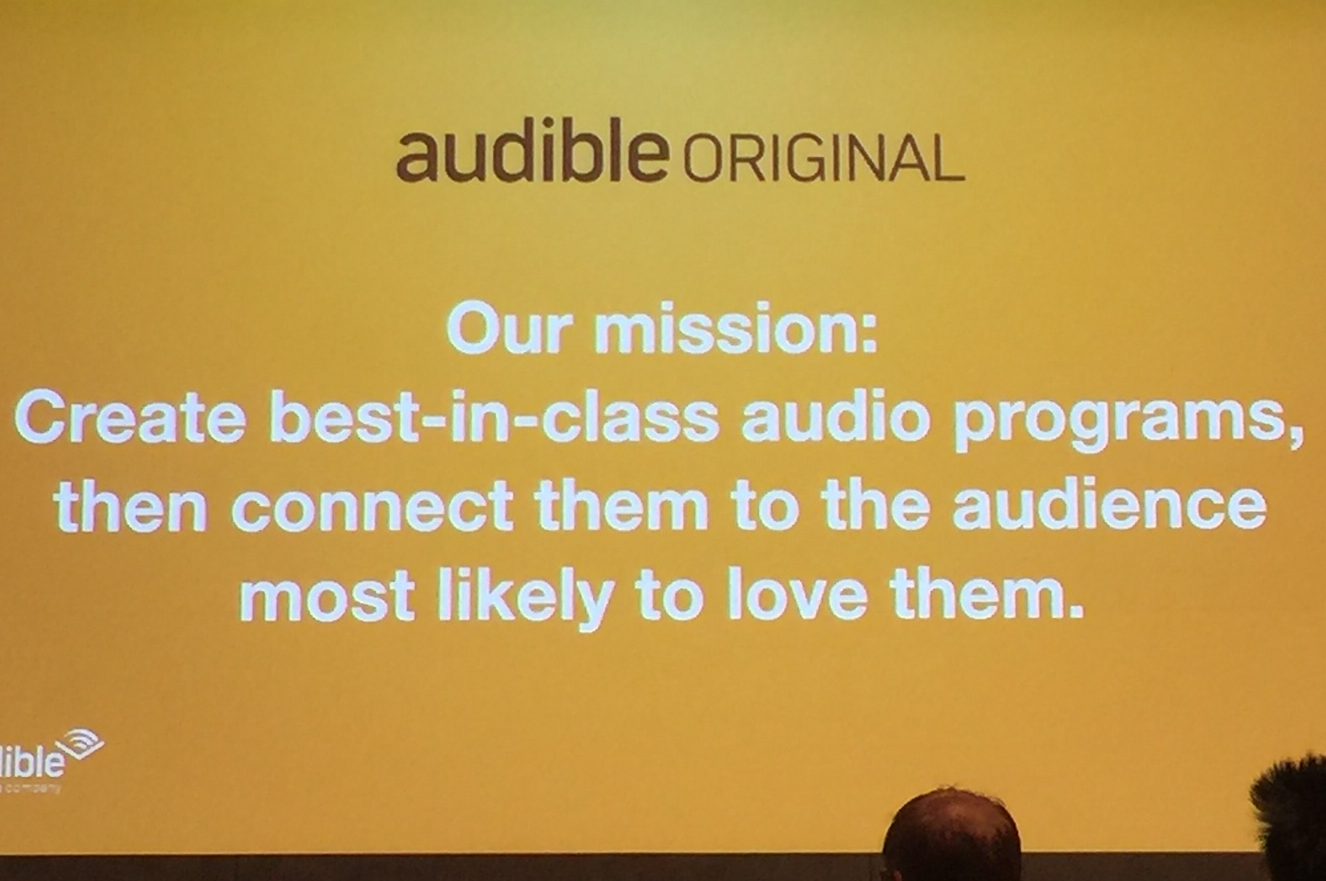 So how do you fix it? Will the public pay for it? Audible is banking on that with the launch of their new service ‘Channels’ which offers 40 original high-quality shows. Amazon believes that if you provide a great content experience and target it to people who find value for that particular form of programming, they’ll invest in it.
Other suggestions for monetization include developing branded content, increasing live reads, developing sponsored contests, creating live event revenue opportunities, and providing merchandise. Those all sound great and should help but they’re all things that are offered in radio.
The fact of the matter is that despite being in existence for quite some time, podcasting brands are still relatively unfamiliar to a large number of people. To influence a change in spending or listening takes time, promotion, and most importantly – a lot of money!
Radio has decisions to make about its own level of confidence in the podcasting business. Groups such as Hubbard, ESPN Radio and E.W. Scripps have placed their support behind it, and others offer on-demand audio on many of their brands and appear intrigued by the idea of becoming larger players in the future.
 As radio contemplates its viability in the digital audio business, the podcasting community needs to understand the importance of walking before running. Replacing the radio business isn’t going to happen tomorrow or the next day and expecting advertisers to make drastic changes in the way they do business doesn’t happen without effort, patience, and sustained performance. The space is attractive to listeners and creators, and if good judgment is used in the future, and more quality programming is provided, who knows what the industry’s ceiling is.
The one glimmer of hope I’ll leave you with is this. It’s easy to suggest that podcasting won’t surpass radio. A case can easily be made today to demonstrate why its economic potential is limited. However, in 2000 you’d have laughed if I told you that the UFC in 10-15 years would pass professional boxing in terms of popularity and revenue growth.
If you missed it, the UFC was purchased on Monday by WME/IMG for 4 billion dollars, after initially being purchased in 2000 for only 2 million. I’m not suggesting that podcasting will be to radio what the UFC became to boxing, but no one truly knows what the long-term economic potential is. As long as quality audio programming continues being created, and audiences continue clamoring for it, that’ll help determine if podcasting is the next big treasure or fool’s gold.