If you haven’t heard Mike Francesa’s interview with Katie Nolan you need to stop what you’re doing and listen to it. It is fascinating and one of the most refreshing one-hour conversations I’ve listened to in a long time.
Why might you ask?
Because it not only covers every single subject that would be of interest to Mike’s audience, but his unfiltered responses remind us of why he’s been one of the most dominant forces of all-time in this industry. I give a ton of credit to Katie for being well prepared and doing a great job of listening and guiding the discussion into the right locations.
When it comes to Mike, he has a large amount of fans and critics. That’s to be expected when you perform up to thirty hours per week on the air for nearly three decades in the nation’s number one media market.
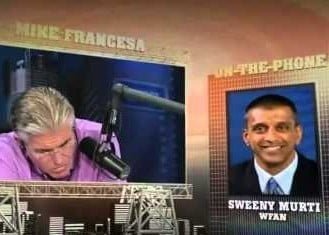 Some take jabs at him for being wrong with some of his predictions. Others point out how he once fell asleep on the air for nearly fifteen seconds while interviewing Sweeny Murti. Countless others criticize the fact that he’s not active in the social media space, relies heavily on phone calls, and is a beneficiary of getting into the format early.
Say what you will about “The Pope of New York Sports” but his resume of success is unmatched. When you build the type of brand that Mike has, it’s common to have others poking holes in your performance.
The reality in life is that most people like to see David upset Goliath. It’s why teams like the New York Yankees, Dallas Cowboys, and the Los Angeles Lakers draw the amount of attention that they do. Legions of fans recognize and appreciate their greatness but many love to see them crash and burn.
I grew up listening to “Mike and the Mad Dog” and the show inspired me to pursue working in this industry. I was fortunate to live in New York and watch as the format took off and morphed into the juggernaut that it has become today. WFAN played a strong role in sports radio’s growth because they did a masterful job of making New York listeners feel like they were a big part of the experience.
 When you listened to WFAN, it felt big and important. The personalities seemed larger than life and when you called in and became a part of the show by sharing your opinion with the hosts, there was a sense that your voice mattered and the local teams took notice. It felt as if the radio station’s airwaves were the place you’d turn to for holding hold players, coaches, teams and executives accountable for their actions and/or performance.
Truth be told, before I ever considered working in in this business I preferred to listen, but after sitting on the sidelines observing for eight years, I finally took the bait and called in one day after the Knicks defeated the Bulls and Phil Jackson was whining about the referees. I thought I had a good angle and when I presented it to Francesa he absolutely crushed me. Just thinking about it still makes me smile.
As the year’s have passed, the radio station has remained one of the best in the business. They’ve dealt with additional competition, changes in ratings methodology, and a loss of some of the industry’s most iconic broadcasters and play-by-play partnerships, but through it all they’ve remained highly successful.
Whether you care for Francesa’s style and show though isn’t what we’re here to discuss today. Instead I want to focus on some of the key points he made during his conversation with Nolan because they touch on a scary reality that is facing our business.
 When asked about the possibility of a “Mike and the Mad Dog” permanent reunion, Mike said “I don’t think we would be the obstacle. I think the business is the obstacle. They don’t want guys like me in this business anymore. They don’t want stars. They don’t want guys who are making a lot of money. They want a bunch of cookie cutter people who they can control that aren’t any trouble. They want a bunch of nameless faceless guys. They want the events and rights fees to carry the day and make the sportscasters interchangeable. That makes it a tough business.”
Let that sink in for a second.
The top performer in the #1 media market in the country who has delivered big ratings for nearly thirty years believes operators are less interested in paying for major brands and top talent.
Is he right? To a certain degree I think he is.
We’ve all heard the phrase “you get what you pay for” and in radio’s case, the future is going to be very unforgiving if the best performers aren’t available to be heard. There are many content options out there now, and new media companies will pay high profile talent and offer them a stage to perform on if they can help them grow their business.
 Don’t believe me? Just take a look at the way Netflix, Amazon, iTunes, Pandora, Spotify, YouTube, Facebook and Twitter have blossomed. Just last month before Howard Stern signed a new deal with SiriusXM, there was talk that Apple/iTunes was considering making a run at him.
When Bill Simmons and ESPN split up in 2015, many thought he’d have lesser options but then HBO entered the picture. When Colin Cowherd’s run with ESPN was coming to a close, he had conversations with MSNBC before agreeing to a deal with Fox Sports 1.
Years ago Blockbuster and Hollywood Video, record companies, and the entire newspaper industry thought they were untouchable but once the internet took off and new media outlets started to emerge and invest in content, talent, and a better experience, things changed quickly.
I could be wrong but when Mike says he doesn’t think a reunion with Chris would be possible based on economics, he’s right as it applies to radio. But if digital media or television enter the picture that could be a different story.
And that’s a shame because few have possessed the ability in radio to draw in listeners the way Mike and Chris did. When you add up their talent, chemistry and ability to inform and entertain, it makes for an incredible program which can make a brand a LOT of money.
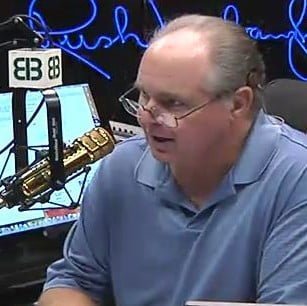 Would a company prefer to spend less? Of course. I’m sure SiriusXM wishes they didn’t have to pay Stern a king’s ransom. The same holds true for Premiere Radio Networks with Rush Limbaugh, and any great television network which spends big money for top flight personalities who attract a large number of eyeballs.
But if you add up the expenses for any of those shows and compare them to what they generate for ratings and revenue, I guarantee you they’re making money off of their investments. Media companies don’t stay in the business of spending millions of dollars on talent unless they’re making millions more themselves.
The other part of the conversation that I want to examine is the part where Mike discussed how important the ratings are to him. It’s a lesson for every single talent to pay attention to.
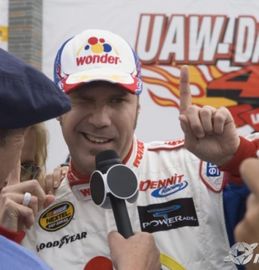 When asked about the ratings game and how it affects his show’s content, he said that he doesn’t let it change his overall approach but that he does make tweaks and is always aware of how the show is being consumed. His mindset going into his program each month is that they have one job to do – finish first! Not second, third, fourth or fifth which most others would consider a big success, first! When I heard him say that I couldn’t help but think about that classic Talladega Night’s line “If you ain’t first, you’re last“.
But I digress!
That’s a lot of pressure to put on one’s shoulders especially in a market like New York City. Mike mentioned to Katie that he once received a phone call from an executive who told him “I pay you to finish first” after he came in second. It didn’t make him happy but he understood the point.
 From where I sit, I love hearing that. It’s exhilarating to know that regardless of the challenges with PPM and the countless distractions and media options that are available to listeners to pull them away from the show, that Mike makes no excuses and approaches his craft with the expectation of being the best. We need more of that in our industry. Even if you don’t hit #1, that should be the goal every time you grab a microphone and broadcast.
As a matter of fact, you can apply this to every single aspect of your life. If you’re playing sports in school or on a professional level, you should be driven to win the game and be the best player on the field. If you’re in sales, you should want to generate the most amount of money and be seen as the company’s best salesperson.
I can identify with him on this subject because I’m wired the same way. Those who know me well will attest to that.
When I played little league baseball, I won two MVP awards and went to five consecutive All-Star games because all I did was practice and play. Nothing mattered besides being the best baseball player on the field.
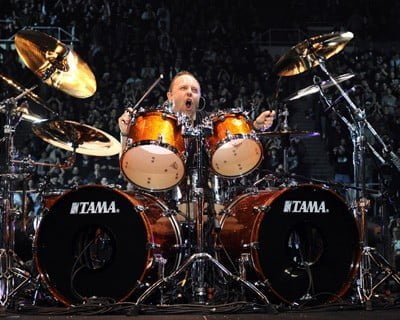 As I aged and became more interested in music, I wanted to be the best drummer on the planet and gain a record deal. I’d listen to Lars Ulrich of Metallica, John Bonham of Led Zeppelin, and Neil Peart of Rush and picture myself surpassing them on the list of the best of all-time. I’d practice for hours each day and if I was off on a beat or drum fill, I’d do it again and again until I had it right.
I learned later that you can be the best drummer in the world but you’re not going to land a record deal unless you and the other 3-4 members of your band share the same goal, so when I gave up the chase of becoming a professional musician to work in radio, I once again pushed myself to be the very best I could be.
Throughout the years I’ve been fortunate to have that approach pay off for me. I grew from an intern to News Anchor to Sports Talk Show Host to Producer to Program Director and during that time landed five different programming jobs and produced one of the best national radio programs in the country.
Although I’d like to believe that my talent came into play at some point during each of those processes, I know that my drive and passion to win stood out.
When I was being considered for an opportunity at ESPN Radio, one manager mentioned that I hadn’t had enough major market experience and they weren’t sure if I could handle making the transition from a small market to the big stage. Their point was valid. I couldn’t do anything to change the fact that I lived and performed where I was raised so I decided to put my passion into my pitch and explain why I deserved a look.
 I still have the email I sent and in it I said “Many people were critical when the NY Giants selected a Head Coach named Bill Parcells because he didn’t have any experience and was an unknown commodity. A few years later when he was winning Super Bowl’s they looked like an organization of geniuses. Your next Bill Parcells is right here and waiting to make a difference for ESPN Radio”.
Was it ballsy? Definitely. But I believed in myself and knew I could win for them and I wasn’t going to let a situation beyond my control cost me an opportunity. If they didn’t think I was good enough I could’ve accepted that but I wasn’t accepting rejection over my location.
Luckily I landed the job and produced at ESPN Radio for 2 years. Week after week I pushed everyone involved to make “GameNight” as great as it possibly could be, and in doing so I earned the respect of my peers and my bosses. When a bigger opportunity came up to produce “The Dan Patrick Show” just 13 months later, I was given the promotion.
That same mindset helped me when I interviewed for programming opportunities in Philadelphia, San Francisco and St. Louis. In each situation, I entered the process determined to beat the competition and land the job. I had no idea who I was up against, and in many cases I had no local market connection, but what I did have was vision, passion, and an “I won’t lose” attitude. I focused on articulating my vision, asking questions, and selling my love and passion for coaching and creating great sports radio. By focusing on the things I could control, I was able to gain a few fans and win over a few rooms.
I don’t bring up these examples to showcase my resume. I mention them because they help to reinforce Mike’s point. Winning starts with your mindset. You can’t perform as an elite talent or lead a brand to incredible heights if you don’t set your own bar extremely high.
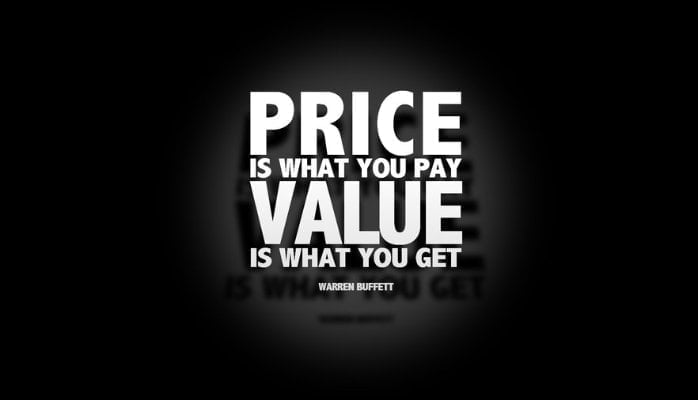 When I see brands sitting in 20th to 30th place and just floundering in their markets it frustrates me. It tells me that there isn’t a big focus on the radio station. Why be in the format and spend any amount of money on a product if you’re not going to maximize its potential? I get that not every city has the budget to pay a Mike Francesa but there are tons of great broadcasters out there and if you want to build an audience, attract advertisers, and make money in this industry, you’ve got to invest in on-air people who are worth listening to.
To bring this back full circle to what we originally started with, once you have great talent, it’s your job to find a way to keep them. I had a former boss of mine in San Francisco once tell me “we will pay for performers but nobody is breaking the bank until they prove it”. That’s a fair statement but unfortunately not every broadcast group subscribes to this theory.
During the past few months I’ve talked to a lot of talent and in three different cases, hosts took over timeslots in different cities and led their stations to double digit ratings and/or double to triple the previous ratings performance, only to be told when contract time rolled around that they weren’t due a raise or were only worth a minimal 1-2% increase.
I’ve also watched as some talented people I know have had to take on responsibilities selling their own shows to make extra money, and a few groups in particular have chosen to only hire talent who sell or pay for their air time. Delivering ratings and a quality product matters little in comparison to inflating the bottom line.
 In some of these instances it might be necessary to operate that way. If a company isn’t making money you can’t blame them for not being able to do better. But if that’s the case, there are other ways to show your appreciation for someone who has performed and is helping do their part to grow the business. Whether it’s an extra week of vacation, sales trade, a bump in ratings bonuses, a higher endorsement rate, a guarantee number of appearances, or an extra weekend shift to make additional dollars, all of those things tell a talent “we want you to make more money and you’re important to us”.
When you don’t treat your best people with that respect, you end up losing the pieces that are most vital to your operation. Music formats can get away with it more because they can play songs and tell a DJ that the artists are the stars, but when a personality talks 45 minutes per hour, and is the main reason why people come to your radio station on a daily basis, losing them over a handful of dollars isn’t smart business.
That said, this also is an industry that has compensated a lot of talented people well throughout the course of their careers. The format’s top talent wouldn’t be sticking around for decades if the paychecks and additional revenue streams weren’t attractive.
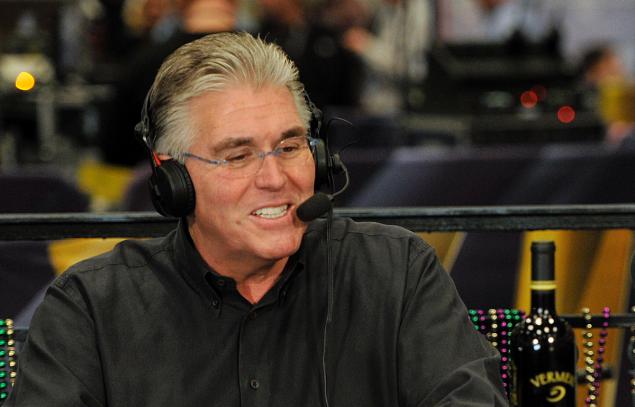 I’ve heard Francesa say that he’s done with WFAN at the end of 2017, and he says it’s not a negotiating ploy. I don’t know him personally to know if it is or it isn’t but it sounds as if he knows a pay cut awaits him in the future and given his performance and place in the industry, I can see why that doesn’t have a lot of appeal to him. That said, WFAN pays him extremely well so we’re not talking about a couple of nickels and dimes in this situation.
It’s a tough spot for both sides to be in because from the operator’s standpoint, you’re paying millions for a host during a time when salaries are declining and no matter how much you love the performer, there has to be a limit to what you’ll invest.
On the flip side, how do you tell your top talent that you’ll pay them one fee to finish 1st, and then when they do, offer half or even less on their next deal? Is the radio station going to sell ads for less and accept making less money during the duration of the talent’s agreement? Heck no! So why should they take less when they’ve performed and helped the company make a lot of money?
Everyone gets their feelings hurt once it’s time to talk business because the offer (or lack thereof) tells an employee what the company thinks they’re worth. Personalities expect to be paid for hitting their target and companies expect to grow their bottom line and reap the rewards of making significant investments.
When talent though start getting treated as if they’re expendable, and the product becomes less appealing to the audience, you’ve got to ask yourself “is saving the money truly worth it if it means losing your most valuable commodity and having your audience and advertiser numbers decline”?
The challenge of course is to keep your listeners tuned in, your advertisers spending the same or more, and hire new talent for less than the previous host made but at a number that they feel comfortable with. While that sounds great, it doesn’t always work out like that. It’s even more of a risk when it involves a top talent with a lengthy track record and loyal following.
 Mike made the point that SportsCenter isn’t what it used to be and most people couldn’t name the anchors on the show today like they once did. The show was once a must-watch and the hosts were household brand names. Today the stars have become the highlights, the games, and the packages, and the talent have become nameless and faceless.
In this case, he’s not wrong. I spent my 20’s and early 30’s fully invested in watching SportsCenter each night. Now, it’s become background noise and a show I can live without.
Which brings me back to the question I previously asked “is losing your best talent and damaging your brand in exchange for eliminating expenses really worth it”?
When you have a superstar talent on your airwaves, delivering an impact, and it’s helping you make money, you continue investing and riding that horse as far as they’ll take you. If you choose to get off the ride when you’re on top of the mountain, understand that the next one could leave you face down in the dirt.