One topic that has been interesting to watch unfold over the past year has been the shift of local radio operators to take back their timeslots from national sports radio networks and replace network programming with local personalities and content. For years it was a given that to become a network affiliate, you were required to carry at least one national prime time show on your radio station.
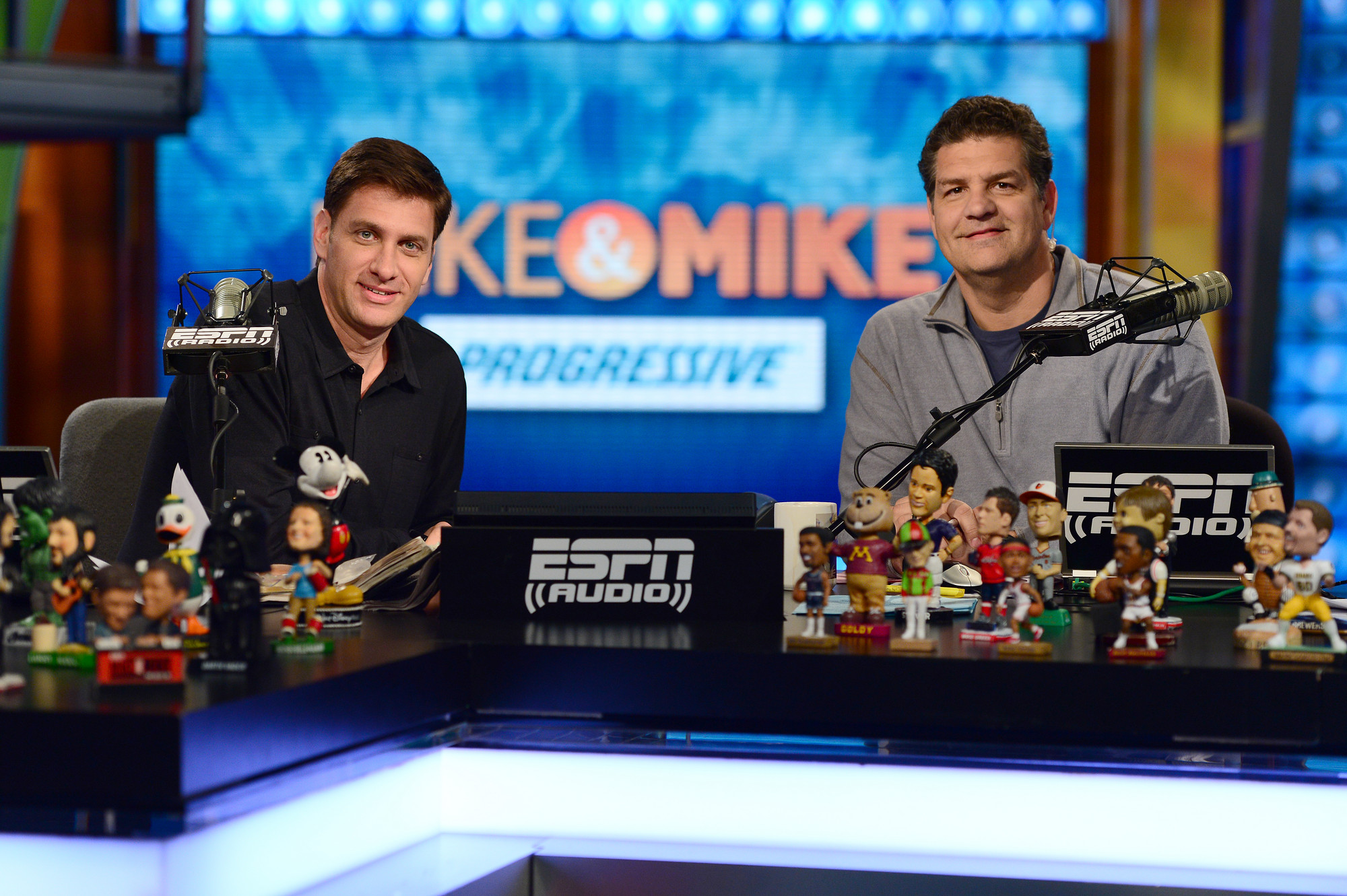
However, in the past year alone, five top-25 markets have dropped an ESPN Radio network program to make room for a local show. Of all the national shows offered by ESPN, Mike and Mike have been hit the hardest. Four of the five changes were made during their morning drive timeslot.
In Philadelphia, 97.5 The Fanatic replaced Mike and Mike with Anthony Gargano. In Washington DC ESPN 980 introduced “The Man Cave” with Jason Paul and Chris Reid, also dropping Mike and Mike. In Seattle, 710 ESPN announced plans to reduce Mike and Mike by two hours to carry Brock and Salk and in St. Louis, the same formula is being followed with the return of Bernie Miklasz.
 With Colin Cowherd departing ESPN, it’s only a matter of time until more national programming gets replaced in local markets by local operators and the first change has already taken place in Phoenix where Arizona Sports 98.7FM has named former NFL star Bertrand Berry as their permanent replacement for Cowherd’s timeslot.
Since then, The Ticket in Miami has begun airing a local program with Josh Friedman and Chris Wittyngham while ESPN offers fill-ins during the month of August. Depending on what ESPN Radio does with Colin’s slot, that shift to a local show at 10am could become permanent. Although, if Dan LeBatard gets the nod to take over for Colin on the national level, it’s unlikely The Ticket will pre-empt him.
To dig even deeper, when you look at the major markets where national shows are being cleared, many air on AM stations which are no longer a high priority for their respective companies. In many cases, the ratings on these brands are very low and the focus appears to be to simply “clear network programming and fill air-time” rather than take advantage of it.
 As an example, in Boston, ESPN Radio airs on WEEI’s old AM signal 850AM. In Atlanta, ESPN is now airing on Cumulus’ 1230AM and in San Diego they clear on 1700AM. In all three cases, the stations are not destinations for local listening.
And it’s not jut ESPN Radio facing this challenge. It’s happening to Fox Sports Radio and the CBS Sports Radio Network too.
Of those three groups, CBS was thought to have the biggest opportunity to challenge ESPN when they announced they’d be entering the network space. With the company’s ability to use the power of their highly successful local brands, many expected a stronger network battle but so far that hasn’t happened.
 Of CBS Sports Radio Network’s shows, only Jim Rome’s program has received decent support in local markets. CBS’ top content earning local market distribution has been the CBS Sports Minute, which I understand Mike Francesa is a big fan of (sorry I couldn’t resist).
While Rome is clearing Los Angeles on The Beast 980, San Diego on The Mighty 1090 and Sacramento on KHTK 1140, the majority of the markets he clears are smaller. As for the network’s other shows, while they offer some solid talent, they remain challenged to receive local market clearance and support. Even in bigger markets where they do clear, they’re usually on brands with little attention and listening. Case in point, 610AM in Philadelphia, 1050AM in San Francisco and 1270AM in Detroit.
 For Fox Sports Radio, the Dan Patrick Show remains a destination and although the network has done a great job adding strong talent such as Rich Eisen and Jay Mohr, the challenge also remains large when it comes to penetrating local radio markets during prime time hours. Unlike ESPN though, they don’t charge rights fees or persist on network shows being part of a local station’s lineup in exchange for a local market affiliate relationship which is smart.
Will an addition of Colin Cowherd change that? Perhaps. But for now, aside from clearing their own backyard in Los Angeles, most of the markets airing Fox national shows during prime time are outside of the Top 25. Although they do have some solid situations in Phoenix, Seattle, San Diego, Houston and Portland.
While all of these changes are significant and very different than what was the norm five to ten years ago, it doesn’t appear to be going away.
 Assuming local operators continue to invest more in local personalities and content, that means that the audience reach and market clearance for network shows will decline, which you can bet advertisers will look to try and take advantage of.
So does this mean that national networks are in deep trouble?
Not necessarily.
While the 1990’s and 2000’s may have represented great growth for the sports radio format and created a dominant place at the table for networks on local radio station’s, the 2010’s have seen sports audio become an even bigger juggernaut, and the focus has become reach and distribution rather than local market clearance.
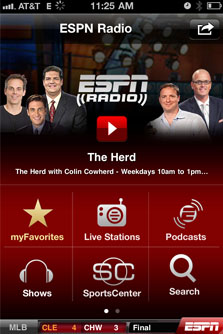 For instance, ESPN Radio is streamed on ESPNRadio.com and the ESPN Radio app. It’s also be heard on Slacker, Tune-In, SiriusXM, Google Play, iTunes and numerous radio stations across America, not to mention it can be watched on ESPN-2, ESPN-U and ESPN News.
It’s a big reason why the company shifted their focus from positioning themselves as ESPN Radio to ESPN Audio, and given the reach and power of the brand, it was a smart strategy.
In an interview in March, ESPN Audio boss Traug Keller told Sports Illustrated’s Richard Deitsch that ESPN Radio had twenty million people per week listening to their content. The product was being received on more than five hundred radio affiliates, three of which were owned and operated radio stations, and as a whole the ESPN Radio brand was serving over sixty percent of the population who listen to sports radio.
Those numbers are staggering and very impressive.
Now logic would tell us that with Colin Cowherd and Scott Van Pelt gone from the network, those numbers will likely drop, but that doesn’t mean the numbers won’t rebound once permanent replacements of those timeslots are announced.
 Switch sides to Fox Sports and you can find their programming also available on local stations and their website but they also add the power of being heard on the iHeart Radio app, watched on Fox Sports 1, DirecTV and YouTube and consumed on SiriusXM, iTunes, Tune-In and the Podcast One network.
For CBS the story is very similar. They provide their audio content on their website, local radio stations, the Radio.com app, the Play It podcast network, Tune-In and the CBS Sports Television Network.
So if these national brands have instant credibility with sports fans and talented and recognized personalities delivering quality topical content, than why are local operators dropping them in favor of local programming?
 “It’s all about the ratings and national programming doesn’t deliver them in my market” said a local program director I spoke with who oversees a station inside a top 20 market.
But with adding a local program comes added expense and as radio operators across the board trim budgets in an effort to stay profitable, how can added expenses make sense to the bottom line?
“Yes there are risks involved by adding salary, but personality endorsements and appearances are in high demand and ratings are critical for radio stations to attract larger advertising dollars.” said a local market general manager. “While the quality of network programming is excellent and the personalities are good, we believe that local shows hosted by locally known personalities are worth the investment because they will provide more solutions for our clients and listeners which ultimately will help us be more profitable“.
While I don’t disagree with the viewpoints of the local operators I talked to, I do think one thing is definitely different and important to remember as we gauge the success of sports audio operators going forward – it’s not just about ratings anymore!
 If you’re on a local level, your brand strategy is going to be built around delivering high local ratings and you’re going to want personalities in the local community who can advance the message of your station’s advertisers and connect with people at local appearances. From that standpoint, national programming doesn’t offer much appeal.
However, if you work on the network side of this business, your model for success isn’t measured by local market ratings. It’s based on total audience reach, platform distribution, advertising revenue and content creation.
 Do we really think a network like ESPN Radio or Fox Sports Radio isn’t successful just because they didn’t win a ratings battle in New York City, Los Angeles or Chicago? If they’re on television and every audio platform possible and reaching twenty million people per week, I’d say they’re delivering huge value for advertisers and clearly people do enjoy their content or they wouldn’t be accessing it thru multiple audio channels.
Yes it becomes harder to monetize due to the fact that the consumption of content is splintered between so many different audio avenues, and listening now has the on-demand element to deal with, but that’s the job of management and sales executives, to create their story and share it with advertisers and the people inside their own offices.
 If you’re an advertiser looking to get bang for your buck, you can’t deny that a show like “The Dan Patrick Show” or “Mike and Mike” doesn’t have huge reach and ability to move product. Between television, radio syndication, podcasting, their websites and social media promotion, people are consuming the content, which means they are also receiving the message.
Unfortunately, since we operate in a silo and use antiquated technology to gauge audience measurement, and we fail to include the total usage of users on all of these other platforms, many local and national brands are not receiving the credit they’re due for delivering record numbers of audience.
 As someone who’s programmed on the local level, I believe in delivering as much local content as possible. If my quarterly bonus and station’s ability to generate revenue are tied to our ability to superserve advertisers and local fans, then I want people on my airwaves who walk into the same building as I do, understand the station’s goals and possess the ability to get the job done.
While I enjoy the listening experience of some national shows, their personalities don’t live and die with the success or failure of my brand. Most don’t invest the time in interacting with their local affiliates either through calling in or making in-market appearances, and if they’re not going to share the same pain and joy in my company’s performance, then I can’t put my ass on the line for them when my future depends on it.
However, just because I have that point of view as it applies to running a local brand, doesn’t mean that national programming isn’t important, necessary and a huge success for the sports radio format. I often hear people in the industry discredit network shows because of the ratings factor, but there’s no question that we all know these brands, shows, personalities and the content they create. That has to count for something right?
 What I believe it comes down to is this – success in the sports radio format isn’t a one size fits all formula anymore. It’s sort of like when a station celebrates delivering powerful Men 25-54 numbers but yet gets crushed on social media and in the industry trades because their 6+ numbers were low. If you can’t see the full story and you’re lacking information, it becomes harder to analyze and understand.
Every company has a different measurement for success. For some it’s about total audience, for others it’s about reach and distribution, other locations will have a stronger emphasis on digital, social and mobile activity and engagement, and for numerous traditional operators, it’s about local ratings.
While perception is often reality in this format, what gets lost is the understanding that we all operate in different spaces with very different goals and our ability to define success has become complicated due to the numerous avenues of distribution, the different ways to listen to audio and the inability of our industry to measure it as a whole.
 Having been on both sides of the fence (national and local), I see tremendous value to both approaches and business strategies and consumers are going to sample both, in multiple locations, and on the terms of when they feel like accessing it. It’s not a choice of one or the other, it’s a matter of being accessible and worthwhile when the user feels like sampling your material.
While we can all debate the benefits and disadvantages of local vs. national, I think we can all agree that we need to do a better job of defining success for our brands internally and sharing that success story externally. Who knows, by doing that we just might create a better perception of our format on the local and national level.